
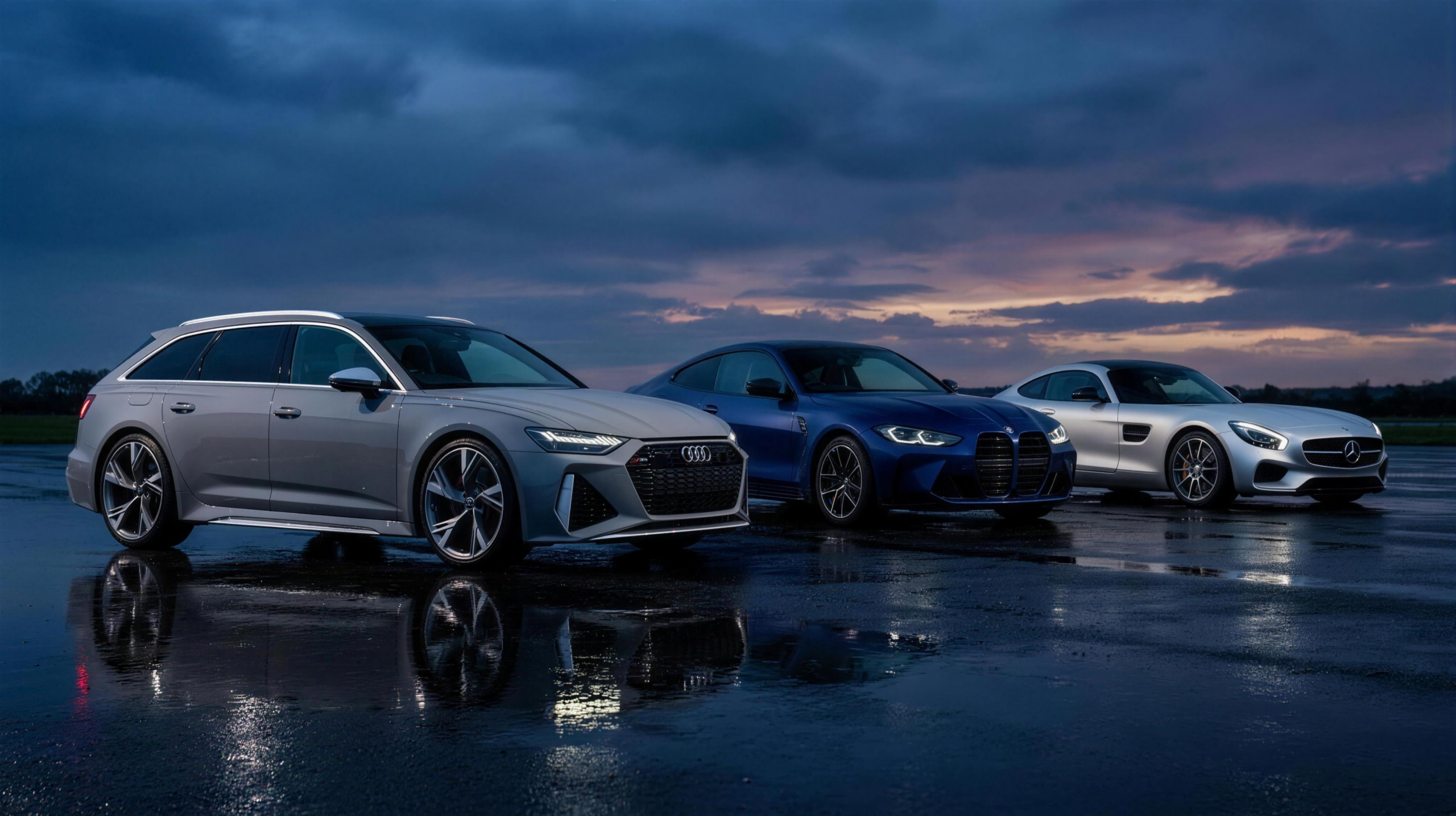
Audi RS vs BMW M vs Mercedes-AMG is the eternal German performance question — and if you want the short answer: buy a used BMW M car if driving is the point, a used Mercedes-AMG if power and presence are the point, and a used Audi RS if you’ll actually drive it every day, in every season. All three divisions build genuinely fast cars. Where they separate — especially on the used market — is depreciation behavior, out-of-warranty running costs, and how each car ages past 50,000 miles.
That last part is what most comparisons skip. Anyone can tell you an M3 handles and an E63 sounds like weather. Almost nobody tells you what the second and third owners actually pay to keep them alive. This guide does — the same real-numbers approach as our Bugatti Chiron first-year ownership cost breakdown.
Audi RS vs BMW M vs Mercedes-AMG at a Glance
| Audi RS | BMW M | Mercedes-AMG | |
|---|---|---|---|
| Core philosophy | All-weather, all-road speed | Driver engagement and track precision | Horsepower, sound, and luxury theater |
| Drivetrain signature | quattro AWD, turbocharged | RWD-biased (M xDrive on newer cars) | RWD-biased, 4MATIC+ on most modern V8s |
| Signature engine | 2.5L turbo five-cylinder / 4.0L twin-turbo V8 | S58 twin-turbo inline-six / S63 V8 | Handbuilt 4.0L twin-turbo V8 (“One Man, One Engine”) |
| Depreciation (typical) | Steepest early, then flattens | Moderate; M2/M3 hold best | Steepest on sedans/SUVs; AMG GT holds well |
| Used sweet spot | RS5, RS7, RS Q8 at 3–5 years old | M2, M3/M4, M5 at 3–6 years old | E63 S, AMG GT, C63 at 4–7 years old |
| Out-of-warranty risk | Tech and electronics repairs | Cooling systems, hard-use wear on tracked cars | Air suspension, V8 accessory costs |
| Best for | Daily-driven performance, any climate | Purists, weekend and track use | Grand touring, sound, presence |
Why the Used Market Changes the Answer
New, these three divisions are priced within a few thousand dollars of each other, model for model. Used, the math diverges fast — and even in a market where exotic prices keep climbing, depreciation on these three is doing most of the work in your favor.
A German performance flagship typically sheds 40–55% of its MSRP in the first four years. That’s brutal for the first owner and a gift to you: a $120,000 car becoming a $60,000 car doesn’t lose half its capability, only half its price. But the divisions don’t depreciate evenly, and they don’t cost evenly once the factory warranty is gone. A car that’s $10,000 cheaper to buy can erase that advantage in two service visits.
So the real question isn’t “which badge is best” — it’s which division gives you the most car per total cost of ownership at the age and mileage you’re shopping.
Audi RS: The Everyday Weapon
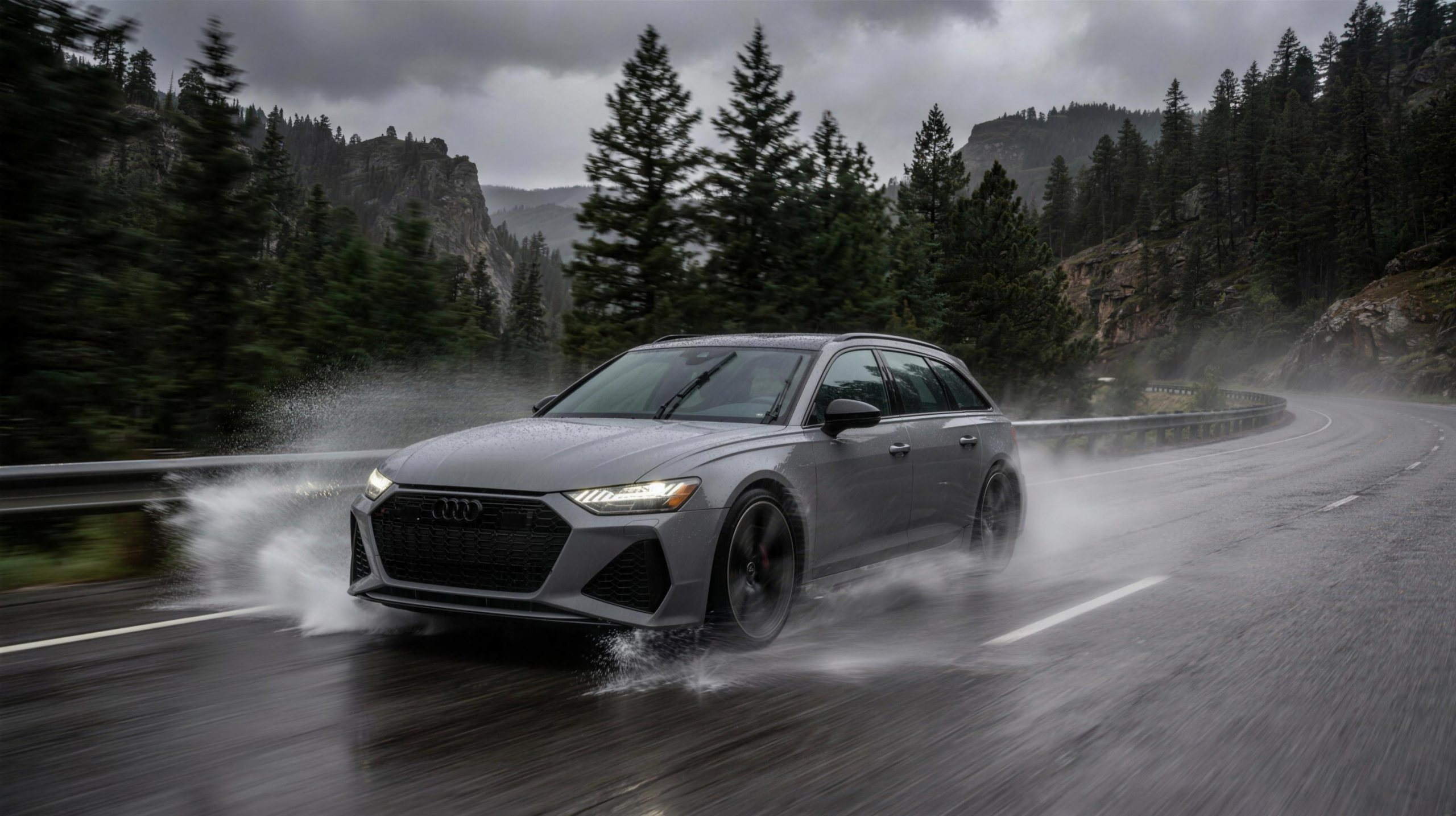
Audi Sport’s RS formula hasn’t changed since the original Quattro dominated rally in the 1980s: send enormous turbocharged power to all four wheels and make it usable by anyone, anywhere, in any weather. A modern RS6 Avant or RS7 will put its 591+ horsepower down on a cold, wet road that would have an equivalent RWD car spinning its tires in third gear.
What you’re buying used. The current-generation cars worth targeting are the RS3 (that 2.5-liter five-cylinder is one of the great engines of the era), the RS5 coupe and Sportback, the RS6 Avant and RS7, and the RS Q8 — which shares its platform and much of its hardware with the Lamborghini Urus at a fraction of the price.
Depreciation behavior. RS models tend to fall hard in years one through three — often harder than equivalent M cars — then stabilize. That makes a 3–5-year-old RS one of the strongest value plays in this entire segment. The RS6 Avant is the exception: US enthusiast demand for the wagon keeps it noticeably stronger than the mechanically identical RS7.
Ownership costs and aging. The engines are stout. The risk profile on an aging RS is electronic, not mechanical: MMI screens, driver-assist sensors, air suspension components on the larger cars, and the sheer density of modules. Budget roughly $1,500–$2,500 per year in maintenance on a V8 RS model out of warranty, with the understanding that a single electronics fault can add a four-figure surprise. Carbon-ceramic brakes, if fitted, are spectacular and spectacularly expensive to replace — check pad and rotor life in the pre-purchase inspection and price the car accordingly.
Buy an RS if: it’s your only car, you live anywhere with real weather, or you want Urus-adjacent capability without the Urus tax.
BMW M: The Driver’s Car
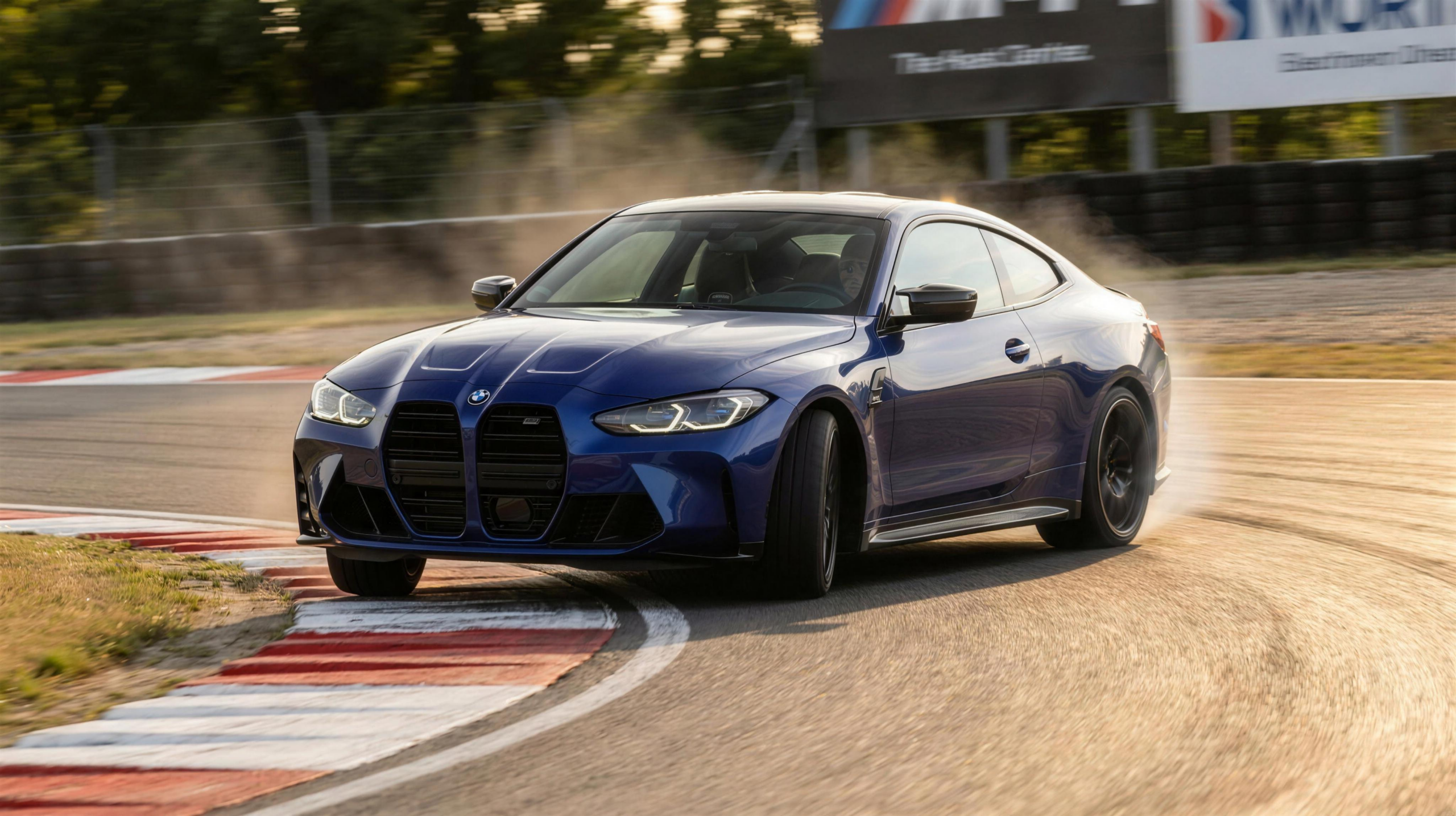
M division’s cars are the benchmark for chassis tuning in this class, full stop. Even as M cars have grown heavier and gained all-wheel drive, the steering precision, brake feel, and body control remain the reason people cross-shop nothing else.
What you’re buying used. The modern hierarchy: M2 (the purist’s pick and the best value in the lineup), M3/M4 with the S58 inline-six (a genuinely robust engine), M5 with the S63 V8, and the X3 M through X6 M SUVs. Manual transmissions — available on M2, M3, and M4 — carry a real and growing premium on the used market, and they’re the versions most likely to appreciate.
Depreciation behavior. M cars hold value better than RS and AMG equivalents almost across the board. The M2 and manual M3/M4 depreciate slowest; the big SUVs (X5 M, X6 M) fall fastest and are the “most car for the money” play if you want M engineering in a family-sized package. Competition-package cars command a premium used but also resell stronger.
Ownership costs and aging. Two things matter more on a used M car than on an RS or AMG: how it was driven and whether it was tracked. M cars get tracked at a far higher rate than the other two divisions. That’s not automatically disqualifying — a well-maintained track car is often better cared for than a neglected street car — but it makes the PPI and service records non-negotiable. Known watch items by era: cooling systems and rod bearings on older S65/S85 cars, crank hub concerns on tuned S55 cars, and consumables that simply cost more because the cars get used harder. Budget $1,200–$2,000 per year on an inline-six car, more for V8s.
Buy an M if: the drive itself is the product, you want the strongest resale in the segment, or you want a manual German performance car — because M is effectively the last place to get one.
Mercedes-AMG: The Rockstar
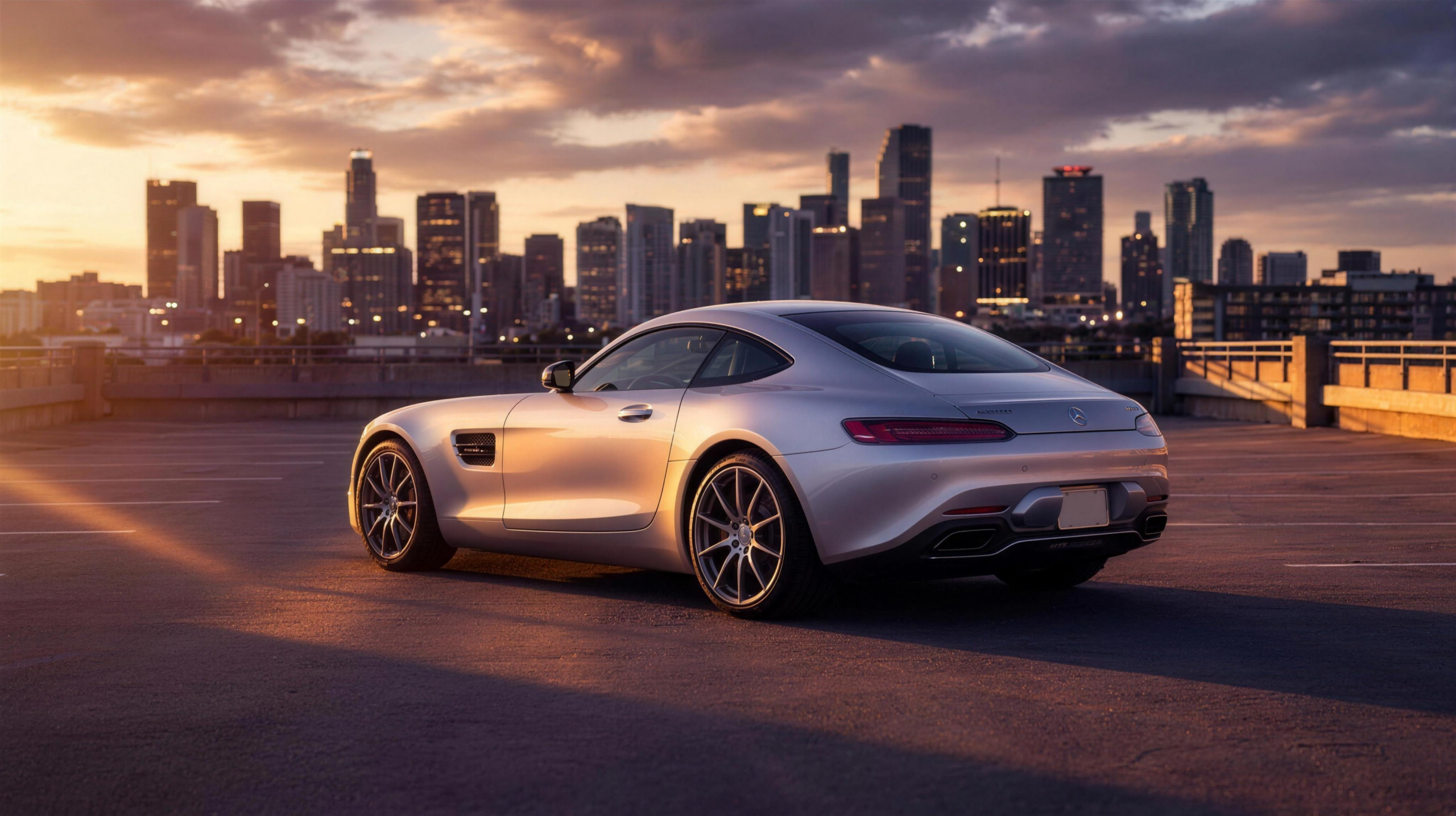
AMG began as an independent tuning house in 1967 and never lost the hot-rod DNA. The handbuilt V8 — assembled start to finish by one technician who signs the engine — remains the emotional center of the brand. Nothing in this comparison sounds like an AMG V8, and nothing matches the way an E63 S or AMG GT blends violence with a first-class cabin.
What you’re buying used. The modern targets: C63 (the pre-2023 V8 cars, now discontinued in favor of a four-cylinder hybrid, which has made used V8 C63s more desirable, not less), E63 S (arguably the best all-around super sedan of its generation), the AMG GT sports car, and the G63 — which operates under its own economic laws and barely depreciates at all.
Depreciation behavior. AMG sedans and SUVs (G63 excepted) depreciate the hardest of the three divisions, which makes a 4–7-year-old E63 S a staggering amount of car for the money. The AMG GT holds value more like a Porsche 911 competitor than a Mercedes. And the V8 C63s have effectively bottomed out — the switch to four-cylinder power put a floor under them.
Ownership costs and aging. This is the division where deferred maintenance hurts most. The V8s themselves are robust, but everything attached to them — AIRMATIC air suspension, turbos, accessory systems, and interior tech — bills at Mercedes flagship rates. Expect $2,000–$3,000 per year out of warranty on a V8 car, and treat any AMG without complete service history as mispriced no matter how attractive the number. The “One Man, One Engine” plaque is wonderful; the parts catalog behind it is not sentimental.
Buy an AMG if: you want the most sound, presence, and straight-line violence per dollar, you grand-tour more than you apex-hunt, or you’re buying one of the last V8 C63s while the market still lets you.
Head-to-Head: The Matchups That Matter on the Used Market
RS7 vs M5 vs E63 S (super sedans)
The E63 S is the most engaging and the cheapest used; the M5 splits the difference and offers the best chassis; the RS7 is the one you’d daily in January. If this is your only car in a four-season climate, RS7. If it’s a weekend missile, the E63 S is the value king of the entire segment.
RS5 vs M4 vs C63 (coupes)
The M4 is the driver’s choice and the strongest resale. The V8 C63 is the emotional choice with a closing window. The RS5 is the refined, effortless one — quickest point-to-point in bad conditions, least dramatic in good ones.
RS Q8 vs X6 M vs GLE 63 S (super SUVs)
All three are absurd and wonderful. The RS Q8 is the stealth Urus. The X6 M is the sharpest to drive. The GLE 63 S is the most luxurious inside. Depreciation runs steep on all three, which is exactly why the used versions are compelling.
AMG GT vs M8 Competition (GT cars)
The AMG GT is the sports car — sharper, louder, more special, better residuals. The M8 is the faster grand tourer with the better back seat (Gran Coupe) and the bigger discount used.
The 5-Point Pre-Purchase Checklist
- Full service history or walk away. These cars are affordable to buy used precisely because they’re expensive to neglect. Gaps in records are a pricing event, not a footnote.
- PPI at a specialist, not a general shop. A proper pre-purchase inspection at a marque specialist runs $200–$500 and routinely finds four-figure problems. It is the highest-ROI money in this entire process.
- Check consumables like they’re part of the price. Tires, brakes (especially carbon-ceramics), and scheduled major services can total $5,000+ on a car that “runs great.”
- Verify software and recall status. All three brands have had significant recalls and software campaigns this decade. Run the VIN through the manufacturer database before money moves.
- Price the warranty question. Factory extended or reputable third-party coverage on a V8 AMG or M car can be worth real money. On an out-of-warranty car, your purchase price should reflect self-insurance.
Verdict: Which Division Wins in 2026?
There’s no single winner — there’s a winner per buyer, and the used market sharpens the differences. Best value on the used market: Mercedes-AMG — the E63 S and V8 C63 specifically, maximum car with maximum depreciation absorbed by someone else. Best to own long-term: BMW M — strongest residuals, deepest enthusiast and specialist support, and the last home of the manual. Best to live with daily: Audi RS — quattro, refinement, and the RS6 Avant, the one car in this segment that does everything.
Whichever badge you land on, buy the history, not the horsepower. A documented, specialist-maintained example of any of these three will beat a cheaper, neglected version of your first choice every time.
Browse current inventory: Audi RS models · BMW M models · Mercedes-AMG models on ExoticMotors.com.
Frequently Asked Questions
Which is more reliable: Audi RS, BMW M, or Mercedes-AMG?
All three are broadly similar in engine durability; the differences show up in peripherals. Aging RS models tend toward electronics faults, M cars toward wear from hard use, and AMGs toward expensive suspension and accessory repairs. Service history matters more than the badge.
Which German performance brand holds its value best?
BMW M, particularly the M2 and manual-transmission M3/M4. Mercedes-AMG sedans and SUVs depreciate the fastest (the G63 and AMG GT are exceptions), and Audi RS models fall hard early, then flatten.
What does it cost to maintain an AMG, M, or RS car out of warranty?
Plan on roughly $1,200–$2,000 per year for six-cylinder cars and $2,000–$3,000+ for V8 models, excluding tires and brakes. A single major service or repair on any of the three can exceed a full year’s normal budget.
Is a used AMG a good buy in 2026?
Yes — arguably the best value in the segment. Steep depreciation on V8 sedans like the E63 S, plus the discontinuation of the V8 C63, means used AMG V8s deliver more performance per dollar than any rival, provided the service history is complete.
Should I buy a used M car that’s been tracked?
Not automatically a dealbreaker. Track-driven M cars are often maintained above street standards. Insist on records showing fluid services, brake maintenance, and inspections — and price in consumables.
What’s the best first German performance car?
The BMW M2 for driving purity and resale, the Audi RS3 or RS5 for year-round usability, or a well-documented Mercedes-AMG C43/C63 for character per dollar.