
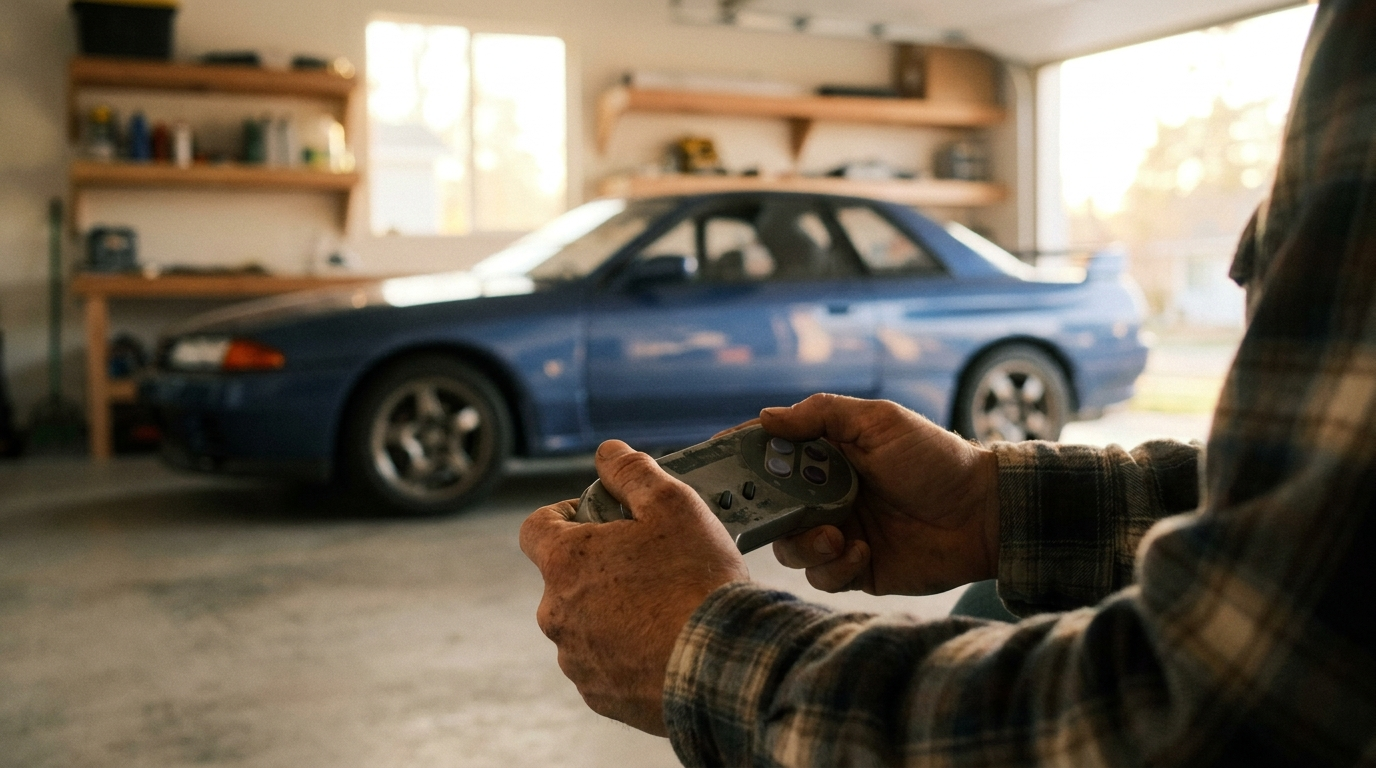
Somewhere right now, a Bayside Blue R34 Skyline GT-R is crossing an auction block, and the bidders driving the price aren’t gray-haired men in blazers. They’re in their late thirties. They have their phones out. And most of them first drove this exact car in 1998 — on a PlayStation, in a bedroom, on a memory card that held their entire garage. Welcome to the new collector car market — two decades in the making, and arriving right on schedule.
That car is now worth more than a new Porsche 911. And it’s not an outlier. It’s the leading edge of the biggest generational shift the collector car market has ever seen — a shift written by two video game franchises.
Key Takeaways
A Market Handoff, Happening in Real Time
For decades, the collector car market ran on a simple formula: the cars that command the biggest money are the cars the wealthiest generation lusted after in their youth. Boomers drove muscle car values to the moon. Their fathers did the same for pre-war classics.
Now it’s the millennials’ turn — and the numbers say the handoff is already well underway.
The average model year of cars selling for over $1 million at auction was 1972 as recently as 2020. Today it’s 1984 and climbing. The majority of the top ten auction sales each year are now expected to be cars built after 1990 — a statement that would have sounded absurd ten years ago, when “collectible” still meant chrome bumpers and carburetors.
Meanwhile, the poster cars of the 1990s and 2000s — the new center of gravity of the collector car market — are posting the kind of appreciation curves that used to belong exclusively to Hemi ‘Cudas and split-window Corvettes. A 1995–98 Nissan Skyline GT-R in excellent condition now carries a guide value north of $80,000. A Porsche Carrera GT — a car you could buy for under $400,000 a decade ago — recently sold for over $3 million, nearly double its estimate, with barely 1,800 miles on the clock. A Ferrari Enzo hammered at $9.3 million against a $5–6 million estimate.
And it’s not just halo cars. Even a clean sixth-generation Honda Civic Si — a car that sold new for the price of a Camry — has more than doubled in value since 2016. When the humble stuff moves, that’s not speculation. That’s a generation arriving at the market with money and a very specific shopping list.
Two Games Wrote the Shopping List
Here’s what makes this generational shift unlike any before it: millennials didn’t fall in love with these cars in showrooms or on the street. Most of them couldn’t. They fell in love through two screens’ worth of software — and each game taught them to want something different.
Gran Turismo was the encyclopedia. When it launched in 1997, it put a photorealistic Skyline GT-R in millions of American living rooms a full decade before US import law would allow the real thing on our roads. But it did more than show the cars — it taught an entire generation the catalog. Trim levels, horsepower figures, drivetrain layouts, the difference between a GT-R V-Spec and a standard car. Kids who had never seen a Skyline in person could recite its specifications from memory. Gran Turismo didn’t just create desire. It created informed desire — and informed buyers are exactly who’s walking into auction houses today.

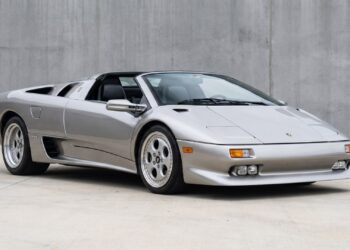
Need for Speed was the fantasy. The original 1994 game handed players the keys to a Lamborghini Diablo and a Ferrari 512TR — unobtainable European exotics rendered drivable for the price of a cartridge. Then, in 2003, Need for Speed: Underground flipped the script entirely: suddenly the hero cars were Skylines, Supras, and Eclipses dressed in widebody kits and neon, arriving in perfect sync with The Fast and the Furious to turn tuner culture into the defining automotive aesthetic of a generation.
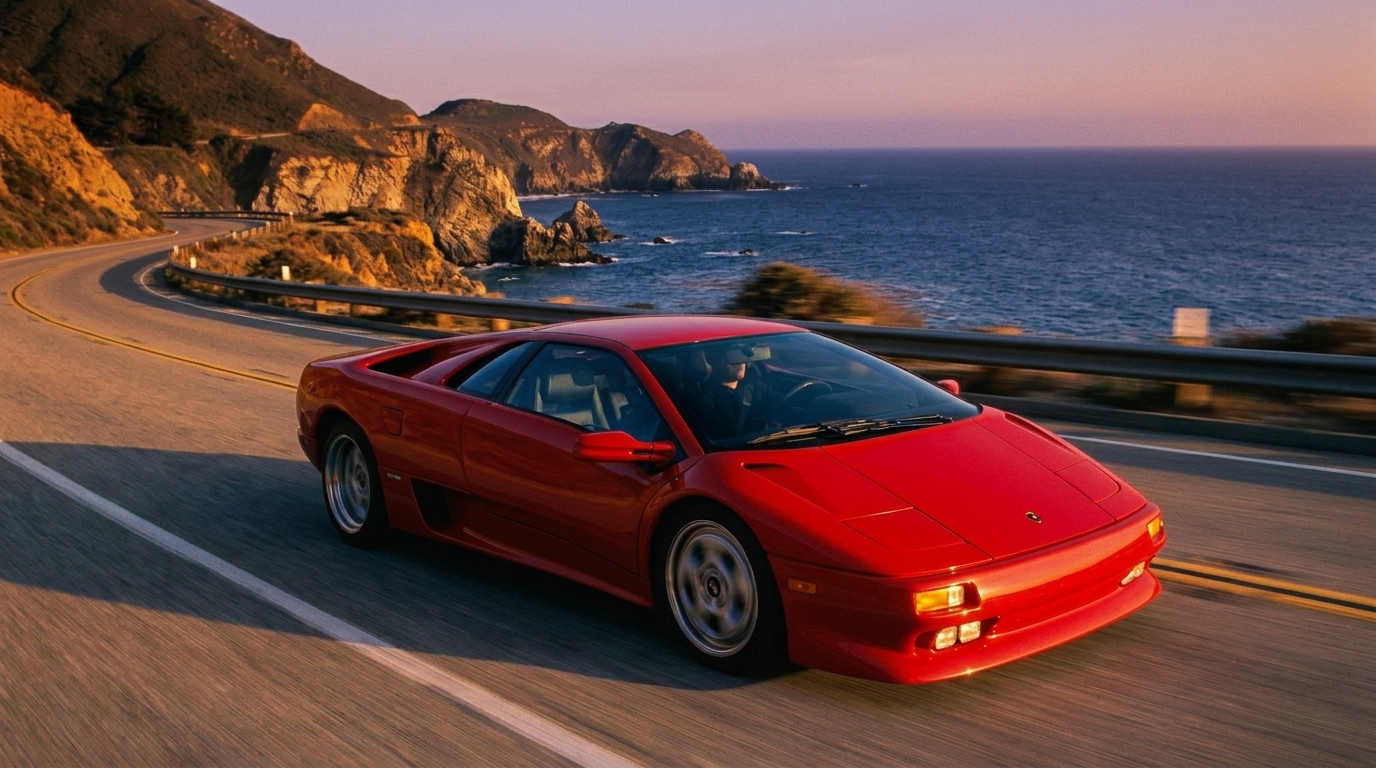
Between them, the two franchises covered the entire map of desire: Gran Turismo made millennials want the JDM legends they couldn’t have, and Need for Speed made them want both the exotics they couldn’t afford and the street builds they saw at every midnight meet. Look at what’s appreciating fastest today — R34s, Supras, analog Lamborghinis, Carrera GTs — and you’re essentially reading a combined save file from 1997 to 2005.
This is historically unprecedented. Muscle cars appreciated because Boomers actually drove them in high school. These cars are appreciating because millennials couldn’t drive them — and spent twenty years wanting to.
The 25-Year Rule Is a Supply Valve — And It’s Opening
America’s 25-year import rule works like a slow-motion IPO calendar. Every January, a new model year of previously-forbidden cars becomes legal to import, and every unlock date brings a fresh wave of collector car market demand crashing into a fixed supply.
The first R34 GT-Rs became US-legal in 2024, and the collector car market response was immediate and violent — clean examples now trade at prices that would have bought you a Ferrari 360 a few years ago. The most desirable R34 variants, including the final special editions, continue unlocking through 2027. Behind them wait the icons of the early 2000s: the cars of Gran Turismo 3 and 4, the machines from the Underground era, an entire class of Japanese performance royalty queuing up for legal entry.
Anyone who watched what legalization did to R32 and R33 values already knows how this movie ends. The supply is finite. The demand is a generation deep.
The Muscle Car Math Says We’re Right on Schedule
There’s a well-worn pattern in the collector car market: cars take off roughly 25 years after their cultural peak, when the kids who worshipped them reach their peak earning years.
Muscle car values began their historic run in the late 1990s — about a quarter century after the muscle car era ended. Air-cooled Porsches followed the same clock. Now run that math on the PlayStation era. Gran Turismo’s 1997 debut puts its cars’ 25-year moment squarely in the mid-2020s. Need for Speed: Underground’s 2003 tuner explosion lands its wave at the end of this decade. We are, almost to the year, exactly where the curve is supposed to steepen.
The generation that memorized spec sheets in Gran Turismo’s garage menu and argued about NSX lap times on forums is now 35 to 45 years old. They’re in their highest-income decades. And the cars they want are analog, mechanical, manual — everything modern performance cars have engineered away. That’s why the market keeps rewarding naturally aspirated engines, hydraulic steering, and three pedals with premiums that grow every season. It isn’t just nostalgia. It’s tactility. These are the last cars that feel like the games promised they would.
The parallel runs deeper than timing. Muscle cars minted their records the moment boomer nostalgia met boomer liquidity — and the collector car market of the 2020s is watching the identical collision, just with different heroes. The difference this time is scale: gaming put these cars in front of tens of millions of teenagers simultaneously, in every country, in the same years. No poster on a bedroom wall ever built demand that wide — and unlike posters, the games let an entire generation drive these cars first, spec sheets and lap times included, producing the most informed wave of first-time buyers this hobby has ever seen.
The Collector Car Market Heat Check: What’s Hot, Overheated, and Still Sleeping

Not everything with a big wing and a video game cameo is a smart buy. The collector car market has matured fast, and it’s gotten ruthless about quality.
Fully priced: Mk4 Supra Twin Turbos, R34 GT-Rs, and first-generation NSXs have already made their big move. So have the Need for Speed originals — analog Lamborghinis and limited-run Ferraris are setting collector car market records at every major sale. They’ll likely keep appreciating, but the era of finding one cheap is over — and as with any blue-chip exotic, the purchase price is only the entry fee. The best examples are disappearing into long-term collections, which tightens supply further but raises the entry price.
The scrutiny era: Standards have risen sharply. A casual respray and aftermarket wheels no longer cut it. Serious buyers now demand original trim, factory wheels, documented service history, and unmodified drivetrains — the same forensic scrutiny once reserved for vintage Ferraris. Ironically, the generation raised on Underground’s body kits is paying the biggest premiums for cars that were never touched. The gap between a great example and a merely good one has never been wider, and it shows up in five-figure price spreads on identical models.
Still sleeping: The collector car market pattern says look one ring further out — at the Underground-era garage. Mitsubishi Evo VIII and IX. Honda S2000, especially the CR. Early-2000s BMW M cars with manuals. Clean, stock Japanese performance cars that lived hard lives and are now genuinely rare in original condition. If the muscle car playbook holds, these are the 1970 Chevelles of 2035 — still attainable today, not for long.
How to Buy Into This Market Without Getting Burned
The collector car market now rewards preparation more than passion. Documentation is the whole game: service records, original books and tools, unmodified drivetrains, and a paper trail that proves the car is what the seller says it is. The premium for a fully documented example over an undocumented one has widened into five figures on even mid-tier cars, and it grows with every auction cycle.
For Japanese imports, eligibility comes first. A car must be at least 25 years old to enter the United States exempt from federal motor vehicle safety standards, and the federal import rules are unforgiving about paperwork. Insist on the original export certificate, verify the chassis number against every document, and treat Japanese auction grade sheets as the starting point of due diligence rather than the end of it. A grade 4 or better car with an intact interior score is worth waiting for.
Price discovery has never been easier — or more necessary. Study completed sales rather than asking prices, and use valuation data and auction comps to separate a market price from a hopeful one. The spread between what sellers list and what cars actually hammer for is widest in exactly the segments moving fastest.
And the oldest rule in the collector car market still applies: buy the best example you can afford, not the cheapest one you can find. In a segment where originality now commands vintage-Ferrari levels of scrutiny, a great car at a strong price will outrun a compromised car at a bargain price every single time.
>
Where you buy matters almost as much as what you buy. Online auction platforms have become the collector car market’s price-setting mechanism for exactly these cars — comment sections double as free pre-purchase inspections, and sold archives are the most honest price guide in the hobby. Results from the past ninety days will tell you more than any printed guide from last year. And patience is a position too: in a collector car market this deep, another good example always surfaces — usually right after you stop refreshing the listings.
The Bigger Picture
This isn’t a bubble story. Bubbles happen when prices detach from the people who love the cars. What’s happening here is the opposite: an enormous, culturally unified generation is finally able to buy the exact machines it spent childhood obsessing over, and the supply of clean examples shrinks every year.
The old guard of the collector car market spent decades treating post-1990 cars as used cars. The market has now decisively overruled them. Every corner of the collector car market is repricing around a buyer who did his research twenty years ago — in a garage menu. The top of the hobby is going modern, the auction records are going digital-native, and the definition of “classic” now includes cars a generation first met through a television screen.
The Gran Turismo and Need for Speed generation isn’t coming for the collector car market. It’s already here — and it brought its childhood save file.
The generational handoff reshaping the collector market is one of the clearest trends in the alternative asset world right now, and it’s still early. The cars that defined the Gran Turismo and Need for Speed era are moving from used-car pricing to blue-chip status in real time, with import eligibility dates and shrinking clean-example supply acting as built-in catalysts. For buyers, the window on the next tier — the Evos, S2000s, and analog M cars — is still open. For everyone else, it’s a reminder that in this market, culture leads and prices follow.
Frequently Asked Questions
Why are 1990s JDM cars so valuable now?
The generation that grew up playing Gran Turismo and Need for Speed has reached its peak earning years, and it is buying the exact cars it obsessed over as teenagers. That demand is colliding with a fixed and shrinking supply of clean, original examples, while the 25-year import rule unlocks new waves of previously forbidden models each January. The result is the fastest-appreciating segment in the collector car market.
What is the 25-year import rule for cars?
Vehicles at least 25 years old can be imported into the United States exempt from federal motor vehicle safety standards. This makes previously off-limits Japanese market cars legal on a rolling schedule — the first R34 Skyline GT-Rs became eligible in 2024, with the most desirable final variants continuing to unlock through 2027, followed by the icons of the early-2000s Underground era. Each unlock lands directly in the hottest corner of the collector car market.
Which collector cars are rising fastest in 2026?
JDM halo cars — Mk4 Toyota Supra Twin Turbos, R34 Skyline GT-Rs, and first-generation Honda NSXs — have already made their big move, and analog supercars from the same era are setting records at every major sale. The next ring out is climbing now: Mitsubishi Evo VIII and IX, Honda S2000 (especially the CR), and early-2000s BMW M cars with manual gearboxes. The common thread across every rising segment of the collector car market is originality: stock, documented, low-owner cars are pulling away from everything else.
Are video game era cars still affordable?
The Underground-era corner of the collector car market remains attainable — clean, stock Japanese performance cars from the early 2000s, plus manual German sports sedans of the same vintage. But most of these cars lived hard lives, so genuinely original examples are rarer than production numbers suggest. If the muscle car pattern repeats, this window closes within the decade.
Is the collector car market in a bubble?
The demand driving this shift is demographic rather than speculative: an enormous, culturally unified generation entering its highest-income decades, chasing a supply of clean examples that shrinks every year. That is the opposite of a bubble dynamic. The real risk sits in overpaying for modified or poorly documented cars, where the market has become ruthless about condition and originality. Watch completed auction results rather than asking prices to read where the collector car market actually is.
How do I verify a JDM import before buying?
Start with the paperwork: the original Japanese export certificate, a chassis number that matches every document, and a legitimate auction grade sheet — grade 4 or better with a solid interior score is the benchmark. Confirm the car cleared the 25-year threshold for legal entry, inspect for hidden rust and accident repair, and insist on an unmodified drivetrain. In today’s collector car market, a documented history is worth more than any single option or color.
What are analog supercars and why are they appreciating?
Analog supercars are the last generation of exotics built before digital intervention took over: naturally aspirated engines, hydraulic steering, manual gearboxes, and minimal electronic assistance. They deliver the raw, mechanical experience modern performance cars have engineered away — which is exactly what the games of the era promised. Because no manufacturer will ever build them again, supply is permanently capped, and the best examples keep pulling further ahead of the broader collector car market with every auction season.