


In the world of high-performance automobiles, the terms supercar and hypercar are often used interchangeably. But while they are closely related, they are not exactly the same.
Both categories represent the top end of automotive performance, design, and prestige. However, a hypercar goes beyond what most people think of as a supercar. It is rarer, more extreme, more advanced, and usually far more expensive.
So what is the real difference between a supercar and a hypercar?

What Is a Supercar?
A supercar is a high-performance sports car that sits above ordinary luxury and performance vehicles. Supercars are designed to deliver exceptional speed, aggressive styling, sharp handling, and a dramatic driving experience.
These cars are often built by brands such as Ferrari, Lamborghini, McLaren, Porsche, Aston Martin, and others known for performance and prestige.
Common traits of a supercar:
- Very high horsepower
- Exotic styling
- Advanced aerodynamics
- Premium materials and engineering
- Strong acceleration and top speed
- High price compared with standard sports cars
A supercar is typically the kind of vehicle that turns heads everywhere it goes. It blends performance, design, and exclusivity in a way that separates it from normal sports cars.
Examples often considered supercars include:
- Ferrari 296 GTB
- Lamborghini Huracán
- McLaren 750S
- Porsche 911 Turbo S
- Aston Martin Vantage or DBS
These are serious performance machines, but they are generally produced in higher numbers than hypercars and are more attainable for wealthy enthusiasts.
What Is a Hypercar?
A hypercar is the next level above a supercar.
If a supercar is already an elite performance vehicle, a hypercar is the most extreme version of that idea. Hypercars are typically built with cutting-edge technology, ultra-low production numbers, extraordinary performance figures, and price tags that place them in a different class altogether.
Common traits of a hypercar:
- Extreme horsepower and performance
- Very limited production
- Advanced materials such as carbon fiber monocells
- Hybrid or highly advanced powertrains
- Groundbreaking engineering
- Multi-million-dollar pricing in many cases
- Greater exclusivity and collectibility
Hypercars are often halo vehicles for a manufacturer. They showcase the absolute limit of what a brand can build in terms of speed, innovation, and prestige.
Examples often considered hypercars include:
- Bugatti Chiron
- Koenigsegg Jesko
- Pagani Utopia
- McLaren P1
- Ferrari LaFerrari
- Porsche 918 Spyder
- Aston Martin Valkyrie
- Rimac Nevera
These vehicles are not just fast. They are statements of engineering ambition.
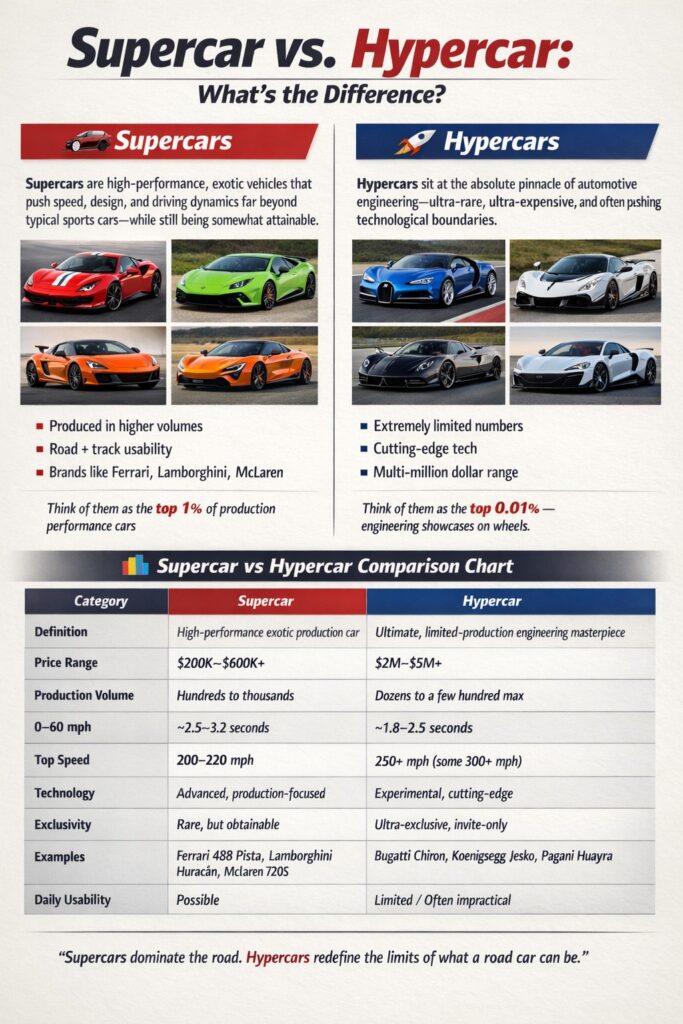
Supercar vs Hypercar: The Main Differences
While there is no single legal definition separating the two, the difference usually comes down to five core areas: performance, exclusivity, price, technology, and purpose.
1. Performance
Supercars are extremely fast, often with breathtaking acceleration and top speeds that exceed what most drivers will ever experience.
Hypercars take that even further.
They often feature power outputs well beyond 1,000 horsepower, revolutionary aerodynamics, or record-setting acceleration and top speed capabilities. A hypercar is usually intended to push boundaries, not just deliver excitement.
2. Exclusivity
Supercars are exclusive compared with normal cars, but many are still produced in meaningful volumes.
Hypercars are much rarer. Some are limited to a few hundred units, and others to just dozens. That rarity is a major reason they command so much attention and value.
3. Price
A supercar may cost anywhere from the high six figures into the low seven figures depending on model and options.
A hypercar usually starts much higher. Many hypercars cost well over $1 million, and some exceed $3 million, $4 million, or more before resale premiums.
4. Technology
Supercars often include world-class engineering, but hypercars are usually where manufacturers debut their most advanced technology.
That may include:
- hybrid-assisted performance systems
- extreme lightweight construction
- active aerodynamics
- advanced suspension systems
- bespoke chassis development
- track-focused engineering at an entirely different level
A hypercar is often as much a technology showcase as it is a car.
5. Purpose and Brand Positioning
A supercar is usually designed to deliver thrilling real-world performance while still serving as a road car that owners may drive somewhat regularly.
A hypercar often exists to define a brand’s peak capability. It may be road legal, but its mission is bigger: to represent the highest level of performance, rarity, and innovation that the company can produce.
Is Every Expensive Exotic Car a Hypercar?
No.
This is where many people get confused. A car does not become a hypercar simply because it is expensive, rare, or visually dramatic.
To be considered a hypercar, a vehicle usually needs to combine:
- extreme performance
- extreme rarity
- exceptional engineering
- strong collector significance
- a position above the brand’s normal supercar lineup
That is why many Ferraris, Lamborghinis, and McLarens are supercars, while only a select few models from those same brands are considered hypercars.
Can a Car Be Both?
In casual conversation, people sometimes use both terms loosely. But generally, the hierarchy looks like this:
Sports Car → Supercar → Hypercar
That means every hypercar is effectively part of the broader exotic high-performance universe, but not every supercar rises to hypercar status.
Why the Distinction Matters
The difference matters because these categories shape how people think about:
- performance expectations
- ownership experience
- market value
- collectibility
- brand prestige
For enthusiasts, the distinction helps define where a car sits in the automotive world. For collectors and buyers, it can influence long-term desirability and market perception.
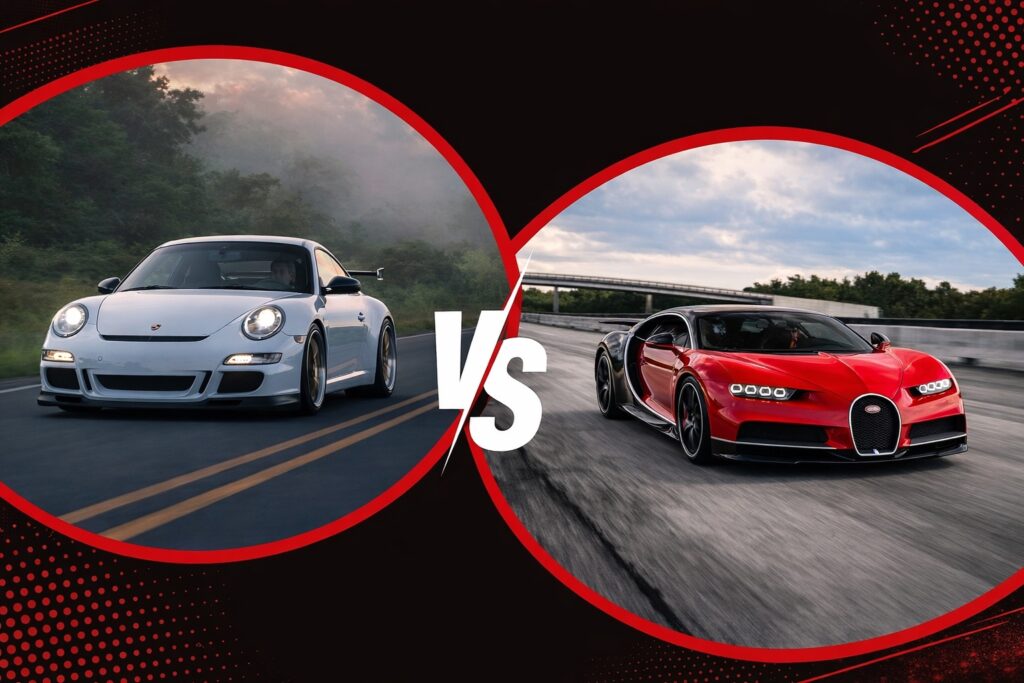
A supercar may represent a dream car for many people. A hypercar is often a once-in-a-generation machine.
Final Thoughts
A supercar is an elite high-performance machine with exotic styling, thrilling speed, and premium engineering.
A hypercar is the next step beyond that — rarer, more technologically advanced, more expensive, and more extreme in nearly every category.
In simple terms:
A supercar is exceptional. A hypercar is extraordinary.
As manufacturers continue pushing performance, electrification, and innovation further, the line between the two may continue to evolve. But one thing remains clear: both supercars and hypercars represent the most exciting edge of the automotive world.
For enthusiasts, that is exactly what makes them so compelling.
Frequently Asked Questions
What is the difference between a supercar and a hypercar?
Both are top-tier high-performance vehicles, but a hypercar goes beyond a typical supercar: it is rarer, more extreme, more technologically advanced, and usually far more expensive. Supercars deliver exceptional speed and dramatic styling, while hypercars push the absolute boundaries of performance, exclusivity, and price.
How fast and powerful is a hypercar compared to a supercar?
Supercars are extremely fast with breathtaking acceleration and very high top speeds. Hypercars take this further, often featuring power outputs well beyond 1,000 horsepower along with revolutionary aerodynamics and record-setting acceleration or top-speed capabilities.
How much do supercars and hypercars cost?
A supercar may cost anywhere from the high six figures into the low seven figures depending on model and options. A hypercar usually starts much higher — many cost well over $1 million, and some exceed $3 million or $4 million before resale premiums.
How exclusive are hypercars?
Supercars are exclusive compared with normal cars but are often still produced in meaningful volumes. Hypercars are much rarer — some are limited to a few hundred units and others to just dozens, which is a major reason they command so much attention and value.
Is every expensive exotic car a hypercar?
No. A high price alone does not make a car a hypercar. The hypercar designation depends on a combination of extreme performance, advanced technology, rarity, and boundary-pushing engineering — not just cost.