

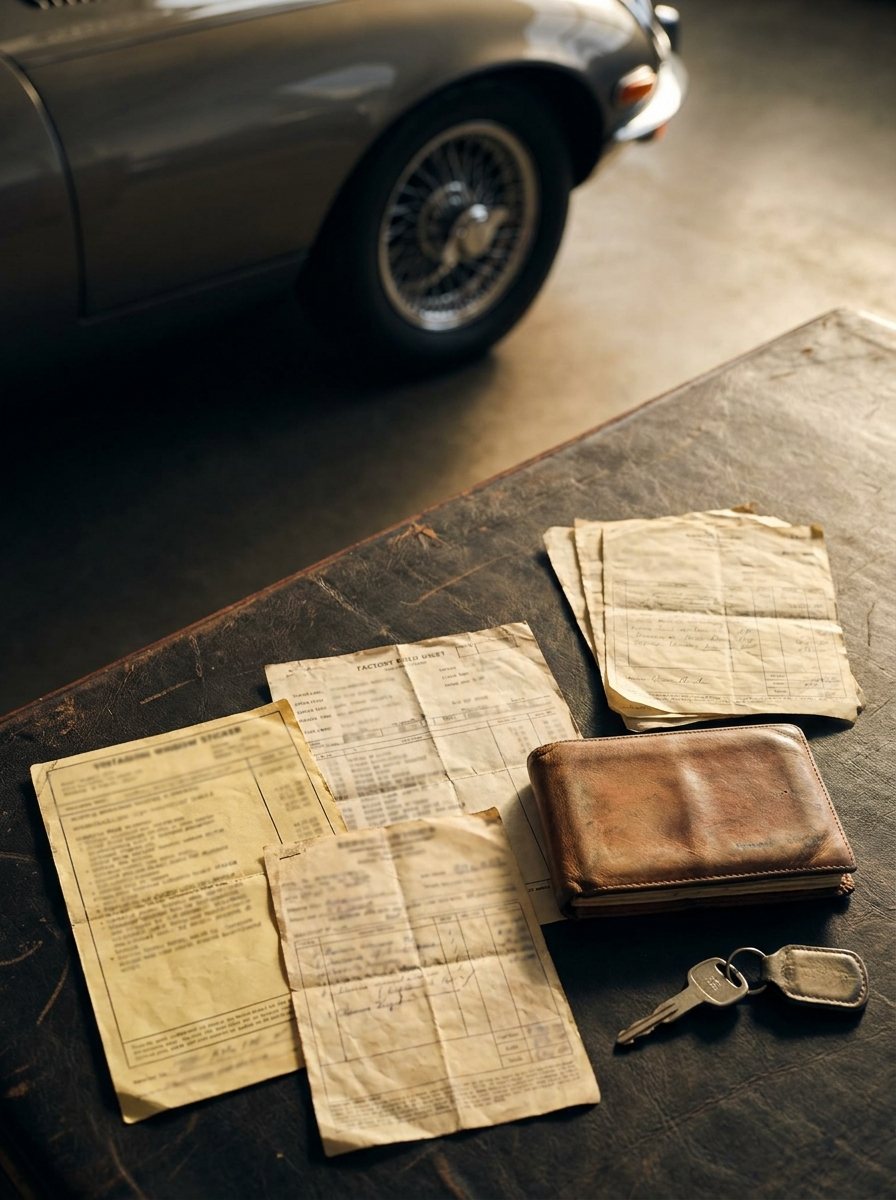
Collector car documentation has never mattered more. From Marti Reports and Porsche production records to Ferrari Classiche certification, the paperwork surrounding a collector car can reveal almost as much as the machine itself.
A rare car can make an unforgettable first impression. The paint catches the light, the engine fires and every mechanical detail appears correct.
Then someone asks the question that can change the entire conversation:
Where is the paperwork?
In today’s collector-car market, documentation is no longer an afterthought stored in the glovebox. Window stickers, factory build sheets, dealer invoices, service books, owner’s manuals and heritage certificates can help establish how a vehicle was originally built, where it was delivered and what happened to it over the decades that followed.
For serious enthusiasts, these documents do more than complete the presentation. They help separate a well-supported history from a story that has simply been repeated often enough to sound true. In short, strong collector car documentation turns a good story into a verifiable one.
Why Does Collector-Car Documentation Matter?
Collector-car documentation matters because it can support a vehicle’s original configuration, ownership history, maintenance record and authenticity.
A strong history file may help confirm:
- Original paint and interior colors
- Factory-installed equipment
- Engine and transmission specifications
- Production and delivery dates
- Original selling dealership
- Service and restoration history
- Limited-production configurations
- Matching identification numbers
- Original books, tools and accessories
No single document proves everything. A window sticker does not guarantee that the engine presently in the car is original, just as a heritage certificate cannot confirm every repair completed since the vehicle left the factory.
Taken together, however, factory records, physical inspections, ownership documents and service invoices can create a far more credible picture.
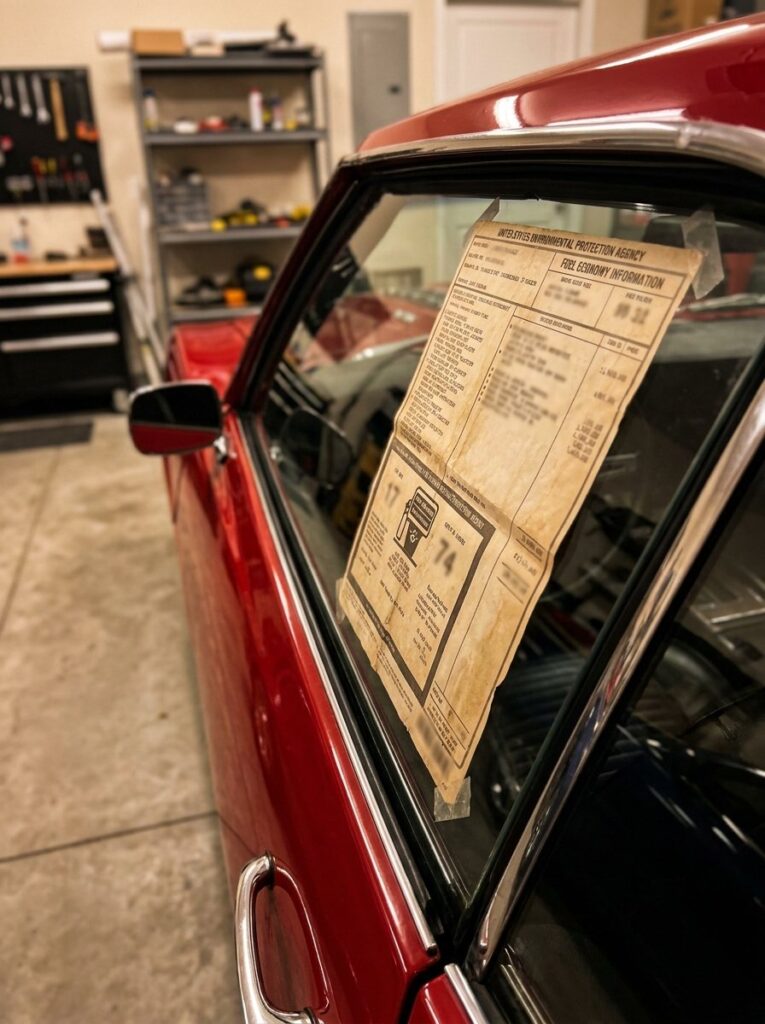
When a Missing Window Sticker Can Be Recreated
Original window stickers were never designed to survive for generations. Many were removed at delivery and immediately discarded. Others faded, tore or disappeared as cars changed owners.
Specialists can now reproduce certain missing documents using surviving factory information, period templates and original pricing data. Handled honestly, this can restore an important part of a car’s collector car documentation.
One of the best-known names is Marti Auto Works, a major resource for owners of collectible Ford, Lincoln and Mercury vehicles. Its reproduction window stickers are designed to reflect original fonts, paper, layouts, dealer information, option terminology and even midyear pricing changes.
Marti Auto Works also offers different levels of vehicle reports and production statistics for eligible Ford Motor Company products. Depending on the model and year, these reports can identify factory equipment and show how unusual a particular combination may be.
That can be especially valuable for Mustangs, Cougars and other performance models where a rare drivetrain, paint color or option package can influence desirability.
A reproduction is not the original document that accompanied the car, however. It remains a later recreation and should always be described that way.
A Window Sticker Is Not the Same as a Build Sheet
The terms are sometimes used interchangeably, but window stickers and build sheets served different purposes.
A window sticker, also known as a Monroney label on applicable U.S. vehicles, was created for the consumer. It generally listed standard equipment, factory options, suggested retail pricing, destination charges and other required information. Understanding this distinction is essential when assessing collector car documentation.
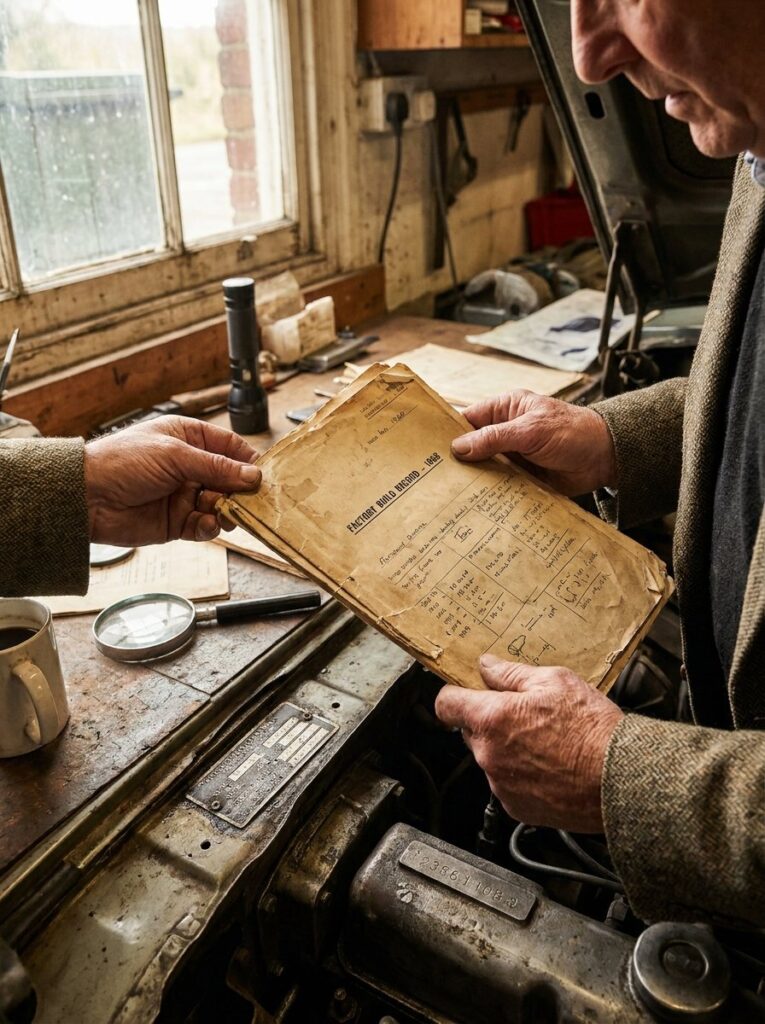
A build sheet was primarily an internal production document. It told assembly workers which components belonged on a particular vehicle.
Depending on the manufacturer, similar documents may be called:
- Broadcast sheets
- Production orders
- Chassis records
- Data cards
- Factory ledgers
- Kardex records
- Build cards
- Vehicle specification reports
The terminology changes from one marque to another, but the central question remains the same: What does the surviving factory record say about this specific car?
Factory Records Are Becoming Part of the Ownership Experience
Automakers have increasingly recognized that owners want more than a decoded VIN. These programs are quietly reshaping how collector car documentation is created and valued.
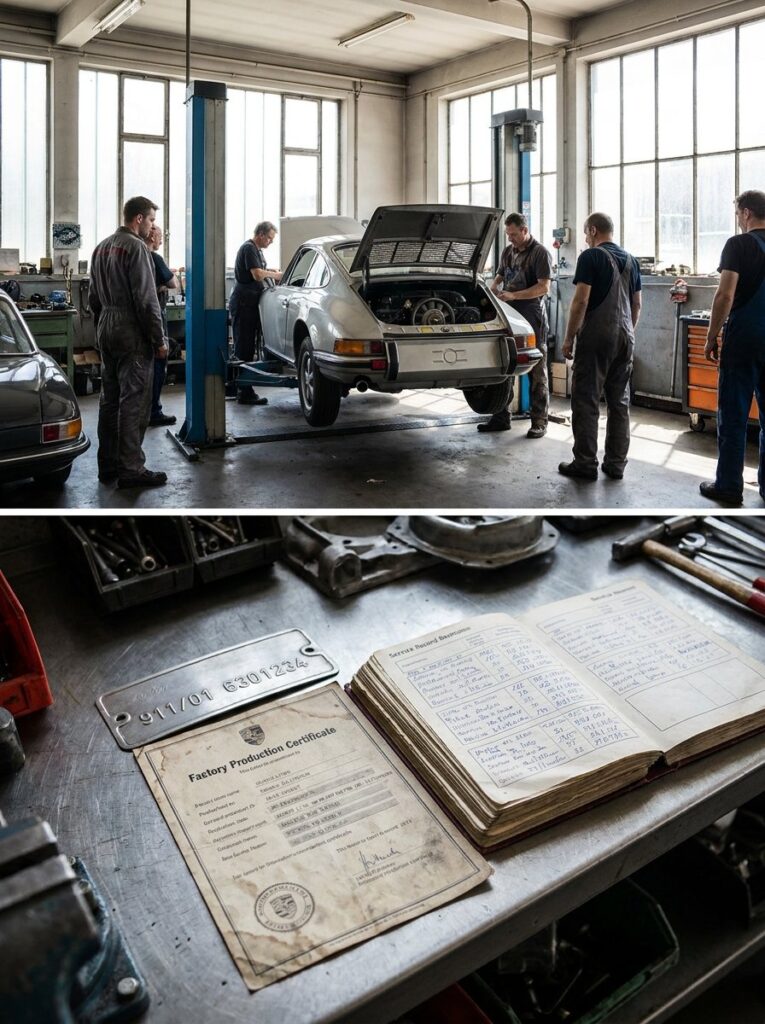
Porsche, for example, offers multiple documentation services for qualifying vehicles. A Porsche Production Specification can provide information such as original colors, optional equipment, engine and transmission type, production completion date and, when available, the original suggested retail price.
Its more extensive Classic Technical Certificate combines archived production information with an inspection of the vehicle as it exists today. The program can record the engine and transmission numbers presently installed and compare them with original Porsche records. Both options strengthen a car’s collector car documentation considerably.
That distinction is important. One document reports what the factory built. The other helps examine whether major components currently in the vehicle correspond with those records.
Ferrari takes the concept further through Ferrari Classiche. For eligible cars, the certification process can examine the vehicle and its major components to determine whether they conform to original factory specifications. Ferrari describes the certification as confirming the authenticity and origin of the car’s components.
For owners, this is far beyond ordering a decorative replacement window sticker. It is a formal process that can require extensive research, inspection and, in some cases, corrective work.
British Classics Have Their Own Paper Trail
Owners of British classics may be able to obtain certified production information through the British Motor Industry Heritage Trust. For these cars, such certificates are a cornerstone of credible collector car documentation.
The archive holds original factory records associated with numerous historic British manufacturers, including Austin, MG, Morris, Rover, Triumph and other former British Motor Corporation and British Leyland marques.
Where records survive, a Heritage Certificate can show details such as:
- Build date
- Dispatch date
- Engine or body number
- Original color combination
- Factory-installed equipment
- Delivery destination
The amount of information varies because not every factory ledger was equally detailed. Still, the certificate is based on a vehicle’s entry in an original factory record—not merely a modern VIN-decoding database.
Similar archive and heritage services exist for marques including Jaguar, Daimler, Aston Martin, Mercedes-Benz, BMW and Alfa Romeo, although record availability and ordering procedures differ.
Manuals, Service Books and Tools Also Matter
Not every valuable item in a collector car’s history file came from the assembly line. Even so, this material forms an important layer of collector car documentation.
The original book package may have included:
- Owner’s manual
- Warranty booklet
- Service-record book
- Dealer directory
- Radio instructions
- Supplemental model guide
- Leather or vinyl document wallet
Original tools, keys, luggage, tire gauges, emergency equipment and delivery accessories can also contribute to a vehicle’s completeness.
For modern exotic cars, a stamped service book or documented dealer history can be especially significant. For older vehicles, original shop manuals, parts catalogs and assembly manuals may help a restorer determine how the car should have been constructed before decades of repairs and modifications changed it.
A manual alone may not dramatically change a car’s value, but a complete collection of correct books, tools and records can distinguish an unusually well-preserved example from an otherwise comparable car. In practice, this completeness is what elevates ordinary paperwork into genuine collector car documentation.
Does Documentation Increase a Classic Car’s Value?
Documentation can increase buyer confidence and may improve a vehicle’s marketability, but its financial effect depends on the car and the importance of the information being confirmed. Broadly, complete collector car documentation tends to widen the pool of serious buyers.
A reproduction window sticker for an ordinary production model may add presentation value without significantly changing the sale price. Buyers still tend to appreciate seeing complete collector car documentation, whatever its effect on price.
The stakes become higher when documentation supports:
- A rare factory engine or transmission
- An unusual paint-to-sample color
- A limited-production package
- Competition or celebrity history
- An original matching-number drivetrain
- Continuous ownership or maintenance history
- A recognized factory certification
Documentation is most powerful when it confirms something desirable that can also be supported through physical inspection and other independent records.
Paperwork should strengthen the evidence—not replace it.
Documentation Can Also Reveal Problems
The same records that support a car’s history can expose inconsistencies. Reviewing collector car documentation carefully is the best way to catch these red flags early.
A build sheet may show that the vehicle left the factory in a different color. A production record may identify another engine number. A service invoice might reveal mileage that conflicts with the odometer. A previous auction listing could describe damage or restoration work omitted from the current presentation.
That does not necessarily make the car undesirable.
Collector cars live long lives. Engines fail, colors change and bodywork gets repaired. What matters is whether those changes are understood, reflected in the valuation and disclosed accurately. This is exactly why thorough collector car documentation is so valuable to buyers.
The greater danger is not a replacement component. It is a replacement component presented as original.
Reproduction or Forgery? Disclosure Makes the Difference
There is nothing inherently wrong with a reproduction window sticker, recreated build sheet or replacement manual. The key is that any such item should be disclosed and clearly separated from original collector car documentation.
A high-quality reproduction can:
- Replace a missing display item
- Help explain a car at shows
- Guide a restoration
- Preserve a deteriorating original
- Make factory equipment easier to understand
The problem begins when a later reproduction is intentionally represented as an original artifact.
Sellers should clearly identify whether a document is:
- Original to the vehicle
- An original period replacement
- A later factory-issued record
- An official heritage certificate
- A licensed reproduction
- A privately reconstructed document
- A generic facsimile
Extra caution is necessary with VIN plates, data tags, stamped service books and identification labels. Altering or replacing regulated vehicle identifiers can create serious legal and ownership concerns.
A reproduction should make a vehicle easier to understand—not create a history it never had.
How Should Owners Research a Collector Car?
Start with the car itself.
Photograph and record every relevant identification number before ordering reports or beginning a restoration. Depending on the vehicle, that may include: Careful notes here become the foundation of trustworthy collector car documentation.
- VIN or chassis number
- Body number
- Engine number
- Transmission number
- Trim or data plate
- Factory option label
- Date-coded components
- Existing books and service records
Next, contact the manufacturer’s heritage department or official archive. After that, consult a respected marque specialist, owners’ club or model registry. Each step adds another layer to the vehicle’s collector car documentation.
Third-party VIN reports can be useful, particularly for newer vehicles, but an automatically generated option list is not the same as a certified factory record.
The best research combines archived information with a physical inspection and a documented ownership trail.
Preserve the Paper Before It Disappears
Many original automotive documents are more fragile than the cars they describe, so preserving collector car documentation should be a priority for every owner.
Ink fades. Thermal-paper service receipts turn blank. Old build sheets crumble when removed from beneath a seat. Photographs are separated from the names and dates that once gave them meaning. Protecting collector car documentation from these threats preserves the value it represents.
Owners should scan important documents at high resolution, photograph both sides and maintain multiple digital backups. Original materials should be stored in archival sleeves away from moisture, sunlight and extreme temperatures.
Never discard an old invoice simply because it looks insignificant. A routine repair bill may contain the date, mileage, owner’s name or shop information that eventually connects two missing chapters in the car’s history.
The Story Is Part of the Car
A collector car is not only metal, leather, paint and mechanical engineering. It is also the accumulated record of where the car was built, who ordered it, how it was equipped and what happened after it left the showroom. Seen this way, collector car documentation is part of the car itself.
Marti Reports, Porsche production records, Ferrari Classiche certification and British Heritage Certificates are different tools serving different parts of the market. Each reflects the same growing realization: Whatever the marque, the goal is the same: complete, credible collector car documentation.
The story surrounding a significant automobile deserves to be preserved along with the automobile itself.
A perfect binder cannot transform an ordinary car into an important one. But when the machine is rare, authentic and historically significant, the right documentation can make its story clearer, more credible and much harder to lose.
Frequently Asked Questions
What is collector-car provenance?
Collector-car provenance is the documented history of a vehicle, including its factory configuration, ownership, maintenance, restoration, competition use and other historically relevant events.
Can I obtain a replacement window sticker for a classic car?
Replacement or reproduction window stickers are available for many vehicles, but coverage depends on the manufacturer, model year and availability of factory data. Some are recreated from original records, while others are generated from decoded vehicle information.
Is a Marti Report an official Ford document?
A Marti Report uses licensed Ford production data for supported Ford, Lincoln and Mercury vehicles. Marti Auto Works also produces researched reproduction window stickers and other documentation for eligible vehicles.
What is the difference between a build sheet and a window sticker?
A build sheet was generally used during vehicle assembly to identify the components and options required for a particular car. A window sticker was a consumer-facing label listing standard equipment, options, pricing and other sales information. Together, these papers are central pieces of collector car documentation.
Does a heritage certificate prove that a car is matching numbers?
Not always. Many heritage certificates report the numbers recorded when the car was built but do not physically inspect the components currently installed. Programs involving an in-person technical inspection may provide additional verification.
Should a reproduction window sticker be disclosed?
Yes. A reproduction should always be clearly represented as a later recreation rather than the original document delivered with the vehicle.
What paperwork should come with a collector car?
Ideally, the file should include factory records, ownership documents, service invoices, restoration records, manuals, warranty books, inspection reports and evidence relating to major components. Availability varies greatly based on the vehicle’s age and history. A well-organized set of collector car documentation makes all of this far easier to verify.
Editor’s note: Documentation programs, eligibility requirements and available records can change. Owners should confirm current services directly with the relevant manufacturer, archive or specialist. A historical report or reproduction document should not replace a professional physical inspection of a valuable vehicle.