

In a remote corner of southern Sweden, on the grounds of a decommissioned air force base, one of the most unlikely companies in the global auto industry is preparing to do something no boutique hypercar manufacturer has ever done before. Koenigsegg Automotive AB, the Ängelholm-based maker of multimillion-dollar machines like the Jesko, CC850, and Gemera, is laying the groundwork for a potential initial public offering, a move that could fundamentally alter how investors and enthusiasts think about the rarefied world of low-volume hypercar production.
If it happens, it would mark the first time a hypercar manufacturer producing fewer than 100 cars per year goes public. Ferrari and Aston Martin have done it before, in 2015 and 2018, respectively, but both companies sell thousands of vehicles annually. Koenigsegg sells dozens.
The Building Blocks Are in Place
While executives insist no formal timeline has been set, the moves over the past two years tell their own story. Koenigsegg Automotive AB converted into a public limited company last year and welcomed its first institutional investor in 2024, when New York-based Chieftain Capital Management purchased just over 6% of the company for €50 million ($58 million), implying a valuation of roughly $1 billion.
That single transaction transformed Koenigsegg from a privately held passion project into a company with a publicly stated valuation, an institutional shareholder, and the kind of governance structure that public markets demand.
The leadership additions tell an even clearer story. Koenigsegg recently hired Johan Ekdahl as its new chief financial officer, a position he previously held at Volvo. Volvo’s head of legal finance, Rosmarie Söderbom, is now Koenigsegg’s general counsel. Both Ekdahl and Söderbom played important roles in Volvo going public in 2021.
In other words, Koenigsegg has quietly assembled a team that knows exactly how to take a Swedish automaker through the rigors of an IPO. The blueprint exists, and now sits on the shelf at the Ängelholm headquarters.
Investment bankers have reportedly visited the company’s factory over the past year as Koenigsegg gradually explores strategic options.
A Tech Company in a Hypercar’s Body
The most revealing comments may have come from CFO Johan Ekdahl himself. Ekdahl has suggested that investors shouldn’t see Koenigsegg as a traditional automaker but as a hybrid of a tech company and an ultra-luxury brand like Hermès. With low volumes and cutting-edge technology to license, from its Dark Matter electric motor to the FreeValve camless engine, the framing makes sense.
That positioning matters. It signals that Koenigsegg’s pitch to public markets won’t be about car volume or revenue per unit. It will be about intellectual property, engineering uniqueness, and the kind of brand power that allows a small company to charge between $2.8 million and $4 million per vehicle while maintaining a customer waiting list that stretches years into the future.
The numbers reinforce the logic. Koenigsegg delivered 56 cars in 2025, priced between $2.8 million and $4 million per car. The math is staggering: a company producing fewer than 60 vehicles a year is generating revenue numbers that rival much larger boutique manufacturers, with margins that traditional automakers can only dream of.
Explosive Growth Behind the Scenes
What might surprise casual observers is just how much Koenigsegg has expanded in recent years. The Swedish hypercar maker has grown from 150 employees to 850 since 2020, thanks in part to a surge in demand for multi-million-dollar hypercars.
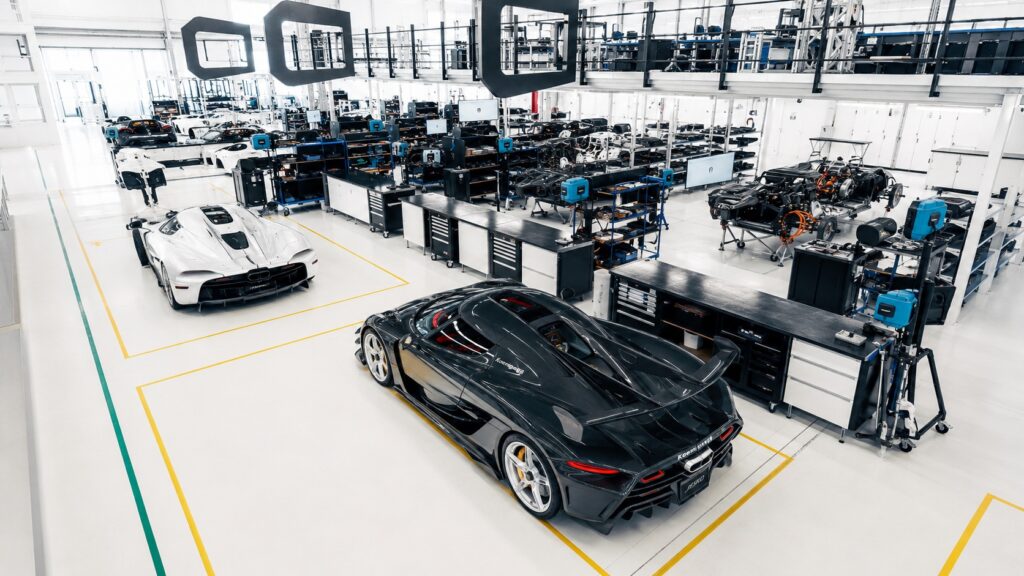
That nearly six-fold increase in headcount has been accompanied by significant physical expansion. When the current expansion projects around Ängelholm are fully completed, Koenigsegg’s footprint will stretch beyond 30,000 square meters, including a new Gemera production facility, warehousing, pre-assembly halls, event spaces, and an experience center designed to bring collectors into the brand’s orbit.
The growth is also driven by necessity. The current wait time for a new Koenigsegg ranges from four years to almost a decade, and the company is working hard to reduce that figure to roughly two years. A healthy injection of serious capital could help.
The Product Lineup Justifying the Expansion
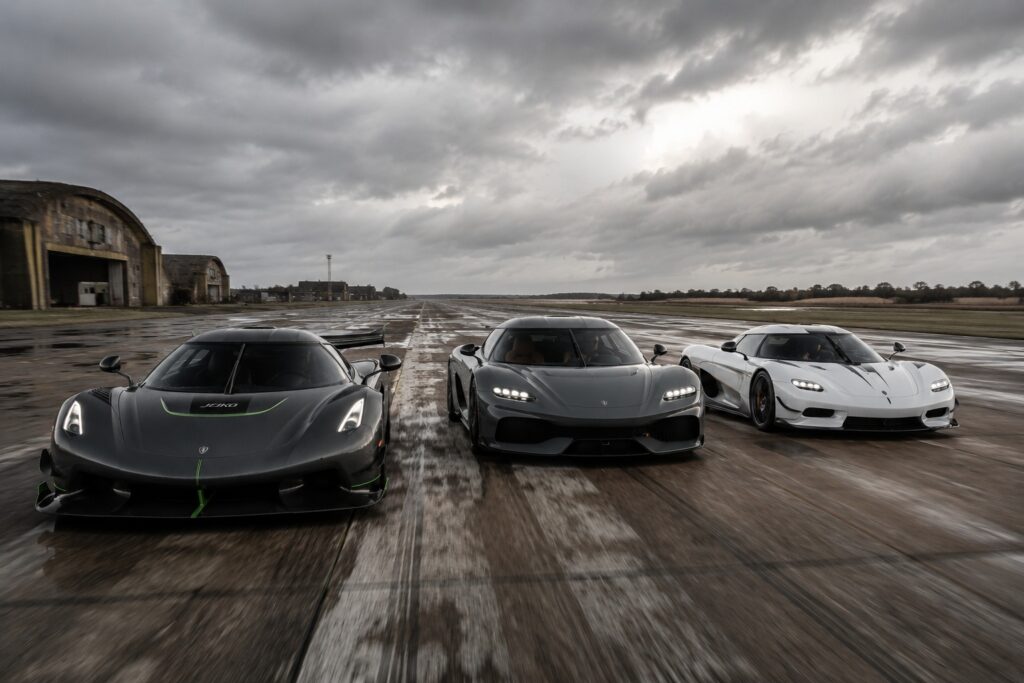
Koenigsegg’s current range is broader than it has ever been. The company produces four distinct machines that stretch the definition of a hypercar in different directions: the Jesko represents the obsession with extreme speed and track capability; the CC850 celebrates the firm’s early design language while introducing a remarkable transmission that can behave like both a manual and an automatic; the Gemera expands the concept into a four-seat grand tourer with electrified power and the radical camless Freevalve combustion engine; and the Sadair’s Spear pushes the brand back toward the racetrack with a street-legal machine built almost entirely around lap-time performance.
A new model is also on the horizon. Christian von Koenigsegg has confirmed the company will introduce something new in the next year to year and a half, after which the order books will reopen.
Notably, that next car will not be electric. Von Koenigsegg has said that the appetite in the market for fully electric cars at this level is extremely low, comparing electric hypercars to “robots” and combustion-powered cars to “animals.” He has drawn a parallel to the watch industry, where mechanical timepieces rebounded after the quartz era because buyers ultimately wanted something hand-built and emotional.
That philosophy puts Koenigsegg on a different trajectory than its closest rival.
The Rimac Contrast
While Koenigsegg explores public markets with a combustion-first strategy, Croatian rival Rimac has charged in the opposite direction. The Bugatti Rimac joint venture has positioned Mate Rimac as one of the most influential figures in the industry, supplying EV technology to Porsche, Aston Martin, and Hyundai while building the all-electric Nevera in extremely limited numbers.
Rimac recently reasserted its electric dominance in the most public way possible. The Nevera R retook the 0-400-0 km/h record from Koenigsegg, completing the run in 25.79 seconds, more than two seconds quicker than the Koenigsegg Jesko Absolut managed last year.
The two companies represent a philosophical fork in the boutique hypercar road. Rimac is betting on electrification and supplier relationships with legacy automakers. Koenigsegg is betting on combustion craftsmanship and proprietary technology that it may eventually license out.
Pagani, meanwhile, has stayed firmly on the artisanal path. The Italian manufacturer recently released the Utopia in 2026 with a seven-speed manual transmission paired to its 800-plus horsepower V12, a direct rejection of the electrification trend and a doubling down on the kind of analog driving experience that defined the company from its earliest Zonda models.
Why Go Public, and Why Now?
The strategic question hanging over the IPO discussion is straightforward: Koenigsegg doesn’t appear to need the money. The company is profitable, its order books are full for years, and its valuation has already been validated by an institutional investor.
COO Halldora von Koenigsegg has addressed the question directly. She has noted that Koenigsegg could continue to finance itself privately, but a broader spread of funding might be prudent for opportunities the company can’t yet foresee. She has emphasized that she and her husband aren’t looking to exit and that an IPO could also let Koenigsegg’s growing family of employees take a stake in the company they help build, motivating current staff and attracting new talent.
Not everyone is convinced. Some industry analysts have noted that going public may not make much sense for Koenigsegg unless it plans a dramatic increase in production.
That tension lies at the heart of the decision. Going public almost always brings shareholder pressure for growth, and growth has historically been the enemy of exclusivity in the hypercar world. The question Christian and Halldora von Koenigsegg are now wrestling with is whether their company can satisfy public market expectations without compromising the qualities that made the brand worth investing in.
A Possible Ferrari Playbook
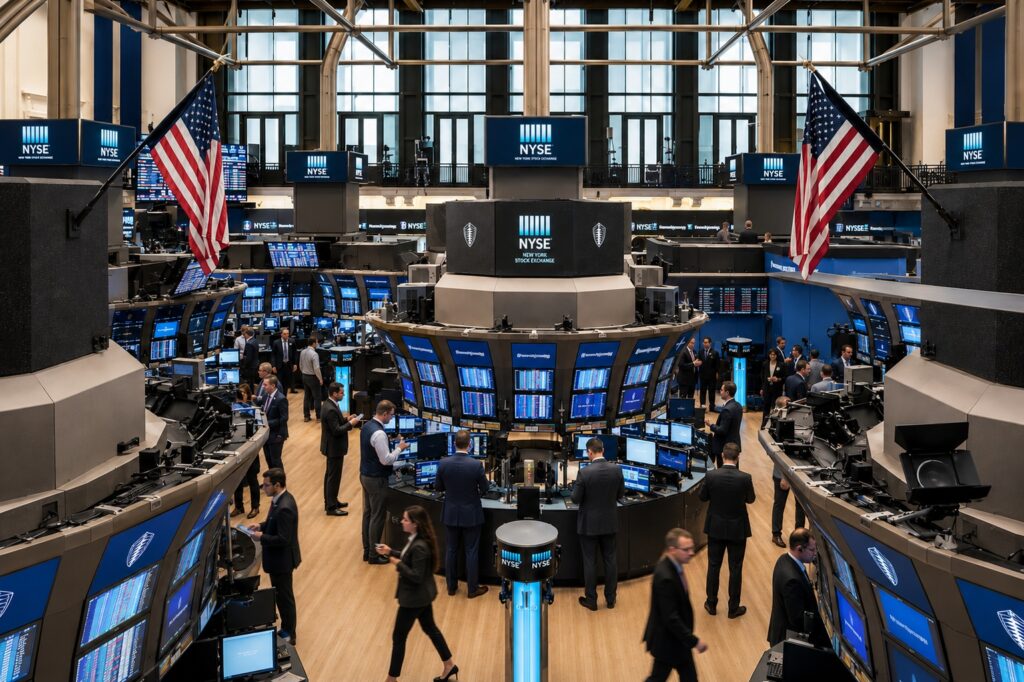
The most obvious comparison is Ferrari, which transformed its IPO into one of the most successful luxury automotive listings in history. Ferrari set its IPO share price at $52, and today the stock trades well north of $300. A similar trajectory for Koenigsegg would provide enormous capital for the kind of measured production expansion the company has signaled it wants, ideally without sacrificing the qualities that make the brand what it is.
But Ferrari sells more than 13,000 cars annually. Koenigsegg, by comparison, is operating at less than half a percent of that scale. Whether public market investors will give a sub-100-car-per-year manufacturer the same luxury-brand premium remains an open question.
What Comes Next
For now, Koenigsegg is keeping its cards close. There is no formal IPO timeline, no announced exchange, and no confirmed share structure. But the structural pieces are aligned: a public limited company designation, a CFO with IPO experience, an institutional shareholder, expanded production capacity, a confirmed pipeline of new models, and a brand story that resonates increasingly with luxury and technology investors alike.
Whether the company ultimately rings the bell on a Stockholm exchange or chooses to remain in the hands of its founder and a small group of investors, the broader signal is unmistakable. Boutique hypercar manufacturing is no longer a curiosity confined to enthusiast magazines. It has become a recognizable asset class, with valuations, growth trajectories, and strategic decisions that look increasingly like those of any other high-end industrial company.
For Christian and Halldora von Koenigsegg, who started this journey on a former Swedish airfield more than three decades ago, the next chapter may be the most consequential one yet. And for the rest of the boutique hypercar world, what happens at Ängelholm over the coming year could set the template for how the next generation of small, engineering-obsessed automakers approaches the question of growth, capital, and independence.
Discover more elite automotive content, market insights, and collector-focused coverage at Exotic Car News.