


Two cars hit the market the same week. The first is a 992-generation Porsche 911 GT3 — Shark Blue, six-speed manual, lightweight buckets, front axle lift, 2,800 miles. It sells in 72 hours, over asking, to a buyer who never saw it in person.
The second is a V12 Vanquish — silver over black, automatic, 9,400 miles, clean history. Fourteen months later it is still sitting in the same showroom corner, three price drops deep, its listing photos now old enough that the dealer has reshot them twice.
Same market. Same week. Same broad category of car. Completely different outcomes.
The gap between these two cars isn’t luck, and it isn’t a mystery. Exotic car market liquidity — how fast a given car converts to cash at a fair price — follows patterns that are consistent, measurable, and largely knowable before a car ever gets listed. Here is how it actually works.
Key takeaways
- Exotic car market liquidity is predictable: correctly priced, well-specced exotics typically sell within 2–4 weeks; mispriced or thin-demand cars commonly sit 6–14 months.
- Spec (color, transmission, options) determines most of a car’s liquidity before it is ever listed.
- The first 30 days of a listing generate the majority of serious buyer interest.
- Mileage is priced in bands — under 5K, under 10K, under 20K — and crossing a threshold by a few hundred miles costs real money.
- Porsche GT products, the Huracán STO and Performante, and well-specced Ferrari V12s are the most liquid exotics; V12 grand tourers and muted-spec automatics are the slowest.
Spec Is Destiny
By the time an exotic reaches the market, most of its liquidity has already been decided — at the factory, years earlier, by whoever configured it.
Color is the most visible factor. Bold, correct-for-the-model colors move. A Verde Mantis Huracán or a Shark Blue GT3 photographs well, stands out in search results, and signals an owner who ordered the car with intent. Silver-over-black and grey-over-grey cars, by contrast, compete against dozens of identical listings and give buyers no reason to pick one over another. In a market where paint-to-sample and rare interiors are actively driving premiums, blending in is expensive.
Transmission is the second axis. Manual-equipped exotics from the last two decades carry a durable liquidity premium — not just in price, but in speed of sale. The buyer pool for a manual Gallardo or a stick-shift 911 is smaller in absolute terms but far more motivated, and motivated buyers move fast.
Options round out the picture. Carbon ceramic brakes, front lift, factory carbon packages, and desirable wheel options all shorten time-to-sale. Skipped options do the opposite. A GT car ordered without the seats and brakes the model is known for reads as a compromise, and compromised cars wait for compromised buyers.

The uncomfortable truth for sellers: you cannot fix spec. A car configured wrong in 2017 will still be configured wrong in 2027. All you can do is price around it.
The Pricing Psychology Gap
The second-biggest liquidity killer is the gap between what sellers believe and what the market knows.
Sellers anchor to three numbers: what they paid, what they’ve spent, and the highest comparable ask they can find online. None of these is the market price. Buyers — especially serious ones — anchor to recent sold results, and in the exotic space, serious buyers are unusually well informed. They run alerts. They track auction results. They know what the last five examples of a given spec actually traded for, often to the dollar.
This gap is where exotic car market liquidity is won or lost. A car priced at or just under recent solds gets discovered immediately by every buyer with an active alert, generates competing interest in the first week, and frequently sells at or above ask. A car priced 10–15% over market to “leave room for negotiation” doesn’t generate lowball offers — it generates silence. Buyers filter by price. An overpriced car simply never appears in the searches of the people most likely to buy it.
The first 30 days of a listing are the entire game. That is when the car is new, when alert-driven buyers see it, and when urgency is highest. A car that survives its first month unsold enters a different category: buyers who saw it earlier assume something is wrong, and every subsequent price drop reads as confirmation rather than opportunity. This is how a mispriced car becomes a stale car, and stale cars are the ones that sit for a year.
Mileage Bands and the Cliff Points
Mileage bands are one of the sharpest edges of exotic car market liquidity. Buyers don’t price mileage linearly — they price it in bands, and the boundaries between bands behave like cliffs.
The thresholds that matter most are under 5,000 miles, under 10,000, and under 20,000. A car with 4,800 miles and a car with 5,300 miles are functionally identical machines, but they live in different search filters, different mental categories, and different price brackets. The same is true at 9,800 versus 10,400. Sellers who cross a threshold by a few hundred miles have often given up more value than an entire year of careful ownership preserved.
Which band matters depends on the model’s culture. GT3s and other driver-focused cars are expected to be driven; a 15,000-mile example with track-day records can be an easier sell than a 900-mile garage queen with flat-spotted tires and a dead-battery history. Limited-production collectibles run the opposite direction — delivery-mileage examples command the premium, and every mile is a withdrawal. That collector mindset is only intensifying as a new generation reshapes the collector car market.
The liquidity insight: cars sitting comfortably inside a band sell faster than cars sitting just above a threshold. A buyer choosing between a 10,200-mile car and a 9,600-mile car at similar money will take the lower number nearly every time — not because 600 miles matters mechanically, but because the resale math already lives in their head.
Documentation Is a Liquidity Multiplier
In exotic car market liquidity terms, documentation is a multiplier: two identical cars at identical prices will sell at very different speeds if one has a complete story and the other has gaps.
Full service history from marque specialists or dealers, a clean and explainable ownership chain, verifiable accident-free status, original window sticker, both keys, books, tools, and records of major services — none of these adds horsepower, but together they remove the single biggest source of buyer hesitation: the fear of the unknown. In a six-figure private transaction, hesitation is what kills deals. Every unanswered question gives a buyer a reason to wait, and waiting buyers drift to the next listing.
The highest-liquidity sellers treat documentation as a product in itself: an organized binder or digital folder, a pre-purchase inspection already completed and shareable, and receipts for the expensive scheduled services buyers fear most. A recently completed major service on a V12 or a fresh clutch on a single-clutch automated manual can be the difference between a 10-day sale and a 6-month sit, because it converts a buyer’s biggest projected expense into a solved problem.
The Exotic Car Market Liquidity Map
Beyond any individual car’s spec and story, the model itself sets the baseline. Some nameplates are simply liquid; others are not, and no amount of presentation changes that.
The fast movers. Porsche GT products lead the category — GT3s, GT3 Touring models, and GT4 RSs trade with near-commodity speed because the buyer pool is deep, global, and standing by with funds. Ferrari’s V12 flagships in the right spec, the Lamborghini Huracán STO and Performante, and low-mileage examples of anything with a fixed production number and a waiting list behind it all share the same profile: more qualified buyers than available cars at any given moment — the deepest end of exotic car market liquidity.
What the fast movers have in common is structural, not stylistic. Deep buyer pools — the same dynamic that separates the strong performers in the used performance market. Strong enthusiast communities that generate constant demand. Depreciation curves that have either flattened or inverted, which removes the buyer’s fear of catching a falling knife. And clear, well-established market pricing that makes buyers confident they aren’t overpaying.

The slow movers. Aston Martin’s V12 grand tourers, automatic rear-wheel-drive Huracáns in muted colors, older Bentley Continental GTs, and depreciating four-seat exotics generally occupy the other end. These are often magnificent cars — the Vanquish is one of the great GT shapes of its era — but their buyer pools are shallow, their depreciation curves are still steep, and their maintenance reputations frighten exactly the marginal buyer they need to attract.
A slow-mover listing isn’t waiting for a price; it’s waiting for a person. The distinction matters enormously for strategy. Fast movers can be priced to market and sold on schedule. Slow movers require either aggressive pricing that acknowledges the thin demand, or the patience to wait for the one buyer who has wanted that exact car for years.
What Sellers Can Actually Control
Spec is fixed and the model’s buyer pool is what it is. But four levers remain fully in the seller’s hands, and together they routinely separate a fast sale from a long one.
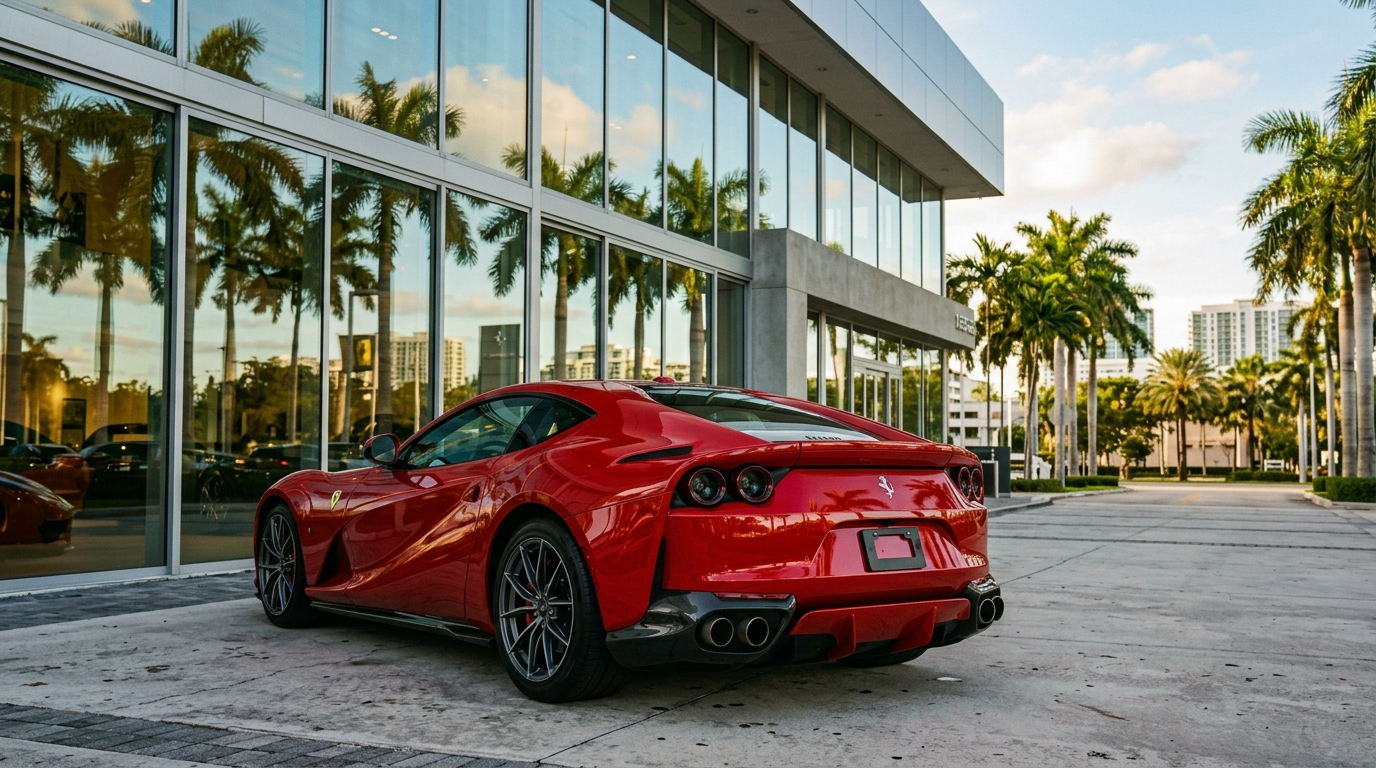
Photography. Exotic buyers shop remotely and decide emotionally. Professional photography — proper light, clean location, detail shots of the options that matter, honest documentation of any flaws — is the cheapest liquidity investment available. Listings shot on a phone in a driveway signal a seller who doesn’t understand the market, and buyers price that signal in.
Platform. Where a car is listed determines who sees it. A specialist marketplace with a qualified exotic audience produces fundamentally different results than a generalist classified site where the listing competes with commuter cars. Dedicated platforms like ExoticMotors.com exist precisely because of this gap — buyers browsing a curated exotic marketplace arrive qualified, with alerts set and financing arranged, which is exactly the audience a well-priced car converts in its critical first 30 days.
Inspection readiness. Offering a completed pre-purchase inspection up front collapses the buyer’s timeline. Every serious exotic buyer will want a PPI; the seller who has already done one removes a two-week delay and signals total confidence in the car.
Timing. The exotic market has seasons. Tax-refund season and spring consistently bring buyers out; listing a convertible in November or fighting for attention during the holidays adds weeks for no benefit. Sellers who can choose their window should.
Exotic Car Market Liquidity Is Knowable
The exotic that sells in three days and the one that sits for fourteen months were never really in the same market. One entered with the right spec, priced against real solds, inside a clean mileage band, with a complete story, on a platform full of buyers already looking for it. The other entered hoping.
For buyers, this map is just as useful in reverse. The most liquid cars cost more going in but cost far less to exit — and in a category where most owners hold for two to four years, exit cost is the real cost. The slow movers, meanwhile, are where the genuine value hides for anyone buying to keep rather than to trade.
Exotic car market liquidity isn’t about luck or timing. It comes down to a handful of things that can be checked before the car is ever listed: how it was optioned, how it’s priced against what has actually sold, where its mileage sits, how complete its paperwork is, and whether it’s listed where serious exotic buyers actually shop. Get those right and the market responds in days. Get them wrong and the market simply moves on without you. For sellers ready to put those principles to work — and buyers hunting the liquid end of the map — the current inventory at ExoticMotors.com is a good place to see how the fast movers are specced and priced in real time.
How long does it take to sell an exotic car?
Exotic car market liquidity varies widely: correctly priced, in-demand exotics with strong specs typically sell within 2–4 weeks, and the most sought-after models can sell in days. Overpriced cars, undesirable specs, or thin-demand models commonly sit for 6–14 months. The first 30 days of a listing generate the majority of serious buyer interest.
Why won’t my exotic car sell?
The most common causes are pricing above recent sold comparables, an unpopular color or transmission spec, mileage just above a key threshold (5K, 10K, or 20K miles), incomplete service documentation, or listing on a platform without a qualified exotic-buyer audience.
Which exotic cars sell the fastest?
Porsche GT models (GT3, GT4 RS), Lamborghini Huracán STO and Performante, and well-specced Ferrari V12 models are among the most liquid exotics, due to deep buyer pools and flat or appreciating value curves.
Does mileage matter more on some exotics than others?
Yes. Limited-production collectibles are most sensitive, where delivery-mileage examples command large premiums. Driver-focused cars like GT3s tolerate mileage well when supported by full service records.