

It isn’t a trim level or a sub-brand. Bentley Supersports is the name the company brings out only when it builds something unusually fast, unusually light — or both.
Ask most people what a Bentley is and you’ll hear some version of “fast, plush and heavy.” Supersports is the badge Bentley uses when it wants to argue with that last word.
What Bentley Supersports means
Supersports is a recurring performance nameplate, not a model you can buy every year. Bentley has used it on just four generations of cars in a century. The three modern ones are all extreme versions of the Continental GT, the brand’s two-door grand tourer, and each was the sharpest member of its generation.
If Mercedes-AMG comes to mind, you have the general idea of “the performance version.” The comparison stops there: AMG is a full division with its own lineup, while Supersports appears only when Bentley has a specific idea worth building.
Where the name comes from
The first Super Sports (two words back then) arrived in 1925 as a shorter, lighter, more powerful take on the 3 Litre. Bentley says it was the first Bentley capable of exceeding 100 mph, and only 18 were built. Speed and scarcity: the template was set.
2009: four engineers and a hunch
The name returned on the first-generation Continental GT. According to Bentley’s launch material, it began as an under-the-radar project by four engineers curious about what a lighter, more powerful Continental could do. Over roughly two years it grew into an official program.
The result, announced in February 2009 and on sale that autumn, made 621 bhp, sent most of its torque to the rear wheels, wore carbon-ceramic brakes as standard and topped out at 204 mph. It was also the first two-seat Continental: the rear seats gave way to a luggage deck, and the front seats got carbon-fiber backs. Its big vertical intakes and twin hood vents weren’t decoration — the extra boost needed more cooling air.
2017: the power play
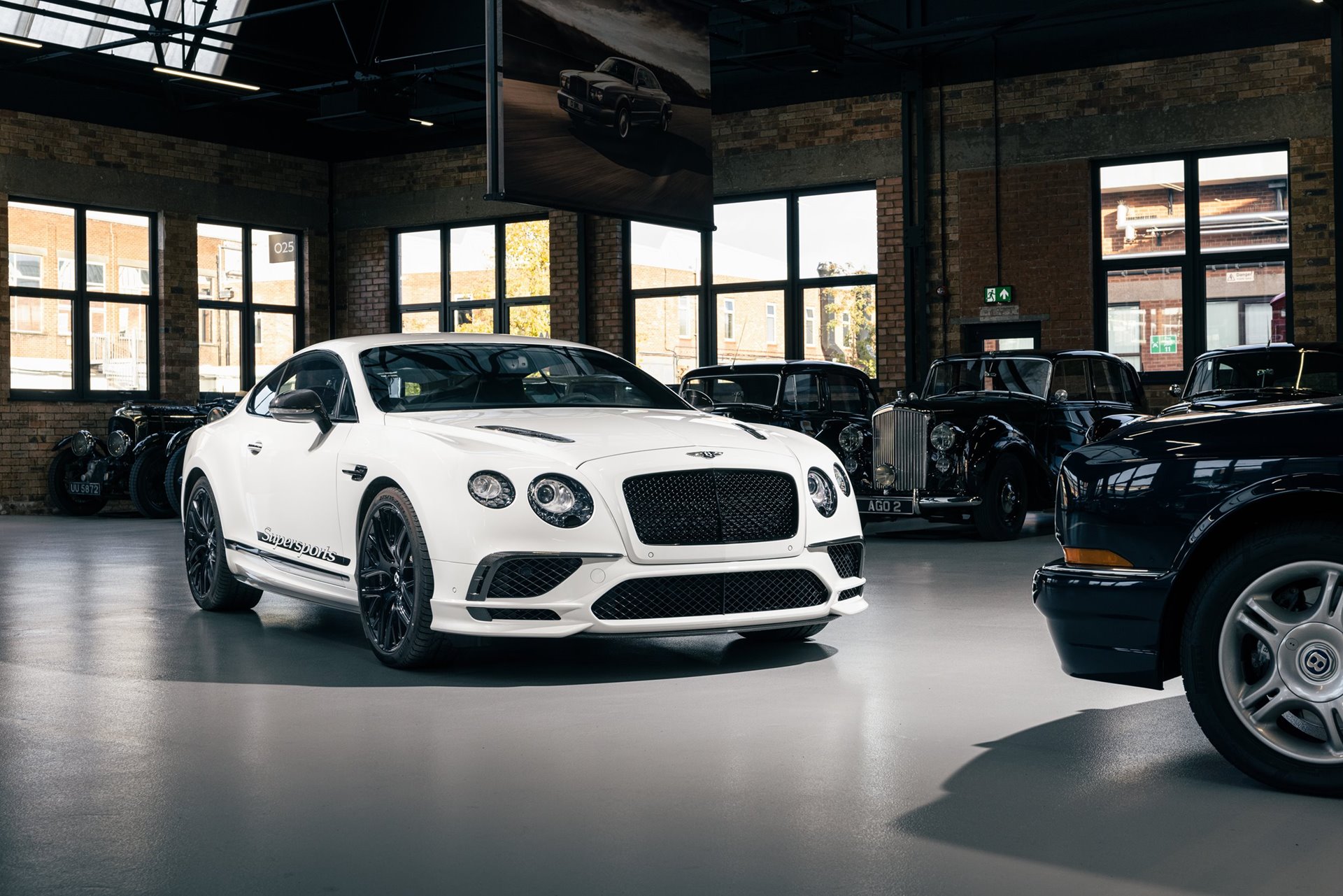
The second modern Supersports, revealed in January 2017, near the end of the second-generation GT’s run, went the other direction. It kept four seats (a convertible was offered too), pushed its W12 to 700 hp and 750 lb-ft, and Bentley claimed its 209-mph top speed made it the world’s fastest four-seater. A carbon-fiber splitter and diffuser, plus hood vents, set it apart. Bentley built 710 — one for each metric horsepower.
Today: Project Mildred
The newest Supersports, revealed in November 2025, started in September 2024, when a small Bentley engineering team asked how a rear-wheel-drive Continental GT under two tonnes might drive. A test mule was on track six weeks later. Chairman and CEO Frank-Steffen Walliser calls it the first project developed start to finish since he joined; the team codenamed it Mildred, after 1920s record-breaker Mildred Mary Petre.
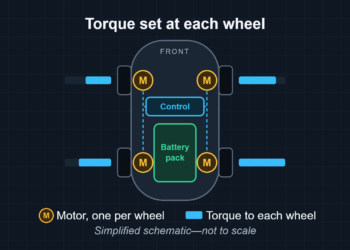
This time the target wasn’t top speed. The hybrid system and front driveshafts are gone, leaving a 657-bhp twin-turbo V8 driving the rear wheels only — the first rear-drive road-going Continental. Bentley says it’s nearly half a tonne lighter than a Continental GT and under 2,000 kg (about 4,400 lb).
It’s a two-seater again, with a carbon-fiber rear-cabin shell where the rear seats were. A carbon roof, the biggest front splitter Bentley has fitted to a road car, dive planes and a fixed rear wing add up to more than 300 kg of extra downforce compared with a Continental GT Speed. And it makes less power than the 2017 car. That’s the point.
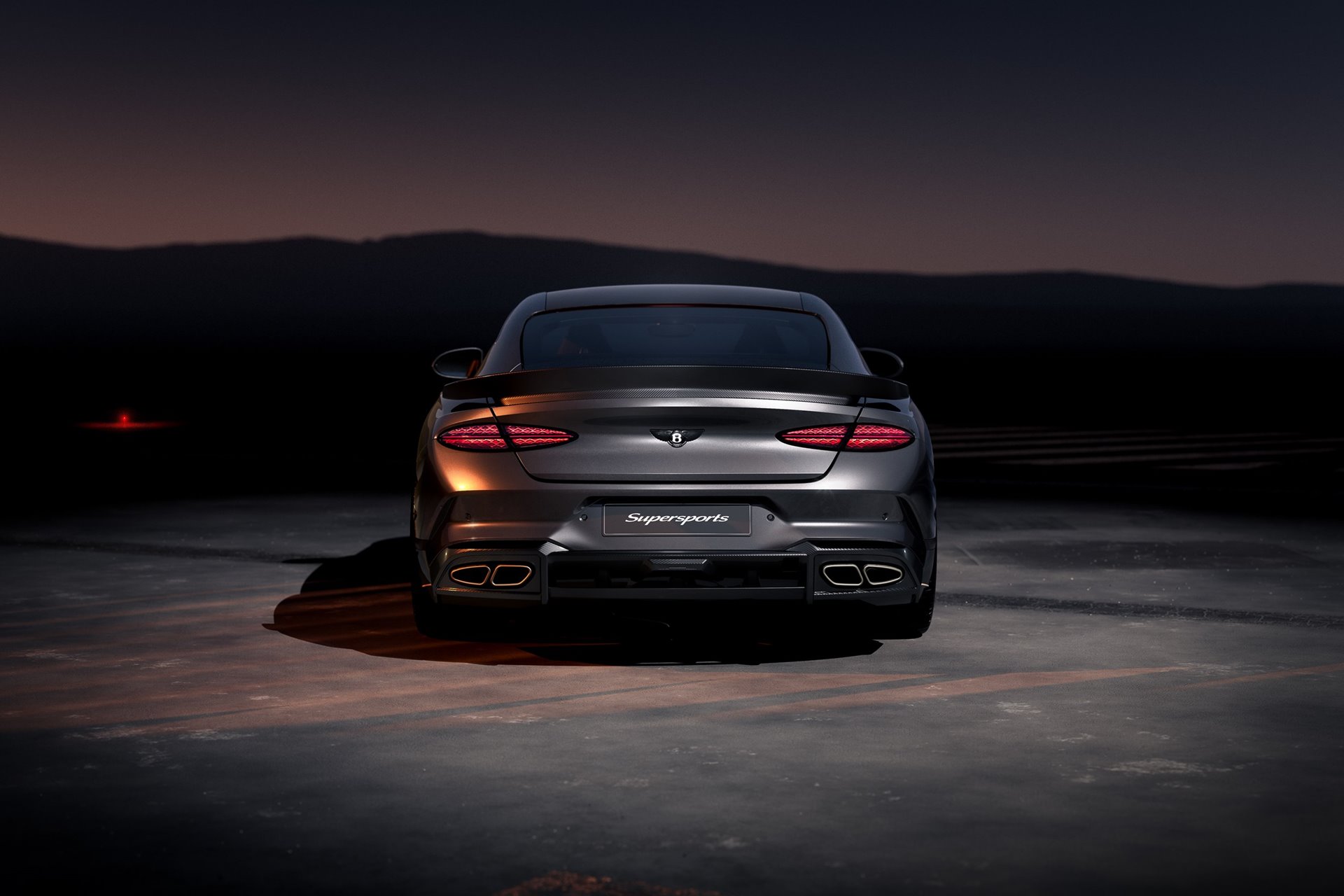
Bentley plans 500 numbered examples, with production starting in late 2026 and first deliveries in early 2027.
So what does the badge mean?
Not a trim. Not a division. Bentley Supersports is what happens when Bentley lets a small group chase one question — more power, less weight, more involvement — and then puts its most historic performance name on the answer. The answer just keeps changing.