

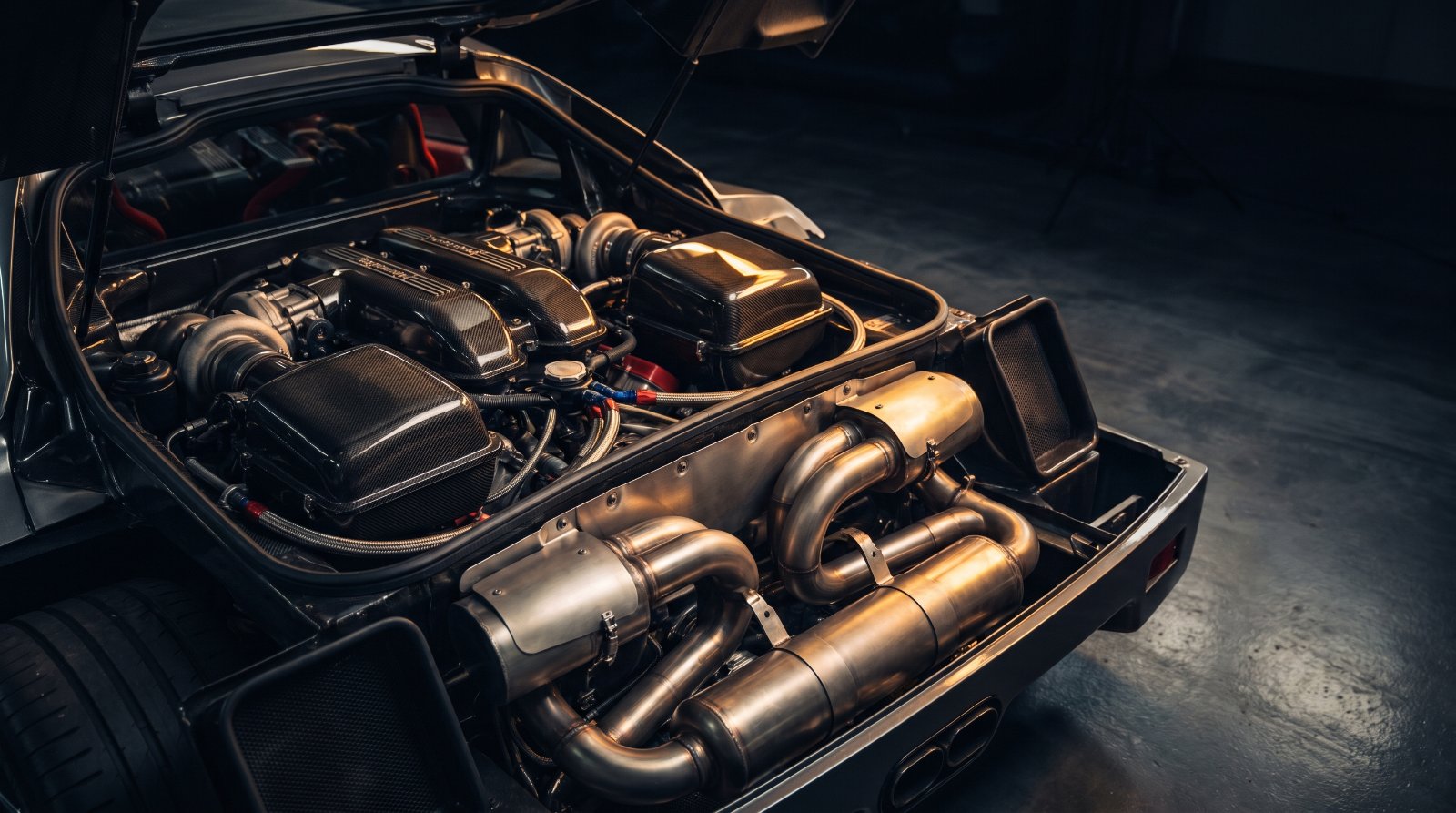
Pop the engine cover on a modern performance car and you’re looking at the visible ten percent of the story. The other ninety percent is liquid. Performance car fluids — somewhere between eight and twelve distinct, purpose-engineered liquids — are circulating, cushioning, cooling, and protecting every moving part of that machine — and each one took decades of racing and laboratory development to perfect.
In short: the essential performance car fluids are motor oil, coolant, brake fluid, transmission and differential fluids, plus a shelf of specialty lubricants — each with a specific job, service life, and manufacturer specification. Here’s the complete tour, from the crankcase to the washer bottle, whether you turn your own wrenches or just want to ask smarter questions at the service desk.
Motor Oil: The Fluid That Does Five Jobs at Once
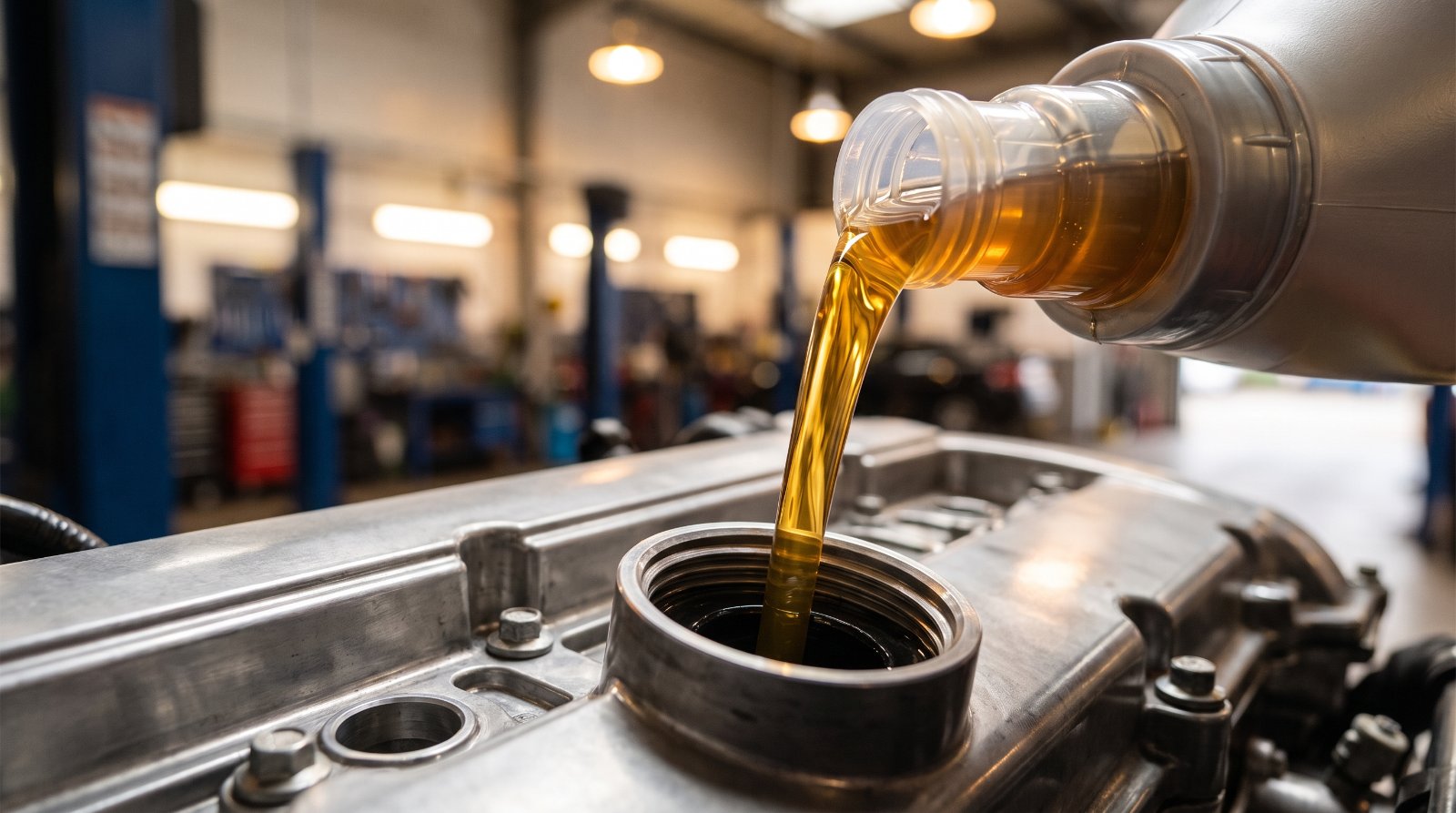
Ask most people what motor oil does and they’ll say “lubrication.” True — but incomplete. Modern engine oil lubricates, cools, cleans, seals, and protects against corrosion, all simultaneously, at temperatures ranging from a frozen morning start to 300°F-plus in the turbo bearings of a hard-driven car.
What Are the Three Types of Motor Oil?
Conventional (mineral) oil is refined directly from crude. It’s inexpensive and fine for low-stress engines, but its molecules are irregular in size and shape, which means it breaks down faster under heat. You will essentially never see it specified for a modern performance car.
Synthetic blend is a mixture of mineral and synthetic base stocks — a halfway house offering some added protection at a modest price premium.
Full synthetic is the standard for every modern performance vehicle, and for good reason. Its uniform, laboratory-built molecules resist thermal breakdown, flow instantly at cold start (when the majority of engine wear occurs), and maintain a protective film at track-day oil temperatures that would shear conventional oil apart. Ester-based synthetics — the chemistry behind many dedicated racing oils — cling to metal surfaces even after shutdown, protecting against dry starts.
What Does 0W-40 Actually Mean?
That number on the bottle is the oil’s viscosity grade, set by the Society of Automotive Engineers (SAE). In a 0W-40, the “0W” is cold-weather flow (“W” for winter) — the lower the number, the faster oil reaches critical components on startup. The “40” is the oil’s thickness at operating temperature. Performance engines often specify oils like 0W-40, 5W-40, or 10W-60 because they need honey-thick film strength when hot, but water-quick flow when cold.
The golden rule: run what the manufacturer specifies, including the approval code (Porsche A40, MB 229.5, VW 502 00, and so on). Those approvals aren’t marketing — they’re the result of engine-specific durability testing. And ignore the 10,000-mile marketing claims if the car sees spirited driving: most specialists recommend 5,000–7,500 miles for street use, and an oil change after every two to three track days, regardless of mileage.
Coolant: More Chemistry Than You’d Think
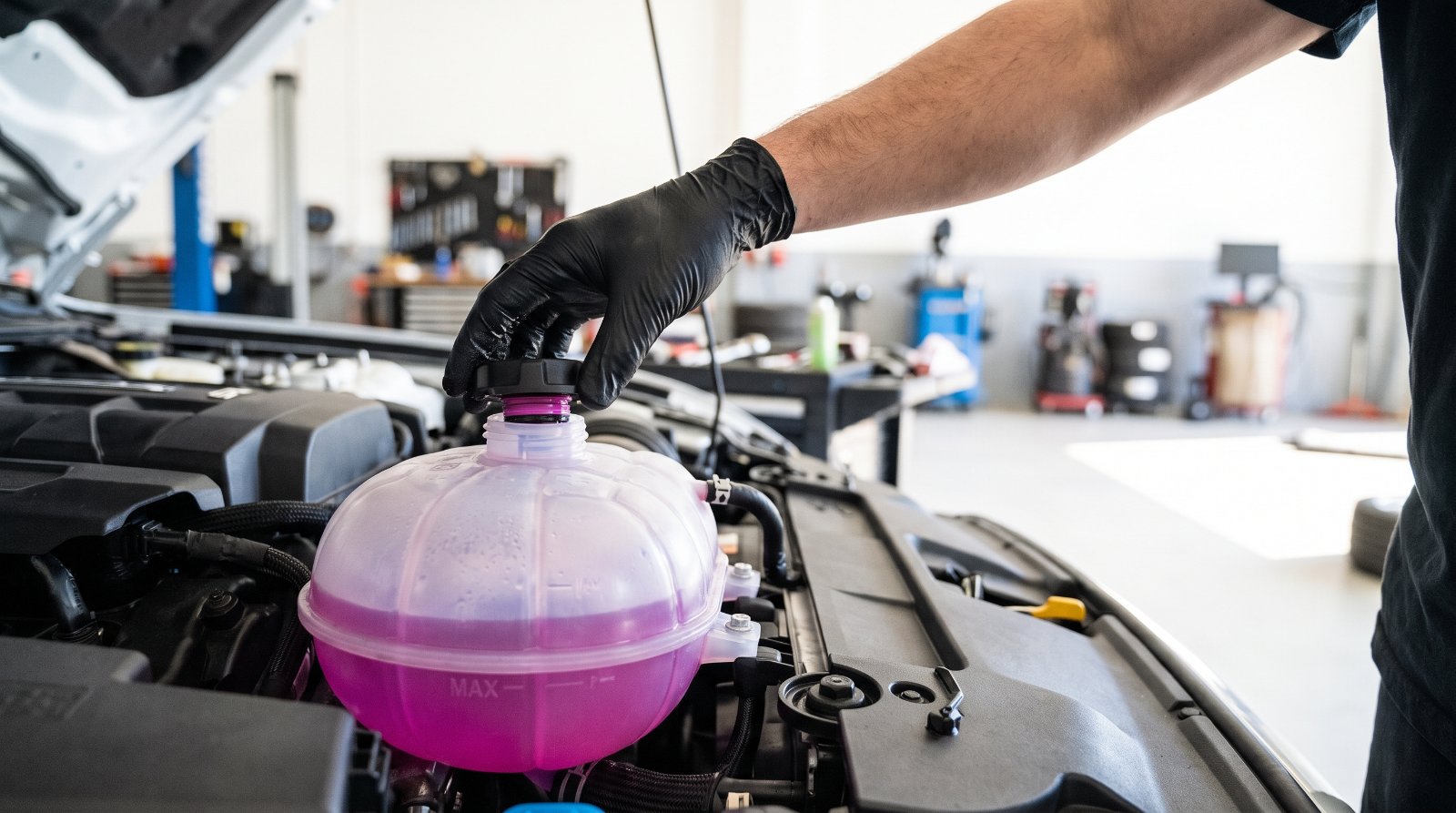
Engine coolant — antifreeze mixed with distilled water — has one headline job: carry combustion heat from the engine to the radiator. But the additive package inside is doing quieter, equally vital work: preventing corrosion in a cooling system that mixes aluminum, magnesium, steel, and rubber; lubricating the water pump; and raising the boiling point far above water’s 212°F.
The three main coolant families:
- IAT (Inorganic Additive Technology) — the old green stuff. Silicate-based, short-lived (2 years / 24,000 miles), and largely obsolete in modern cars.
- OAT (Organic Acid Technology) — long-life coolant, typically orange, red, or dark pink, good for roughly 5 years / 150,000 miles.
- HOAT (Hybrid OAT) — a blend approach used by many German manufacturers, often dyed pink or violet (think the VW/Audi G12/G13 family, or BMW blue).
Two rules matter above all. First, never mix coolant families — incompatible chemistries can gel and clog radiators and heater cores. Second, always dilute with distilled water, not tap water; the minerals in tap water become scale deposits on hot aluminum surfaces. On track cars, many sanctioning bodies ban glycol entirely (it’s dangerously slippery on the racing surface), which is why paddocks run straight water with a surfactant additive instead.
The Hydraulic Workforce: Brake, Steering, and Clutch Fluids
Brake Fluid: The Most Safety-Critical Fluid in the Car
Brake fluid is a hydraulic medium — it transmits the force of your foot to the calipers essentially instantly, because liquid doesn’t compress. Until it boils.
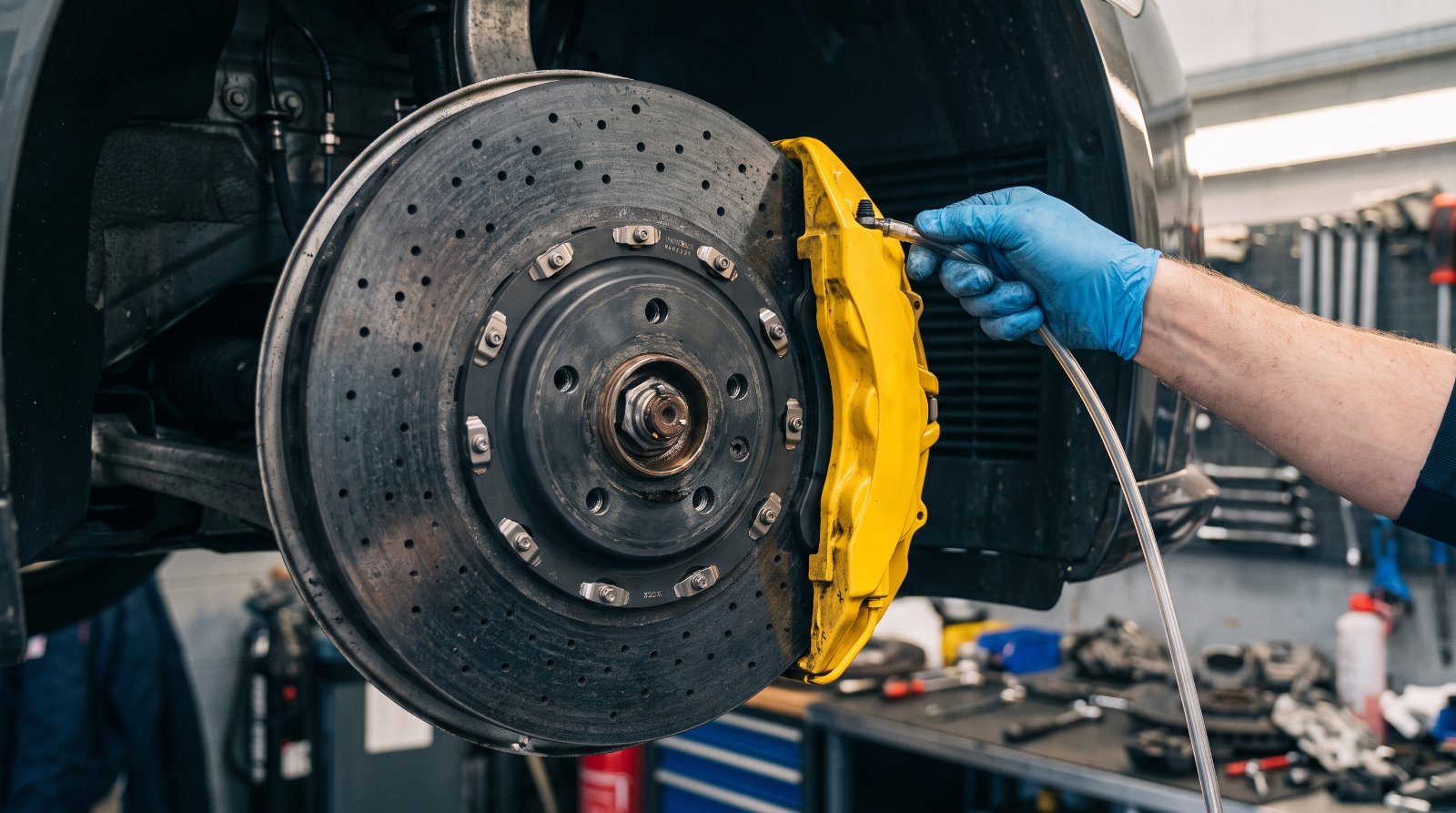
Glycol-ether brake fluids (DOT 3, DOT 4, DOT 5.1) are hygroscopic: they absorb moisture from the atmosphere through hoses and seals. Water in brake fluid slashes its boiling point — a DOT 4 fluid that boils “dry” at 446°F might boil “wet” (about 3.7% water, roughly two years of service) at 311°F. Boiling fluid means vapor in the lines, and vapor compresses — that’s the long, sickening pedal at the end of a hard lap.
- DOT 3: baseline; adequate for commuting.
- DOT 4: the performance standard, with higher dry and wet boiling points. Racing-grade DOT 4 fluids push dry boiling points above 590°F.
- DOT 5.1: glycol-based despite the confusing name, compatible with DOT 3/4, with excellent wet boiling performance.
- DOT 5 (silicone): NOT compatible with the others — reserved for classics and military vehicles, never for ABS-equipped performance cars.
Flush brake fluid every two years minimum — and before every track season if you drive hard. It’s a sub-$100 job that can literally save your life.
Power Steering Fluid — a Disappearing Species
Hydraulic power steering is vanishing (most modern performance cars use electric assist), but where it survives, the fluid is a mineral or synthetic hydraulic oil — often a specialized central hydraulic fluid in European applications, or ATF in others. Dark, burnt-smelling fluid or a whining pump on cold mornings means it’s overdue. Where fitted, hydraulic steering also delivers that magic word — feel — which is precisely why some enthusiasts mourn its extinction.
Clutch Hydraulics: The Forgotten Flush
Manual-transmission cars with hydraulic clutches typically share the brake fluid reservoir. Same fluid, same moisture problem, same two-year flush schedule — and a frequently forgotten one.
Driveline Fluids: Where the Power Actually Goes
Transmission fluid varies wildly by gearbox type. Conventional automatics use ATF; dual-clutch transmissions (PDK, DSG, Ferrari’s DCT) use specialized fluids that must simultaneously lubricate gears and manage wet-clutch friction with surgical precision; manuals use gear oil or, in some cases, a motor-oil-like MTF. Despite widespread “lifetime fill” claims, most independent specialists recommend DCT and ATF services every 40,000–60,000 miles. “Lifetime,” as the joke goes, means the lifetime of the fluid — and its failure can end the transmission’s too.
Differential fluid (gear oil) protects hypoid gears, where teeth slide against each other under extreme pressure. That’s why gear oils (75W-90, 75W-140) carry EP — extreme pressure — additives, usually sulfur-phosphorus compounds that form a sacrificial layer on gear teeth. Limited-slip differentials add friction modifiers to keep clutch packs from chattering; use the wrong fluid and you’ll hear it complaining on every parking-lot turn.
The Specialty Shelf: Fluids and Chemicals the Detail-Obsessed Swear By
This is where enthusiasts — and the true auto aesthetes — separate from mere owners:
- Assembly lube: thick, tacky molybdenum lubricant applied to bearings and cam lobes during engine building, protecting the first critical seconds before oil pressure arrives.
- Anti-seize compound: copper- or nickel-based paste for spark plug threads, hub faces, and exhaust fasteners — anywhere dissimilar metals meet heat.
- Threadlocker: blue for serviceable fasteners, red for permanent — a difference that matters greatly when a caliper bolt is involved.
- Dielectric grease: seals electrical connectors against moisture in cars with more networked computers than a small office.
- Silicone and lithium greases: door hinges, weather seals, sunroof tracks, and the convertible-top mechanisms exotic owners often learn about the expensive way.
- CV joint grease: moly-fortified and packed inside axle boots; a torn boot flinging grease is a warning worth heeding immediately.
- A/C refrigerant and compressor oil: R-1234yf in modern cars, with PAG oil circulating through the system to keep the compressor alive.
- Washer fluid: yes, even this counts — and in winter, the freeze-rated formula protects the reservoir and pump from ice damage.
The Takeaway: Fluids Are the Cheapest Performance Parts You’ll Ever Buy
A modern performance car is a rolling chemistry set — a dozen engineered liquids, each with a specific job, a specific service life, and a specific replacement specification. The pattern across all of them is identical: fresh, correct fluid is dramatically cheaper than the component it protects. A $150 brake flush versus fade into a tire wall. A $400 oil service versus a $40,000 engine. A $500 DCT service versus a five-figure gearbox.
Respect the intervals. Follow the manufacturer’s specifications, not the marketing on the bottle. And when in doubt, change it — no machine has ever been harmed by fluid that was too fresh. Every exotic in our supercars coverage got there on well-kept fluids.
Performance Car Fluids: Frequently Asked Questions
What oil should I use in a performance car?
Always use a full synthetic oil in the exact viscosity grade and manufacturer approval your carmaker specifies (for example, 0W-40 with Porsche A40 or MB 229.5 approval). The approval code matters more than the brand on the bottle.
How often should brake fluid be changed?
Every two years for street cars, because glycol-based brake fluid absorbs moisture that lowers its boiling point. Track-driven cars should get fresh high-performance DOT 4 fluid before each season — or even each event.
Can I mix different types of coolant?
No. Mixing coolant families (IAT, OAT, HOAT) can cause the additives to react, gel, and clog the radiator and heater core. Always use the specific coolant type your manufacturer specifies, diluted with distilled water.
Is “lifetime” transmission fluid really lifetime?
Most independent specialists say no. For dual-clutch and automatic gearboxes in performance cars, a fluid service every 40,000–60,000 miles is cheap insurance against a five-figure transmission failure.