
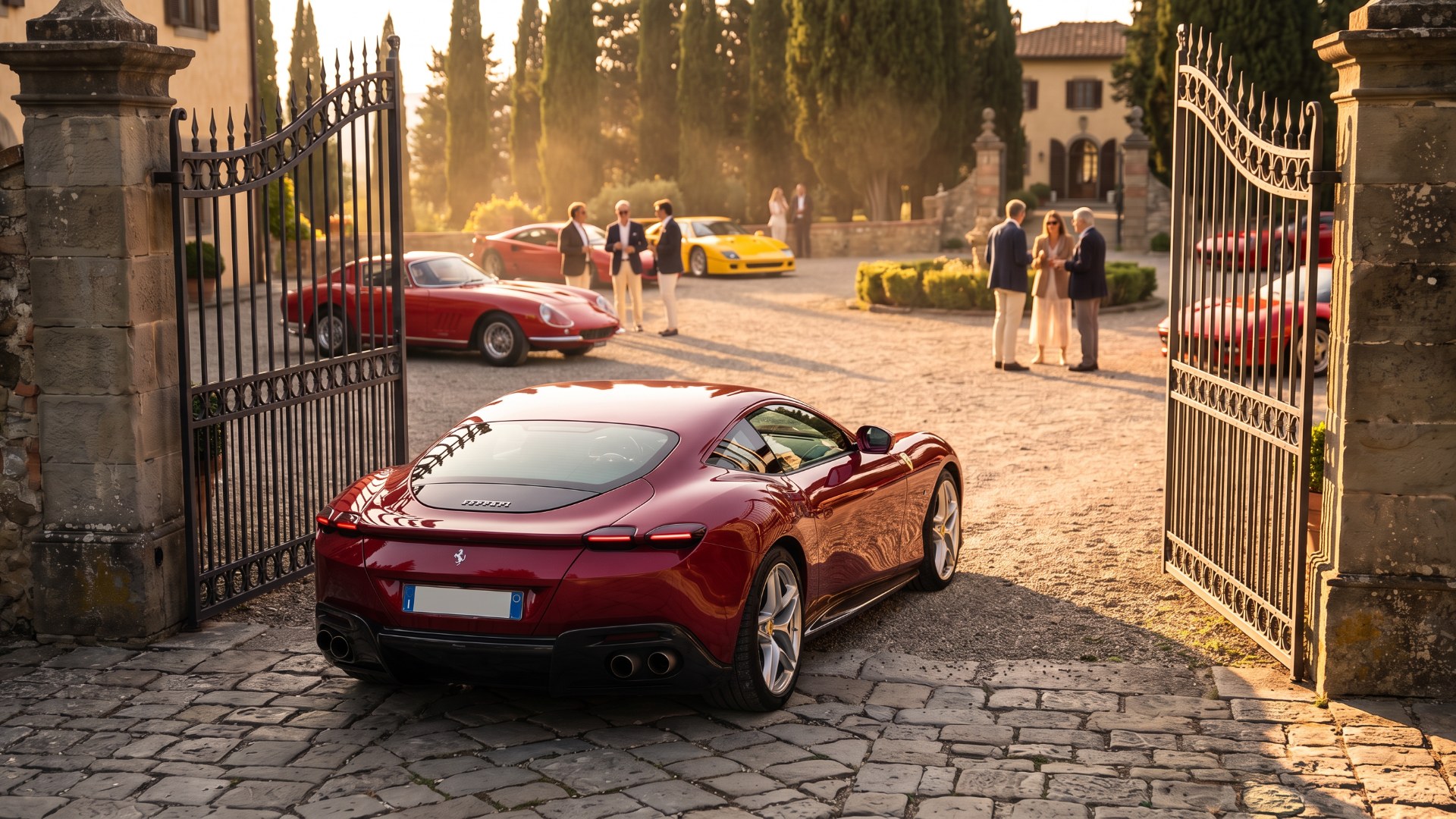
Buying the car may be the beginning, not the end. Ferrari has built an ecosystem of personalization, racing, experiences, community and increasingly rare levels of access around the people who own them.
What You Need to Know
- Ferrari told investors in October 2025 that it has about 90,000 active clients, 20% more than in 2022. Roughly 32,300 of them are new to the brand since then.
- In 2024, 81% of new Ferraris went to people who already owned one, and 48% went to people who owned more than one, according to the company’s annual report.
- Ferrari publishes no client hierarchy, but the Ferrari ownership experience stacks into a clear progression, from owners’ gatherings to Tailor Made to factory-supported track cars.
- Some things can’t simply be bought. The Piloti Ferrari 296 Speciale specification is reserved for clients who take part in Ferrari’s sporting programs.
- The system that rewards loyalty can frustrate people outside it, and Ferrari’s own filings say exclusivity limits how much the company can grow.
For most automakers, the relationship with a customer runs in a straight line. You buy the car, you service the car, and a few years later the dealer hopes you buy another one. Everything between those points is a cost to be managed.
The Ferrari ownership experience runs as a loop instead. The car leads to personalization, which leads to events, which lead to other owners, to track days, to racing, to collecting, and eventually back to another Ferrari, usually a more specific one. The company’s own numbers suggest that loop, more than any single model, is what it has really built.
What Ferrari told its investors
At its Capital Markets Day in Maranello last October, Ferrari put a number on its client base: about 90,000 active clients, up 20% from 2022. Roughly 32,300 of them have come to the brand since that year. The company also said the number of Ferrari sports cars held by collectors has grown 20%, that 45% of its collectors are new since 2022, and that every client car is now “uniquely personalized.”
The more revealing figures sit in the 2024 annual report. That year Ferrari sold 81% of its new cars to existing clients, and 48% to people who already owned more than one Ferrari.
Run those percentages against the 13,752 cars Ferrari shipped in 2024 and the picture sharpens. By our arithmetic, only about 2,600 cars went to first-time Ferrari buyers, while roughly 6,600 went to people with at least two already in the garage. It is an approximation, because shipments and client sales aren’t counted identically, but the proportions are Ferrari’s own.
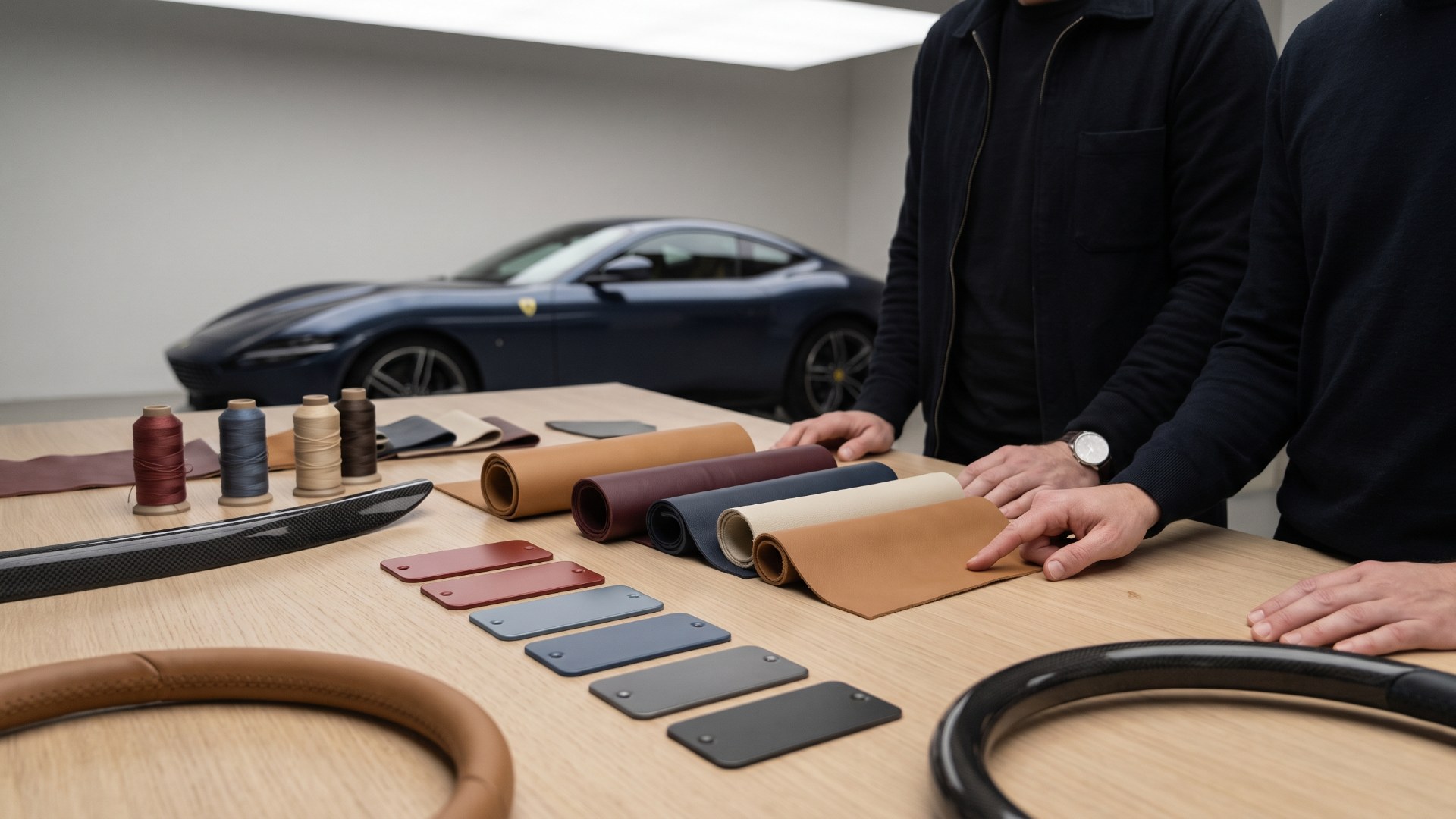
A company that shipped 13,640 cars in 2025, booked about $8.1 billion in revenue and says its order book runs toward the end of 2027 is not short of customers. It is mostly selling to people who are already inside. Management said on its fourth-quarter earnings call that personalization accounts for roughly 20% of revenue from cars and spare parts, and the plan through 2030 adds Tailor Made centers in Tokyo and Los Angeles.
The invisible Ferrari ladder
Ferrari does not publish a hierarchy of clients, and nothing in its filings describes one. What it does publish is a long list of programs, each with its own entry requirements. Lay them side by side and a progression appears. This is our reading of it, not Ferrari’s.
- Owner. You have the car, a dealer relationship and the MyFerrari app. In its 2022 investor presentation, Ferrari called this an “omni-touchpoint” approach: showrooms, digital contact, and experiences on road and track.
- Repeat buyer. The second and third cars. This is where most of Ferrari’s volume already goes.
- Collector. Several cars, often across eras, with the older ones certified or restored through Ferrari Classiche.
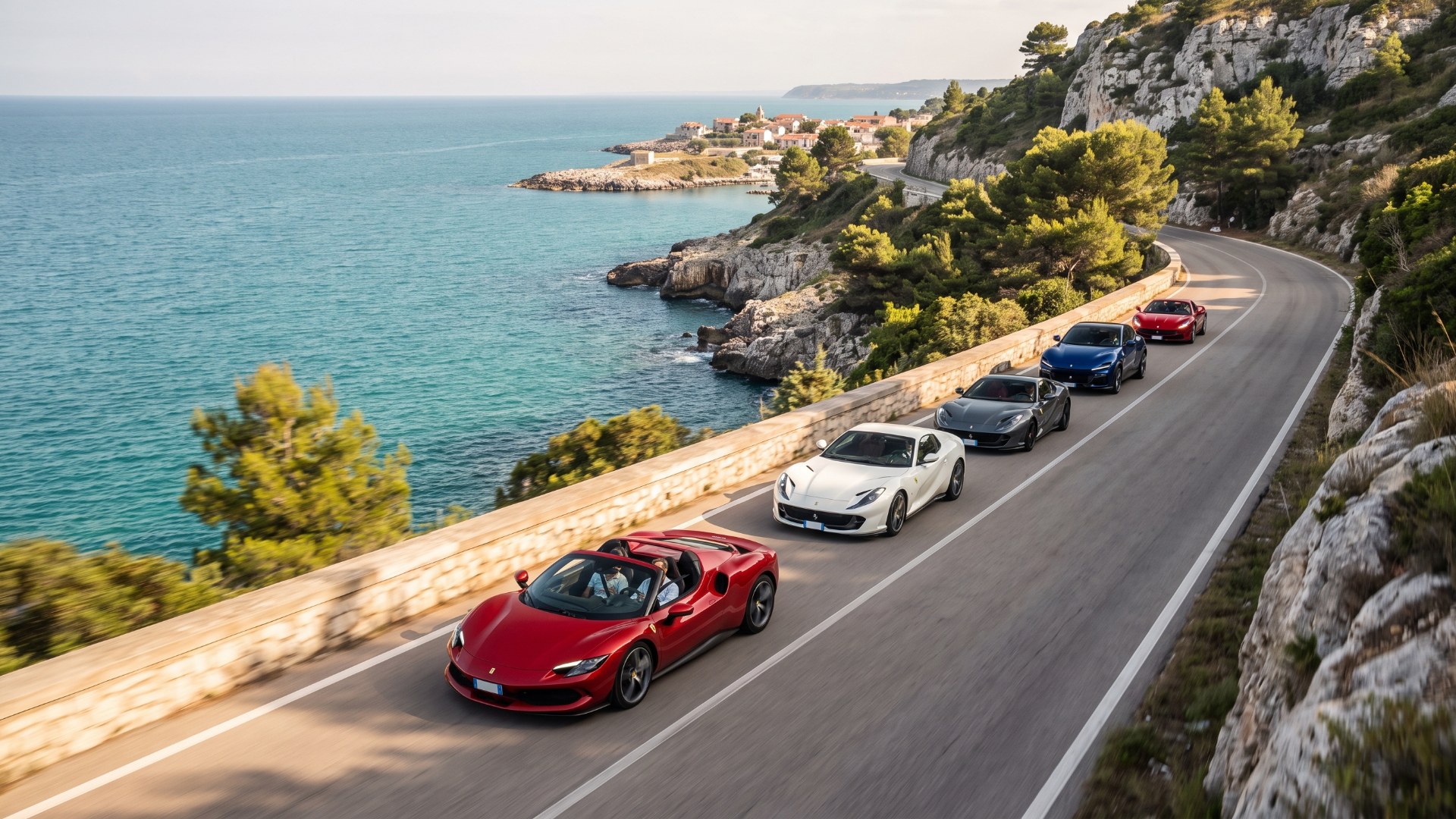
- Community participant. Owners’ clubs, dealer drives and the factory’s own road events. This year’s Ferrari Cavalcade took 116 crews from Venice to Athens. The Cavalcade Classiche brought 75 crews in older cars to Lake Garda.
- Tailor Made client. Past the options list and into a one-off specification developed with Ferrari’s designers.
- Driver. Corso Pilota, Ferrari’s driving school, runs in sequential levels, each a prerequisite for the next.
- Racer. Ferrari Challenge, the one-make series, is in its 33rd North American season in 2026, with rounds from The Thermal Club to Road America before the Finali Mondiali.
- Special-program participant. F1 Clienti, the XX Programme and Sport Prototipi Clienti: retired Formula 1 cars, track-only XX cars and Le Mans-derived prototypes, owned by clients and supported by the factory.
Money matters at every rung. The upper ones also ask for history with the marque, participation and, in a few cases, time spent on track.
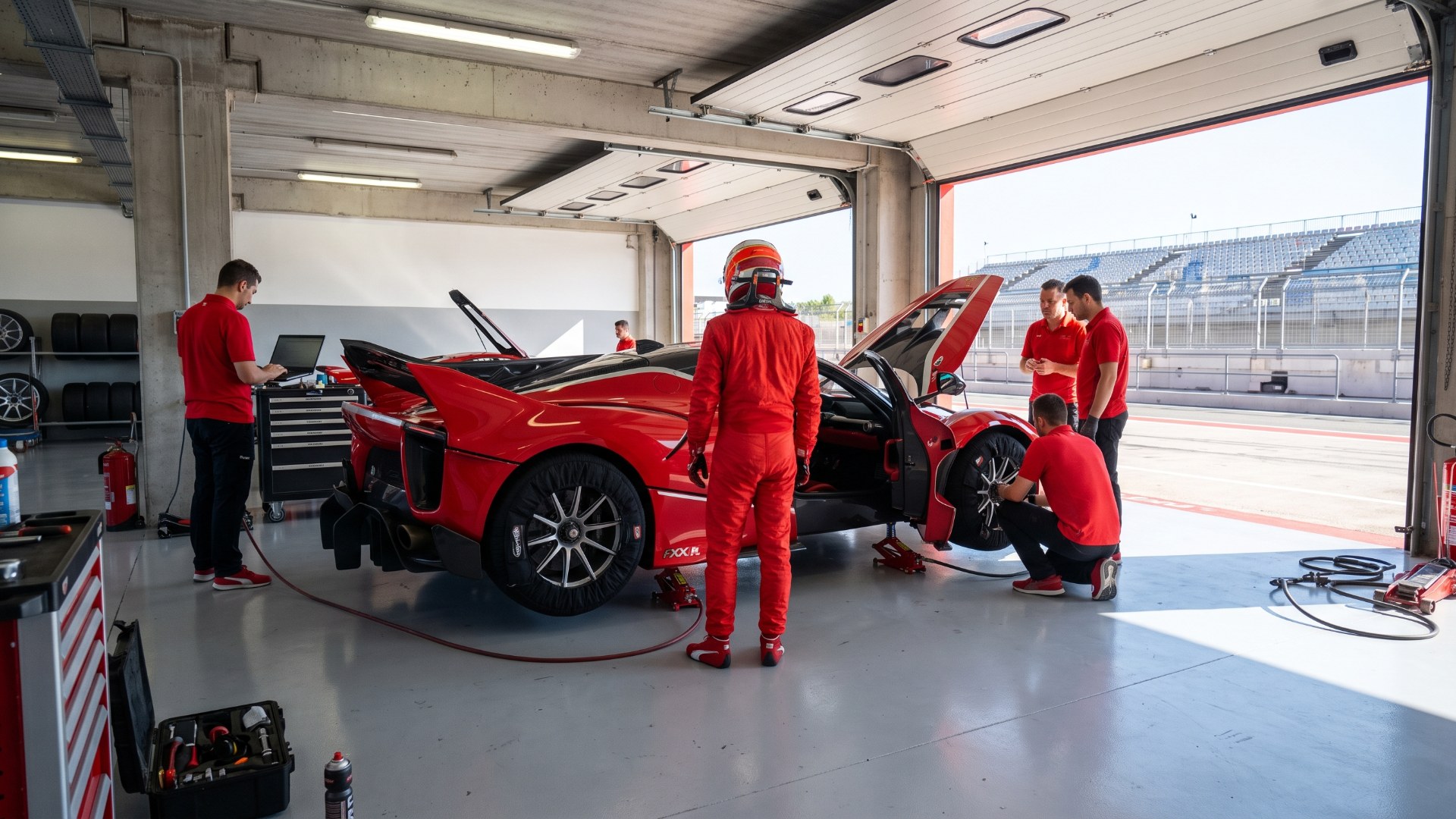
The XX Programme shows how far it goes. It turned 20 last year, when Ferrari gathered more than 40 of the cars at Mugello. The 2026 calendar runs through Losail in Qatar, Paul Ricard, Mugello, Circuit of the Americas, Road Atlanta, Portimão and the Hungaroring, with Ferrari engineers and professional drivers on hand. Two of those stops are in the United States. At that point Ferrari is no longer selling someone an automobile. It is giving that person a reason to organize part of the year around Ferrari.
When taking part unlocks the car
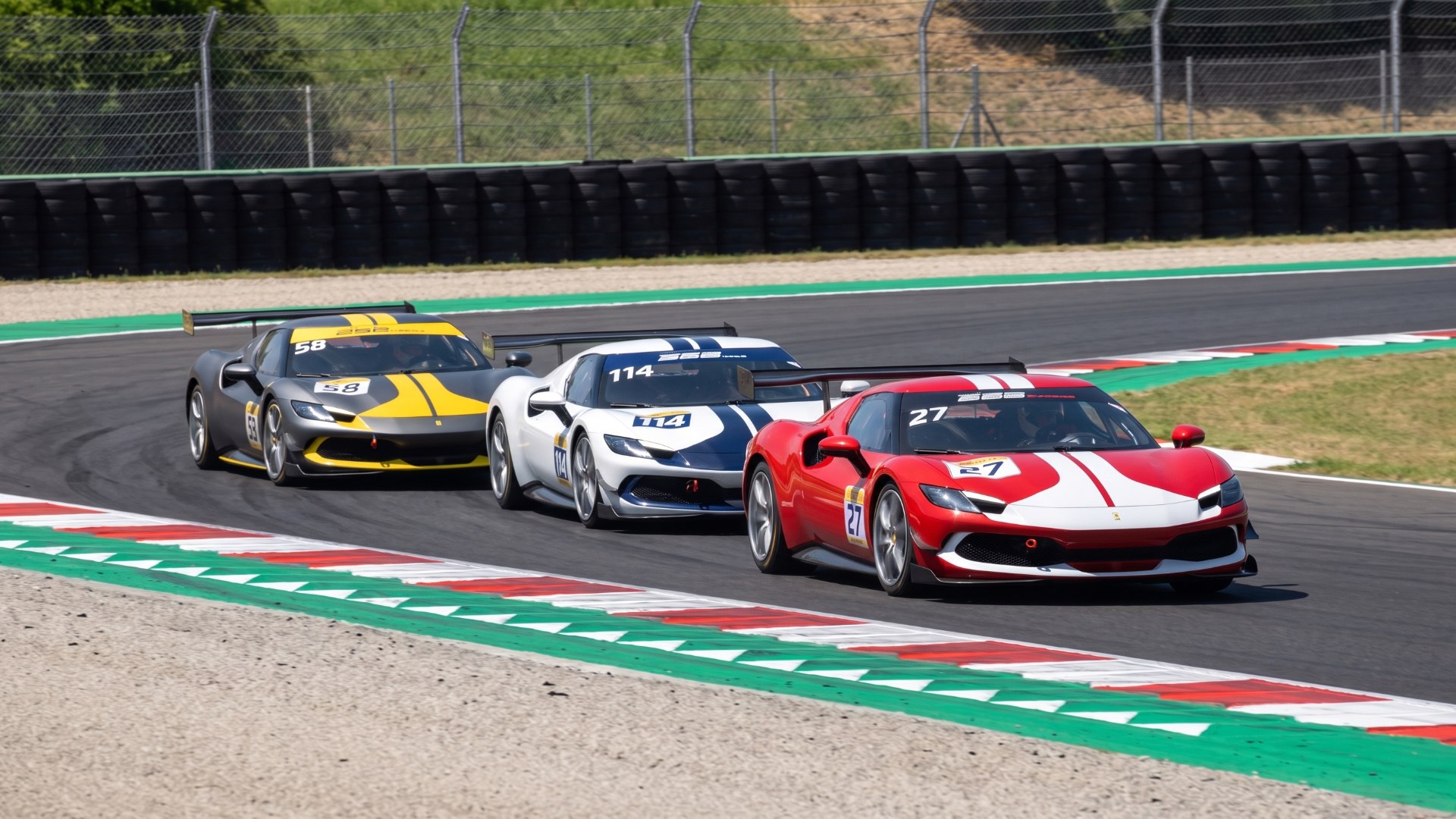
Access stops being abstract with the Piloti Ferrari 296 Speciale. Shown at Le Mans in June 2025, it is a Tailor Made specification of the 296 Speciale with a hand-painted racing livery, a customizable race number and a choice of four colors. Ferrari says it is reserved for clients “involved in Ferrari’s official sporting activities,” competitive or not.
That wording is worth reading closely. Some coverage at the time said you had to be a professional racing driver. Ferrari’s own language is broader, because the non-competitive programs count too. But a buyer who has never turned a wheel in a Ferrari program cannot order one at any price. The qualification is participation.
Where the car club fits
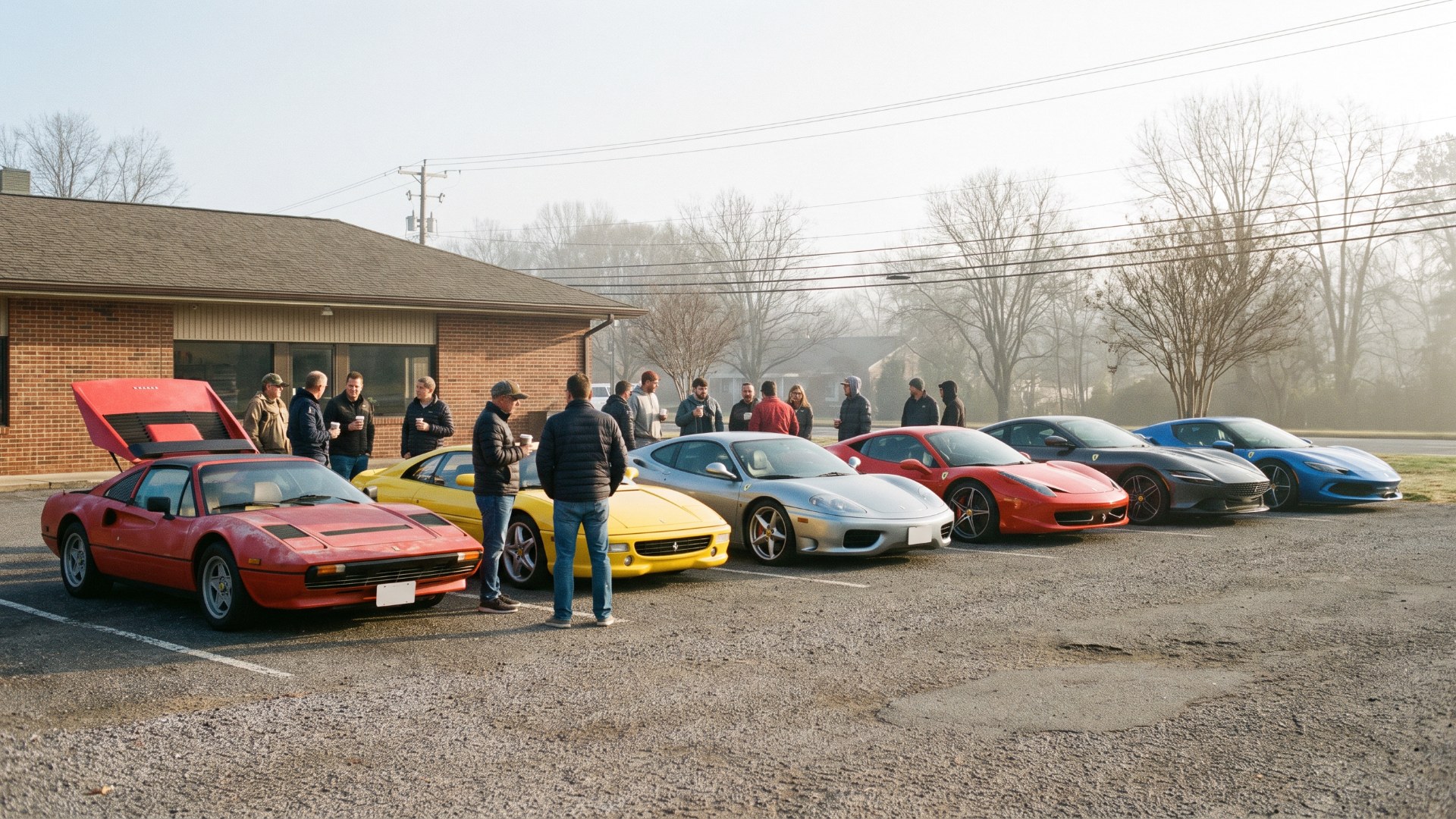
None of this started in Maranello. The Ferrari Club of America was founded in 1962 by owners who wanted to share their cars with other owners. By the club’s count it now has more than 7,000 members across the United States and Canada, and in 2010 it joined Ferrari’s International Council of Ferrari Clubs.
The order matters. Owners built the community first, and the factory recognized it later. Ferrari grasped earlier than most that owners want relationships with one another, not only with the manufacturer.
A dozen owners meeting for coffee on a Sunday and an FXX-K Evo owner arriving at a Ferrari-run track day at Circuit of the Americas look like different worlds. One costs little beyond having the car. The other involves a machine that can’t be registered for the road and a factory crew to run it. Psychologically they are the same act. Both are someone using a car to belong to something.
The Ferrari ownership experience as a luxury product
Once someone has bought the object, the next luxury may be the world that comes with it. Conventional luxury marketing sometimes misses that.
Rolex can sell you a watch. Hermès can sell you a bag. A great hotel can sell you an extraordinary weekend. Ferrari can sell an identity, a social circle, a hobby, a travel calendar, a competitive outlet and a standing relationship with the place the cars come from.
It fits a shift we have been tracking across the segment, where the horsepower war has given way to a contest over emotion. Numbers are easy to match. A world that takes a decade to enter is not.
When does exclusivity become frustration?
Scarcity creates desire. It also creates a line, and people in lines get impatient. The online conversation about Ferrari allocations is loud and imprecise, so it is worth separating what is documented from what is merely repeated.
What Ferrari puts in writing. The annual report describes maintaining waiting lists as deliberate strategy, a way to balance exclusivity with client satisfaction. The investor materials repeat the house rule of selling “one car less than the market demands,” with each model built in limited volume.
What executives have said on the record. In 2016 Enrico Galliera, who ran Ferrari’s marketing and commercial operations for more than 16 years until this summer, told the Australian outlets Drive and Carsales that every limited-series car gets its own selection rules, based on a client’s “history with the company.” That meant purchases, and also how often the client turned up at Ferrari events. He conceded that someone always ends up unhappy, and argued the answer was allocation rules the company could defend. In a separate interview with Top Gear Singapore, he said the factory weighs Classiche restorations, event attendance and track participation, and that the LaFerrari was the first car with a centrally managed shortlist.
What dealers and owners report. Stories of being steered toward a used car, a particular model or several purchases before earning a build slot are common among owners. They may well reflect how individual dealers manage their own allocations of regular-production cars. They are not published Ferrari policy, and they vary by dealer and by market.
What is mythology. Ferrari has never published a fixed number of prior purchases as the price of entry to anything, and no document says a given spend guarantees a limited-series car. The criteria themselves are not public. Anyone quoting an exact formula is guessing.
The tension is real all the same, and Ferrari says so itself. The annual report lists the strategy as a risk factor: the focus on exclusivity “limits our potential sales growth and profits.” There is a customer-side version of that risk too. A system that makes insiders feel chosen can leave everyone else feeling they are always auditioning. Ferrari changed commercial chiefs in July, when Massimiliano Di Silvestre, previously head of BMW Group Italy, succeeded Galliera. How he tunes that balance is worth watching.
What happens when the customer doesn’t want to leave?
Picture the client near the top of that ladder: several Ferraris, a Tailor Made car, friends from a decade of Cavalcades, a Challenge season or two. For that person, moving to another marque is not a matter of changing cars. It means leaving a world they spent years getting into. The Ferrari ownership experience is most of what they would be giving up.
Economists call that a switching cost. Most brands build theirs out of contracts, software or points. Ferrari’s is social, which makes it far harder for a rival to buy its way past. That is the context for the 81% figure, and for a collector market in which some cars are rewarded for sitting still while their owners stay active in everything around them.
Through the door
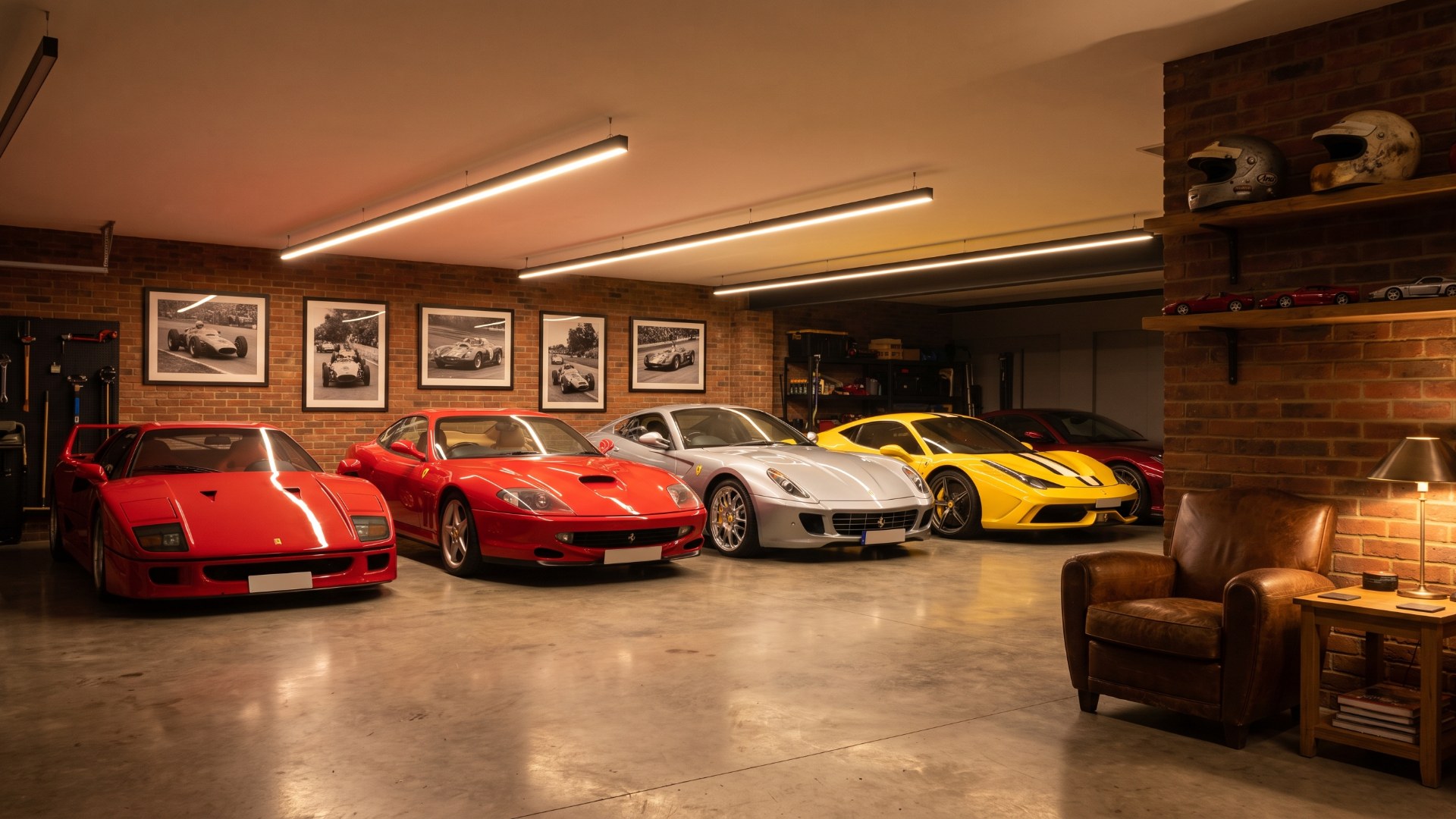
Enzo Ferrari famously sold road cars to pay for racing. The company that carries his name has built something considerably larger around those machines. A client can buy the car, specify it down to the stitching, tour with it, race it, collect its ancestors, meet other owners through it and eventually be invited into programs that exist nowhere else.
The automobile is still at the center of everything. But Ferrari’s most powerful luxury product may no longer be the thing that sits in the garage. It is the feeling that owning one lets you through the door.
Images: Exotic Car News. All images in this article, including the lead image, are editorial illustrations, not manufacturer, press or event photography.
Currency note: Ferrari reports in euros. The 2025 revenue figure is converted at the European Central Bank’s 2025 average of about $1.13 per euro and is approximate.
Sources
- Ferrari — Capital Markets Day: 2030 strategic plan (October 2025)
- Ferrari N.V. — 2024 Annual Report and Form 20-F
- Ferrari N.V. — FY 2025 results press release
- Ferrari — Capital Markets Day 2022 presentation
- Ferrari — Piloti Ferrari 296 Speciale
- Ferrari — 2026 calendars for F1 Clienti, XX Programme and Sport Prototipi Clienti
- Ferrari — 20 years of the XX Programme at Mugello
- Ferrari — Cavalcade 2026 and Cavalcade Classiche 2026
- Ferrari — 2026 Ferrari Challenge North America calendar
- Ferrari Club of America — History of the FCA
- Ferrari N.V. — fourth-quarter 2025 earnings call; press release on marketing leadership change (June 23, 2026)
- Drive and Carsales (2016) and Top Gear Singapore — interviews with Enrico Galliera