
The short version
The Gordon Murray S1 is a 64-car, three-seat supercar with a bespoke 4.2-litre naturally aspirated Cosworth V12 revving to 12,100 rpm, a six-speed manual and a target weight under 997 kg. It is not the T.50 — there is no fan. It is a road-going, distance-capable reinterpretation of the track-only S1 LM, and all 64 cars are already spoken for.
- Engine: Bespoke 4.2-litre naturally aspirated Cosworth V12
- Power: Up to 690 PS (681 bhp); 500 Nm at 7,000 rpm
- Redline: 12,100 rpm
- Transmission: Six-speed manual with a tall touring sixth
- Weight target: Under 997 kg
- Production: 64 cars — the same number as McLaren F1 road cars
- Price: Not disclosed. All allocations reserved.
Sixty-four cars, and the number is the point
Gordon Murray designed the McLaren F1. Of the 106 F1s built between 1992 and 1998, exactly 64 were standard road cars; the rest were prototypes, LMs, GTs and the 28 GTR racers. Gordon Murray Special Vehicles will build 64 examples of the S1.
That is not a coincidence and nobody is pretending it is.

Revealed at The Quail on August 14 — the same afternoon as the McLaren McL 6GT — the S1 is the closest thing to a sequel Murray has permitted himself. Three seats, central driving position, dihedral doors, a naturally aspirated V12 behind your shoulders, and a manual gearbox.
Murray, characteristically, was blunt about whether it happens again: “It’s never going to happen again. This is it.”
The engine: 4.2 litres, 12,100 rpm, and Cosworth
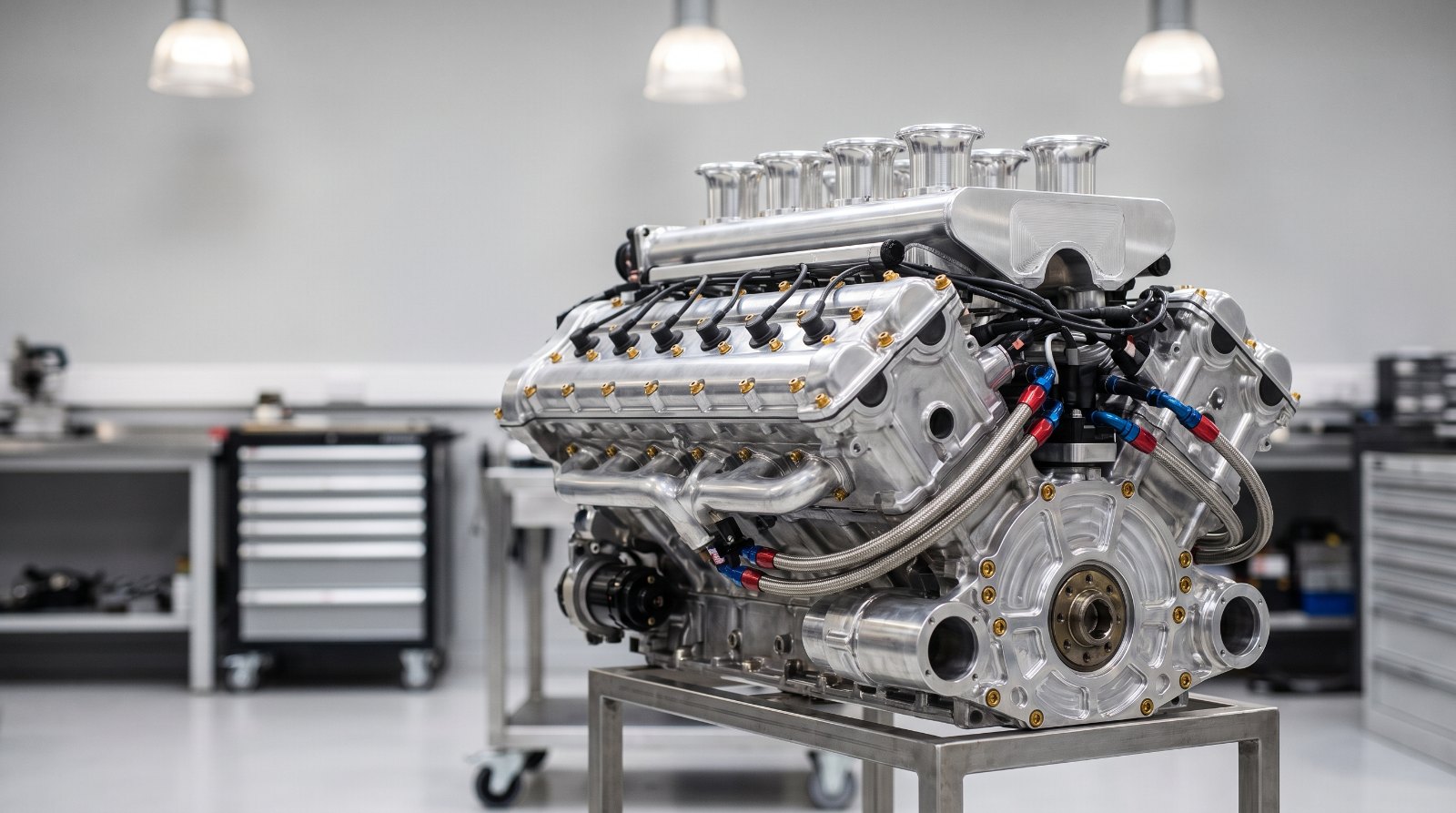
The S1 uses a bespoke 4.2-litre naturally aspirated V12 built by Cosworth, producing up to 690 PS — around 681 bhp — and 500 Nm of torque at 7,000 rpm. Roughly 80 percent of that torque is available from 2,500 rpm, which matters for a car meant to cross countries.
The redline is 12,100 rpm. That number is not a marketing flourish, and it is not free. Reaching it means the reciprocating assembly has to be almost absurdly light and dimensionally stable: press materials cite silicon carbide-coated pistons, titanium valves and titanium connecting rods, and dry-sump lubrication to keep oil where it belongs under sustained high-g cornering. Piston speed, not power, is what usually caps a road engine’s revs, so every gram removed from a piston or rod buys rpm directly.
For context, 12,100 rpm is higher than most naturally aspirated racing engines of the last two decades — in a car you can specify with a lightweight audio system and acoustic insulation. It is also the same ceiling as the T.50’s 3.9-litre Cosworth GMA V12, an engine that weighs 178 kg and is generally accepted as the lightest naturally aspirated road-car V12 ever built. The S1’s unit is a larger-capacity development of that family rather than a clean-sheet design.
A manual, on purpose
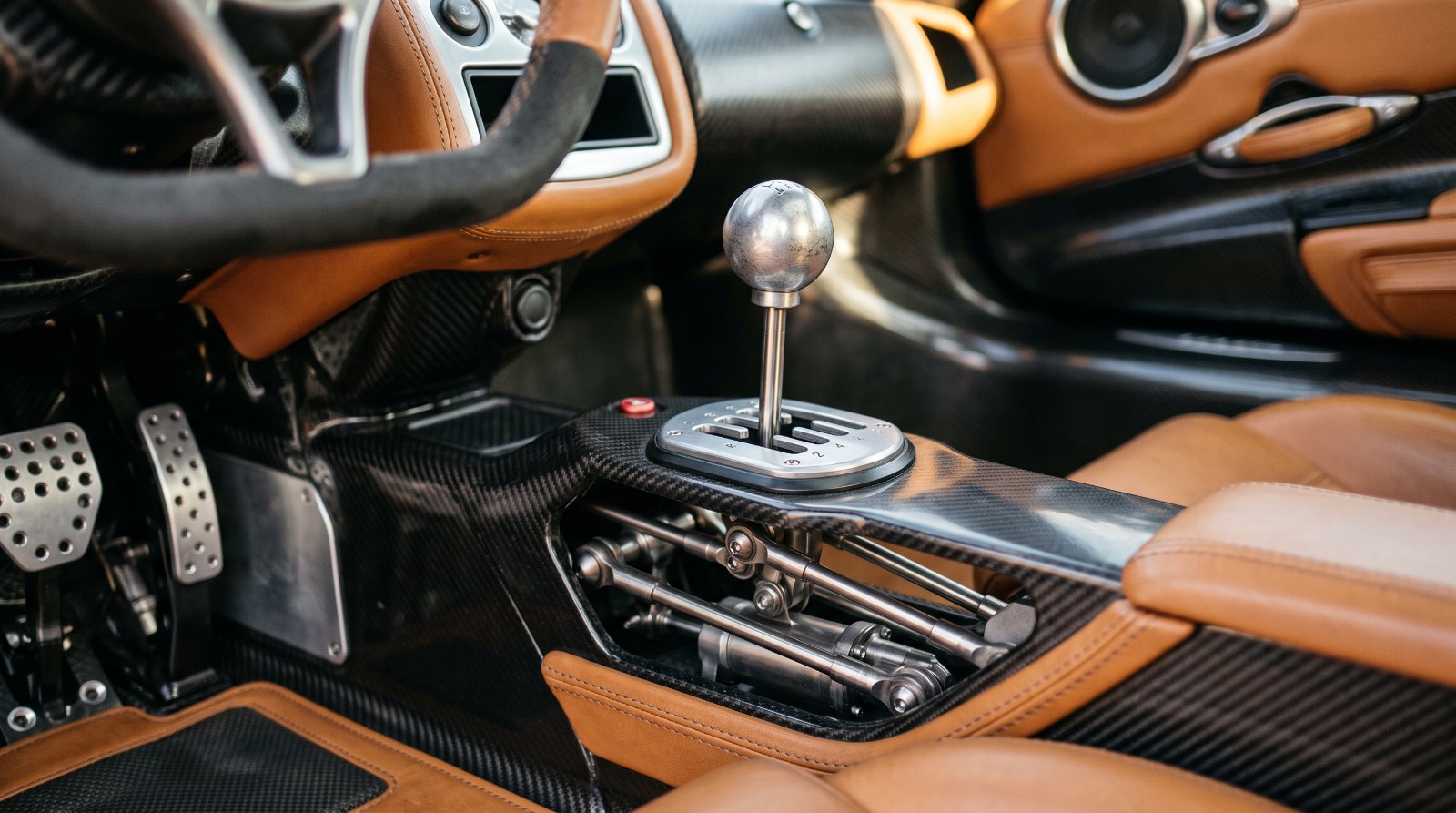
The gearbox is a six-speed manual that Gordon Murray Special Vehicles describes as delivering a “precise, rifle-bolt shift,” with a deliberately tall sixth gear for touring and revised cable routing over the S1 LM’s setup. Autocar reports the ratios were reconfigured for a broader torque range rather than the LM’s tighter, track-biased spread.
This is the part that will date best. A dual-clutch would be quicker everywhere and nobody involved is confused about that. The manual is here because the car is an argument about what a driver’s car is for, and because 64 buyers have already agreed with the argument.
Gordon Murray S1 specifications
| Specification | Gordon Murray S1 |
|---|---|
| Engine | Bespoke 4.2L naturally aspirated Cosworth V12 |
| Power | Up to 690 PS (681 bhp) |
| Torque | 500 Nm at 7,000 rpm; ~80% from 2,500 rpm |
| Redline | 12,100 rpm |
| Internals | Silicon carbide-coated pistons, titanium valves and rods, dry sump |
| Transmission | Six-speed manual, tall sixth, rear-wheel drive |
| Weight target | Under 997 kg |
| Chassis | Carbon monocoque derived from the S1 LM |
| Seating | Three, central driving position |
| Doors | Dihedral, with drop-down glass windows |
| Aerodynamics | Integrated active rear aero. No fan |
| Production | 64 cars, all allocated |
| Price | Not disclosed |
Weight is a manufacturer target. Gordon Murray Special Vehicles has not published pricing or a delivery date.
There is no fan
This is the detail most early coverage got wrong, so it is worth stating plainly: the S1 does not use the T.50’s 400 mm ground-effect fan.
Instead it runs an active aerodynamic system integrated into the rear of the car, which adapts for high-speed stability and under braking. Gordon Murray Special Vehicles has not detailed the mechanism precisely, and the press pack leaves room for interpretation: Top Gear and Motor1 describe active aero worked into the rear diffuser, while Autoevolution reports a flush rear spoiler that changes angle of attack and flips up as an airbrake. Those are not necessarily contradictory, but until GMSV publishes a technical breakdown, treat the specifics as unsettled.
What is certain is that the S1 LM’s fixed rear wing, race-style front splitter and deep side skirts have all been deleted. The stated philosophy is mechanical grip over downforce — which is why the car looks so clean. As Murray put it: “With the S1, we wanted to show how much beauty and purity there is in this design when the more extreme aerodynamic elements of the S1 LM are stripped away.”
How the S1 compares to the F1 and the T.50
| McLaren F1 (1992) | GMA T.50 (2022) | GMSV S1 (2026) | |
|---|---|---|---|
| Engine | 6.1L BMW S70/2 V12 | 3.9L Cosworth GMA V12 | 4.2L Cosworth V12 |
| Power | 627 PS (618 bhp) | 663 PS at 11,500 rpm | Up to 690 PS (681 bhp) |
| Redline | 7,500 rpm | 12,100 rpm | 12,100 rpm |
| Torque | 650 Nm | 467 Nm at 9,000 rpm | 500 Nm at 7,000 rpm |
| Weight | 1,138 kg | 997 kg | Under 997 kg (target) |
| Gearbox | Six-speed manual | Six-speed manual | Six-speed manual |
| Seats | Three, central | Three, central | Three, central |
| Aero | Passive, rear airbrake | 400 mm ground-effect fan | Integrated active rear aero |
| Built | 64 road cars | 100 | 64 |
Read across that table and the through-line is obvious. Three decades separate the first column from the last, power is up by barely ten percent, and the only figure that has moved dramatically is weight — downwards, against an industry that has spent the same period going the other way.
It is the S1 LM, softened for the road
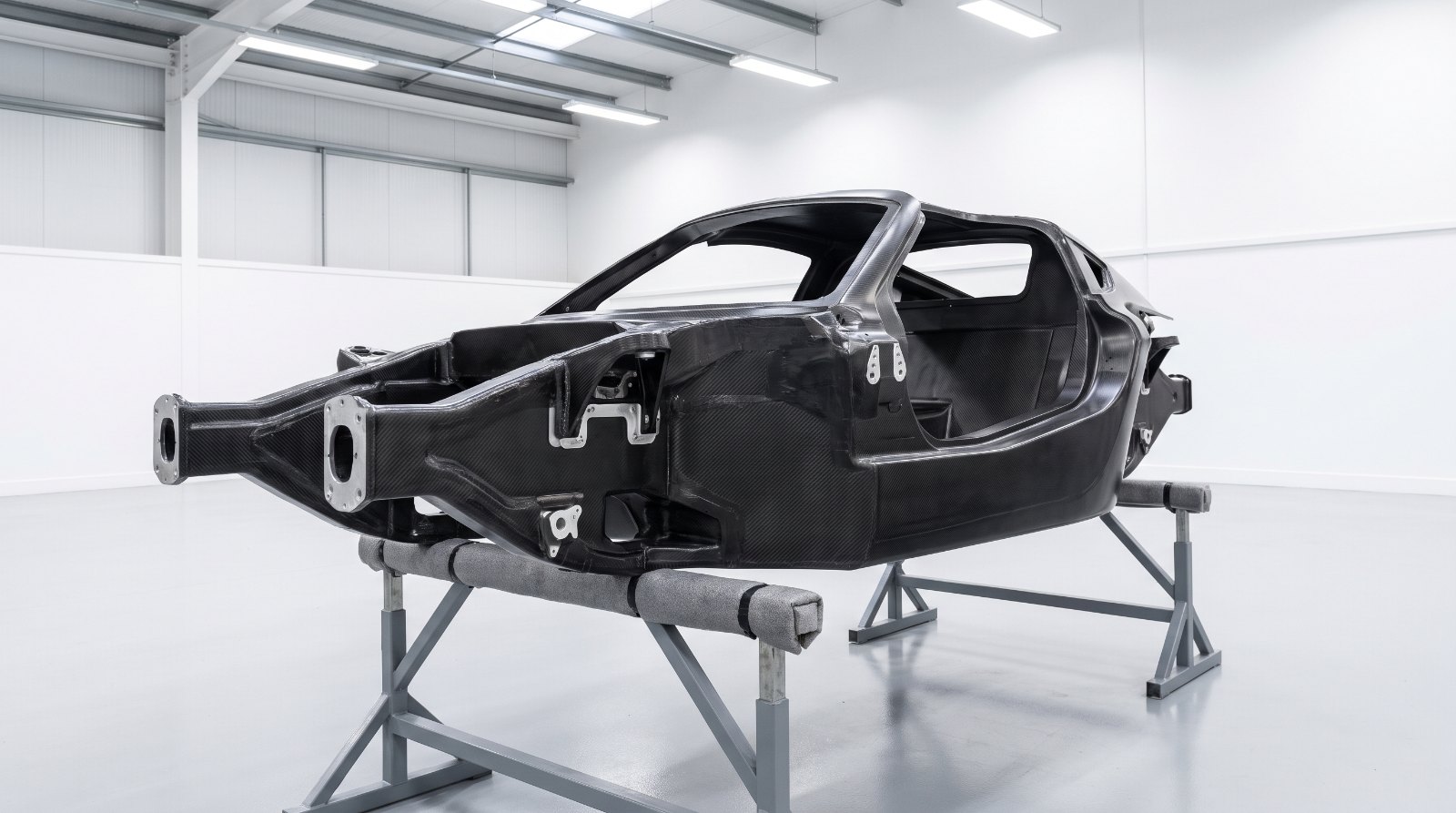
The S1 shares its carbon architecture with the S1 LM — five cars, built as a private customer commission, one of which set a record at auction in late 2025 as the most expensive new car ever sold, at $20.63 million (about £16 million). A widely-repeated $29 million figure is the same sale converted into Canadian dollars.
The road car changes are specific and telling:
- Ride height raised 10 mm, with more compliant damper tuning
- Switchable, selectable power steering
- Dihedral doors with drop-down glass windows replacing the LM’s fixed panels
- Sound deadening, acoustic insulation, a lightweight audio system, and leather or bespoke fabric seats
- Every carbon body panel reworked except the roof and engine cover
- A-pillar-mounted mirrors paired with a rear-view camera system, and a low scuttle for visibility
- Round headlights and wheels referencing the 1992 McLaren F1 Monaco show car, with auxiliary main beams inside the front air intakes
- A 24-carat gold-plated engine-bay heat shield, because of course
What has not changed is the hard stuff underneath: the LM’s lightweight suspension layout and its track width carry over, as do the wide tyres. This is a retune and a rebody, not a softening of the engineering.
Murray’s own summary: “It has the same intensity, response and engineering integrity, but has been tuned for a different purpose. It is exclusive, analogue and deeply driver focused, while also being more elegant, refined and usable over distance.”
Three seats, and why that is the hard part
The central driving position is the S1’s most quoted feature and its most expensive one. Putting the driver on the centreline means the pedal box, steering column, monocoque tub and fuel system all have to be designed around a layout no supplier builds parts for. It pushes the passengers rearwards and outboard, which widens the cabin at the hips and forces the door aperture to be enormous — hence dihedral doors, which need less swing clearance than a conventional hinge.
It also solves problems. The driver gets symmetrical sightlines and pedal placement, weight sits on the car’s centreline, and two passengers fit without the packaging penalty of a 2+2. Murray has been building cars this way since 1992 because he has never accepted that the compromise runs the other direction.
You cannot buy one
All 64 are reserved. Gordon Murray states that every programme the company has announced to date is fully sold out — the T.50’s 100 cars, the 25 T.50s Niki Lauda, both T.33 runs, and now the S1. Registering interest for a future project is the only door still open.
Neither price nor delivery timing has been published by anyone, including Gordon Murray Special Vehicles. This is where reporting gets loose, so to be precise about what is actually known: Top Gear characterised it as “many millions.” Autocar, reasoning from the S1 LM’s £16 million auction result, suggests the S1 will command several times the T.50’s £2.8 million. Both are inference. Neither is a figure from the manufacturer, and anyone quoting a specific number today is guessing.
What it says about the market

Murray was evocative about what “usable over distance” means in practice: “This is a car you could drive along the coast from Los Angeles to Monterey in real comfort, still enjoying every gearshift, every corner, and every note of the V12 when the road opens up.”
That sentence is the whole product brief. It is also a commercial position. The S1 and the McL 6GT were revealed within hours of each other, and both are naturally aspirated, manual, rear-drive, and priced in seven figures. Neither is a hybrid. Neither has a dual-clutch. Two separate British manufacturers, on the same afternoon, both betting that the top of the market now pays a premium for subtraction rather than addition.
That is not nostalgia — it is a read on where value now sits. We traced the same pattern across the whole market in every manual supercar you can actually still buy new in 2026 and in the last naturally aspirated V12s.
Frequently asked questions
How many Gordon Murray S1s will be built?
64, matching the number of McLaren F1 road cars built. Gordon Murray Special Vehicles says all current allocations are fully reserved.
What engine does the Gordon Murray S1 use?
A bespoke 4.2-litre naturally aspirated Cosworth V12 producing up to 690 PS, around 681 bhp, with 500 Nm of torque at 7,000 rpm and a 12,100 rpm redline. It uses silicon carbide-coated pistons, titanium valves and connecting rods, and dry-sump lubrication.
Does the Gordon Murray S1 have a fan like the T.50?
No. The S1 uses an active aerodynamic system integrated into the rear of the car that adapts for high-speed stability and braking. It is optimised for mechanical grip rather than downforce, and has no ground-effect fan.
How much does the Gordon Murray S1 cost?
Gordon Murray Special Vehicles has not disclosed pricing. Press estimates range from “many millions” to several times the T.50’s £2.8 million, reasoning from the S1 LM’s £16 million auction result, but no official figure exists.
Is the Gordon Murray S1 a manual?
Yes. It uses a six-speed manual gearbox with a deliberately tall sixth gear for touring, described by the company as having a precise, rifle-bolt shift. There is no automatic or dual-clutch option.
What is the difference between the S1 and the S1 LM?
The S1 LM was a track-focused private commission limited to five cars. The S1 is the road-going version: 64 cars, ride height raised 10 mm, more compliant damping, switchable power steering, glass drop-down windows, sound insulation, and the LM’s fixed wing, splitter and side skirts removed. Every carbon body panel except the roof and engine cover is new.
How does the S1 compare to the Gordon Murray T.50?
The S1 has a larger 4.2-litre V12 against the T.50’s 3.9, slightly more power, a lower weight target, and no ground-effect fan. The T.50 is a 100-car series production model; the S1 is a 64-car special built by Gordon Murray Special Vehicles and derived from the S1 LM. Both share the central three-seat layout, six-speed manual and 12,100 rpm ceiling.
When will the Gordon Murray S1 be delivered?
No delivery timing has been announced. Gordon Murray Special Vehicles confirmed the 64-car run and the full allocation at the reveal, but has published neither a production start nor a first-customer-car date.
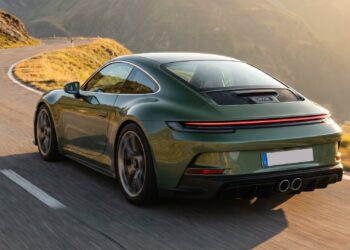
Editor’s note on imagery: Exotic Car News does not publish AI-generated depictions of real vehicles. The images in this article are illustrations of the engineering themes discussed — a naturally aspirated V12, a manual shift linkage, a carbon monocoque, a concours lawn and a coastal road. None of them is a photograph of the Gordon Murray S1, and none is intended to represent how the car looks. For official imagery, see Gordon Murray Special Vehicles’ own S1 page.