
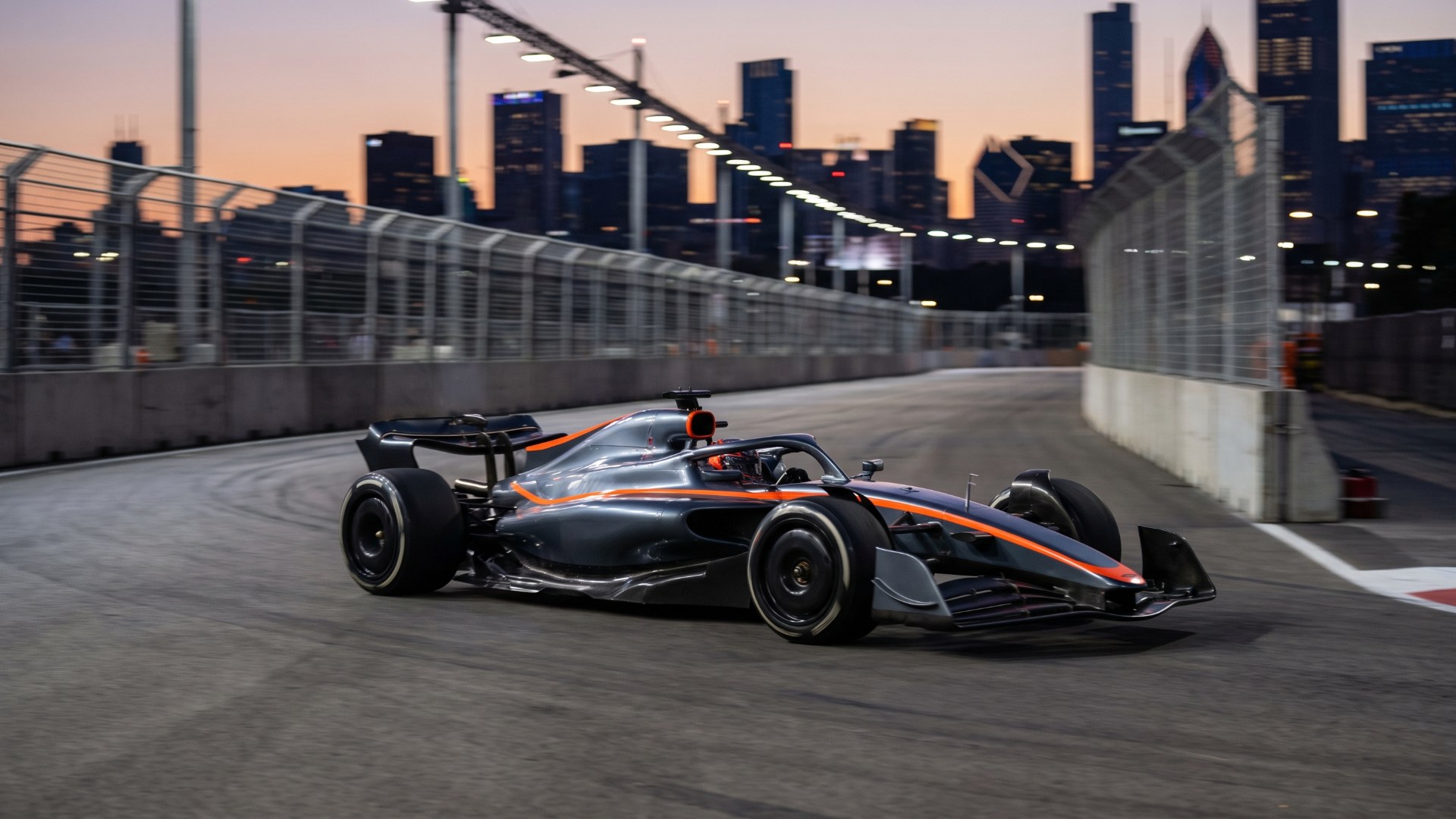
The short answer: Yes — the F1 V8 engine is on its way back. The FIA and F1’s engine manufacturers have reached broad agreement on a 3.0-liter turbocharged V8 paired with a roughly 100 kW electric motor (down from 350 kW today), with a target of cutting at least 50 kg from the power unit. A 2030 debut is being discussed. None of it is official FIA regulation yet.
What You Need to Know
- Engine: 3.0-liter V8, turbocharged — replacing today’s 1.6-liter turbo V6.
- Hybrid: Electric motor reduced to about 100 kW (≈134 hp), versus 350 kW (≈469 hp) under the 2026 rules.
- Weight: Complete power unit targeted to be at least 50 kg (≈110 lb) lighter.
- Why the turbo stays: A naturally aspirated V8 was considered, but noise limits at Melbourne, Miami, Madrid, Singapore, Baku and Las Vegas ruled it out.
- Overtaking: An IndyCar-style push-to-pass mode is under consideration.
- Timing: 2030 is the leading option, which would end the current engine cycle a year early. Not finalized.
- Status: Reported by Motorsport.com and Autosport in late September 2026. The FIA has not published 2030 technical regulations.
At a Glance: 2026 Rules vs. the Proposed 2030 F1 Engine Rules
| 2026 regulations (current) | Proposed next formula (reported) | |
|---|---|---|
| Combustion engine | 1.6-liter turbo V6 | 3.0-liter turbo V8 |
| Cylinders | 6 | 8 |
| Electric motor output | 350 kW (MGU-K) | About 100 kW |
| Power split | Roughly 50/50 combustion/electric | Combustion-dominant |
| MGU-H | Removed | Not expected |
| Power-unit weight | Baseline | At least 50 kg lighter (target) |
| Fuel | Advanced sustainable fuel | Sustainable fuel expected to continue |
| Overtaking aid | Active aero + electrical overtake mode | Push-to-pass under consideration |
| Start date | 2026 | 2030 discussed, not confirmed |
| Status | In force | Broad agreement; regulations not written |
Is the F1 V8 engine really coming back?
That is the direction. According to reporting first published by Motorsport.com and its sister title Autosport, the FIA and the power-unit manufacturers have reached a substantial agreement on the key points of the next engine formula: a 3.0-liter V8, a much smaller hybrid system, and a lighter, simpler overall package that is closer to the traditional idea of a racing engine.
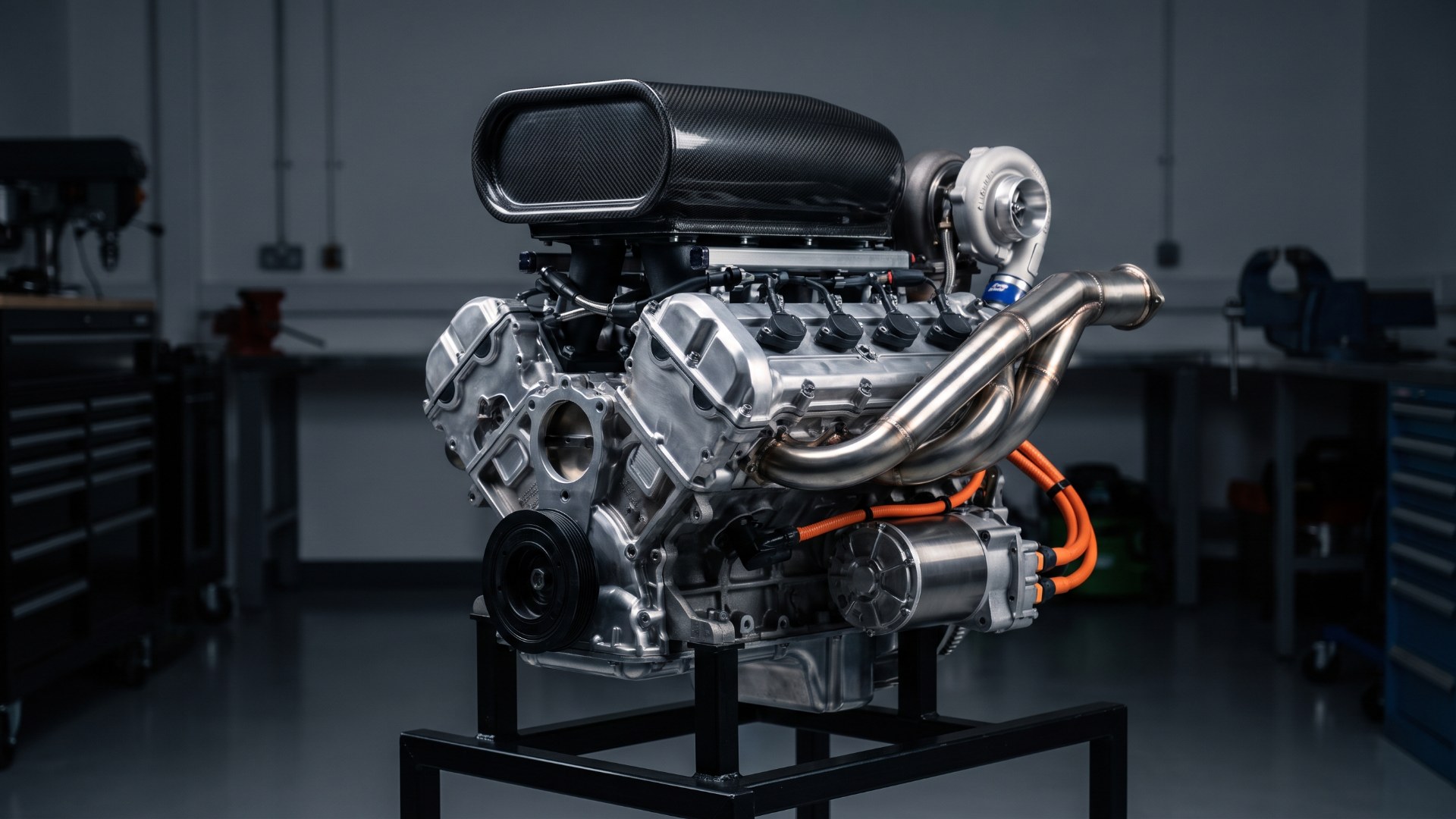
If it survives the approval process, the new F1 V8 engine would mark the first time eight-cylinder engines have raced in Formula 1 since 2013.
The direction should not come as a total surprise. FIA president Mohammed Ben Sulayem publicly backed a return to simpler V8 engines with limited electrification earlier this year. What is new is that manufacturers — the people who have to design, build and pay for these engines — appear to have signed on to the broad shape of it.
Why the new F1 V8 engine keeps a turbocharger
The biggest disappointment for purists is already baked in: this will not be a return to the shrieking, naturally aspirated V8s of 2006 to 2013.
A naturally aspirated option was on the table. It lost on noise. Six venues on the current calendar operate under noise-emission limits — Melbourne, Miami, Madrid, Singapore, Baku and Las Vegas — and an atmospheric 3.0-liter V8 would have been dramatically louder than today’s V6. Reports indicate that could have made some of those races difficult or impossible to hold.

The timing gives that detail extra weight. F1 is in Baku this weekend, one of the six circuits named. And five of the six are street or part-street layouts that run through cities, where the championship has invested heavily in recent years. A formula that put Miami or Las Vegas at risk was never going to get through.
The compromise is a smaller turbocharger — enough to keep noise inside venue limits, while still making the cars considerably louder than the current generation.
What it will likely sound like: Louder and deeper than today. Not a replica of the old V8s, which were 2.4 liters, naturally aspirated and revved to 18,000 rpm in their final years. Displacement is also worth noting — at 3.0 liters, this would be the largest engine F1 has allowed since the V10 era of the early 2000s.
How much hybrid power stays — and why it matters
Electrification is not going away. It is being demoted.
The proposed power unit would use a simplified electric motor of around 100 kW. Under the 2026 regulations, the MGU-K produces 350 kW, which pushed the car toward a near 50/50 split between combustion and electrical power. The complex MGU-H, which recovered energy from the turbocharger, was already eliminated for 2026.
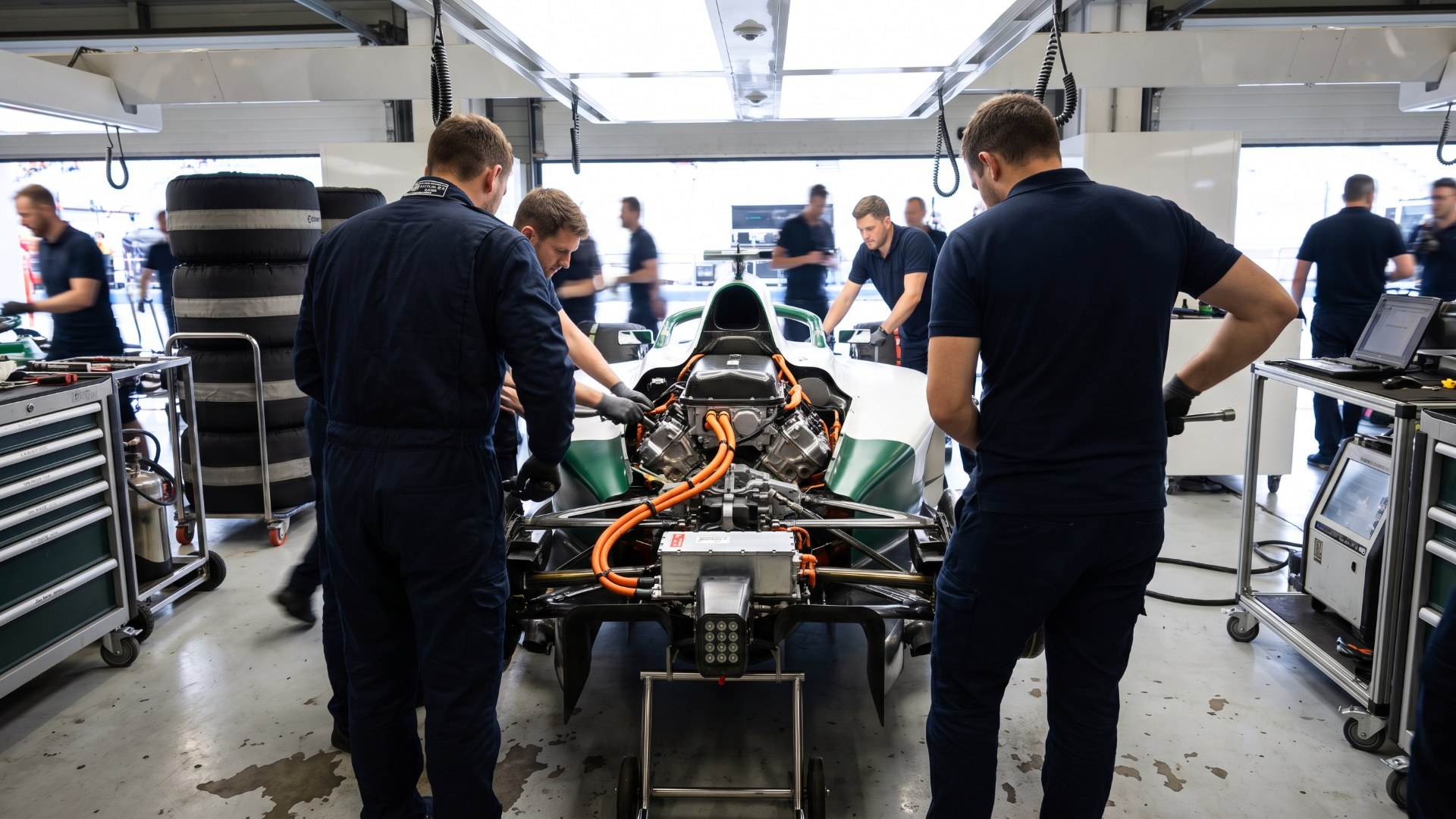
A 100 kW motor keeps a technical link to the road-car industry — hybrids are not disappearing from showrooms — without letting battery management dictate how a car is driven or raced. That is the lesson F1 appears to have taken from 2026.
Why F1 is changing course after one season
The current rules only arrived in 2026, so a replacement already being negotiated tells you something.
From the opening races of this season, energy management became the dominant talking point. In June, the FIA, Formula One Management, the teams and the power-unit manufacturers agreed a package of changes for 2027 and 2028 that stages a rebalancing between combustion and electrical contribution, adjusts fuel energy flow and ERS deployment, and gives more flexibility in energy management. The stated aim was to make qualifying more flat-out without spoiling the racing.
The knock-on effects keep coming. At its September 21 meeting in London, the F1 Commission approved cutting 2027 race distance from 305 km to 290 km — two or three laps — in line with the fuel-flow refinements. All of it is subject to World Motor Sport Council approval. Notably, the Commission’s public statement said nothing about the 2030 engine.
None of that means the 2026 rules have failed. But it does show how hard it is to balance huge electrical deployment, harvesting and combustion performance in a car that still has to race wheel to wheel. The proposed V8 formula keeps what is useful and drops the complexity.
Why losing 50 kg may matter more than two extra cylinders
The V8 will get the headlines. The weight target may do more for the racing.
The complete power unit is targeted to be at least 50 kg lighter than today’s. Modern F1 cars have grown heavier with every generation of hybrid hardware, batteries and safety structures, and weight affects almost everything a driver feels: braking, direction changes, tire wear and how hard a car can be pushed through a sequence of corners.
A lighter engine also frees designers in packaging, balance and chassis layout. In short, the V8 is what fans will hear. The weight is what drivers will feel.
What push-to-pass would mean for overtaking
F1 dropped DRS after 2025. The 2026 cars use active aerodynamics and an electrical overtake mode instead.
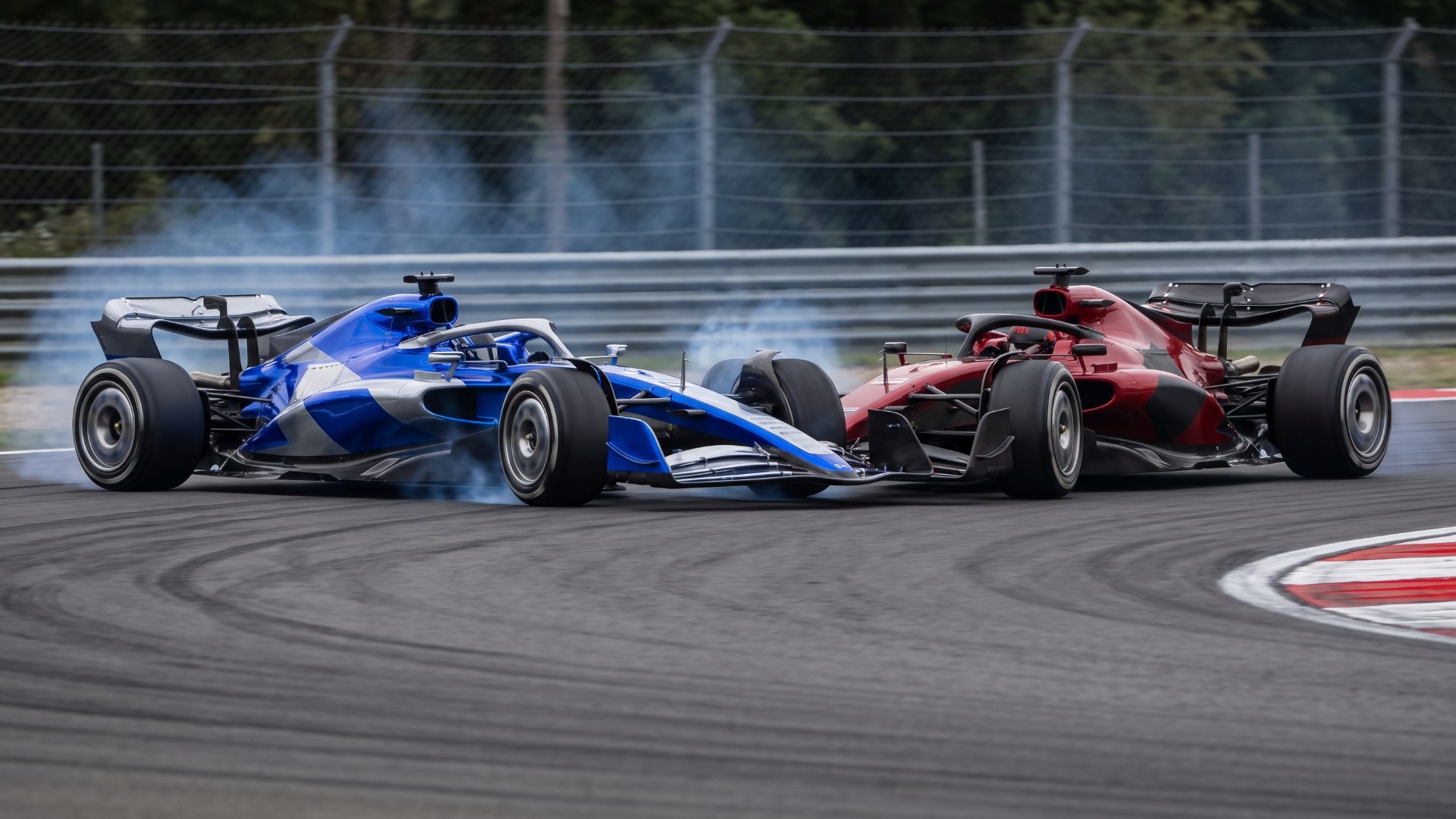
The next formula may shift again toward something closer to IndyCar’s push-to-pass — a temporary power increase the driver deploys to attack or, depending on the rules, to defend. The details are undecided, and they will matter as much as the engine: how much extra power, how long it lasts, how often it can be used and whether the car ahead gets it too.
Sustainable fuel stays central
A larger combustion engine does not mean F1 is abandoning its sustainability commitments. Since 2026, F1 has run on advanced sustainable fuel, and that program is expected to continue.
That is the logic behind the whole package: rather than treating electrification and combustion as rivals, F1 can keep developing renewable fuel alongside a lighter, simpler hybrid system. It mirrors where much of the car industry is heading, with battery-electric, hybrid and low-carbon-fuel combustion engines likely to share the road for years.
When will the F1 V8 engine rules start?
2030 is the strongest option, but it is not confirmed.
The current power-unit cycle was designed to run through 2030. Starting the new formula that season would bring the end of the current cycle forward by a year. FIA and manufacturer meetings are continuing to settle the remaining details, and any new regulations must go through the formal approval process, which leaves room for change.
The honest status as of September 2026: F1 has a direction, not a finished rulebook.
Why It Matters
For the exotic car world, this is more than a sporting story. Formula 1 has spent a decade telling manufacturers that its future was electrified and ever more complex. The proposed V8 formula tells them something different: that combustion still has a place at the top of motorsport, as long as it is efficient, lighter and running on cleaner fuel.
That message lands at the same time as road-car makers are rethinking how far and how fast to push full electrification — a shift ECN has followed as Detroit’s V8 refused to die. F1 is not trying to recreate 2010. The turbo stays, the hybrid stays and the sustainable fuel stays. What changes is the balance — and the answer to which technology is actually worth keeping in a racing car.
Frequently Asked Questions
Is Formula 1 bringing back V8 engines?
F1 and its engine manufacturers have broadly agreed on a 3.0-liter turbocharged V8 for the next engine formula, according to reports from Motorsport.com and Autosport in September 2026. It has not yet been written into official FIA regulations.
When will F1 switch to V8 engines?
A 2030 debut is being discussed, which would end the current engine cycle one year early. The date has not been confirmed.
Will the new F1 V8 engine be naturally aspirated?
No. A naturally aspirated V8 was considered but rejected because of noise limits at Melbourne, Miami, Madrid, Singapore, Baku and Las Vegas. A smaller turbocharger will be retained.
Will F1 cars still be hybrids?
Yes. The proposal keeps an electric motor of about 100 kW, compared with 350 kW in the current 2026 power units, so combustion would provide most of the power.
How much lighter will the new F1 power unit be?
The target is at least 50 kg (about 110 lb) lighter than the current power unit.
Will the 2030 F1 V8 sound like the old V8s?
It should be considerably louder than today’s cars, but not identical to the 2006–2013 V8s, which were 2.4-liter, naturally aspirated and revved to 18,000 rpm.
Is DRS coming back?
No. DRS was dropped after 2025. For the next formula, an IndyCar-style push-to-pass power boost is under consideration.
Sources
- Motorsport.com — First details of future F1 engine rules revealed
- Autosport — The initial plan for F1’s next engine regulation in 2030
- FIA — Agreement reached on proposed regulatory changes for 2027 and 2028
- FIA — Formula 1 Commission Meeting 21.09.26 media statement