
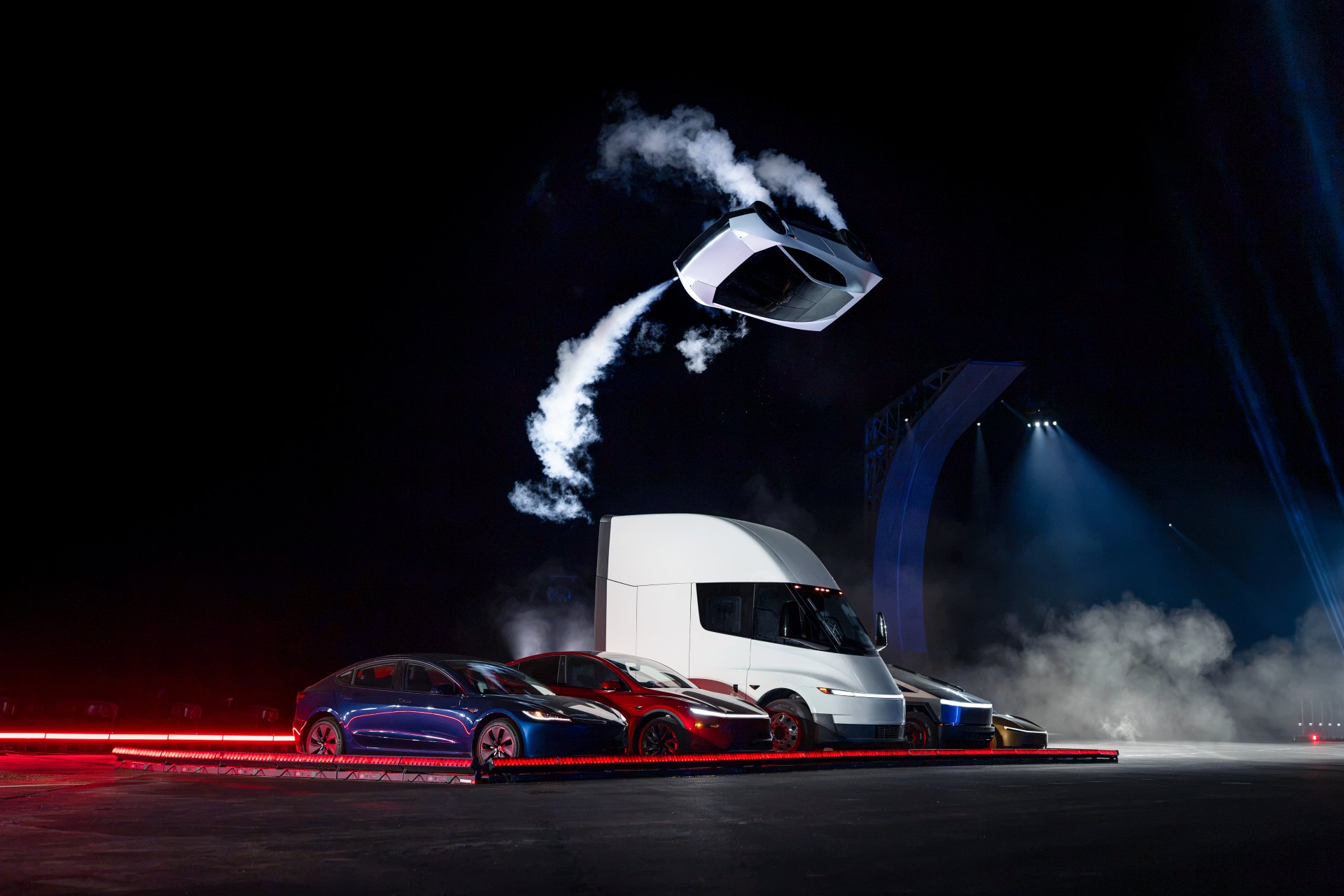
For about ten minutes on the night of October 15, the most talked-about car in the world was hanging upside down from a concrete ramp outside Waco, Texas. Then it let go, rolled over in mid-air on jets of compressed air and set itself down on the pavement. Later it hopped clean over a Tesla Semi, a Cybertruck, a Cybercab, a Model Y and a Model 3, and Tesla capped the night with a 0–60 mph run it timed at 0.81 seconds.
The internet did what the internet does. Within the hour there were flying-car memes, “it’s CGI” threads, slowed-down replays and at least one person asking whether the Roadster could now legally merge over traffic. (It cannot.) Tesla answered the doubters on X with a two-word caption about real life.
The stunts are the least interesting thing about this car. Strip away the fog machines and lasers and the second-generation Roadster asks a question every supercar engineer has lived with for a century: what happens when a car no longer depends only on its four tires to accelerate, grip and steer?
That is where this story lives. The Roadster isn’t breaking the laws of physics. It’s using several of them that road cars rarely touch at the same time: electric fans that suck the car onto the road, a rear wing and active bodywork that change shape on demand, and cold-gas thrusters that push on the air instead of the asphalt. Some of what Tesla showed is demonstrated. Much of it is claimed. A few things are, for now, closer to theatre. Here’s how to tell them apart.
Tesla’s official post of the Roadster flip demonstration
— Tesla (@Tesla) October 16, 2026
What you need to know
- Three versions: Performance (fans and active aero, two seats), Thrust (adds rear cold-gas thrusters, limited), and Rocket (single seat, ten thrusters, invitation only, not approved for public roads).
- Tesla’s claims: 0–60 mph in under 1.6, 0.9 and 0.59 seconds respectively; more than 230 mph; more than 300 miles of range.
- What was shown: an inverted-ramp run on fan suction, a thruster flip and landing, a hop over five Teslas, and a 0.81-second 0–60 run timed by Tesla, not by an independent tester.
- When: Musk says production starts in 2028. No price. Reservations are $50,000 for Performance and $250,000 for Thrust.
The car behind the stunt
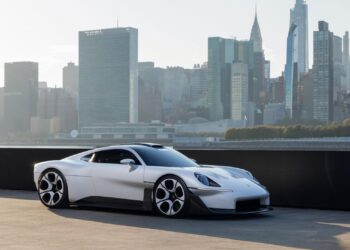
Before the thrusters, there is a sports car, and it is nothing like the smooth, friendly shape Tesla showed at the Semi event in November 2017. The new Roadster is a low, faceted wedge finished in a white Tesla calls Ano White, with pop-up headlights barely more than half an inch tall, a single full-width taillight, butterfly doors and a deployable rear wing. Tesla says the design draws on the SR-71 and F-35, and on its own Cybertruck and Cybercab. Reporters at the event reached for the Lamborghini Countach and the Lotus Esprit from The Spy Who Loved Me; Musk owns that Esprit, and it was on display at the reveal.
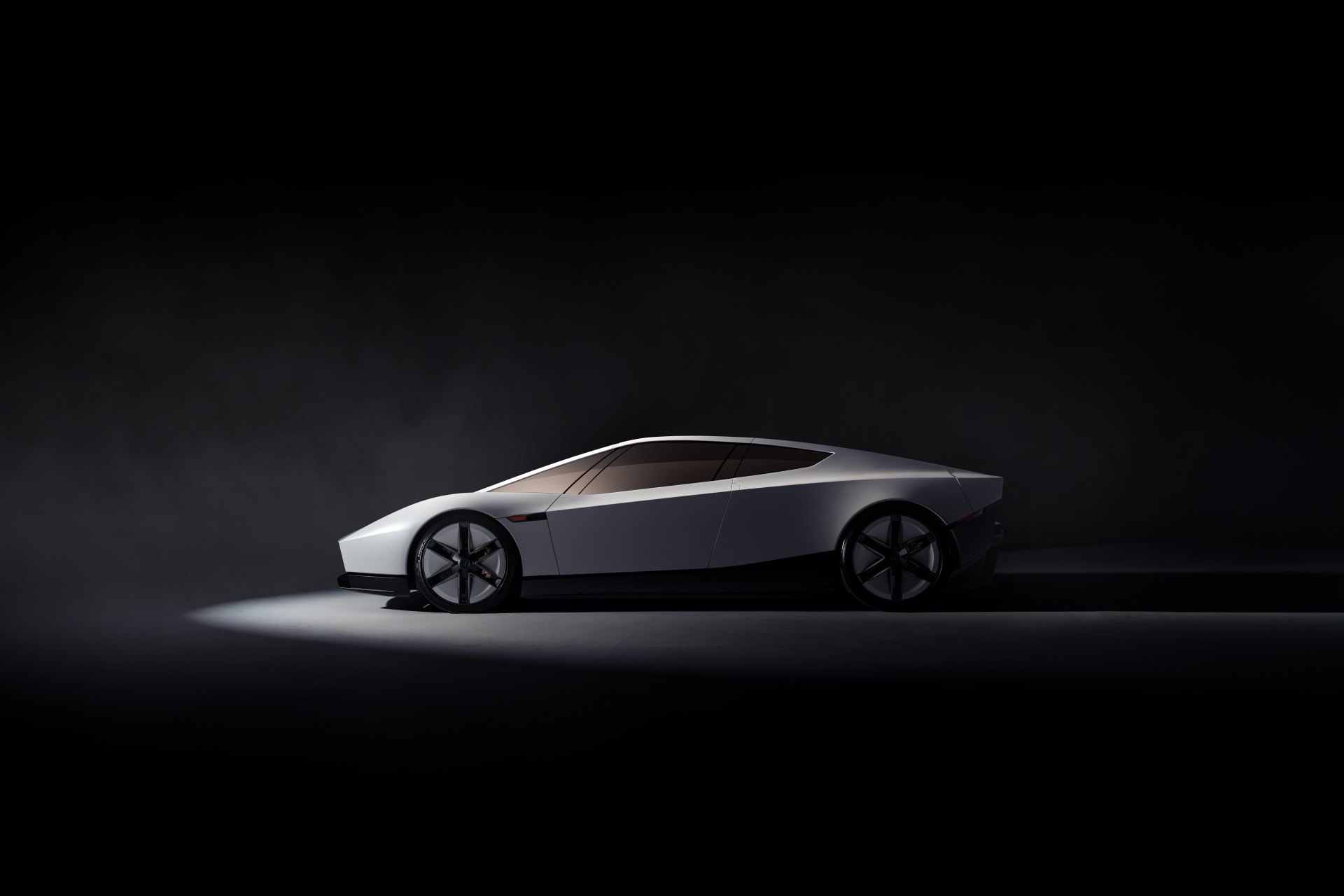
Underneath, the headline change is the drivetrain. The 2017 concept promised three motors and all-wheel drive. The 2026 car has two motors, both on the rear axle, one per wheel, with no differential.
Power figures depend on who you ask. Working from Tesla’s reveal video, InsideEVs reported 1,073 hp for the base car and 1,341 hp for the top version, which are 800 kW and exactly one megawatt. In later walkarounds with Hagerty, Top Gear and MotorTrend, Tesla vehicle engineering chief Lars Moravy described more than a megawatt, up to roughly 1,500 hp, and more torque than all three motors of a Model S Plaid. None of these is an official specification or a measured result, so treat power as somewhere between 1,073 and about 1,500 hp until Tesla publishes a number.
Why drop the front motor? Tesla hasn’t said, but the engineering logic is easy to see. Every kilogram and cubic inch matters in a car that also has to package fans, ducts and pressure vessels, and a front axle without a motor saves both. Independent rear motors also allow torque vectoring without a differential. And, crucially, a rear-drive car normally loses on launch because only part of its weight sits on the driven tires. The Roadster’s four rear fans add load exactly where the drive is. That is ECN’s analysis, not Tesla’s stated rationale, but it is the thread that ties the whole car together.
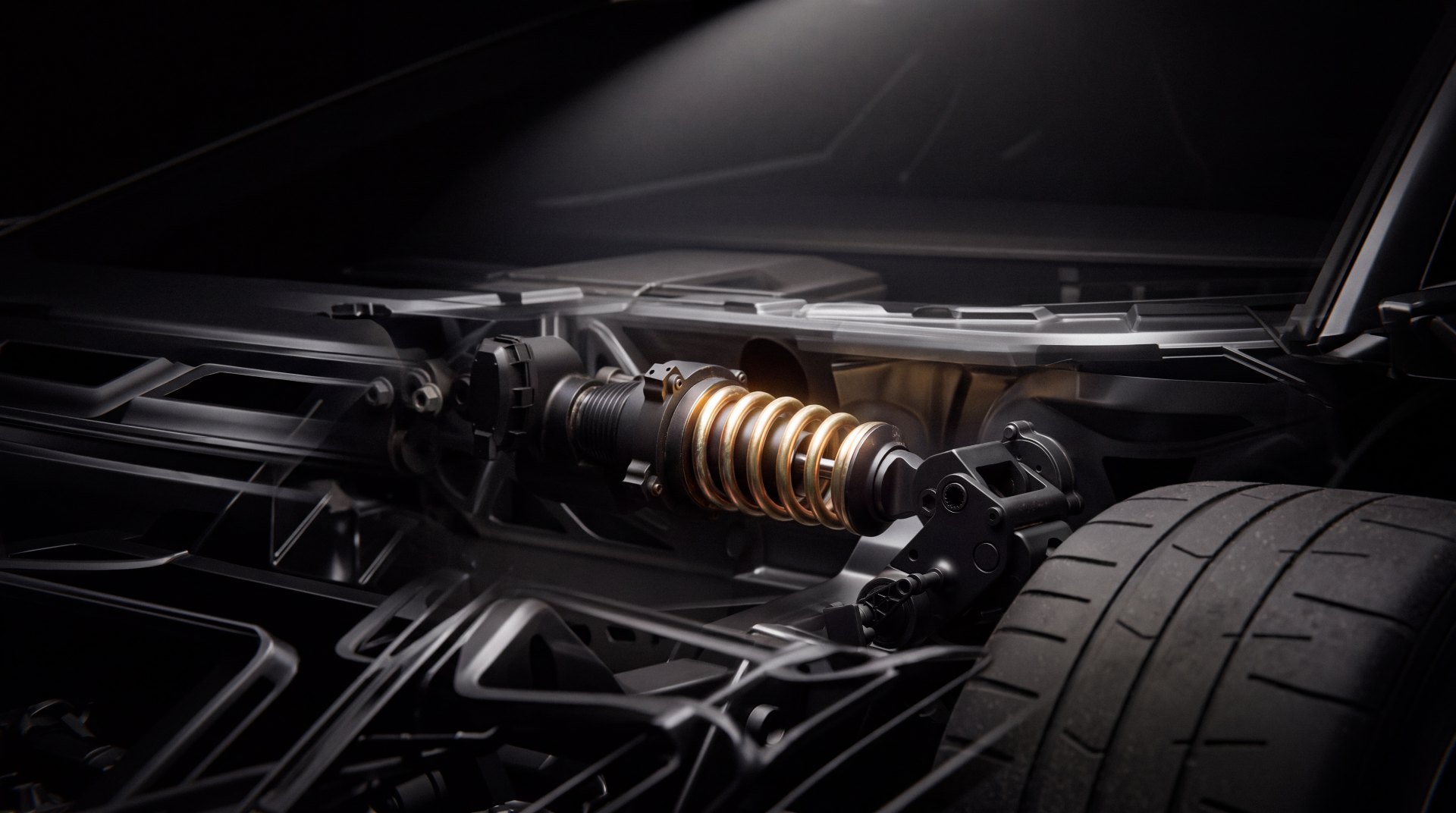
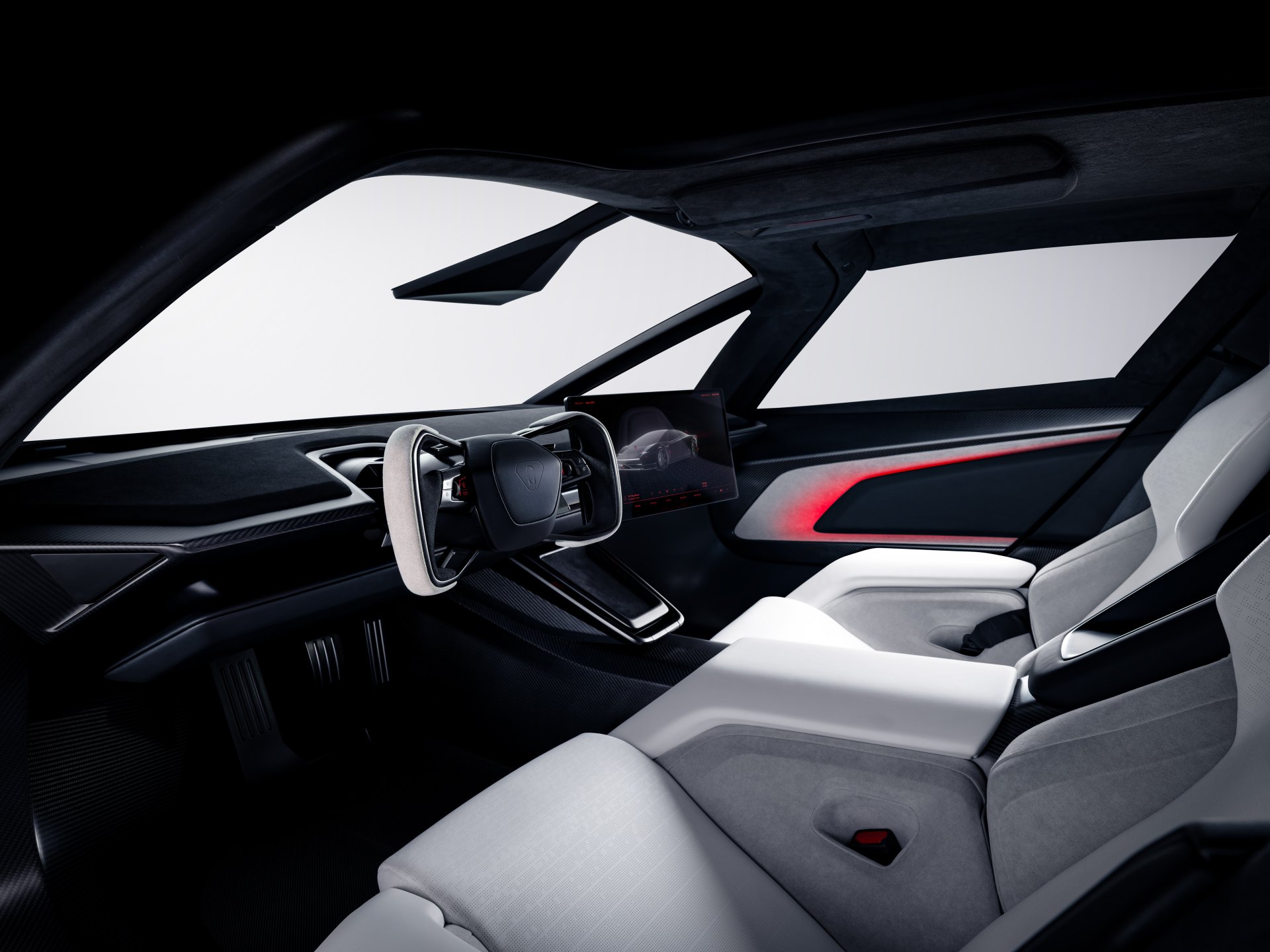
The rest of the hardware reads like a track car with a road registration in mind. Double-wishbone front and multilink rear suspension with adaptive dampers; a Track Mode that, per Tesla’s engineers, drops the body about 40 mm and stiffens it roughly threefold; steer-by-wire, brake-by-wire and throttle-by-wire; a yoke; fixed seats with adjustable pedals; removable roof panels.
The battery uses 4680 cells made specifically for the Roadster with a high-power chemistry, aluminum cans and double-sided cooling, on an 800-volt architecture. Tesla’s engineers cited a 15-to-80-percent charge in about 10 minutes and a target of 25 to 30 minutes of hard track driving per charge. Battery capacity was not disclosed. Weight is “just under” 1,700 kg, about 3,700 lb, and not final.
Tesla Roadster 2026 specifications vs. the 2017 concept
Specifications for this car have been quoted, re-quoted and occasionally mashed together for nine years. The table keeps each version separate. “Claim” means Tesla said it; nothing here has been independently tested.
| Spec | 2017 concept | 2026 Performance | 2026 Thrust | 2026 Rocket |
|---|---|---|---|---|
| Motors / drive | 3 motors, AWD | 2 rear motors, RWD | 2 rear motors, RWD | 2 rear motors, RWD |
| Power | Not stated (10,000 Nm wheel torque claimed) | 1,073–1,341 hp reported by version; engineers cite up to ~1,500 hp; no official figure | Same range, plus thrust | Same range, plus thrust |
| Battery | 200 kWh | Not disclosed; bespoke 4680 cells, 800V | Not disclosed | Not disclosed |
| Weight | Not stated | ~1,700 kg / 3,700 lb, not final | Not stated | Not stated |
| 0–60 mph | 1.9 s (claim) | Under 1.6 s (claim) | Under 0.9 s (claim); 0.81 s Tesla-timed demo | Under 0.59 s (claim) |
| 0–100 mph / ¼ mile | 4.2 s / 8.8 s (claims) | Not stated | Not stated | Not stated |
| Top speed | 250+ mph (claim) | Over 230 mph (claim)* | Over 230 mph (claim)* | Over 230 mph (claim) |
| Range | 620 miles (target) | 300+ miles (claim) | 300+ miles (claim) | 300+ miles (claim) |
| Charging | Not detailed | 15–80% in ~10 min (target) | Same | Same |
| Seats | 2+2 | 2 | 2 | 1 (tanks replace passenger seat) |
| Downforce systems | None announced | Four rear fans, drop-down skirts, active wing and bodywork | Same | Same |
| Thrusters | Promised later as a “SpaceX package” | None | Rear cold-gas thrusters | 10 cold-gas thrusters around the car |
| Reservation (U.S.) | $50,000; $250,000 Founders Series | $50,000 | $250,000, one per customer | Invitation only |
| Status | Never produced | Production targeted 2028 | “Limited”; regional legal rules apply | Not approved for public road use |
Sources: Tesla’s Roadster page and reservation flow; event remarks by Elon Musk and Lars Moravy; Tesla engineers’ interviews with Hagerty, Top Gear and MotorTrend. *Tesla’s “>230 mph” figure has been reported both for all trims and for Rocket specifically; engineers have separately mentioned 330+ mph as a target, and Musk has floated half the speed of sound. None is a measured result. Reservation amounts are deposits, not vehicle prices.
Two things jump out. Range has been roughly halved from the 2017 target, and the original 620-mile figure should no longer be attached to this car. And acceleration has gone the other way, from a once-outrageous 1.9 seconds to claims that start below one.
The physics: four tires and one stubborn number
Every conventional car lives under the same rule. The force a tire can transmit to the road is roughly its grip coefficient multiplied by the load pressing it down. More load, more grip. That is why supercar engineers obsess over tires, weight distribution, suspension geometry and aerodynamics: they are all ways of managing how hard, and how evenly, the tires are pressed into the road.
Weight is the cruel joke in that equation. Add mass and you add load, but you also add the very inertia you are trying to move. On a flat road the two largely cancel out, which is why even the stickiest road-legal tires settle somewhere around 1.2 to 1.5 g of grip, and why the quickest production cars, with all four wheels driven, average roughly 1.6 g from 0 to 60.
Now run the Roadster’s numbers. Averaged over the run, a 0–60 mph time of 0.81 seconds works out to about 33 meters per second squared, or 3.38 g. That is a simplified constant-acceleration figure; real acceleration rises and falls through a launch, and timing conventions matter. Tesla’s 0.81 seconds is timed from a standstill; Tesla says the same run is 0.67 seconds with a one-foot rollout subtracted, the convention most U.S. figures use, Rimac’s included. Rollout times should only be compared with rollout times. Either way, the scale is clear.
| Claim or record | 0–60 mph | Timing | Average acceleration | Where the force comes from |
|---|---|---|---|---|
| Roadster Rocket (claim) | Under 0.59 s | Convention not stated | 4.63 g | Tires, fans, perimeter thrusters |
| Roadster Thrust (Tesla-timed demo) | 0.81 s | From standstill | 3.38 g | Tires, fans, rear thrusters |
| Same run, rollout subtracted | 0.67 s | One-foot rollout | ~4.1 g† | Tires, fans, rear thrusters |
| Roadster Thrust (claim) | Under 0.9 s | Convention not stated | 3.04 g | Tires, fans, rear thrusters |
| Roadster Performance (claim) | Under 1.6 s | Convention not stated | 1.71 g | Rear tires, loaded by fans |
| Rimac Nevera (verified, 2023) | 1.74 s | One-foot rollout | ~1.57 g† | Four driven tires |
| Rimac Nevera R (verified, 2025) | 1.66 s | Not stated in Rimac’s release | 1.65 g | Four driven tires |
ECN calculation: 26.8 m/s ÷ time ÷ 9.81, a simplified constant-acceleration average, not a measured result. †With a rollout, the clock starts after the car has already moved a foot, so this simple average overstates true acceleration from rest. Rimac figures were independently verified (Racelogic and Dewesoft for the Nevera; Dewesoft for the Nevera R); Tesla’s were not.
Look at the Performance line first, because it is the quiet revelation. Tesla hasn’t said whether that figure uses a rollout, but either way a rear-drive car with only its own weight on its driven tires has no business getting near it. The extra load has to come from somewhere, and that somewhere is four fans at the back of the car. Now look at the Thrust and Rocket lines. No road tire on ordinary asphalt delivers three to four-and-a-half g; only Top Fuel dragsters, on enormous slicks and a glued drag strip, get near that through their tires. The extra push isn’t going through the tires at all.
That is the central idea of the car. A conventional supercar can only push against the road. The Roadster adds two more things to push against: the air beneath it, which the fans pump out, and the air behind it, which the thrusters blast into. Moravy summed up the ambition in a line that is more precise than it sounds, saying that under acceleration the car can break the laws of tire physics. Newton remains unbothered.
Suction: how the Roadster sticks to the road at zero mph
Wings and diffusers make downforce from speed. At a standstill they make nothing, and in a slow hairpin they make very little, which is why aerodynamic grip disappears exactly when many cars need it most. A fan car flips that around. Seal the space between the floor and the road with skirts, pump the air out, and the atmosphere above presses the car down whether it is doing 150 mph or zero.
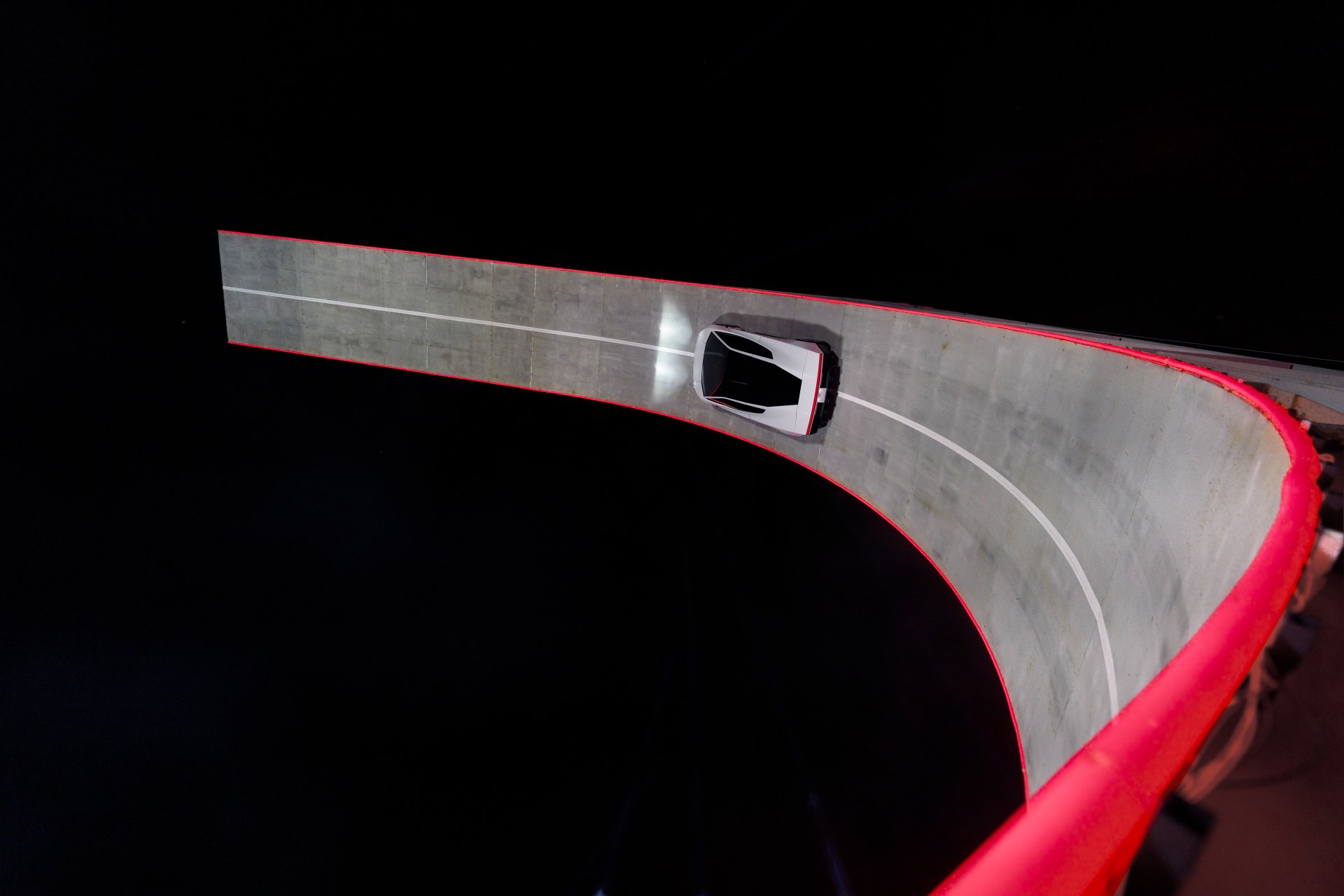
The pressure difference doesn’t need to be dramatic, but it’s worth being precise about what “2 g” means. Moravy’s figure is cornering grip: more than 2 g of lateral acceleration below about 50 mph. That is not the same as 2 g of added downforce, because tires turn load into grip with a multiplier of their own.
If the Roadster’s tires manage a friction coefficient of roughly 1.2 to 1.4, cornering at 2 g needs about 1.4 to 1.7 times the car’s weight pressing down. That means extra suction of roughly half to two-thirds of the car’s weight, about 7 to 11 kN on a 1,700 kg car. Spread over a sealed floor of perhaps four to five square meters, that is a pressure only 1.5 to 3 percent below atmospheric.
Hanging upside down is the harder test. There the fans must beat the car’s entire weight, about 17 kN, which takes a deficit of roughly 3 to 4 percent. In other words, the inverted ramp demonstrated more suction than the cornering claim strictly requires. (ECN estimate. Tesla has not published floor area, pressure or downforce figures, and tire grip falls off as load rises, which pushes the real numbers higher. Car and Driver’s separate reference to “2 g’s of downforce” covers the fans and wings together at 200 mph.)
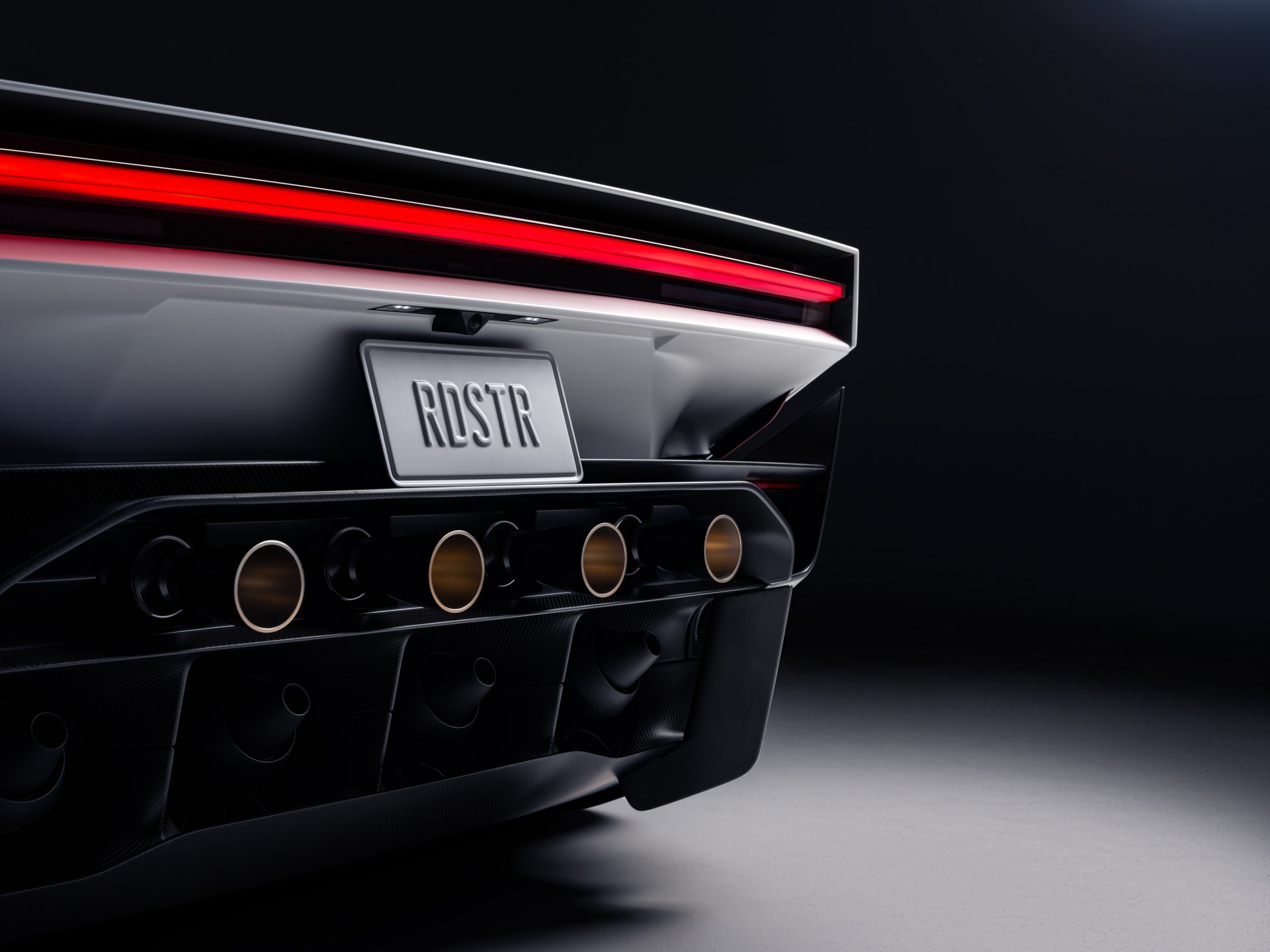
The hard part is not the vacuum. It is the leak. Every gap between the skirts and the road lets air rush back in, and the fans must pump it out as fast as it arrives. Tesla’s engineers described four rear fans of about 20 kW each, adapted from the high-voltage compressor motor in the car’s heat pump, and four drop-down side skirts made as replaceable rubber and nylon-bristle wear parts. Two modes split the job: a “sucker” mode that seals the floor for maximum grip at low speed, and a high-speed mode that opens the front and rear passages to move more air under the car while the wing and bodywork take over.
That two-mode design isn’t a guess. It is described closely in a Tesla patent granted in August 2025, which also covers ground-proximity sensors to adjust skirt height, asymmetric fan control for cornering, and mesh filters to stop rocks being pulled into the fans. Those details hint at the system’s real-world enemies: debris, potholes, speed bumps, wet roads, painted lines and noise. Tesla has not said how loud the fans are, how they perform in rain, how much range they cost, or what happens if a skirt tears at speed.
About that inverted ramp: it was real, and it is impressive. It was also a smooth, purpose-built surface, which is the best possible case for a skirt seal. It shows the system can generate more suction than the car weighs. It does not show the Roadster driving upside down across a parking-garage ceiling.
Thrust: SpaceX engineering beyond the wheels
If the fans make the tires better, the thrusters skip them entirely. Cold-gas thrusters are the simplest kind of rocket there is: no combustion, no fuel, just a tank of very high-pressure gas released through a nozzle. SpaceX uses the same principle to steer Falcon boosters. In the Roadster the gas is ordinary air.
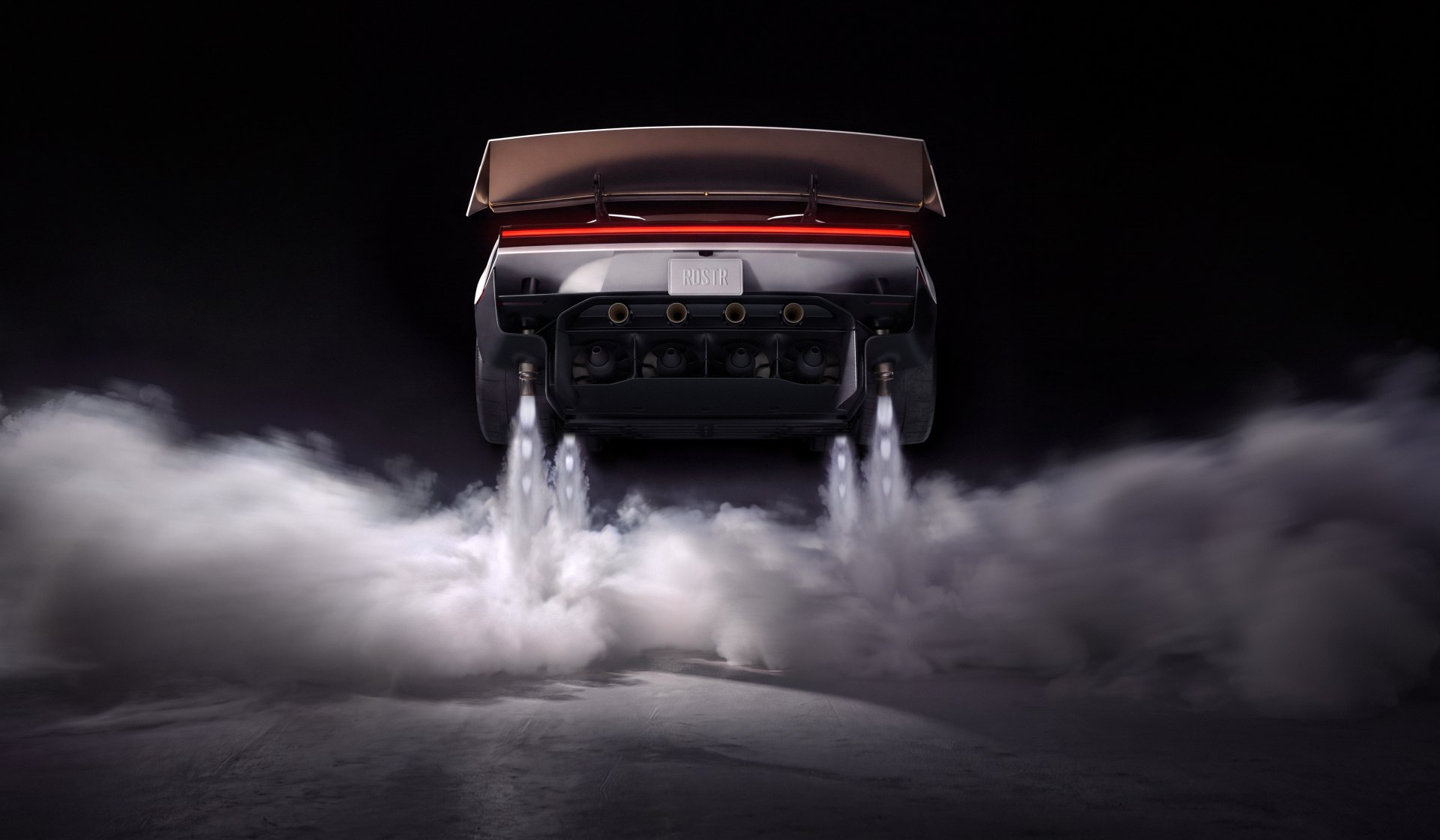
According to Tesla, the Rocket configuration carries about 600 liters of air in carbon-fiber-overwrapped pressure vessels, or COPVs, at around 10,000 psi, which works out to roughly 250 kg of air. The tanks take the place of the passenger seat, and Tesla said every usable void in the car is packed with them.
Ten nozzles around the perimeter handle forward, upward and rotational movement, trimmed by electric actuators. An onboard system recompresses the air, so there is no special propellant to buy. Event reports put the rear nozzles’ thrust above 80 kN, and Tesla said on X that the system makes four to five times the force the tires can. The Thrust trim gets only the rear-facing nozzles; the full ten-nozzle ring is reserved for Rocket.
On a 1,700 kg car, 80 kN is almost five times the car’s weight, which on paper is more push than the 0.81-second run needed. That suggests 80 kN is a peak, available only briefly or at full tank pressure, with real-world thrust lower. Either way, the real question is how long it lasts.
ECN calculation: the air budget
Compressed air is a weak rocket propellant. Even expanded perfectly, room-temperature air leaves a nozzle at less than about 780 meters per second. In practice it does worse: as the tank empties, the remaining air expands and cools sharply, its exit speed falls, and some air is always left behind because tank pressure must stay above what the nozzles need. Assume an average effective exhaust speed of roughly 400 to 650 m/s, with most but not all of the 250 kg usable, and the tank holds about 80 to 160 kilonewton-seconds of total impulse.
At the quoted 80 kN, that is roughly one to two seconds of full thrust. Holding a 1,700 kg car in the air takes about 17 kN, so the same tank buys something like five to ten seconds of hover-equivalent. Tesla engineers reportedly cited about five seconds of use per fill and a refill target of under 30 minutes, which fits a system that isn’t run at peak thrust throughout.
Simplified estimate from the reported Rocket figures (600 L at about 10,000 psi, about 250 kg of air) and assumed exhaust speeds. It ignores nozzle design and the extra air the jets entrain. Tesla hasn’t published tank figures for the Thrust trim, which may carry less air. Not a Tesla figure.
That budget may be the most important number in the whole story. A thruster-assisted run to 60 mph takes under a second, so a fill might cover one or two maximum-effort launches, depending on how hard the system is run. “Flying,” on the other hand, is a resource measured in seconds, not minutes.
The hardware also brings genuine engineering questions. COPVs are mature aerospace parts, but a COPV failure was blamed for the Falcon 9 that exploded on the pad in 2016. Storing air at 10,000 psi inside a car that might crash, be rear-ended or bake in a summer garage is a new problem for automotive safety engineers, inspectors and first responders. Tesla showed the system working. It has not explained how it will be certified, inspected or protected in a collision.
The patent trail
Tesla’s patent filings help explain how this car came together, as long as nobody mistakes a patent for a product plan.
US 12,377,920 B1, “Adaptive vehicle aerodynamics for downforce” (filed April 29, 2025; granted August 5, 2025). The closest match to what Tesla showed: multiple fans, deployable skirts, a sealed high-downforce mode for low speeds and smooth surfaces, and a side-skirts-only mode for higher speeds and rougher ground.
US 12,746,987 B1, “Electric fan car” (application filed January 2024; granted September 29, 2026). Four electric ducted fans in a rear diffuser that draw air from under the car. Its drawings show a Model S, not a Roadster, and its claims aren’t tied to any model. It establishes Tesla’s interest in fan-assisted diffusers, not the Roadster’s final design.
US 2026/0285418 A1, “Deployable and active rear wing assembly with safety features” (filed August 2025 as a continuation of a March 2025 application now listed as abandoned; published September 24, 2026; a pending application, not a granted patent). A two-piece wing that hides flush in the body, deploys for up to 700 kg of downforce, and retracts if sensors anticipate a rear impact. The drawings show a low two-door coupe that Tesla never labels a Roadster.
One detail ties them together: two inventors, David Lemire and James Michael Arthur Crook, are named on both the skirt-and-fan patent and the wing application. That doesn’t prove what’s in a production car. It does suggest one team has been building toward this aero package since at least early 2025. The skirt-and-fan patent, which ECN reviewed in full, doesn’t mention thrusters, and published descriptions of the other two don’t either.
The drawings for US 12,377,920 B1, showing the fan ducts and skirts on a car’s underside, are viewable on Google Patents.
Fan cars before Tesla
Tesla didn’t invent the fan car, and its engineers don’t claim to. In 1970, Jim Hall’s Chaparral 2J used a separate snowmobile engine to drive two fans that pulled air from under a skirted floor in Can-Am racing. It was devastatingly quick and quickly outlawed. In 1978 Gordon Murray’s Brabham BT46B used an engine-driven fan, justified as a cooling device, and won its only Formula One race, in Sweden with Niki Lauda, before Brabham withdrew it. Murray later brought a fan back for the road-going T.50.
The modern benchmark is the McMurtry Spéirling, a sub-1,000 kg electric single-seater whose fans are claimed to produce about 2,000 kg of downforce from a standstill. In 2022 it set the outright Goodwood Festival of Speed hillclimb record of 39.08 seconds, and McMurtry later drove a Spéirling upside down before independent adjudicators. Tesla’s inverted-ramp stunt was, in a sense, a tribute act.
What is new is the combination. The Chaparral had one problem to solve, the Brabham had a rulebook to dodge, and the McMurtry is a track car. Tesla is trying to integrate fans, skirts, an active wing, moving bodywork, independent rear motors and, optionally, thrusters into something it intends to register for the road. The innovation, if it arrives, will be in the software that makes all of those systems agree with each other.
One car, many forces
Here is the part the viral clips can’t show. Each system on the Roadster changes how the others behave. Fan suction changes tire load, which changes how much torque each rear motor can use. The wing changes balance front to rear. Skirt sealing depends on ride height, which changes with Track Mode, speed and load. Thrust adds a force that doesn’t go through the tires at all, so the stability system has to know it’s there. In the air, only the thrusters steer, and the landing hands control back to tires and suspension in a fraction of a second.
Each piece has been demonstrated somewhere before; making them work together, reliably, in a car a customer can buy is the genuinely hard part. So is planning for failure: a fan that quits mid-corner, a skirt torn off on a curb, a thruster valve that sticks. Tesla’s patents describe pressure sensors and fault detection, but Tesla hasn’t said how the production car behaves when something fails. It has said some of the car’s actuators come from its Optimus robot program, without offering more detail.
Flight, or a very good jump?
Tesla calls the Rocket “air ready,” and Musk declared that flying cars are real. It’s worth being precise. What the Roadster did on October 15 sits on a spectrum:
- A jump is ballistic. Once you leave the ramp, physics decides where you land.
- A powered airborne maneuver uses thrust to change that path: to rotate, lift briefly or soften a landing. This is what the Roadster demonstrated.
- Sustained flight means holding altitude and going somewhere under control for minutes, not seconds. Nothing shown, and nothing in the air budget above, suggests the Roadster can do that.
The demo car ran with nobody aboard and, according to pre-event reporting by The Information, was remotely operated, with spectators kept hundreds of yards away partly because of noise. Motor1 described the inverted-ramp flip as tethered; Tesla hasn’t detailed the rigging, and ECN could not confirm that independently. Either way, controlled pitch, roll and yaw on ten nozzles, followed by a clean landing, is a legitimate piece of engineering. A flying car it isn’t. Tesla’s own Roadster page says the Rocket is not approved for public road use, and nobody has suggested it has any form of aviation approval.
Could the Roadster rewrite the record books?
Musk said the fan system will let the Roadster shatter track records. Maybe. But “record” means different things in different places, and the rules matter as much as the hardware.
Acceleration. The 0.81-second run was timed by Tesla. Tesla also said the run works out to 0.67 seconds with a one-foot rollout subtracted, the convention U.S. magazines use and the one Rimac used for the original Nevera’s records. That distinction is vital: the like-for-like comparison is 0.67 seconds against the Nevera’s 1.74, which Racelogic and Dewesoft verified on unprepared asphalt with road-legal tires. Rimac’s release for the Nevera R’s 1.66 seconds says it was verified by Dewesoft but doesn’t state the rollout convention. Until someone independent straps timing gear to a Roadster, there is a claim, not a record.
Tesla’s official post of the 0–60 mph run
— Tesla (@Tesla) October 16, 2026
Quarter mile. Thrust is a launch weapon. Over a quarter mile, one to two seconds of full thrust is spent in the first few hundred feet, after which a Thrust Roadster becomes a 1,700 kg rear-drive EV with an empty tank. Its elapsed time would likely be strong; its terminal speed would depend on the drivetrain. Tesla hasn’t claimed a quarter-mile time.
Cornering. This is where the fans are most plausible. Moravy claimed more than 2 g of cornering from 0 to 50 mph, the range where wings do almost nothing. But tires suffer from load sensitivity: double the load and the grip rises by less than double. More suction helps, with diminishing returns, and it costs energy every second it runs.
Braking. Extra downforce shortens tire-limited stops, so the fans should help. Thrusters are another matter. The Thrust trim’s nozzles point backward. Musk promised braking help from thrusters back in 2018, but Tesla has not shown or claimed that the production hardware can meaningfully slow the car.
Lap records. Nobody should predict a Nürburgring time for this car yet. A Nordschleife lap is seven-plus minutes of braking, cooling and energy management. The fans draw power continuously, the battery target is 25 to 30 minutes of hard track use, and the thrusters are spent within seconds. A car optimized for a spectacular launch is not automatically the fastest car around a full lap.
Eligibility. Here’s the genuinely interesting question. Production-car acceleration records assume the tires do the work. Drag racing has long kept jet- and rocket-powered cars in exhibition categories of their own. Fan cars have been barred from most racing series for decades, though Goodwood’s hillclimb welcomed the McMurtry. If a Roadster runs 0.67 seconds with thrust, is it competing in the same contest as a Nevera R? We’d argue it’s a different, equally fascinating contest.
The quiet irony is that the trim most likely to take a mainstream production-car acceleration record is the one without thrusters: a fan-assisted Performance car beating the Nevera R’s 1.66 seconds, independently timed on the same basis, would be a record nobody could dispute.
How it stacks up
| Car | 0–60 mph | Verification | Grip/propulsion approach | Notable benchmark |
|---|---|---|---|---|
| Tesla Roadster (Thrust) | 0.81 s (0.67 s with rollout) | Tesla-timed demo | RWD, fans, rear cold-gas thrust | None independently set yet |
| Rimac Nevera R | 1.66 s | Dewesoft-verified; rollout convention not stated | Four motors, AWD, conventional aero | ¼ mile in 7.90 s |
| Rimac Nevera | 1.74 s | Racelogic and Dewesoft, one-foot rollout | Four motors, AWD | 23 performance records in one day (2023) |
| McMurtry Spéirling | Under 1.5 s (claim) | Manufacturer claim | Fan downforce, ~2,000 kg at standstill (claim) | Goodwood outright record, 39.08 s (2022) |
Rimac figures from Rimac’s published, independently verified records; the Roadster’s 0.67 s and the Nevera’s 1.74 s are the like-for-like rollout pair. McMurtry hillclimb time from the 2022 Goodwood Festival of Speed timed shootout.
Credit where it’s due: Rimac got to 1.66 seconds with nothing but four tires and very clever torque control, and McMurtry proved the fan concept at speed, in competition, years before Tesla’s demo. The Roadster’s distinction so far is its toolkit, not its results.
The ownership test
Imagine the transporter has just dropped off your Thrust Roadster. What does living with it involve?
The thrusters. The car refills its own tanks with an onboard compressor; Tesla is targeting under 30 minutes. When the air is gone, the Roadster is still a very fast electric car with fans. What isn’t known: how often the pressure vessels must be inspected, what they cost to replace, how they’re treated after a crash, and where you’re allowed to use them. Tesla’s U.S. order page notes that regional legal requirements apply to Thrust, and Musk acknowledged the features may not be legal everywhere. Firing supersonic jets of air on a public road is not something most regulators have written rules for.
The fans and skirts. Skirts are consumables, which is honest engineering. Expect replacement intervals, filter cleaning and fan servicing. Wet roads, gravel, painted lines, steep driveways and speed bumps will all test the seal.
Tires, brakes and battery. A car generating 2 g in slow corners will be hard on rubber. We’ve written about why supercars need tires engineered for one specific car; the Roadster will need that more than most.
Insurance and safety. Earlier this year Musk told a podcast that “if safety is your number one goal, do not buy the Roadster.” No crash-test, insurance or warranty details exist yet. Expect the practical answer to be that the most extreme features are track and private-venue tools, and that the Rocket is a show vehicle you’re invited to own.
The last car Tesla wants you to drive
There’s a paradox at the heart of this machine. Tesla is betting its future on cars that drive themselves, and Musk has said that, long term, the Roadster will be the only manually driven car Tesla makes. Tesla calls it the best of the last human-driven cars.
Yet almost everything that makes the Roadster special is mediated by software: steer-by-wire, brake-by-wire, fan control, wing angle, thruster valves. Whether that adds up to a car that feels alive or one that feels like a superbly tuned simulator is a question no road test has answered. The physical choices are encouraging. Fixed seats, adjustable pedals and a ruthless focus on weight are race-car decisions, the kind of thing enthusiasts celebrate in the last manual supercars. But acceleration has never been the whole story; as we’ve argued, emotion is the new battleground. A great Ferrari was never loved for its 0–60 time alone.
Why Tesla built it, and what might escape
Musk has been candid that the Roadster probably won’t move Tesla’s revenue much. Like the 2008 original, which existed to prove an electric car could be desirable, it is a halo car, and this time a joint Tesla–SpaceX engineering showcase.
Its longer-lasting contribution may be the technology that trickles out. Electric downforce that works at any speed suits EVs, which already carry big high-voltage batteries; Tesla’s own fan-car patent shows the idea on a sedan. Active wings, high-power fast-charging cells and integrated vehicle-dynamics software are plausible candidates for wider use. Thrusters on a family Model Y are not, and none of this is a confirmed product plan.
Nine years from reveal to “2028”
The Roadster was unveiled as a surprise at the end of the Semi event in November 2017 with a 2020 delivery target. It was delayed in 2020, 2021, 2023 and 2024 as the Model 3, Model Y and Cybertruck took priority. Musk then aimed for a demo by the end of 2025, then April 1, 2026, then the spring and August. A demo planned for October 1 in Texas was pushed two weeks by the weather.
Now Musk says production begins in 2028. Tesla’s engineers said four or five prototypes exist, with a larger build planned early next year. There is no price. Reservations take a $5,000 payment followed by the balance by wire within 10 days, $50,000 in total for Performance or $250,000 for Thrust, and Tesla’s agreement describes them as reservations, not orders. Two well-known 2017 reservation holders, Marques Brownlee and Sam Altman, have said they canceled. A reservation is a place in line, not a delivery date.
What Tesla demonstrated, and what remains unproven
| Claim | Shown | Still unproven |
|---|---|---|
| Sub-one-second 0–60 | A 0.81 s run, timed by Tesla | Independent timing; repeatability; the sub-0.59 s Rocket claim |
| Driving upside down | Inverted run on a purpose-built ramp, unmanned | Real-world surfaces; sealing in rain and over debris |
| A “flying car” | Powered hops, rolls and landings lasting seconds | Sustained flight; aviation approval; road use of the Rocket |
| SpaceX propulsion | Cold-gas thrusters fed by COPVs | Crash safety, inspection, refill time, cost |
| Record-breaking | Nothing independently timed yet | Lap times, braking, thermal endurance, rule eligibility |
| Road-legal production car | A prototype and a reservation page | Price, certification, final specs, the 2028 start |
Beyond the thrusters
Strip away the fireworks and the October 15 demonstration showed something real. Tesla has built a car that can press itself into the ground with more than its own weight at zero mph, and push itself forward with more force than any tire can deliver. Those are not tricks. They are applied physics, executed with a confidence that would have been science fiction a generation ago.
But a prototype capability, a production promise and a verified performance record are three different things, and on October 15 Tesla delivered only the first. The air budget says the flights are measured in seconds. The rulebooks say the most dramatic numbers may need categories of their own. And the calendar says this car has missed every date it has ever been given.
For a century, engineers have asked how much performance they could squeeze from four small patches of rubber and the road. The Roadster asks a different question: what happens when the tires are no longer the only way a car can push, grip and steer? Tesla has shown it has an answer. In 2028, it has to show that answer can survive a parking lot, a rainstorm and a stopwatch it doesn’t control.
Frequently asked questions
How fast is the 2026 Tesla Roadster?
Tesla claims 0–60 mph in under 1.6 seconds for the Performance version, under 0.9 seconds with the Thrust augment and under 0.59 seconds for the Rocket, plus a top speed above 230 mph. At the reveal Tesla timed a 0.81-second run (0.67 seconds with a one-foot rollout). None of these figures has been independently verified.
How do the Tesla Roadster’s thrusters work?
They are cold-gas thrusters: compressed air stored at about 10,000 psi in carbon-wrapped pressure vessels is released through nozzles. There is no combustion, and Tesla says the car recompresses the air itself. By ECN’s estimate, a full tank delivers roughly one to two seconds of full thrust.
Can the Tesla Roadster really drive upside down?
Its fan-and-skirt suction system held the car on an inverted, purpose-built ramp during the reveal. That shows the fans can generate more than the car’s weight in downforce, but not that it can do so on ordinary surfaces.
Is the flying Tesla Roadster street legal?
Tesla says the single-seat Rocket version is not approved for public road use. The Thrust version’s U.S. order page says regional legal requirements apply. Tesla has not detailed certification plans.
When can you buy a Tesla Roadster, and how much does it cost?
Musk says production starts in 2028. Tesla has not announced prices. Reservations are $50,000 for Performance and $250,000 for Thrust; the Rocket is invitation only.
About the images: Photographs and renderings of the Roadster are courtesy of Tesla, Inc. and are used editorially; some are Tesla studio images rather than photographs taken at the October 15 event. ECN calculations are simplified estimates, labeled where they appear.
Sources: Tesla Roadster page and reservation terms; Tesla posts on X; event remarks by Elon Musk and Lars Moravy; Tesla engineers’ interviews with Hagerty, Top Gear and MotorTrend; reporting by TechCrunch, Car and Driver, InsideEVs, Motor1 and The Information; US 12,377,920 B1, US 12,746,987 B1 and US 2026/0285418 A1 (USPTO); Rimac record data; McMurtry Automotive.