
Porsche is about to put a long-running motorsport argument on the stopwatch. When the 2026 Porsche Esports Supercup World Championship ends on October 24, up to five of the world’s best sim racers will be invited to a selection process in Cologne. Up to two will get a test in a real race car, and one is meant to receive Porsche Motorsport support for a debut in a Porsche one-make cup in 2027. The question is no longer whether sim racers are fast. It is whether that speed survives contact with heat, G-forces and consequences.
What You Need to Know
- The program: Porsche has turned its Esports Supercup, raced on iRacing, into the first stage of a driver-selection process that ends in a real car.
- The proof case: Three-time iRacing world champion Joshua Rogers won races in his first real season of Porsche competition in 2026 and missed the title by five points.
- The catch: A simulator can teach lines, braking and racecraft. It cannot fully reproduce physical load, real consequences or the feel of a car through the seat.
- The bigger shift: Sim racing doesn’t make motorsport cheap, but it lets a manufacturer find talent before that talent has a racing budget.
From a screen to a selection process
For generations, the route into professional racing has looked roughly the same: karting, junior formulas, club racing, driver schools, testing, sponsors, family money, and then one opportunity after another to move up. Porsche is testing a route that starts somewhere else entirely.
According to Porsche’s season announcement, the 2026 World Championship brings 32 drivers together for five races on virtual versions of Spa-Francorchamps, Silverstone, Suzuka, Interlagos and Monza, with a $30,000 prize pool. Getting there took months: a global open qualifier, then regional championships in which up to 32 drivers per region fought for eight World Championship places.
The prize money is not the point. Porsche doesn’t plan simply to hand the champion a race car. It plans to narrow the field in stages: up to five candidates assessed at the Porsche Esports Performance Center in Cologne, up to two of them tested on a real circuit, and one supported toward a Porsche one-make cup, as Porsche set out in an October newsroom feature. That structure tells you what Porsche is really looking for. Qualifying speed earns an invitation. Adaptability, racecraft, physical capacity and the ability to work with engineers decide what happens next.
| Championship | 2026 Porsche Esports Supercup World Championship (iRacing) |
| Field | 32 drivers, five virtual rounds |
| Season finale | October 24, 2026 |
| Selection | Up to 5 invited to Cologne; up to 2 to a real-car track test |
| The prize that matters | Porsche Motorsport support toward a Porsche one-make cup in 2027 |
Porsche already has one answer
The Australian Joshua Rogers makes the idea hard to dismiss. He is a three-time iRacing world champion and drives for the Porsche Coanda Esports Racing team. In 2026 he also went real-world racing, in a 718 Cayman GT4 RS Clubsport with Team Parker Racing in the Porsche Sprint Challenge Great Britain.
He was on the podium at his debut weekend. At Silverstone he took pole and won all three races of the day, Porsche says, and about two weeks later he won again at the final round, ending his first season just five points short of the title. That doesn’t prove every fast sim racer can become a professional driver. It does show that skills built in a simulator can still matter when the pixels disappear.
This isn’t a racing game on the couch
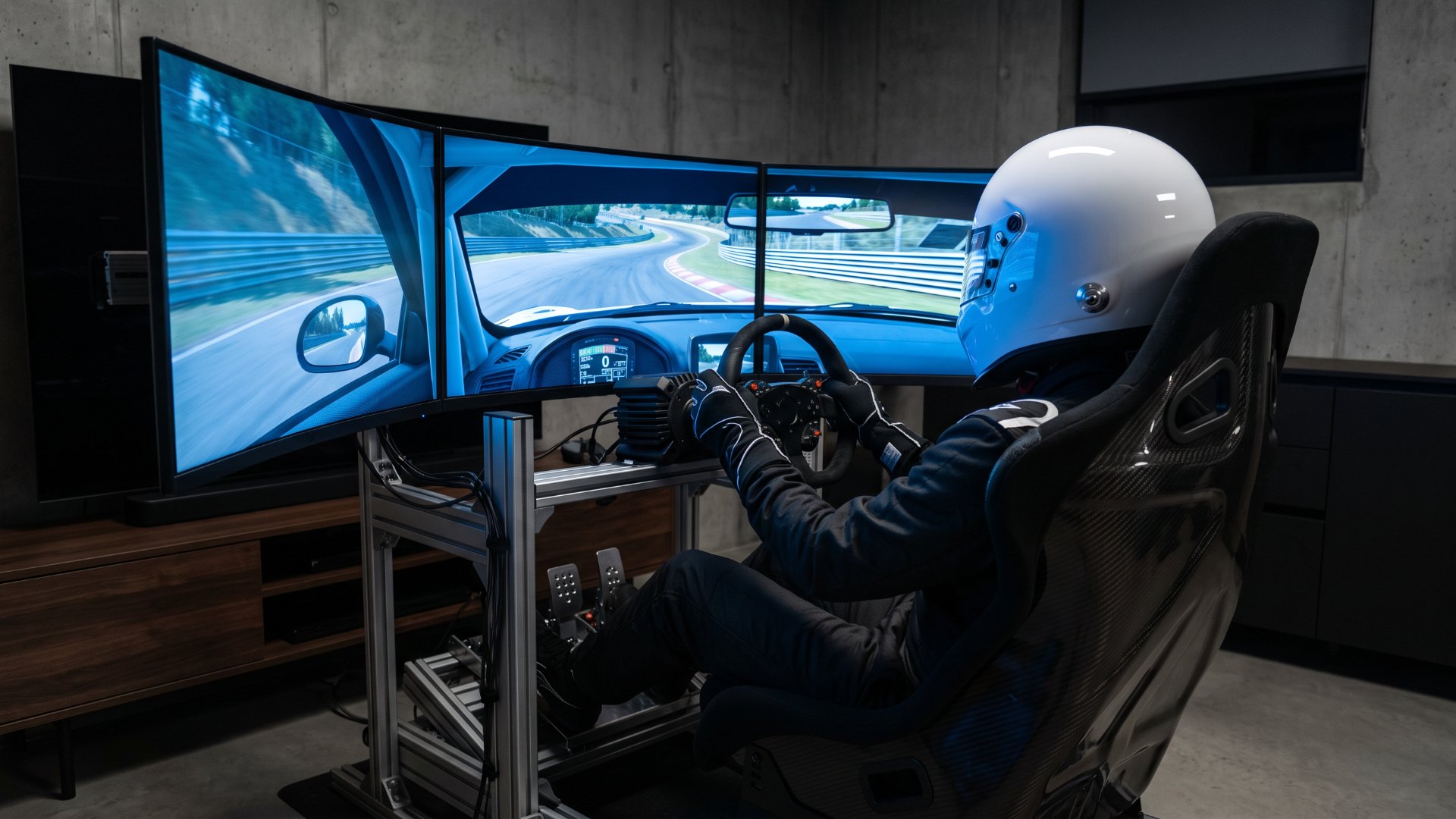
“Video game” undersells what elite sim racers actually do. They drive with a steering wheel and pedals, not a controller, on laser-scanned circuits, in software that models tire behavior, balance, braking, fuel load and track conditions. Rogers trains four to six hours a day, five days a week, and told Porsche his heart rate sits around 140 to 160 beats per minute in the simulator, against roughly 180 in a real car.
None of that makes a simulator identical to a car. But the skills being tested go well beyond reaction time: braking points, race lines, car placement, throttle application, tire management, traffic, strategy and consistency, all processed at once while racing other people. Those are racing skills whether the car is physical or digital.
What actually transfers
Porsche recently put Rogers alongside Nick Tandy, the 2015 Le Mans winner who has also raced seriously in simulators, including the 2020 virtual Le Mans, where the two shared a car. They came at the question from opposite directions, and their answers mirror each other.
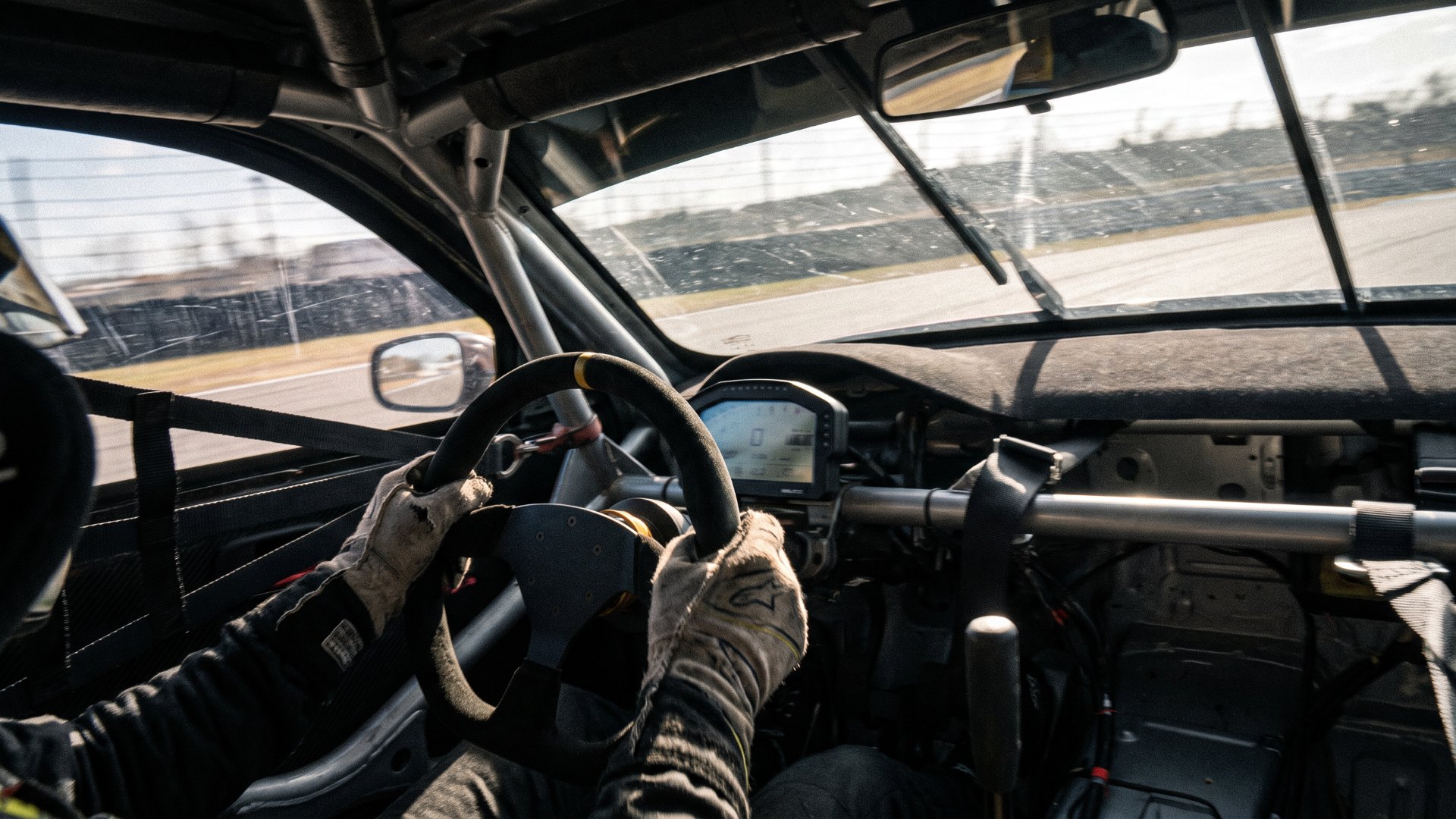
When Rogers first drove a real race car, much of what he had learned virtually made immediate sense. What changed was the volume of information. The steering wheel was no longer the main source of feedback; the whole car was talking. Acceleration pressed him back, braking pushed him forward, cornering loads came through the seat. His job became connecting those new sensations to things he already understood.
Tandy hit the opposite problem. He had spent years feeling tire wear through the car. In the simulator that physical signal was missing, so he learned to read the same information from sound instead. That exchange explains why simulation can teach racing without recreating all of it. Tandy’s verdict, as Porsche reports it, is that the best sim racers will also be fast in real cars, provided they have the ambition and dedication.
A laboratory, not a substitute
The simulator’s biggest advantage has little to do with realism. It allows mistakes, lots of them. Rogers says he doesn’t chase the fastest possible virtual lap and avoids habits that only work in a simulator. Instead he experiments. For a single corner he might try around 15 variations of line and braking point, expect about five to work, and take the best three to the real track.
Doing that in a real car costs tires, fuel, engine life, track time and possibly bodywork. In a simulator, a restart takes seconds. That changes how a driver learns. The simulator becomes less a replacement for driving and more a laboratory for it.
What a screen still can’t reproduce
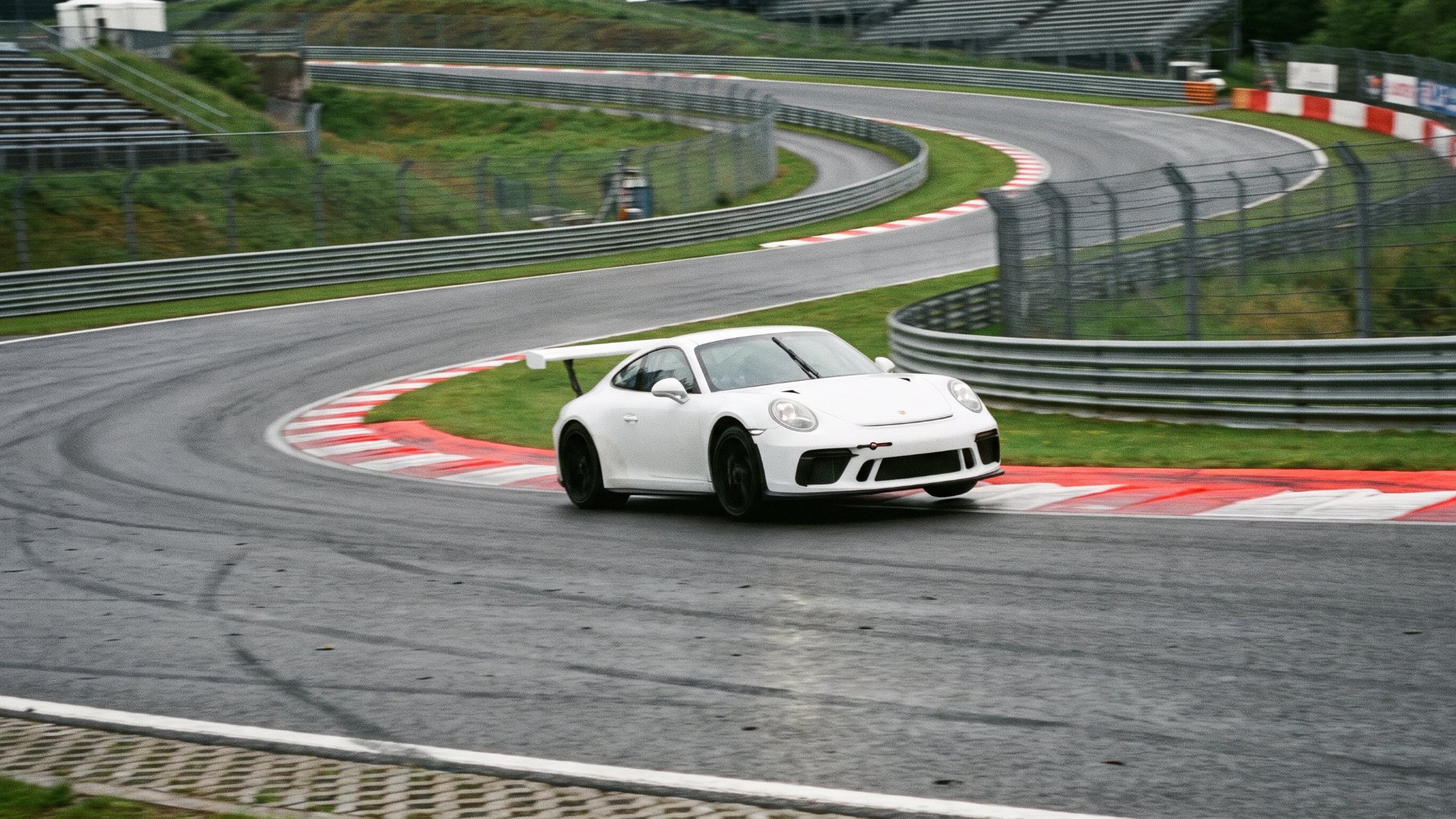
Real racing is physical and dangerous. Drivers perform through heat, vibration, noise, repeated heavy braking and sustained cornering load on the neck and core, and a simulator can only approximate that. More important is consequence. A virtual mistake ruins a race. A real one can destroy a car or hurt someone, and knowing there is no reset button changes how a driver commits to a corner.
Then there is everything around the driving: working with engineers and mechanics, reading weather, managing a car whose balance shifts over a stint, learning a circuit with limited running, and staying sharp while physically tired. None of that shows up on an online leaderboard, which is presumably why Porsche’s process doesn’t end there.
Motorsport has tried this before
The best-known precedent is Nissan and PlayStation’s GT Academy. Jann Mardenborough won it in 2011 after beating more than 90,000 entrants, then built a genuine career: a class podium at Le Mans in 2013, a GP3 race win, four Japanese Formula 3 victories and a Super GT win in the GT300 class in 2016. Gran Turismo’s reach goes beyond the track, too: the generation that grew up on it is now buying the cars it first drove on a screen.
McLaren’s World’s Fastest Gamer competition followed a similar logic. Its first winner, Rudy van Buren, became a McLaren simulator driver, and 2019 winner James Baldwin went on to race GT3 cars in the real world.
What is different now is permanence. Those were headline competitions. Porsche is wiring its regular esports championship directly into its real-world driver-development structure, season after season.
Why It Matters
Motorsport has always been brutally expensive. Talent matters, but money usually decides whether talent gets enough chances to develop: karting, transport, coaching, entries, testing, tires and ever more expensive cars. Plenty of quick drivers have disappeared because the budget did.
Sim racing doesn’t fix those economics. Anyone who reaches real competition still needs a car, a team, equipment and track time. What it changes is the beginning. A teenager nowhere near a kart track can learn race lines and compete internationally, and a manufacturer can evaluate thousands of drivers digitally before spending money on a real test. The traditional ladder finds drivers who already have access to racing. Simulation can find them before they do.
Porsche has its own reasons to care. Porsche Motorsport vice president Thomas Laudenbach says esports connects the brand with a younger, tech-focused audience, and that simulation plays a growing role in race preparation and in developing both race and road cars. Engineers already test ideas in simulators and teams prepare circuits there before their trucks arrive. Driver selection may simply be the next connection between the virtual and physical sides of the sport.
Simulation teaches the language
Porsche’s experiment won’t prove that a computer can build a racing driver from nothing. That was always the wrong question. Simulation can develop and reveal some of the skills a driver needs; real racing demands more. Rogers is a useful example precisely because he has lived both. His virtual career gave him an unusually advanced understanding of driving, and the track then taught him everything around it.
If one of this year’s finalists earns a place in Porsche competition in 2027, it won’t mean anyone good at a racing game can turn professional. It will mean something more interesting: the place a racing career begins no longer has to be a kart track. It could be a bedroom, a simulator, and a stopwatch that doesn’t care where the driver learned to be fast.
FAQ
Can sim racers become real racing drivers?
Some have. Jann Mardenborough went from GT Academy to Le Mans, and Joshua Rogers won races in his first real Porsche season in 2026. Simulator speed is a strong signal, but physical fitness, racecraft under real consequences and working with a team still have to be proven in a real car.
How does the Porsche Esports Supercup talent program work?
After the 2026 World Championship, up to five drivers are invited to a selection process at the Porsche Esports Performance Center in Cologne. Up to two get a test in a real race car, and one is meant to receive Porsche Motorsport support for a debut in a Porsche one-make cup in 2027.
What platform does the Porsche Esports Supercup use?
The series runs on iRacing, with qualification through national esports championships or a global open qualifier, then regional championships that feed the 32-driver World Championship.
What can’t a racing simulator teach?
It can’t fully reproduce sustained G-forces, cockpit heat, the feel of the car through the seat, or the risk of a real crash. Real racing also demands skills such as working with engineers and mechanics and managing a car over a stint, which a leaderboard can’t measure.