
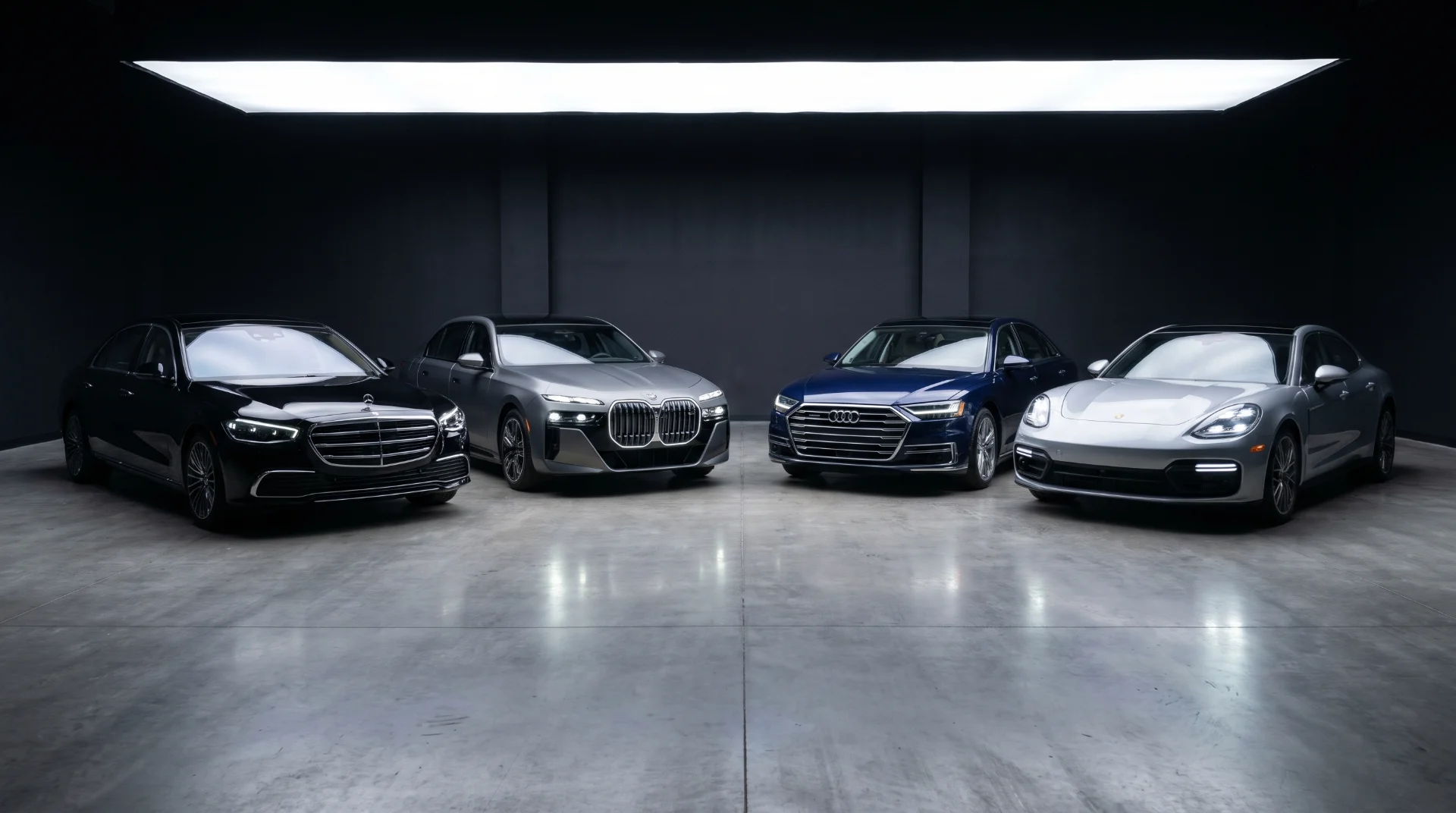
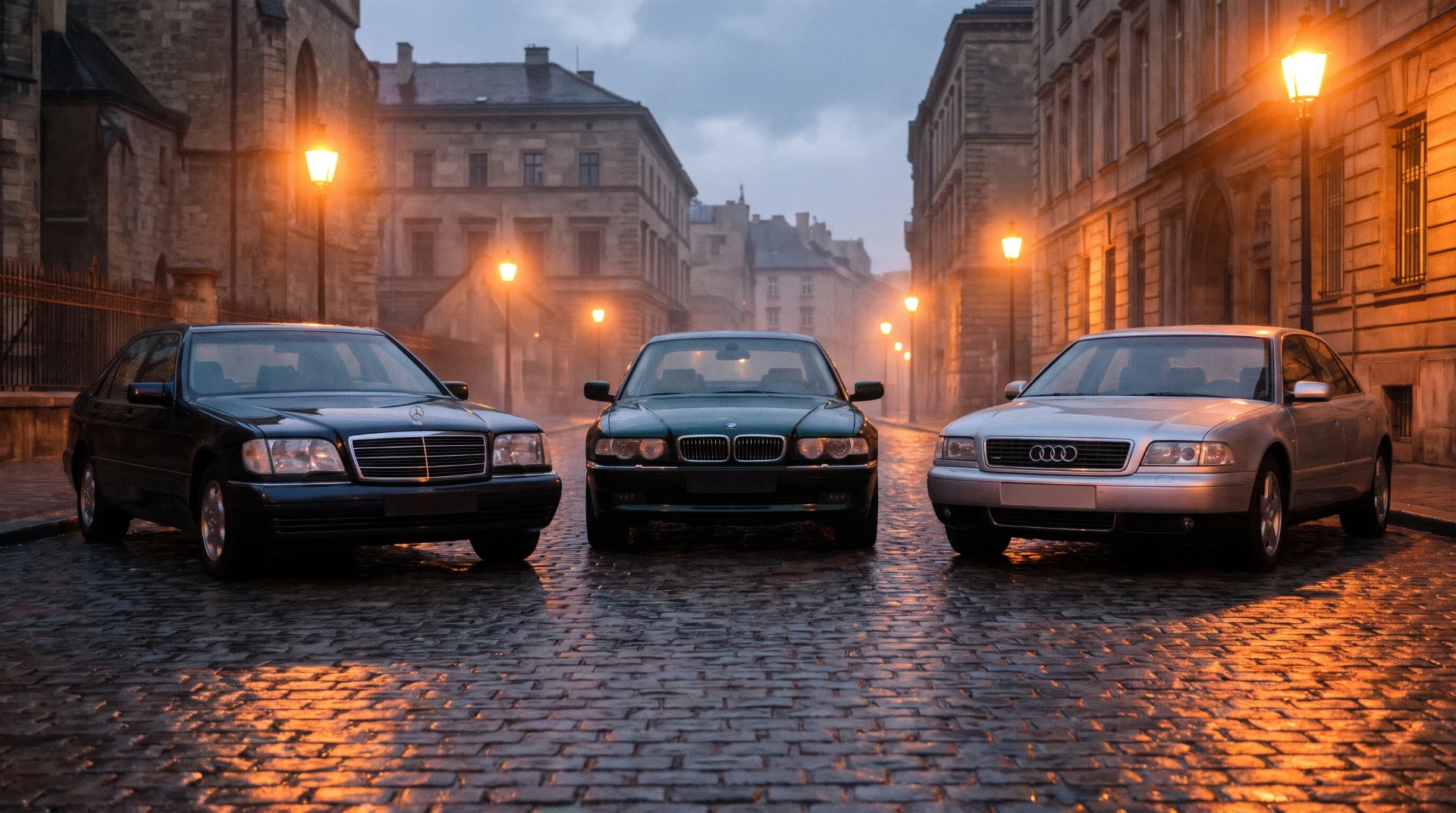
In March 1991, Mercedes-Benz rolled out the W140 S-Class at the Geneva motor show. It was enormous, double-glazed, powered in its top form by the company’s first production V12, and engineered with such thoroughness that its cost became part of its legend. Three years later, at the same show, Audi unveiled the A8, a car that weighed less than its size suggested because its body was made of aluminum. Weeks earlier, BMW had revealed the E38 7 Series, lower and leaner than the Mercedes, built around the idea that the person paying for a luxury car might also want to drive it.
Three answers to one question, presented within three years of each other: what should the best car a company can build actually be?
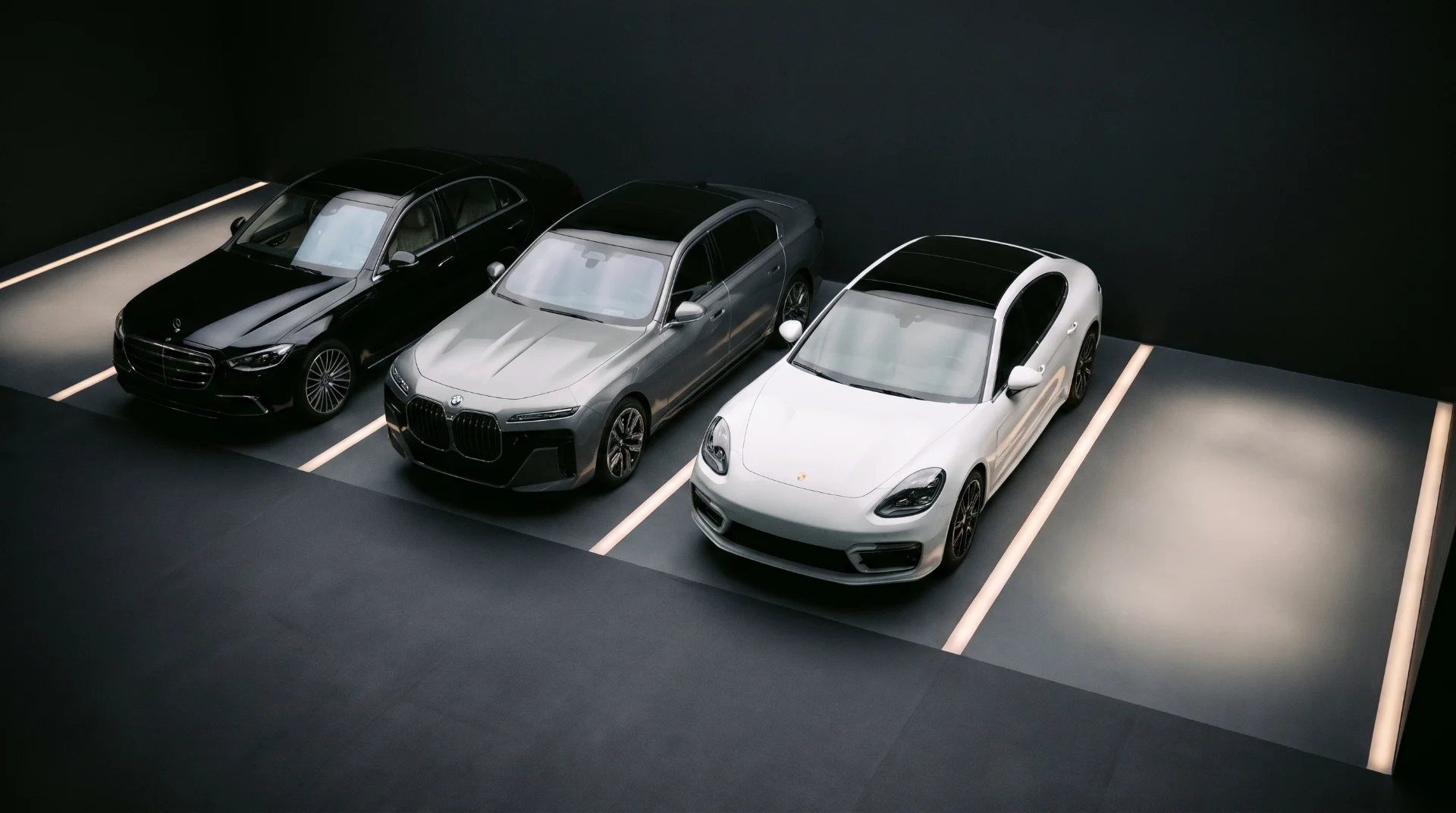
Some images in this feature are editorial illustrations, not manufacturer or period photography.
That question has never had one answer in Germany, and that is what makes the history of German flagship sedans worth telling. Each maker started from a different place, and each answer carried a philosophy that still shows in today’s S-Class, 7 Series, A8 and Panamera, and even in the cars that sit far below them in the showroom.
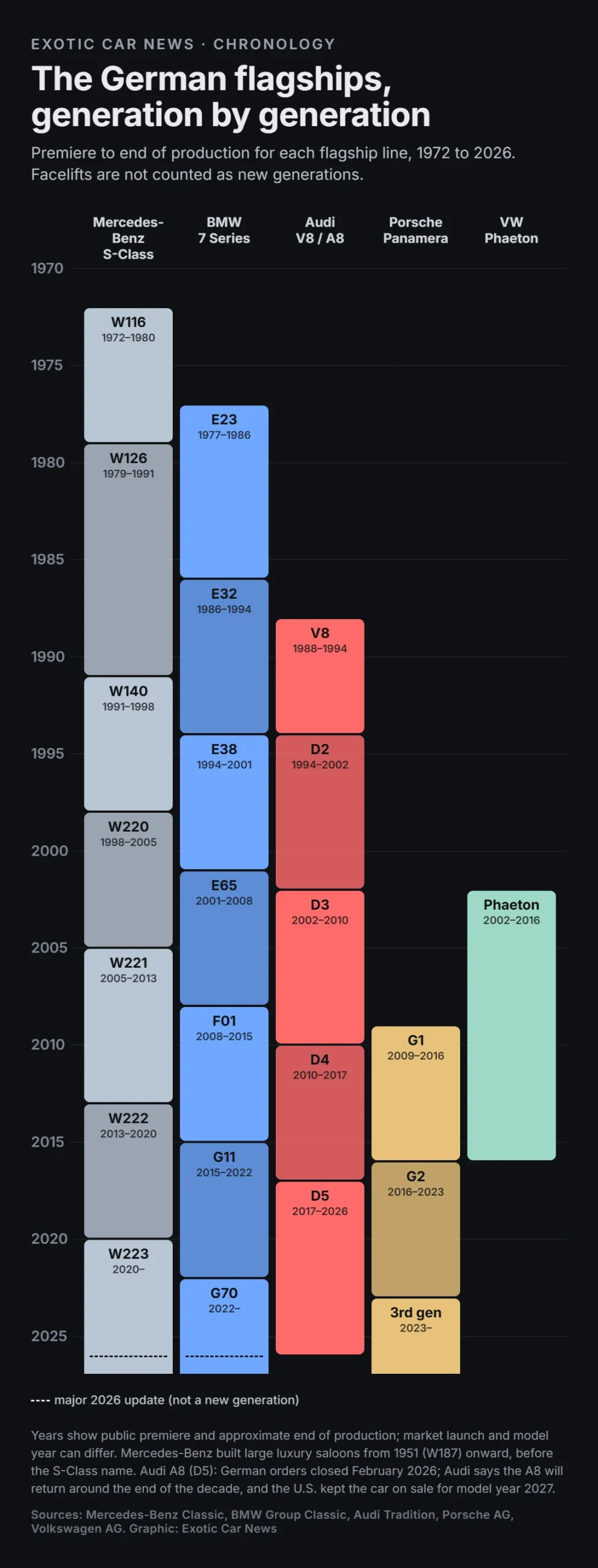
Before the Rivalry
The S-Class name dates only to 1972, but Mercedes-Benz was building large luxury saloons long before it. The line is usually traced back to the 220 (W187) of 1951, followed by the “Ponton” saloons, the “Fintail” W111 of 1959 and the elegant W108/W109 of 1965.
The Fintail matters more than its styling suggests. It was the first Mercedes built to Béla Barényi’s crumple-zone patent, filed in the early 1950s: a rigid passenger cell with front and rear sections designed to deform in a crash. Mercedes has said the fins themselves served as parking guides. The engineering idea that the most expensive Mercedes should also be the safest was in place before the S-Class existed.
BMW’s history at the top of the market was rockier. Its first postwar luxury car, the 501 and the V8-powered 502 of the 1950s, nicknamed the “Baroque Angel,” sold poorly, and BMW Group Classic counts it among the problems that pushed the company toward crisis by the end of that decade. When BMW returned to the large-sedan class with the E3 “New Six” in 1968, it did so carefully, with a sporting six-cylinder rather than a grand statement.
Audi, in this period, did not compete at all. It would not enter the full-size luxury class until 1988. Porsche built two-door sports cars. Volkswagen built the cars almost everyone else drove.
So when the modern rivalry began in the 1970s, the starting positions were uneven. Mercedes had a crown to defend. BMW and, later, Audi needed a technical argument to justify asking for the same money. Porsche and Volkswagen would eventually try to stretch their brands into a segment they did not own. Those starting points explain most of what followed.
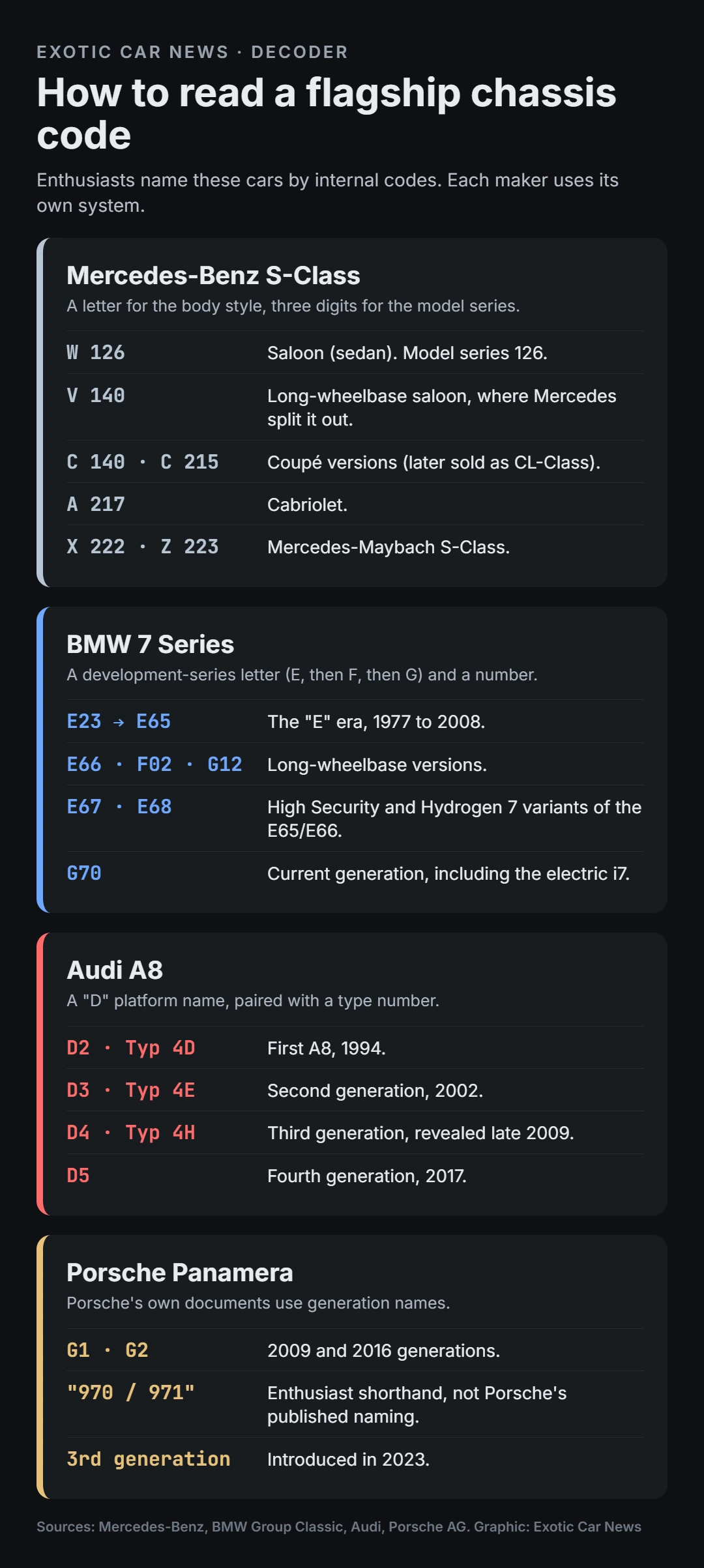
Mercedes-Benz and the Definition of the Flagship
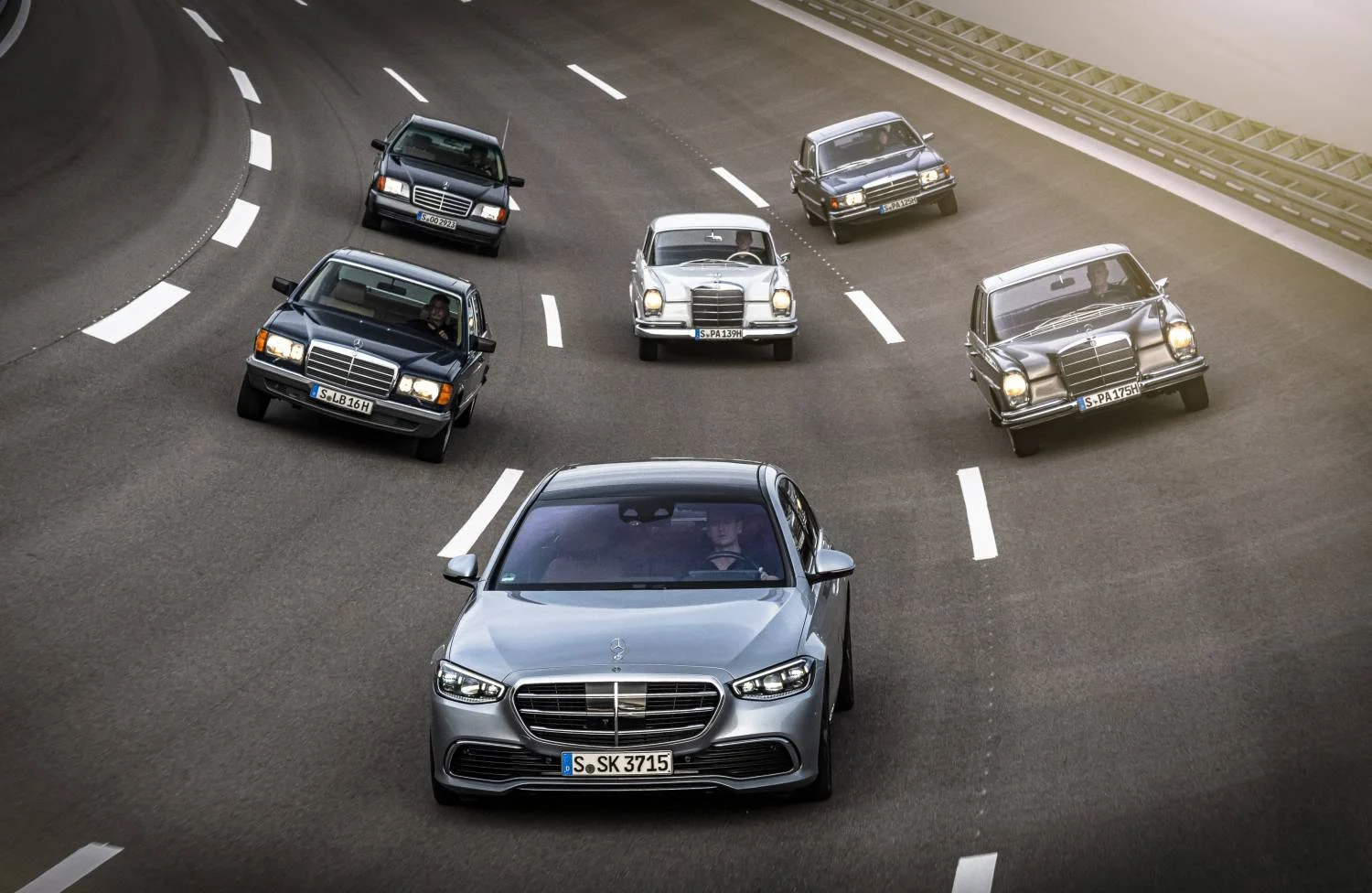
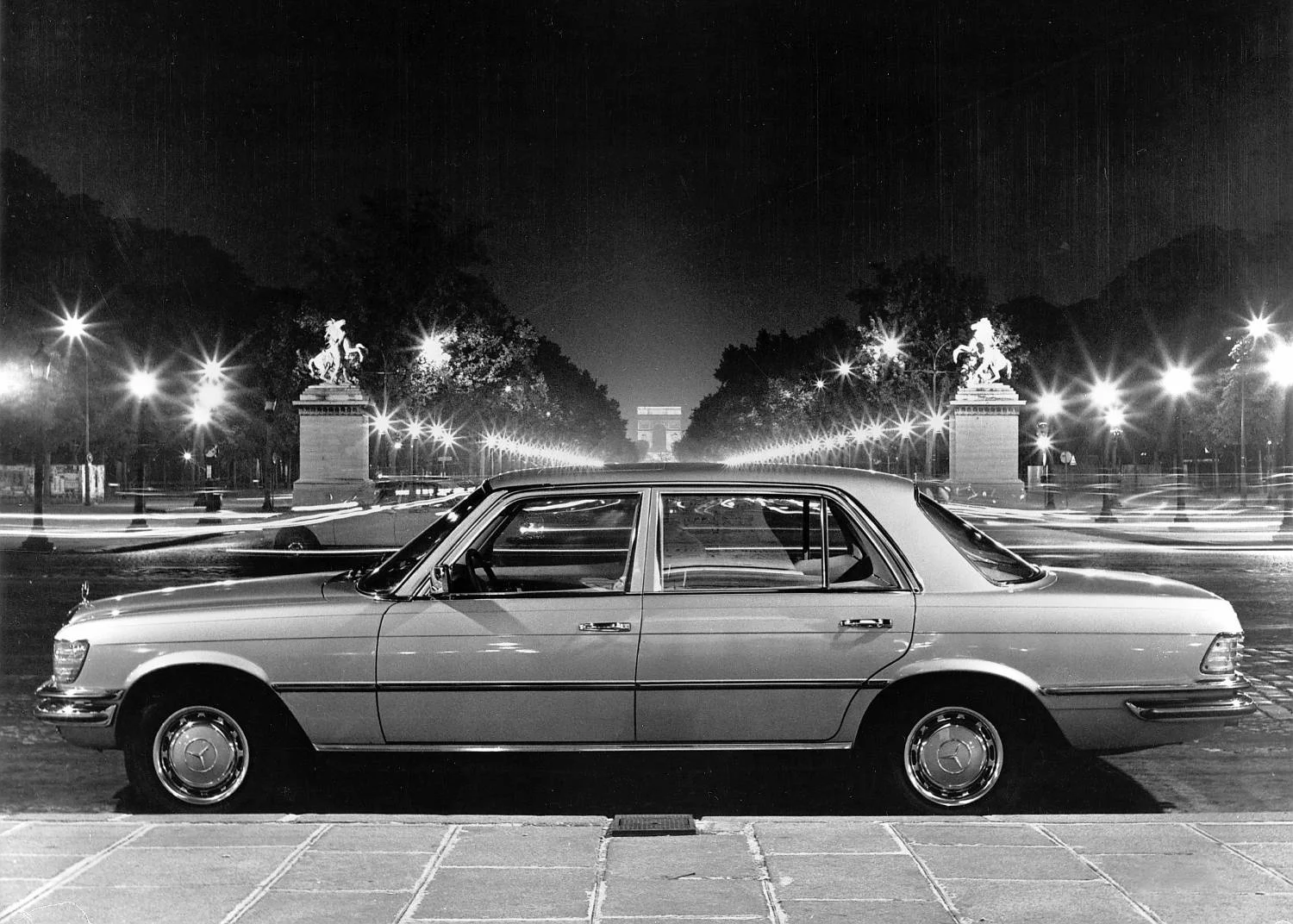
W116: the first S-Class (1972)
The W116, revealed in Paris in October 1972, was the first Mercedes officially called S-Class. Mercedes has traced the “S” back to the 170 S of 1949; the popular reading of “Sonderklasse,” or “special class,” is often repeated, but we did not find it confirmed in Mercedes’ own materials.
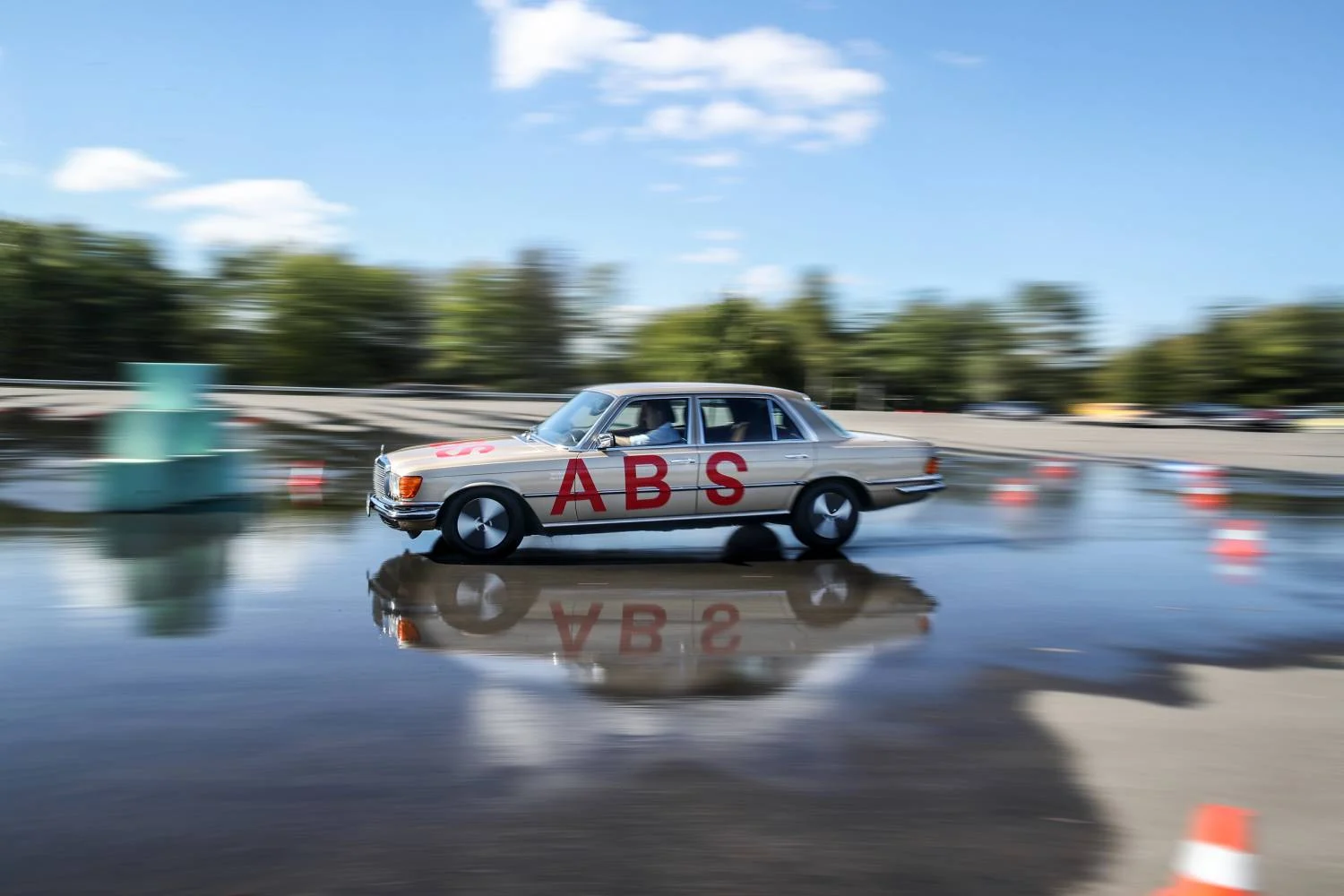
The W116 earns its place for what it put into series production. Late in 1978, Mercedes and Bosch introduced the electronic anti-lock braking system as an option on the S-Class, first on the 450 SEL 6.9. ABS is now standard on new cars around the world. Mercedes says it built 473,035 W116 cars.
W126: the long reign (1979)
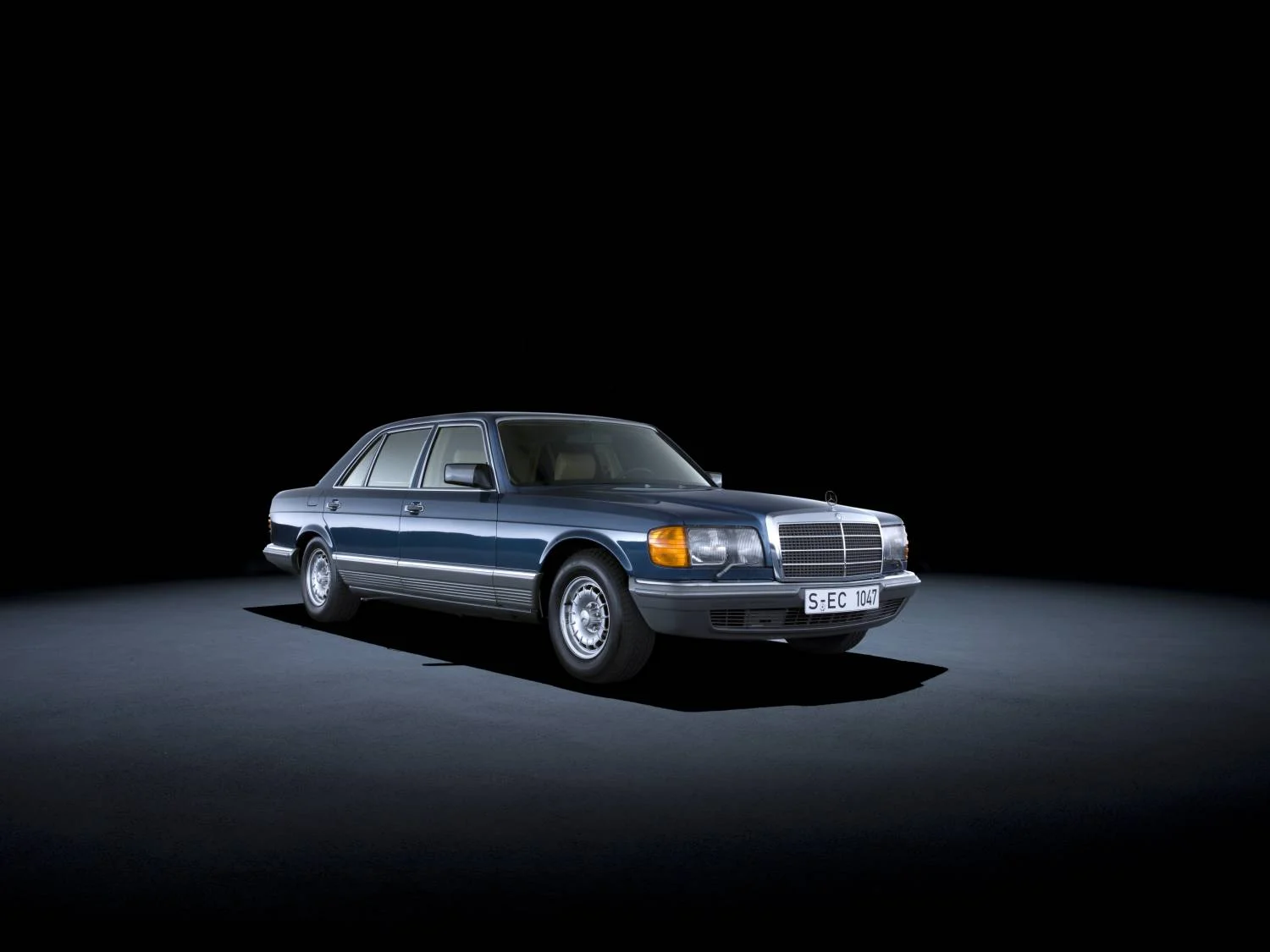
If the W116 established the S-Class, the W126 made it the benchmark. It premiered at the Frankfurt show in 1979 and stayed in production into the early 1990s, longer than any other S-Class. Mercedes credits it with 818,036 saloons and 74,060 coupés, the highest total of any S-Class generation with an official figure.
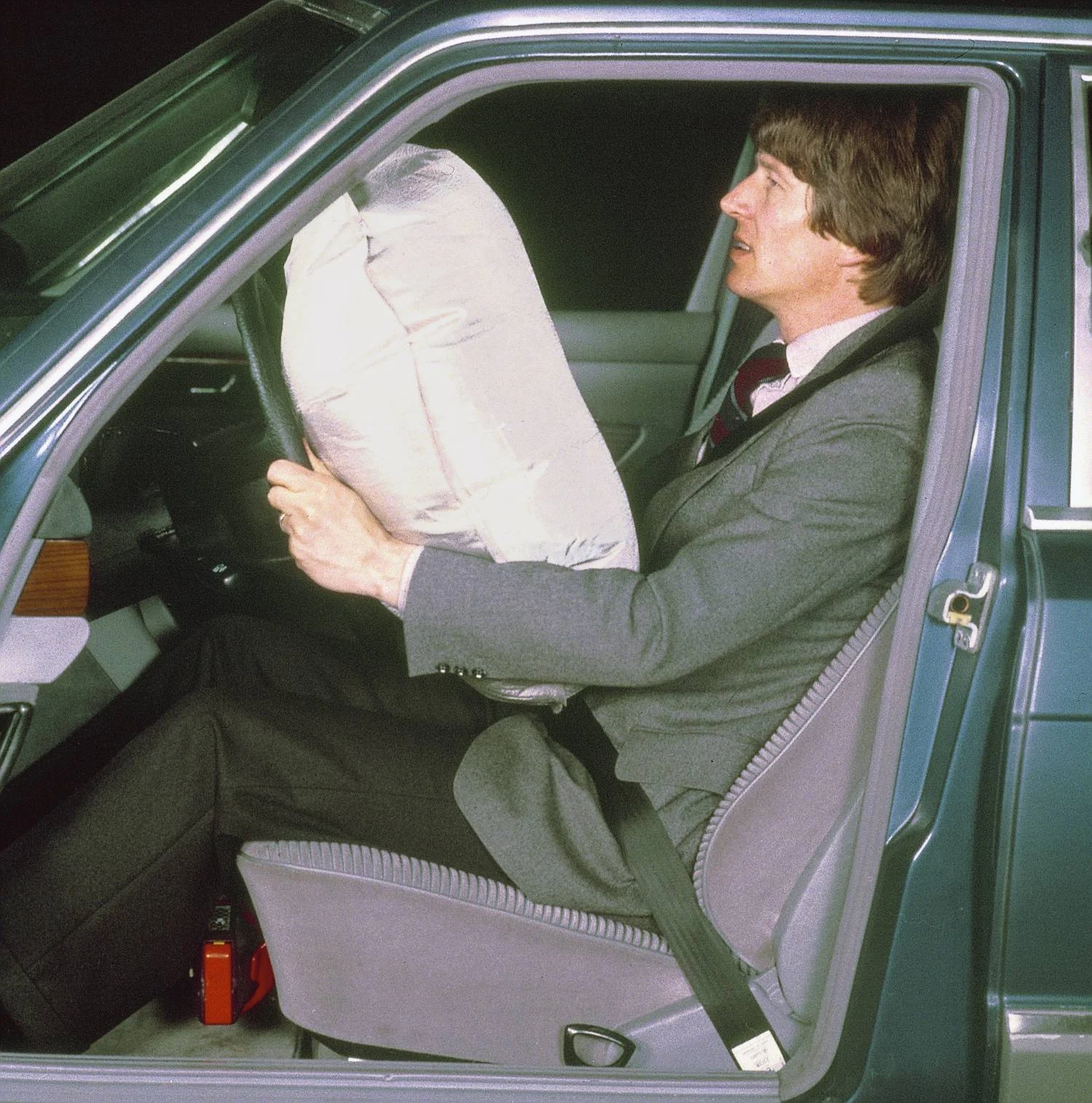
Its claim to importance rests as much on that longevity as on any single innovation. The shape was cleaner and lighter than the W116’s, and it aged unusually well. Mercedes also used it to put the driver airbag with a seat-belt tensioner into series production as an option in 1981, the template for the restraint systems in almost every car today.
W140: over-engineering as a statement (1991)
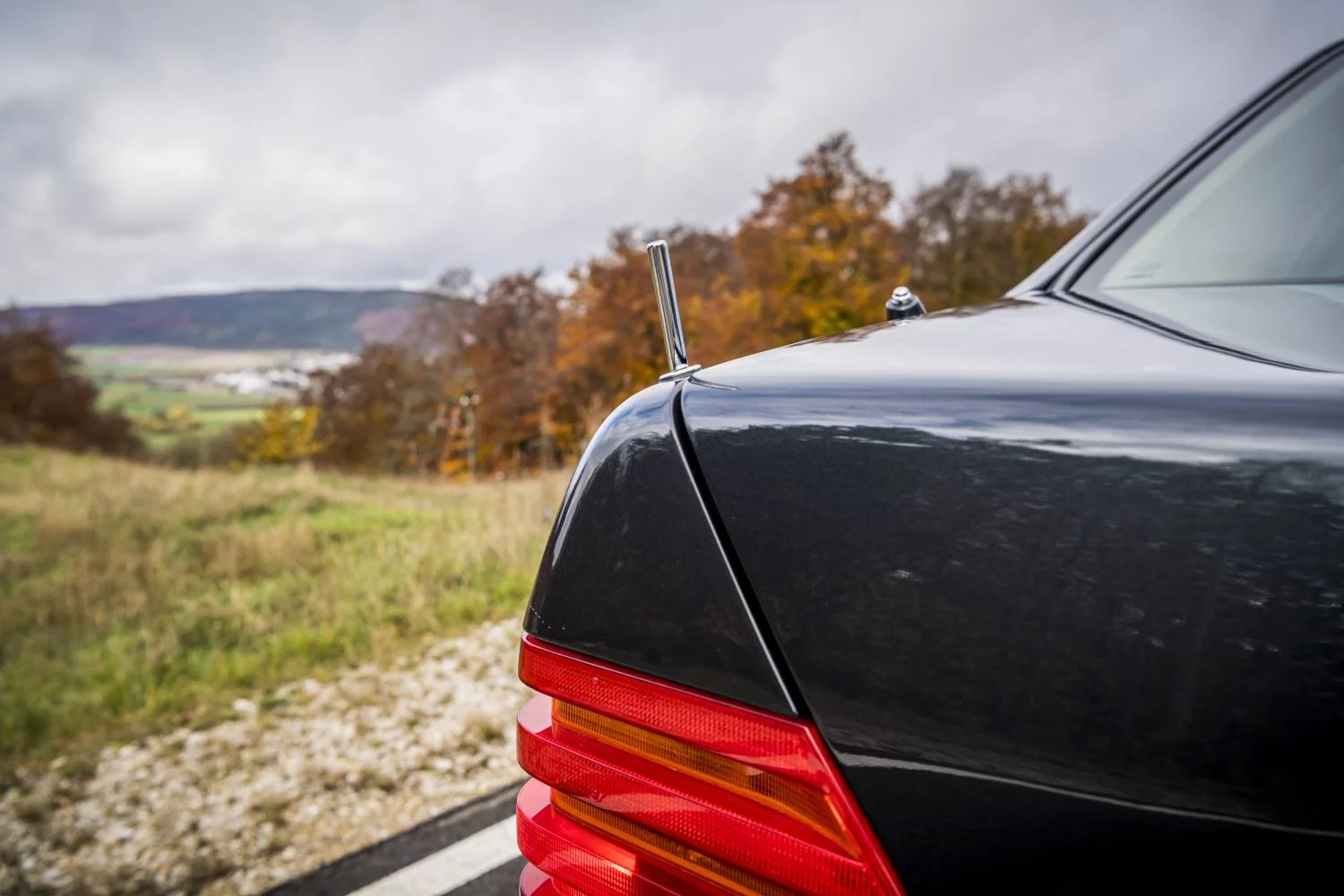
The W140 is the generation most enthusiasts argue about. Mercedes designed it to be beyond criticism, and the result was a car of extraordinary solidity and equally extraordinary size. The 600 SEL brought the first V12 in a Mercedes production car, rated at 408 PS (about 402 hp). Double glazing kept the cabin quiet, doors and trunk pulled themselves shut, and two small guide rods rose from the rear fenders when the car was put in reverse, so the driver could judge the corners of a body that was hard to see from the seat.
Mercedes credits the W140 with 406,717 saloons. Its successor, the W220, was deliberately smaller and lighter, which says something about how the W140’s mass and cost were received. Yet the W140 is also the S-Class that defined the 1990s for many people who grew up with it, and its ambition is the point: it represents the moment when the flagship was allowed to be as good as engineers could make it, almost regardless of cost.
W220 to W222: from mechanics to electronics (1998 to 2013)
The W220 of 1998 changed the S-Class’s center of gravity from metal to software. It brought Airmatic air suspension and Distronic, a radar-based cruise control that could hold a set distance from the car ahead. Distronic is often described as the first adaptive cruise control; it was not, since Mitsubishi and Toyota had offered systems in Japan earlier, but it was among the first radar-based systems and pointed directly at the assisted driving of today. In 2002, the W220 also introduced PRE-SAFE, which prepares the occupants when the car senses a likely collision.
The W221 of 2005 extended that work. Night View Assist used infrared to show the road beyond the reach of the headlights, and Distronic Plus could slow the car to a stop in traffic. Neither was the first of its kind, since Cadillac and Toyota had offered night vision earlier, but together they turned the S-Class cabin into a place where the car increasingly watched the road alongside the driver.
The W222 of 2013 went further, using a stereo camera to read the road surface ahead and adjust the suspension before the wheels reached a bump. Mercedes called that Magic Body Control. Mercedes also said the W222 was the first car to do without a single light bulb, using LEDs throughout. Those two features capture the generation’s direction: cameras and software were no longer only assisting the driver, they were shaping how the car itself behaved.
W223: the digital S-Class (2020)
The current S-Class, the W223, was revealed in a digital premiere in September 2020. In late 2021 it became the first car approved in Germany for Level 3 conditionally automated driving, a system Mercedes called Drive Pilot, and in 2023 California’s Department of Motor Vehicles approved it for certain highways. Under Level 3, the driver may take attention off the road in defined conditions while the car is in control.
That milestone has a 2026 postscript, covered in the final chapter: the updated S-Class unveiled in January 2026 does not offer Drive Pilot.
Maybach, the extension
Mercedes also learned what happens when luxury reaches beyond its flagship. The standalone Maybach 57 and 62 of 2002 to 2012 were built in small numbers and then discontinued. When the name returned in 2014 and 2015, it came back as Mercedes-Maybach, a sub-label of the S-Class rather than a separate brand. The lesson anticipates the Phaeton sidebar later in this story: at this level, the badge and the car have to make sense together.
BMW Changes the Formula
E23: the first 7 Series (1977)
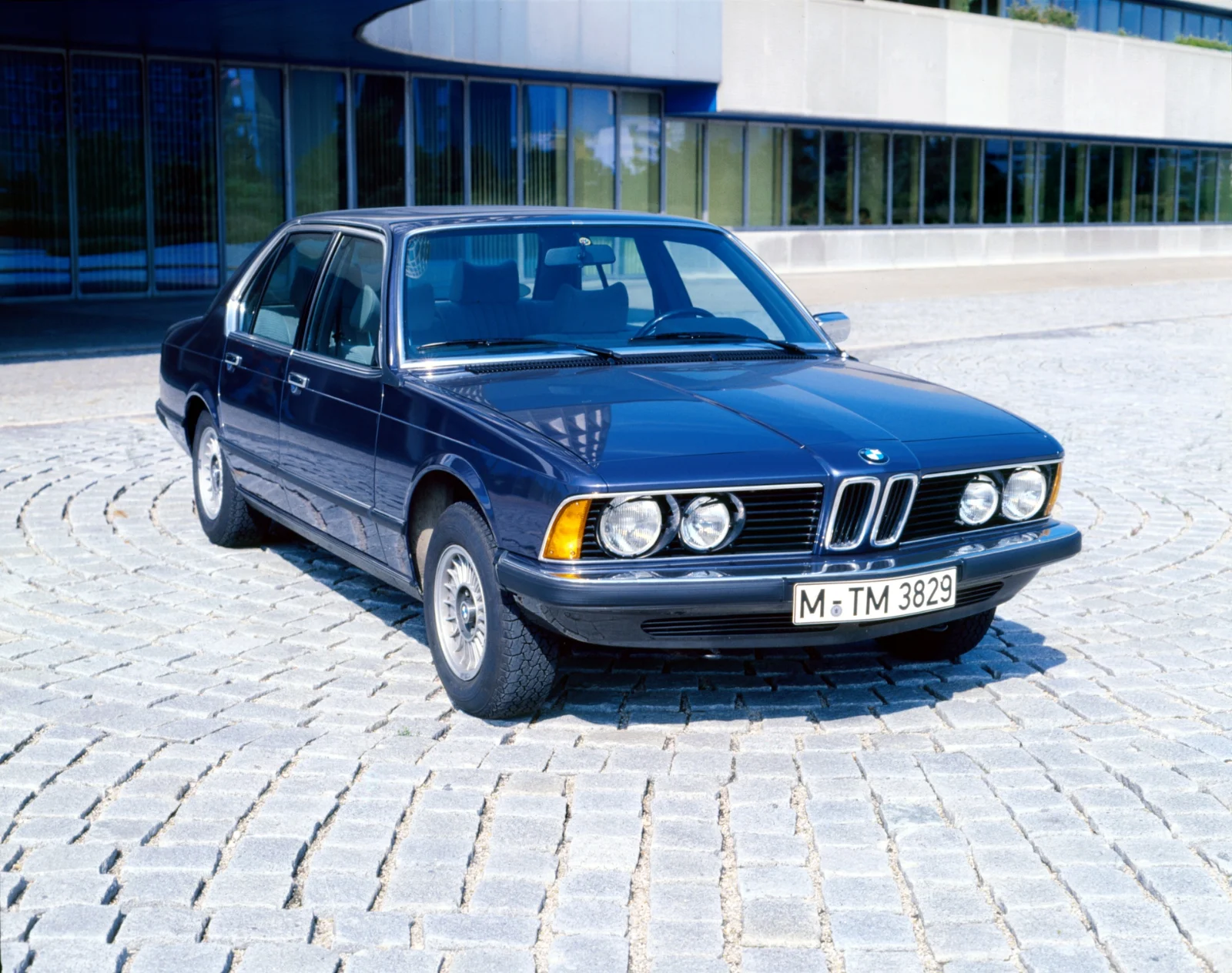
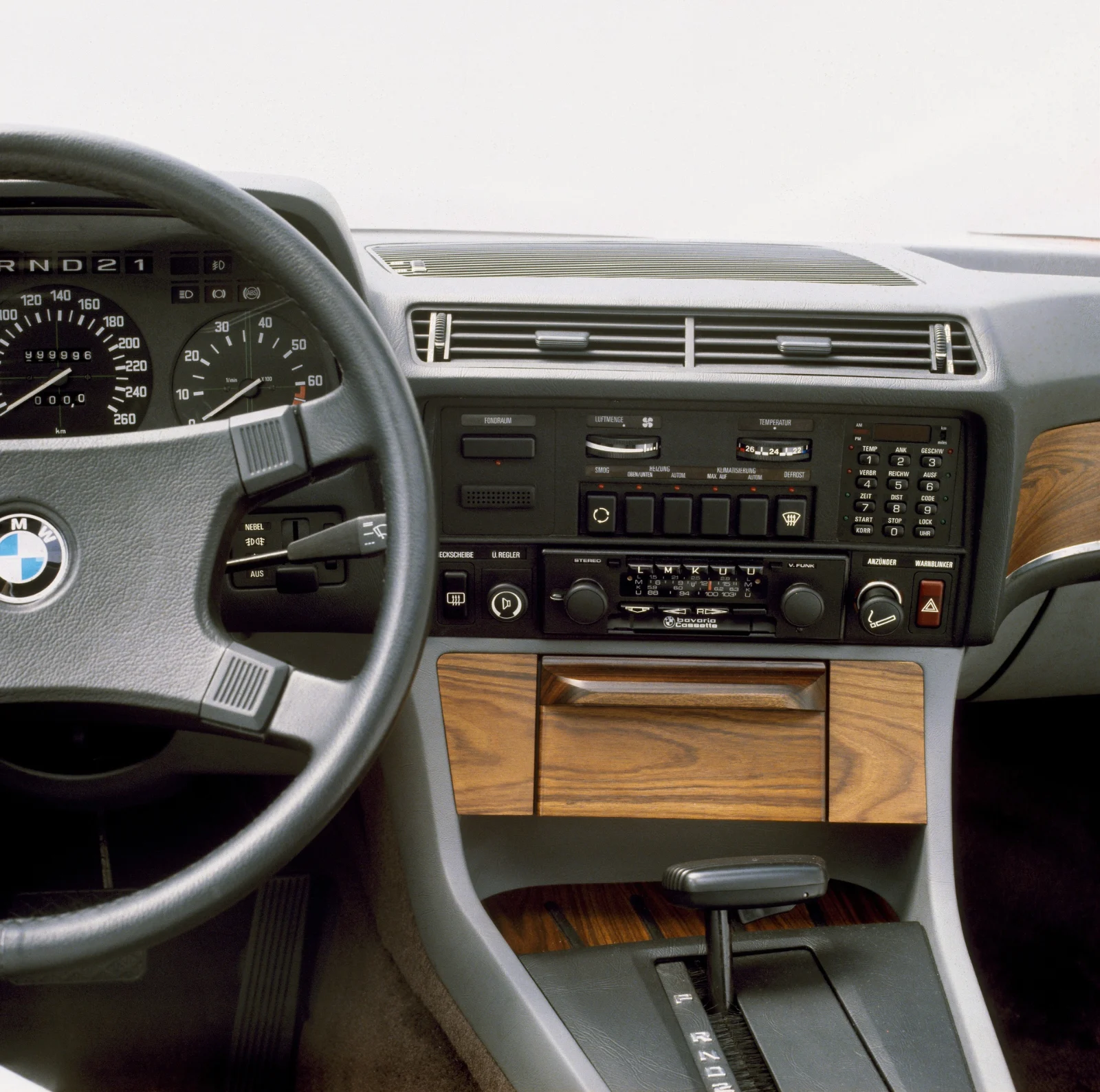
BMW’s first 7 Series, the E23, arrived in 1977 to replace the E3. It was a serious luxury car with a sporting stance and a dashboard angled toward the driver. Its equipment told the story BMW wanted to tell: an on-board computer and Check Control, a system that monitored fluid levels and bulbs and reported faults to the driver.
One claim about the E23 should be retired. A 2009 BMW of North America document described it as the first production car with ABS. The W116 S-Class offered ABS first, in 1978. The E23’s place in history does not depend on that claim.
E32: the decisive move (1986)
The second-generation 7 Series, the E32, is where BMW stopped trailing Mercedes and started setting the agenda. In 1987 the 750i brought a 5.0-liter V12, which BMW Group Classic describes as the first German twelve-cylinder engine since the war. Mercedes did not answer until the W140 in 1991.
The E32 added more firsts in its class. The 750iL offered xenon headlights from 1991, among the first cars to do so; Bosch confirms 1991 as its first year for automotive xenon lamps. BMW Group Classic counts about 311,000 E32 cars and calls it the best-seller in its class. For the first time, a BMW was not the alternative to the S-Class. It was a rival.
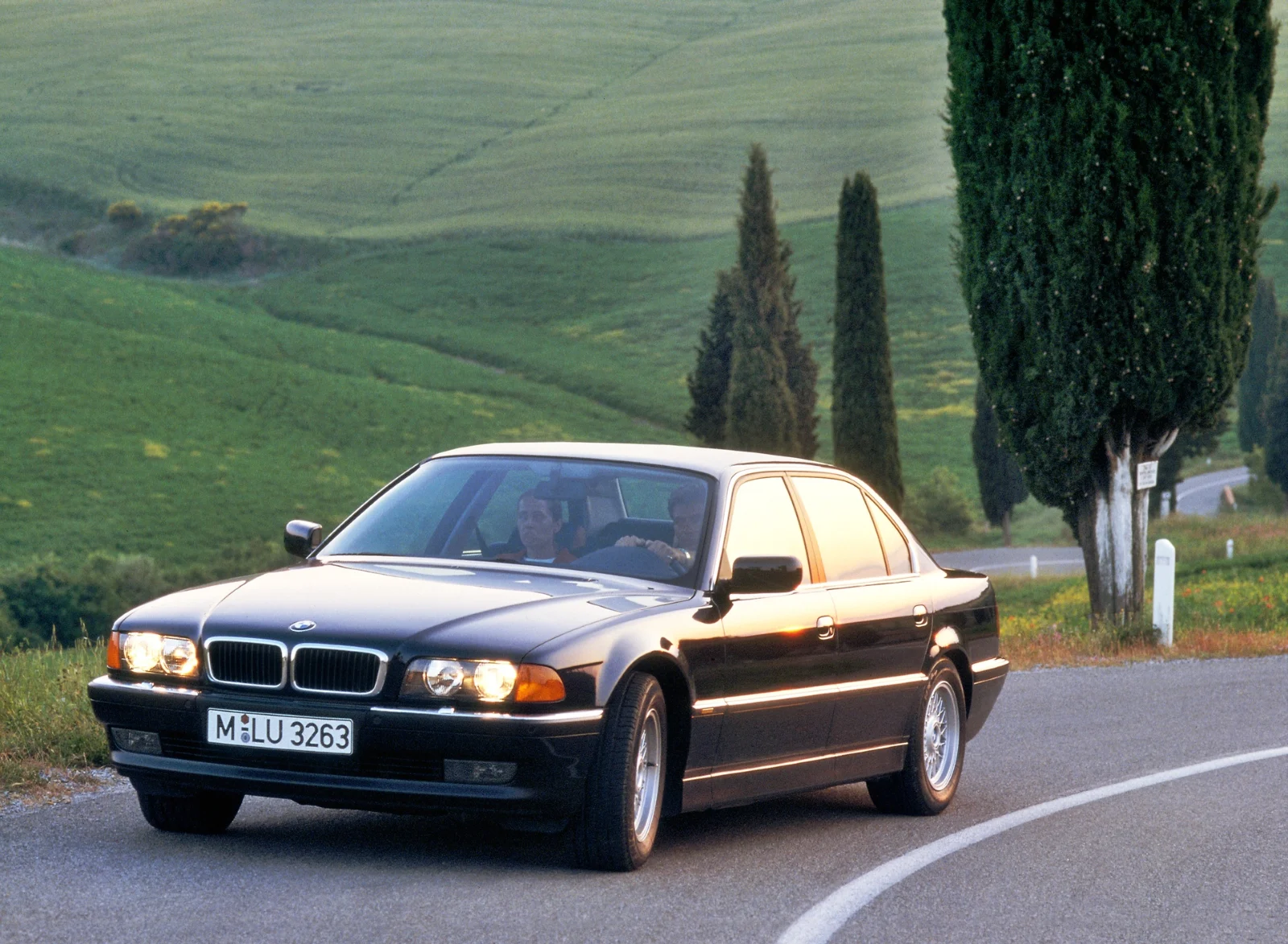
E38: the driver’s flagship (1994)
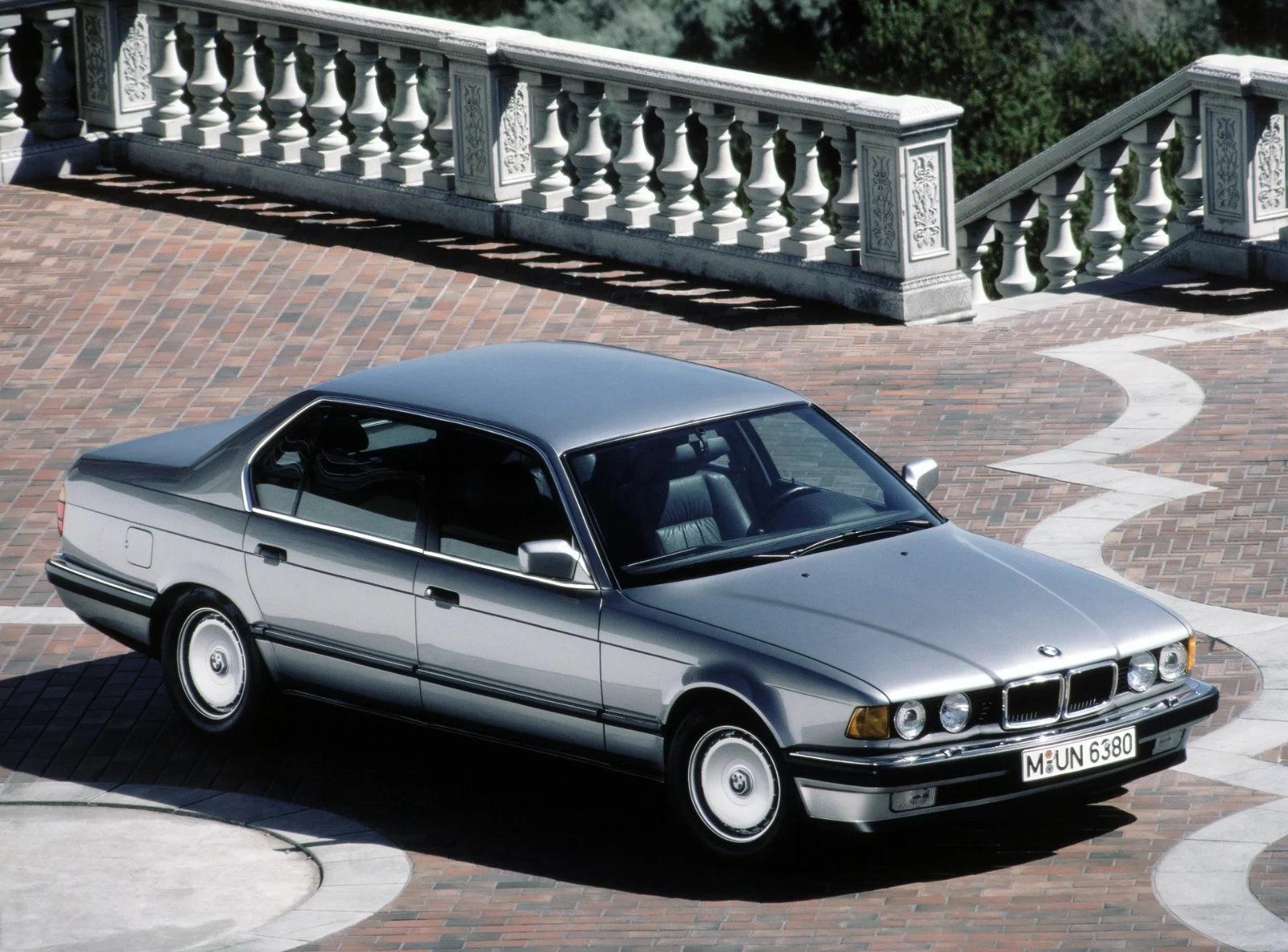
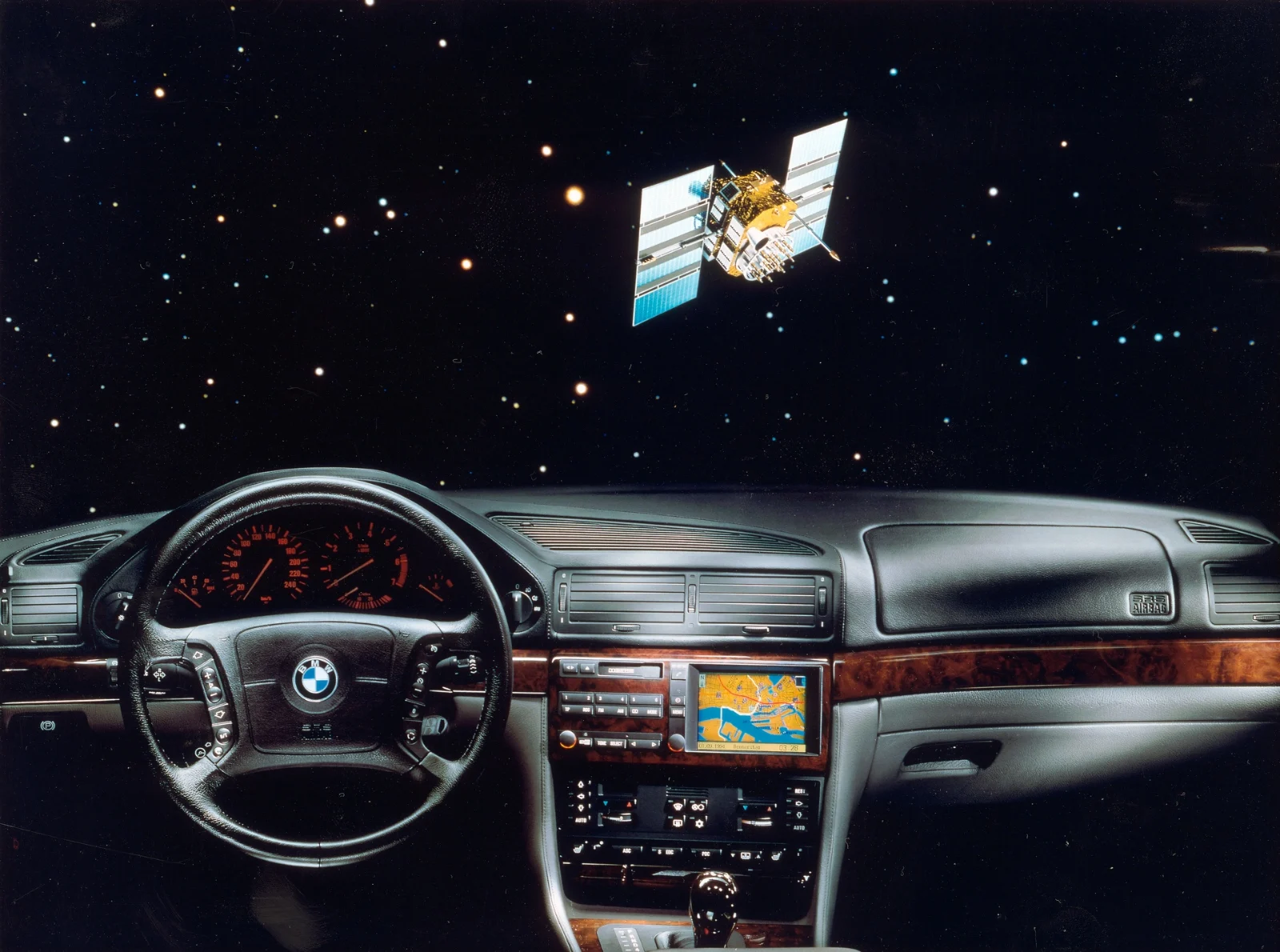
The E38 of 1994 is the 7 Series that many enthusiasts consider the best-looking BMW sedan ever made, but its significance is broader than design. It was lower, tauter and more restrained than its rivals, and it drove with a precision unusual for a car of its size. BMW says it offered the first integrated navigation system in a European production car, and in 1997 it added the Head Protection System, an early tubular head airbag.
Its legacy is also cultural. A 750iL starred in the 1997 James Bond film Tomorrow Never Dies, and a black 735i carried Jason Statham through The Transporter in 2002. BMW Group Classic counts 327,598 E38 cars.
E65: the controversy that changed the industry (2001)
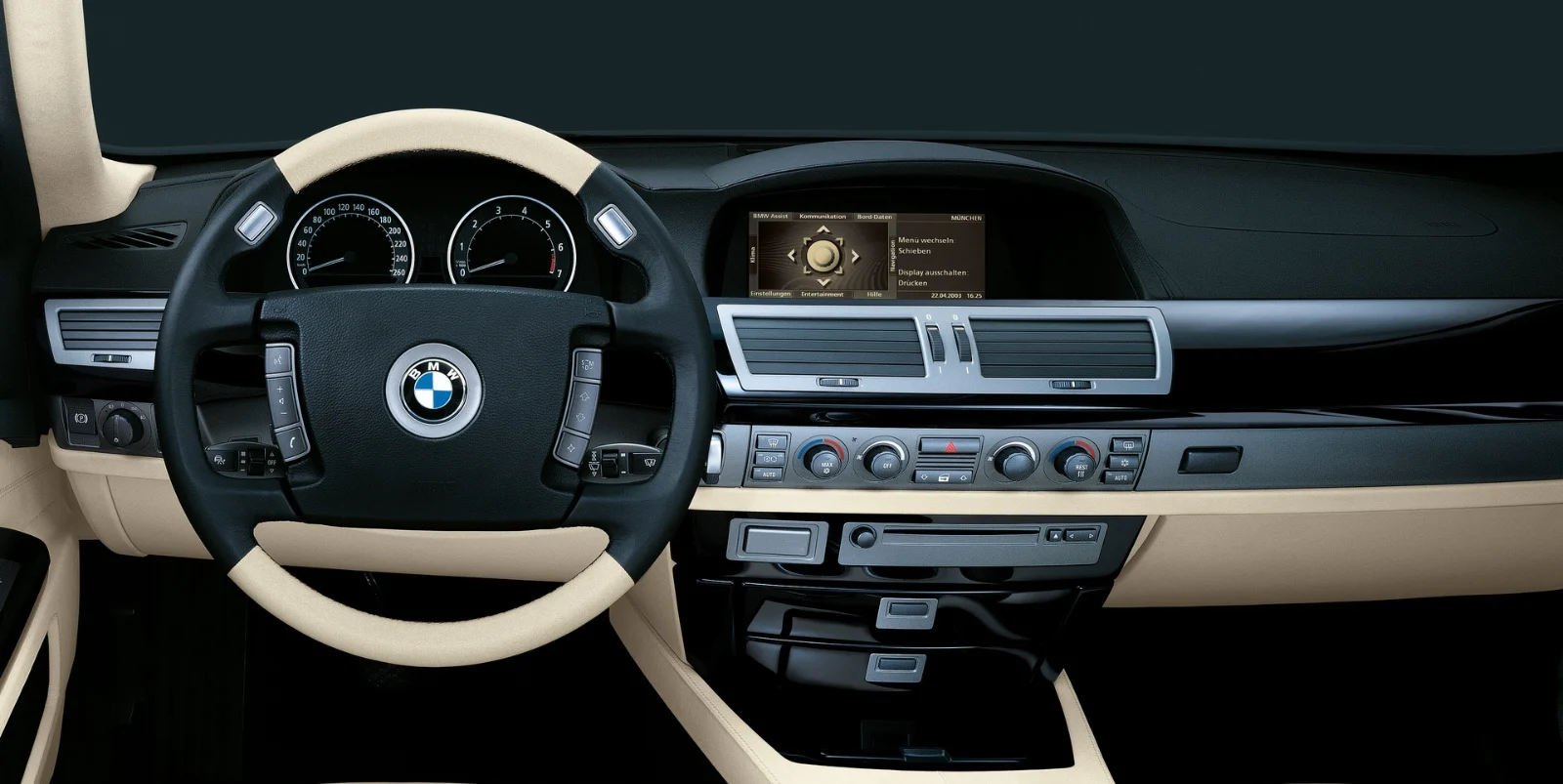
The E65 of 2001 divided opinion like no flagship before it. Chris Bangle’s design, with its raised trunk lid, was so controversial that BMW Group Classic itself acknowledges the debate. The car also introduced iDrive, a central rotary controller paired with a screen, which critics found baffling at launch.
Yet both bets paid off. The E65 sold better than either of its predecessors, and the controller-and-screen interface spread across the industry within a few years; Audi’s MMI arrived in the A8 just a year later. Few flagships have changed how ordinary cars work more directly.
F01, G11 and G70: lighter, smarter, electric (2008 to 2022)
The F01 of 2008 refined the formula rather than restarting it. It softened the E65’s styling, improved iDrive, and offered Integral Active Steering, which could steer the rear wheels, along with an ActiveHybrid version. BMW says Dingolfing built about 370,000 of them, a quiet success after a loud predecessor.
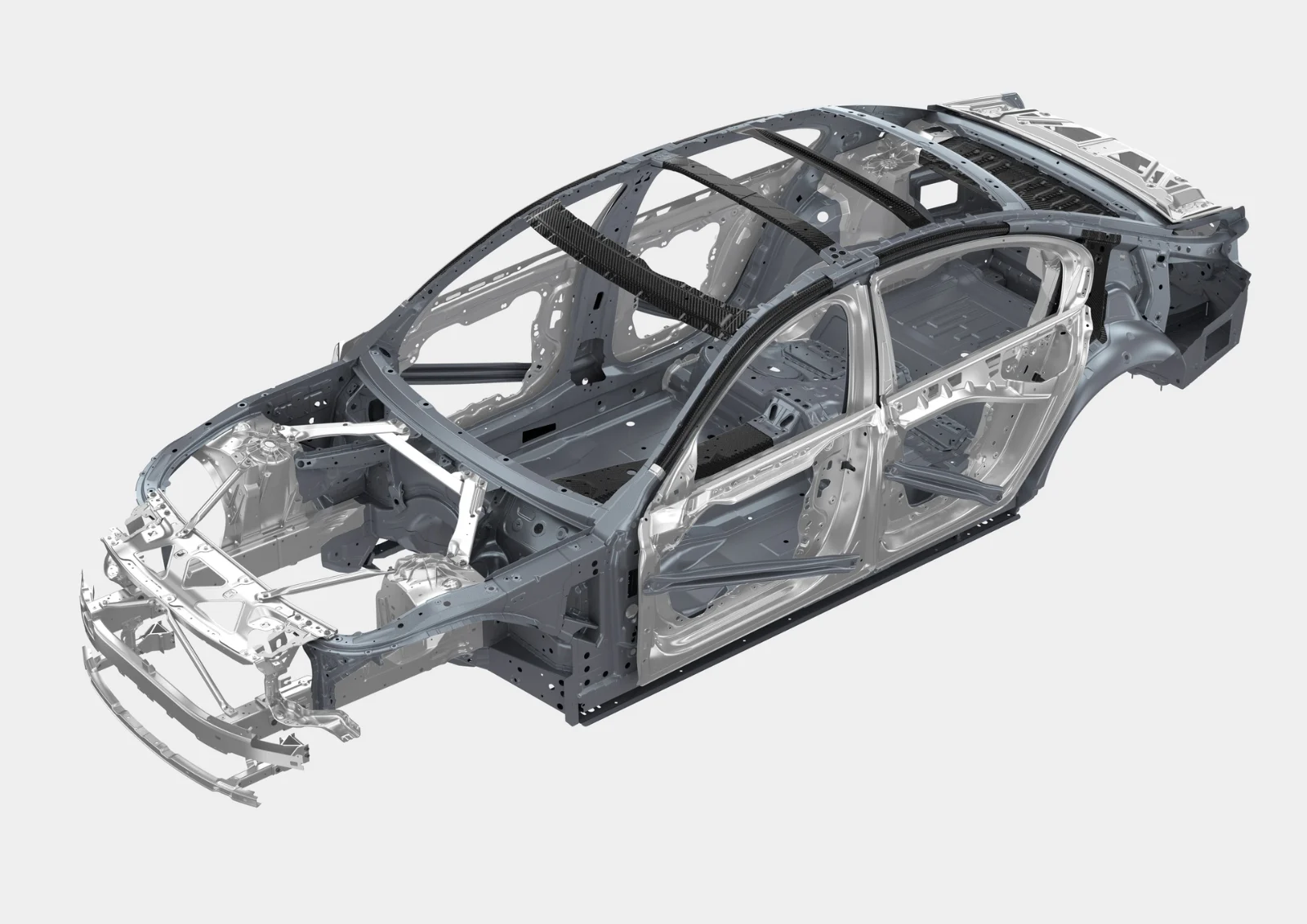
The G11 of 2015 made the more surprising move. BMW built its Carbon Core passenger cell with carbon-fiber-reinforced plastic produced on an industrial scale, technology developed for the i3 and i8, and said it was the first car in its class to do so. BMW said the approach saved up to 130 kilograms.
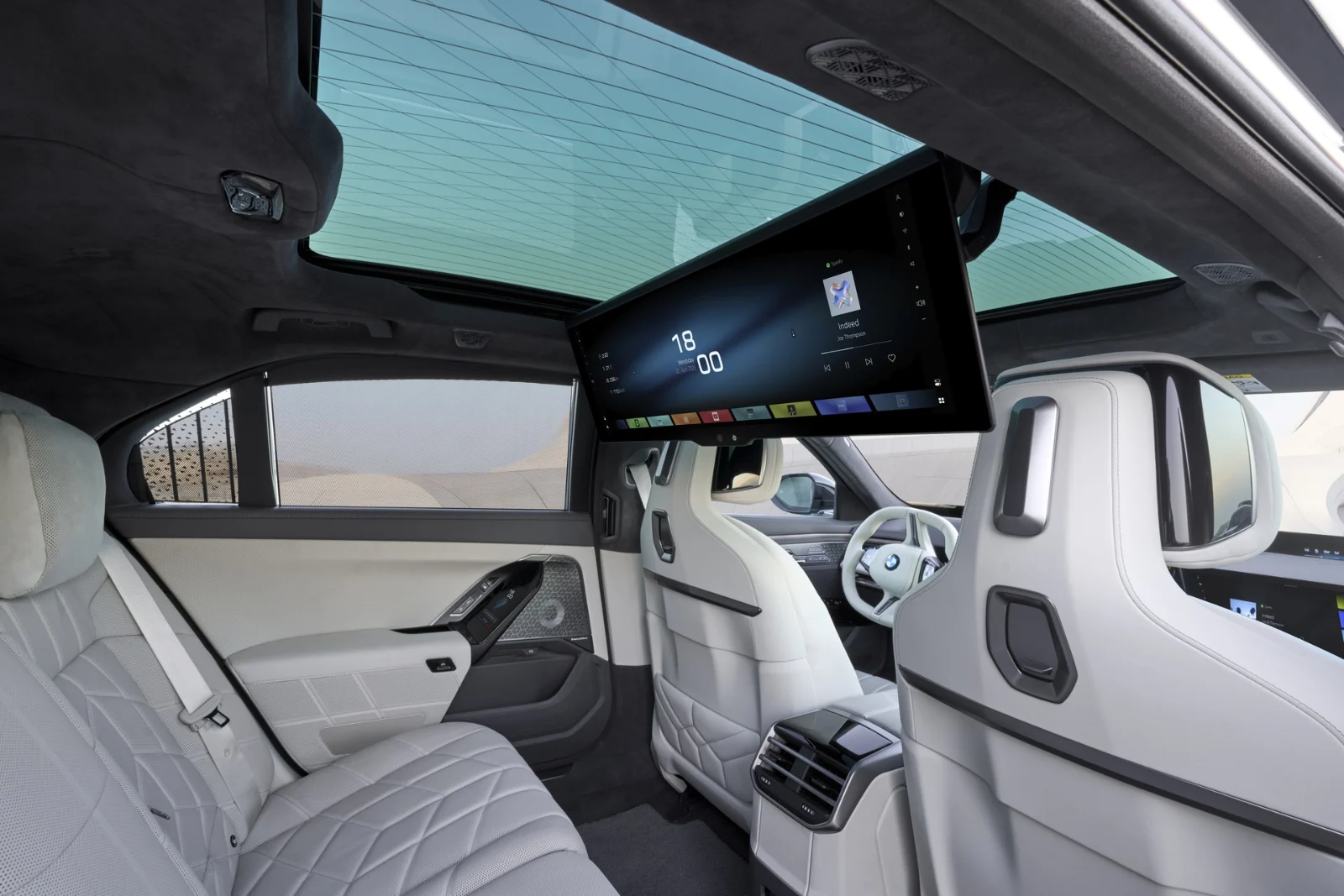
The G70 of 2022 changed the 7 Series in a different way. Its rear cabin could carry a 31.3-inch Theater Screen that folds down from the roof, and the electric i7 was a core version rather than a spin-off. In 2024, BMW followed Mercedes with Level 3 approval in Germany, through an option it called Personal Pilot L3. That chapter, too, ended in 2026.
Audi Rewrites the Engineering Rules
Audi V8: the way in (1988)
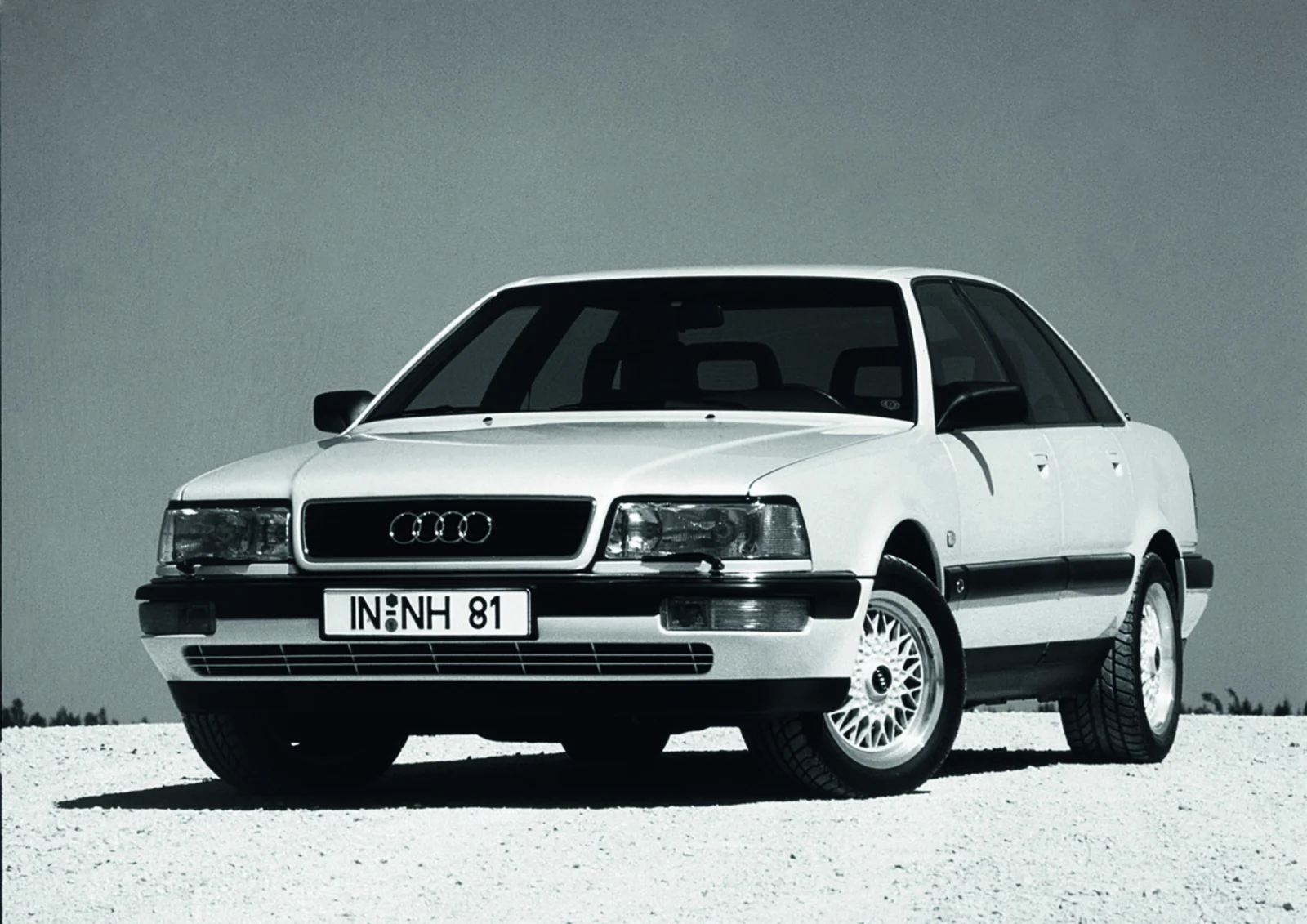
Audi entered the luxury class in 1988 with the V8, a car based on the Audi 100 and 200 structure but carrying a 3.6-liter V8, an automatic transmission and quattro all-wheel drive. Audi’s own 2010 press kit calls standard quattro in that class a first for the premium segment. The V8 was not a commercial success, but it gave Audi a place at the table and a technical argument to bring with it.
A8 (D2): the aluminum car (1994)
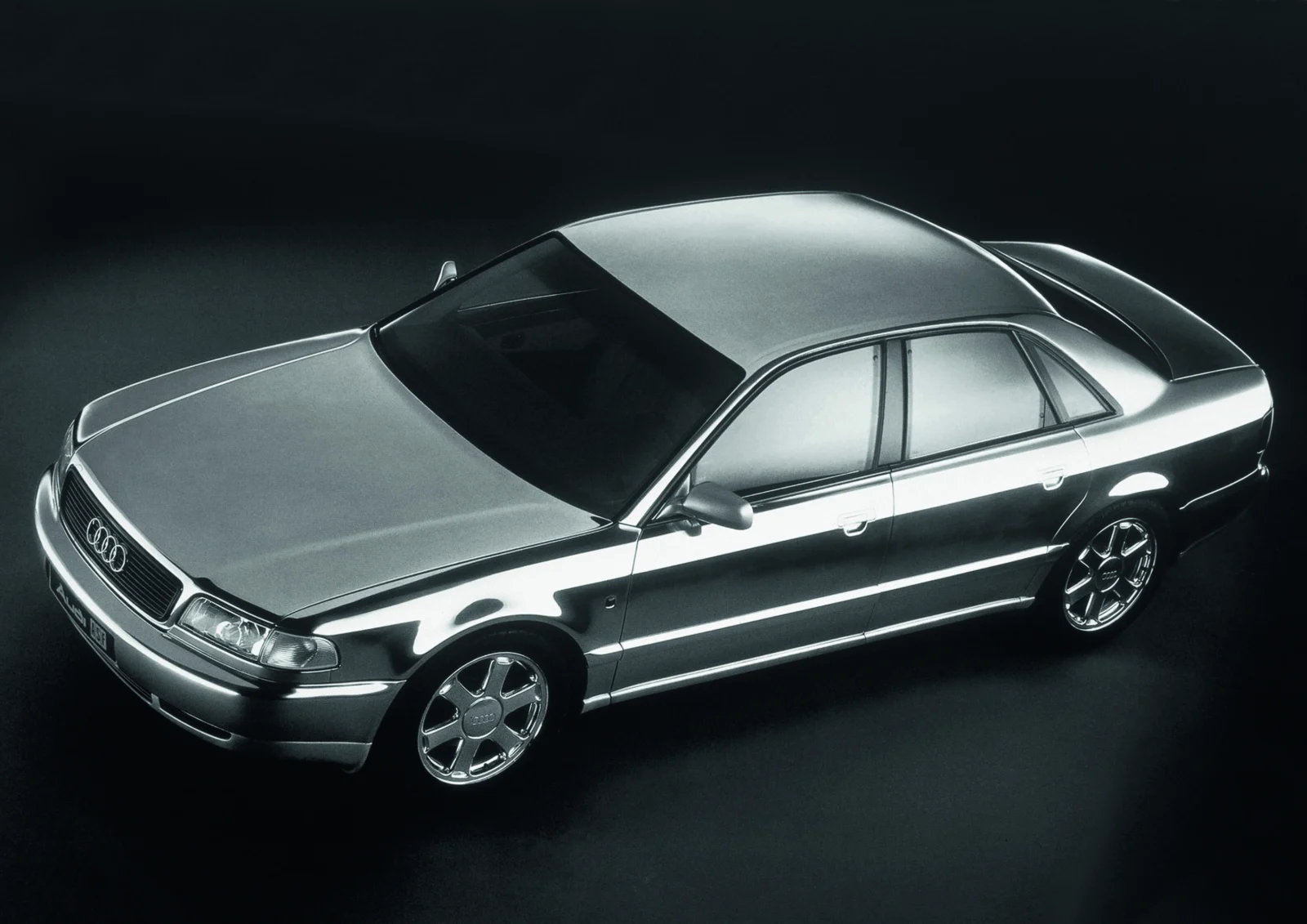
The first A8, shown at Geneva in March 1994, is the pivotal Audi of this story. Audi had already shown a polished-aluminum concept, the ASF, at the 1993 Frankfurt show. The production car brought its idea to market: a body built as an aluminum space frame, with extruded sections, cast nodes and aluminum panels, developed over more than a decade with aluminum producer Alcoa. Audi says the structure was more than 40 percent lighter than a comparable steel body.
The wording matters. The A8 was not the first car with an all-aluminum body; Honda’s NSX, launched in 1990, had an all-aluminum monocoque. The A8 was the first production car with an aluminum space-frame body, and the first all-aluminum luxury sedan. Combined with quattro, it gave Audi a flagship argument that neither Mercedes nor BMW could make in the same terms.
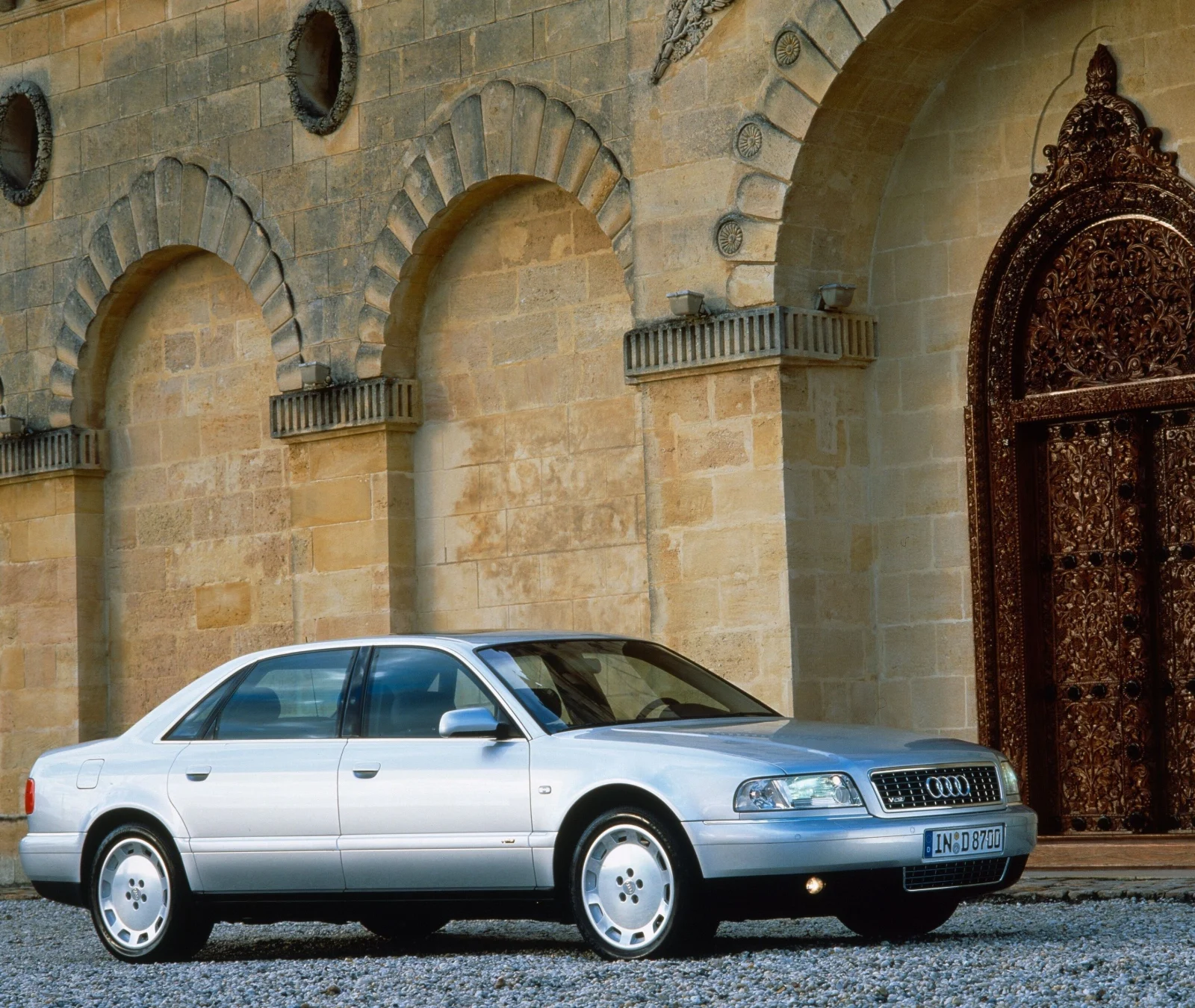
The twelve-cylinder chapter came later than is often assumed. Audi’s W12, a compact 6.0-liter engine made of two narrow-angle V6 banks, arrived in the D2 A8 only around 2001, and Audi describes it as its first twelve-cylinder engine. It became a signature of the A8 for two decades.
D3 to D5: technology as the argument (2002 to 2017)
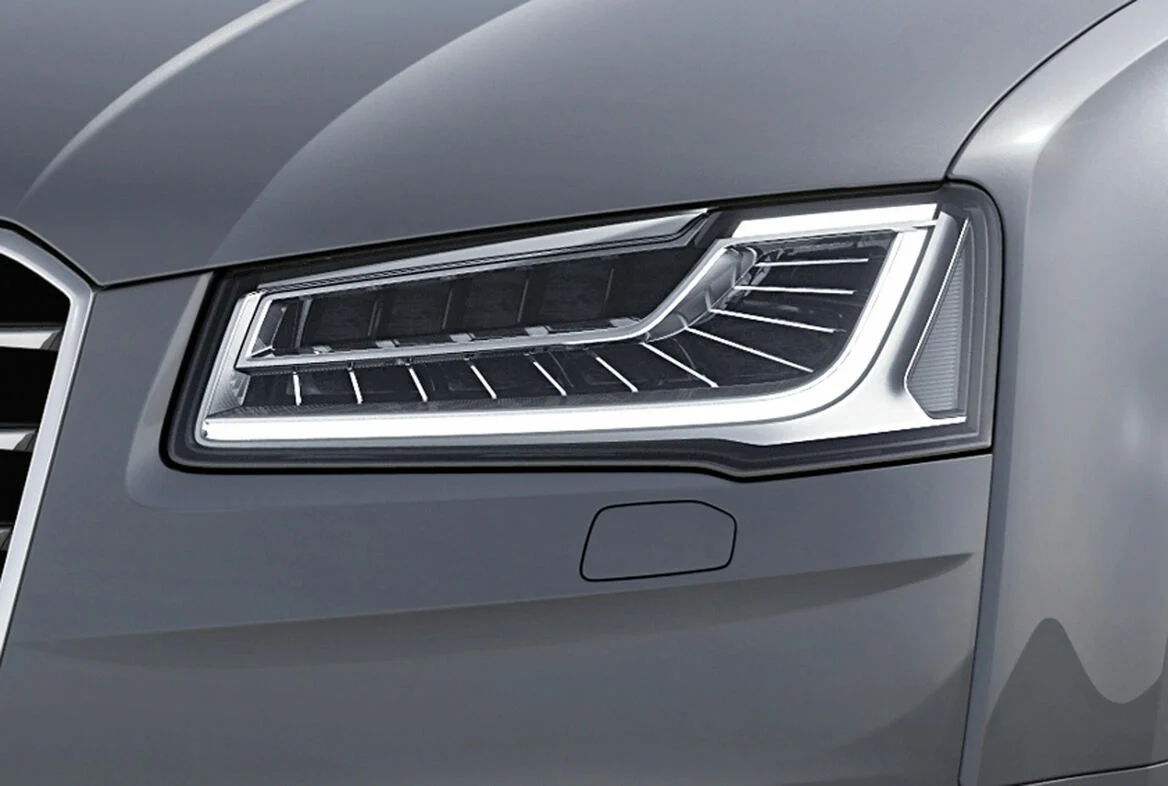
The D3 of 2002 brought MMI, Audi’s controller-and-screen system, and a performance S8 with a 5.2-liter V10 related to Lamborghini’s engine. The D4, revealed in Miami in late 2009 and sold from 2010, became a showcase for lighting. In 2013, its update brought Matrix LED headlights, which switch individual LEDs to shape the high beam around other traffic. Audi called it a world first.
The D5 of 2017 was presented as the most technologically ambitious A8 yet. It added predictive active suspension, which uses a front camera to prepare each wheel for the road ahead, and Audi announced a Level 3 Traffic Jam Pilot. That system was never activated for customers in any market, because the regulatory framework it needed did not arrive in time. The brand that argued hardest with technology was the one whose most ambitious promise stayed on the shelf.
Porsche Enters the Conversation
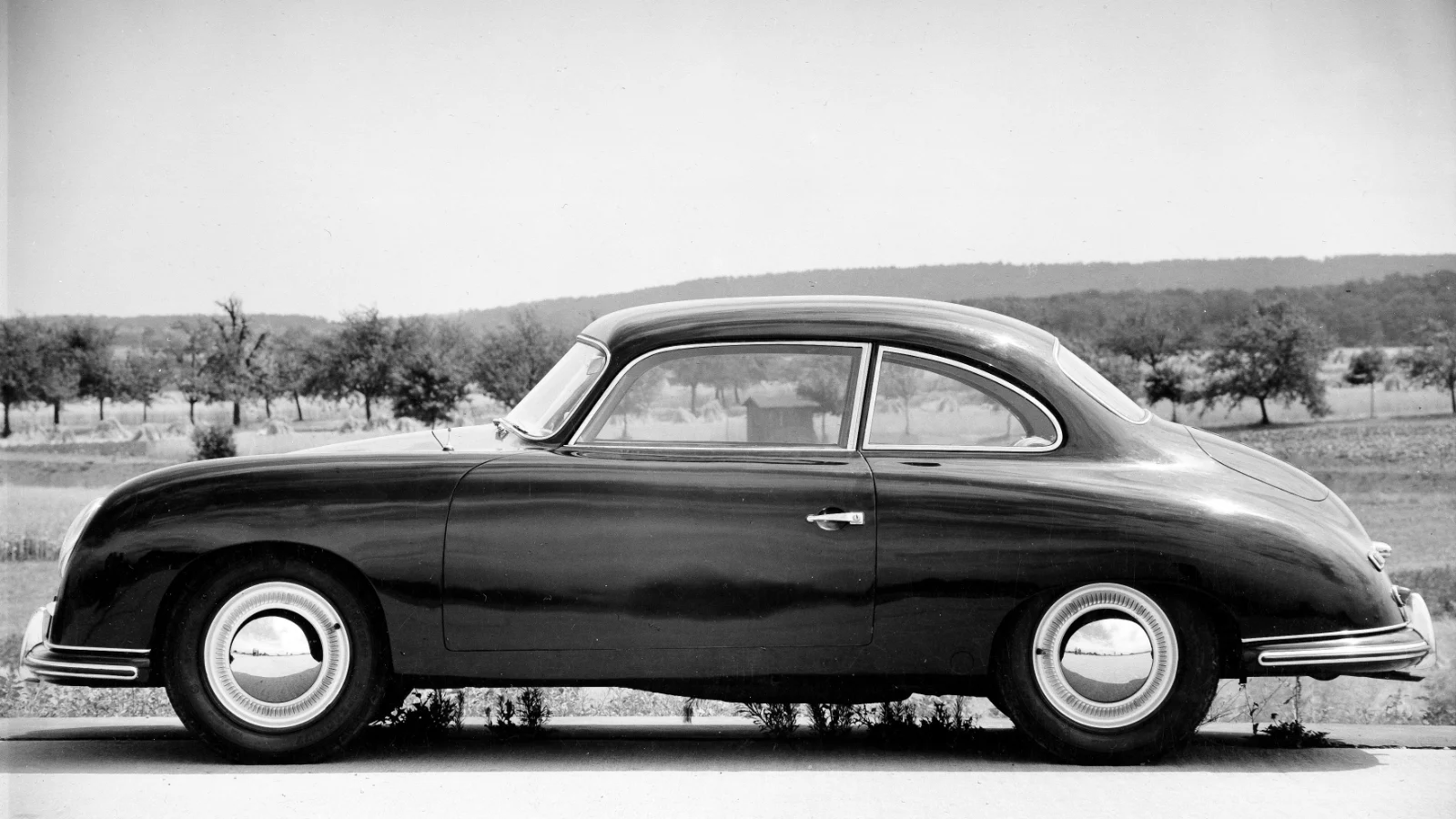
Porsche thought about four seats for decades before building a four-door. Its own history traces the idea from the Type 530 of the early 1950s, a stretched 356-based study, through four-door drawings for the 928, to the 989 of 1988 to early 1992, a front-engined V8 sedan that Porsche cancelled as the company fought through a financial crisis. A four-door 911 from 1967 sometimes appears in these histories, but it was built by a Texas coachbuilder for a dealer, not by the factory.
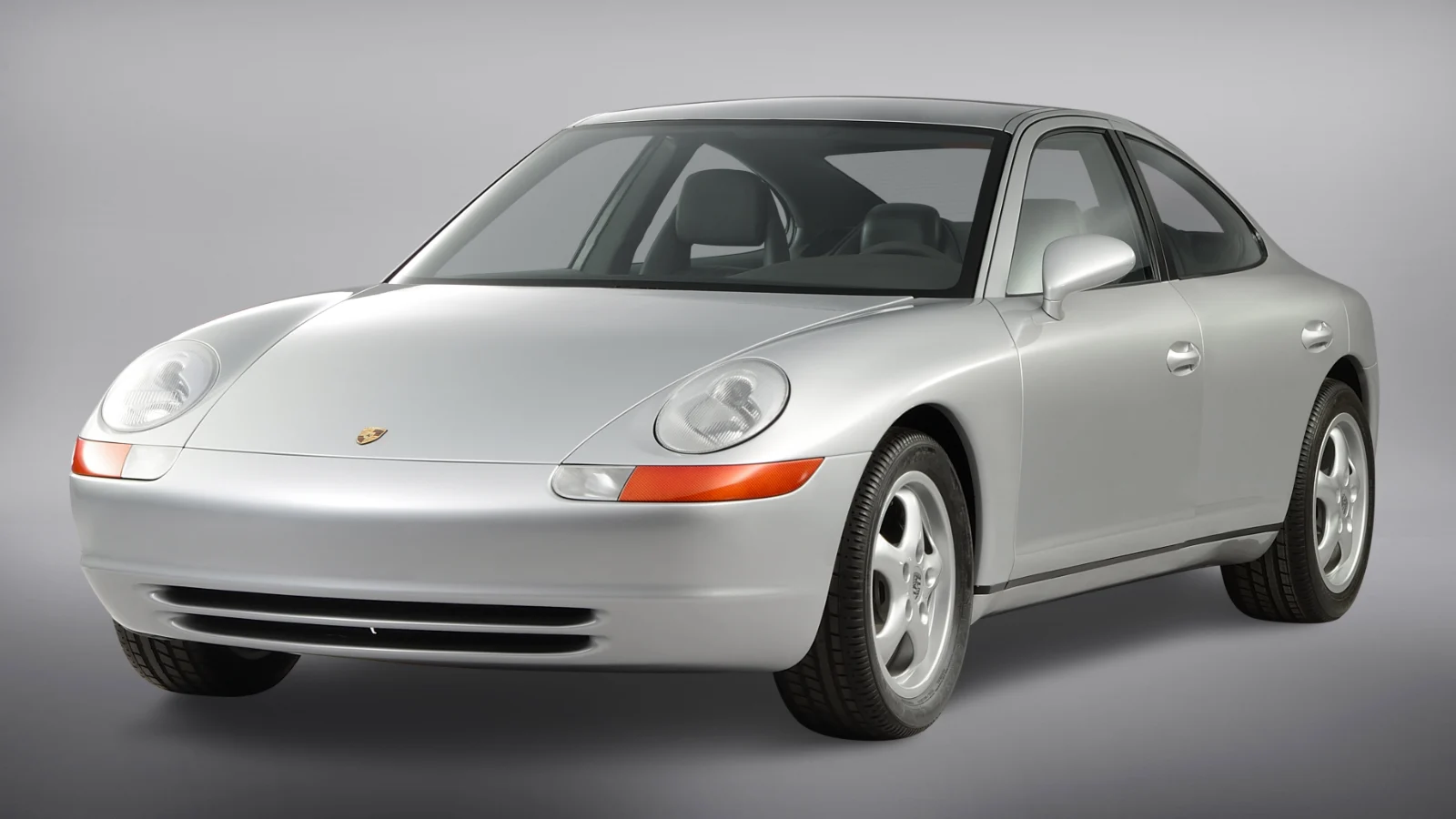
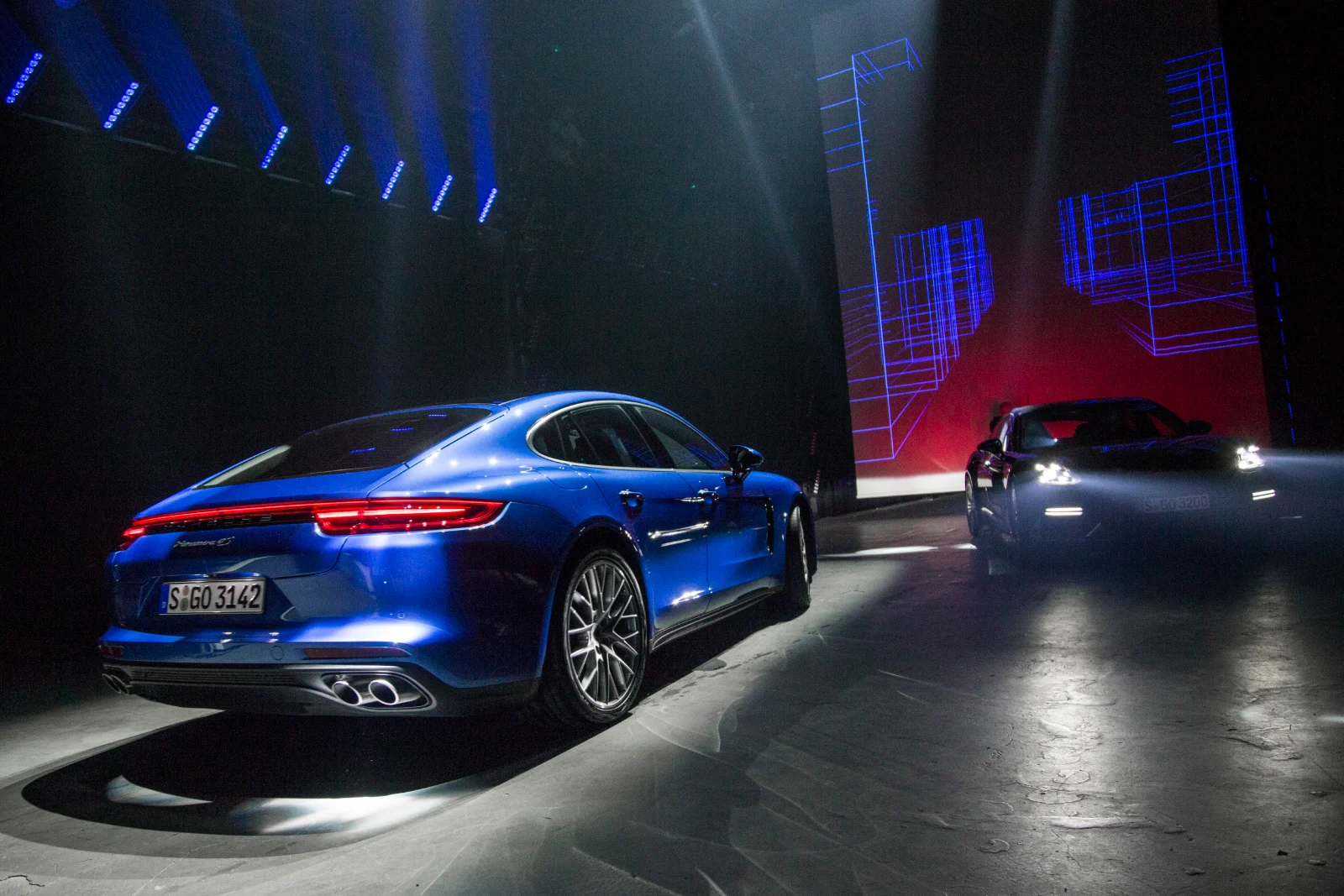
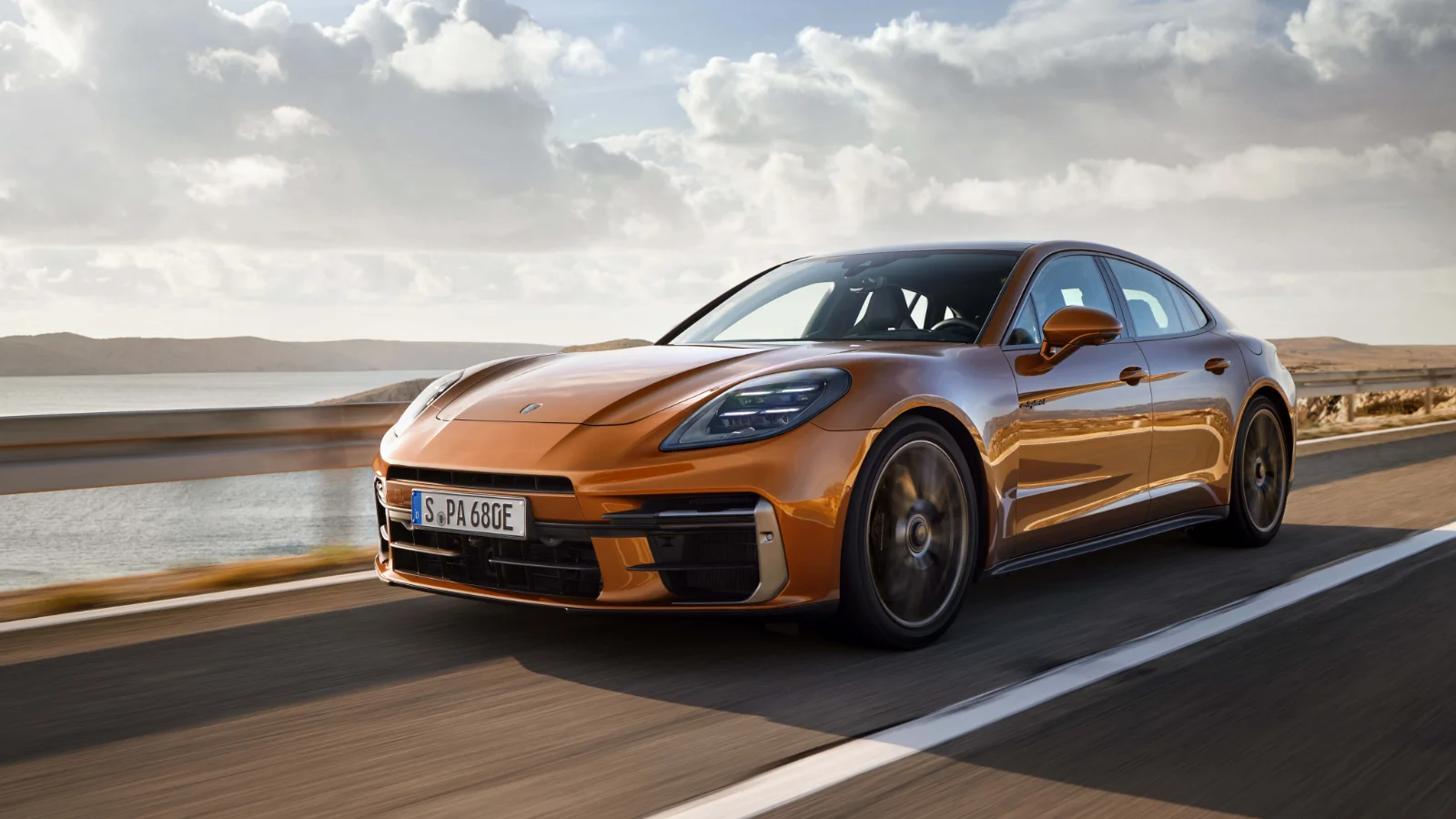
The Panamera finally arrived in 2009. Porsche staged the premiere in Shanghai, famously lifting a car to the 94th floor of a skyscraper for the reveal. It was not a conventional luxury sedan and never pretended to be. It had a sports-car driving position, a fastback hatch rather than a trunk, and four individual seats. Its rivals were the S-Class and 7 Series by price, but its reference point was the 911.
That opposite starting point gave the Panamera its role in this story. Where Mercedes added sportiness to comfort, Porsche added comfort to a sports car. It also became a hybrid pioneer in the class: an S Hybrid in 2011, the plug-in S E-Hybrid in 2013, which Porsche described as the first plug-in hybrid in the luxury class, and later the Turbo S E-Hybrid as the top of the range.
The difference from the traditional German flagship is easy to feel. An S-Class or long-wheelbase 7 Series is designed around the rear seat, with legroom, reclining chairs and screens for passengers who may never drive the car. The Panamera is designed around the front seat. Its rear passengers sit low in two sculpted seats, and the car’s priorities show in its chassis technology, from air suspension and active anti-roll systems to rear-wheel steering, all tuned to make a large car feel smaller. That is why it competes with the flagships on price and prestige while offering a different answer to what the money should buy.
Porsche’s own documents call the generations G1 (2009), G2 (2016) and the third generation (2023). The “970” and “971” codes enthusiasts use are shorthand, not Porsche’s published naming.
Sidebar: The Volkswagen Phaeton
The Phaeton is the most fascinating outlier in the German flagship story: a car with engineering ambitions that matched the best in the class, sold under the badge of a mass-market brand.
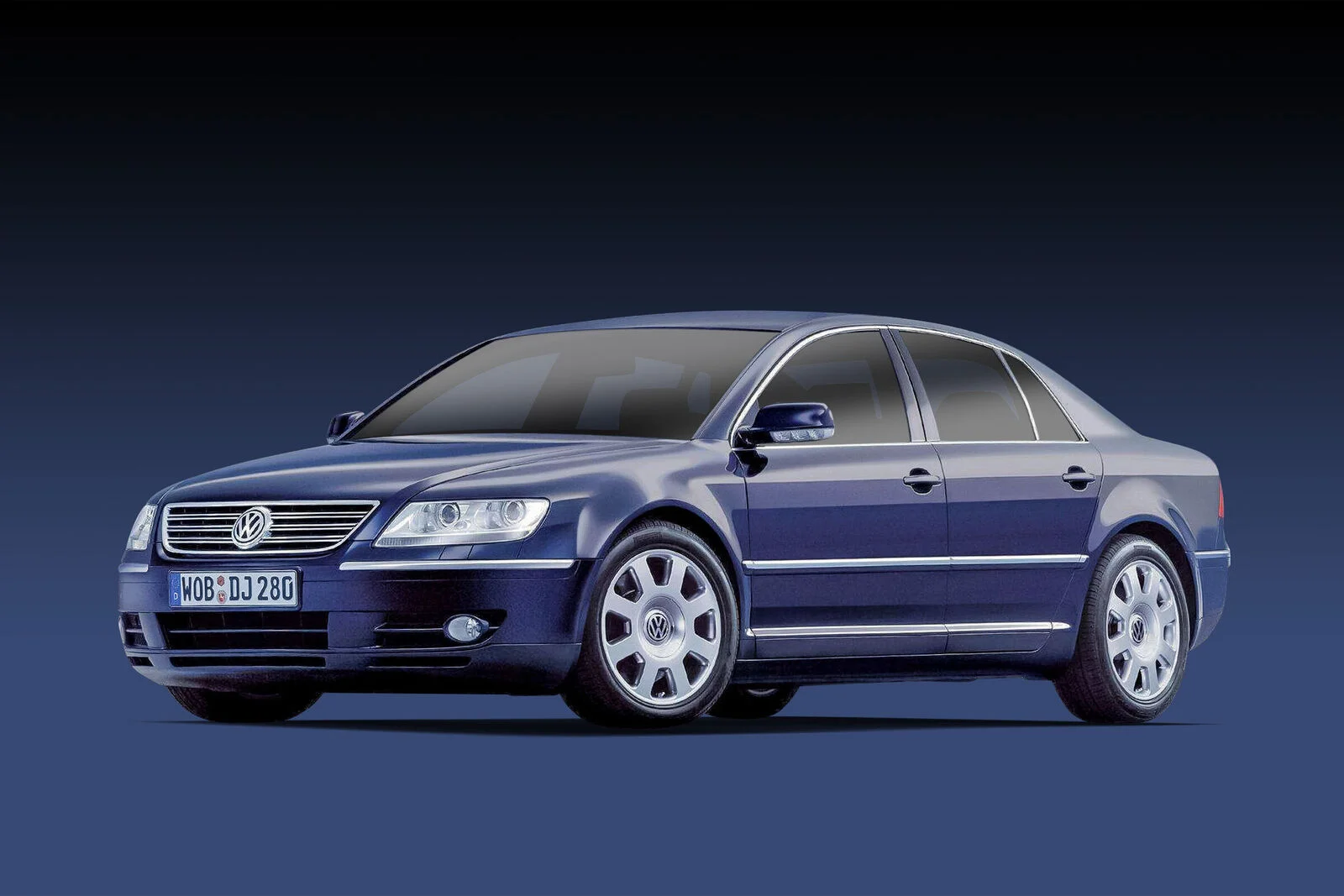
Volkswagen premiered it at Geneva on March 6, 2002. It was driven by the ambitions of Ferdinand Piëch, then chairman of Volkswagen AG, who wanted Volkswagen to compete at the top of the market. The car offered a W12 and, later, a V10 TDI that Volkswagen called the world’s most powerful diesel sedan at the time. A frequently quoted story says Piëch demanded that the car hold 300 km/h all day in 50-degree heat while keeping the cabin at 22 degrees; we found no Volkswagen source for it, so treat it as legend rather than specification.
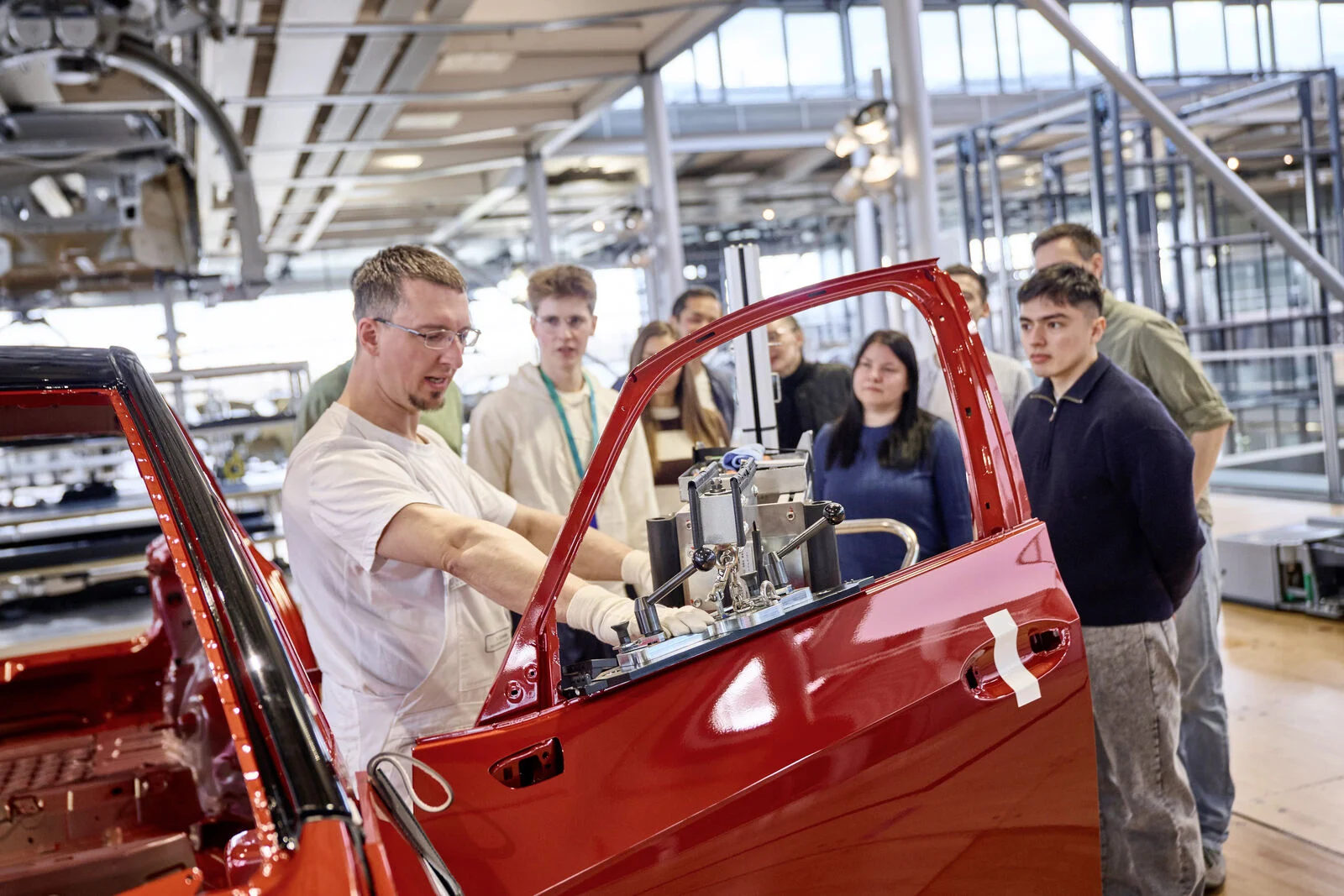
What Volkswagen did build was remarkable. The Phaeton was assembled at the Transparent Factory in Dresden, a glass-walled plant with parquet floors where customers could watch their cars being built. Dresden also assembled Bentley Flying Spurs for a period, underlining how close the Phaeton was to the group’s most expensive cars.
The market was less impressed. In the United States, Volkswagen sold 820 Phaetons in 2005 against hopes of around 10,000, and withdrew the car from the market soon after. China kept it alive, and global sales peaked at 11,166 in 2011. Production ended on March 18, 2016, after 84,235 cars.
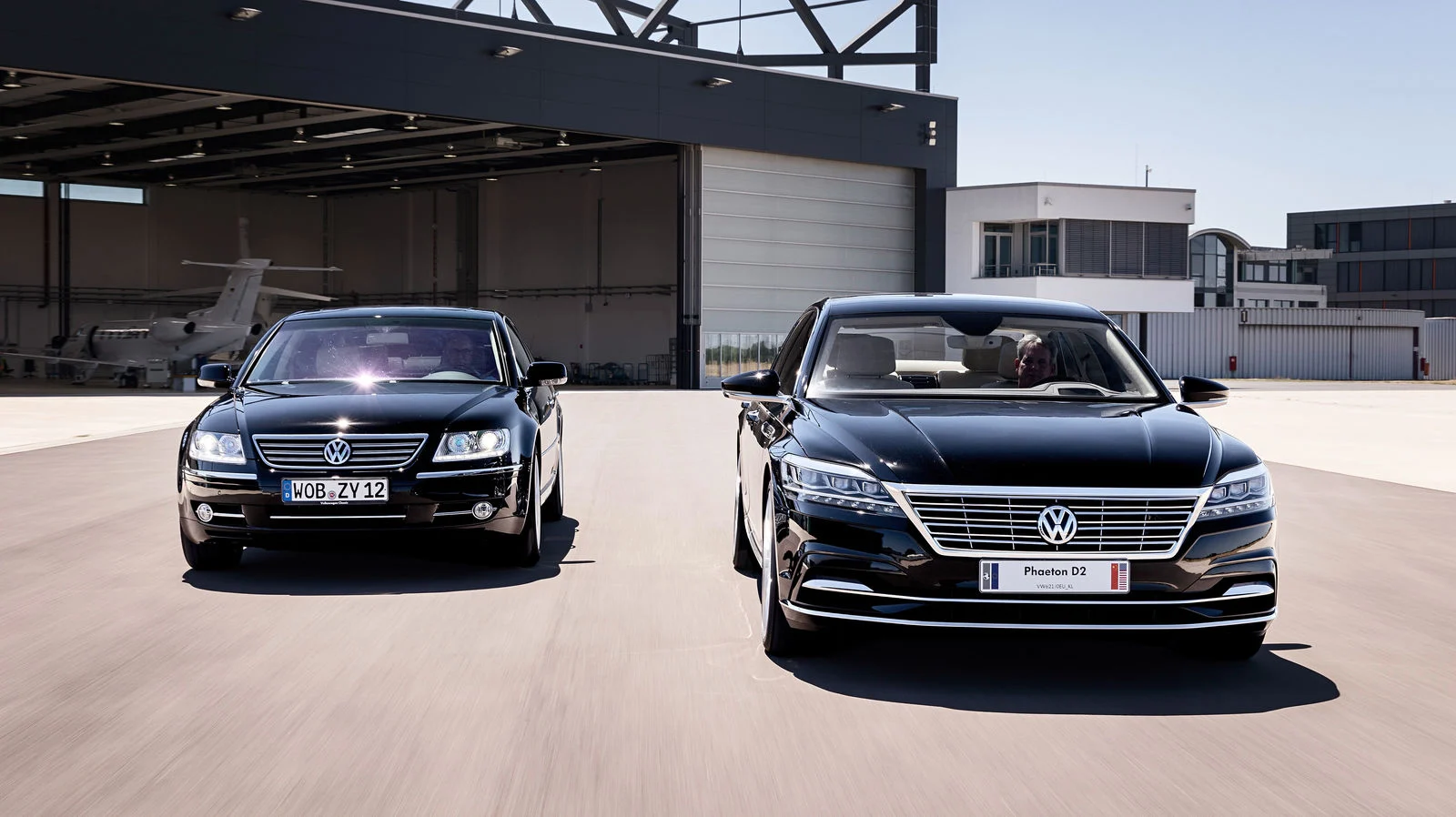
A planned successor was turned into an electric project after the diesel crisis and then cancelled. In 2022, Volkswagen showed that never-built “Phaeton D2” for the first time. The Transparent Factory ended vehicle production in December 2025.
The Phaeton belongs in this discussion because it isolates one variable. Its engineering was flagship-grade; its badge was not. The answer the market gave is part of what defines a flagship.
When Flagships Were Engineering Laboratories
Put the generations side by side and a pattern emerges. For about four decades, the German flagship was where new technology entered the market. It was expensive enough to absorb the cost of a new system, and its buyers were willing to pay for features that did not yet exist anywhere else. Once a technology proved itself and its cost fell, it moved down the range and then across the industry.
The pattern is easiest to see with safety technology. Anti-lock brakes, airbags and stability control were once flagship options; they are now standard equipment on ordinary cars, and in many markets stability control is required by law. Radar cruise control is common on compact cars. The controller-and-screen interface that confused E65 buyers in 2001 became the template for the touchscreen era. Adaptive LED lighting, camera-based suspension and lightweight bodies all followed similar paths.
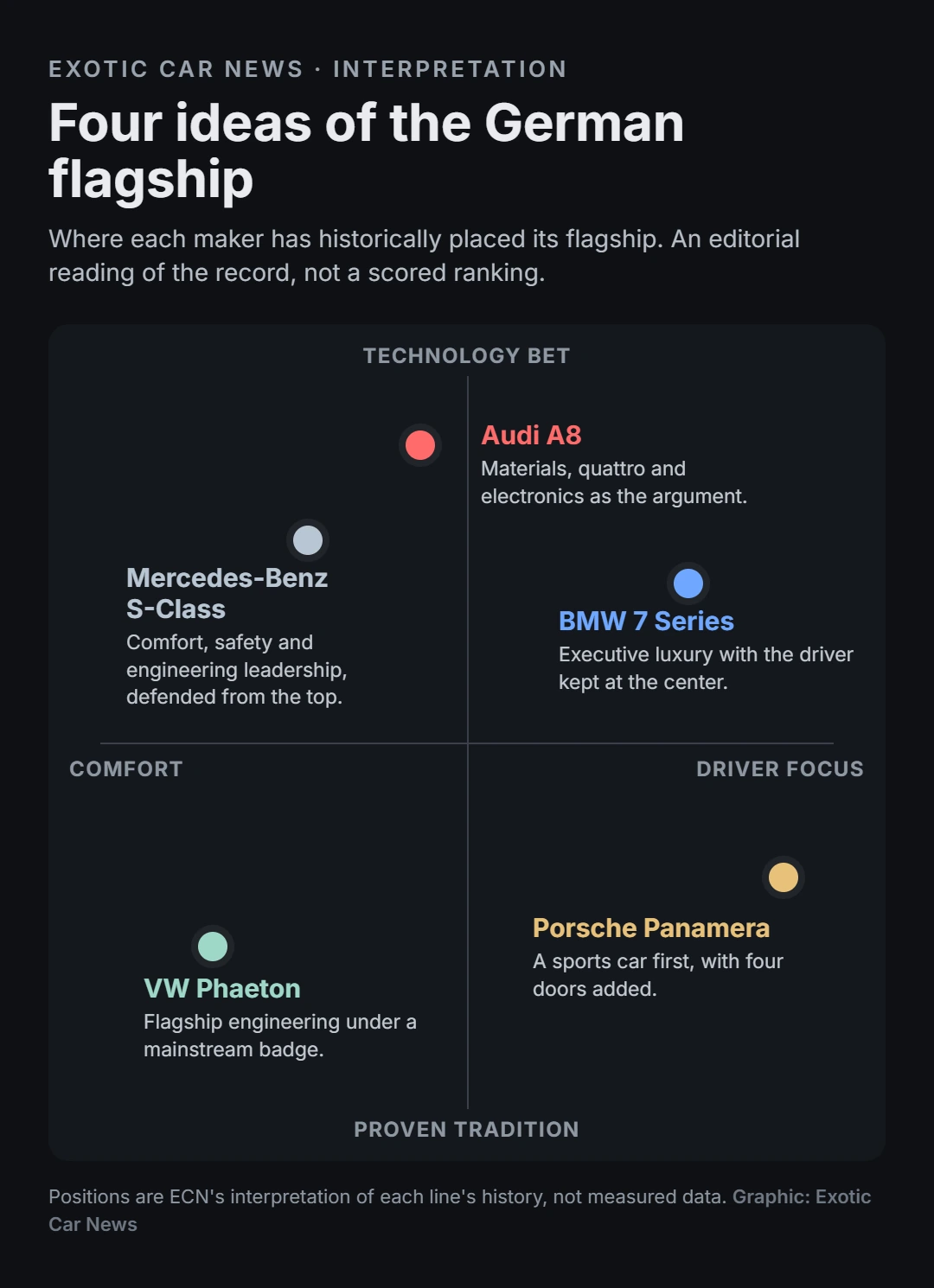
Each brand’s contributions also reflect its philosophy. Mercedes concentrated on safety and occupant protection, from crumple zones to PRE-SAFE. BMW concentrated on the driver’s relationship with the car, from Check Control to iDrive to Carbon Core. Audi concentrated on materials and lighting. The milestones below show which technologies reached the market first in these cars, and what the record supports about each claim.
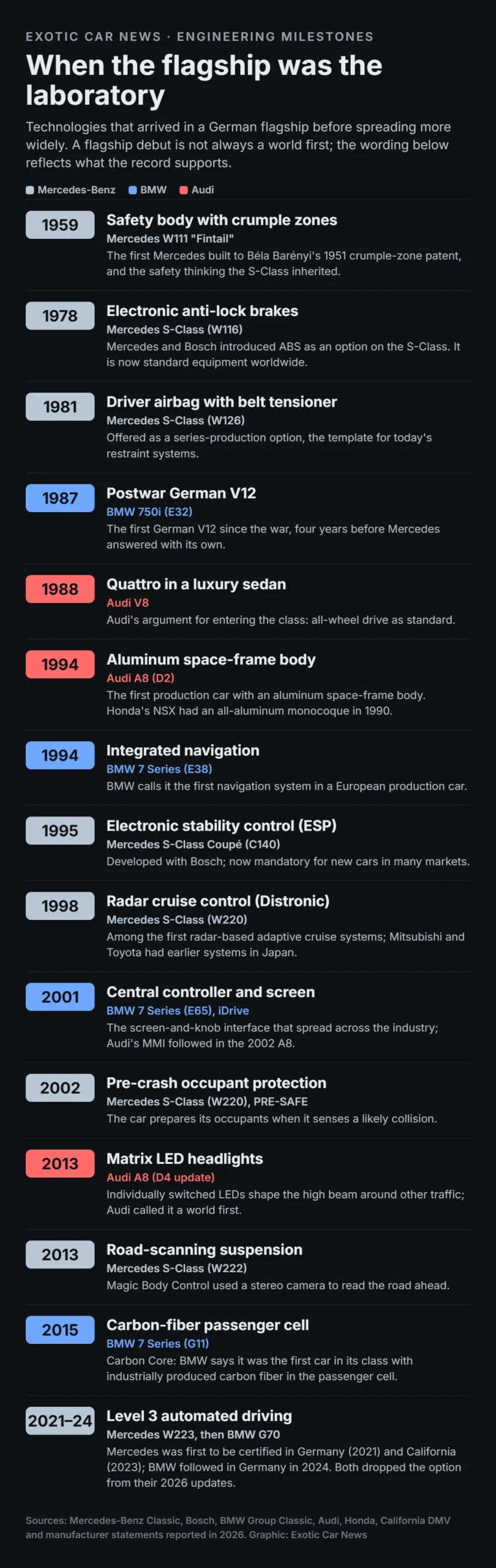
The most recent chapter is the most revealing. Level 3 automated driving was supposed to be the next great flagship technology. Mercedes was the first carmaker approved for it in Germany, in 2021, and in California, in 2023; Honda had offered a small run of Level 3 Legends in Japan earlier in 2021. BMW followed in Germany in 2024. Audi announced it in 2017 and never switched it on.
By 2026, both Mercedes and BMW had dropped the option from their updated flagships. BMW cited limited customer benefit and demand; Mercedes called its decision a pause. Both are concentrating on assistance systems that still require the driver’s attention. For the first time in this story, the most ambitious flagship technology moved backward. It is part of a wider shift in what a six-figure car is selling, which we explored in The $200,000 Luxury Car Has a New Problem: Technology Isn’t Luxury Anymore.
The Modern German Flagship (as of October 2026)
The S-Class and 7 Series have both received major updates in 2026, the Panamera is in mid-cycle, and the A8 is pausing. This chapter reflects the record as of October 29, 2026.
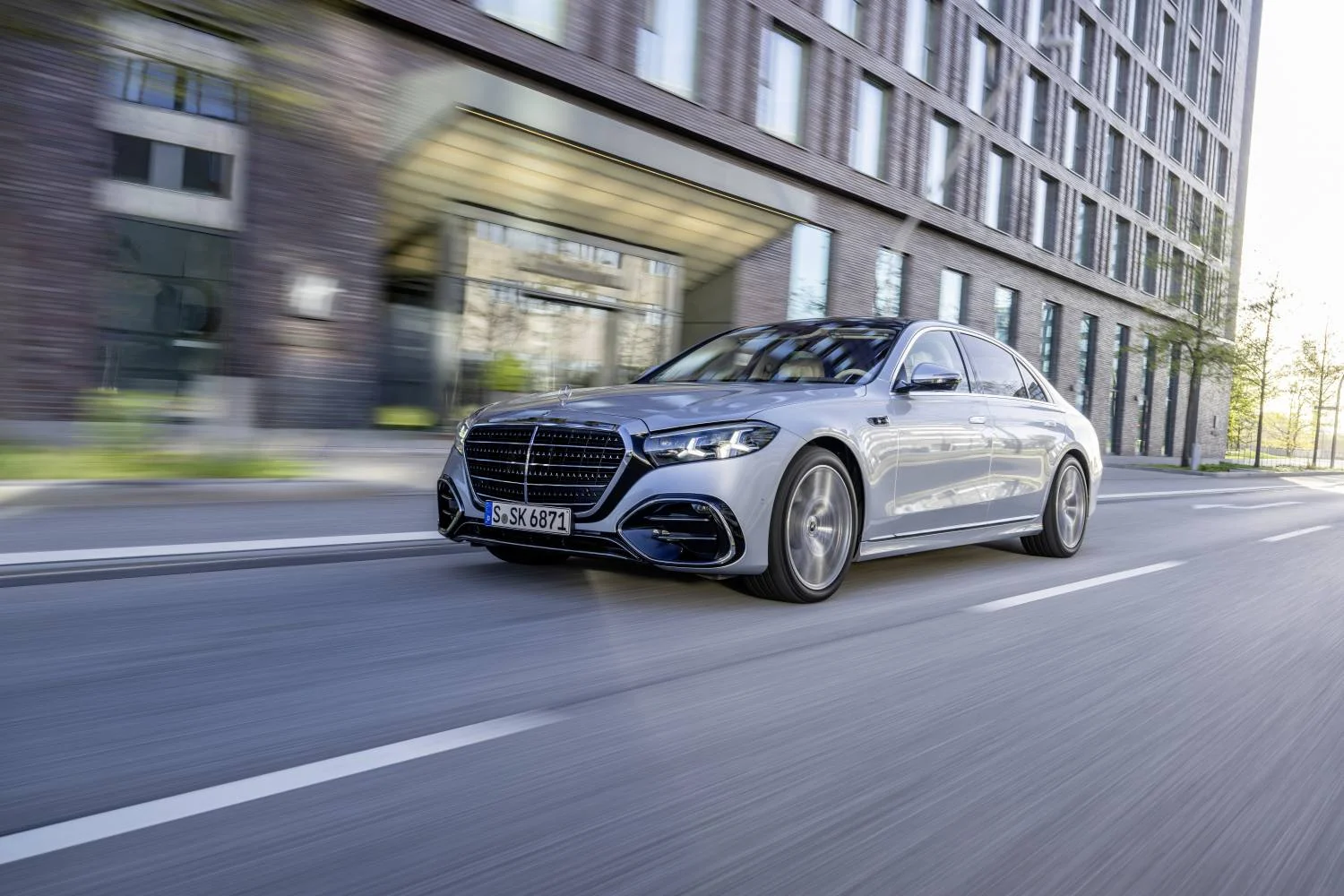
Mercedes-Benz S-Class. The updated W223 premiered at the Mercedes-Benz Museum on January 29, 2026. Mercedes describes it as the most comprehensive update within a single S-Class generation, with more than half of the car new or revised. It runs on the company’s MB.OS operating system and a fourth-generation MBUX interface, gets a larger, illuminated grille surround and DIGITAL LIGHT micro-LED headlamps, and offers a new V8 rated at 530 hp in the S 580 4MATIC. Drive Pilot is not part of the update; a Mercedes spokesperson told The Verge that another system would come within the next two to three years. Mercedes has not announced a next-generation S-Class.
BMW 7 Series. BMW revealed the updated G70 on April 22, 2026, with events in New Jersey, Beijing and New York, and calls it its most extensive model update ever. It adopts Neue Klasse design cues, including a new illuminated kidney grille and two-section headlights, keeps the 31.3-inch Theater Screen, and entered production at Dingolfing in July 2026. U.S. prices start at $99,800 before destination for the 740. Personal Pilot L3 is gone; a BMW spokesperson confirmed to Automobilwoche that the option was dropped for lack of customer demand.
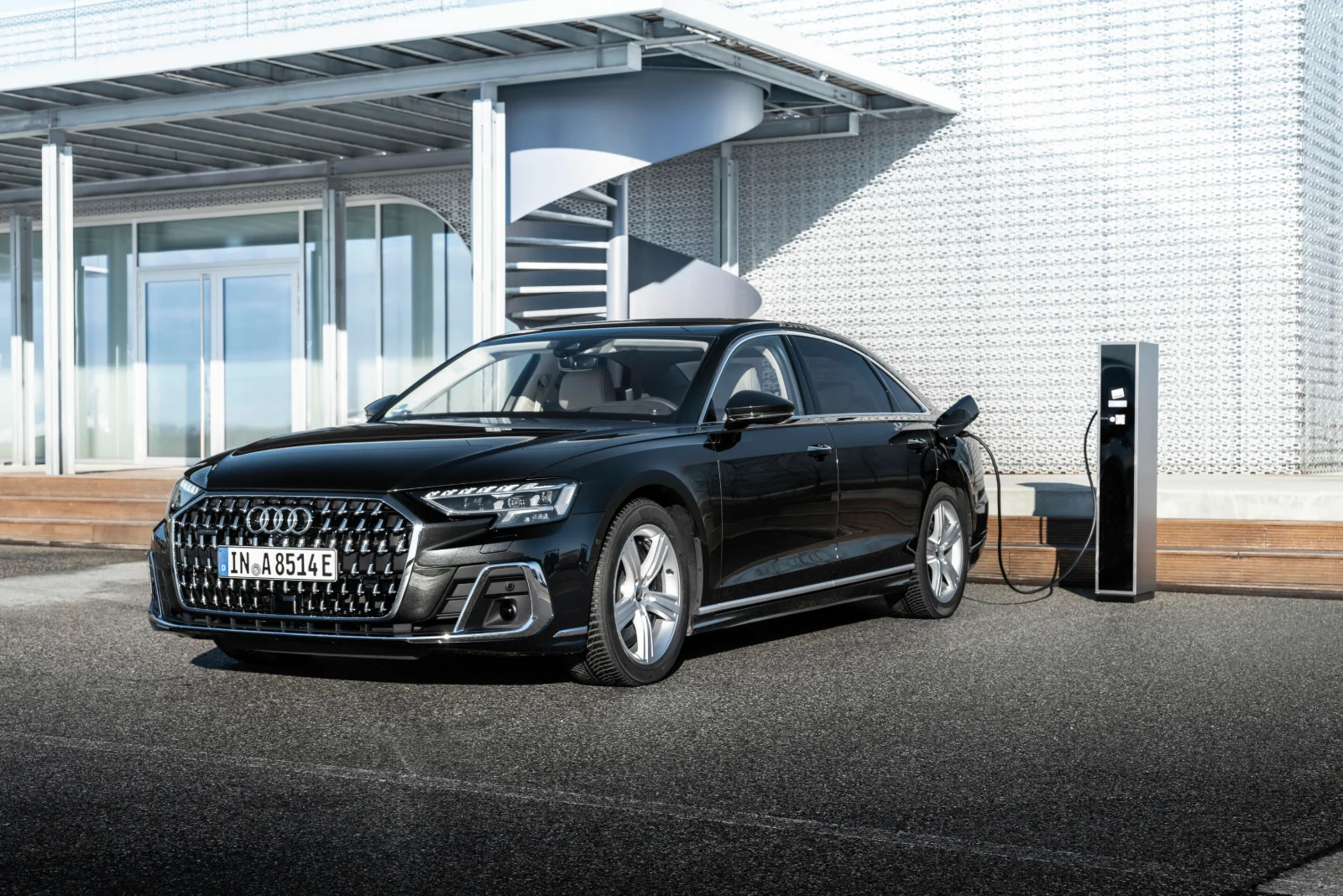
Audi A8. The A8 is on hiatus rather than replaced. Audi stopped taking orders in Germany in February 2026, according to multiple reports. In March 2026, Audi chief executive Gernot Döllner said the A8 would return around the end of the decade, as reported by Road & Track. In the United States, Audi kept the A8 on sale for the 2027 model year, with a spokesperson saying no end date had been set. Reports in the German press say a successor could be developed with Porsche; Audi has not confirmed details.
Porsche Panamera. The third-generation Panamera arrived in late 2023. In September 2025, Porsche said combustion and plug-in hybrid Panameras would continue well into the 2030s, part of the same product reset behind Porsche’s decision not to build an electric 911.
What Makes a Flagship?
Half a century of German flagships suggests there is no single answer, and that the disagreement is the point.
Mercedes defined the flagship as the car that sets the standard for everything else, in comfort, safety and engineering. BMW argued that a luxury car could be built around the driver without giving up comfort, and won enough converts to become a genuine rival. Audi argued with materials, all-wheel drive and electronics, and changed how large cars are built. Porsche turned the idea around and built a sports car with four doors. Volkswagen proved that engineering alone does not make a flagship; the buyer has to believe in the badge.
For collectors and buyers, the same philosophies explain which cars have aged into favorites. The W126 is prized for durability and restraint, the W140 for over-engineering, the E38 for balance and design, and the first A8 for its aluminum body. Each represents its maker’s idea of a flagship at its clearest, which is often what makes an old luxury car worth keeping. Our look at how a used car becomes a collectible explores that process in more detail.
The 2026 updates also show how the role is changing. The flagship is still where a brand shows its best design, materials and software. It is less clearly where safety-critical technology is proven first, as the step back from Level 3 makes plain. And in Audi’s pause, the market is testing whether a brand needs a traditional large sedan at all when its customers increasingly buy SUVs and electric cars.
What these cars share is ambition. Each generation that matters in this story mattered because a company tried to answer the question at the heart of that Geneva show in 1991: what should the best car we can build actually be? The answers keep changing. The question has outlasted every one of them.