
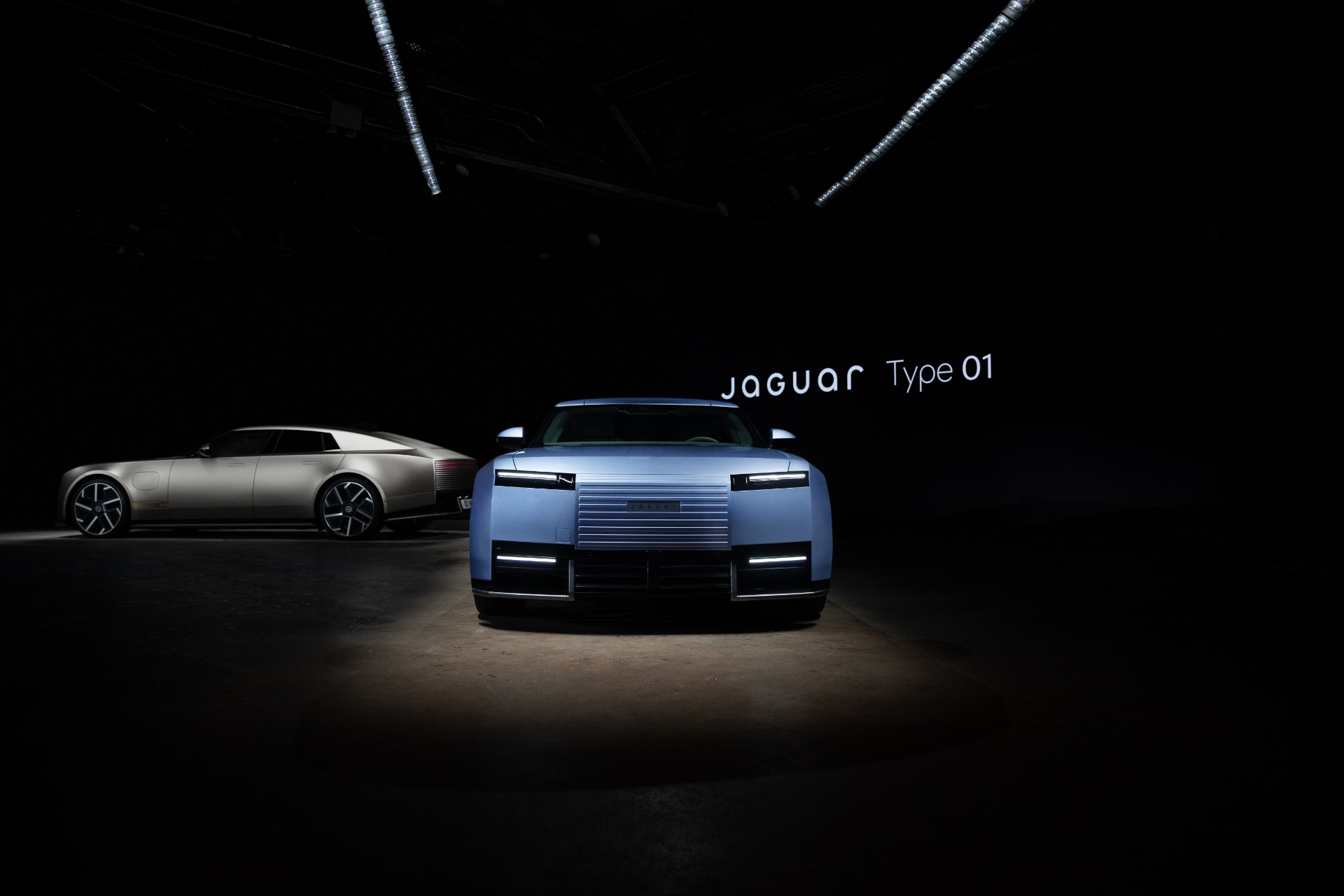
Jaguar is reinventing itself as an exclusive electric luxury brand. Its parent company’s latest financial results reveal just how much is riding on that transformation.
Jaguar has spent the past several years preparing to become a different kind of luxury car company. The familiar lineup is giving way to a new generation of electric vehicles, led by the dramatic Type 01 four-door GT. The ambition is unmistakable: fewer conventional luxury cars, a more exclusive identity and a stronger position among the world’s premium automotive brands.
Now comes the difficult part.
On November 13, Jaguar Land Rover reported a £451 million (about $590 million) loss after tax for the quarter ending September 30, even as revenue climbed 20.3% to £5.9 billion (about $7.7 billion).
The figures arrived as JLR prepares to deliver some of the most consequential vehicles in its history. The Jaguar Type 01, Range Rover Electric and Range Rover Sport Electric have all been revealed, and JLR says customer deliveries are expected to begin in early 2027.
The company’s future is taking shape. But its latest results illustrate the financial pressures involved in getting there.
And for Jaguar, the question extends beyond whether buyers will embrace an electric luxury car. It is whether the brand can convince a new generation of customers that Jaguar deserves a place in a more exclusive segment of the market.
At a Glance: JLR, July–September 2026
| Revenue | £5.9B (~$7.7B), up 20.3% |
| Profit before tax & exceptional items | £6M (vs. £485M loss a year earlier) |
| Exceptional charges | £530M (~$695M) |
| Loss after tax | £451M (~$590M) |
| Adjusted EBIT margin | 1.1% |
| Free cash outflow | £540M (~$710M) |
| Full-year margin outlook | 2–3% (cut from ~4%) |
| New EVs awaiting delivery | Jaguar Type 01, Range Rover Electric, Range Rover Sport Electric |
Source: JLR Q2 FY27 results, November 13, 2026. Dollar figures are approximate conversions.
A £451 Million Loss Doesn’t Tell the Entire Story
The headline financial result is substantial, but it needs context.
JLR’s £451 million loss after tax included £530 million in exceptional charges associated with restructuring, employee separation costs and write-downs of intangible assets under development and other assets. Before exceptional items, the company reported a £6 million pretax profit for the quarter.
That was a significant improvement from the comparable period a year earlier, when JLR recorded a £485 million pretax loss before exceptional items after a major cyberattack halted its manufacturing for five weeks.
Revenue increased 20.3% year over year, reflecting a recovery in vehicle volumes and operations. Wholesale volumes rose to 82,400 vehicles from 66,165 a year earlier.
Yet profitability remains under pressure. JLR reported an adjusted operating margin of 1.1%, down from 2.8% in the previous quarter, while free cash outflow reached £540 million.
The company also lowered its full-year adjusted operating-margin outlook to 2–3%, from roughly 4% previously, and now expects approximately £1.25 billion (about $1.64 billion) in free cash outflow for the year.
These figures describe a business recovering operationally while absorbing considerable restructuring costs and investing in its next generation of vehicles.
They do not establish that Jaguar’s electric transformation caused the quarterly loss.
Jaguar is one part of a much larger business that includes Range Rover, Defender and Discovery. JLR’s consolidated financial results reflect all four brands, multiple markets and significant company-wide restructuring. In fact, Jaguar is barely present in the current numbers: with its old models wound down, it accounted for only about 800 of the 82,400 vehicles JLR wholesaled in the quarter.
Nevertheless, the timing is revealing. Jaguar’s reinvention is taking place when its parent company has limited room for expensive mistakes.
Jaguar Isn’t Simply Replacing Its Old Cars
The Type 01 represents more than a new powertrain. It is a statement about the kind of customer Jaguar wants to attract.
For decades, Jaguar occupied a distinctive position in the luxury market. Its vehicles combined British styling, performance and prestige, often offering an alternative to established German competitors.
That identity produced memorable cars, from the E-Type and XJ to the modern F-Type.
But it also left Jaguar competing in crowded segments where established rivals possessed greater scale, stronger sales momentum and deeply entrenched customer relationships.
The new strategy attempts to change the equation. Rather than continuing to compete primarily on familiar luxury-car terms, Jaguar is pursuing a more exclusive, design-led identity built around electric vehicles. JLR has said Jaguar will be its only fully electric brand, while Range Rover, Defender and Discovery keep a mix of hybrid and electric options.
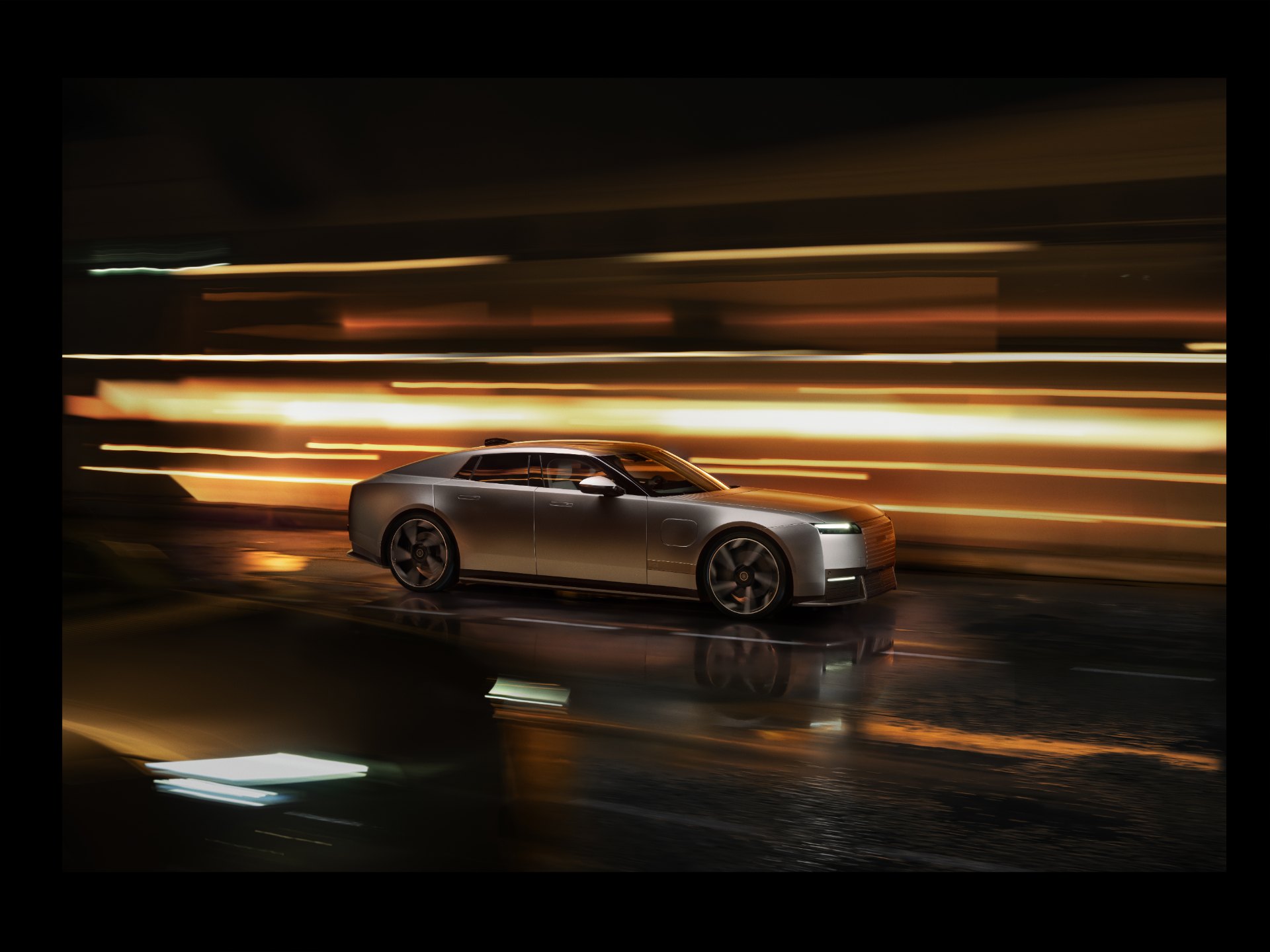
The Type 01’s proportions, styling and presentation signal that ambition. It is deliberately different from the Jaguars that preceded it.
Whether customers find that difference desirable is another matter.
A striking concept can generate attention. Converting that attention into sustained demand for expensive production vehicles is a much more difficult achievement.
Jaguar will need to demonstrate that its new cars offer not only visual distinction but also the quality, refinement, performance and ownership experience expected at their intended price level.
Three Electric Vehicles, One Critical Launch Period
JLR’s November results announcement highlighted three new luxury electric vehicles: the Jaguar Type 01, Range Rover Electric and Range Rover Sport Electric.
All three are being built at the company’s Solihull plant in the United Kingdom, and JLR says customer deliveries are expected to begin in early 2027.
Additional products are planned. A Range Rover GT and a new electric Defender are expected to launch in 2027, built at Halewood on JLR’s new Electrified Modular Architecture (EMA).
This is an unusually concentrated period of product change for the British manufacturer. It also places substantial demands on engineering, manufacturing, suppliers, dealerships and customer support.
JLR says it plans to invest £15 billion to £18 billion (roughly $20 billion to $24 billion) in its transformation, with £11.5 billion invested since 2024.
That investment is intended to support a broader portfolio of electric vehicles while preserving combustion-engine and hybrid choices elsewhere in the group.
The distinction matters. Jaguar’s repositioning is centered on electric luxury, but JLR as a whole is not abandoning combustion engines across every brand. Range Rover and Defender customers will continue to have different powertrain choices as the company responds to varying demand across global markets.
This flexibility could become particularly important if electric-vehicle adoption develops unevenly between regions.
China Is a Challenge. North America Is an Opportunity.
JLR’s financial pressures are not confined to the cost of launching new vehicles.
China remains a difficult market. JLR’s wholesale volumes in the China region fell to 6,100 vehicles in the quarter, from 11,370 a year earlier, and the Middle East also weakened. Management has highlighted intense competition from Chinese manufacturers.
That competition is especially consequential as established luxury brands introduce expensive electric vehicles into a market where domestic manufacturers have rapidly improved their technology, design and perceived quality.
North America presents a different opportunity. It was JLR’s largest wholesale region in the quarter at 27,100 vehicles, up from 17,879 a year earlier, and management has identified further U.S. growth as part of its strategy.
For Jaguar, the American market could be particularly important.
The brand has a long history in the United States, but its new positioning will require it to establish credibility with customers who may otherwise consider a Porsche, Mercedes-Benz, Bentley or another high-end luxury vehicle.
Those buyers are not necessarily shopping for the least expensive option. They are shopping for an experience, an identity and confidence in the product.
Jaguar’s challenge is to deliver all three.
Can Exclusivity Become a Business Advantage?
Moving further upmarket offers a potential benefit. A manufacturer selling fewer, more expensive vehicles may be able to support stronger margins if customers are willing to pay for distinctive design, craftsmanship and exclusivity.
But exclusivity is not automatically profitable.
Developing sophisticated electric vehicles requires substantial capital, and lower sales volumes can make it harder to recover those investments. A new luxury brand identity also takes time to establish.
Jaguar must persuade buyers that its new vehicles deserve their asking prices, while simultaneously building confidence in long-term ownership, service and resale support.
The company cannot rely entirely on the reputation of its previous models because it is intentionally moving away from much of what defined them.
That creates both an opportunity and a risk. Jaguar may succeed in attracting buyers who previously overlooked the brand. It may also discover that some existing customers have little interest in following it into this new segment.
The outcome will depend less on the reaction to a concept car than on the production vehicles customers can actually purchase.
JLR Is Trying to Become a More Efficient Company
Alongside its product launches, JLR is pursuing a substantial restructuring program.
The company has outlined plans to generate £1.7 billion (about $2.2 billion) in savings over two years, targeting material costs, warranty and fixed costs.
Management is also targeting a reduction in the volume of vehicles needed to break even, aiming for approximately 300,000 units a year.
The objective is straightforward: make the business less vulnerable to fluctuations in demand. That matters when an automaker is investing heavily in new technology while facing uncertain market conditions.
The restructuring includes a voluntary redundancy program covering approximately 4,000 employees over two years. JLR says about 3,000 have already agreed to leave, and £295 million of the quarter’s exceptional charges relates to the program.
These are significant operational changes. They also demonstrate that JLR is attempting to address its financial pressures through more than the introduction of new models. The company is changing the cost structure supporting those vehicles.
Whether the savings arrive on schedule will be an important measure of the strategy’s effectiveness.
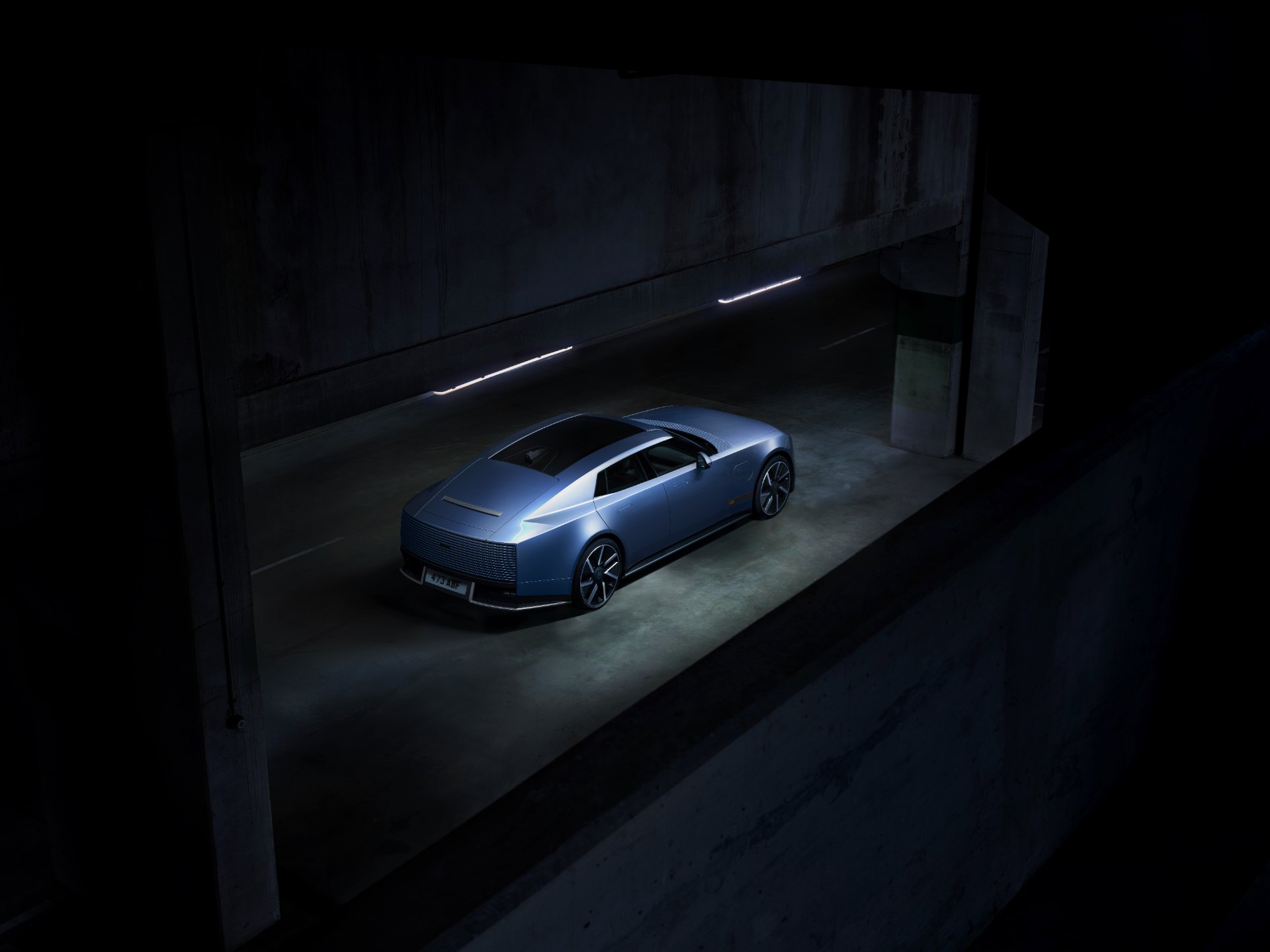
The Real Test Begins When Customers Take Delivery
Jaguar’s transformation has already achieved something important: it has made people pay attention. Its new design language has generated debate, curiosity and strong reactions.
But attention is only the beginning. The questions that matter next are more practical.
- Will customers embrace the production Type 01?
- Can Jaguar deliver the quality and refinement expected of a vehicle positioned in the upper reaches of the luxury market?
- Will the dealership and ownership experience support the brand’s new ambitions?
- Can JLR generate sufficient profitability and cash flow while bringing several major electric products to market?
Those answers will not emerge from a single quarterly earnings report. They will become clearer as production vehicles reach customers, order books develop and the financial performance of the new product portfolio begins to appear in JLR’s results.
Jaguar’s Reinvention Has Entered Its Most Important Phase
The November financial results do not represent a verdict on Jaguar’s future. They reveal a company operating under significant financial pressure while preparing an ambitious product offensive.
Revenue is recovering. Underlying profitability has improved. Restructuring costs remain substantial, and cash flow is negative.
At the same time, Jaguar is attempting one of the most dramatic brand repositionings in the modern luxury-car industry.
The Type 01 may prove that Jaguar can design something radically different. The more important question is whether it can build a sustainable business around that difference.
For a company with Jaguar’s history, reinvention is not necessarily the problem. The challenge is making the new identity desirable enough, and profitable enough, to endure.
That is where the real test begins.
Sources: JLR Q2 FY27 financial results (November 13, 2026), JLR Q2 FY27 wholesale and retail volumes (October 3, 2026) and JLR’s June 2026 strategy update. Dollar conversions are approximate, at about $1.31 per pound.