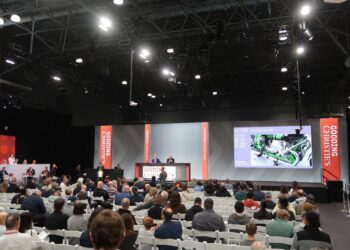

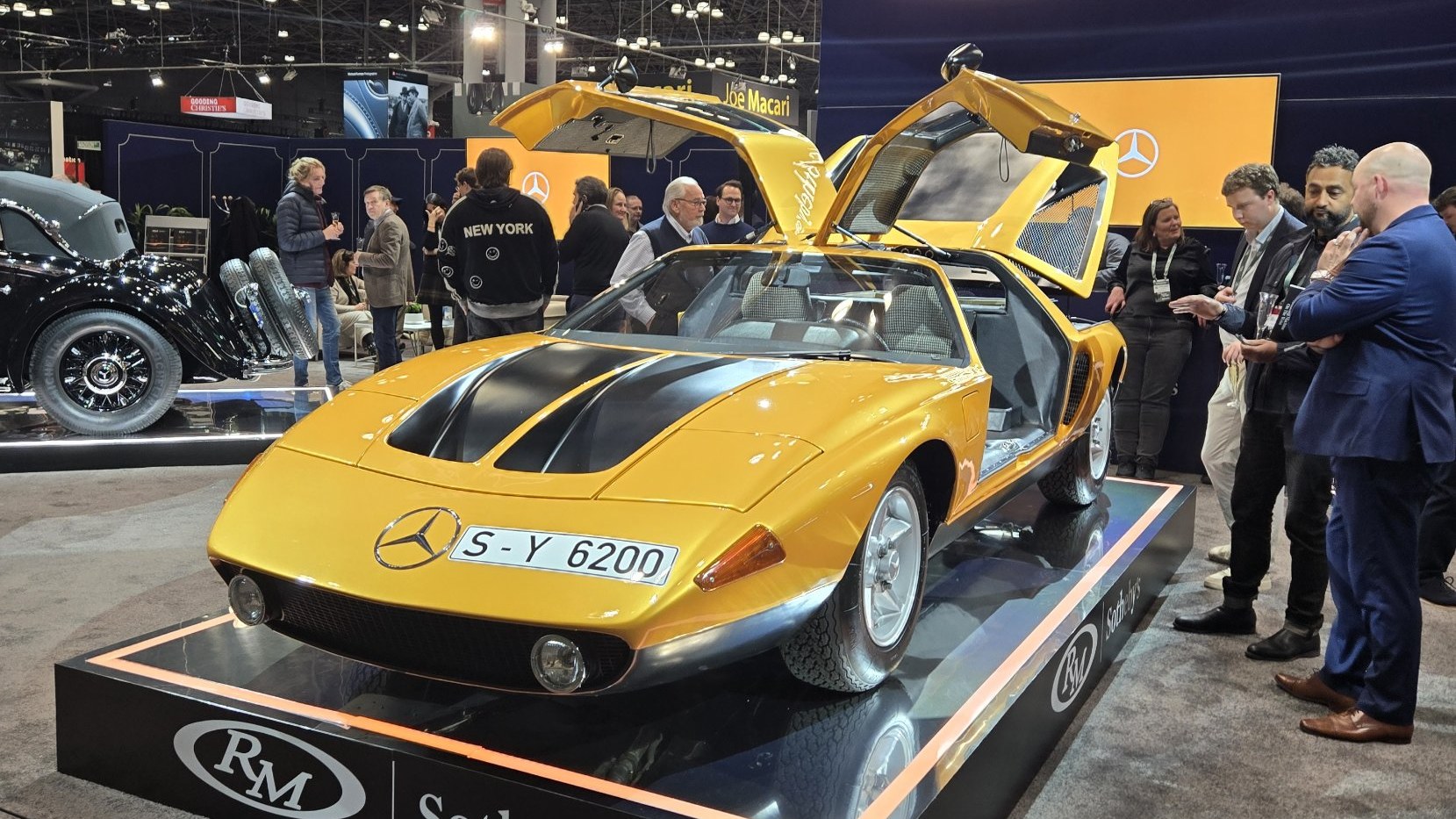
There were older cars at Rétromobile New York, and plenty that looked more expensive. Few drew the same slow, circling crowd as a low orange wedge on the RM Sotheby’s stand at the Javits Center: a car Mercedes-Benz refused to sell for more than half a century.
It is the 1970 Mercedes-Benz C 111-II known inside the company as Car 33, and its New York appearance was a stop on the way to Paris. On February 3, 2027, RM Sotheby’s is scheduled to offer it at the Palais du Louvre during Rétromobile Paris. It will be the first C 111 ever offered for public sale. RM Sotheby’s has set a valuation threshold of more than $27.5 million (€25 million). That is not a sale result, and the car changes hands only if it sells.
The more interesting figure may be what comes after the hammer falls. Mercedes-Benz says the proceeds will fund a project it calls Mercedes-Benz Museum 2.0. That raises the question hanging over the car in New York: after 56 years of saying no, why is Mercedes letting one go, and what does it plan to build with the money?
At a Glance
| Car | 1970 Mercedes-Benz C 111-II, internal “Car 33” (S-Y 6200) |
| Engine | Original 2.4-liter four-rotor Wankel, 350 PS (about 345 hp) |
| Built | 17, of which 13 survive, all owned by Mercedes-Benz |
| Auction | RM Sotheby’s, February 3, 2027, Palais du Louvre, Paris |
| Valuation threshold | More than $27.5 million (€25 million) |
| Proceeds | Mercedes-Benz Museum 2.0: the Stuttgart museum and its digital twin |
Two sightings in New York
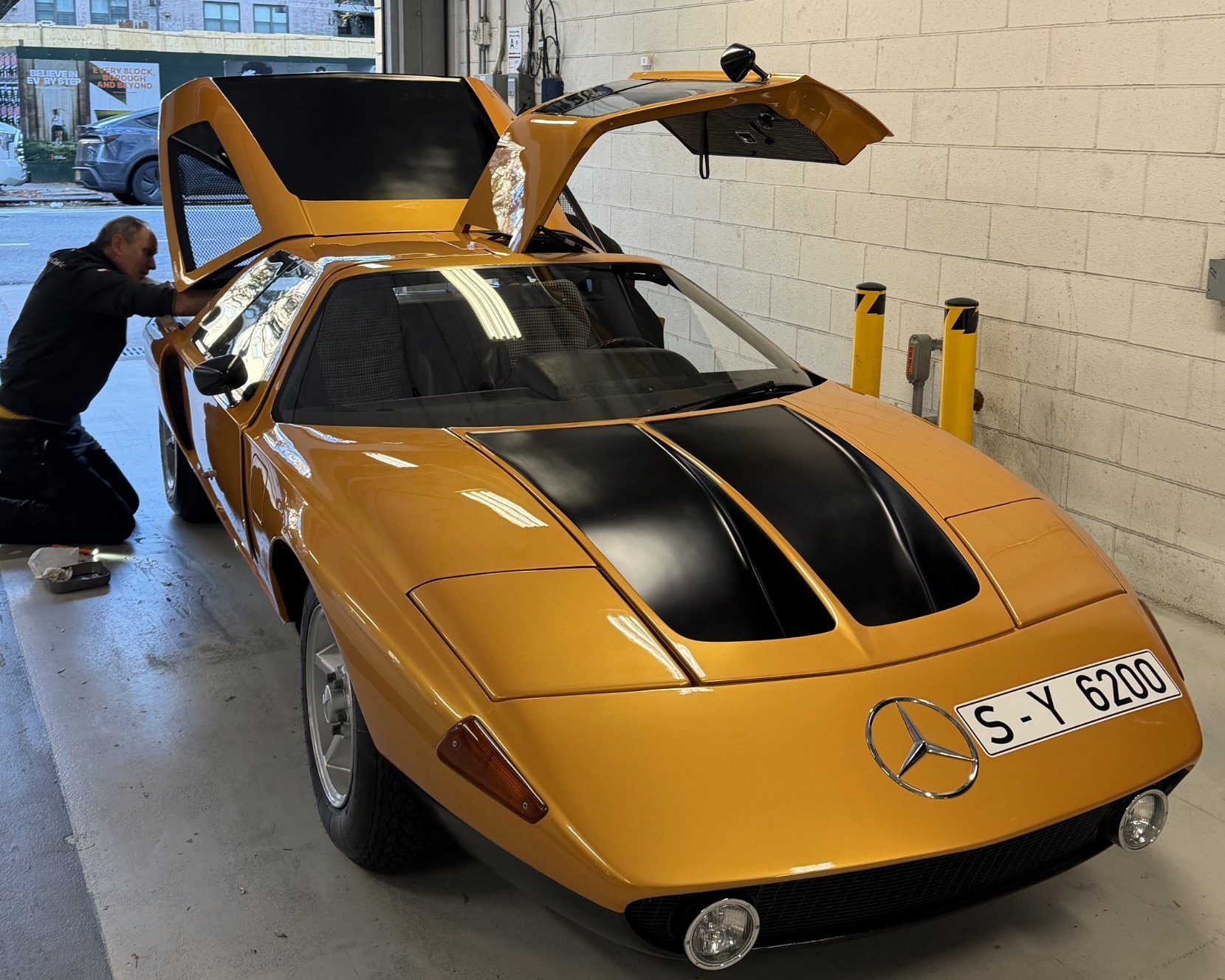
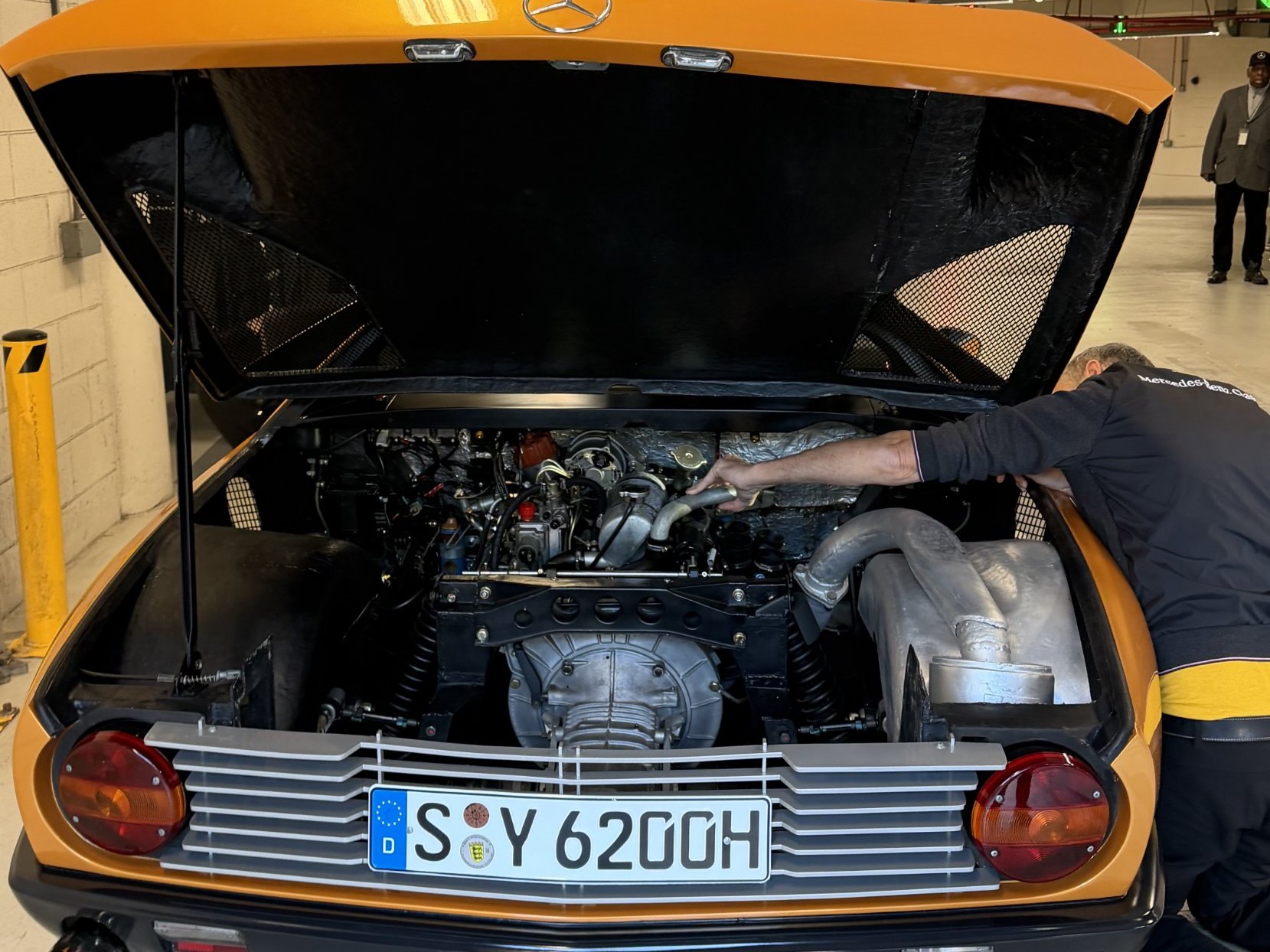
The ECN team saw this exact car twice in New York. The first time was at Mercedes-Benz of Manhattan, where Car 33 had arrived from overseas and was being prepared for display. Our photos from that visit show technicians in Mercedes-Benz Classic jackets working around it in a service garage. One knelt at the open driver’s door with a flashlight, two more leaned in at a rear wheel with cloths in hand, and the rear deck stood raised over the powertrain. We also saw it parked, doors up, in a darker display room at the dealership.
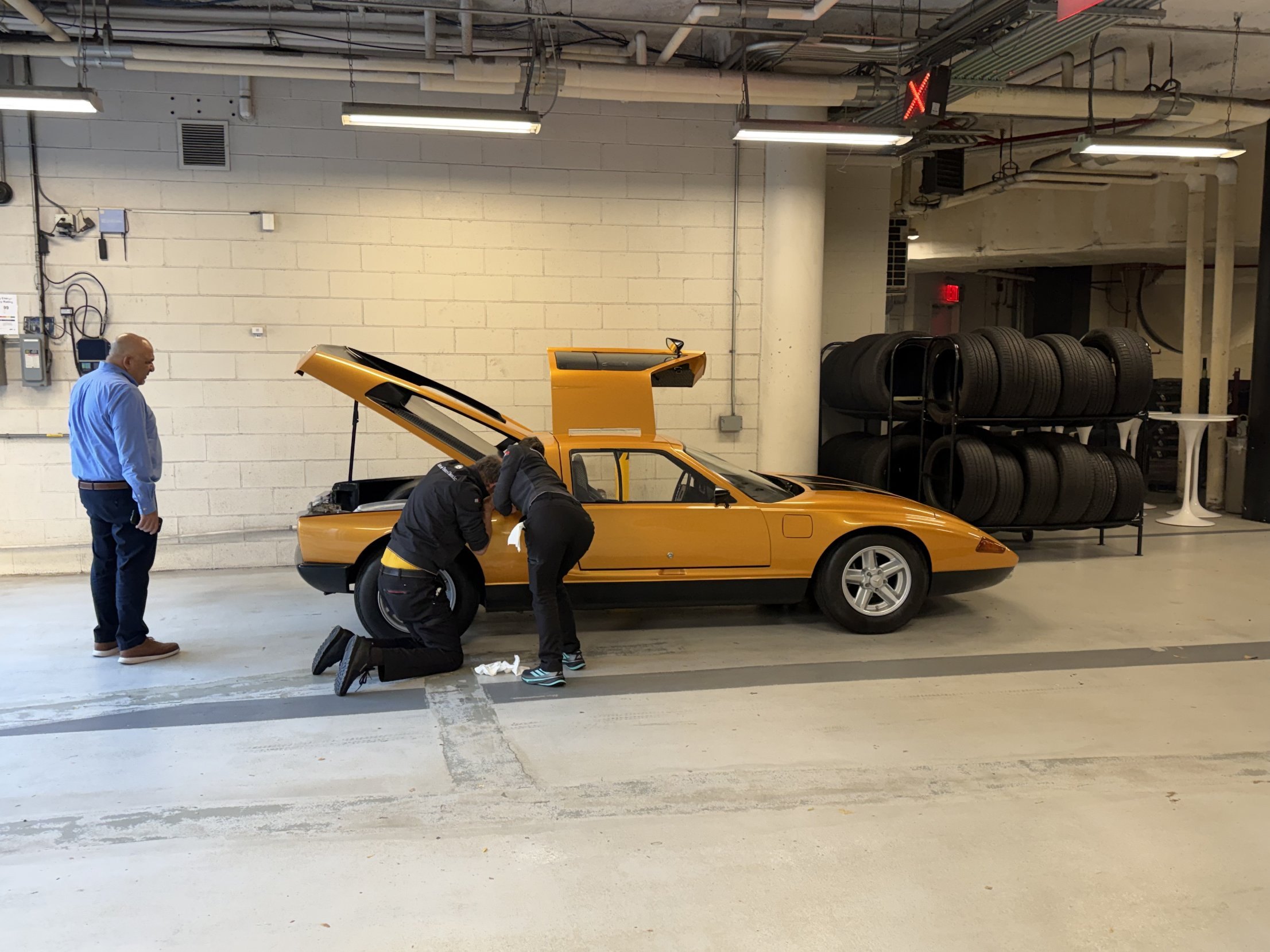
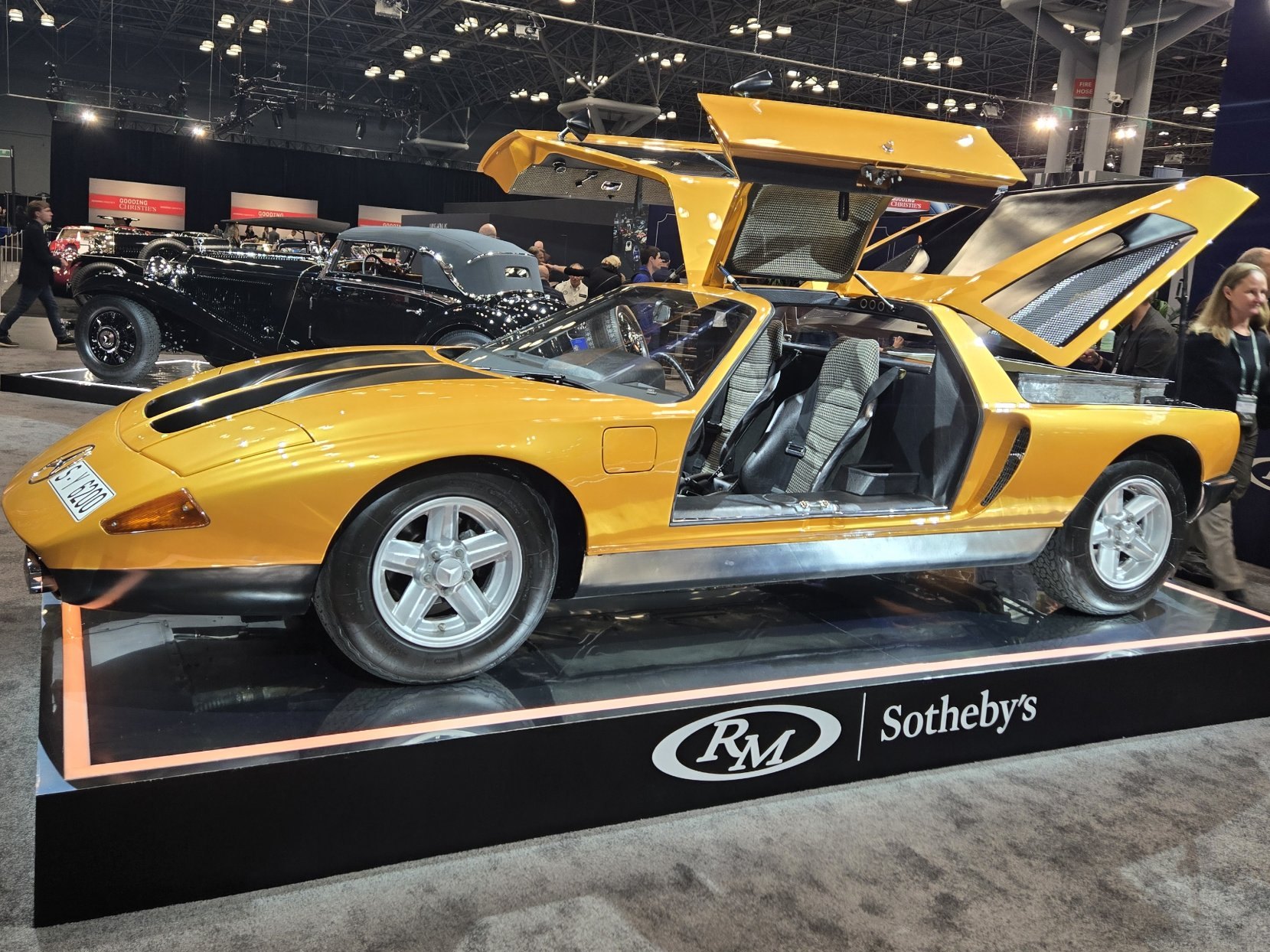
The second sighting was its Rétromobile New York appearance on a lit RM Sotheby’s plinth at the Javits Center. Seeing it in both places made clear how much care goes into moving and presenting a rare prototype that still runs. Its confirmed destination is the auction itself, at the Palais du Louvre in Paris on February 3, 2027.
The supercar Mercedes wouldn’t build
The Mercedes-Benz C 111 made its debut at the 1969 Frankfurt motor show as a mid-engine research car. It was a rolling laboratory for the Wankel rotary engine, wrapped in a fiberglass body with gullwing doors that recalled the 300 SL. The revised C 111-II followed in 1970, and the public response was fierce. According to Mercedes and RM Sotheby’s, would-be buyers reportedly mailed blank checks to Stuttgart.
Mercedes never cashed them. Emissions rules, production costs and the 1973 oil crisis all worked against a production version, and the C 111 stayed a prototype. Mercedes built 17 examples across the program. One was used for crash testing and three were dismantled in the 1970s. The remaining 13 are all still in the company’s collection.
Car 33 was the third C 111-II assembled. Work began at Sindelfingen in March 1970, with the drivetrain fitted at Untertürkheim and the body built at Rastatt. The car was registered as S-Y 6200 in August 1970 and joined the experimental fleet that month.
Engineers used it to develop a fuel system that drew evenly from the side-mounted tanks. In December 1970 it carried instruments for luggage-compartment temperature tests, and in August 1971 it ran at the Hockenheimring. Conductor Herbert von Karajan was given a demonstration in April 1971, and the car appeared in the first German edition of Playboy in 1972.
Four rotors, five gears, no production line
Car 33 still carries its original 2.4-liter, four-rotor Wankel engine. Mercedes rates it at 257 kW, or 350 metric horsepower (PS), which works out to about 345 hp by the U.S. measure. Power goes through a five-speed ZF manual transaxle. Mercedes’ period claims were 0–62 mph in 4.8 seconds and a top speed of about 186 mph, with a reported weight of 1,240 kg (about 2,730 lb).
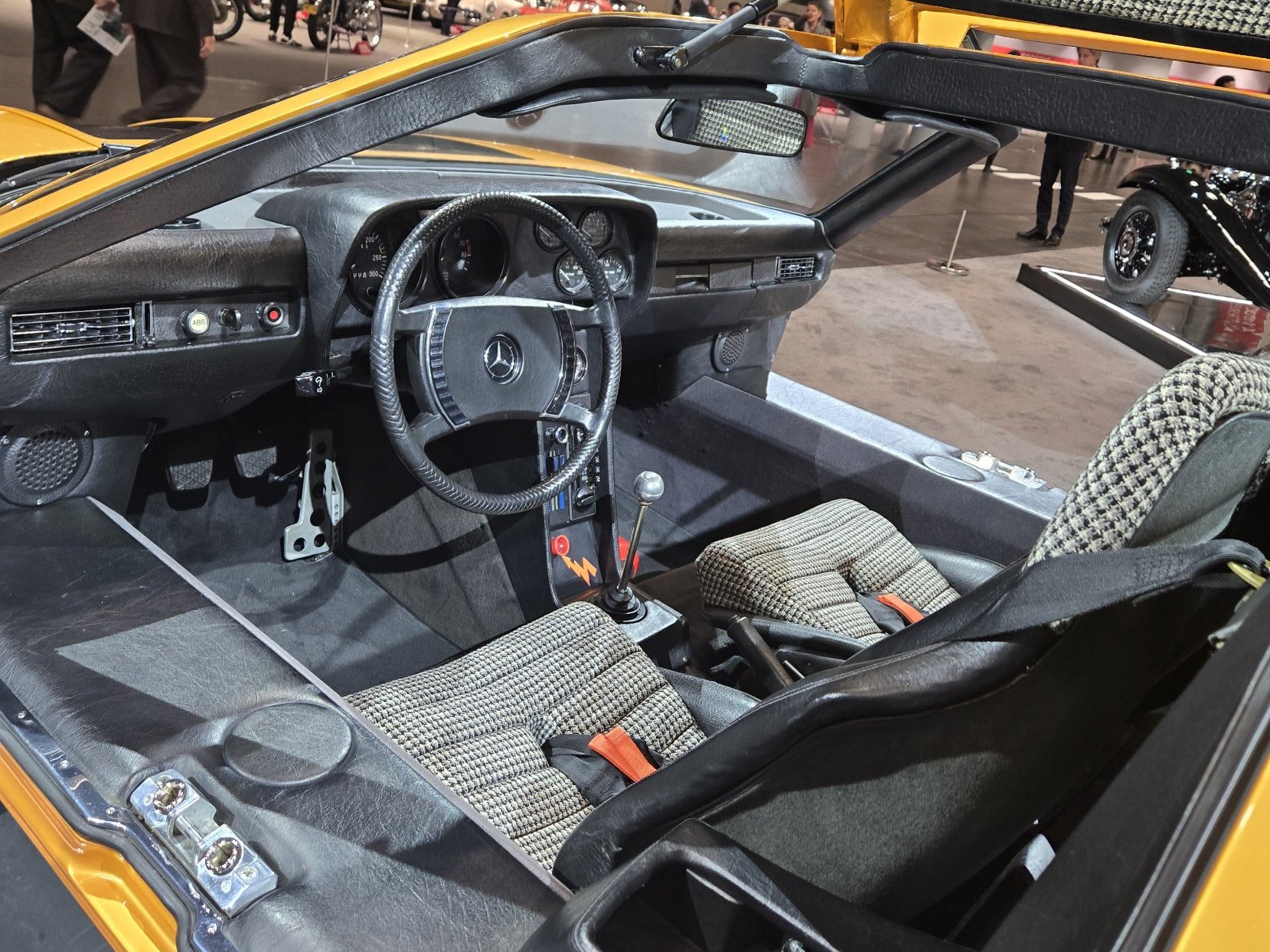
RM Sotheby’s catalog describes gray-and-white houndstooth upholstery that extends to the door panels, leather-bolstered racing seats, a 300 km/h speedometer and a 9,000-rpm tachometer. Our photos caught a few things the catalog only lists: a ball-topped gear lever, orange harness straps and a dash switch marked ABS, a reminder of the ABS testing Mercedes says the car did (the system is no longer active). A red fire extinguisher sits strapped in the passenger footwell.
From test fleet to museum floor
Car 33 moved into Mercedes’ collection in September 1975. From 2006 it was part of the design exhibit at the Mercedes-Benz Museum in Stuttgart.
That changed in 2024. The Mercedes-Benz Classic Center in Fellbach returned the car to running condition, overhauling the powertrain and adding a fire-suppression system to the engine bay. Mercedes preserved the car’s original exterior and interior patina. RM Sotheby’s calls it the engine’s first restart in more than 20 years.
Later that year, the car appeared on the lawn at the Pebble Beach Concours d’Elegance in a special exhibition of wedge-shaped concept cars and prototypes. RM’s listing also records appearances in 2025 at Rétromobile Paris, Silverstone and Hampton Court Palace. When RM catalogued it, the odometer read 24,766 km, or about 15,390 miles.
Why sell a Mercedes-Benz C 111 now?
The answer Mercedes gives is Museum 2.0. The project has two parts: further development of the physical museum in Stuttgart, and a digital twin of it.
In plain terms, a digital twin is a detailed virtual copy of the museum. The goal is to expand access to the museum’s exhibits, so people can explore them online from anywhere, not only in Stuttgart. Mercedes is building it with The Classic Car Trust and its Roarington platform, and expects first results in 2027. The museum’s director, Bettina Haussmann, described the goal in the announcement as opening the museum to people all over the world. The project is still in development, and Mercedes has not said what the finished version will include.
The sale is also built around scarcity. Mercedes says it is contractually committed not to sell another C 111 for at least 25 years.
In ECN’s view, the trade is clear. If the car sells, Mercedes gives up one of 13 surviving cars and keeps 12. In return, it gets funding for a project meant to expand access to its museum exhibits far beyond Stuttgart. A collector would get the car. Everyone else may get exhibits they can visit from anywhere.
RM Sotheby’s has run two earlier landmark Mercedes auctions, both held at the Mercedes-Benz Museum. In 2022, the 300 SLR Uhlenhaut Coupé from Mercedes’ own collection sold for €135 million (about $143 million). In 2025, the W 196 R Streamliner, consigned by the Indianapolis Motor Speedway Museum, sold for €51,155,000 (about $53 million, per RM Sotheby’s). This time the sale moves to Paris, with bidders in person or by phone. RM says internet bidding is not available, and bidders must register in advance.
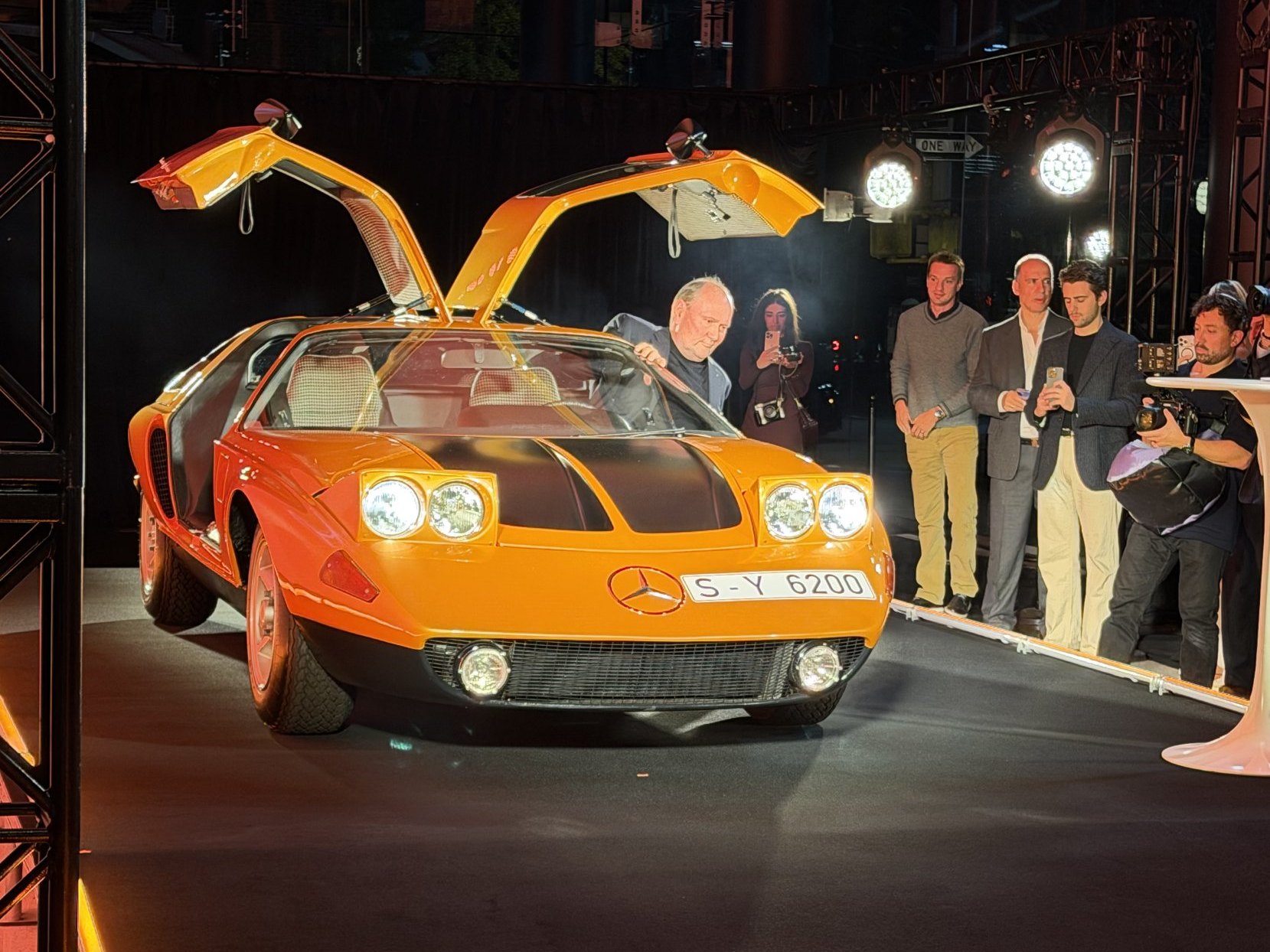
Last look in New York
For the people who saw it at the Javits Center, the car’s appeal didn’t depend on a price. The C 111 was Mercedes’ answer to what the 300 SL might become. It became a myth largely because it was never sold.
That could change in February. If Car 33 sells, its buyer will own something Mercedes kept off the market for 56 years. If the museum project delivers what Mercedes describes, the rest of us may get something out of the sale too.
Photos: Exotic Car News. Sources: Mercedes-Benz, RM Sotheby’s lot listing and RM Sotheby’s car history. The valuation is RM Sotheby’s threshold, not a sale result.