
The restomod business runs on one promise: take an old car and make it behave like a new one. Chau Nguyen spent years and roughly 200 builds on that promise before concluding it could not be kept.
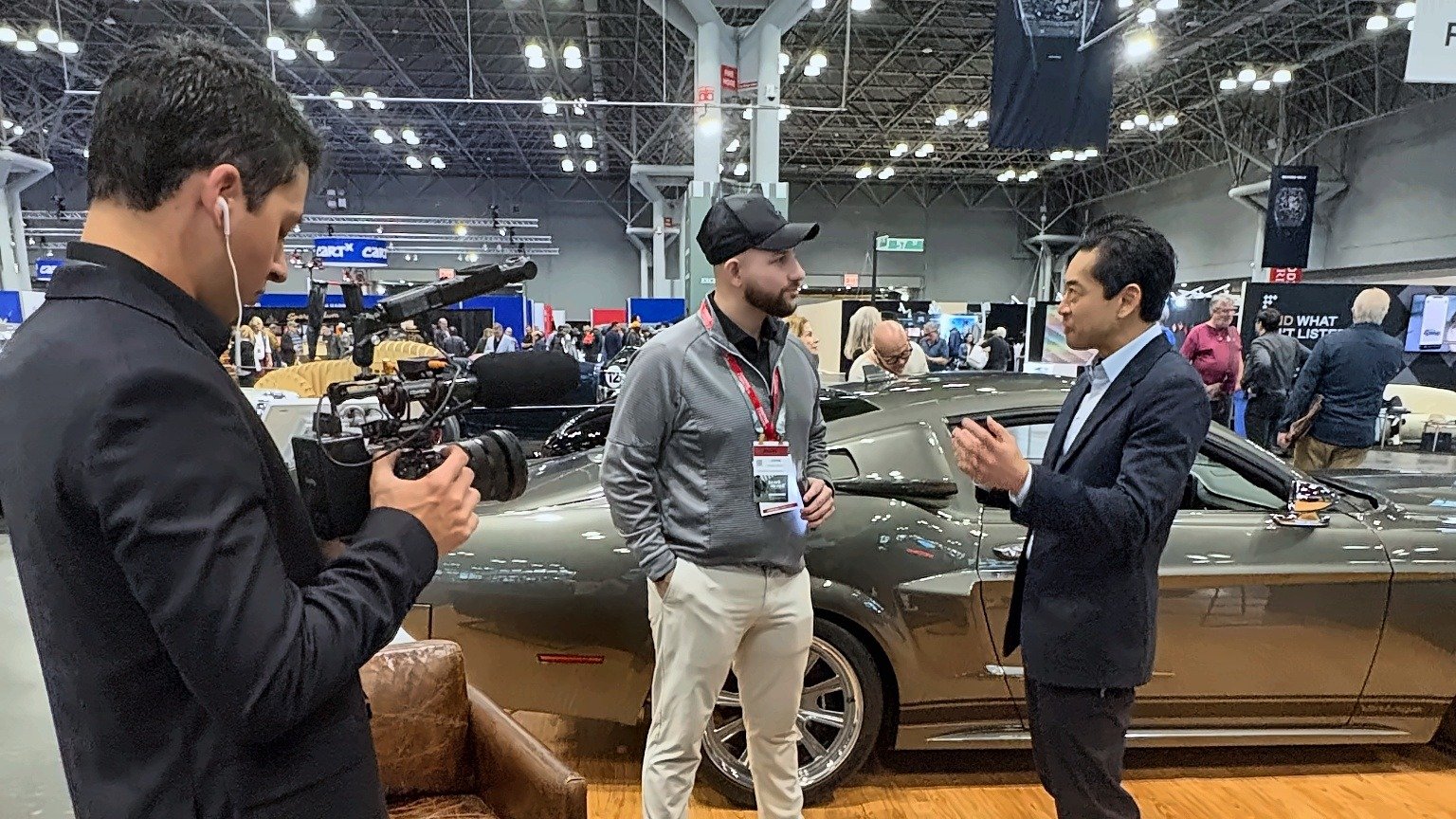
So he turned it around. “We took a modern car and made it look classic,” Nguyen told Exotic Car News on the floor of the Javits Center.
Nguyen is the founder and CEO of Vintage Modern, the Atlanta-area company that builds new vehicles to look like old ones. It used the first Rétromobile New York to unveil its latest, the Vintage Fastback.
The Fastback is the sharpest version of that idea yet: hand-laid carbon-fiber bodywork with 1960s proportions, wrapped around the current S650 Ford Mustang platform, with an optional Whipple supercharger good for a claimed 840 horsepower. It starts at $295,500.
What You Need to Know
- Vintage Modern builds classic-looking bodies on new vehicle platforms rather than restoring old cars. Its first model, the Bronco-inspired Modern Classic, was shown alongside the Fastback.
- The Vintage Fastback is its first car after years of trucks and SUVs. It debuted at Rétromobile New York, which runs through November 22.
- Standard power is a 5.0-liter V8 with 486 hp. The supercharged option is rated by the company at 840 hp and 615 lb-ft on 93-octane fuel.
- Nguyen says the current factory builds about 250 vehicles a year. The Fastback gets its own line in a new facility nearby.
- A third model line is planned. Nguyen says the vehicle has not been chosen.
It Started With a Bad Bronco
Nguyen is a car guy by any measure. He says he has owned more than 60 cars since he was 21, including Ferraris, Lamborghinis and McLarens. The company began with the one that let him down.
“It all started by accident, purely out of passion and a problem,” he said. “One day I bought an old Bronco just for fun. And when I got that old Bronco home, it looks very cool from 10 feet away, but it was highly problematic.”
Steering, brakes, reliability: the truck had what he called pretty much every classic car problem. His kids could not ride in it because it had no airbags. His wife, he said, hated it.
“We’re so spoiled and conditioned by modern-day reliability, technology and engineering,” Nguyen said. “It’s very hard to go back.”
Fixing his own truck became a restoration business, and the restoration business became a restomod operation with a factory, a team and an assembly line. It built about 200 trucks that way. The clients who arrived were used to Range Rovers, G-Wagens and Bentleys, and their feedback was consistent.
“The car looked really nice, but it still didn’t drive like their normal car,” he said. “And it had no safety features.”
The Question Nobody Liked
Nguyen came to cars from a career in technology. He thinks that mattered.
“I think it took an outsider to make this concept come to life,” he said. “One of the first questions I asked when I got into restoration was, ‘Can we put airbags in the car?’ And everyone said, ‘No, you can’t do that.’ I said, ‘Well, why not?'”
The answer he kept getting was that no amount of money spent on a restoration would give an old car modern crash protection. “For me, I thought, I don’t like that answer,” he said. “You’re putting people, families, kids in your car.”
Software taught him a blunt standard for new products. “You’re forced to think about how to make it 10 times better, or you won’t make it.”
That is the logic behind reversing the formula. A new platform arrives with airbags, stability control, crumple zones and a factory-engineered drivetrain already in place. The hard part moves to the body, which has to be designed, tooled and manufactured from nothing.
He is also clear that the motive was not a spreadsheet. “If I had started a company intentionally to make money, we probably wouldn’t be here today,” he said. “I did it out of passion, not profit. And what that does is it forces you down a path of perfection and doing it right.”
The Modern Classic Came First
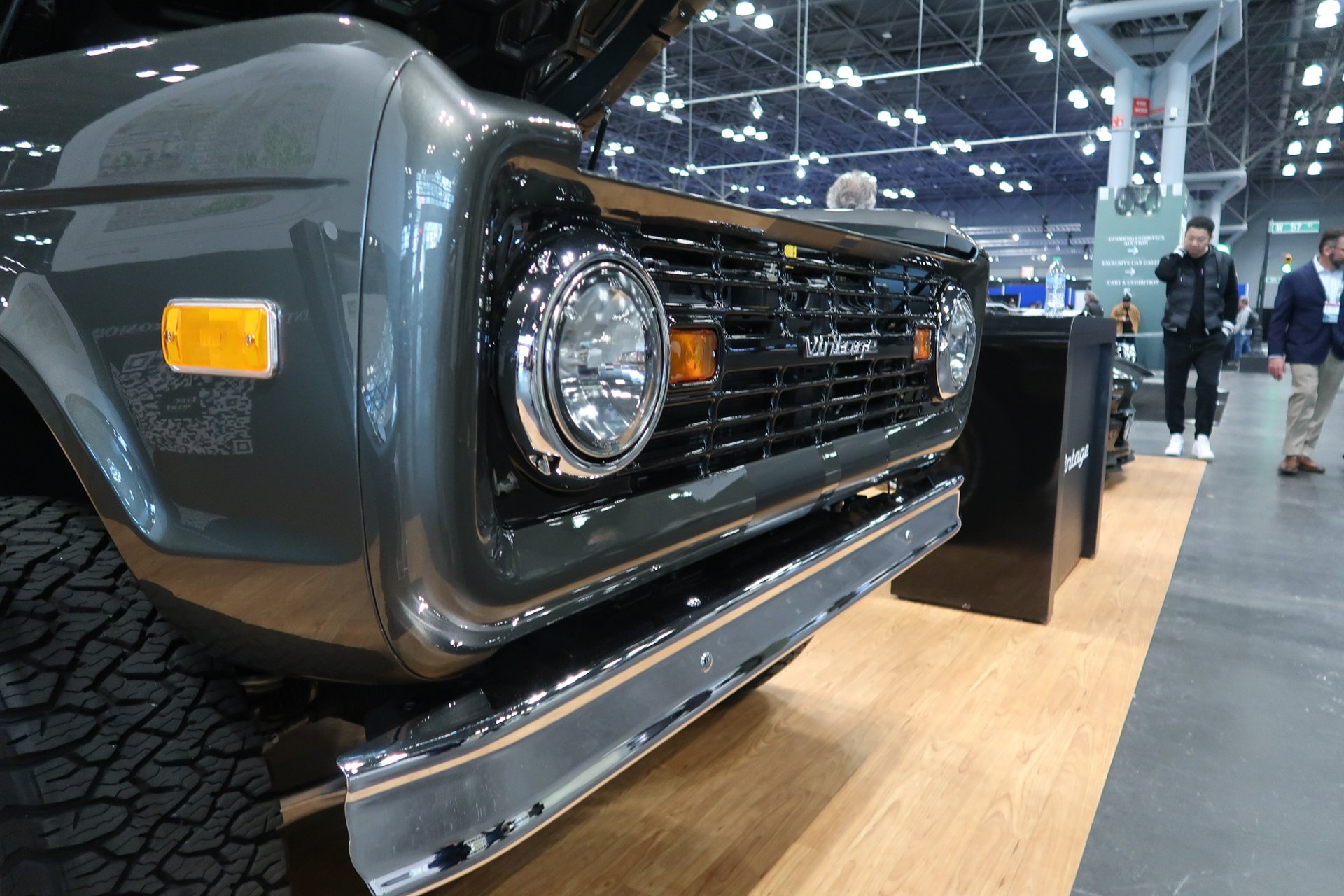
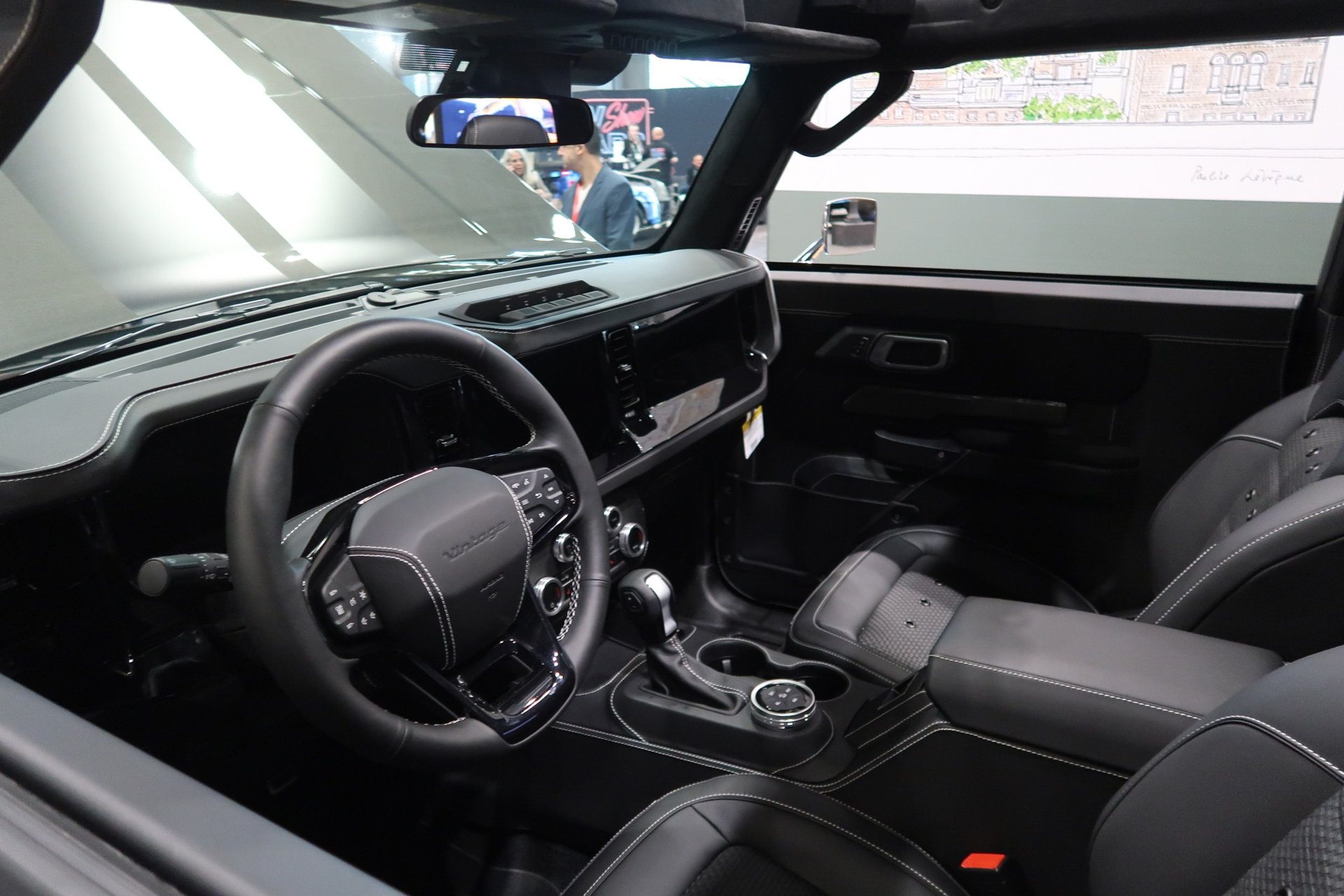
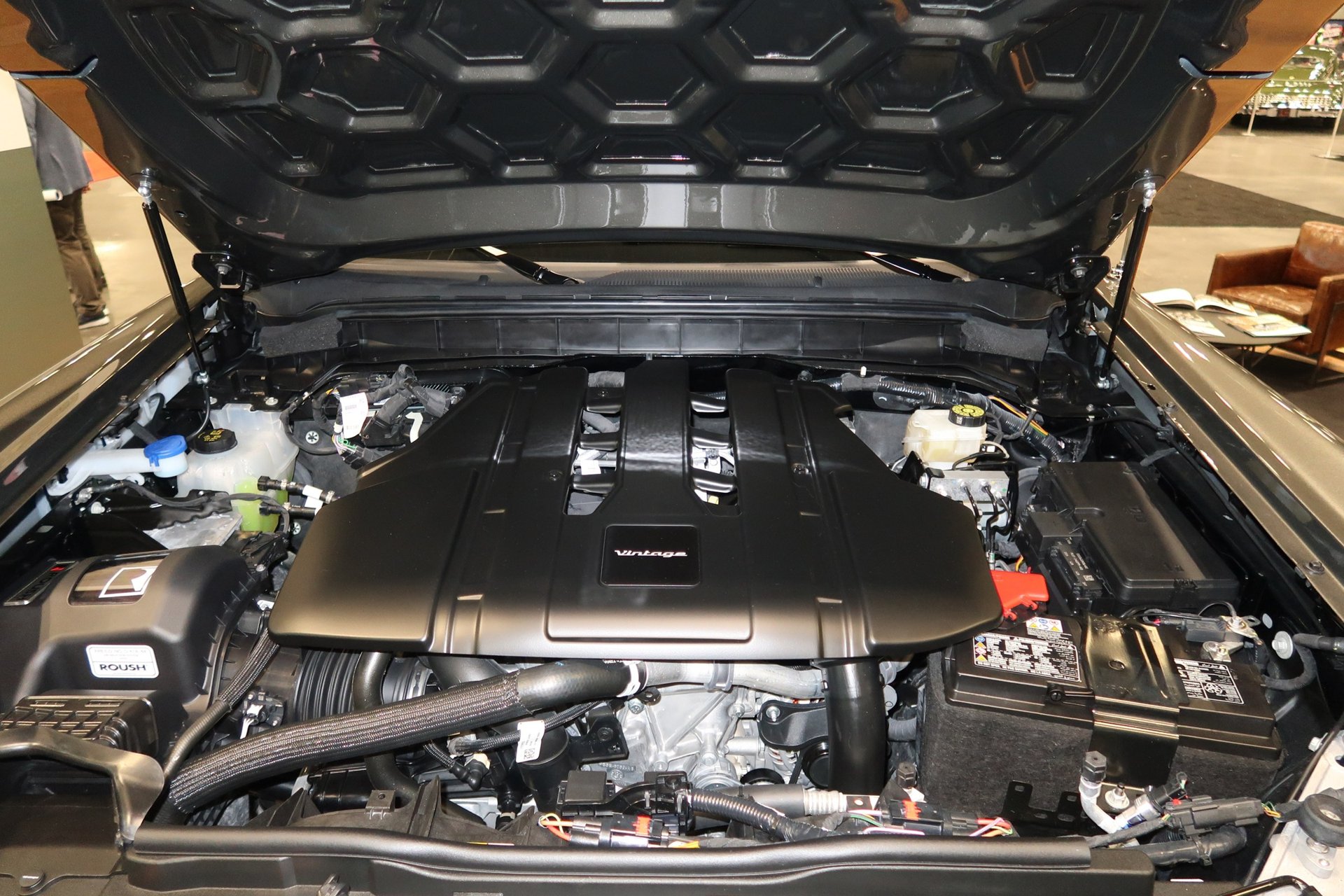
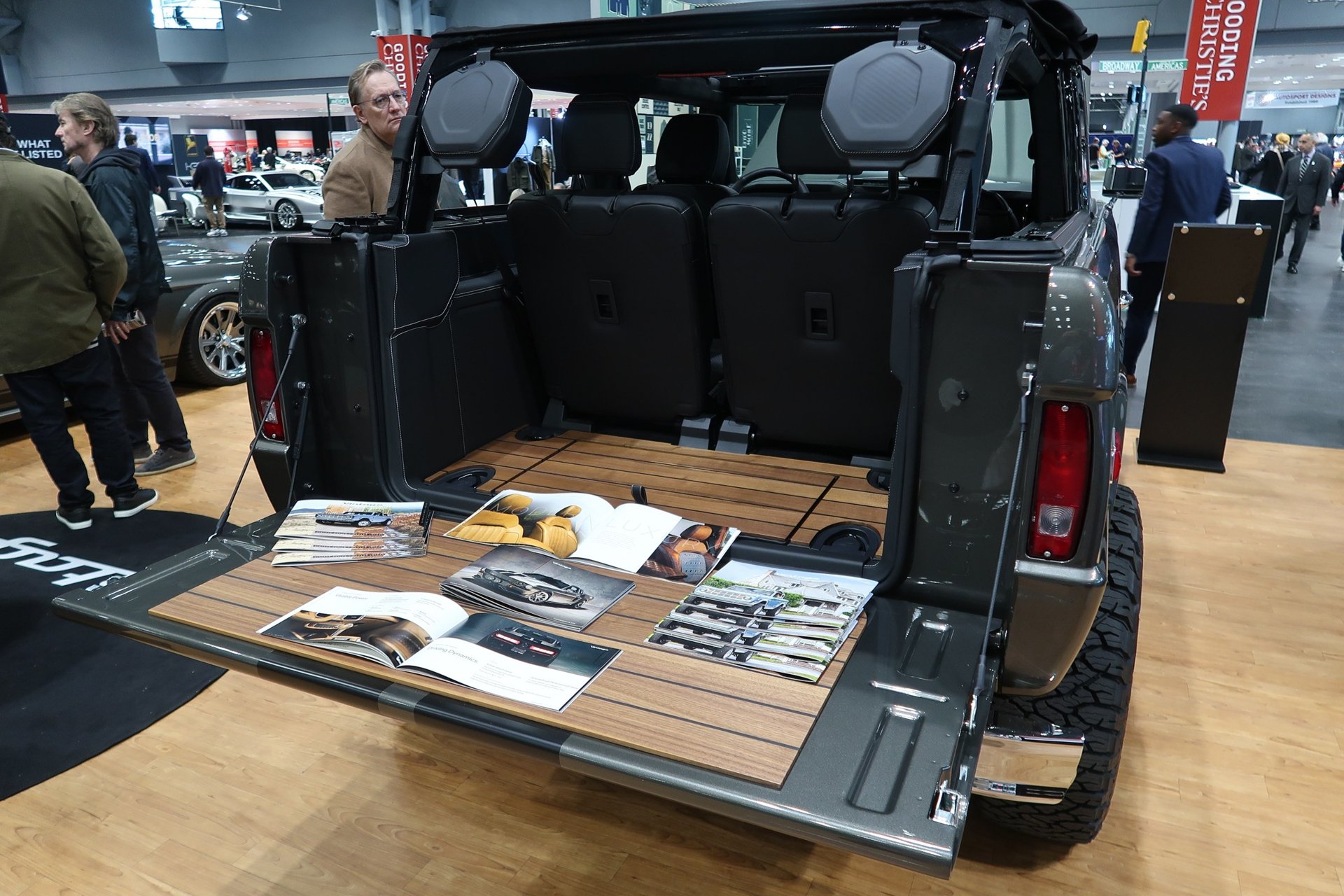
The proof of concept sat a few feet from the Fastback on the same stand. The Modern Classic is the truck that grew out of that old Bronco, and the vehicle that made Vintage Modern’s name. The company was called Vintage Broncos before it took its current name.
It has the upright proportions, round headlights and chrome bumpers of a 1960s original. Underneath is a new Ford chassis with a modern turbocharged engine. Lift the hood and there is nothing to tune. Open the door and the cabin has a current steering wheel, a rotary drive-mode dial and a touchscreen, all trimmed in stitched leather. The company lists six airbags, anti-lock brakes, traction control and Apple CarPlay.
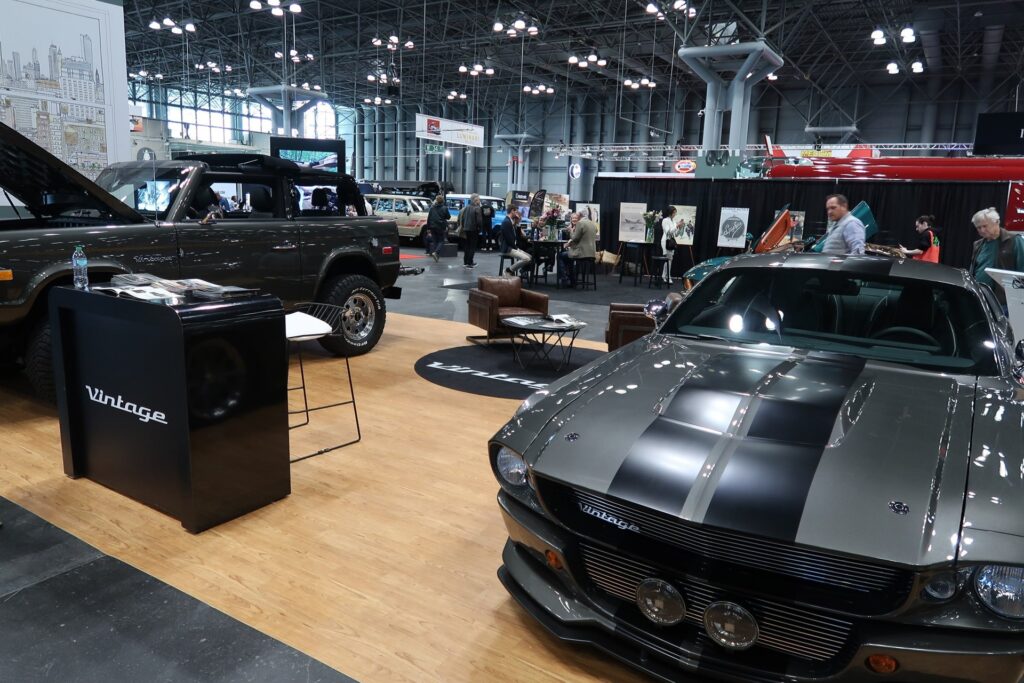
The body is neither a donor shell nor fiberglass. “That’s real steel that we stamped,” Nguyen said. Prices start at $269,500 at the time of publication.
Nguyen calls the truck the family, fun, beach-cruiser end of the lineup. With that segment covered, he wanted the opposite.
Why a Fastback, and Why Carbon
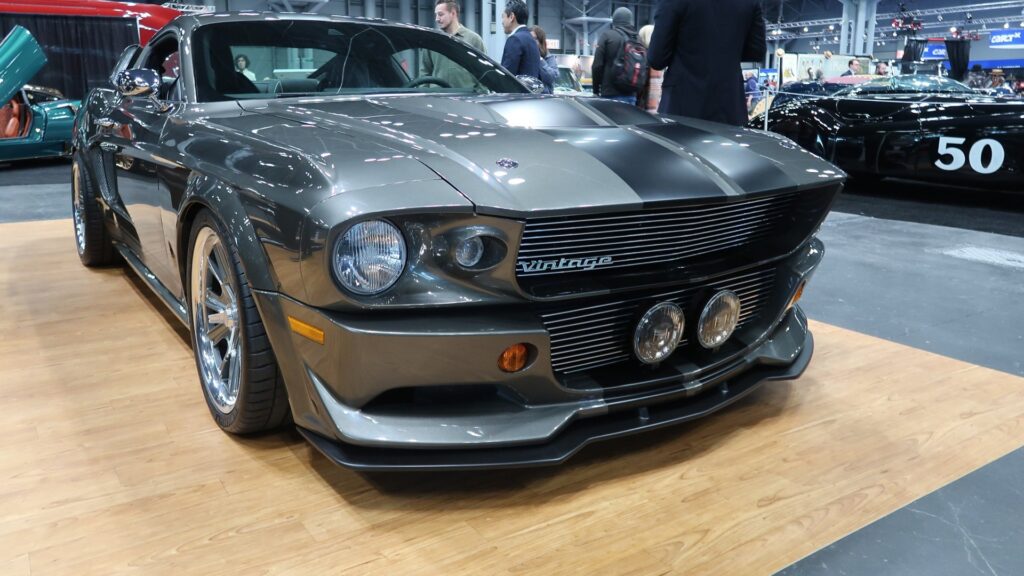
The Fastback is for the other side of his garage.
“I love a fast car that makes a lot of noise, that handles well,” he said. “But my taste has changed. Now I’m into classic cars, but I don’t want the problems.”
American muscle cars, in his telling, look amazing and carry every classic-car compromise: hot, loud and hard to live with on a long drive. His brief for the Fastback had three parts. It had to look like nothing else on the road. It had to be fast in a way an owner can use. And the cabin had to stand next to the best luxury cars on sale.
“If you don’t have traction control, then why do you need a thousand-horsepower car?” he said. “We say it’s a blend of muscle car, luxury car and supercar.”
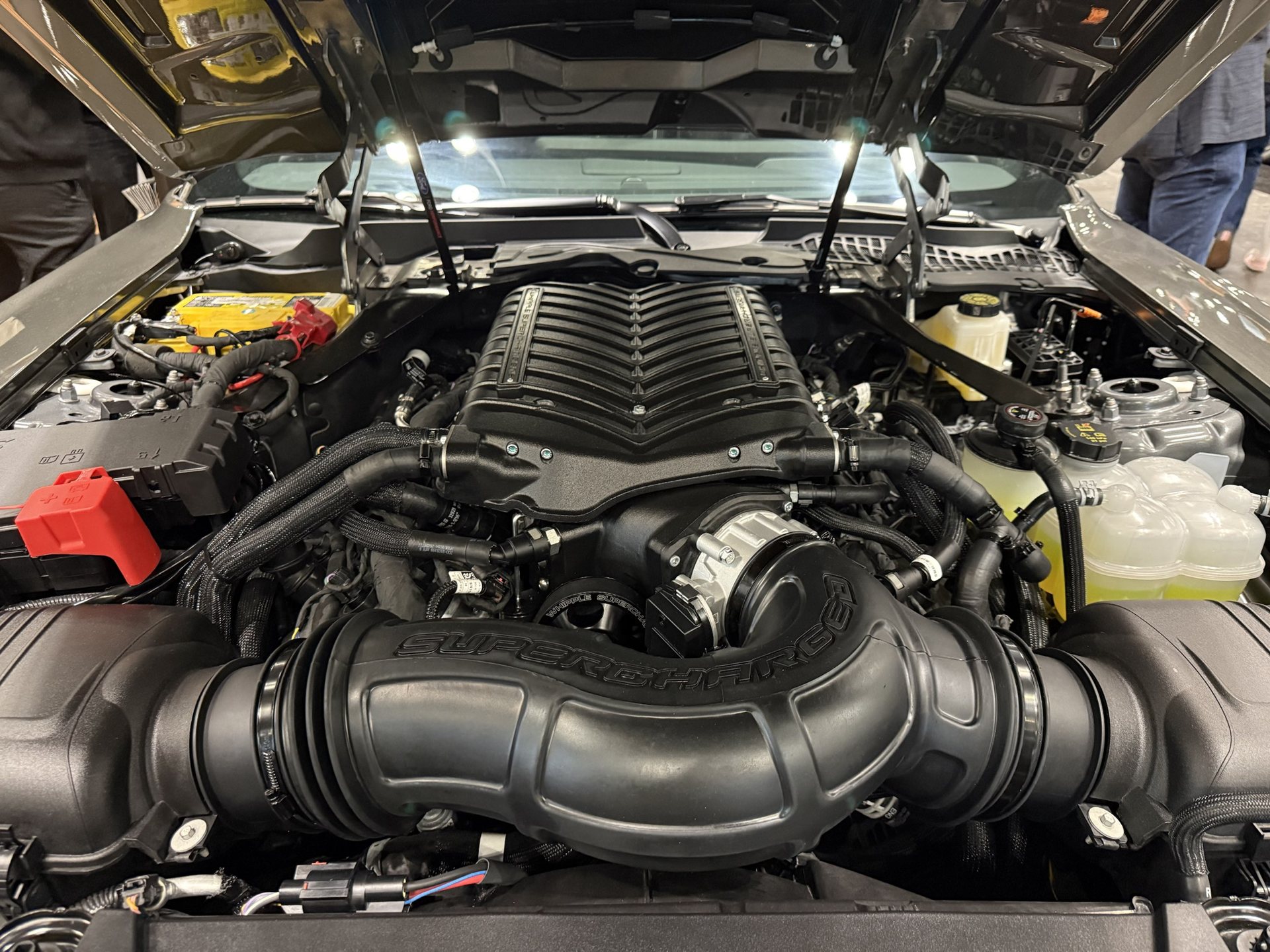
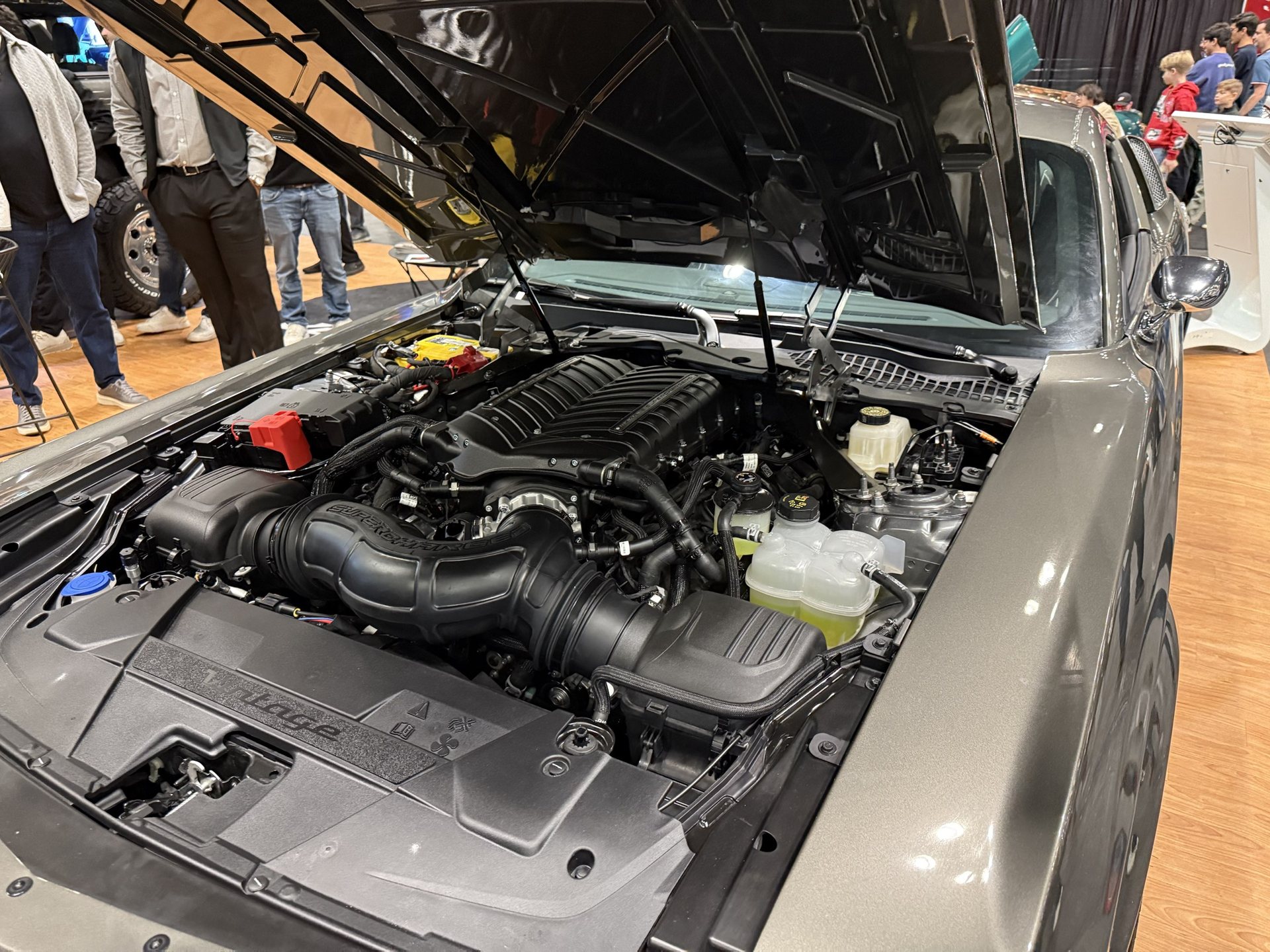
For the car, weight decided the material. The Fastback’s panels are carbon fiber, and Nguyen says the shape is not a copy of anything: “It has a lot of lines that never existed.” The door handles are billet pieces the company makes itself, and the forged wheels are its own design. Nguyen said four different sets were made.
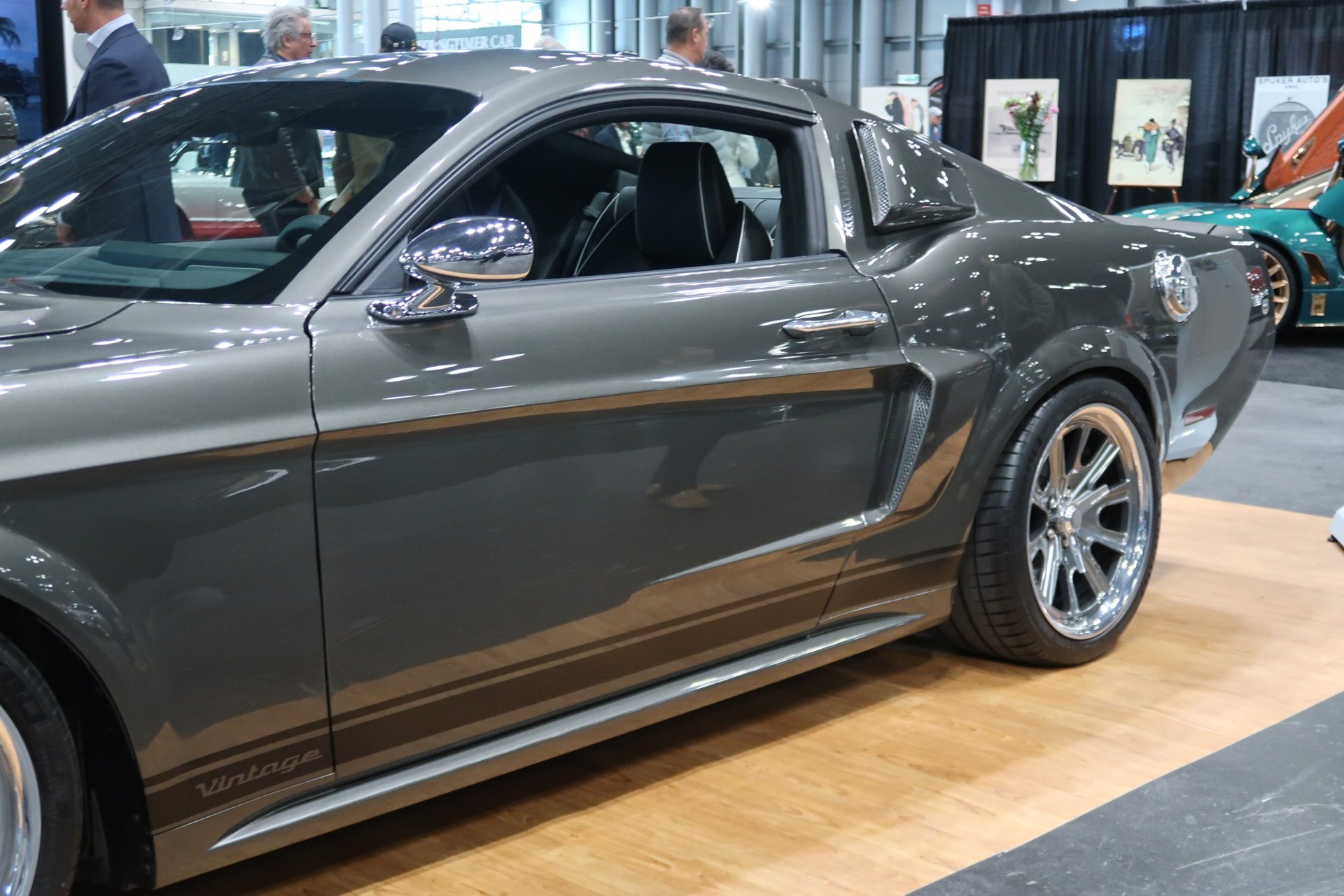
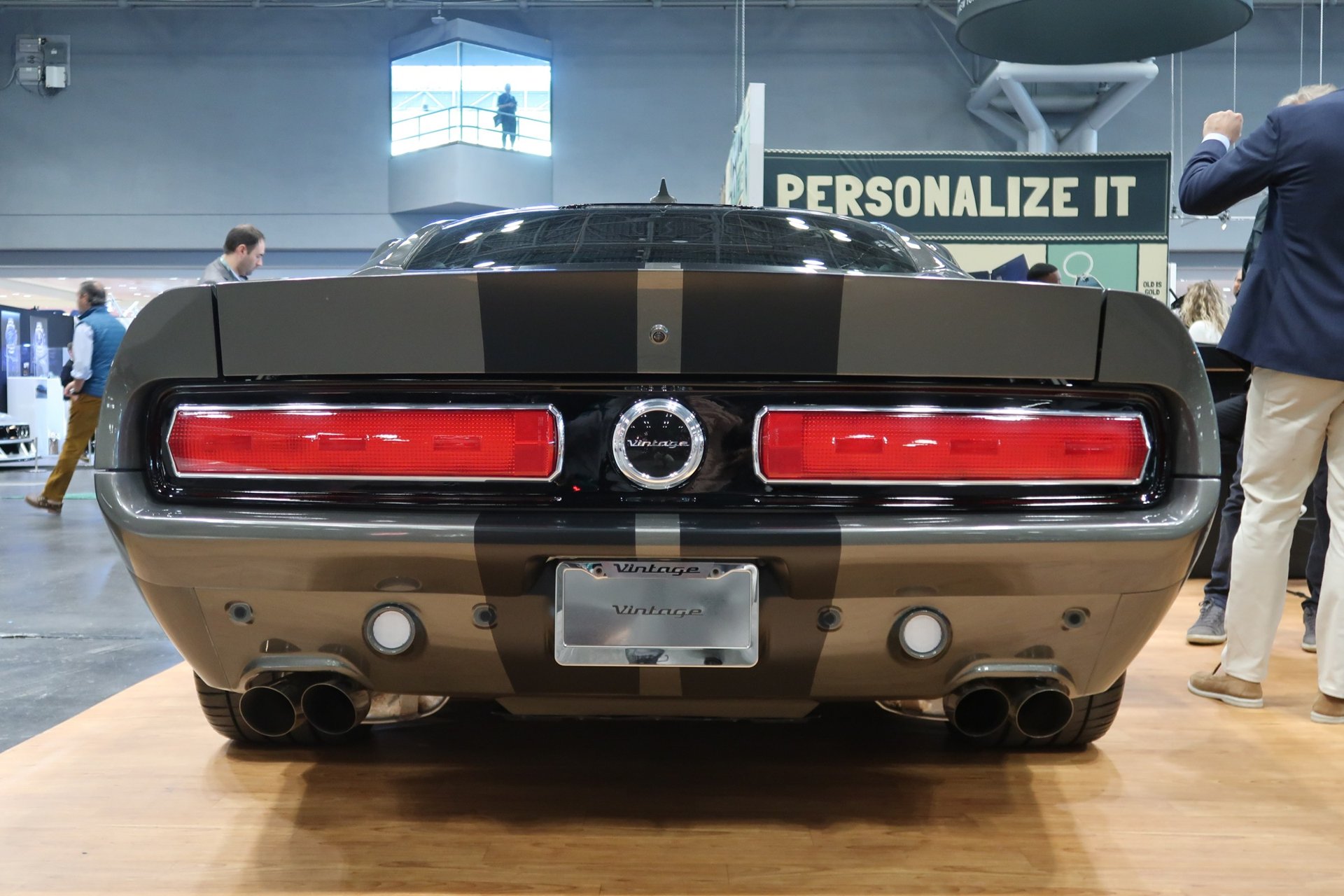
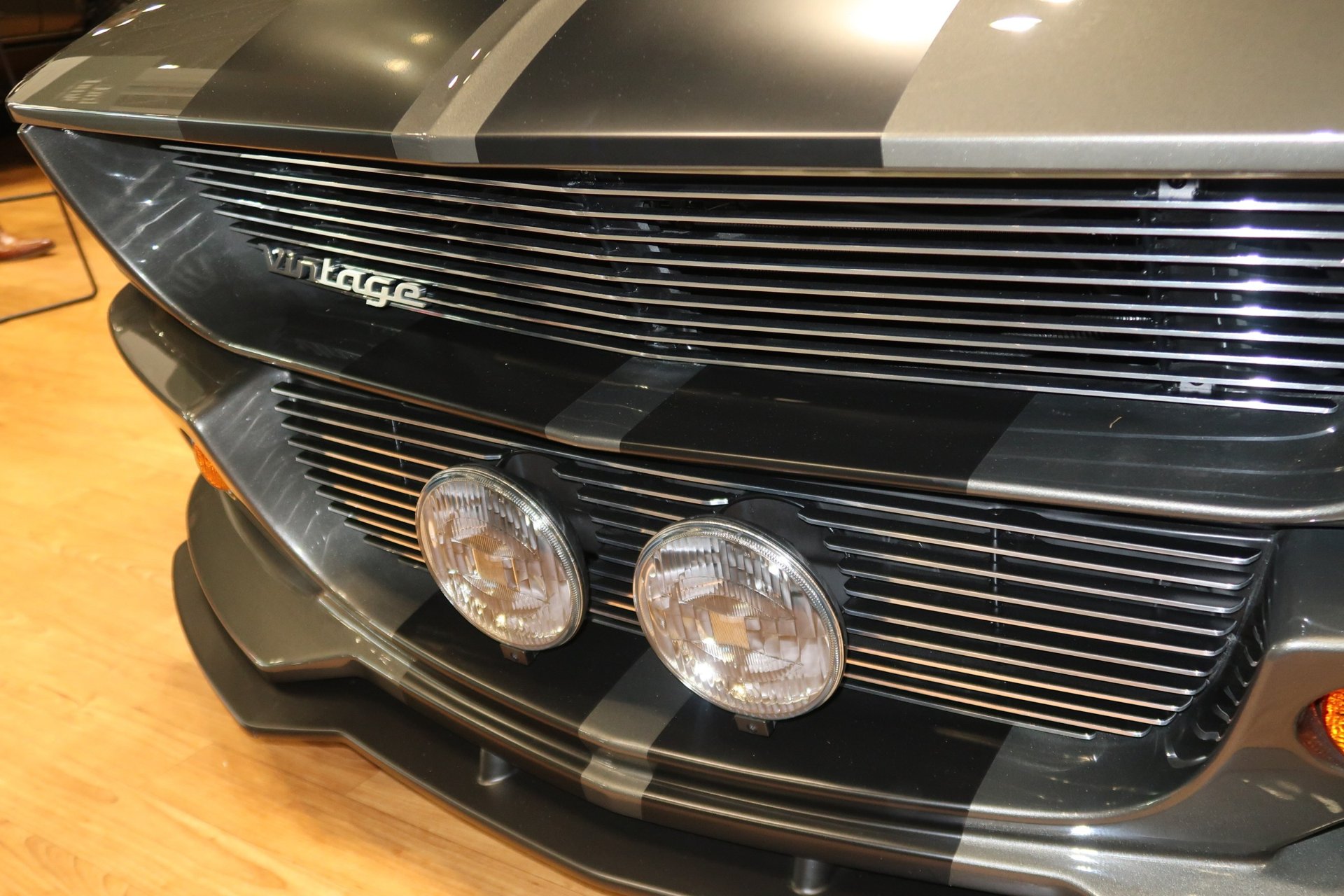
His design process starts from an impossible target. “I like to start with what does perfect look like, even if it’s not achievable,” he said. “What would the perfect classic car look like, feel like, sound like?”
Then comes the part where, in his view, others have stopped short. “There have been other companies that have tried to build on a modern car chassis,” he said. “You have to go all the way.”
Built by a Customer
Nguyen says his advantage is that he has owned the cars his buyers own, so he knows what a Ferrari driver expects from an interior. He is not shy about where he thinks the bar sits.
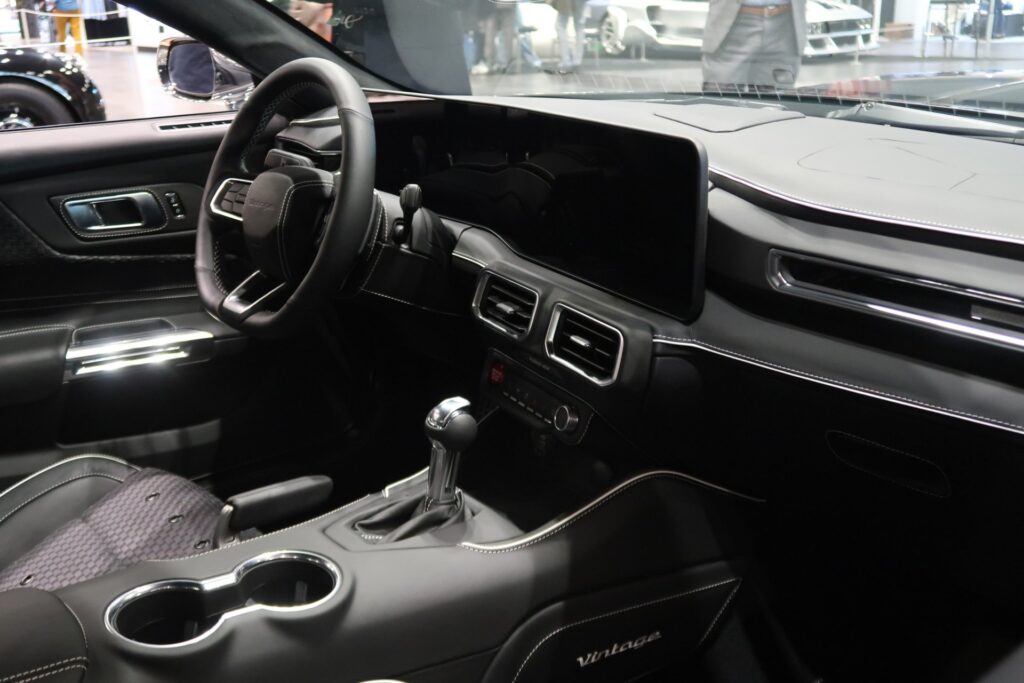
“I love McLarens,” he said. “The interior of a McLaren is nowhere near as nice as you would think. For $400,000 on a car, that’s a compromise.” Vintage Modern’s approach on materials, he said, is to “purposely go over the top.”
The use case he describes is domestic. With his wife and kids aboard, the exhaust goes quiet and the MagneRide dampers go soft. After he drops them off, he opens it up.
“I never bought a car and just let it sit in the garage,” he said. He once took a two-seat Lamborghini through the school carpool lane. “I felt so guilty. I was like, I’m never doing that again.”
What the Purists Think
The obvious question for a company like this is how owners of the real thing react. Nguyen says many of them are already customers.
“A good number of the customers who have a deposit on our Fastback actually own an old Mustang, a Shelby, an American classic,” he said. “That’s the one they keep and collect, and maybe bring out for cars and coffee every once in a while.” The Fastback is the one they intend to drive.
For the numbers-matching crowd, he expects respect if not orders. “Even if you don’t buy one, you can appreciate the amount of work that goes into pulling something off like this,” he said.
What Comes Next
Vintage Modern’s current factory in the Atlanta area builds about 250 vehicles a year, Nguyen said. A new facility down the street will house the Fastback assembly line, with a third line planned after that.
Asked what the third line will build, he did not tease. “We actually haven’t decided yet,” he said. For now the priority is the car on the stand. “Right now we’re focused on this one and getting this thing nailed. But we feel very, very confident about the demand that the Fastback is going to have.”
He gave the credit to the people building it. When he started, he handled marketing, sales, design and procurement himself. “This is a team sport,” he said. “As you build a really great team, there’s almost nothing you can’t accomplish.”
Vintage Fastback at a Glance
| Platform | Current Ford Mustang (S650) |
| Body | Hand-laid carbon fiber |
| Standard engine | 5.0-liter V8, 486 hp, 418 lb-ft |
| Optional engine | Whipple-supercharged 5.0-liter V8, 840 hp, 615 lb-ft (93 octane) |
| Transmissions | Six-speed manual or 10-speed automatic |
| Chassis | MagneRide adaptive dampers, Brembo brakes |
| Safety | Eight airbags, stability and traction control, ABS |
| Build time | More than 900 hours per car |
| Starting price | $295,500 before commissioning options, at time of publication |
Figures are Vintage Modern’s. The company says the Fastback will meet applicable Federal Motor Vehicle Safety Standards.
Why It Matters
The restomod world spent years trying to make old cars behave. Chau Nguyen quit trying. He kept the shape people fall for and replaced everything that made them leave it in the garage. So at $295,500, the Fastback is not really up against another restored Mustang. It is up against the exotic parked beside it, the one nobody looks at twice anymore.
More from the show: ECN’s first look at Rétromobile New York. All photos: Exotic Motors.