
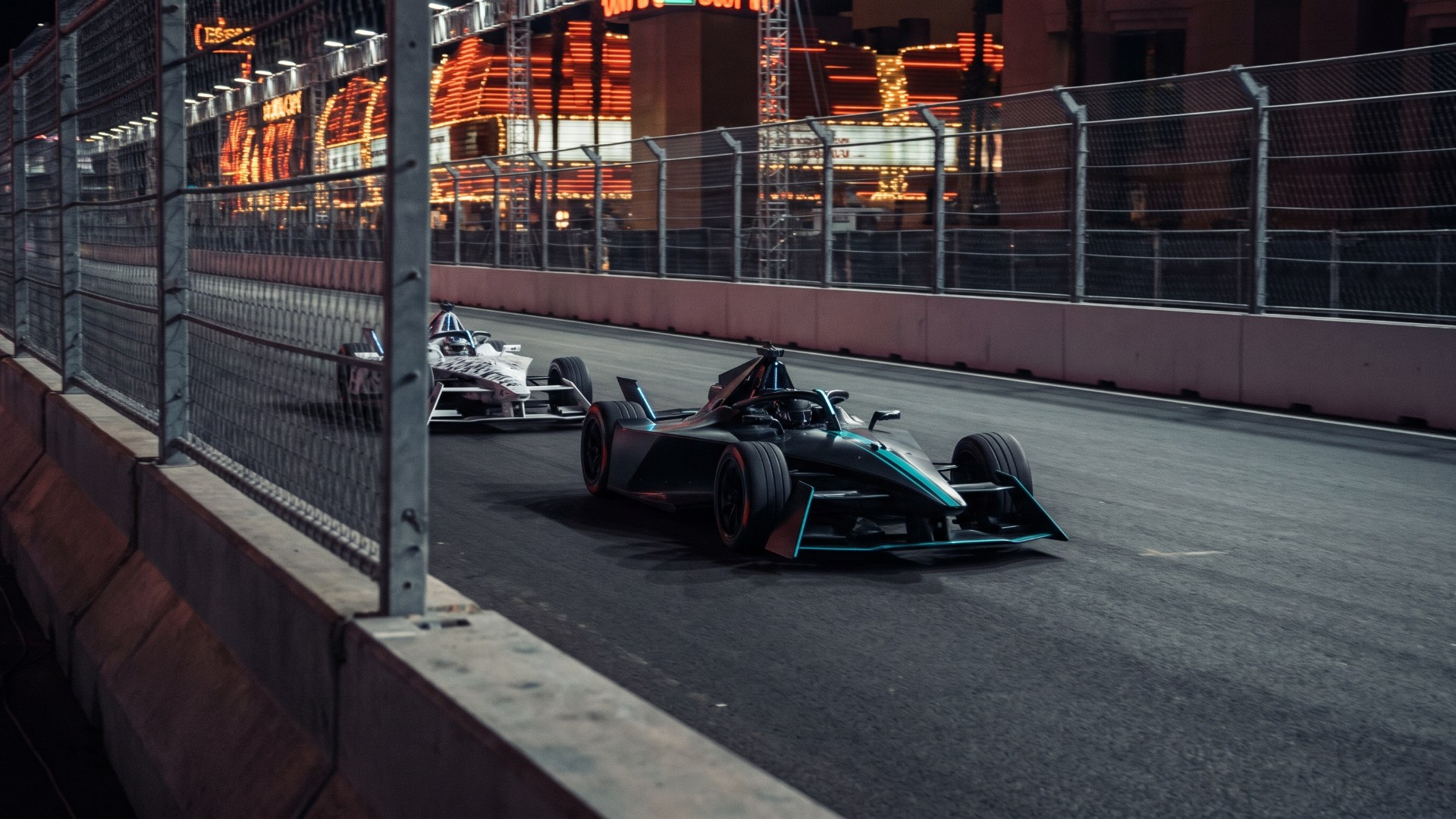
Las Vegas has never been particularly interested in subtlety. But even by the standards of F1’s most extravagant race weekend, the 2026 Las Vegas Grand Prix delivered an extraordinary spectacle.
Max Verstappen emerged victorious after 50 laps of aggressive racing, repeated lead changes, a Safety Car interruption and a final stretch that threatened to overturn the result.
The Red Bull driver crossed the finish line just 0.639 seconds ahead of Lando Norris, with Oscar Piastri completing the podium for McLaren. It was Verstappen’s fourth win of the season and the 75th of his career.
What You Need to Know
- Verstappen won by 0.639 seconds after trading the lead repeatedly with George Russell and Kimi Antonelli.
- Mercedes looked set for a podium until Russell hit the barrier on Lap 48 and Antonelli faded in the closing stages, finishing ninth and fourth.
- McLaren took second and third; Piastri climbed from 17th on the grid.
- Lewis Hamilton and Charles Leclerc made contact again; both Ferraris carried 10-second penalties.
Yet the finishing order barely captures what happened on the Strip.
Mercedes appeared capable of winning. Ferrari’s drivers collided while fighting for position. Isack Hadjar briefly challenged at the front before his race unraveled. And the final laps transformed what looked like a Mercedes podium opportunity into another Verstappen victory.
For a race sometimes criticized for placing entertainment ahead of motorsport, Las Vegas delivered plenty of both.
Verstappen Had to Win This One More Than Once
Starting from pole position, Verstappen initially appeared positioned to control the race.
That expectation lasted only a few corners.
George Russell challenged immediately, while Hadjar joined the battle in the second Red Bull. The long straights and powerful slipstream effects made maintaining track position exceptionally difficult.
Russell moved ahead on Lap 2, but Verstappen responded almost immediately. The pair continued trading positions as the race developed, frequently using the final corner and the approach to Turn 1 to reverse the order.
Rather than establishing a comfortable lead, Verstappen found himself repeatedly defending and reclaiming first place.
The pattern continued well into the second half of the race. Even when Mercedes briefly moved ahead, Verstappen consistently found a way back.
It created an unusual strategic problem: being first at one point on the circuit did not necessarily mean being best positioned to lead at the end of the lap.
For Verstappen, the obvious risk was that a rival could time an overtake perfectly on the final lap and leave him no chance to respond.
Ultimately, that scenario never materialized.
A Safety Car Changed the Race
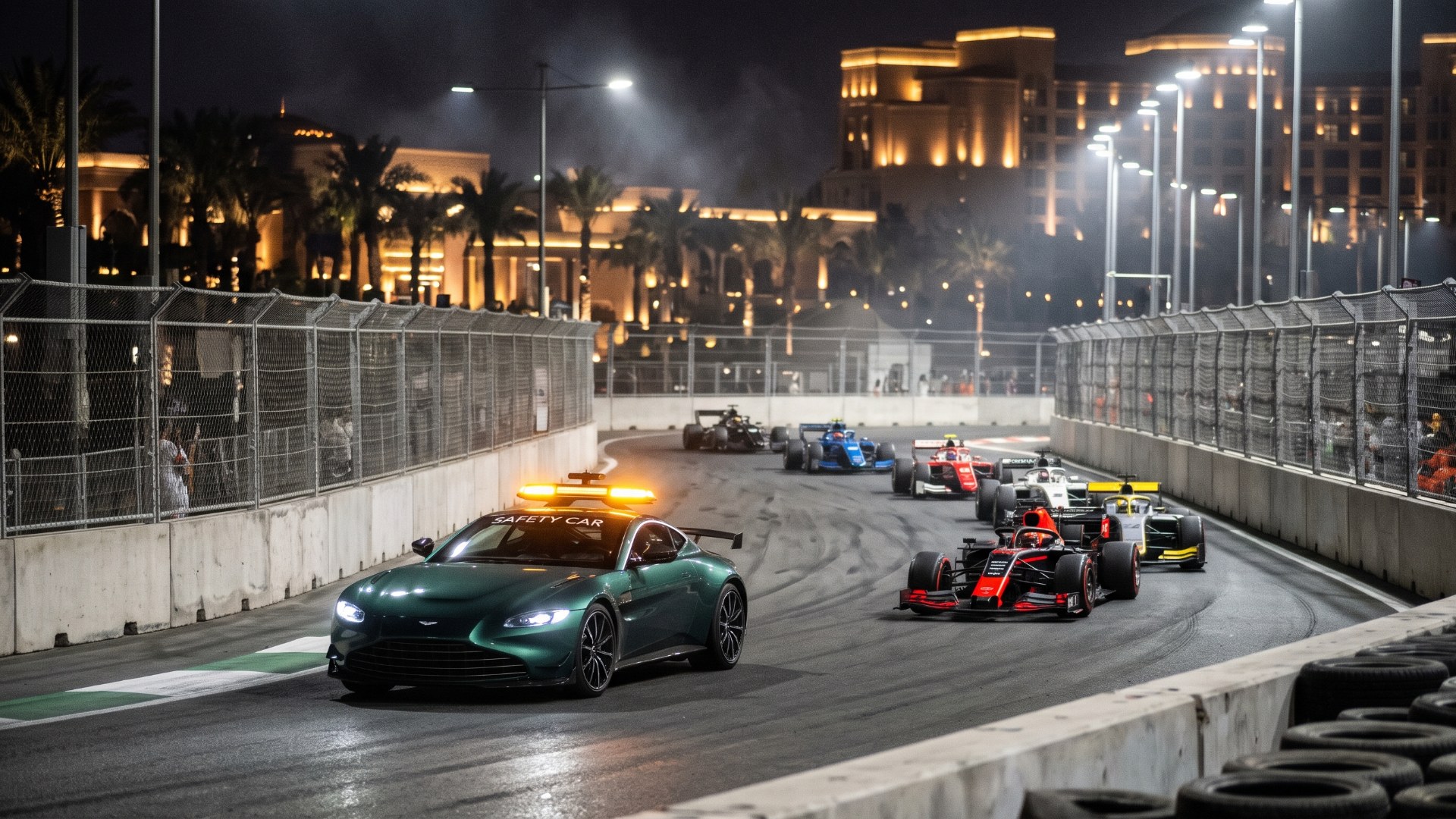
The race’s first major interruption came on Lap 19 when Sergio Pérez and Rafael Câmara collided at Turn 14.
Pérez’s Cadillac struck the barriers and retired, triggering a Safety Car.
The interruption brought much of the field into the pits and reshaped the strategies at the front.
Red Bull double-stacked its cars. Ferrari kept Lewis Hamilton out, because his pending 10-second penalty would have complicated a double-stack, and brought him in a lap later.
The restart on Lap 25 returned the field to racing conditions, but it did little to settle the contest.
Russell continued challenging Verstappen, Norris worked his way forward, and Hadjar suffered front-wing damage that forced him into an additional stop. He eventually finished 14th.
The second Red Bull’s setback removed one of Verstappen’s strongest potential allies from the lead battle.
From that point, the Dutchman increasingly had to defend against Mercedes and McLaren without meaningful support from his teammate.
McLaren was not just along for the ride, either. Norris even led briefly: On Lap 34 he blasted past Russell and then Verstappen, before Russell and Antonelli both re-passed him.
Mercedes Had the Speed. The Finish Was Another Matter.
Mercedes entered the closing stages with both George Russell and Kimi Antonelli in contention near the front.
Antonelli, already crowned the 2026 F1 world champion, demonstrated why his season had been so successful. He fought his way into the podium positions and, in the closing laps, took the lead from Verstappen several times, only for the Red Bull to strike back each time.
Russell remained a threat as well.
But with only a few laps remaining, Mercedes’ race began to unravel.
On Lap 48, Russell attempted to pass Antonelli, locked his brakes and ran into the barriers. He managed to reverse and continue, but the incident dropped him to ninth.
Antonelli then appeared to encounter a problem in the closing stages, losing positions to Norris and Piastri.
A team that had spent much of the evening threatening Verstappen’s lead ultimately finished fourth and ninth.
It was a reminder that having the pace to win and executing a complete Grand Prix are two very different achievements.
Ferrari’s Night Went From Difficult to Uncomfortable
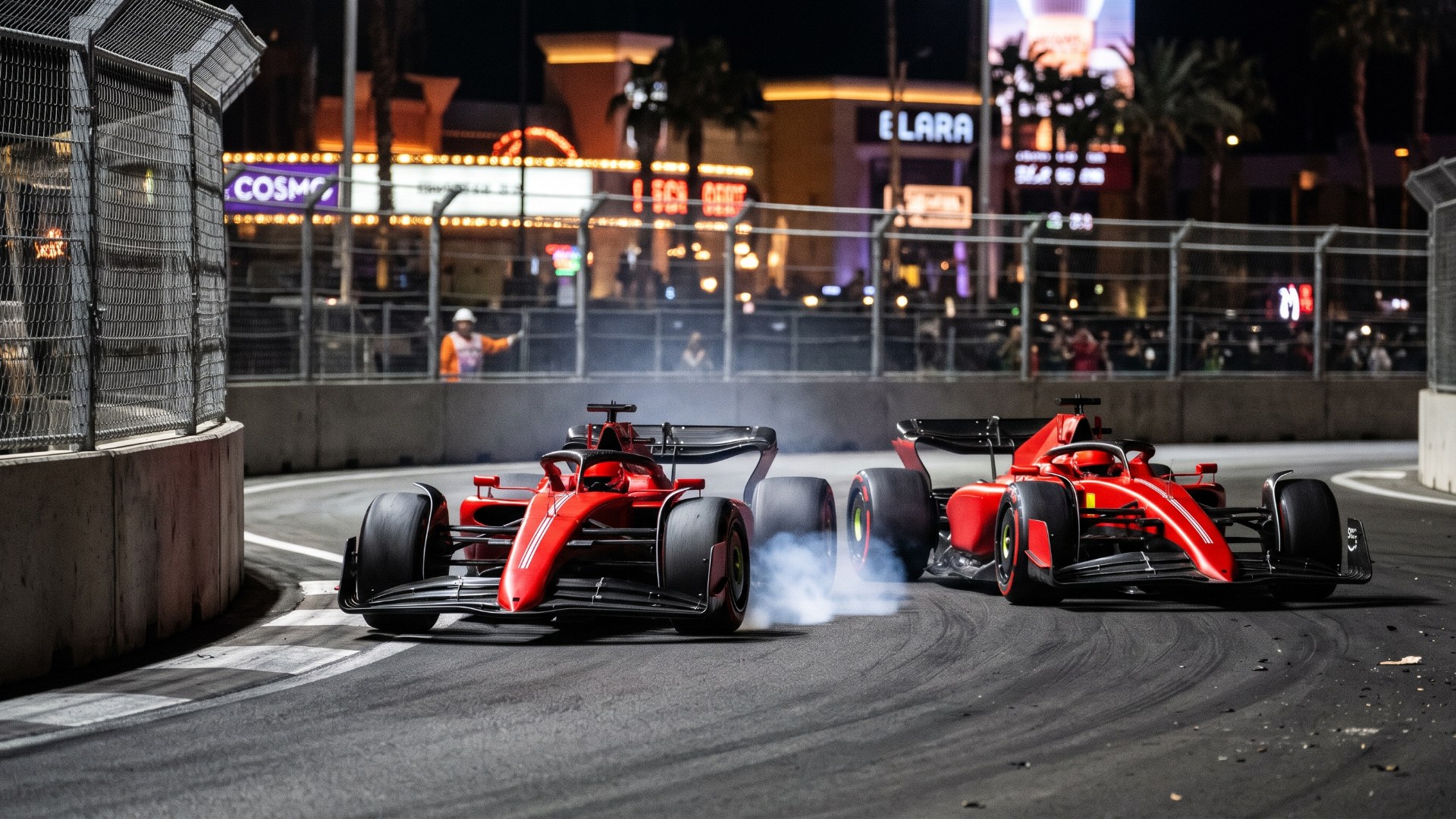
For Ferrari, Las Vegas produced a different kind of frustration.
Lewis Hamilton and Charles Leclerc were involved in several close battles throughout the race, including an increasingly tense fight against one another. It was not a new storyline: the two had already clashed in Mexico City earlier this month.
Hamilton had already received a 10-second penalty for leaving the track and gaining an advantage during an earlier contest with Norris.
Later, the two Ferrari drivers made contact.
Hamilton spun and lost positions, while Leclerc received a separate 10-second penalty following the incident.
The collision was especially damaging because both drivers had demonstrated enough pace to compete in the points.
Hamilton recovered to finish seventh. Leclerc finished tenth.
Neither result reflected the potential Ferrari had shown at various stages of the race.
The greater concern was the unnecessary loss of opportunity when the two cars came together.
Ferrari’s challenge is not simply finding more speed. It is converting the speed it already has into cleaner, more consistent race weekends.
McLaren Turned Chaos Into a Double Podium
While Mercedes and Ferrari struggled to turn opportunities into results, McLaren took advantage.
Norris had endured a difficult opening phase, losing positions during battles with Ferrari and other midfield contenders.
Piastri faced an even greater recovery after starting 17th.
Both drivers worked forward as the race unfolded, with Norris taking the fight to Mercedes and Piastri joining the podium battle.
Late Mercedes trouble ultimately helped both McLarens.
Norris finished second, while Piastri claimed third.
It was a particularly impressive recovery for Piastri, who transformed a difficult starting position into a podium finish.
Alpine Quietly Delivered One of the Weekend’s Best Results
Away from the podium, Alpine produced a strong double-points finish.
Pierre Gasly finished fifth after spending portions of the race fighting among the leading cars, despite apparent cooling concerns later in the Grand Prix.
Franco Colapinto followed in sixth.
For a team often overshadowed by the front-running manufacturers, the result represented an important achievement.
Carlos Sainz also delivered a solid performance, finishing eighth for Williams in his 250th Formula 1 Grand Prix.
These performances were easy to overlook amid the battles for victory, but they were significant results for the teams involved.
2026 Las Vegas Grand Prix: Top 10 Results
| Position | Driver | Team |
|---|---|---|
| 1 | Max Verstappen | Red Bull |
| 2 | Lando Norris | McLaren |
| 3 | Oscar Piastri | McLaren |
| 4 | Kimi Antonelli | Mercedes |
| 5 | Pierre Gasly | Alpine |
| 6 | Franco Colapinto | Alpine |
| 7 | Lewis Hamilton | Ferrari |
| 8 | Carlos Sainz | Williams |
| 9 | George Russell | Mercedes |
| 10 | Charles Leclerc | Ferrari |
Source: official race classification, as published in Formula One’s race report.
Las Vegas Delivered Something Formula 1 Cannot Manufacture
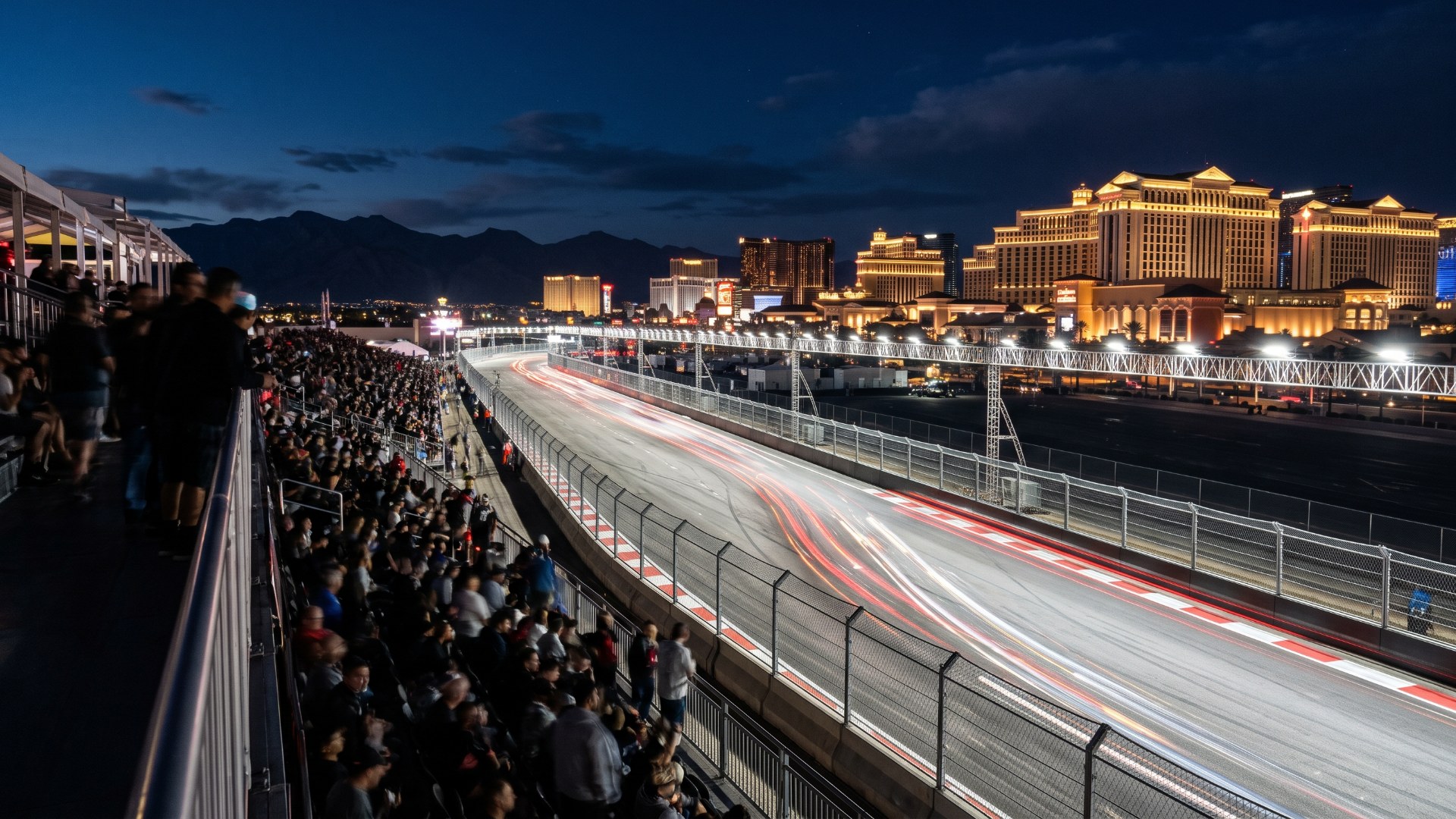
F1’s Las Vegas event has always been about more than racing.
The illuminated Strip, enormous hospitality operations, celebrity appearances and elaborate entertainment program make it one of the championship’s most commercially ambitious weekends.
But the race itself ultimately has to justify the spectacle surrounding it.
This year, it did.
The constant slipstream battles, changing lead, late-race incidents and extraordinarily close finish gave the event the competitive substance that no amount of production spending could guarantee.
Verstappen’s victory was particularly impressive because it required more than outright speed.
He repeatedly lost and recovered the lead, managed a disrupted race and remained composed while several of his closest competitors encountered problems.
Mercedes had the machinery to challenge him. McLaren had the consistency to capitalize. Ferrari had moments of promise but failed to convert them into a meaningful result.
In the end, Las Vegas offered a fitting reminder of what makes Formula 1 compelling.
The fastest car does not always have the easiest race, the strongest team does not always get the result, and a Grand Prix can remain undecided until the final few laps.
Verstappen won under the lights, but he had to fight for nearly every inch of it.