
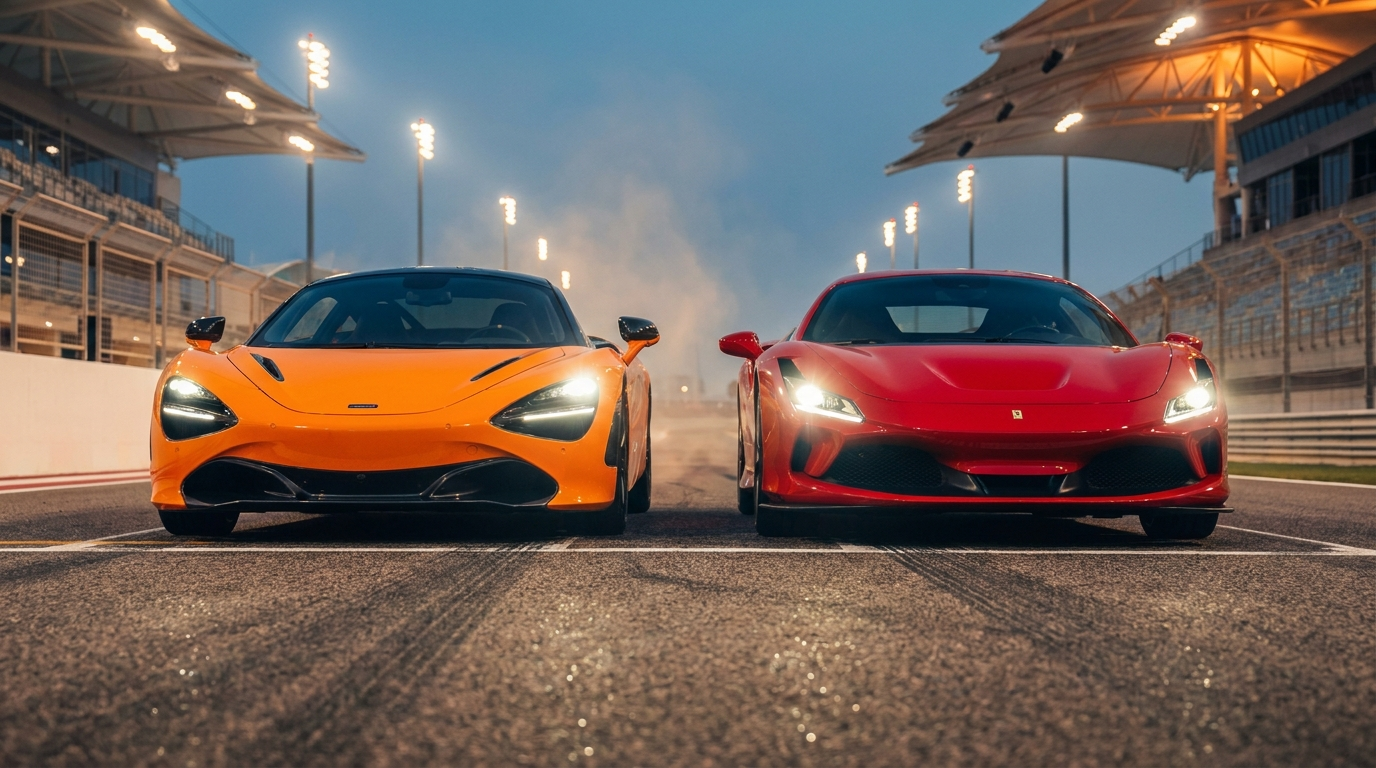
Every hypercar generation gets one defining rivalry. The 2010s had P1 versus LaFerrari versus 918 Spyder. The 2020s have distilled to two names: the McLaren W1 and the Ferrari F80. McLaren W1 vs Ferrari F80 is the comparison every collector is now running. Both are reaching customers now, which makes this the right moment to line them up — dimension by dimension.
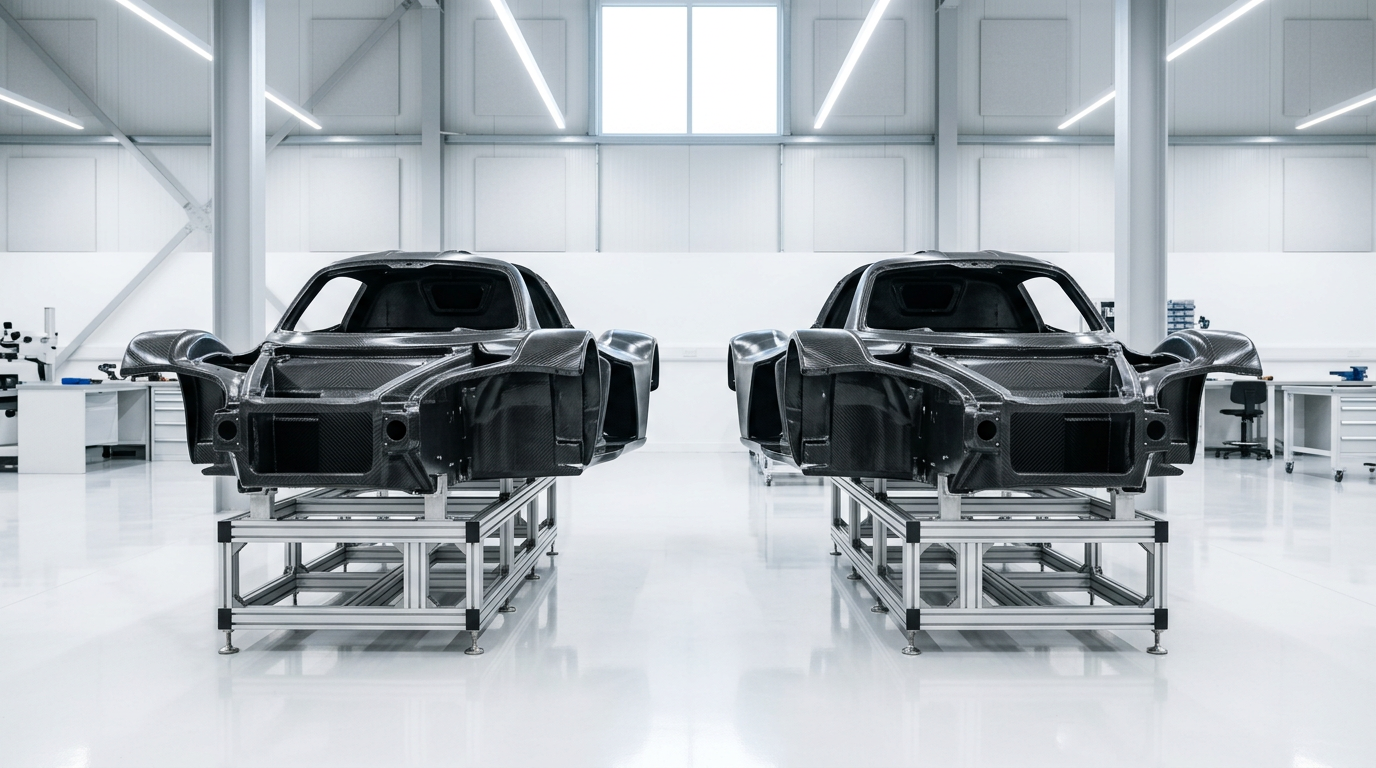
Philosophy: V8 Purity vs V6 Density
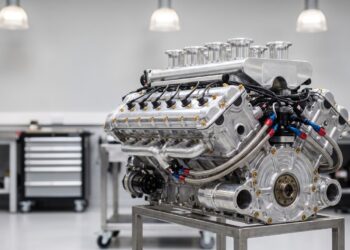
McLaren stayed with eight cylinders: an almost entirely new 4.0-liter twin-turbo V8 hybrid making 1,258 bhp, all of it to the rear wheels. Ferrari went the Formula 1 route — a compact twin-turbo V6 hybrid system producing roughly 1,200 horsepower, with electric motors driving the front axle. These are two different answers to the same question: how do you make four-figure horsepower feel alive rather than merely administered? McLaren’s answer is traction as a skill; Ferrari’s is traction as a given.
McLaren W1 vs Ferrari F80: Powertrain and Performance
The W1 runs 0–124 mph in 5.8 seconds and tops out at 217 mph. The F80’s all-wheel-drive launch gives it the edge off the line, while the McLaren’s rear-drive layout rewards commitment everywhere after. Neither car chases a top-speed record — both are downforce cars, and that is the real battleground.
McLaren W1 vs Ferrari F80: Chassis, Weight and Aero
Here the W1 lands its heaviest blow: it is meaningfully lighter than the F80 — a gap measured in hundreds of kilograms — while generating up to 1,000 kg of downforce through ground-effect underbody work and active elements at both ends. The F80 counters with aero philosophy lifted from Ferrari’s endurance racing program and the stability of a driven front axle. On a tight, technical circuit, the Ferrari’s front motors should tell; on a flowing, high-commitment track, the McLaren’s mass advantage fights back hard. The first independent head-to-head tests will settle what the spec sheets cannot.
Cabin and Character
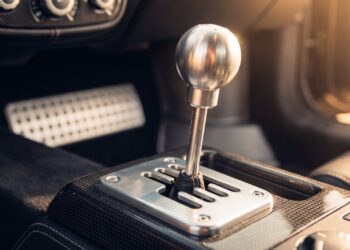
The W1 continues McLaren’s driver-first minimalism — the seat is fixed and sculpted into the tub, the pedal box moves, and everything faces the person doing the work. The F80 wraps its driver in a cockpit Ferrari describes in single-seater terms, with the passenger deliberately set back and secondary. Both cars make the same statement from different directions: this class is no longer about lounges with engines.
McLaren W1 vs Ferrari F80: Scarcity Math
McLaren will build 399 W1s. Ferrari will build 799 F80s. Both sold out instantly, but scarcity favors Woking by half — a fact the collector market has already priced into early speculative asks. History complicates the math, though: Ferrari’s flagship lineage (288 GTO, F40, F50, Enzo, LaFerrari) is the most reliable appreciation dynasty in the entire market, and the F80 inherits it. The W1’s counterargument is the F1 — the most valuable series-production car of the modern era — and a production number less than half its rival’s.
The Legacy Question
The F80 arrived first and reset expectations; early drives called it a genuine quantum leap. The W1 carries the heavier name: successor to the P1, descendant of the F1, the most powerful road McLaren ever. History says the car that wins a rivalry like this is not the faster one but the one remembered as the icon — and that verdict takes a decade. What is certain now: these two will be cross-shopped, cross-traded, and cross-referenced for the next thirty years, and both belong on our 2026 delivery tracker.
McLaren W1 vs Ferrari F80: Which One Wins Today?
If driving purity, lightness, and rarity rule your math: the W1. If technological ambition, racing pedigree, and dynasty rule it: the F80. The honest answer is the one every collector operating in this bracket has already reached — the correct number of these two cars to own is both.
The McLaren W1 (399 units, 1,258 bhp, rear-wheel drive, up to 1,000 kg of downforce) and Ferrari F80 (799 units, about 1,200 hp, all-wheel drive) are the defining hypercar rivalry of this generation, with both reaching first customers in 2026. The W1 is lighter and rarer; the F80 carries Ferrari’s flagship dynasty.