

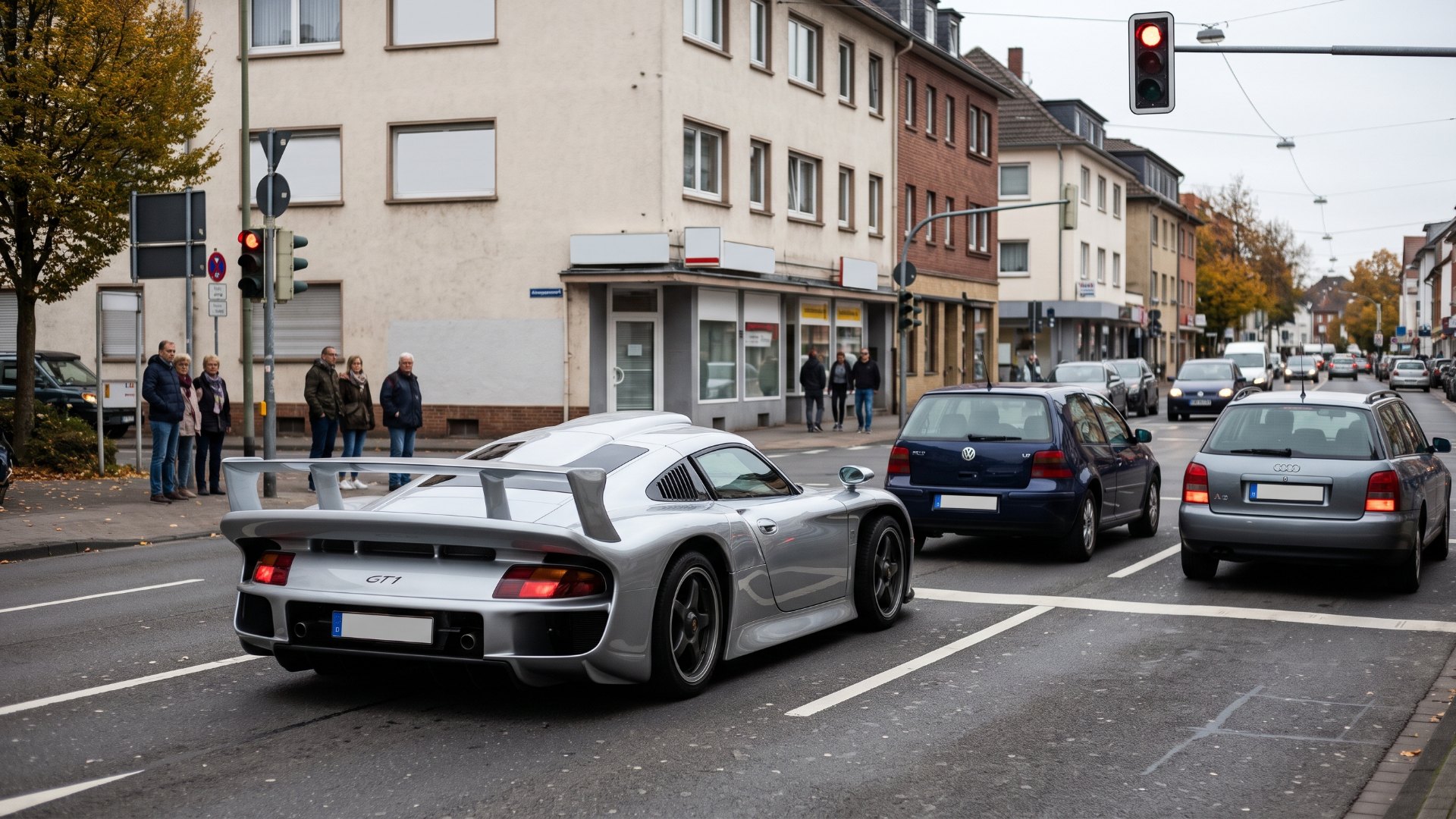
For a few seasons in the 1990s, the rulebook let McLaren, Porsche, Mercedes-Benz and Panoz put Le Mans machinery on public roads. The cars that loophole left behind are about to share a lawn in Las Vegas.
Picture a traffic light, a set of registration plates, a pair of mirrors and a horn. Now picture what those legal necessities are bolted to: a carbon-fiber tub, an engine developed to run for 24 hours at Le Mans, a rear wing sized for 200 mph, and a cabin that makes very few apologies for any of it.
That was the GT1 era. Between 1995 and 1998, international sports-car racing ran on homologation rules flexible enough that the relationship between “road car” and “race car” quietly flipped. At the start, racers adapted a road car. By the end, manufacturers were building the race car they wanted and then producing just enough road cars to make it legal.
It produced some of the most extraordinary street-legal machines ever built. And almost as quickly as it began, it was over.
What You Need to Know
- GT1 began with a road car. The McLaren F1 was conceived purely for the road, then won Le Mans outright in 1995 on its first attempt.
- Then the logic reversed. Porsche’s 911 GT1 and Mercedes-Benz’s CLK GTR were race cars first, with road-going versions built to satisfy homologation.
- The numbers were tiny. Mercedes needed 25 road cars; McLaren built three F1 GT “Longtails”; Panoz built two street-legal GTR-1s.
- It didn’t last. Costs climbed, rivals withdrew, and the FIA GT Championship dropped its GT1 category after 1998.
- The era is back in the spotlight. The 2026 Concours at Wynn Las Vegas includes a non-judged GT1 specialty class, with the main concours on Saturday, Oct. 31.
The Road Car That Started It: McLaren F1 GTR
The story begins with a car that was never meant to race. Gordon Murray’s brief for the McLaren F1 was the ultimate road car: a carbon-fiber monocoque, a central driving seat, an obsession with weight, and a naturally aspirated BMW V12. Motorsport was not part of the plan.
Customers saw something else. The F1 already had what race engineers spend years chasing: low mass, a very stiff structure, a big engine and aerodynamics built around high-speed stability. With their encouragement, McLaren developed the F1 GTR, and it arrived just as international GT racing was being revived through the BPR Global GT Series, a production-based championship that had grown out of the collapse of the old World Sportscar Championship.
The GTR was competitive immediately. Then came the 1995 24 Hours of Le Mans. The No. 59 car of JJ Lehto, Yannick Dalmas and Masanori Sekiya won outright, on McLaren’s first appearance at the race, beating purpose-built prototypes in the process. F1 GTRs filled four of the top five places.
It was a triumph for a road car. It was also a signal to everyone else. If a road car could win Le Mans, the question for rival manufacturers was no longer how to turn a road car into a racer. It was how much racer the rules would let them put on the road.
The F1 GT: When the Longtail Needed a License Plate
By 1997, the original GTR was facing far more specialized opposition. McLaren’s answer was the F1 GTR “Longtail,” with substantially revised, longer bodywork for better high-speed aerodynamics and less weight. To race it, McLaren needed a matching road car.
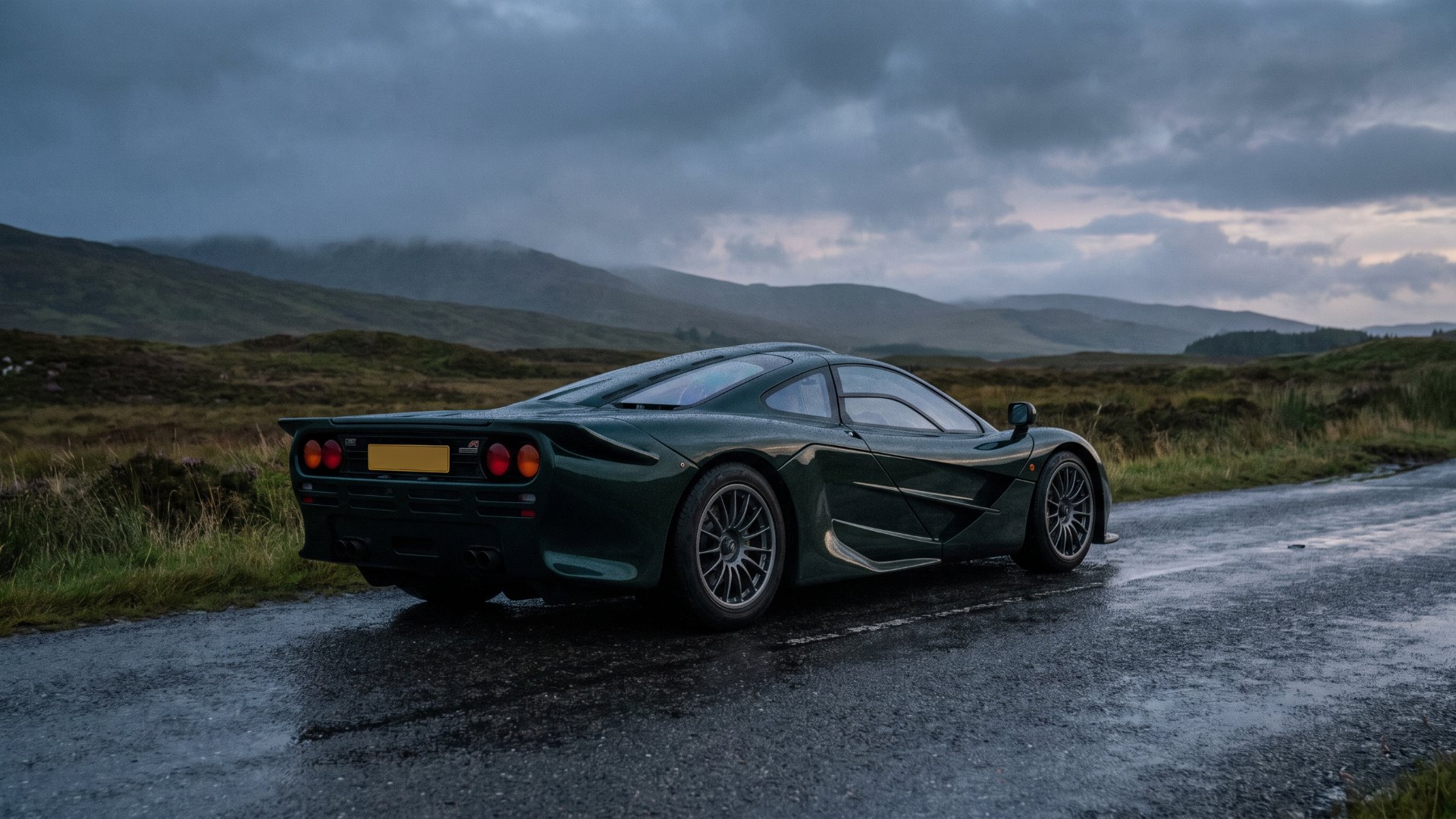
The result was the F1 GT. Only three were built: the green development prototype, known as XP GT, which McLaren kept, and two customer cars. Unlike the original F1, which existed long before any racing program, the F1 GT existed because of one. Its stretched tail made the purpose obvious, but underneath it kept what made the F1 special: the central seat, the BMW V12 and the relentless focus on mass.
McLaren had walked from the road toward the racetrack. Porsche was about to walk the other way.
Porsche 911 GT1: When the Race Car Came First
From the front, the 911 GT1 looked like family. Porsche headlights, a rounded nose, familiar 911 cues. Underneath, the resemblance mostly ended.
A road-going 911 puts its engine behind the rear axle. The GT1 mounted its water-cooled, twin-turbocharged flat-six ahead of it, in a mid-engine layout, and combined elements of the 911 with purpose-built racing hardware. Suspension, aerodynamics and packaging were all shaped by competition. This was not a 911 with a body kit. It was a racing car that wore just enough 911 to keep the family name.
It made an immediate point. At the 1996 24 Hours of Le Mans, the two works GT1s finished second and third overall and first and second in class. In racing trim the engine made roughly 600 hp, depending on specification.
The Strange Logic of the Straßenversion
The road-going 911 GT1 Straßenversion existed to establish the racer’s eligibility. It wore lights, a more livable interior and a road calibration of the engine, rated at 544 PS in the customer cars. It could be registered and driven. But nearly everything about it pointed back to the circuit.
That is the key shift. The road version was not a comfortable alternative to the race car. It was evidence that the race car could satisfy the paperwork. According to Porsche’s own history, the company built two road-legal prototypes in 1996, a run of roughly 20 customer cars in 1997, and a single road-going example of the 1998 evolution.
That race-first approach also strained the series around it. As BPR gave way to the FIA GT Championship for 1997, a category meant to connect racing to production cars was filling up with machines whose road versions existed mainly on behalf of the race program.
1998: Porsche Reaches the Limit
Porsche kept developing. The 911 GT1-98 adopted a carbon-fiber chassis and bodywork that resembled a road-going 911 even less. At the 1998 24 Hours of Le Mans, it delivered an overall one-two finish.
It was a landmark win, and it showed how far GT racing had traveled from its premise. These were no longer sports cars modified for racing. They were prototype-like machines competing under a GT label. Porsche was not alone.
Mercedes-Benz CLK GTR: The Ultimate Homologation Weapon
If Porsche stretched the definition of a production-based GT car, Mercedes-Benz showed how far it could go. For the first FIA GT Championship season in 1997, Mercedes and AMG arrived with the CLK GTR. The name pointed to the CLK coupe in Mercedes showrooms, and the headlights and taillights helped the illusion. Mechanically, the two cars lived in different worlds.
The CLK GTR was a purpose-built racer: a carbon-fiber structure, a mid-mounted V12, sophisticated suspension and aerodynamics designed for international competition. It went from first sketches to first test runs in about 128 days, a timeline helped along by a McLaren F1 GTR that Mercedes acquired and used as a test bed for its own V12.
The homologation itself was famously light-touch. GT1 rules called for 25 road cars. In April 1997, days before the season opener, Mercedes showed FIA officials its race cars and a single road car, along with a commitment to build the rest. That was enough. Mercedes did build them, but the customer cars followed well after the race car had started winning.
A Mercedes That Barely Resembled a Mercedes
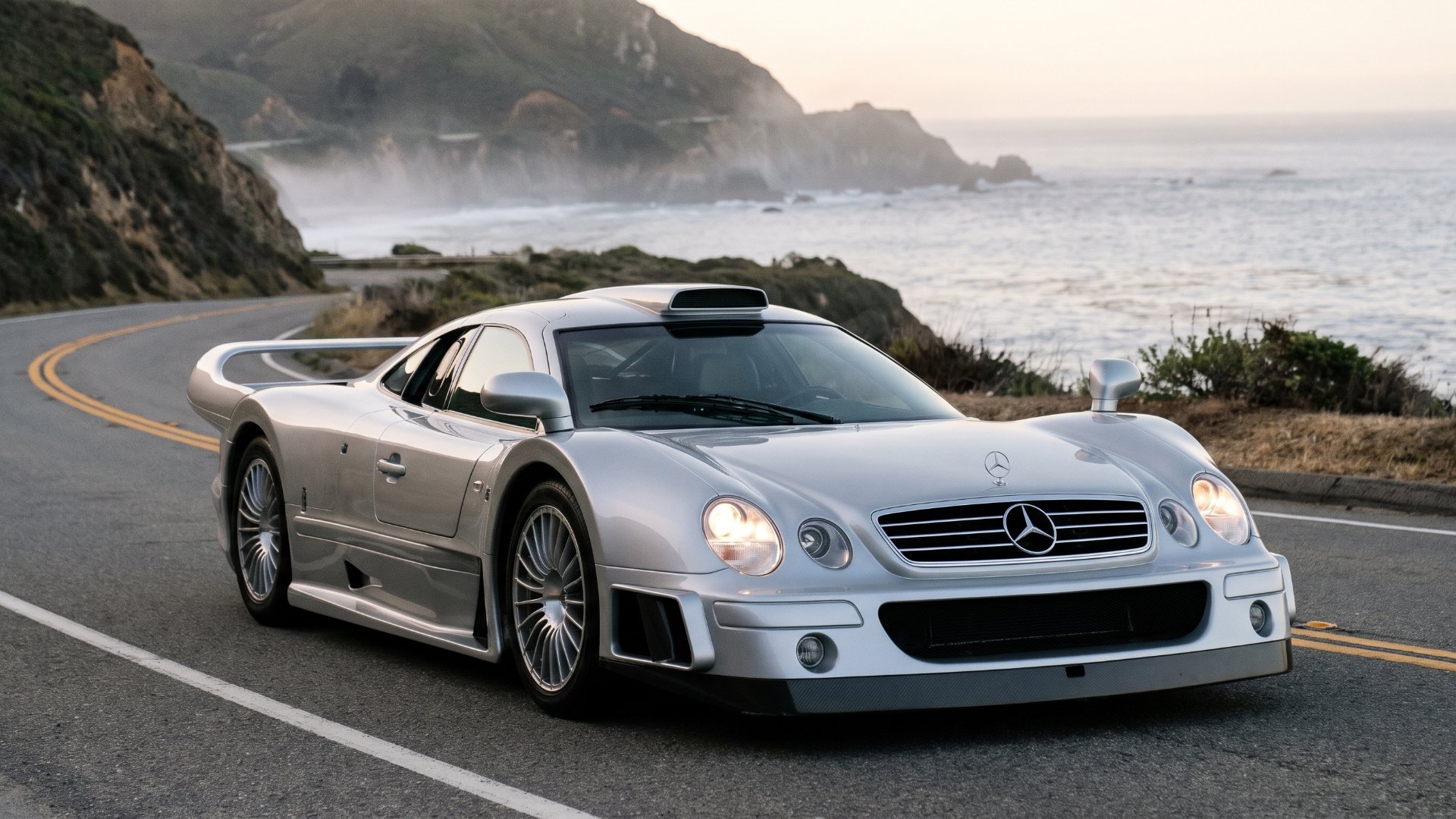
The CLK GTR Straßenversion looked like it had wandered out of a pit lane: a low nose, a wide track, deeply sculpted carbon bodywork and an integrated rear wing. Behind the cabin sat a naturally aspirated V12 enlarged to about 6.9 liters for road use, larger than the racer’s 6.0-liter unit, producing 612 PS (about 604 hp) through a six-speed sequential gearbox.
There were concessions to the road: more ride height, softer suspension settings and a trimmed interior that tried to honor the badge. Mercedes built 20 coupes, followed later by a small run of roadsters. When new, the CLK GTR was listed by Guinness as the world’s most expensive production car. Even so, nobody mistook it for an S-Class. It was technically a road car, and almost every detail reminded the driver that the racing program came first.
Mercedes Dominates
The CLK GTR was no mere spectacle. In 1997, Mercedes won six of the 11 FIA GT Championship rounds and took both titles, with Bernd Schneider crowned drivers’ champion.
In 1998, the factory team won all ten rounds. The detail matters: the V12 CLK GTR won the first two races, then gave way to the related but different V8-powered CLK LM, which won the remaining eight. Klaus Ludwig and Ricardo Zonta took the drivers’ title.
GT1 had become a manufacturer arms race, and Mercedes was winning it. But winning was getting very expensive.
Panoz GTR-1: The American That Ignored the Formula
While the Europeans chased ever lower, mid-engined shapes, Panoz went its own way. The Esperante GTR-1 put a Ford-based 6.0-liter V8 up front, behind the front axle, under a very long hood. Where its rivals looked like prototypes, the Panoz looked like an exaggerated American grand tourer.
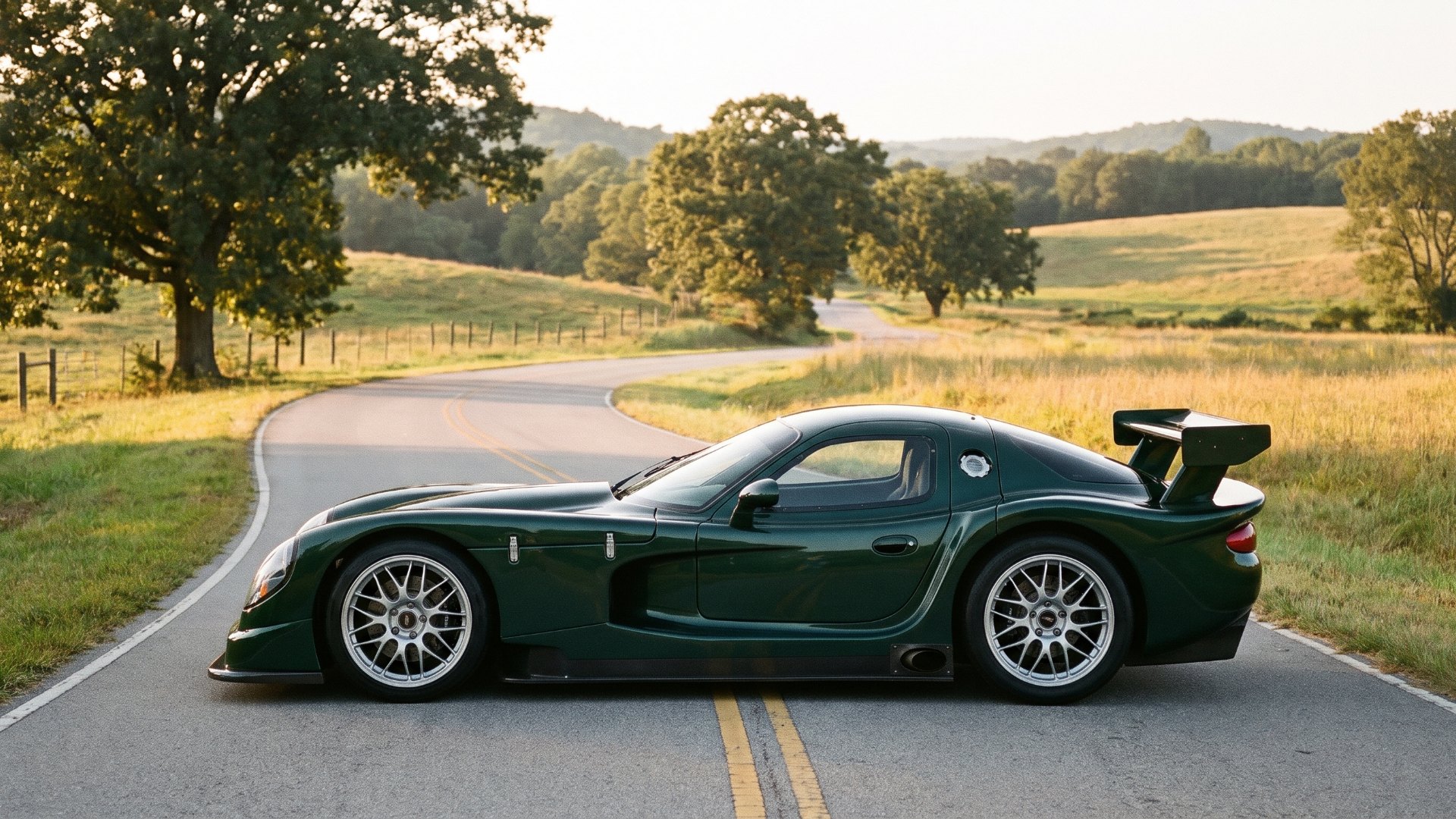
The proportions were deliberate. Developed by Panoz with Reynard Motorsport, the GTR-1 began racing internationally in 1997, including that year’s Le Mans, and despite the name it shared little beyond styling cues with the Esperante road car.
Like its rivals, it needed a road-going counterpart, and Panoz took the idea to an extreme. Two street-legal GTR-1 homologation specials were built. The surviving car was restored by Panoz in 2015 and, according to the company, wears a full leather interior, remains street legal and has stayed in the Panoz collection in Braselton, Georgia, its entire life.
An Early Glimpse of Hybrid Racing
Panoz added another strange chapter in 1998 with the Q9 GTR-1 Hybrid, nicknamed “Sparky,” built with Reynard and Zytek. It paired the combustion engine with an electric hybrid system years before electrification became central to top-level endurance racing. Its racing life was brief, but Panoz has described it as the first successful modern hybrid race car. In an era remembered for V12s, turbocharged flat-sixes and enormous wings, it was a glimpse of where the sport would eventually go.
At a Glance: The GT1 Road Cars
McLaren F1 GT
Path: road car turned racer
Road cars: 3 (incl. XP GT prototype)
Engine: BMW V12, naturally aspirated
Headline: F1 GTR won Le Mans outright, 1995
Porsche 911 GT1 Straßenversion
Path: race car made road legal
Road cars: 2 prototypes (1996), ~20 (1997), 1 (1998)
Engine: twin-turbo flat-six, 544 PS
Headline: GT1-98 won Le Mans 1-2, 1998
Mercedes-Benz CLK GTR
Path: race car made road legal
Road cars: 25 required; 20 coupes plus roadsters
Engine: 6.9-liter V12, 612 PS
Headline: FIA GT titles 1997 and 1998
Panoz GTR-1
Path: race car made road legal
Road cars: 2 built, 1 surviving
Engine: Ford-based 6.0-liter V8, front-mid
Headline: hybrid Q9 “Sparky,” 1998
The Homologation Loophole: How Few Road Cars Were Enough?
Every one of these cars exists because of homologation, the process that ties a racing car to vehicles sold for the road. In principle, it stops manufacturers from entering unrelated prototypes into categories meant for production-based machinery. In practice, it is only as strict as the rules and the people enforcing them.
In the 1990s, those rules shifted between championships, events and seasons. There was no single, universal GT1 production requirement covering every car across the period, which is why the four manufacturers ended up in such different places. McLaren’s F1 already had a road-car identity before it raced. Porsche built a few dozen road cars across three specifications. Mercedes worked to a 25-car target. Panoz built two.
Against conventional production numbers, those figures are tiny. Yet they satisfied the applicable rules, and that created a powerful incentive. Instead of spending years developing a production supercar and then adapting it for racing, a manufacturer could pour resources into the race car and build the road versions needed to support it. The road car became part of the racing budget. The more specialized the racers became, the more extraordinary their street-legal twins looked.
What Was It Actually Like to Live With One?
A normal road car has to handle traffic, parking, cold starts, potholes, luggage, passengers and routine servicing. A GT1 homologation special was developed under almost the opposite priorities: structure designed for extreme performance, aerodynamics tuned for speeds rarely possible on public roads, and packaging dictated by racing. Softer springs and leather trim could take the edge off. They could not change what the car was.
Each answered the compromise differently. The McLaren F1 GT kept more road-car character than its rivals because its architecture began as a road car. The 911 GT1 Straßenversion was a more direct translation of racing hardware. The CLK GTR paired extraordinary mechanical capability with a cabin that made a real effort at Mercedes refinement. The Panoz offered a distinctly American take, with a big front-mounted V8 and proportions nobody else would have chosen.
None of them can be judged fairly by ordinary standards of comfort. Their appeal is something else: they let a handful of owners experience machinery that exists only because of top-level motorsport. They were not just fast cars. They were artifacts of a rulebook.
Why the Original GT1 Era Collapsed
The escalation was thrilling, and it was unsustainable. BPR had started as a home for privately entered, production-based sports cars. By 1997, the FIA GT Championship was a battleground for major manufacturers running ever more expensive factory programs.
Staying competitive now meant a dedicated chassis, sophisticated aerodynamics, purpose-built engines and extensive testing. A privateer in a production-derived car had little chance against a factory machine whose road version existed mainly for homologation. As rivals pulled back, the field thinned, and Mercedes was left winning every round of 1998 against shrinking opposition. With too few entries to justify it, the FIA GT Championship dropped the GT1 category for 1999 and reorganized around less extreme GT machinery.
Manufacturers did not stop chasing extreme performance. That ambition simply moved into prototypes, later GT categories and ever more sophisticated road-going hypercars. What disappeared was the specific regulatory window that had allowed cars like these to exist.
The Irony of GT1
GT1 was supposed to keep racing connected to production cars. The pursuit of victory slowly cut that connection: the most competitive cars were often the ones that resembled road cars least. Manufacturers followed the rules as they applied to their programs, but the results tested the spirit of production-based racing. GT1 became a victim of its own success, too fast, too specialized and too expensive to sustain. And because the experiment was so short, the road cars it left behind became even more remarkable.
Why These Cars Matter More Than Ever
The McLaren F1 GT, Porsche 911 GT1 Straßenversion, Mercedes-Benz CLK GTR and Panoz GTR-1 are not simply rare supercars. They are four different answers to one engineering question: how much of a racing car can exist on public roads?
McLaren started with an extraordinary road car and developed it through racing. Porsche built a competition machine and made the road versions it needed. Mercedes treated homologation as one line item in an enormously ambitious factory effort. Panoz challenged the European establishment with a front-engined V8 and a philosophy all its own.
They also help explain the modern hypercar. Carbon structures, specialized aerodynamics, motorsport-derived powertrains and tiny production runs are now familiar at the top of the market. In the GT1 era, those traits were not lifestyle choices. They were dictated by the demands of competition. These road cars were not built to establish a luxury identity. They were built because their makers wanted to race. The idea still carries weight decades later: Koenigsegg’s CCGT1 openly invokes the GT1 name.
The Collector Significance
Rarity is only part of the appeal. Provenance, originality, mechanical condition and a car’s link to its racing program can matter enormously. A road-going CLK GTR represents a different achievement from a McLaren F1 GT, even though both are vanishingly rare. And the different generations of 911 GT1 Straßenversion reflect real engineering changes, not routine model-year updates.
Verified sales show the depth of interest. A 911 GT1 Straßenversion sold for $5,665,000, including buyer’s premium, at Gooding & Company’s Amelia Island auction in March 2017, then a record for the model. One result shows the car’s standing, but it cannot set the value of every surviving example. With cars this unusual, an individual car’s history can matter as much as any broad market trend.
The GT1 Era Returns to the Spotlight in Las Vegas
The 1990s GT1 era gets a rare moment in the sun this weekend. The 2026 Concours at Wynn Las Vegas runs Oct. 29 through Nov. 1, with the main concours at Wynn Golf Club on Saturday, Oct. 31, and its lineup includes a non-judged GT1 specialty class covering 1995 to 1997. Event previews have pointed to the McLaren F1 GTR, Porsche 911 GT1, Mercedes-Benz CLK GTR and Panoz GTR-1 as the machines that defined the period.
Which individual cars actually take the lawn, and their specific histories, will only be clear once the field is on display. Either way, the class offers a rare chance to see side by side how differently these manufacturers answered the same challenge. They are historic machines now, but for a few seasons they were the sharpest edge of international motorsport.
The Last Word: When the Rulebook Created Legends
There is a difference between a road car inspired by racing and a road car that exists because of racing. The first is common. The second is rare, and the McLaren F1 GT, Porsche 911 GT1 Straßenversion, Mercedes-Benz CLK GTR and Panoz GTR-1 all belong to it, each by a different route.
They came from a moment when manufacturers could turn regulatory requirements into engineering opportunities. The results were spectacular and economically unsustainable. The GT1 era did not last. Perhaps it never could have. But the cars remain as evidence of what happens when engineering ambition, manufacturer rivalry and an unusually permissive rulebook collide.
For a brief moment in the 1990s, some of the world’s most extraordinary road cars existed because somebody wanted to win a race.
Frequently Asked Questions
What was a GT1 homologation car?
A road-legal car built so a manufacturer’s GT1 racing car could be eligible to compete. In the late 1990s, several of these road cars were essentially race cars adapted for the street, built in very small numbers.
How many Porsche 911 GT1 Straßenversion cars were built?
Porsche’s own history describes two road-legal prototypes in 1996, roughly 20 customer cars in 1997 and a single road-going example of the 1998 evolution.
How many Mercedes-Benz CLK GTR road cars were made?
GT1 rules called for 25 road cars. Mercedes built 20 CLK GTR coupes and later added a small run of roadsters.
Did a road car really win Le Mans?
Yes. The McLaren F1, designed as a road car, won the 1995 24 Hours of Le Mans outright in GTR racing form, driven by JJ Lehto, Yannick Dalmas and Masanori Sekiya.
Why did the GT1 class end?
Costs escalated, privateers were outclassed by factory programs, and rival manufacturers withdrew. With too few entries, the FIA GT Championship dropped GT1 for 1999.
Sources include Porsche, Panoz, the Wynn Las Vegas newsroom, Gooding & Company auction results and period championship records.