
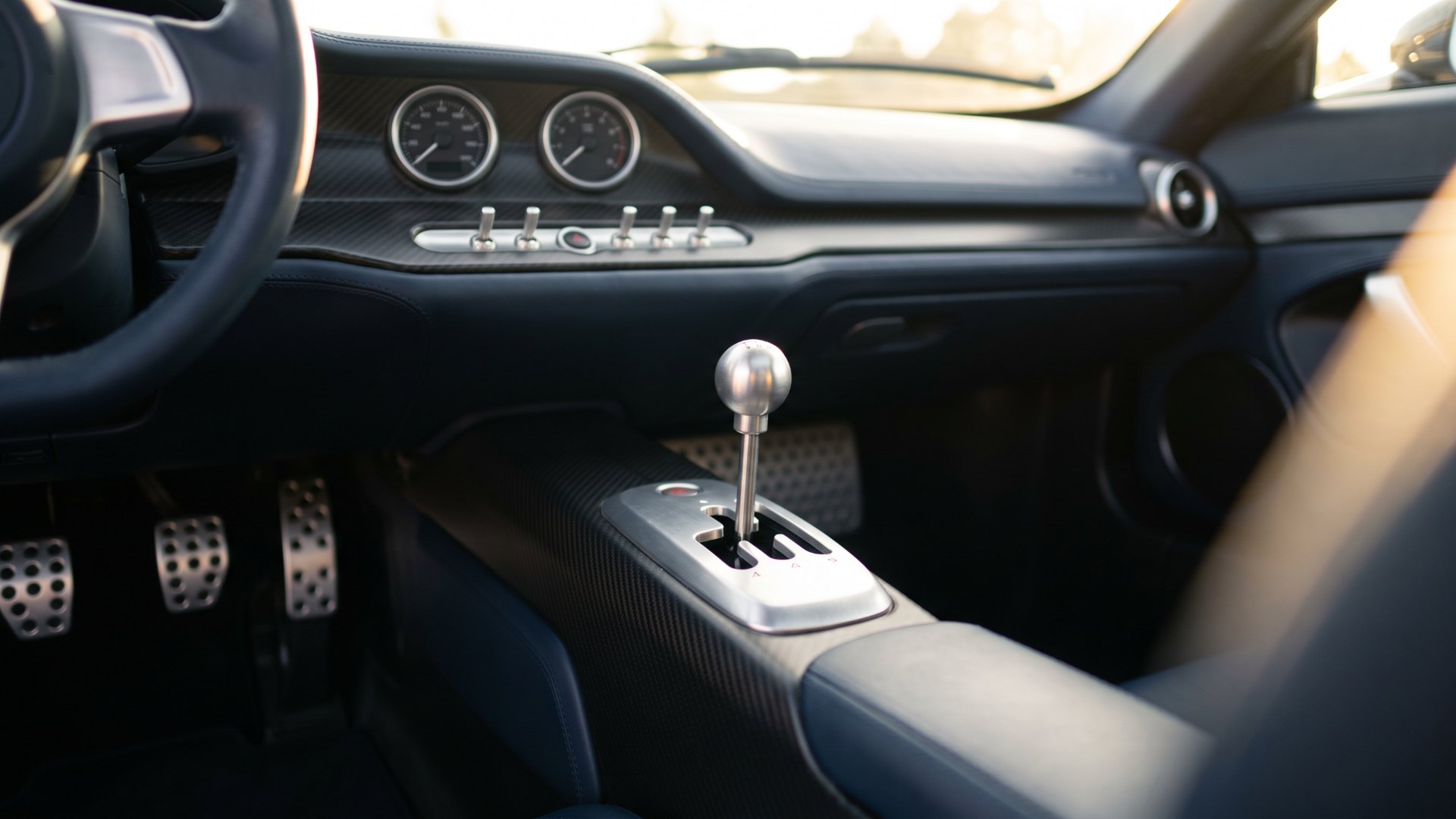
Mate Rimac built his reputation on electric hypercars with no gears for the driver to choose. Now he runs Bugatti, and he keeps bringing up a clutch pedal.
On October 26, Top Gear published an interview in which Rimac described the V16 Tourbillon as a platform rather than a single car, and said Bugatti now has the freedom to do bold things. Asked whether that could include a proper manual gearbox, he answered: “Absolutely. You bet.”
It was the second time in about ten weeks. During Monterey Car Week in August, Road & Track asked whether there was space for a Bugatti with a manual. Rimac said yes, emphatically, and went a step further: “Imagine [a] V-16 with a manual. Real manual.”
Neither remark announces a manual Bugatti Tourbillon. Bugatti has not named a model, a timeline, a price or a production number. The Tourbillon it is preparing to deliver remains a hybrid with an eight-speed dual-clutch gearbox, and its planned run of 250 cars is reportedly fully allocated.
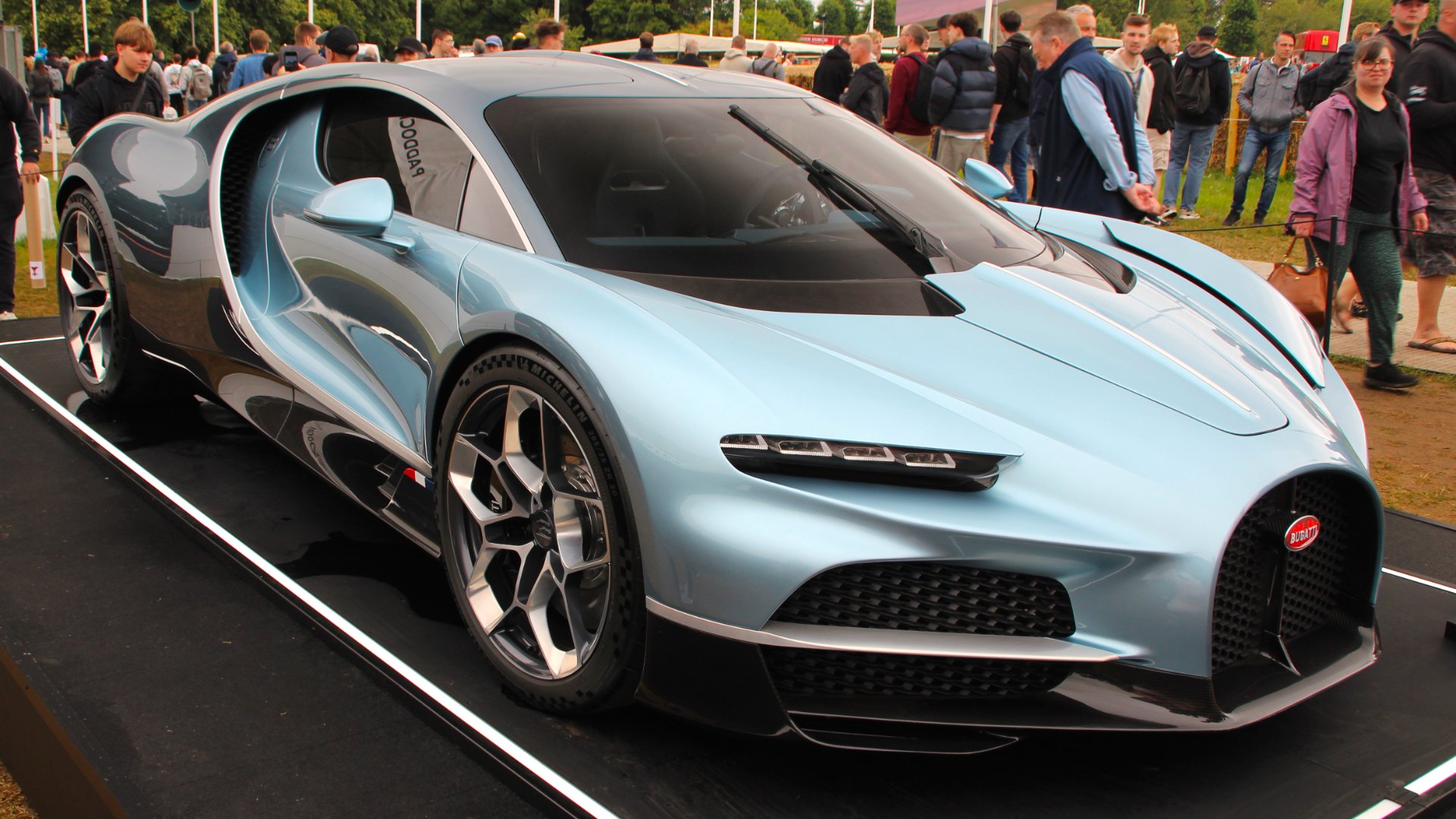
The idea still deserves more than a headline, because most quick takes have treated it as simple subtraction. Take out the battery and motors, keep the V16’s 986 hp, save about 300 kilograms, bolt in a clutch. Bugatti’s own engineering descriptions, and Rimac’s own words from last year, say it is nothing like that simple. In the Tourbillon, the electric system starts the engine, makes the car’s electricity and drives the front wheels. The battery is part of the chassis.
A lightweight manual Bugatti would not be a stripped Tourbillon. It would be a different kind of Bugatti: as far as we can find, the first modern Bugatti designed to make less power than the car it is based on. That is what makes it so unlikely, and so interesting.
What Rimac said, and when
- April 24: Porsche agrees to sell its Bugatti Rimac and Rimac Group stakes to a HOF Capital-led consortium (Bugatti, Porsche).
- August 17: Road & Track publishes Rimac’s Monterey Car Week comments on a “real manual” V-16.
- September 9: The sale closes; Rimac Group keeps its 55 percent majority (Rimac Group).
- October 26: Rimac tells Top Gear a lighter, simpler, manual Tourbillon is possible.
The ownership change is the context Rimac himself offered. Porsche’s exit ended Volkswagen Group involvement in Bugatti after nearly three decades. Rimac Group retained its 55 percent of Bugatti Rimac, and a consortium led by New York’s HOF Capital, with Abu Dhabi’s BlueFive Capital as its largest investor, took Porsche’s 45 percent. We covered that deal in Bugatti No Longer Belongs to Volkswagen. Rimac told Top Gear that independence is what lets Bugatti think long-term.
What he described was broader than a gearbox. He said the Tourbillon made sense as the Chiron’s successor, then wondered aloud what Bugatti should do next. His answer was lightness and simplification. He likened the Bugattis of the past 20 years to sledgehammers and asked whether the next one could be more engaging and closer to the brand’s roots, specifically the Type 35. It was Top Gear, not Rimac, that sketched the obvious route: drop the battery, motors and dual-clutch, leave the naturally aspirated V16, and cut roughly 300 kilograms.
The 986-hp number, explained
Bugatti rates the Tourbillon’s V16 at 1,000 PS, or metric horsepower. Its English technical specifications print that as “1,000 hp,” and the combined figure as “1,800 hp,” but both are metric ratings. In U.S. horsepower, 1,000 PS is about 986 hp, and the combined 1,800 PS is about 1,775 hp. The V16 makes 900 Nm (664 lb-ft) and revs to 9,000 rpm.
So 986 hp is a conversion of an existing engine’s rating as installed in a hybrid car. It is not a specification for any new model. A standalone V16 would need its own calibration and certification, and its rated output could end up different.
The number has a neat resonance, though. The 2005 Veyron, the car that launched the modern Bugatti, made 1,001 PS. A lightweight V16 Bugatti would land almost exactly back there, at roughly two-thirds of a 1,500-PS Chiron. Each new Bugatti model line since then has launched with more power than the one before. This would be a deliberate step the other way.
| At a glance | Tourbillon (Bugatti figures) | Manual idea (ECN estimates) |
|---|---|---|
| Engine | 8.3-liter naturally aspirated V16, 1,000 PS (986 hp) | Same V16; rating would need recertifying |
| Electric motors | Three, 250 kW each (two front, one rear) | None, or a minimal starter-generator system |
| Total output | 1,800 PS (1,775 hp) | About 1,000 PS (986 hp) if the V16 is unchanged |
| Gearbox | Eight-speed dual-clutch | Manual (no design disclosed) |
| Driven wheels | All four | Rear only, without the front e-axle |
| Mass | Under 1,995 kg (4,398 lb), DIN | About 1,700 kg (3,740 lb) if Top Gear’s 300 kg were a net saving; likely more |
| Pounds per horsepower | About 2.5 | About 3.8 |
| Status | Pre-delivery; type approval pending | Not announced |
What the hybrid actually does
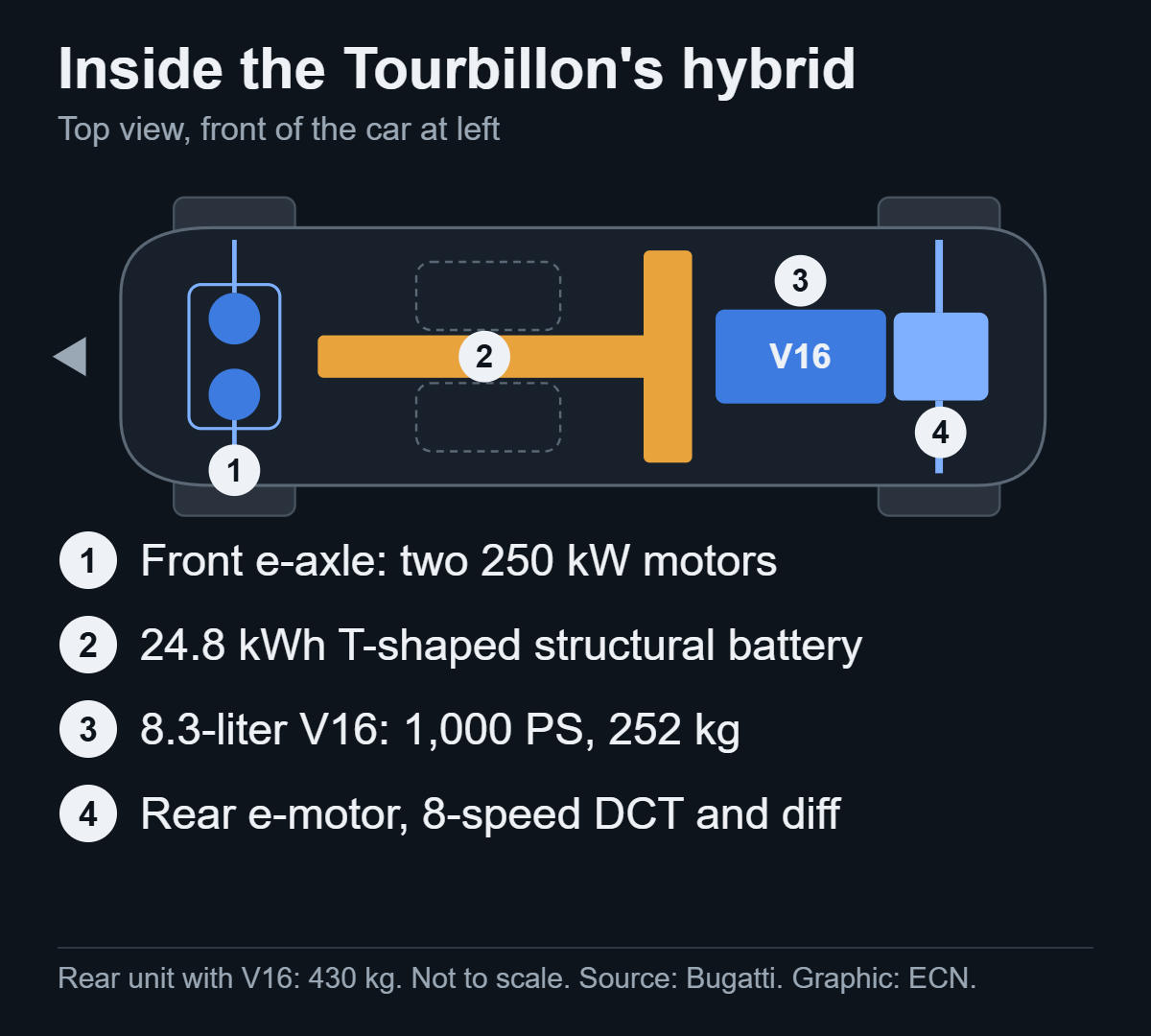
Bugatti has described the Tourbillon’s architecture in unusual detail, and it explains why “just remove the hybrid” is the wrong mental model.
- At the rear: the V16, a 250-kW electric motor, the eight-speed dual-clutch gearbox and a torque-vectoring differential. Bugatti says the assembly weighs 430 kg, matching the Chiron’s engine alone. The V16 by itself was reported at launch as weighing 252 kg. ECN calculation: subtracting one from the other leaves roughly 178 kg (392 lb) for the gearbox, rear motor and differential, plus whatever mounts, fluids and electronics Bugatti counts in the larger figure. Bugatti hasn’t said whether the two numbers are measured the same way, so treat it as an approximate split.
- At the front: two more 250-kW motors on a separate electric axle. Bugatti says there is no mechanical connection between the engine and the front wheels. Without those motors, the car is rear-wheel drive.
- In the middle: an 800-volt, 24.8-kWh (gross) T-shaped battery that Bugatti says is integrated into the monocoque and adds to its rigidity.
- Everywhere: Bugatti says the electric motors also serve as starter motors and generators, replacing a conventional 12-volt starting system.
That last point is the one most coverage skips. Rimac addressed it directly when Top Gear asked him, in June 2025, whether he would do a non-hybrid Tourbillon. He said “it’s pretty difficult because the starter is the hybrid motor.” He explained that the engine has no belt drive, no alternator and no engine-driven air-conditioning compressor, and added that a much-reduced system could work. In the same conversation, he listed a version without the hybrid, one with it minimized, and one without a driven front axle as possibilities.
ECN’s reading: the most plausible “non-hybrid” lightweight Bugatti may still carry a small electrical system, simply to start the engine, charge the car and cool the cabin. Its weight saving would also be smaller than the headline. Top Gear’s roughly 300 kg is its estimate of the hardware coming out, not a Bugatti figure, and it doesn’t appear to subtract what would go back in: a starter and charging system, a manual gearbox, and possibly extra structure where the battery once carried loads. Bugatti has published no figure for any of it.
There is a deeper irony. The hybrid is what made the V16 possible in the first place. Rimac told Top Gear in 2025 that dropping turbochargers for natural aspiration cost about 600 bhp, and that the electric side made it back. Bugatti quotes him describing the electric powertrain as “actually enabling this very emotional combustion engine.” A lightweight manual car would keep the emotion and give up the enabler.
Can a manual handle a V16?
Probably, with real work. The torque is high but not unprecedented for a manual. Pagani had Xtrac develop a seven-speed manual for the Utopia to cope with 1,100 Nm from its twin-turbo V12. A manual V16 isn’t new, either: the Cizeta V16T of the early 1990s sent 540 PS through a five-speed ZF manual. The Tourbillon’s engine makes nearly twice that.
The challenges, as ECN sees them (none of this comes from Bugatti):
- Revs and mass. A 9,000-rpm V16 with a crankshaft Top Gear puts at a meter long is a lot of spinning metal. The clutch and flywheel would need to survive full-power starts and still let a person modulate them.
- Packaging. Bugatti moved the gearbox behind the engine to make room for diffuser tunnels twice the Chiron’s volume, and built the rear crash structure into the diffuser. Any new gearbox lands in the middle of that design.
- Dynamics. Without the front motors and the electronic differential’s torque vectoring, this becomes a rear-drive car with about 1,000 PS. That is a very different chassis to tune.
- Certification. Bugatti’s newsroom still lists the Tourbillon itself as awaiting type approval. A new powertrain would need its own approvals in each market. That isn’t a legal wall, since Bugatti was still building the purely combustion-engined W16 Mistral in 2025, but it is time and money spent on what would likely be very few cars.
Why the Type 35 is the right ghost
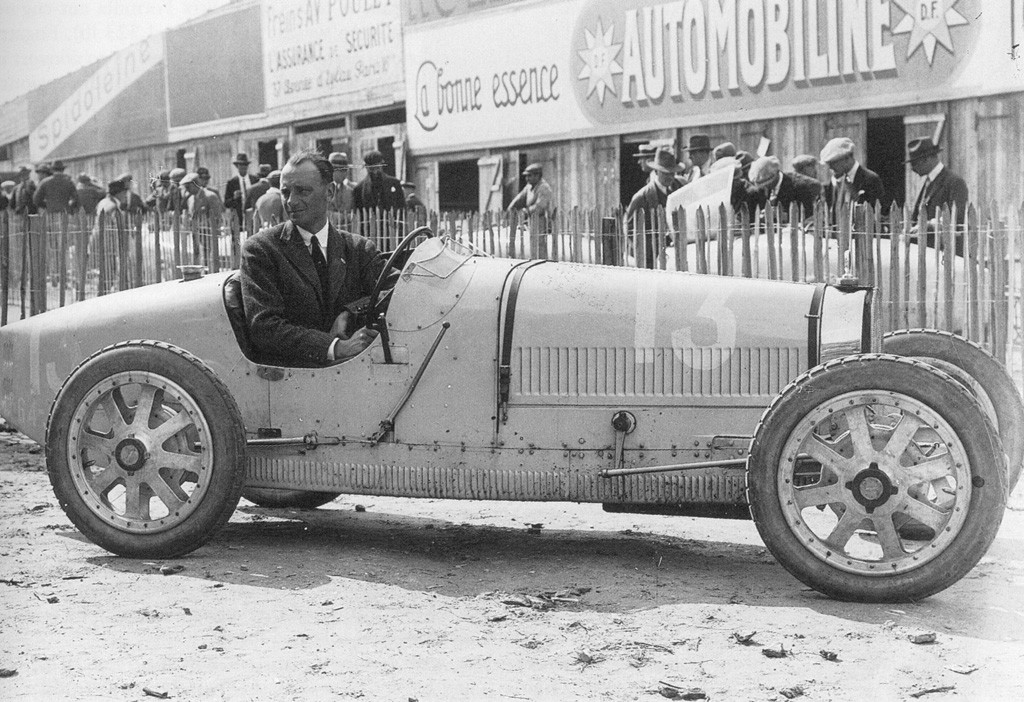
The Type 35 made its debut at the Grand Prix de Lyon in August 1924 and weighed about 750 kg. Bugatti credits it with more than 2,000 race victories. In the company’s own heritage writing, Ettore Bugatti understood that power matters but “light weight is all-important.”
The modern Bugatti has argued the other side, one number at a time: 1,001 PS for the Veyron, 1,500 for the Chiron, 1,800 for the Tourbillon. Rimac’s sledgehammer remark is, in effect, a critique of his own brand’s recent history.
It is worth being honest about scale. Even 300 kg lighter, a V16 Bugatti would weigh more than twice a Type 35 and would still be an enormous, very fast car. The link to the Type 35 would be about philosophy, not size: involvement over output.
There is a more recent precedent, too. The last Bugatti with a manual gearbox was the EB110 of the early 1990s, which put a quad-turbo V12 and all-wheel drive through a six-speed manual. Since the brand’s revival under Volkswagen in the late 1990s, no production Bugatti has offered a clutch pedal.
Would collectors want one?
The market evidence for manuals is real, but it comes with conditions.
In a 2023 analysis, Hagerty found that where factory manuals were rare and automated gearboxes common, the manual cars carried large premiums: about double for an F430, 125 percent more for a 575M, 120 percent more for a 612 Scaglietti. The same analysis found that Ferraris converted to manuals after the fact sold at an average of 9.4 percent below the guide value for unconverted cars. Collectors were paying for factory originality and rarity, not the shifter alone. A factory manual Bugatti would be original by definition.
At the new-car end, Pagani’s commercial director has said more than 70 percent of Utopia buyers chose the manual, which we covered in The Supercar Horsepower War Is Over. This year has also produced two different answers to the same demand. Ferrari’s 12Cilindri Manuale uses what Ferrari calls a Manuale By-Wire system: a gear lever and a clutch-by-wire pedal that operate the car’s dual-clutch transmission. McLaren says its McL 6GT concept, due in production in 2028, has an authentic manual gearbox. Rimac’s insistence on a “real manual” puts Bugatti, at least rhetorically, closer to McLaren’s answer. Our list of manual supercars you can still buy new shows how short that list is.
The counterarguments are serious. The Ferrari premiums apply to older cars where the manual was a scarce version of a common model, bought decades later. A manual Bugatti would be a new, very low-volume car at the very top of the market, where pricing works differently. Some buyers may also see a slower Bugatti as a lesser one, because the brand’s modern value was built on records. With no program, price or volume announced, ECN won’t guess at future values.
What can be said is narrower. If it were built, it would be the first factory three-pedal Bugatti since the EB110 and the only manual car with this V16. Those are the kinds of firsts collectors have historically noticed. They are not a guarantee.
What we still don’t know
- Whether any program exists beyond Rimac’s stated interest.
- Whether it would be a series model, a limited run, or a one-off through Programme Solitaire, Bugatti’s bespoke division. Its latest creation, the Destrier shown at Monterey, still uses the W16 and a paddle-shifted gearbox.
- Name, price, timing and production numbers.
- How much electrification would survive.
- The Tourbillon’s final production weight and specifications, which await type approval.
The point
Every maker that revived the clutch pedal this year had to decide how real to make it. Ferrari recreated it by wire. McLaren says it is bringing back the real thing. Bugatti’s version of the problem would be stranger: persuading people who can buy one of the fastest cars in the world that the one with less power is the better Bugatti.
That is why it shouldn’t exist. It is also why it might. The most successful car Bugatti ever built won on lightness and agility, not brute force, and the man now running the company was asking aloud whether it is time to remember that.
For 20 years, a new Bugatti’s job was to make the number bigger. The most radical idea Rimac has floated is a Bugatti that asks the driver to do some of the work.
Sources: Top Gear interviews with Mate Rimac (October 26, 2026, and June 2, 2025); Road & Track (August 17, 2026); Bugatti technical specifications (status June 2024) and newsroom releases on the Tourbillon powertrain (June 12, 2025), packaging (July 17, 2025) and Type 35 heritage; Porsche, Bugatti and Rimac Group transaction releases (April and September 2026); Ferrari and McLaren launch materials (July and August 2026); Hagerty Insider analysis (May 19, 2023). Horsepower conversions: 1 PS = 0.986 hp.
Images: The lead image is an Exotic Car News editorial illustration, not a Bugatti interior or manufacturer photography; Bugatti has not shown a manual Tourbillon. Tourbillon photo: MrWalkr, CC BY-SA 4.0. Type 35 photo: public domain. Diagram: Exotic Car News.