

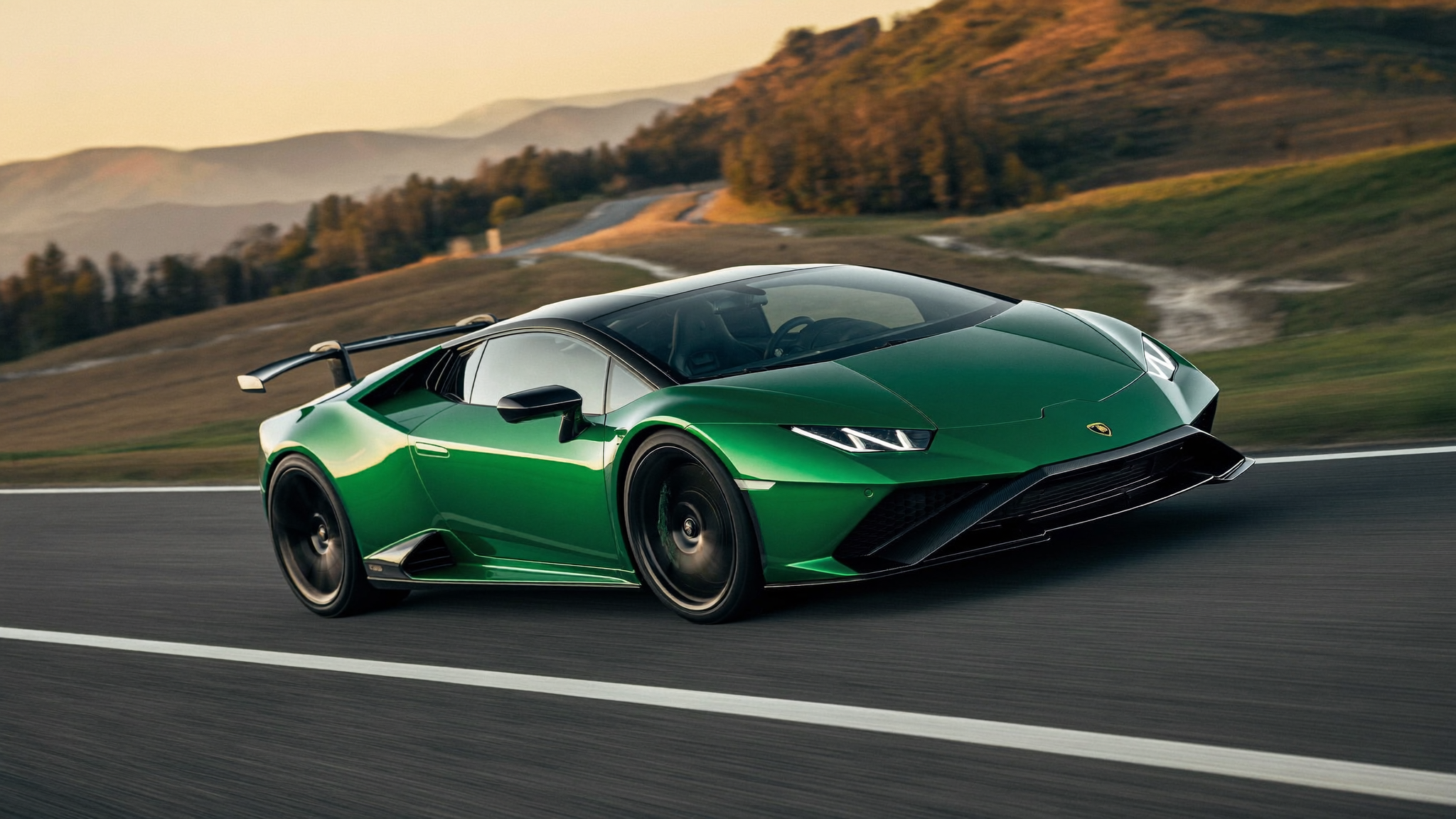
For seventy years, nearly every car on Earth — from a base Corolla to a Bugatti — has run its electrical system on the same 12 volts your grandfather’s Bel Air used. That era is ending, and fittingly, it’s the exotic and performance car world leading the charge. From Lamborghini’s roll-free Urus to Porsche’s 800-volt Taycan, voltage has quietly become one of the most important performance specs you’ve never checked.
Here’s why the 48V electrical system has become essential in the world’s fastest cars, what the numbers actually mean, and where the electrical arms race goes next.
Key Takeaways
- 48V delivers four times the power of 12V through the same wire — or the same power through cables a quarter of the size. That’s why active anti-roll bars, electric superchargers, and mild-hybrid motors all run on it.
- A 12V system tops out around 3 kW; a 48V electrical system delivers 10–20 kW — enough to physically move the chassis in milliseconds.
- Modern hybrid hypercars run three electrical networks at once: 12V for legacy electronics, 48V for chassis muscle, and 400–800V+ for traction.
- 800V EVs charge with half the current of 400V cars, which means thinner cables, less heat, and 10–80% charges in under 20 minutes.
- The ceiling keeps rising: Tesla’s Cybertruck went all-in on 48V low-voltage, Lucid runs about 900V, and BYD’s newest platform hits 1,000 volts with megawatt charging.
Table of Contents
First, a 60-Second Volts Primer
Power equals voltage times current. If you want more power through a wire, you either push more amps — which demands thicker, heavier copper and generates more heat — or you raise the voltage. Quadruple the voltage from 12V to 48V, and you deliver the same power with one-quarter of the current. That means thinner wiring, smaller actuators, less heat, and faster response.
Put real numbers on it and the problem becomes obvious. Delivering 3 kW at 12 volts means forcing roughly 250 amps through the harness — welding-torch territory, demanding thick, heavy, expensive cable. The same 3 kW at 48 volts needs about 62 amps, which travels happily through a conductor a fraction of the size. Scale that across an entire car and the copper savings alone are measured in kilograms.
For engineers chasing tenths at the Nürburgring, that math is irresistible. A 12-volt system realistically taps out around 2.5–3 kW of usable power. A 48V electrical system comfortably delivers 10–20 kW — enough to run systems that physically move the car.
Why 12 Volts Hit a Wall
The industry actually started even lower. Early automobiles ran 6-volt electrics, which were fine for a horn, a coil, and a pair of dim headlamps. The move to 12 volts in the 1950s came when high-compression V8s demanded stronger starters and hotter ignition. That was the last voltage upgrade most cars ever got — a standard old enough to collect Social Security.
Meanwhile, the electrical load exploded: heated and cooled massaging seats, radar, cameras, adaptive dampers, electric power steering, massive touchscreens, ambient lighting. Modern luxury cars carry wiring harnesses weighing over 100 pounds, with kilometers of copper snaking through the body.
Engineers saw the wall coming decades ago. In the late 1990s, an industry consortium proposed a jump to “42V” electrics, and everyone agreed it made sense — right up until automakers found cheaper efficiencies elsewhere and quietly shelved it. What finally forced the issue wasn’t infotainment or heated seats. It was active chassis technology: systems that need serious, instant power that a 12-volt network simply cannot supply.
What a 48V Electrical System Unlocks in Exotic Cars
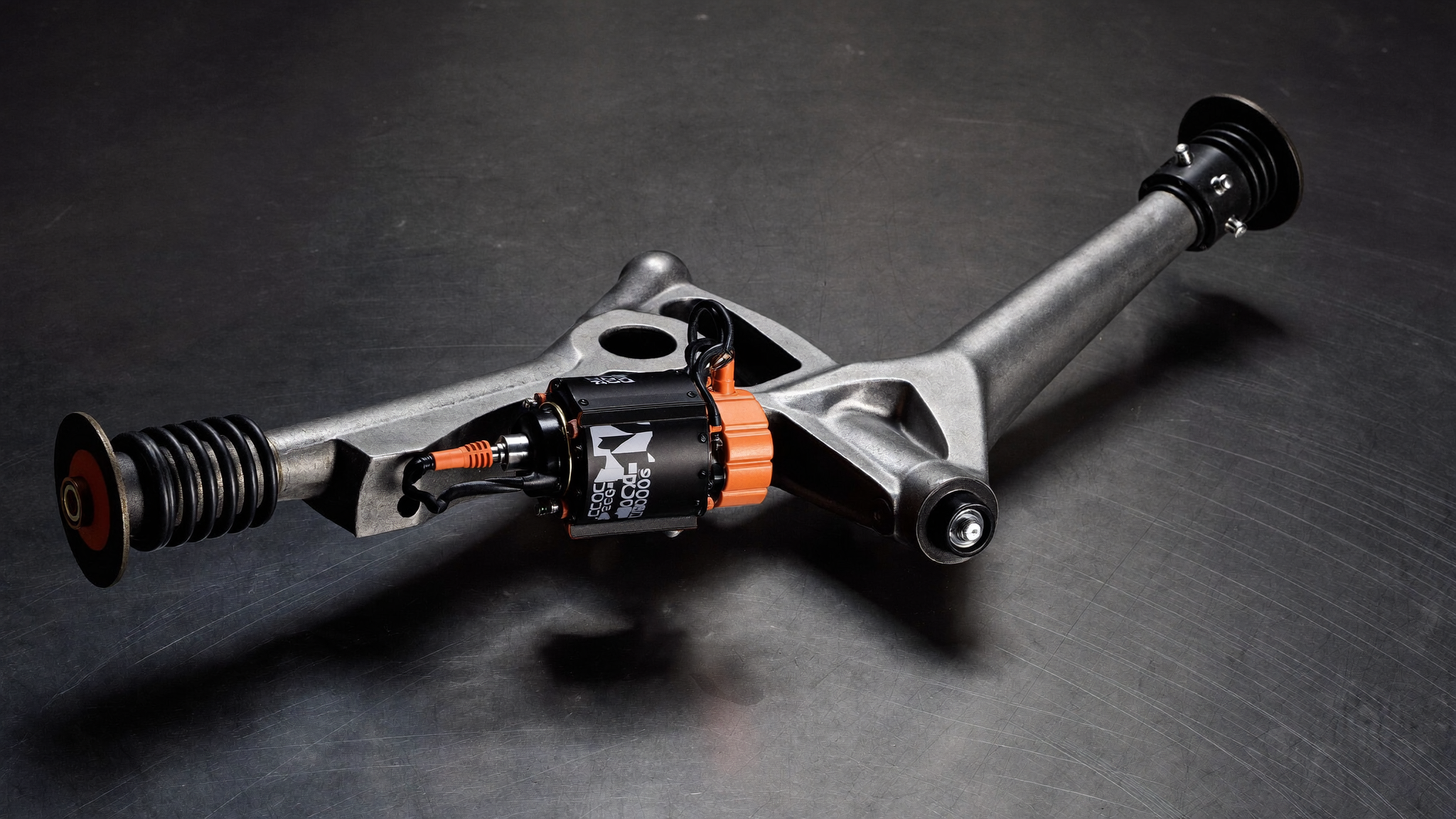
Active anti-roll bars that defy physics
The most famous 48V party trick is electromechanical active roll stabilization. Bentley got there first: the 2016 Bentayga’s Dynamic Ride system was the production debut of 48-volt active anti-roll bars, followed quickly by the Audi SQ7 and then the Lamborghini Urus. These systems mount a compact electric motor in the middle of each anti-roll bar and twist against body lean in milliseconds, feeding up to about 1.2 kW of instant torque per axle into the chassis.
The result: a 4,800-pound SUV that corners flat like a sports car, yet rides softly in a straight line because the bars can fully decouple over broken pavement. Hydraulic systems tried this for years — Porsche’s early PDCC among them — but electromechanical actuation responds faster, weighs less, and works even when the engine is off. A 12-volt network simply cannot deliver that kind of instant power; this is 48V territory by definition.
Electric superchargers: boost before the turbos wake up
Audi’s SQ7 pioneered the 48V electric compressor, spinning to 70,000 rpm in about a quarter of a second to fill the torque hole before the exhaust-driven turbos spool. No lag, no waiting — just an electrically-assisted shove off the line that a 12V system couldn’t dream of powering.
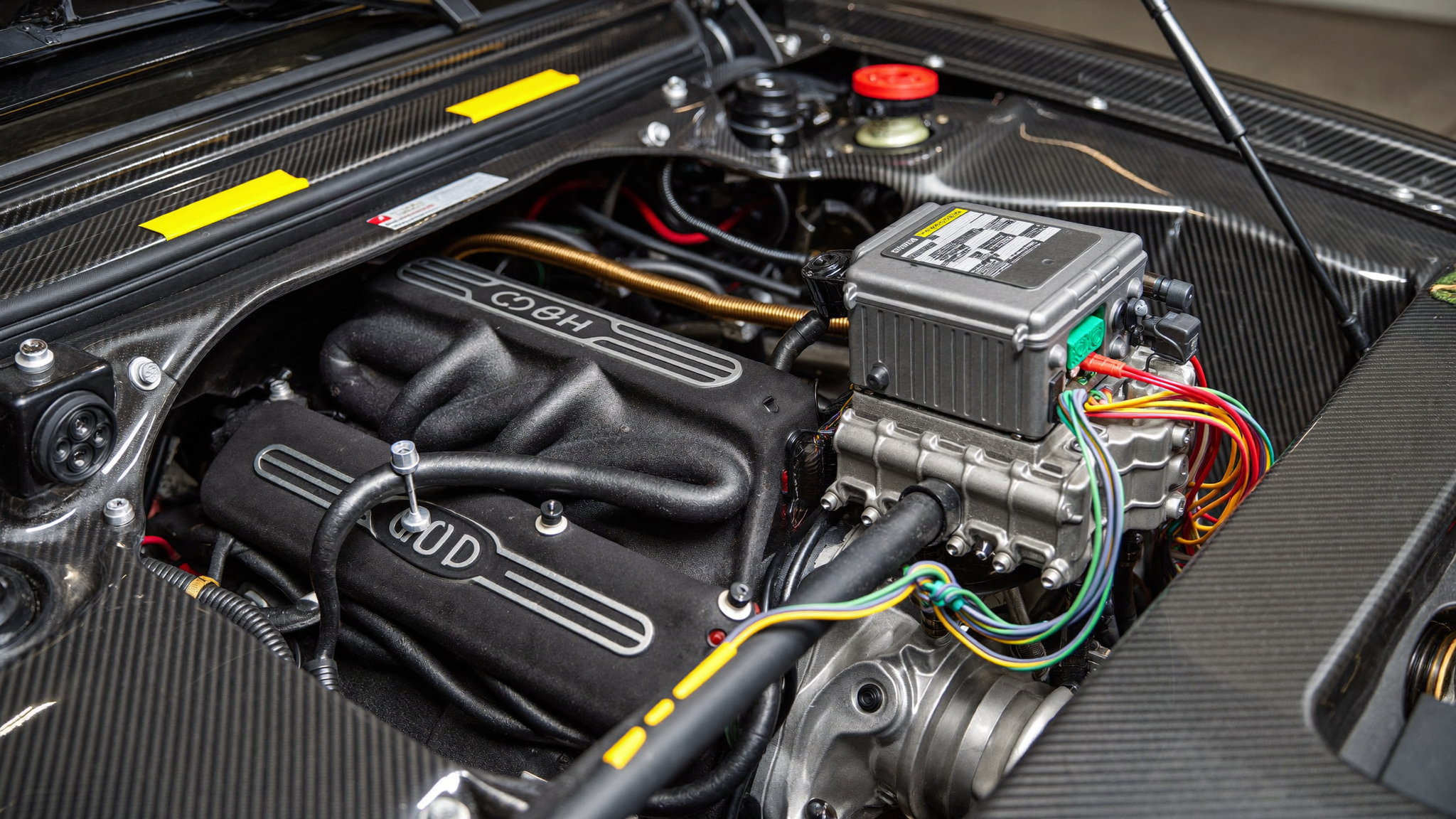
Mild-hybrid muscle
Lamborghini’s Sián and Countach LPI 800-4 used a 48-volt e-motor fed by a supercapacitor — chosen over a battery because it charges and discharges far faster — to add 34 electric horsepower of instant fill during gear changes. Mercedes-AMG’s ISG starter-generator does similar duty on its inline-sixes, contributing around 20 extra horsepower of electric shove while smoothing the stop-start system into invisibility.
Even Ferrari’s next-generation V12s are reportedly heading toward 48V mild-hybrid assistance — a way to keep naturally aspirated engines alive in an emissions-regulated world. For purists — the same crowd fueling the analog comeback — 48V is less a threat than a life-support system for the twelve-cylinder soul.
Suspension that reads the road
Mercedes took the concept further with E-Active Body Control, a 48-volt hydropneumatic suspension that controls each wheel individually. It scans the road ahead with a camera and pre-loads the dampers before the bump arrives, leans the car into corners like a motorcyclist, and can even bounce the body vertically to free itself from sand. Every bit of that intelligence rides on the 48V electrical system’s ability to move real force, right now.
Faster everything
Adaptive dampers, electric power steering, brake-by-wire, rear-wheel steering — all respond faster and weigh less when they draw from a 48V electrical system instead of a 12-volt one. Sharper turn-in isn’t just suspension geometry anymore; it’s electrical architecture.
The Hidden Benefits: Weight, Heat, and Safety
The headline systems get the attention, but the quiet wins matter just as much to a performance car. Because a 48V electrical system moves the same power with a quarter of the current, its cables can use dramatically less copper — and on a car whose harness is one of its heaviest single components, that’s real weight off the scales, in exactly the places engineers struggle to save it.
Less current also means less resistive heat, so components can be packaged tighter without cooking themselves, and less energy is wasted just pushing electrons around. The efficiency gains compound: a 48V starter-generator recovers energy under braking that a conventional alternator would simply throw away.
And here’s the elegant part: 48 volts sits safely below the roughly 60-volt DC threshold where automotive regulations classify a system as high-voltage. That means no bright-orange safety cabling, no special insulation regime, no HV service procedures — nearly all the benefit of higher voltage with almost none of the regulatory burden. It’s the engineering equivalent of a loophole, and the entire industry is driving through it.
The High-Voltage League: 400V and 800V
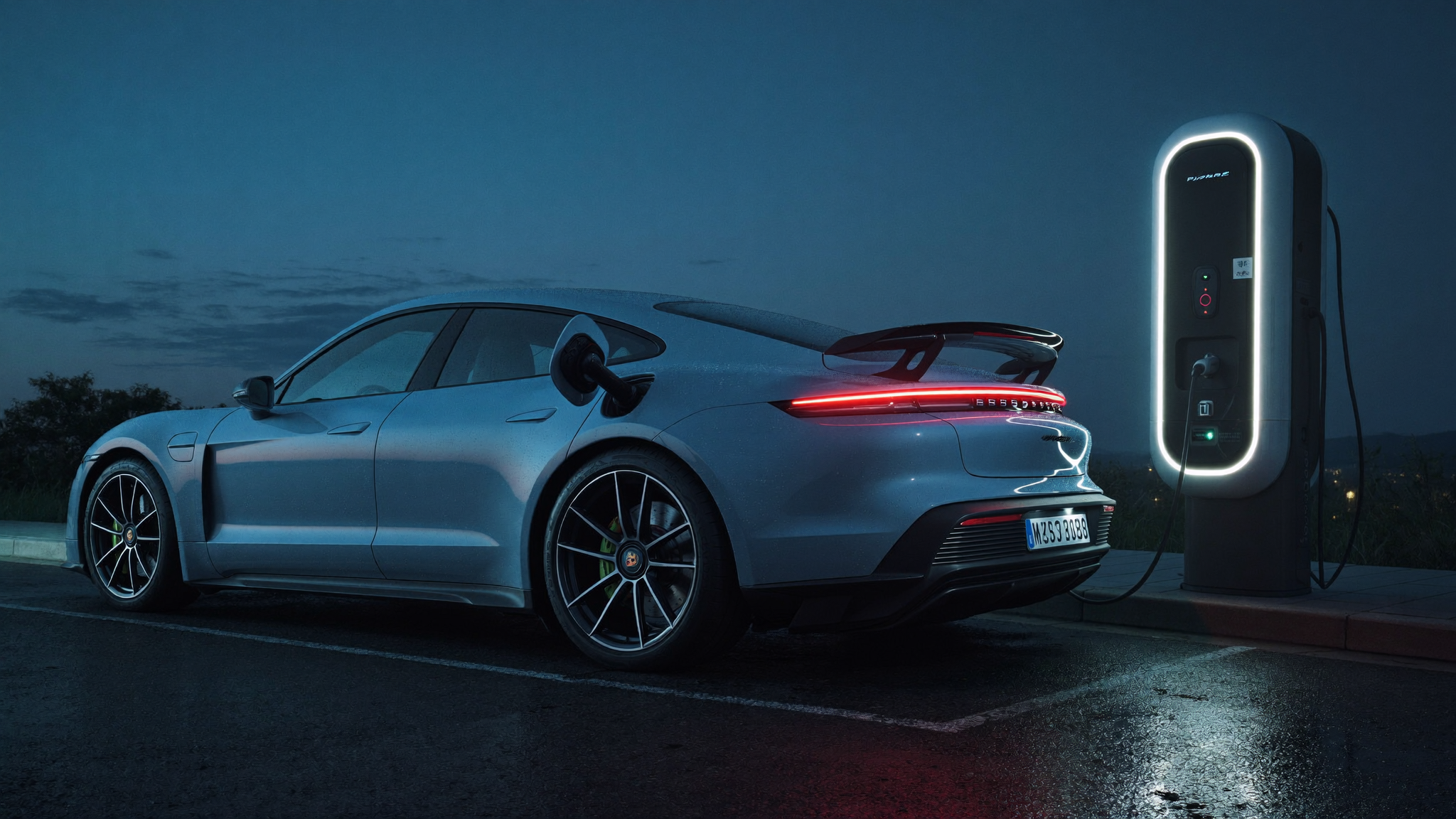
Hybrids and EVs play in an entirely different voltage league. Most electric cars run traction systems around 400 volts — a figure that made sense when EV engineering borrowed heavily from existing industrial components. But the Porsche Taycan broke ranks as the first production 800-volt EV, an architecture shared with the 1,914-hp Rimac Nevera and adopted by Hyundai-Kia’s E-GMP platform, the Lotus Eletre, and Lucid — whose Air runs up to about 900 volts.
The benefits mirror the 48V story, scaled up: at 800 volts, you need half the current of a 400V system for the same charging power. That means thinner, lighter cables, less heat in the battery, and brutal charging speed — the Taycan peaks at over 270 kW, and E-GMP cars sprint from 10 to 80 percent in around 18 minutes. Charging power that once demanded liquid-cooled cables as thick as your wrist now flows through hardware a valet could handle one-handed.
It also means repeatable performance. Less current means less heat soak in the pack, so your third launch-control run is as savage as your first — the difference between a car that performs on a spec sheet and one that performs all afternoon at the track.
There is a catch: 800-volt components are expensive. The silicon-carbide semiconductors that switch power at those levels cost real money, which is why the technology debuted on a Porsche rather than a commuter hatchback — and why, like every other performance technology from disc brakes to turbocharging, it is trickling down from the exotic tier to everything else. Your next family EV will owe its 18-minute charge stop to hypercar engineering.
So a Modern Hypercar Has… Three Electrical Systems?
Correct. A modern hybrid hypercar effectively runs a layered electrical stack:
- 12V — legacy loads: lights, infotainment, ECUs, and decades of parts-bin electronics that would cost a fortune to redesign
- 48V — chassis muscle: active roll bars, e-superchargers, mild-hybrid motors, active suspension
- 400–800V+ — traction: drive motors and battery pack, stepped down through DC-DC converters to feed the lower tiers
It’s complex, expensive, and heavy — which is exactly why the industry wants to consolidate. The endgame is fewer voltage tiers, not more: kill the 12V rail, run every accessory on 48V, and let the high-voltage pack handle propulsion.
The glue holding this stack together is the DC-DC converter — a solid-state transformer that steps the traction pack’s hundreds of volts down to feed the 48V electrical system and the legacy 12V rail. It has quietly replaced the alternator in electrified performance cars, and its efficiency directly affects range, heat, and how much real power the chassis systems can draw at full attack.
The Future: Zonal Architectures, 48V Everything, and the Kilovolt Club
Tesla’s Cybertruck became the first modern production vehicle to eliminate 12V entirely, running its whole low-voltage side on a 48V electrical system — which is what makes its steer-by-wire setup possible, with no mechanical steering column at all. Tesla even open-sourced its 48V design to push the industry forward. Expect exotic manufacturers to follow: steer-by-wire means variable steering ratios that change with speed and drive mode, plus cleaner cockpit design — technology tailor-made for hypercars.
The next step is zonal architecture: instead of one massive harness snaking from a central fuse box to every corner of the car, smart zone controllers manage local loads and talk to each other over a data network. The payoff is slashed wiring weight and complexity — real, measurable kilograms that matter more to a track car than any carbon-fiber trinket in the catalog.
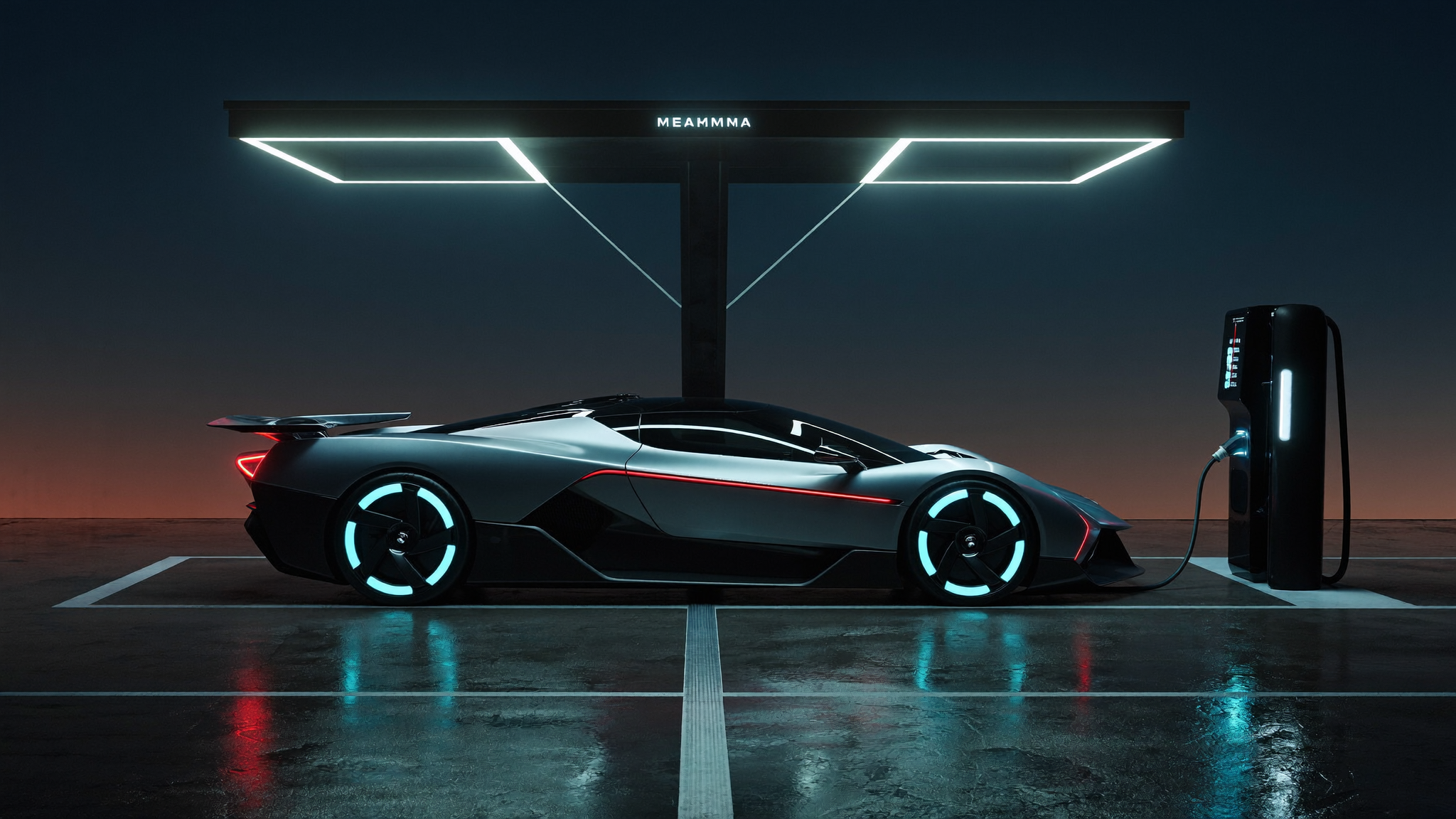
On the traction side, the ceiling keeps rising. Lucid already runs roughly 900V, and Chinese platforms have crossed into four-digit territory — BYD’s latest platform operates at 1,000 volts and supports megawatt-class flash charging, claiming hundreds of kilometers of range added in about five minutes. That’s a fuel-stop timescale, not an EV-charging one. Expect the next generation of European hypercars to flirt with the kilovolt club, because at that level, charging stops become pit stops.
Further out, solid-state batteries promise to tolerate faster charging at even higher voltages, and every one of these architectures is being designed with that handoff in mind. The voltage arms race hasn’t peaked; it’s still accelerating.
The Bottom Line
Horsepower wars will always make headlines, but the real battleground in exotic cars has moved into the wiring. The 48V electrical system determines how fast a chassis can think, how hard a mild hybrid can push, and how flat a two-and-a-half-ton SUV can corner — while 800-volt traction systems decide how quickly a battery refills and how many launch runs it survives.
The spec sheet of the future won’t just list displacement and torque — it’ll list volts. And in that race, more is always more. (And yes — even with all those volts, your exotic still lives and dies by its fluids.)
Frequently Asked Questions
What is a 48V electrical system in a car?
A 48V electrical system is a secondary electrical network running at four times the traditional 12 volts. It powers high-demand systems — active anti-roll bars, electric superchargers, and mild-hybrid motors — using one-quarter of the current, which allows lighter wiring and faster response.
Why do exotic cars need 48V instead of 12V?
Performance systems like active roll stabilization and electric compressors need 5–20 kW of instant power. A 12V system tops out around 3 kW; a 48V electrical system delivers the power these systems demand without heavy cables or excess heat.
Which performance cars use 48-volt systems?
The Bentley Bentayga (the first, in 2016), Lamborghini Urus, Audi SQ7 and SQ8, Mercedes-AMG mild-hybrid models, the Lamborghini Sián and Countach LPI 800-4, and the Tesla Cybertruck — which runs its entire low-voltage network on 48V — are notable examples.
Is a 48V electrical system dangerous to touch?
No — 48 volts sits below the roughly 60-volt DC threshold at which automotive regulations classify a system as high-voltage. That is why 48V systems do not require orange high-voltage cabling or special service procedures, unlike a hybrid or EV traction system.
Does a 48V system make a car faster?
Indirectly, yes. Mild-hybrid motors add instant torque fill (34 hp in the Lamborghini Sián), electric superchargers eliminate turbo lag, and 48V active anti-roll bars let a car carry more speed through corners. The gains come from response and cornering as much as raw power.
What is the difference between 48V and 800V systems?
48V is a low-voltage network for accessories and chassis systems. 800V refers to an EV’s high-voltage traction system — the battery and drive motors — enabling ultra-fast charging and sustained performance, as in the Porsche Taycan, Rimac Nevera, and Lucid Air.
Will cars go beyond 800 volts?
Yes. Lucid already operates near 900V, and BYD has launched a 1,000-volt platform supporting megawatt-class charging. Voltage will keep climbing as automakers chase faster charging and repeatable performance.