
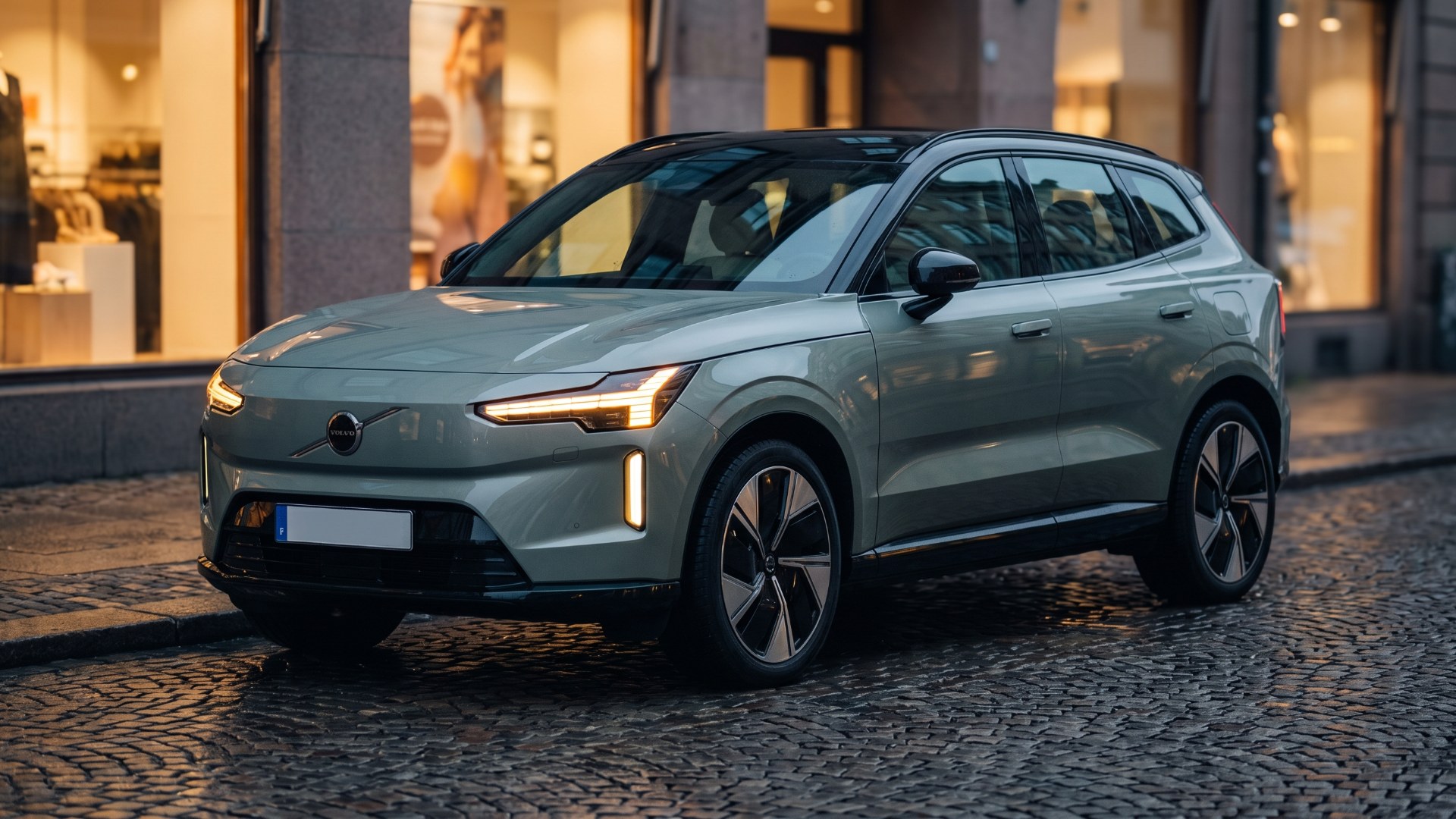
What You Need to Know
- Volvo’s EX60 debuts a multi-adaptive seat belt that chooses from 11 load-limiting profiles, up from three, based on who is wearing it and how the car is crashing.
- BMW’s Neue Klasse models, starting with the iX3, can delay a door from opening when a cyclist is approaching and can steer around an obstacle without leaving their lane.
- The electric Mercedes-Benz CLA was Euro NCAP’s top-scoring car of 2025.
- Volvo and Toyota models can now bring themselves to a stop if the driver stops responding.
- Hands-free driving is not proven safety tech: IIHS research finds partial automation adds no crash benefit beyond systems like automatic emergency braking.
For most of the past half-century, you could see automotive safety progress. Crumple zones got smarter, airbags multiplied, and anti-lock brakes and stability control became standard equipment. The next wave is much harder to spot, because most of it lives in sensors and software.
The cars arriving in 2026 use cameras, radar, lidar and interior sensors, backed by far more computing power than any previous generation, to build a picture of both the road and the cabin. Some can tune a seat belt to the person wearing it. Some can hold a door shut while a cyclist rides past. Some can tell when the driver has stopped responding and bring the car to a controlled halt.
That is the new car safety technology story worth following this year, and it is a different story from the hands-free driving features that dominate the marketing.
Safety technology versus convenience technology
The distinction matters because not every advanced driver-assistance feature has earned the word safety.
Research from the Insurance Institute for Highway Safety and its sister organization, the Highway Loss Data Institute, has consistently found that systems that warn or intervene in an emergency, such as automatic emergency braking, lane-departure prevention and blind-spot and rear crash prevention, reduce insurance claims. The benefit also grows as those features are stacked together.
Partial automation is a different matter. In a July 2024 study of BMW and Nissan models, IIHS found that adaptive cruise control combined with lane centering added no safety benefit beyond what the underlying crash-avoidance features already delivered. IIHS President David Harkey called partial automation “a convenience feature like power windows or heated seats.”
Keep that lens in mind. The most important systems below are the ones that act in the seconds before, during and after a crash.
Volvo EX60: the seat belt learns who is wearing it
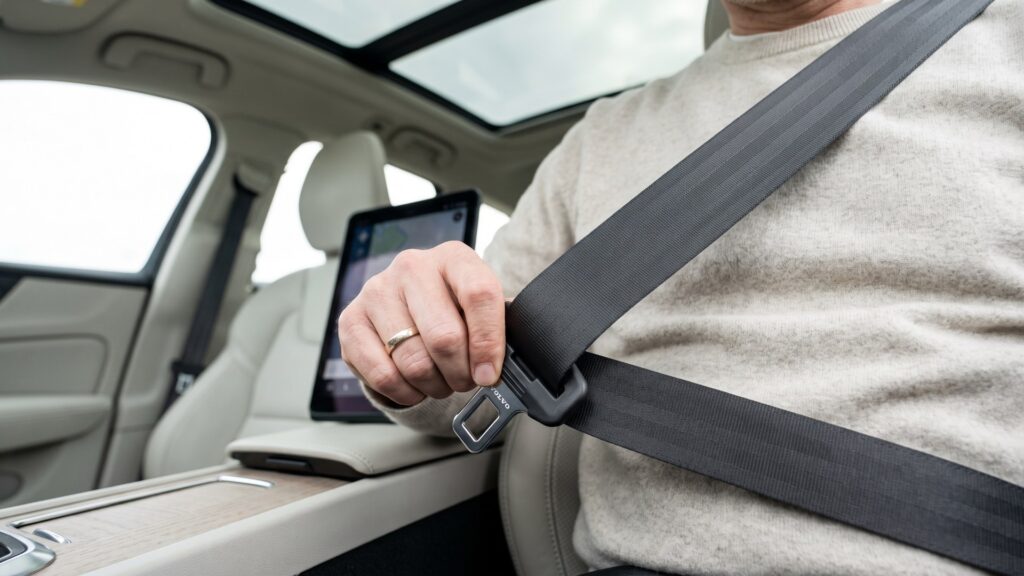
Volvo introduced the modern three-point seat belt in 1959, and it is now giving that invention its biggest upgrade in decades. The new multi-adaptive safety belt debuts in the all-electric Volvo EX60.
A conventional belt uses a load limiter to control how much force the webbing applies to the body during a crash, and today’s systems typically choose from three profiles. According to Volvo, the new belt expands that to 11 load-limiting profiles and adds more possible settings between them.
What makes the system notable is the information behind each decision. Interior and exterior sensors tell the car about the occupant, including height, weight, body shape and seating position, and about the crash itself, including its direction and speed and the occupant’s posture at that moment. The car then selects the most appropriate setting in a fraction of a second.
Volvo’s own example explains why that matters. A larger occupant in a serious crash receives a higher belt load to help reduce the risk of head injury, while a smaller occupant in a milder crash receives a lower load to reduce the risk of rib fractures. The system is also designed to improve over time through over-the-air software updates, drawing on Volvo’s database of more than 80,000 occupants involved in real-world crashes.
The EX60 opened for U.S. orders in May as a 2027 model, starting at $58,400 before a $1,395 destination charge, with deliveries expected later this year. Volvo’s U.S. launch materials highlight the car’s Safe Space Technology suite, so buyers should confirm the multi-adaptive belt on their specific build as market-by-market equipment details are published.
It is far less flashy than a hands-free driving demonstration. Over the life of the car, it may prove considerably more consequential.
BMW iX3: a door that waits for the cyclist
BMW’s Neue Klasse architecture tackles a crash type that rarely makes headlines. Dooring happens when a parked car’s door swings open into a traffic lane, and it is particularly dangerous for cyclists. According to the German Insurance Association, dooring accounted for 392 accidents in Berlin alone in 2024, just under 8 percent of the city’s bicycle accidents.
BMW has offered exit warnings for years. With the Neue Klasse, the system goes a step further: side radars monitor traffic around the parked car, and if they detect a collision risk, the electronic door lock delays the door from opening until the danger has passed.
Compare that with the approach in the Volvo EX90, which warns occupants in two stages, first with a light in the door mirror and then with a flashing light and a warning sound if a collision is imminent. Both are useful. BMW’s version simply places a physical pause between a distracted passenger and a passing cyclist.
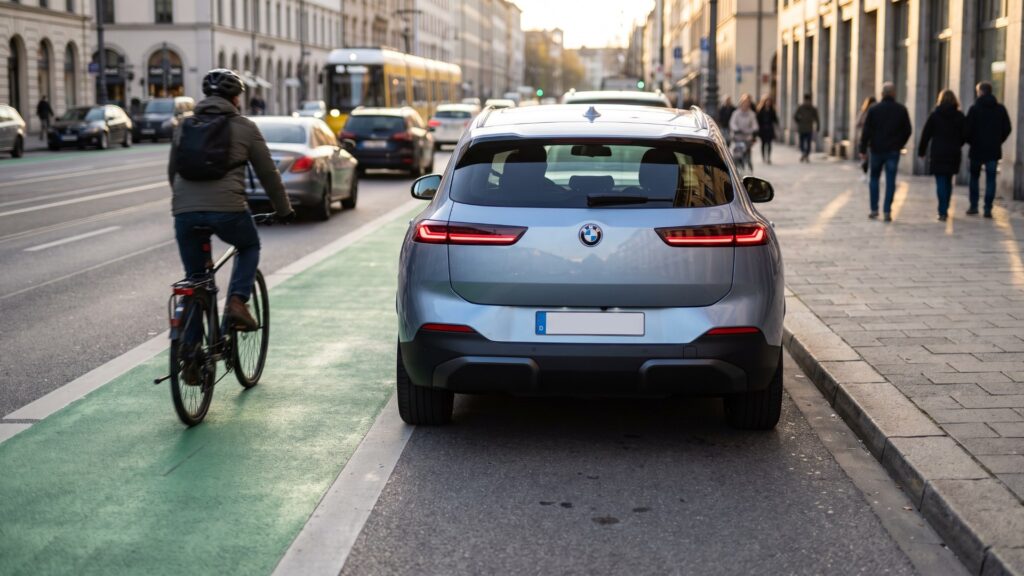
The same architecture brings an emergency steering intervention that can automatically guide the car around an obstacle while keeping it inside its own lane. BMW cites scenarios such as a person stepping out between two vehicles after a breakdown, or a cyclist overlooked in low light. Other new or upgraded functions include emergency braking for cross traffic when reversing out of a parking space, Park Distance Control that can now brake for objects beside the car, and start monitoring that brakes in a controlled way if the accelerator is pressed unusually hard near an obstacle.
All of it runs on a new generation of cameras, radar and ultrasonic sensors feeding a central, water-cooled computer that BMW says has roughly 20 times the computing power of its predecessor. The iX3 was the first production model to get the package as standard, and the new 3 Series, 7 Series and X5 are next.
BMW has also published fleet data that shows why this matters. Across 1.3 million consenting BMW vehicles in Europe equipped with the previous generation of driver assistance, drivers covered 1.6 billion kilometers in July 2026 alone. The cars issued around 8 million collision alerts, and in 243,977 cases active steering and braking interventions helped prevent a potential collision. The new iX3 has also earned five stars under Euro NCAP’s stricter 2026 test protocols.
Mercedes-Benz CLA: the benchmark for crash protection
The new electric Mercedes-Benz CLA set a benchmark of a different kind. In January, Euro NCAP named it Best Performer of 2025, making it the highest-scoring car across every class the organization tested in its busiest year to date, as well as the best small family car. It scored 94 percent for adult occupant protection and 93 percent for protecting vulnerable road users such as pedestrians and cyclists. The E-Class took the same title the year before.
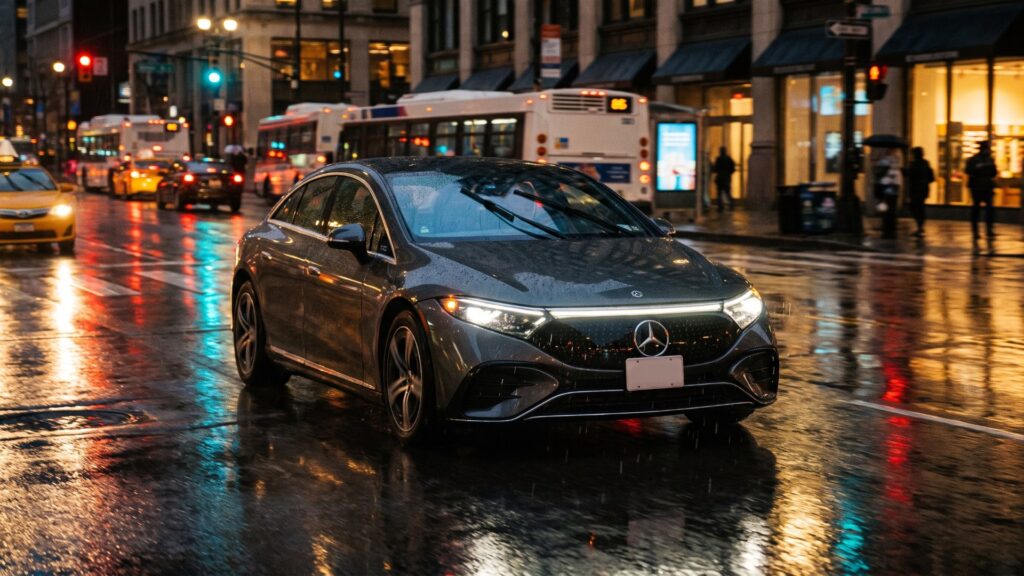
Mercedes is pairing that result with a far more ambitious assistance system. At CES 2026, the company presented MB.DRIVE ASSIST PRO, developed with Nvidia. It merges SAE Level 2 driver assistance with navigation so the car can help steer, brake and accelerate through city streets from a parking lot to a destination. The system uses roughly 30 sensors, including 10 cameras, five radar sensors and 12 ultrasonic sensors, and a cooperative steering approach that lets the driver adjust the car’s path without switching the system off.
The key words are Level 2. The driver remains responsible at all times and must supervise the system. Mercedes has said the feature will reach the U.S. later this year, starting with the CLA.
When the driver stops responding
Some of the most meaningful work is happening inside the cabin, where the car now watches the person behind the wheel.
The Volvo EX90’s driver understanding system, which TIME named one of its Best Inventions of 2024, uses interior cameras to track eye movement, attention, drowsiness and whether the driver’s hands are on the wheel. If the driver fails to respond to escalating alerts, the EX90 can bring itself to a safe stop and switch on its hazard lights.
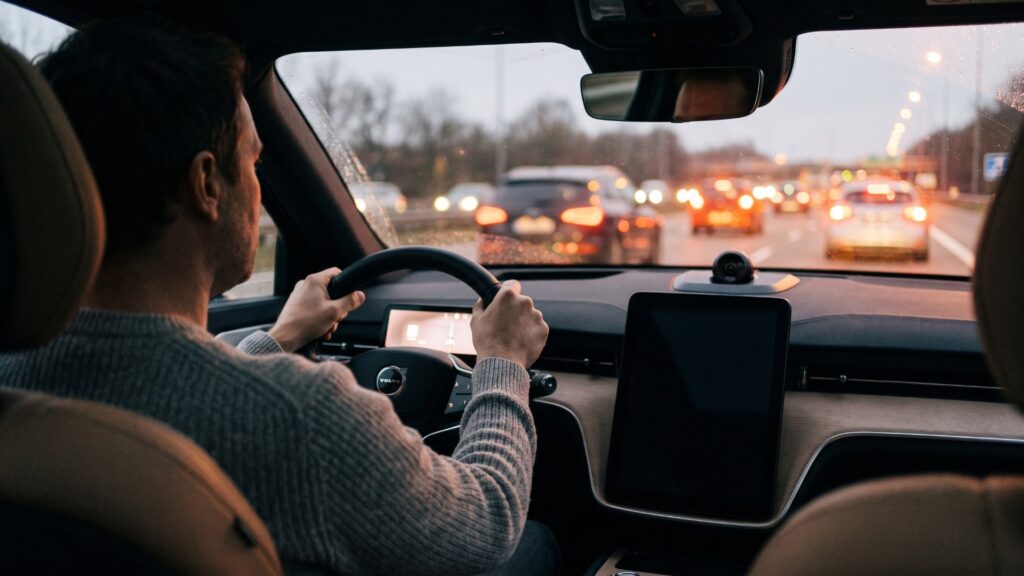
The idea is spreading beyond luxury brands. Toyota has added an Emergency Driving Stop System to the Toyota Safety Sense 3.0 suite on models such as the 2026 Grand Highlander. It monitors whether the driver is inattentive and can stop the vehicle if prompts to retake control go unanswered, with one important limitation: it works only while Lane Tracing Assist is active.
A car that can recognize a medical emergency, a driver who has fallen asleep or someone who has simply stopped responding addresses a type of crash that no amount of structural engineering can prevent.
A check of the back seat before you walk away
Safety no longer ends when the car is switched off. The EX90 uses radar sensors throughout the cabin that are sensitive enough to detect sub-millimeter movement, such as a sleeping child’s breathing. If the system detects a person or animal inside when the driver tries to lock the car, the EX90 can stay unlocked, prompt the driver to check the interior and keep the climate system running to reduce the risk of heatstroke or hypothermia.
It is a reminder that the definition of automotive safety now covers emergencies that have nothing to do with a collision.
Lidar, hands-free driving and the fine print
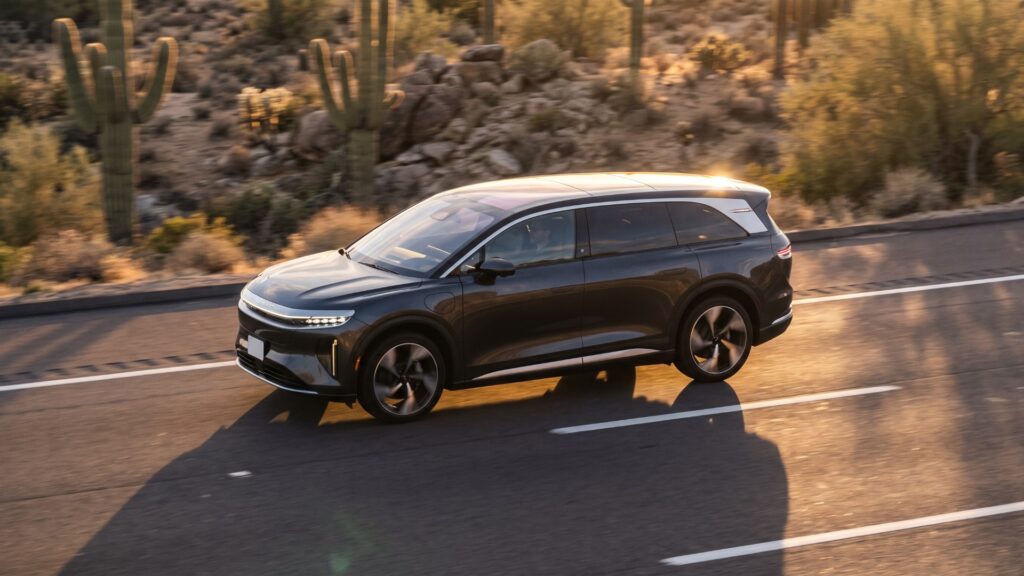
Lidar, long associated with robotaxis, is now on the options list of privately owned luxury SUVs. In June, Lucid began rolling out an over-the-air update that brings Hands-Free Drive Assist to Gravity SUVs equipped with DreamDrive 2 Pro, a $6,750 package that includes lidar alongside radar, cameras and ultrasonic sensors. The feature handles steering, acceleration and braking on compatible highways, which Lucid has put at roughly 125,000 miles of roadway in the U.S. and Canada, and it can change lanes to pass slower traffic. Lucid is explicit that drivers must stay focused on the road.
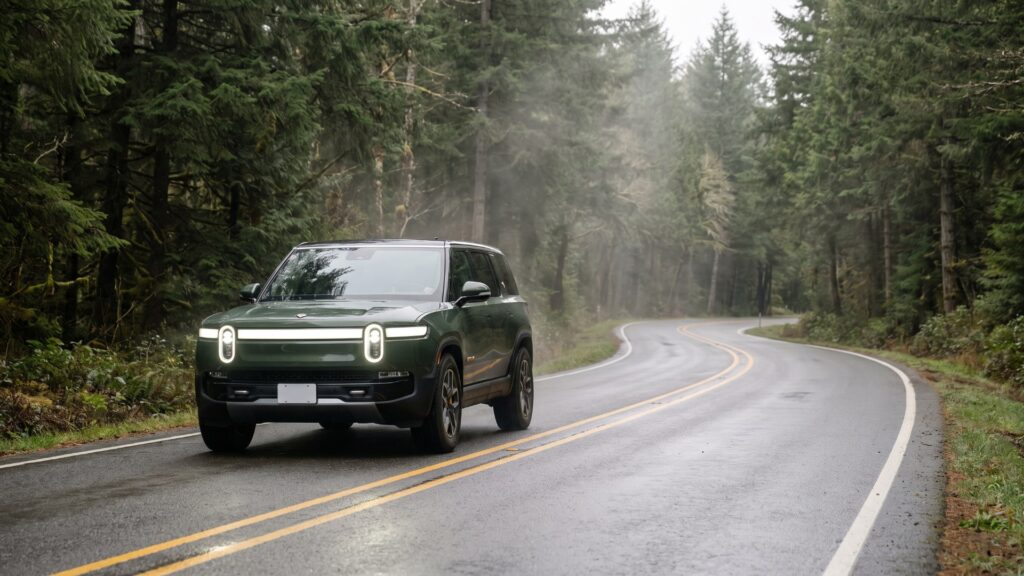
Rivian has taken a different route. Its Universal Hands-Free system, which launched on second-generation R1S and R1T models at the end of 2025, works on about 3.5 million miles of U.S. and Canadian roads with clearly painted lane lines, using cameras and radar rather than lidar. Rivian plans to add lidar with its next hardware generation, starting with the R2. Universal Hands-Free became part of the paid Autonomy+ package this spring, at $2,500 up front or $49.99 a month. Rivian describes it as hands-free, eyes-on driving and has warned owners that it will not stop or slow down for traffic lights or stop signs.
That caveat captures the larger point. Both systems are impressive engineering, and both rely on driver-monitoring cameras to keep the person behind the wheel engaged. But hands-free does not mean self-driving, and hands-free capability on its own is not evidence that a car is safer. IIHS rates partial-automation systems on their safeguards for exactly that reason: the value lies in keeping drivers attentive, escalating warnings when they are not, and bringing the car to a safe stop when the driver does not respond.
At a glance: 2026’s most significant safety systems
| System | Where you will find it | What it does | Status (September 2026) |
|---|---|---|---|
| Multi-adaptive safety belt | Volvo EX60 | Chooses from 11 load-limiting profiles based on the occupant and the crash | Debuts with the EX60; U.S. orders open for the 2027 model |
| Exit warning with door-opening delay | BMW iX3 (Neue Klasse) | Side radars can delay a door opening when a cyclist or vehicle approaches | Standard on iX3; 3 Series, 7 Series and X5 to follow |
| Emergency steering intervention | BMW iX3 (Neue Klasse) | Steers around an obstacle while staying in its own lane | Standard on iX3 |
| Driver understanding and emergency stop | Volvo EX90 | Cameras track eyes, attention and drowsiness; car can stop itself | Available now |
| Emergency Driving Stop System | Toyota Safety Sense 3.0 | Stops the vehicle if an unresponsive driver ignores prompts | 2026 Grand Highlander; works while Lane Tracing Assist is on |
| Interior occupant sensing | Volvo EX90 | Cabin radar detects sub-millimeter movement and can prevent locking | Available now |
| MB.DRIVE ASSIST PRO | Mercedes-Benz CLA | Point-to-point Level 2 assistance on city streets with cooperative steering | U.S. launch slated for later in 2026 |
| Hands-Free Drive Assist | Lucid Gravity | Hands-free driving on compatible highways; lidar-equipped package | Rolled out June 2026; $6,750 DreamDrive 2 Pro |
| Universal Hands-Free | Rivian R1S and R1T (second generation) | Hands-free on about 3.5 million miles of marked roads; eyes on the road | Paid Autonomy+ feature since spring 2026 |
What new car safety technology to look for in 2026
When comparing new cars, the feature with the most futuristic name is rarely the one most likely to prevent an injury. A strong safety package should include:
- Automatic emergency braking that detects vehicles, pedestrians and cyclists, with proven performance at night.
- Lane-departure prevention that actively steers, rather than a warning alone.
- Blind-spot intervention and rear cross-traffic braking.
- A driver-monitoring camera that can recognize distraction, drowsiness or a lack of response.
- An emergency-stop function in case the driver becomes incapacitated.
- Occupant-focused features such as adaptive restraints, exit warnings and rear-seat occupant detection.
The evidence behind the basics is solid. A February 2022 IIHS study of 2017 to 2020 model-year vehicles found that pedestrian-detecting automatic emergency braking cut pedestrian crash rates by 27 percent and pedestrian injury crash rates by 30 percent. The same research exposed the gaps: it found no benefit on unlit roads at night, on roads with speed limits of 50 mph or more, or while the vehicle was turning. IIHS has since added a nighttime pedestrian evaluation to its ratings.
That is why a checkbox on a window sticker is not enough. How well a system sees, where it works and what happens when the driver fails to react matter more than whether it is on the equipment list.
Why it matters
The defining safety story of 2026 is not a car that drives itself. It is a car that understands context: a camera that knows where the driver is looking, radar that sees a cyclist closing on a parked door, interior sensors that know who is sitting where, and software that decides in milliseconds whether to warn, brake, steer, adjust a restraint or stop.
For buyers at the premium end of the market, where these systems tend to arrive first, that changes the questions worth asking in the showroom. Which systems are standard and which are optional? Do they improve through over-the-air updates? And what do the cabin cameras record? Cars are collecting more data about the people inside them just as roadside systems collect more about the cars themselves, a trend we examined in our look at license plate reader cameras and what they mean for exotic car owners.
The Volvo EX60’s belt and BMW’s door delay stand out precisely because neither tries to replace the driver. Each targets a specific moment when a person can make a mistake and a fraction of a second changes the outcome. That is where the next generation of real-world safety gains is most likely to come from.
Frequently asked questions
What is the most important new car safety technology in 2026?
The systems with the strongest real-world evidence remain automatic emergency braking, lane-departure prevention, and blind-spot and rear crash prevention. Among genuinely new features, Volvo’s multi-adaptive seat belt, BMW’s exit warning with door-opening delay, and driver-monitoring systems that can stop the car when the driver becomes unresponsive stand out.
What is Volvo’s multi-adaptive seat belt?
It is a seat belt debuting in the Volvo EX60 that uses interior and exterior sensor data to choose from 11 load-limiting profiles, up from three, based on the occupant’s size and seating position and the direction and severity of the crash. Volvo says it can be improved through over-the-air software updates.
How does BMW’s door-opening delay work?
On Neue Klasse models such as the BMW iX3, side radars watch for approaching road users while the car is parked. If opening a door would risk a collision, for example with a cyclist, the electronic door lock delays the opening until the hazard has passed.
Is hands-free driving safer than regular driving?
There is no evidence yet that it is. IIHS research published in 2024 found that partial automation did not add safety benefits beyond crash-avoidance features such as automatic emergency braking. Hands-free systems from Lucid, Rivian and others still require the driver to keep watching the road.
Does automatic emergency braking work at night?
Performance varies by system. A 2022 IIHS study found that pedestrian-detecting automatic emergency braking reduced pedestrian crashes by 27 percent overall but showed no benefit on dark roads without streetlights. IIHS now evaluates nighttime pedestrian performance, so check a model’s current rating.
Can a car stop itself if the driver has a medical emergency?
Some can. The Volvo EX90 can bring itself to a stop and turn on its hazard lights if the driver fails to respond to escalating alerts, and Toyota’s Emergency Driving Stop System can stop models such as the 2026 Grand Highlander while Lane Tracing Assist is active.
Which car scored best in Euro NCAP testing in 2025?
The electric Mercedes-Benz CLA. Euro NCAP named it Best Performer of 2025 in January 2026, with scores of 94 percent for adult occupant protection and 93 percent for vulnerable road user protection.