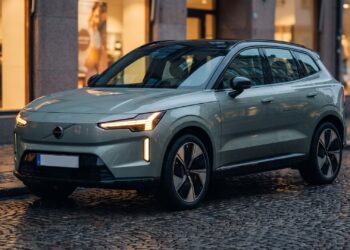

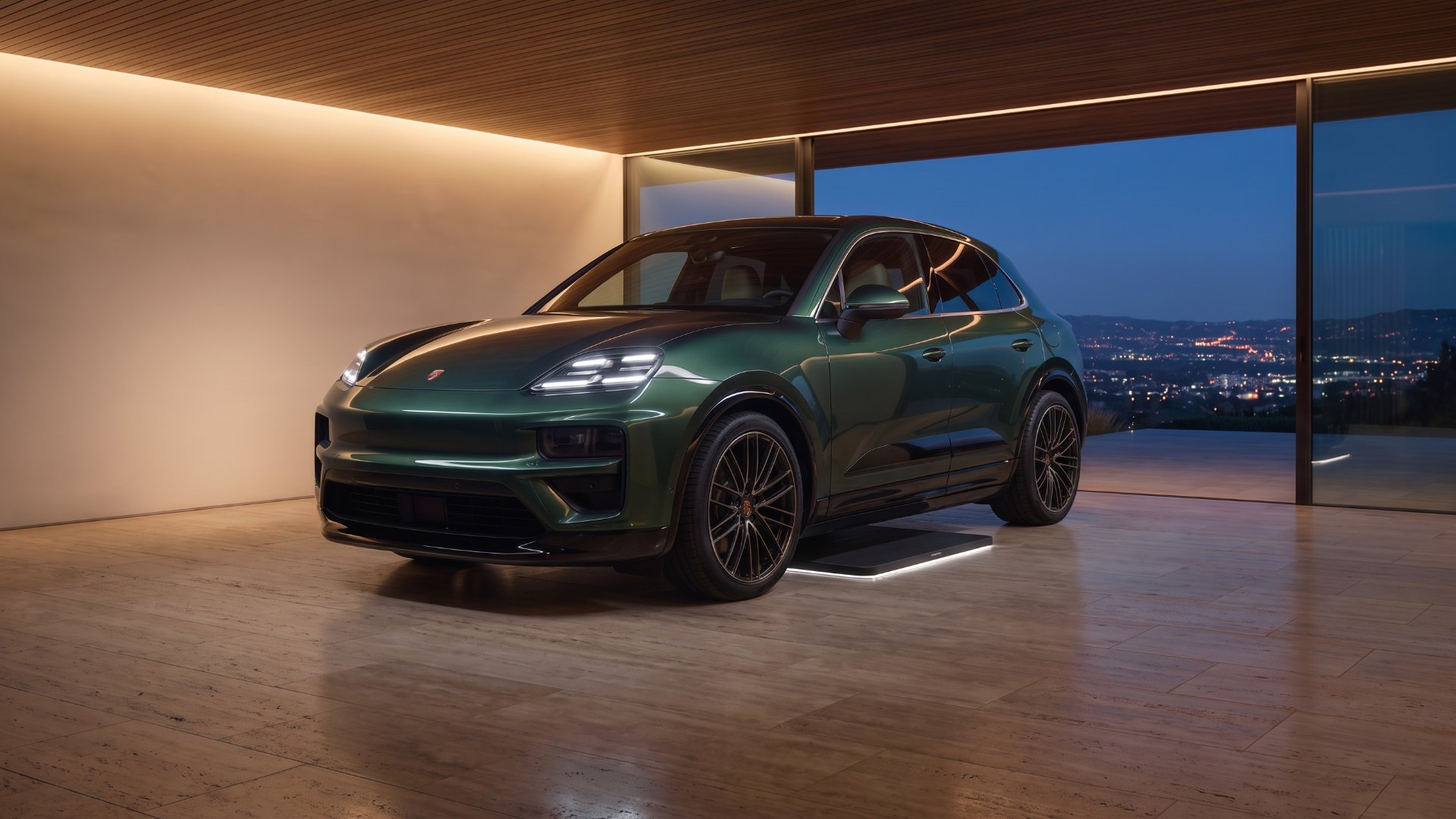
Porsche is now taking European orders for an 11 kW floor plate that charges the Cayenne Electric without a cable. Robotaxis, port trucks and electrified highways are next in line, and they may matter more.
What you need to know
- Porsche opened orders on September 16, 2026 in Germany and other European markets for Porsche Wireless Charging on the Cayenne Electric. It delivers up to 11 kW at around 90 percent efficiency, and the vehicle hardware plus floor plate costs about $7,990 in Germany at current exchange rates.
- Almost every car-scale wireless charger uses resonant inductive coupling at 85 kHz. “Magnetic resonance” is the same physics tuned for looser coupling; capacitive and radiative methods are still largely lab work.
- The volume will come from vehicles with nobody to plug them in. Tesla says its Cybercab robotaxi will charge inductively, and road trials have pushed 190 kW into a Class 8 truck at 65 mph in Indiana and more than 300 kW at peak on France’s A10 motorway.
Wireless EV charging has been a few years away for about fifteen years. As of this week, you can at least order it. On September 16, Porsche began taking orders in Germany and other European markets for Porsche Wireless Charging, an option for the Cayenne Electric that replaces the charging cable with a 50-kilogram floor plate and a receiver coil under the car. Park over the plate, set the parking brake, and the SUV begins charging at up to 11 kW. Porsche says the option will roll out gradually to every Porsche Connect market except China. It has not announced a U.S. order date.
This is not the first factory wireless charger. BMW leased a 3.2 kW system on the 530e plug-in hybrid in Germany in 2018, and Genesis offered an 11 kW option on the GV60 in South Korea in 2021. What separates Porsche’s launch is its timing. It lands two years after SAE International finished the standard that governs how cars and ground pads find and talk to each other, in the same year Tesla started building a robotaxi designed to charge itself, and while highway engineers on two continents are feeding hundreds of kilowatts into moving trucks. For the first time, wireless charging has a real product, a finished standard and a business case all at once.
How Porsche’s floor plate works
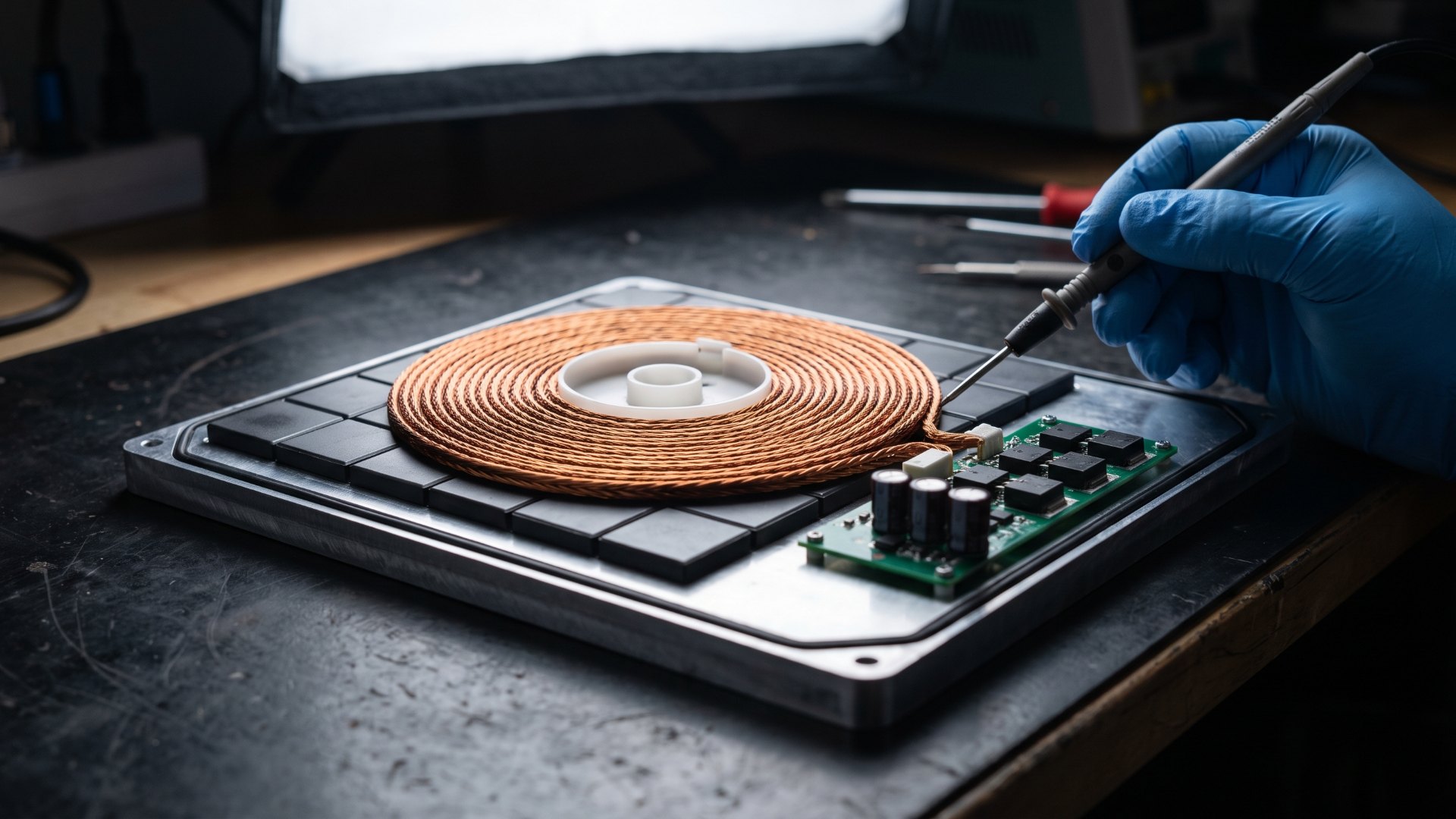
Porsche calls it a “one-box” system. Everything except the supply cable lives inside the floor plate, which measures 117 by 78 centimeters and stands 6 centimeters tall, so there is no separate wallbox to mount. Copper coils and ferrite in the plate generate an alternating magnetic field at 85 kHz. A receiver coil mounted behind the Cayenne’s front axle picks up that energy across a gap of 12 to 18 centimeters, and the car drops on its air suspension to close the distance. According to Porsche’s engineers, the resonant circuit runs at around 2,000 volts AC, and the system still transfers enough power with the two coils up to 10 centimeters out of line.
Getting onto the plate is handled by ultra-wideband radio and the Surround View cameras, which show the driver where to stop. The plate carries a motion detector and foreign-object detection, and it cuts power if an animal crawls underneath or a stray piece of metal on the plate starts to heat up. Porsche says it can be installed in a garage, carport or open parking space, that live components are sealed against rain and snow, and that driving over it does no harm.
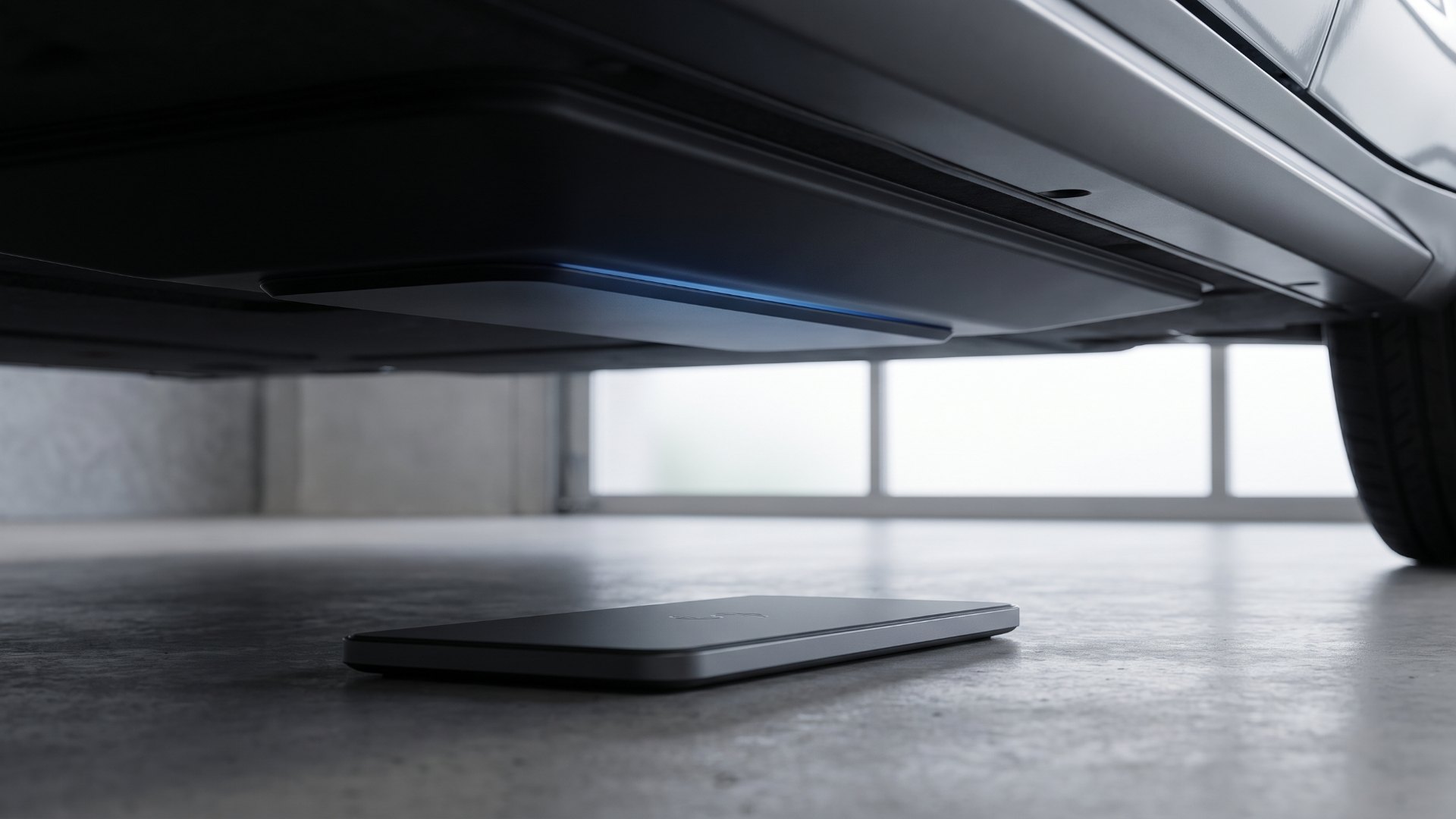
The numbers need context. Eleven kilowatts is Level 2 power, not fast charging. The Cayenne Electric carries a 113 kWh battery and accepts up to 400 kW on a DC fast charger, where Porsche quotes 10 to 80 percent in under 16 minutes. Refilling a deeply discharged pack from the floor plate is an overnight job. Nobody orders this option to charge faster; they order it so the car is simply full every morning without anyone touching a cable.
There is a small cost to that convenience. Porsche puts efficiency at around 90 percent, and a good wired charger loses less. Carscoops, which reported in April that the U.S. ground pad is expected to cost about $6,500 and the onboard hardware $1,650, estimated the extra electricity at roughly $1,000 over 200,000 miles compared with a Level 2 cable. The same report noted that Porsche’s U.S. mobile connector tops out at 9.6 kW, which would make the wireless plate the quicker home option. Porsche has not confirmed U.S. pricing or timing.
Inductive, magnetic resonance and capacitive: what is actually different
Every wireless car charger on sale today works like a transformer with its core pulled apart. Alternating current in a coil on the ground creates a magnetic field, and a second coil in the car, sitting inside that field, has a current induced in it. The principle is Michael Faraday’s, from 1831. The engineering problem is distance. Separate the two coils by a few inches and most of the field never reaches the receiver.
Magnetic resonance is the fix. Both coils are paired with capacitors and tuned to ring at the same frequency, so energy moves efficiently even when only a small fraction of the field links them. MIT physicist Marin Soljačić’s group demonstrated the idea in 2007 by lighting a 60-watt bulb about two meters from its power source, and the company spun out to commercialize it, WiTricity, has spent the years since licensing it to automakers and suppliers.
Here is the part the marketing tends to blur. Porsche’s system, the SAE J2954 standard, WiTricity’s reference designs and Electreon’s in-road coils all use resonant inductive coupling. When a company says “magnetic resonance,” it is describing a design emphasis, looser coupling and more tolerance for gaps and misalignment, rather than a different species of charger.
Capacitive wireless power transfer is a different animal. It replaces coils with metal plates and moves energy across an electric field, typically at frequencies from hundreds of kilohertz into the megahertz range. Plates are lighter and cheaper than copper and ferrite, handle misalignment well and don’t heat nearby metal the way a magnetic pad can. The catch is that the coupling capacitance is tiny, so the plates swing to kilovolt-level voltages, which creates safety and emissions headaches. University teams in the United States have demonstrated kilowatt-class systems, but nothing is close to a showroom.
Radiative methods (microwaves and lasers) can send power across meters, but they remain suited to sensors and small devices rather than the tens of kilowatts a car needs.
Then there is the cable-free option that is not wireless at all. Austria’s Easelink uses a connector under the car that lowers onto a floor plate and makes direct metal contact. Its Matrix Charging system avoids inductive losses entirely. Audi, Nissan and Voyah are founding members of the Matrix Charging Interest Group formed in November 2025 to standardize it, and German supplier SEG Automotive joined in July 2026 to help industrialize it. If inductive charging is the elegant solution, conductive underbody charging is the efficient one, and the two will compete for the same parking spaces.
We have been promised this before
The history of wireless car charging is a long list of convincing demonstrations that never quite became normal.
Formula E’s first safety car, a BMW i8, charged over Qualcomm Halo pads in 2014. In 2018, BMW built a GroundPad option for the 530e iPerformance that delivered 3.2 kW across an 8-centimeter gap and refilled the hybrid’s small battery in about three and a half hours, launched first on leases in Germany.
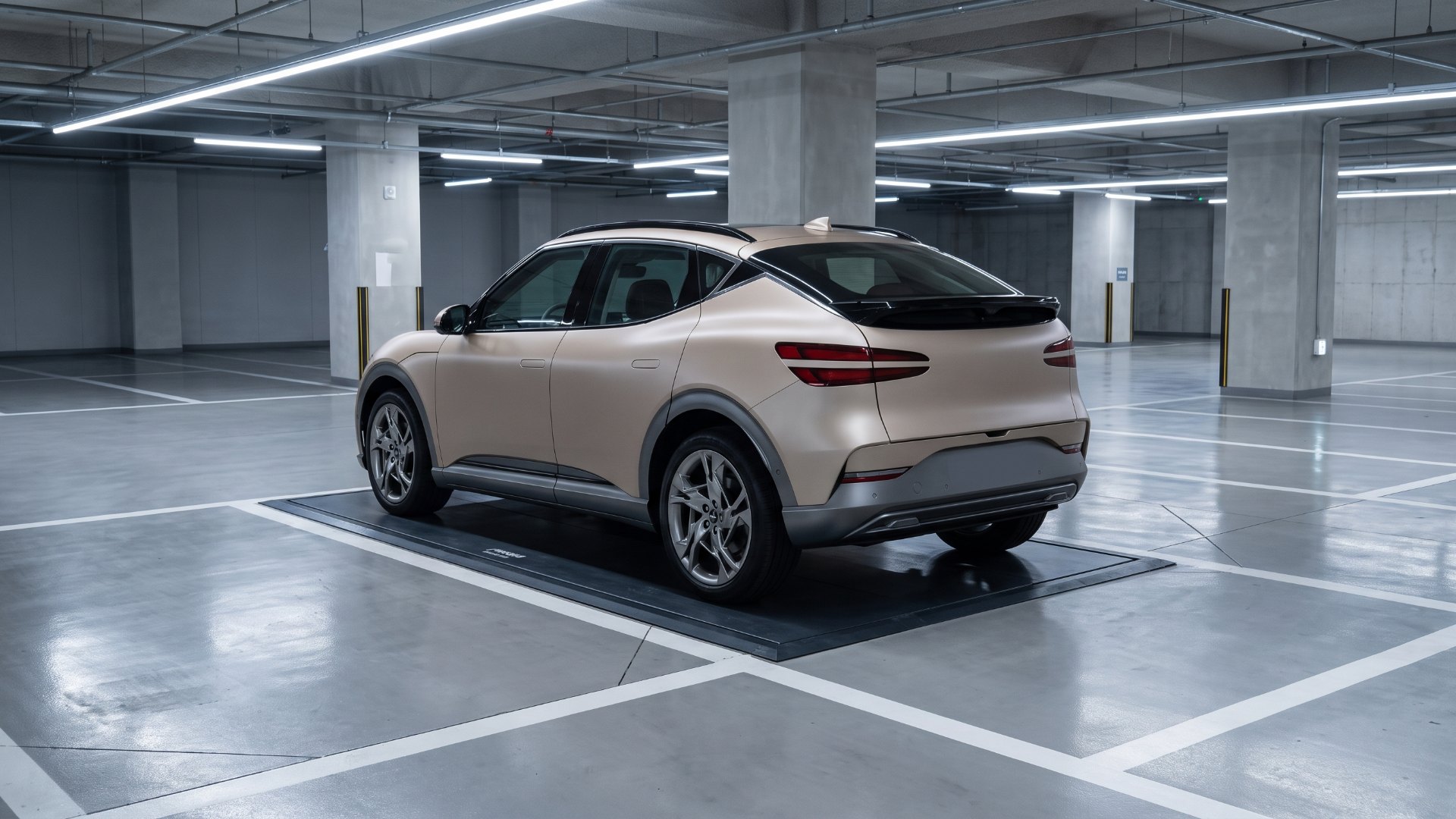
In February 2019, WiTricity bought Qualcomm’s Halo technology, unifying two of the field’s leading technology platforms. In 2020, Oslo put 25 Jaguar I-Pace taxis on Momentum Dynamics charging plates buried at taxi ranks, where cars took on 50 to 75 kW in short bursts while they queued for fares. In 2021, the Genesis GV60 became the first fully electric car with a factory-installed wireless option, an 11 kW system built on WiTricity technology and offered in South Korea.
Tesla’s detour is the most revealing. It bought German wireless charging company Wiferion in mid-2023, then sold the business to power electronics maker PULS a few months later while keeping the engineers. That is what a company does when it wants the know-how for its own product rather than someone else’s.
None of those efforts scaled, for reasons that were easy to list: pads cost thousands, only a handful of cars could use them, and each system found its pad in its own way. Porsche’s newsroom now describes Porsche as the only carmaker in the world set to offer contactless charging, which says as much about how far the earlier programs got as it does about Porsche.
The standard that changed the math
The piece that was missing arrived in August 2024, when SAE International completed J2954 for light-duty vehicles. The standard defines power classes of 3.7, 7.7 and 11 kW, fixes operation around 85 kHz, supports efficiency of up to 93 percent and, crucially, settles on a single alignment method. Its Differential Inductive Positioning System has the ground pad emit a low-intensity magnetic field from several coils, which a car can use to locate the pad precisely in any weather. It works whether a driver or a self-parking computer is at the wheel.
SAE is also developing J2954/2 for heavy-duty vehicles at up to 500 kW and a separate document for dynamic charging on the move. China published its own wireless charging standard, GB/T 38775, in 2020, and WiTricity says its technology is built into it.
One detail is worth watching. Porsche’s published technical material describes ultra-wideband positioning and a Porsche-specific pairing process, and it does not mention J2954 conformance or cross-brand compatibility. Whether a Porsche floor plate will ever charge a different make, or a future J2954 car, is an open question the company has not answered. For a single-car garage that hardly matters. For a hotel, office or condo garage, interoperability is the whole game.
Robotaxis are the real customer
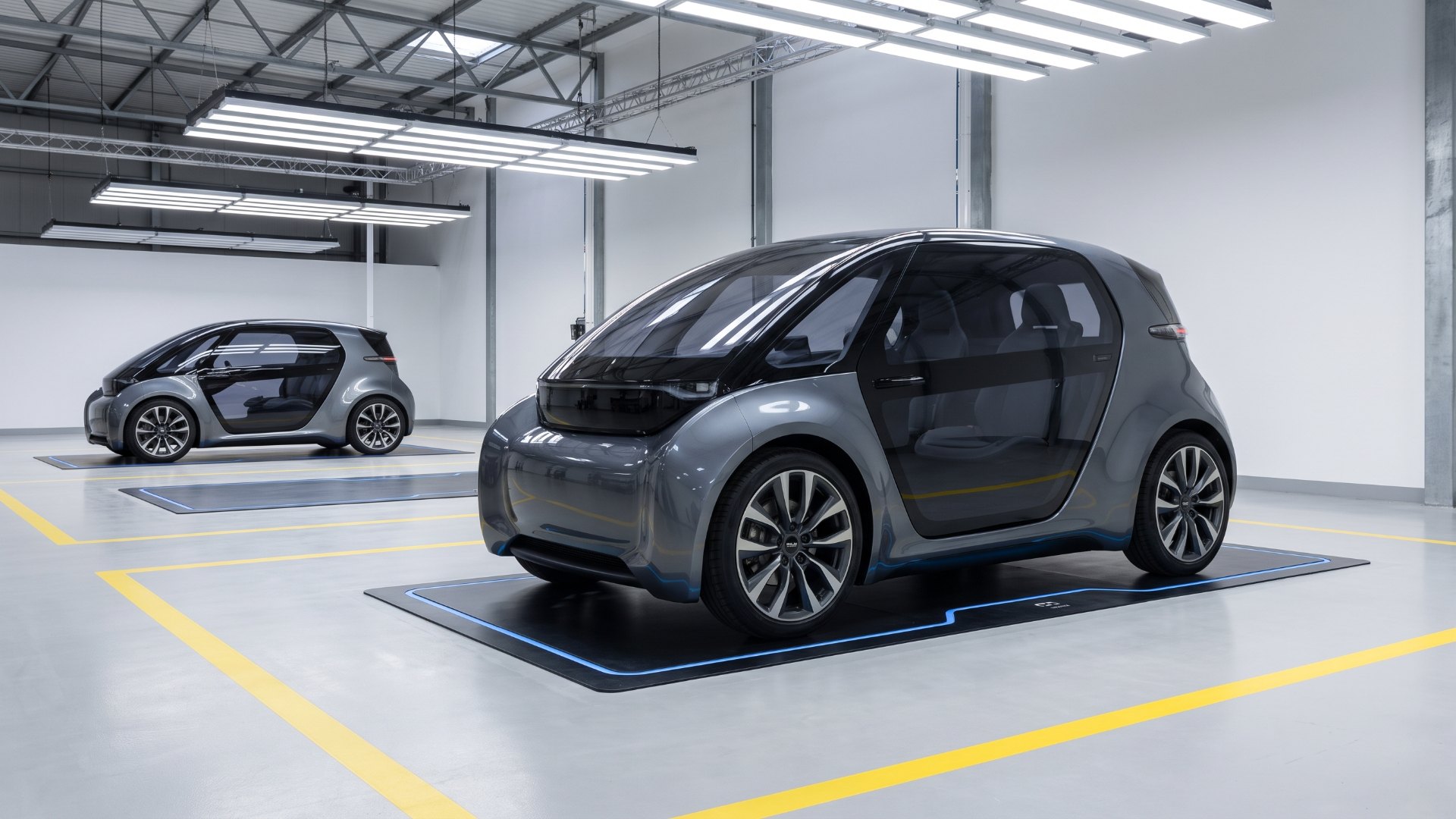
A human driver can plug in. A car with no driver can’t, unless someone installs a robot arm at every stall. That is why the most important wireless charging customer may turn out to be a two-seat Tesla with no steering wheel.
Tesla unveiled the Cybercab on October 10, 2024, started production at Gigafactory Texas in February 2026 and opened paid public rides in Austin on September 4, 2026. The company has said Cybercab will charge inductively, and in February, electrive reported that the Federal Communications Commission had granted Tesla a waiver to use an ultra-wideband radio system that aligns the car with a ground charging station. Prototypes have also been seen plugged into Superchargers, and Tesla has not published a wireless charging power figure.
Speed is no longer the objection it once was. In June 2024, Oak Ridge National Laboratory and Volkswagen Group of America pushed 270 kW into a Porsche Taycan across a 4.75-inch gap at more than 95 percent efficiency, adding 50 percent state of charge in about 10 minutes, using a compact polyphase coil design. That was a research rig, not a product, but it shows wireless charging does not have to mean slow charging.
For a fleet operator, the attraction is operational rather than technical. There are no connectors to wear out, no cables to be run over or vandalized, and no staff needed to shuffle cars between plugs. A depot of floor pads lets a robotaxi top up for a few minutes between trips on its own schedule, which is what Oslo’s taxi ranks showed with human drivers six years ago.
Charging while you drive
If a pad can charge a parked car, a string of pads buried under a lane can charge a moving one. Three projects show where dynamic wireless EV charging stands.
Detroit. On November 29, 2023, Michigan and Electreon opened a quarter-mile of in-road coils on 14th Street next to Michigan Central, billed as the first public wireless charging road in the United States. Ford E-Transit vans spent two years testing it through Michigan winters, and in November 2024 the state added a project with Electreon, electric truck maker Xos and UPS to test both in-road charging and overnight pad charging for delivery step vans in Detroit.
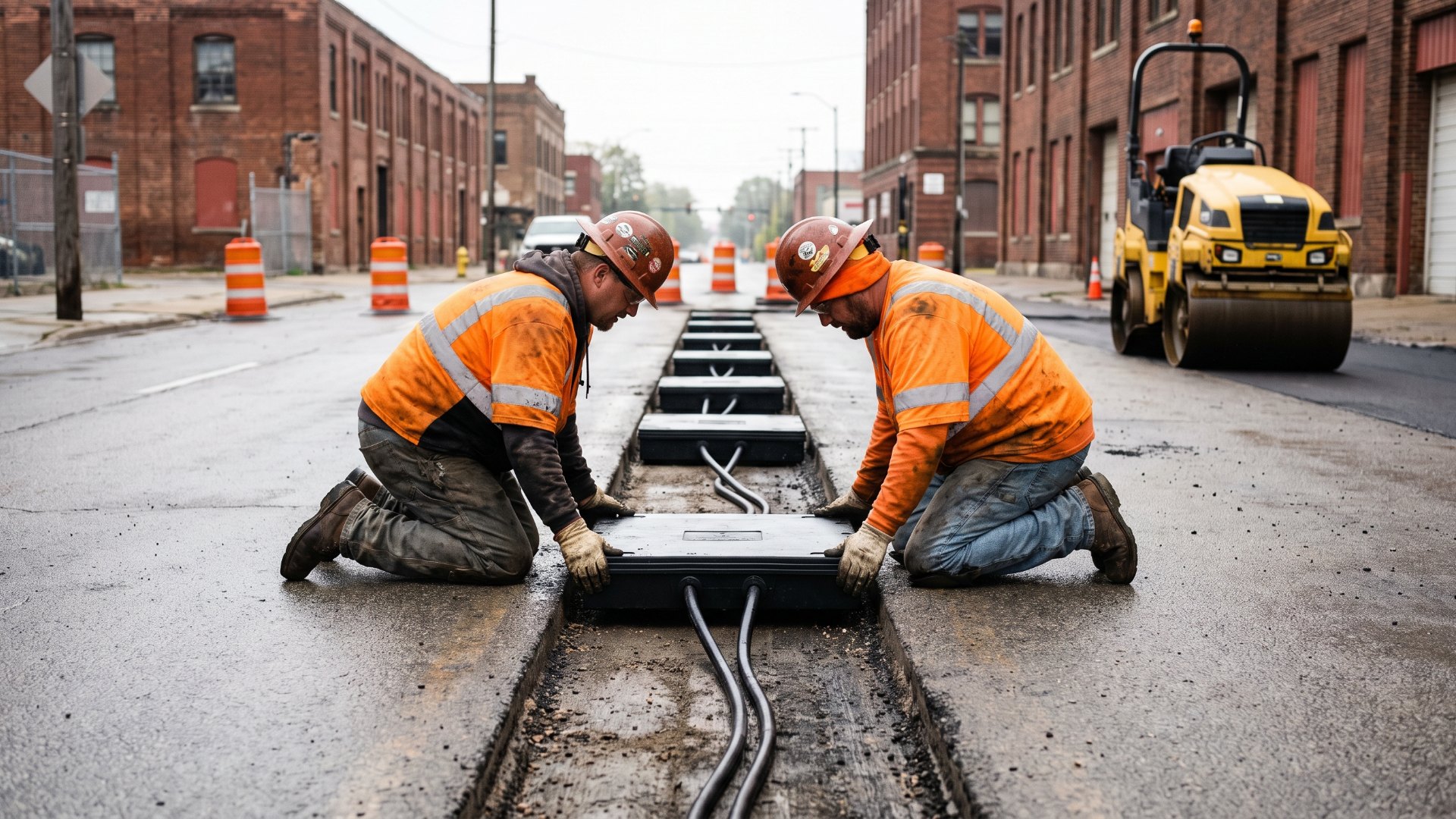
Indiana. Purdue University, the Indiana Department of Transportation and the ASPIRE engineering research center built a quarter-mile test section on U.S. 52/U.S. 231 in West Lafayette. In a test announced in March 2026, it delivered 190 kW to a Cummins Class 8 electric semi traveling at 65 mph. ASPIRE’s stated goal is 1,000 miles of electrified roadway by 2040.
France. On a 1.5-kilometer stretch of the A10 motorway near Paris, VINCI Autoroutes, Electreon, Gustave Eiffel University and Hutchinson ran a truck, a van, a car and a bus over buried coils in live traffic. In October 2025, the partners reported more than 300 kW of instantaneous power and more than 200 kW on average under steady conditions.

The strongest argument for electrified roads is battery weight. VINCI says that at scale, dynamic charging could cut several tonnes of battery from heavy vehicles. The strongest argument against is cost: someone has to dig up the lane, install and maintain the coils, and bill for the energy. Electreon is betting on both sides of the problem. In March 2026 it completed its acquisition of InductEV, the Pennsylvania company known for high-power stationary charging for buses, ports and freight.
Where the money is
The wireless EV charging market is small today and growing fast. BCC Research put global wireless EV charger revenue at $100.2 million in 2024 and forecasts $738.3 million by 2030, a compound annual growth rate of 40.5 percent, with Asia-Pacific holding 48.3 percent of the market. That is a rounding error next to wired charging, but the growth rate explains why suppliers are placing bets now. BCC also flags the main drag: wireless systems run around 85 to 93 percent efficient, against 94 to 98 percent for wired.
The opportunities break down into six groups.
- Automakers. At roughly $8,000 in Germany, Porsche’s option is priced like a performance upgrade, not an accessory. Expect other premium brands to follow with similar pricing, and expect the pad to become a connected-services touchpoint.
- Installers, builders and luxury property. Every floor plate is hardwired into the building’s supply, which means electrical work and, in shared garages, a load plan. Custom home builders, hotels with valet parking, and developers of garage condominiums and private car clubs, the kind of properties listed on our sister marketplace Motor Stables, can pre-wire bays and sell cable-free parking as an amenity.
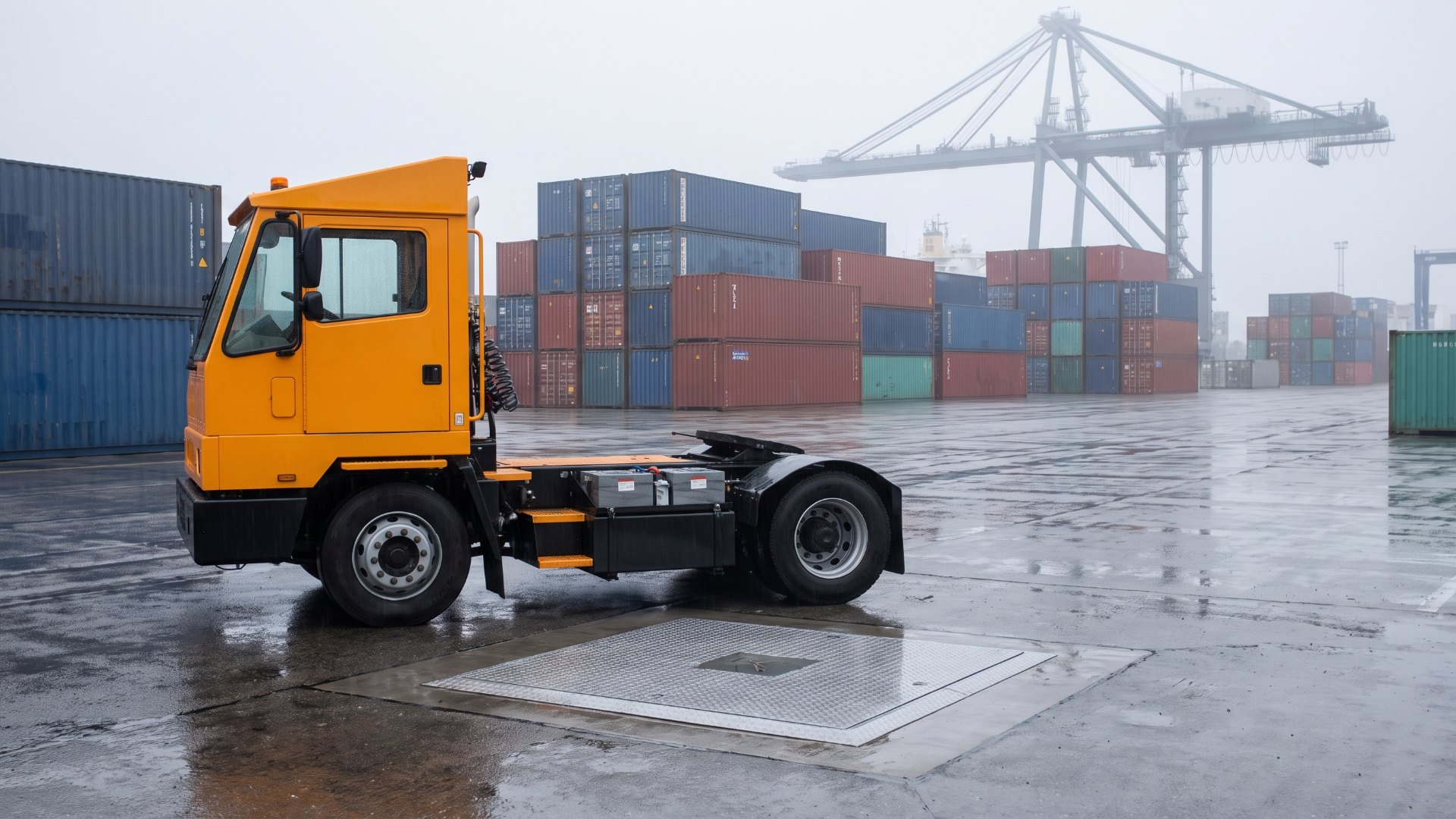
- Fleet depots. Robotaxi and delivery operators are the obvious buyers, but industrial users are already spending. At the Port of Long Beach, a $3.3 million California Energy Commission grant announced in 2025 is funding InductEV chargers, a product range spanning 75 to 450 kW, for terminal operator ITS’s electric cargo-handling equipment, and WiTricity launched wireless charging for airport ground support equipment in January 2026.
- Road operators and transportation departments. Electrified lanes turn a road into an energy product, with metering and billing, and give toll operators like VINCI a new revenue line.
- The supply chain. Litz wire, ferrite, silicon carbide and gallium nitride power electronics, ultra-wideband positioning chips and foreign-object sensors all scale with every pad sold.
- Standards, testing and software. Interoperability certification, payments, and eventually bidirectional charging, which lets a parked car on a pad send power back to a home or the grid, are all still being built.
How wireless EV charging will reach the market: ECN’s read
What follows is our analysis, based on the programs and timelines above.
2026 to 2027: the luxury option phase. Porsche’s European launch is the test of demand. U.S. and other markets should follow, and at least one rival premium brand is likely to answer within a model cycle. Hardware has to be designed into the platform. Porsche has not offered the system on the Taycan or Macan, whose platforms, evo reported, were not designed to take it, so adoption will track new vehicle launches rather than retrofits. Porsche’s electric 718 is due next year; the company has not said whether it will offer wireless charging.
2027 to 2030: fleets set the volume. Robotaxis, delivery vans, airport and port equipment, and taxi ranks will install more pads than private garages, because those operators can put a price on the labor and downtime a cable costs them. Interoperability under J2954 will decide whether public and shared parking follows.
2030s: roads, selectively. Expect electrified lanes on freight corridors, bus routes and industrial sites where the same vehicles pass the same point every day. Blanket electrification of highways for private cars is a much harder sell, and nothing in the current trials makes it inevitable.
The risks are clear enough. Pads are expensive, efficiency trails a cable, the cross-brand question is unresolved, and dynamic roads need public money and patience.
Why it matters
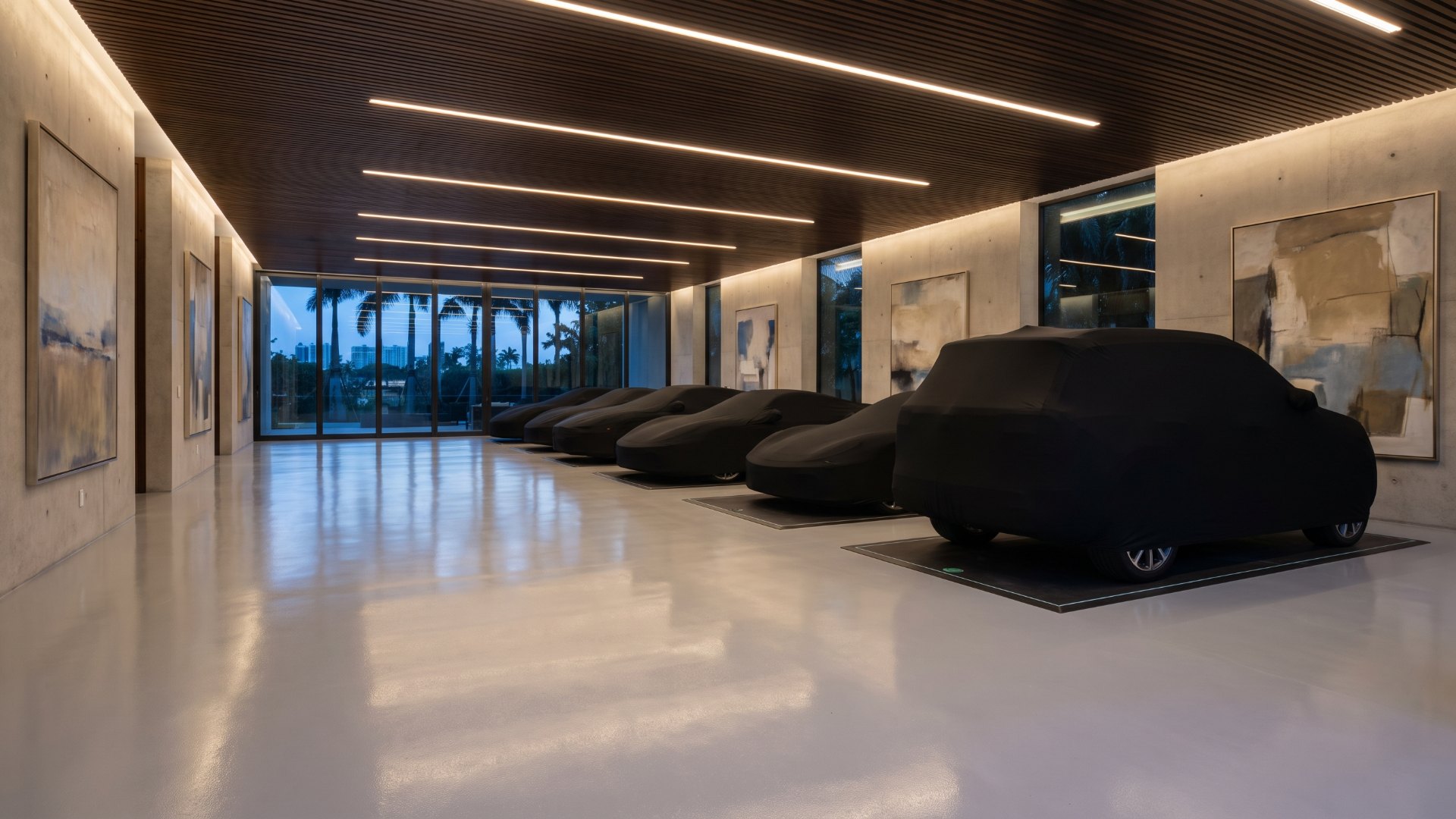
For owners, wireless EV charging changes the relationship with an electric car more than any range figure. The car is simply ready, the way a phone on a nightstand pad is ready, and in a multi-car collector garage the tangle of cables across an epoxy floor disappears.
For the industry, the bigger story is autonomy. A driverless fleet that still needs people to plug it in has not fully removed the cost of the driver, and wireless charging is one of the cleanest answers anyone has built. That is why Tesla, a U.S. Department of Energy national laboratory and an Israeli road-charging company that now owns a Pennsylvania charging firm are all working on the same physics.
For enthusiasts, there is a packaging problem worth watching. Porsche sized its system for an SUV: a 6-centimeter plate and a 12- to 18-centimeter gap. A low-slung sports car with a front splitter inches off the ground needs a flush-mounted pad or different hardware entirely. The first automaker to make wireless charging work cleanly on a genuine sports car will have solved something harder than the Cayenne did.
Frequently asked questions
What is wireless EV charging?
Wireless EV charging transfers energy from a pad on or in the ground to a receiver under the car through an alternating magnetic field, with no cable. Current systems for passenger cars, such as Porsche Wireless Charging for the Cayenne Electric, deliver up to 11 kW.
Is magnetic resonance charging different from inductive charging?
Not fundamentally. Magnetic resonance charging is inductive charging in which both coils are tuned to the same frequency so energy transfers efficiently across larger gaps and with more misalignment. Modern car systems, including SAE J2954 designs and Porsche’s 85 kHz plate, use resonant inductive coupling.
How efficient is wireless EV charging compared with plugging in?
Porsche puts its system at around 90 percent efficiency, and systems built to SAE J2954 can reach up to 93 percent. BCC Research puts wired charging at 94 to 98 percent, so wireless typically wastes a few percent more electricity.
Which cars can charge wirelessly?
The Porsche Cayenne Electric offers an 11 kW factory option, with orders open in Europe from September 16, 2026. The Genesis GV60 offered an 11 kW option in South Korea from 2021, and Tesla says its Cybercab robotaxi will charge inductively.
Can a road charge an electric car while it is moving?
Yes, in trials. A quarter-mile Indiana highway test delivered 190 kW to a Class 8 electric truck at 65 mph, and a 1.5-kilometer section of France’s A10 motorway recorded more than 300 kW of peak power in October 2025. Detroit has operated a quarter-mile public test road since 2023.
Is wireless EV charging safe?
Systems are designed to stay within electromagnetic exposure limits and use detection to stop charging when something is in the way. Porsche’s floor plate includes motion detection for people and animals and foreign-object detection that stops charging if metal on the plate begins to heat up.
Related coverage on Exotic Car News: Inside America’s Garage Condo Boom — And the Different Ways to Own · The Best Daily Drivable Supercars in 2026
Michael Perrone is an editor at Exotic Car News covering exotic, luxury, performance and collector automobiles, with a focus on new models, automotive technology and the business of the high-end car market.