
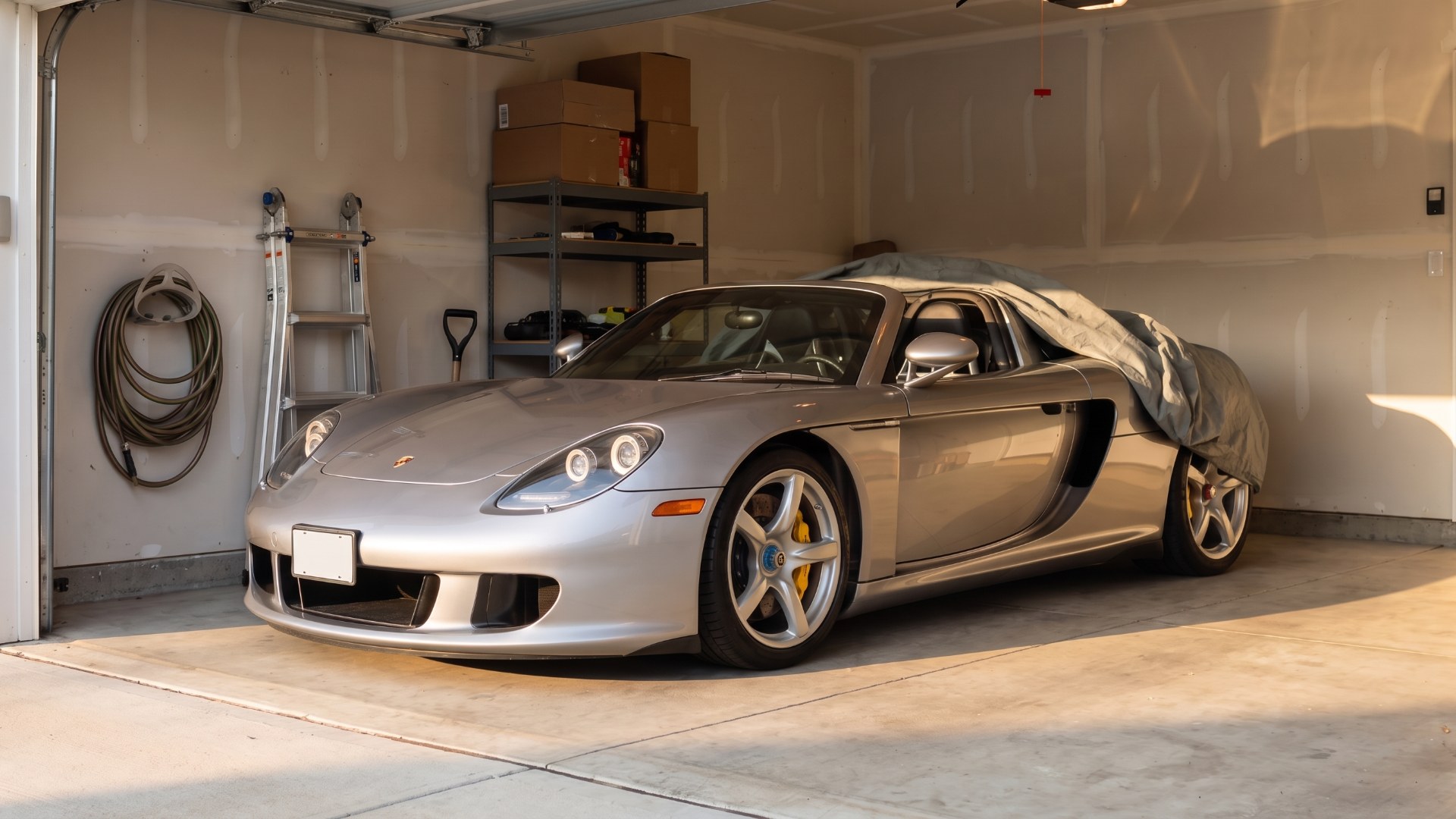
In March 2013, Gooding & Company sold a 2005 Porsche Carrera GT at Amelia Island for $341,000. Two months earlier, the same auction house had sold another, showing 1,242 miles, for $363,000 in Scottsdale. The car had cost roughly $440,000 new. A carbon-fiber Porsche with a 605-hp V10 and a six-speed manual was, as far as the market was concerned, an eight-year-old used supercar selling at a discount.
In March 2026, during the same Florida auction week, Broad Arrow sold a Carrera GT for $6,715,000. That one was a special case, the only U.S.-delivered car in paint-to-sample Gulf Blue. The ordinary ones have moved almost as far: RM Sotheby’s sold a 2,147-mile example in Seal Grey for $3,085,000 in Arizona in January, breaking a record that had stood at $2.2 million.
Nothing about the car changed in those 13 years. The people bidding did. That is the idea behind this story, and the reason talk of a collector-car boom deserves a closer look: the definition of a collectible car is not fixed. It moves forward with the generation doing the collecting, and right now it is moving through the 1990s and 2000s. Which raises an uncomfortable question for anyone with a 20-year-old performance car under a cover. Is it just an old car, or is it next?
What You Need to Know
- One part of the market is hot. The market is not. Hagerty’s Supercar Index rose 30% in the 12 months to August while its Blue Chip Index of traditional classics fell 2%, CNBC reported. Hagerty’s overall Market Rating sits at 58.74, which the company classes as flat.
- Newer cars now carry the auction business. Vehicles built since 1990 accounted for 59% of auction value in Hagerty’s latest report, up from 49% a year earlier.
- Today’s seven-figure cars had cheap years. Completed auction sales include a Carrera GT at $341,000 (2013), an SLR McLaren at $198,000 (2014) and a Lexus LFA at $335,000 (2015).
- The rare specification often matters more than the model. A manual Ferrari F430 sold for $841,000 in August. Hagerty’s price guide has long valued a manual F430 at about twice a paddle-shift car.
- Most depreciated performance cars stay depreciated. This is a story about how classics get made. It is not a buying list.
A Collector-Car Boom, but Only in One Corner of the Room
Start with the word in the headline, because it needs careful handling. The Monterey Car Week auctions in August totaled a record $755.6 million by Hagerty’s final count, about $284 million more than the previous high in 2022. (Hagerty insures collector cars, publishes a widely used price guide and owns the auction house Broad Arrow, which makes it both the best data source in this market and a participant in it.) Our Monterey 2026 auction results coverage, published on the preliminary tally of about $748 million, has the sale-by-sale detail.
That number looks like a boom. Underneath it, Hagerty’s own analysts describe something narrower. Modern supercars “accounted for more than half of all sales.” Cars from the 1950s and 1960s made up more than a third of the lots and were the only two decades to sell, at the median, below their price-guide values, while cars from the 1980s through the 2020s sold at median premiums of 31% to 38%. The company’s verdict: “There is no rising tide here. Each car earns its result individually, and familiarity alone doesn’t generate demand.”
The broader gauges say the same thing. The Hagerty Market Rating, which measures activity across the whole collector-car market, stood at 58.74 in the August report. Anything between 50 and 60 counts as a flat market, and January’s 58.28 was, by Hagerty’s account, the lowest reading in nearly 15 years. Through August, the average auction sale price worldwide was up 31% year over year. The median was up 5%. A small number of very expensive cars is doing the lifting.
What has shifted is the age of what sells. Vehicles built since 1990 rose from 53% to 56% of auction volume in a year and from 49% to 59% of auction value, and the median model year offered moved from 1991 to 1994. Hagerty’s summary of everyone else’s position was blunt: “The typical enthusiast with the typical car is operating under completely different dynamics, with values often falling in real terms.”
So this is not a collector-car boom in the broad sense. It is a sharp repricing of a particular kind of 1990s and 2000s car inside a market that is otherwise standing still. The interesting questions are which cars, and why those.
Four Cars That Moved the Line
The clearest evidence comes from four supercars that arrived between 2001 and 2005: the Porsche Carrera GT, Ford GT, Lamborghini Murciélago and Mercedes-Benz SLR McLaren. They did not follow the same path, and the differences are the useful part.
Porsche Carrera GT. Porsche built 1,270, about 644 of them for the U.S., according to RM Sotheby’s. Between 2011 and 2013, Gooding and RM sold four of them for between $341,000 and $363,000, and a fifth failed to sell at RM’s 2012 Monterey auction against an estimate of $320,000 to $360,000. By 2016 a car with fewer than 450 miles made $980,000 at Gooding’s Scottsdale sale. The record reached $2.2 million in 2022, values then slipped (Hagerty put the retreat at about 7%), and in 2026 they jumped again.
Ford GT. This is the one that never had cheap years, and it belongs here for that reason. The 2005 car listed at $139,995 and early buyers paid $100,000 or more over that, Sports Car Market reported. The markups evaporated but the car never went under water: Gooding sold an example with fewer than 500 miles for $160,600 at Pebble Beach in 2007, and RM sold an essentially unused one for $242,000 in 2012. RM Sotheby’s got $434,000 for a 2,470-mile car in Arizona in 2024, and Hagerty’s July index update had 2005–06 Ford GT values up 35% in a single quarter. Not every future classic passes through a bargain phase. Some are recognized on arrival.
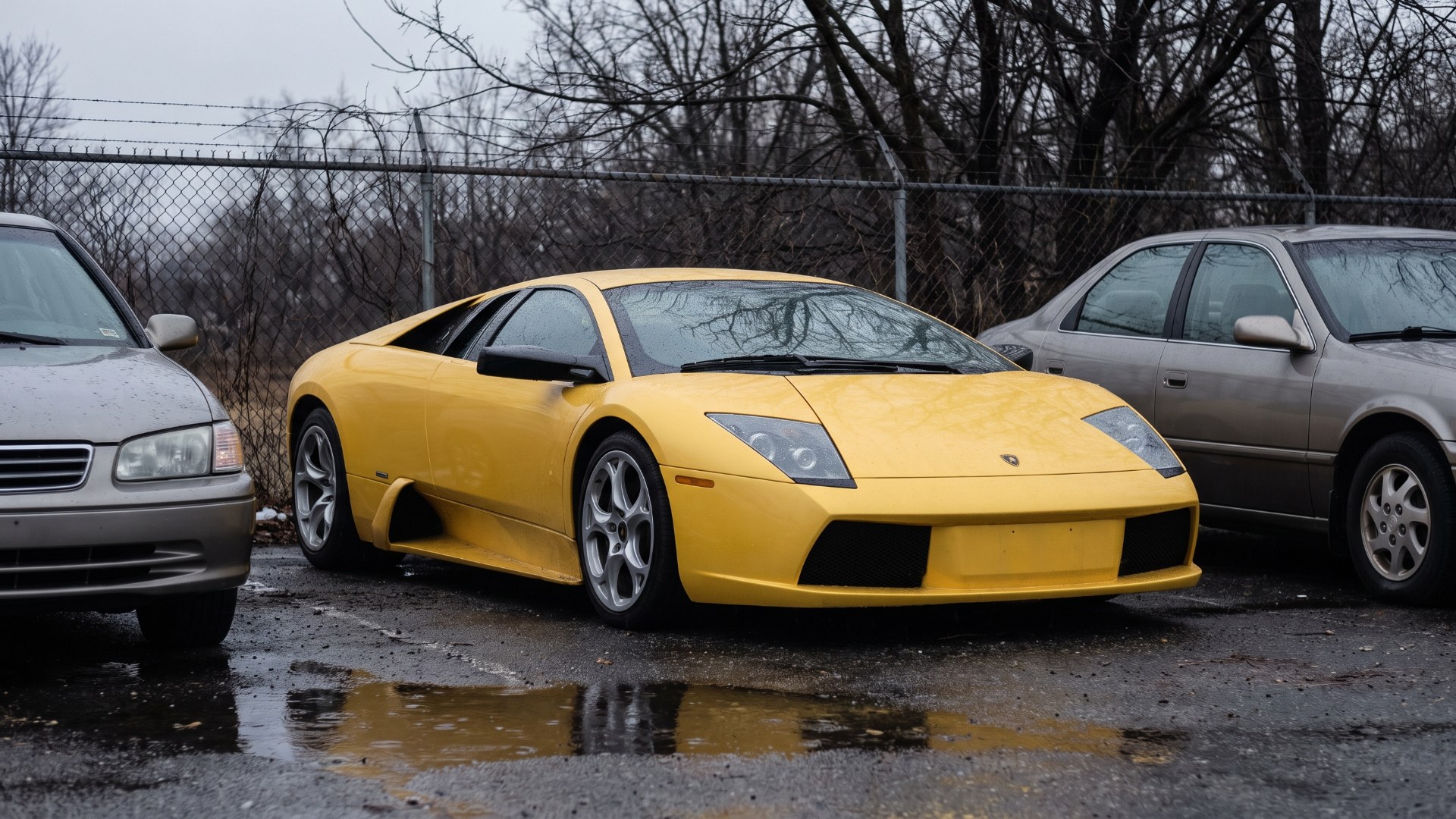
Lamborghini Murciélago. A 2002 Murciélago was priced at $273,000 including gas-guzzler tax in a period road test. In January 2011, RM sold a 2002 car in Arizona for $88,000. In 2025, Gooding sold a 2003 six-speed manual with fewer than 23,200 miles for $412,000, and this August RM Sotheby’s sold a 791-mile LP 670-4 SV for $3,140,000. The spread inside the model line is now enormous, and much of it comes down to one option, which we will get to.
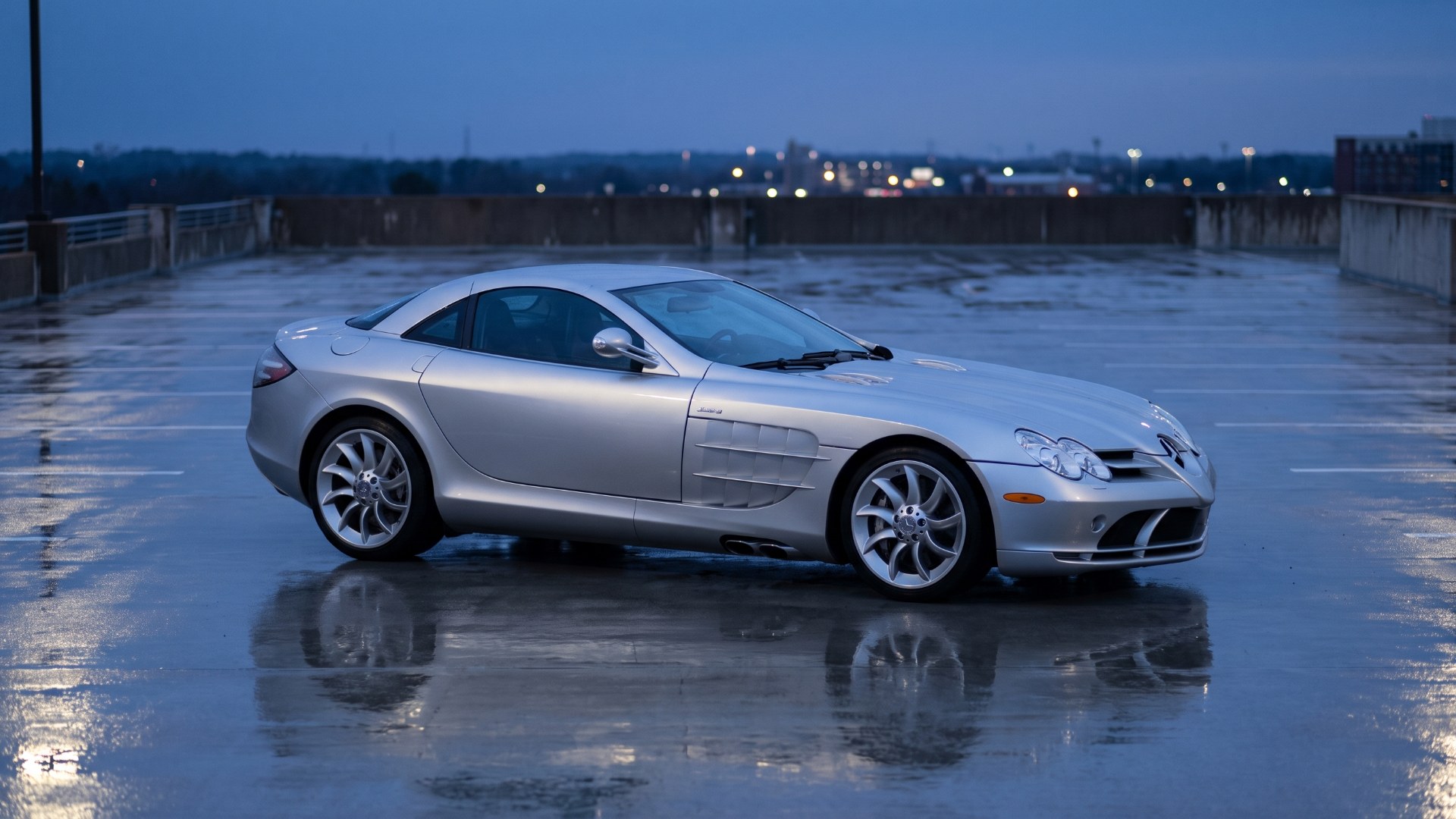
Mercedes-Benz SLR McLaren. The SLR is the honest laggard, and the best-documented case of a supercar nobody wanted. In November 2009, Fortune’s Alex Taylor III reported that Mercedes had planned to sell 500 a year at $495,000 each and could not; that, according to one dealer, 26 unsold cars were sitting at the port in Los Angeles; and that combined allowances could take $175,000 off the price by Mercedes’ account, or $250,000 by a dealer’s. “Today, the SLR is unloved and unwanted,” he wrote.
The auction record bears him out. Gooding sold an 800-mile 2008 coupe for $253,000 in 2010 and a 5,000-mile 2005 car for $198,000 at Amelia Island in 2014. Standard coupes have since roughly doubled. RM Sotheby’s sold a 6,515-mile 2006 car for $434,000 in Miami in 2024, against an original sticker of $467,450. Twenty years on, in other words, a good SLR is worth about what it cost, before inflation. The seven-figure money has gone to the rare variants.
| Car | New (U.S. list) | Low point (completed sale) | Recent (completed sale) |
|---|---|---|---|
| Porsche Carrera GT | About $440,000 2004 U.S. base price | $341,000 Gooding & Company, Amelia Island, 2013 | $3,085,000 RM Sotheby’s, Arizona, January 2026. Record: $6,715,000, Broad Arrow, March 2026 |
| Lamborghini Murciélago | $273,000 2002, including gas-guzzler tax | $88,000 RM Auctions, Arizona, 2011 | $412,000 2003 six-speed manual, Gooding, Amelia Island, 2025 |
| Mercedes-Benz SLR McLaren | $467,450 original sticker of a 2006 car, per RM Sotheby’s; $495,000 by 2009, per Fortune | $198,000 Gooding & Company, Amelia Island, 2014 | $434,000 RM Sotheby’s, Miami, 2024 |
| Lexus LFA | $375,000 2012 | $335,000 Russo and Steele, Newport Beach, 2015 | $819,000 RM Sotheby’s, Monterey, 2021. Nürburgring Package: $1,600,000, same sale |
| Ford GT | $139,995 2005 | $160,600 Gooding & Company, Pebble Beach, 2007. Did not fall below list at the sales we reviewed | $434,000 RM Sotheby’s, Arizona, 2024 |
Each figure is an individual public auction result for a different car; mileage, condition and specification vary. Prices are in U.S. dollars and are not adjusted for inflation.
Before They Were Collectible, They Were Just Used
The halo cars are the visible part. The lifecycle shows up more clearly lower down, in cars that were not obviously special while they were depreciating. We have covered the exotics that flopped when new separately. The two below show the mechanism.
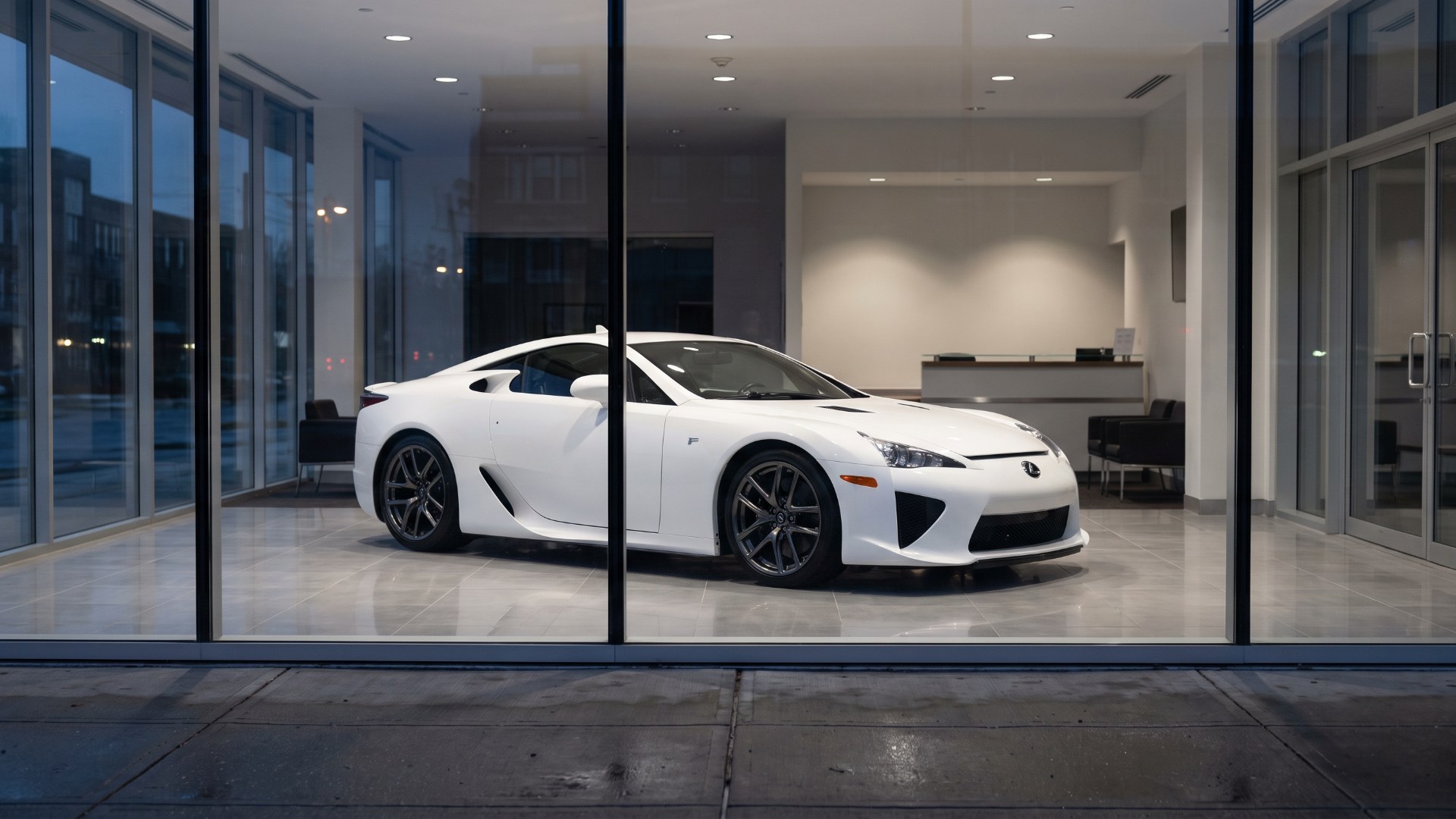
Take the Lexus LFA. Lexus built 500 at $375,000 each and then spent most of a decade selling them. In June 2015, a never-registered car with fewer than 140 miles sold at Russo and Steele’s Newport Beach auction for $335,000 including buyer’s premium, $40,000 under sticker. Writing up that sale, Sports Car Market’s Jeff Zurschmeide noted there were “still several LFAs sitting in dealer showrooms around the country.” He was right. In August 2017, nearly five years after production ended, Autoblog counted 12 unsold new LFAs in U.S. dealer inventory and quoted Lexus saying, “Some of these cars may never be sold, except perhaps by the dealer’s heirs.”
Four years after that, RM Sotheby’s sold a Nürburgring Package LFA, one of 64 built and 25 delivered to the U.S., for $1.6 million at Monterey, and a standard car for $819,000 at the same sale. Hagerty’s July 2026 update had LFA values up another 18% in a quarter. The car that struggled to find 500 buyers at $375,000 now sells for more than twice that.
Or take the 2006–2010 BMW M5, a four-door sedan with a 5.0-liter V10. Kelley Blue Book lists a 2008 M5 at $88,920 new and puts a typical one at $15,500 today, and the car’s reputation for expensive failures is a large part of why. But BMW also built a conventional six-speed manual version for North America only, at no extra cost, and in August RM Sotheby’s sold a 13,329-mile manual in Silverstone Metallic for $156,800. Same engine, same body, same model year. One is cheap transportation with frightening repair bills. The other is treated as an artifact, and the only difference is a clutch pedal that few buyers asked for.
The Option Nobody Ordered
The M5 points at the strangest part of this market. Some of the most valuable cars of the 2000s are valuable because of a choice almost nobody made at the time.
In the mid-2000s, paddle-shift gearboxes were the new thing: quicker, more modern, closer to what Formula 1 used. Buyers voted accordingly. Hagerty counted 1,921 of the original 6.2-liter Murciélagos, of which 985 were manual coupes: 51%. Of the 1,675 LP640s that followed, 88 were manual coupes: 5%. At Ferrari, RM Sotheby’s catalogue notes that of some 15,000 F430s built, all but around 10% had the paddle-shift gearbox, and that “a mere 30” 599 GTBs left the factory with a six-speed manual, 20 of them for North America. Maurizio Reggiani, then Lamborghini’s head of engineering, told AutoGuide that “just five percent of Gallardo orders were for a manual.”
Those are now the cars the market fights over. One of the manual 599s sold for $786,000 at RM Sotheby’s Monterey sale in 2024. A manual LP640 Roadster, one of eight built for the U.S., made $1,352,500 at the same sale. A manual F430 in Tour de France Blu with 11,717 miles made $841,000 this August. That was an exceptional result for an exceptional car, but the direction is not new: Hagerty’s price guide has for years valued a manual F430 at roughly twice a paddle-shift one, and put the premium for a manual 575M or 612 Scaglietti higher still. The option most buyers skipped has become the one that defines the car.
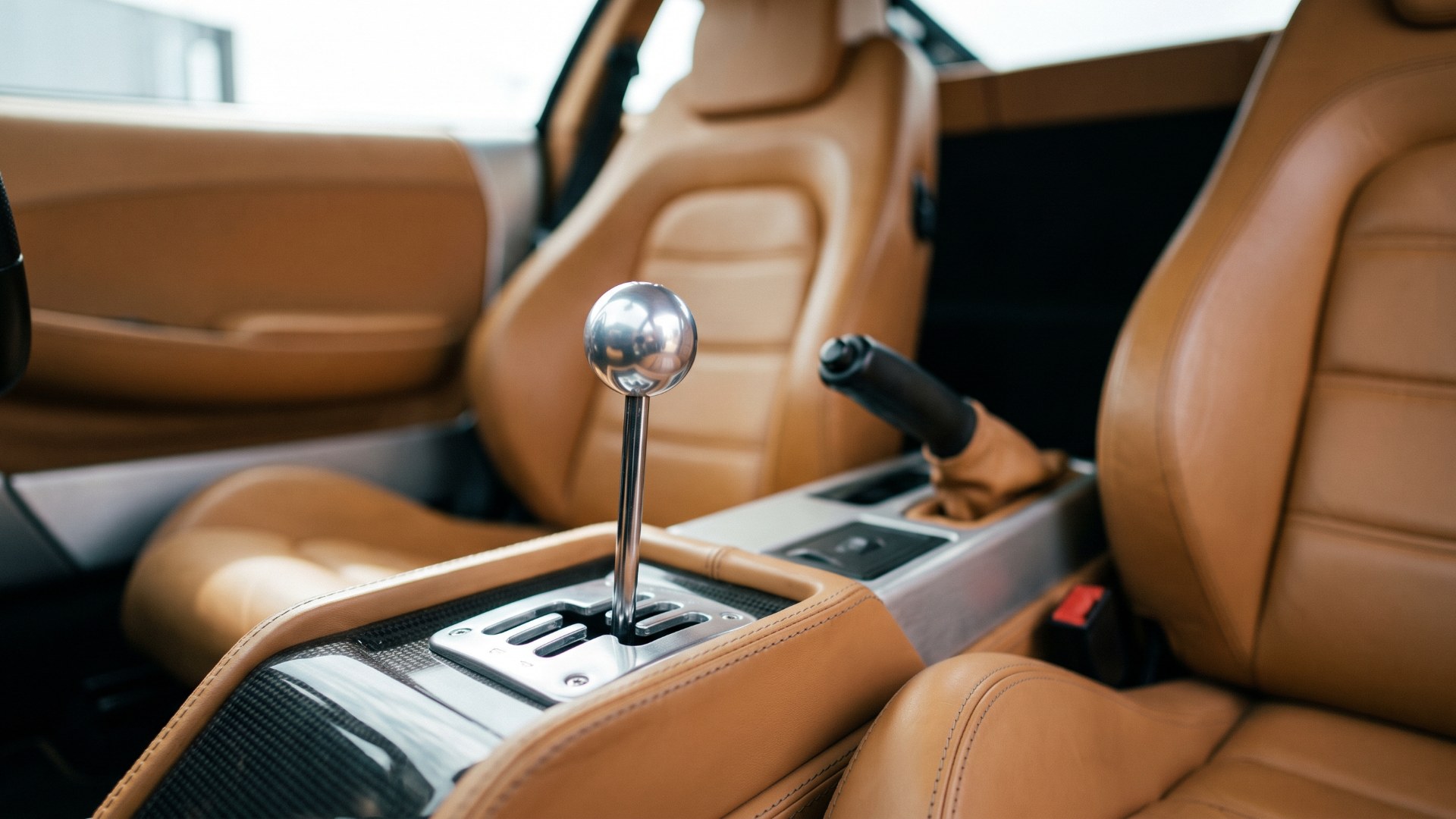
Two cautions. First, this is about factory specification, not gearboxes as such. When Hagerty’s John Wiley looked in 2023 at Ferraris converted from paddle-shift to manual after the fact, he found they had sold at an average 9.4% discount to the guide value of an unconverted paddle-shift car. The market is paying for a rare original, not for a third pedal.
Second, the evidence for color is weaker than the folklore suggests. Rare colors clearly command premiums. The Gulf Blue Carrera GT more than doubled the model’s previous auction record, according to Broad Arrow. But we could not find solid documentation of a color that sold badly when new and is prized now for that reason. Rarity is documented. Original unpopularity, for colors and interiors, mostly is not.
The Generation That Drove Them First on a Screen
Earlier generations of collectors formed their attachments at racetracks, in dealerships, through magazines and from posters on a bedroom wall. All of those are forms of looking. The enthusiasts who grew up in the late 1990s and 2000s could do something new. They could drive the cars, virtually, for hundreds of hours, and compare them, tune them, watch them tested on television and argue about them with strangers online.
The scale of that is easy to underestimate. Gran Turismo launched in Japan on December 23, 1997. Sony reported that the third game alone had shipped 14.89 million copies by 2008, 7.14 million of them in North America, and the series passed 100 million units in 2025. Electronic Arts said in 2013 that Need for Speed had sold more than 150 million copies. Forza Motorsport arrived in 2005.
Television did the rest. The BBC relaunched Top Gear in 2002, and Guinness World Records later recognized it as the most widely viewed factual TV program, airing in 212 territories. In the spring and summer of 2004 it put the SLR, the Carrera GT and the Ford GT on screen within about two months of each other.
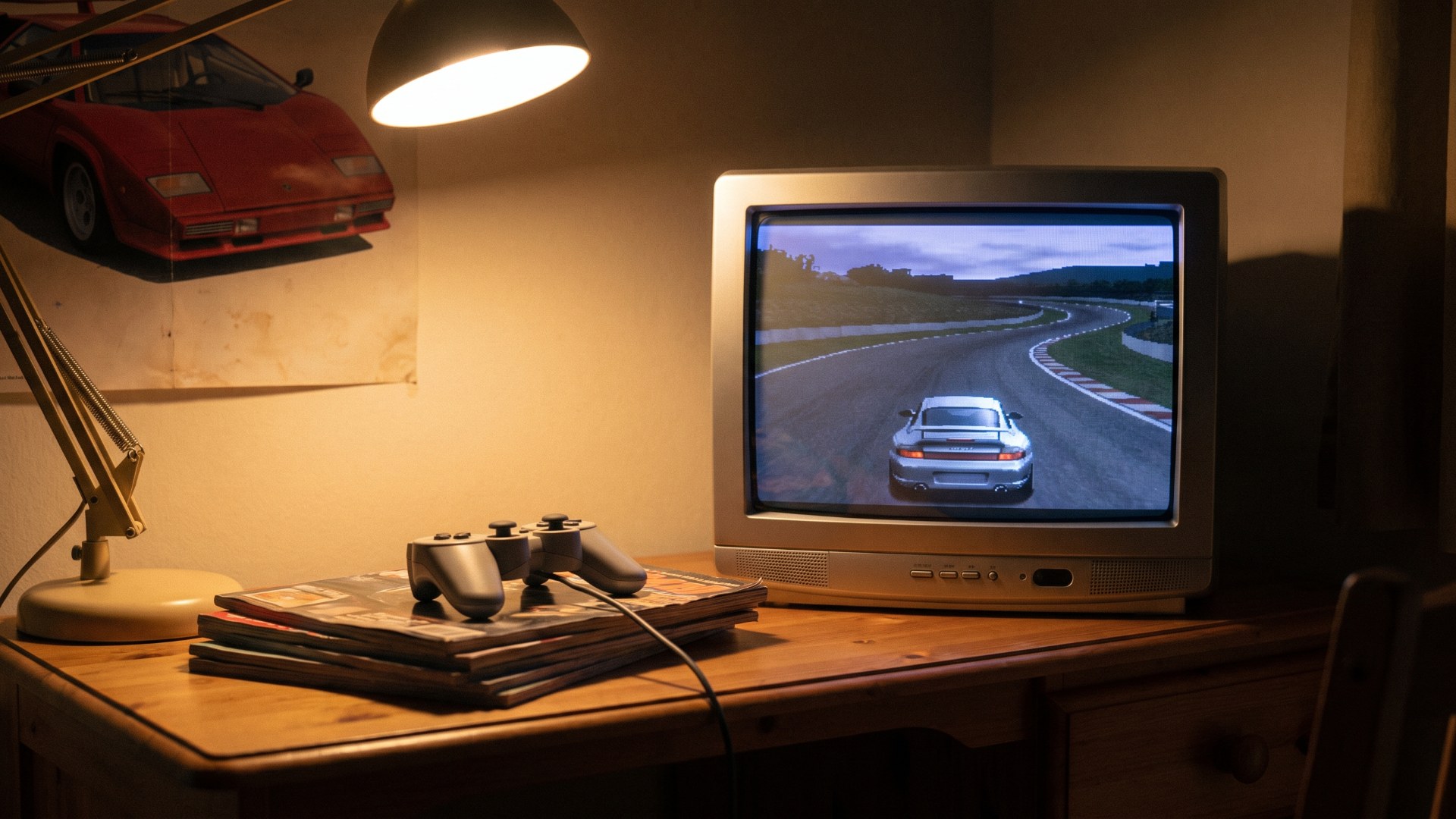
There is real evidence that this exposure shaped what people wanted. In 2002, Mitsubishi’s Takashi Kiuchi told Reuters there was “no doubt that Gran Turismo played a huge role in our decision to launch the Lancer Evolution in the United States,” as Game Developer recorded at the time. Nissan designed the GT-R’s multi-function display in conjunction with Polyphony Digital, the studio behind the game.
The market’s own insiders make the connection too. McKeel Hagerty, the insurer’s CEO, told Axios in 2024 that “if anybody wants to understand where the car market is going, you’ve got to kind of stare at those two games,” meaning Gran Turismo and Forza. On Bring a Trailer, the five most-listed model years in 2025 were 2006, 2004, 2008, 2005 and 2007, according to the company’s year-end figures. And Hagerty says 58% of the interest in the V10 M5 comes from enthusiasts under 40.
What that evidence does not show is causation in the collector market, and the gap deserves to be stated plainly. We found no study that connects playing these games to buying these cars decades later. The academic work that exists measures short-term attitudes toward a brand, not purchases.
Hagerty’s own data is also awkward for the tidy version of the story. In 2023, Wiley tested the “poster car” theory against the company’s insurance-quote records and wrote that “it’s a reasonable concept, but it’s unsupported by data”: the youngest enthusiasts were typically seeking cars about 24 years older than themselves. Baby boomers became the largest group of quote-seekers again during 2025. Gen Z makes up roughly 10% of quotes and gravitates to inexpensive cars such as the Honda Beat and Chevrolet Cobalt SS. And by Hagerty’s count, only 28% of those interested in the Carrera GT are in their 40s or younger, which means most of the people chasing the definitive 2000s supercar are older than the PlayStation generation.
Whether the games created the demand, or simply kept a generation’s attention on cars it would have wanted anyway, is not something the data can settle. We looked at the video-game generation’s effect on the collector market in more detail earlier this year.
They Didn’t Know They Were the Last
There is a second explanation that needs no theory of nostalgia at all. Many of these cars turned out to be the last of something, and nobody building or buying them knew it.
The Carrera GT and the 2005–06 Ford GT were sold only with manual gearboxes. So was the Dodge Viper until it ended in 2017. In 1980, about 35% of new light-duty vehicles in the U.S. were built without an automatic transmission. By 2022 it was fewer than 1%, according to Department of Energy figures drawn from the EPA’s Automotive Trends Report.
The engines and the steering went the same way. Ferrari’s 458 Italia arrived in 2009 with no manual option, and its successor, the 488 GTB, replaced the naturally aspirated V8 with a turbocharged one in 2015. Porsche switched the 911 to electric power steering with the 991 generation in 2011 and turbocharged the standard Carrera engines in 2015. BMW’s M5 went from a naturally aspirated V10 to a turbocharged V8 in 2011. Lamborghini’s naturally aspirated V10 line ended in 2024, replaced by a twin-turbo V8 hybrid, and its V12 flagship has been a plug-in hybrid since 2023. Audi built the last R8 in March 2024.
None of this was a selling point at the time. A hydraulic steering rack, a clutch pedal, an engine that needs revs: in 2005 these were just how fast cars were made. Then engineering and regulation moved on. Automatic emergency braking becomes mandatory on new U.S. passenger cars and light trucks by September 2029 under NHTSA’s FMVSS No. 127, and each generation of performance car has arrived with more assistance and more software than the one before. Ordinary features became rare ones by standing still.
The strongest sign that buyers miss those traits is that manufacturers have started putting them back. Pagani’s commercial director Hannes Zanon told Motor1 that more than 70% of Utopia clients had opted for the manual gearbox. We keep the full list in our guide to the manual supercars you can still buy new. The new ones are built that way on purpose, as a statement. The 2000s cars were built that way because it was normal, which is a different kind of authenticity and one that cannot be manufactured now.
The Cars We Modified Are Becoming the Cars We Wish We’d Left Alone
The affordable end of this era has its own twist. When a car is cheap, current and plentiful, nobody treats it as an artifact. They treat it as a platform.
The first Fast and the Furious film opened in June 2001. SEMA, the aftermarket trade association, put sales of compact-performance products at $2.86 billion that year and $3 billion in 2002. Greg Neuwirth, president of intake maker AEM, later told SEMA the film brought “a 25% jump in our sales.” Wheels, coilovers, exhausts, body kits, stereo installs, bigger turbos: this was simply what you did with a Supra, an Integra or an Evo. It was also, in hindsight, a slow way of using up the supply of original cars.
The prices now paid for the ones that escaped are hard to explain any other way. A 2001 Acura Integra Type R listed at $24,930. In July 2025, an unmodified 4,800-mile example, one of 1,173 built for U.S. sale that model year, brought $204,204 on Bring a Trailer, The Drive reported. In January 2026, Mecum sold an unmodified 6,080-mile 1998 Toyota Supra Turbo with the six-speed manual for $242,000 including fees at Kissimmee, Autoblog reported. The premium is not for the model. Higher-mileage and modified examples of both remain far cheaper. It is for the car as the factory built it, with the mileage and paperwork to prove it.
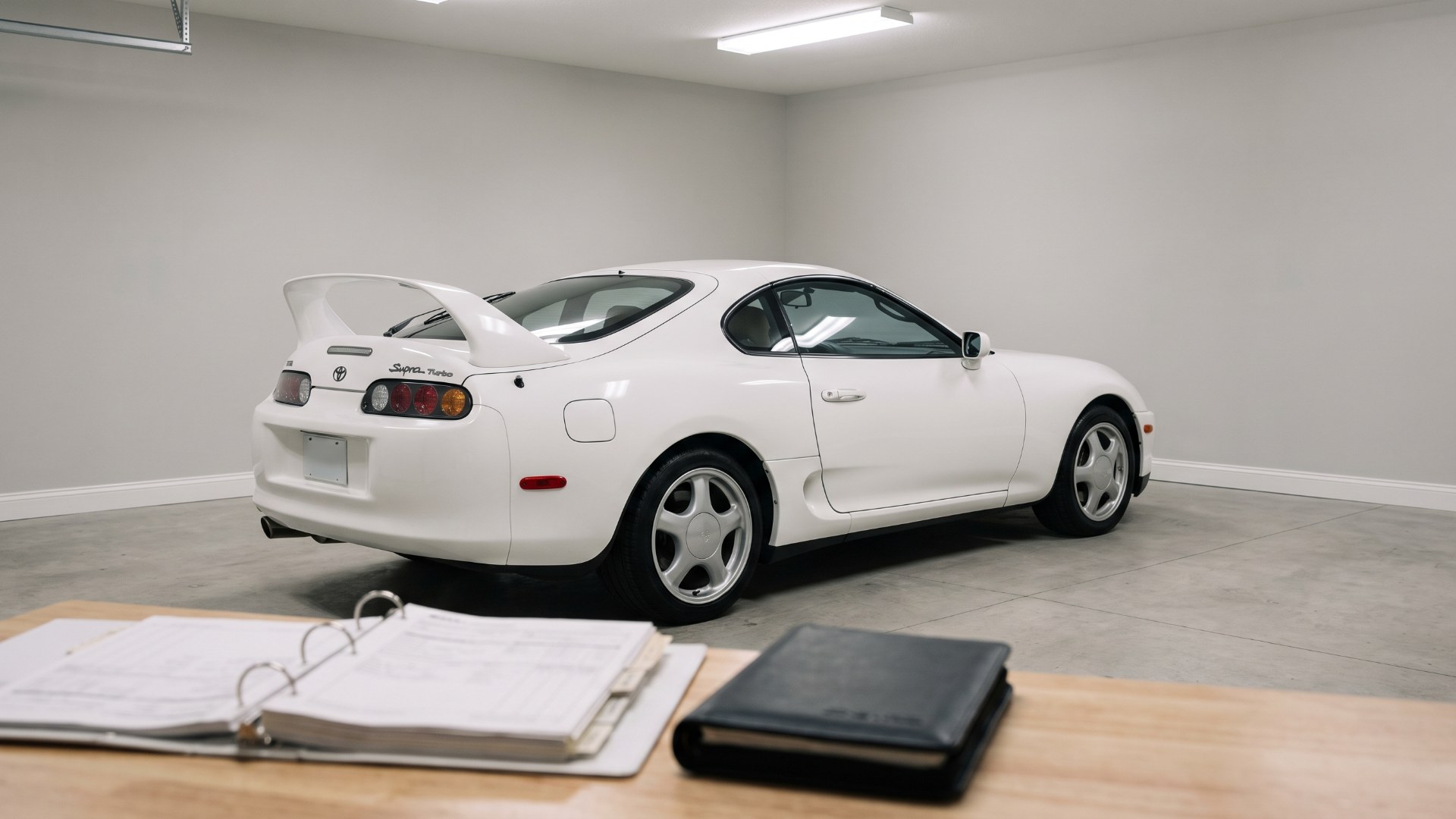
That last part matters more as a model ages. Once a car is valuable, the question shifts from “is it nice?” to “is it right?”: original paint, original drivetrain, factory wheels, the window sticker, the service history, the books and tools. We went deep on that in Paper Provenance. It is the same logic that makes a factory manual worth more than a converted one. It also rewards low mileage to a degree that creates its own distortions, which we explored in The Worst Thing You Can Do to Some Supercars Is Drive Them.
The Cars That Survived Their Cheapest Years
Here is the part of the lifecycle that gets the least attention. The most dangerous time in an expensive car’s life is not when it is new or when it is valuable. It is the stretch in between, after the price has collapsed and before anyone thinks the car matters.
The purchase price falls. The running costs do not. When an SLR McLaren could be bought for $200,000, it still needed SLR McLaren brakes: in 2024, Jalopnik gathered Mercedes-Benz dealer quotes for a full brake job, and most came in between roughly $120,000 and $132,000. Replacing a Carrera GT clutch means removing the engine and transmission as a unit. At the time of publication, an authorized Porsche dealer’s parts department listed the factory clutch part alone at approximately $40,000; current pricing may differ. An M5 that costs $15,000 still has a V10 whose rod bearings buyer’s guides advise replacing preventively, at several thousand dollars a time. Cars in that position get serviced late, repaired cheaply, modified to mask a fault, crashed and patched, or passed through owner after owner until the records are gone.
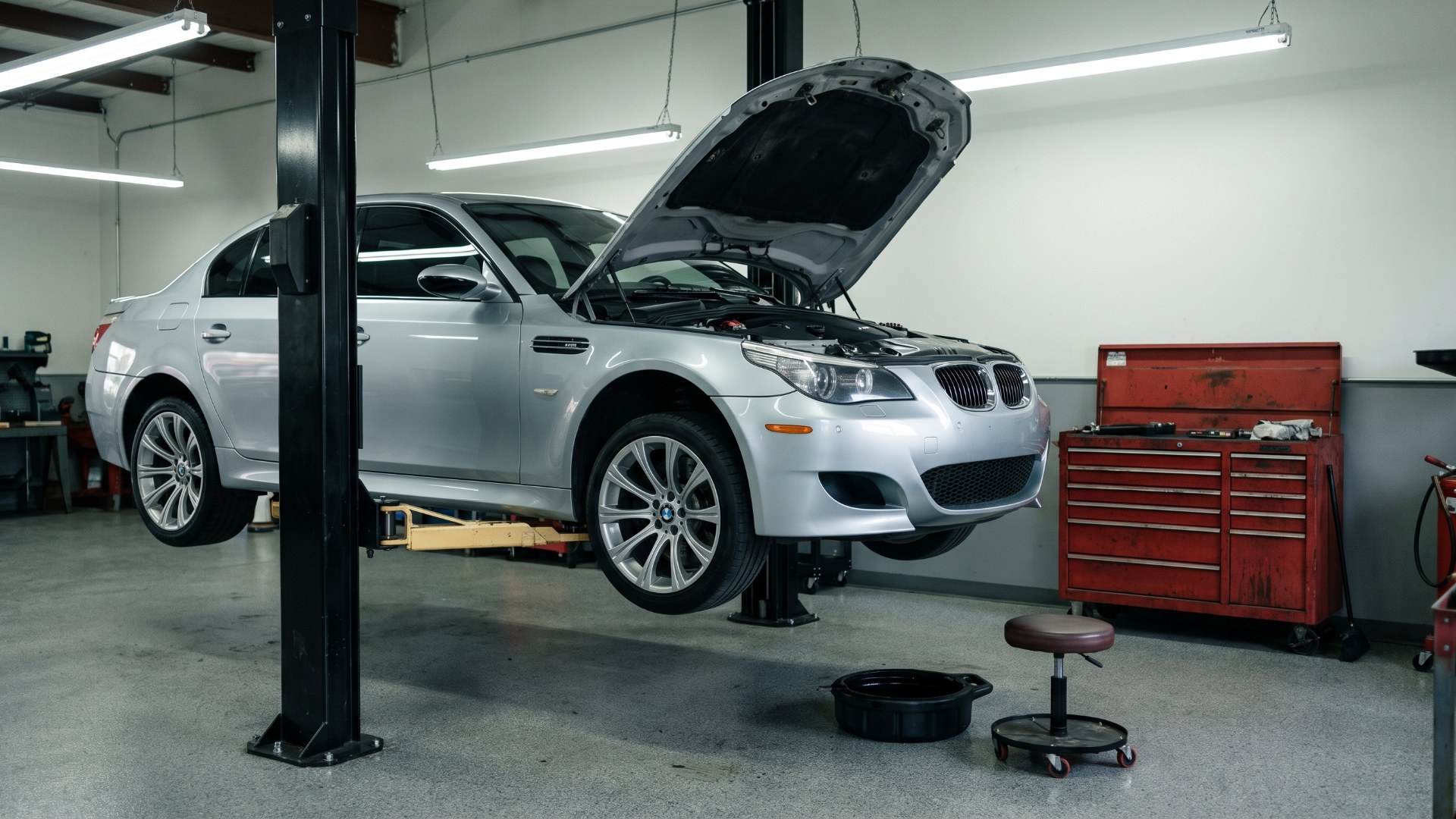
By the time collectors rediscover a model, the cheap years have already decided how many excellent examples exist. That is the supply side of every price in this story.
For Every Future Classic, a Lot of Old Cars
It would be easy to read all this as a case for buying any depreciated 2000s performance car and waiting. The evidence says otherwise, and nothing here is investment advice.
Most of them simply became old cars. Kelley Blue Book lists a 2006 Bentley Continental GT at $171,285 new and $29,500 today, and a 2005 Maserati Quattroporte at $102,850 new and $7,500 today. Both were fast, handsome and desirable. Both were also built in large numbers, with running costs that track the original price rather than the current one. Twenty years on, there is no sign of a rediscovery.
Even at the top, experienced voices are wary. “There is a huge amount of speculation in that part of the market,” the dealer and adviser Simon Kidston told CNBC in August, speaking of modern supercars. “It’s been very frothy and created some inexplicable price imbalances to anyone who has long-term experience in the market.” Carrera GT values slipped after their 2022 peak before this year’s surge. Prices that rise this quickly can stop.
And a higher price is not the same as a profit. Insurance, storage, servicing and, as the SLR shows, twenty years of inflation all come off the top. Hagerty’s Brian Rabold put the sensible position plainly last October: “Buy what you love instead of what the market favors. You may not come out ahead in the ledger, but you’ll make it up with emotional dividends.”
What separates the cars that came back from the ones that did not? Across the examples here, the same traits keep appearing, usually several at once:
- Cultural significance. The car meant something beyond its owners: a poster, a lap time, a game, a film.
- Distinctive engineering. A racing-bred V10, a carbon tub, an engine or gearbox that will not be built again.
- Scarcity. Either few were made, or few were made that way.
- Design. A shape that still looks deliberate twenty years later.
- Driving experience. Something the car does that newer, faster cars do not.
- Provenance and originality. Documented history, factory specification, unmodified condition.
- Survivorship. How many good ones made it through the cheap years.
- Real generational demand. People who want to own and use the car, not just trade it.
A Continental GT has one or two of those. A manual LP640 has nearly all of them. None can be added to a car afterward, which is why the list is better at explaining the past than at predicting the future.
How a Used Car Becomes a Classic
Put the pieces together and the process looks less like a collector-car boom than like a sequence. A car is launched expensive and judged against its rivals. It depreciates, because that is what cars do. It spends ten or fifteen years as a used car, during which some are neglected, some are modified, some are wrecked and a few are quietly kept as they were. The technology that made it ordinary disappears from showrooms. A generation that grew up knowing every detail of it reaches the age and the means to buy one. And one day an auction result makes everyone look again at something that had been in plain sight the whole time.
The Carrera GT that sold for $341,000 in 2013 was not undervalued by fools. It was priced correctly as a used car, by a market that had not yet changed its mind about what it was.
Which means it is happening again, now, to something else. Somewhere there is a performance car that enthusiasts still consider too new, too common, too complicated or simply too depreciated to be collectible. Its owner may think of it as nothing more than an old car. Another generation may eventually wonder how nobody saw it coming.
About the numbers: Auction figures are completed public sales as published by the auction house or reported by the outlet named; asking prices are not used. Original prices are U.S. list prices for the year shown and are not adjusted for inflation. Price-guide figures from Hagerty and Kelley Blue Book are estimates, not transactions, and are identified as such. The Carrera GT’s U.S. base price is given as $440,000 in period U.S. pricing data; Porsche’s own retrospective cites $390,000.
Images: Exotic Car News. The images in this article, including the lead image, are editorial illustrations of the cars and themes discussed, not manufacturer, auction or owner photography.