
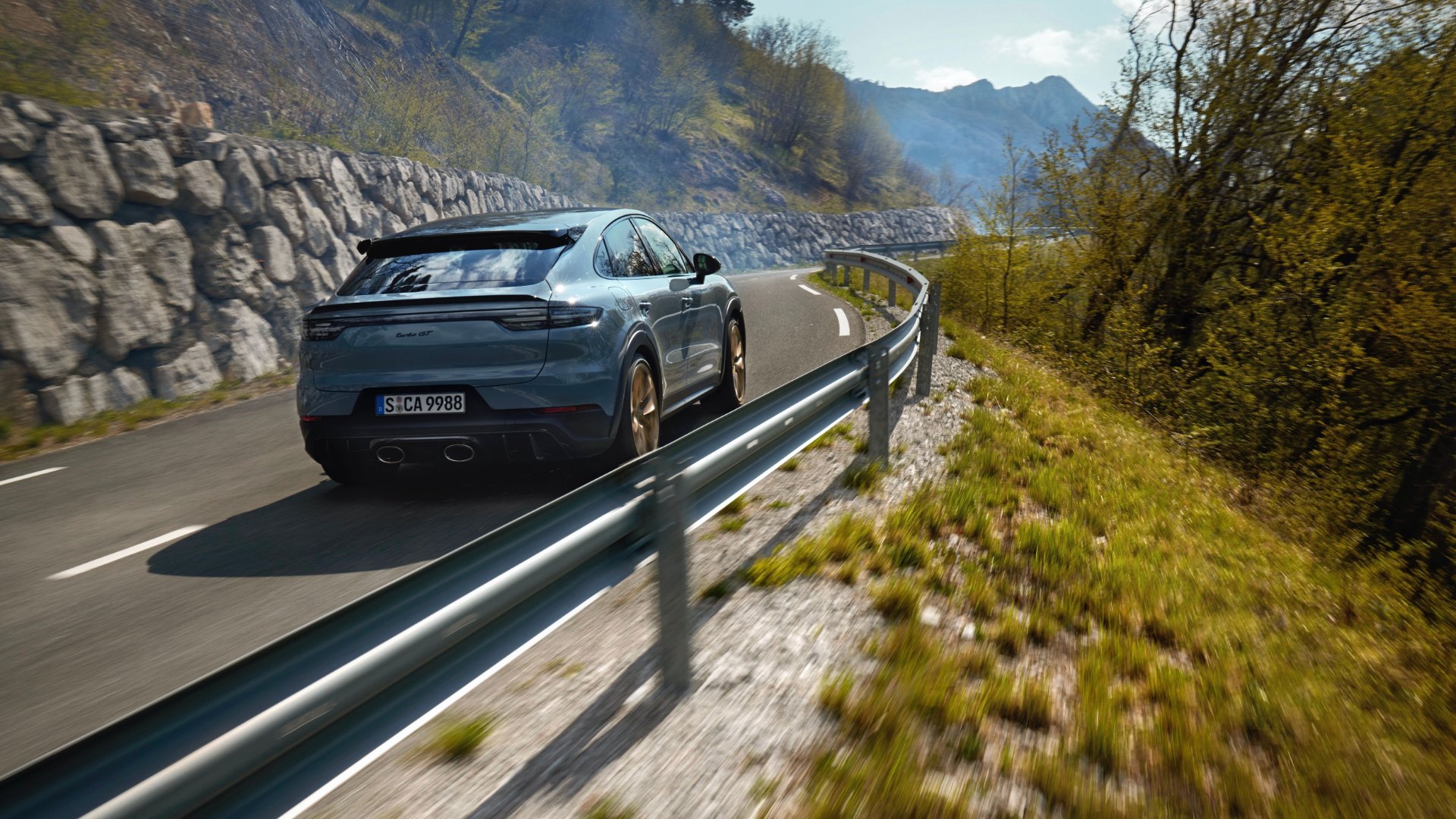
Images show the 2021 Cayenne Turbo GT, not the upcoming update. Photos: Porsche.
Porsche’s next Cayenne Turbo GT may have a more interesting job than winning another horsepower argument. Its task is to make the case for a sharper, V8-only performance SUV alongside the electric Cayenne, at a time when Porsche says it wants about 20 percent fewer model variants.
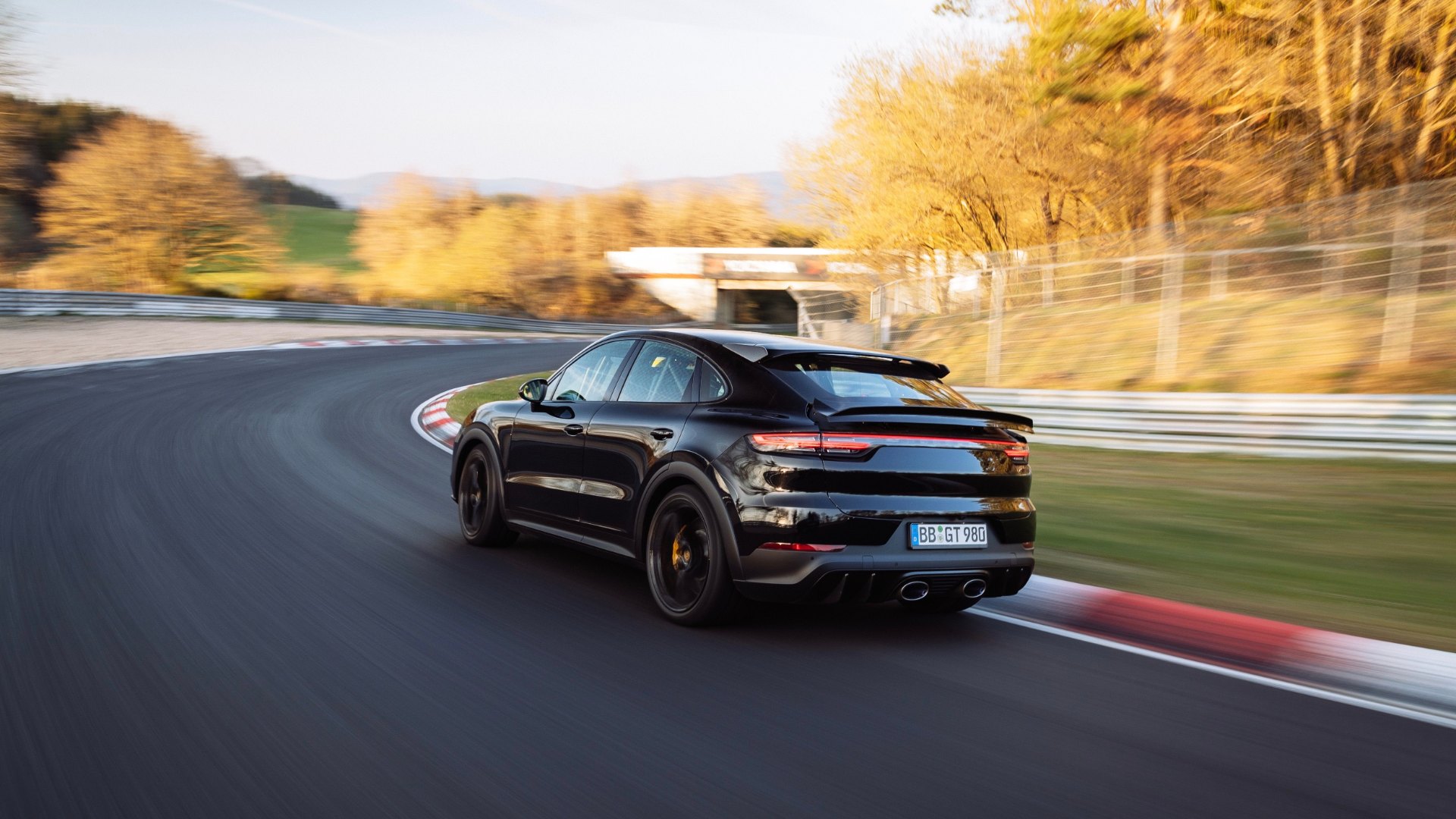
The evidence so far comes from the Nürburgring. In September, Autoblog and autoevolution published agency photos, credited to SH Proshots, of a black, lightly disguised Cayenne prototype on the Nordschleife. Both identify it as an updated Turbo GT and link it to a possible Weissach package. Both reports use SH Proshots imagery, so they should not be treated as independent photographic corroboration.
Porsche has not confirmed the package, the specifications or the timing. The reports don’t agree on a model year either: Autoblog calls it a 2027, autoevolution a 2028. Porsche’s U.S. site already lists the current Turbo GT as a 2027 model.
What the photos show
According to those reports, the test car has a revised front bumper with reworked intakes, straighter horizontal indicator lights and film over the headlights. At the rear are two central exhaust outlets, a roof spoiler, a lip spoiler, a diffuser, and tape over the lower vents and the panel between the taillights. Both outlets noted a roll cage inside, which is normal for a high-speed development car and says nothing about the showroom version.
The baseline it has to beat
Porsche rates today’s U.S.-market Turbo GT at 650 hp and 626 lb-ft from its 4.0-liter twin-turbo V8, with a claimed 3.1-second 0–60 mph run with the Sport Chrono Package and a 190-mph top track speed on summer tires. In 2021, Porsche test driver Lars Kern lapped the 20.832-km Nordschleife in a Turbo GT in 7:38.9, which Porsche announced as an official SUV record at the time.
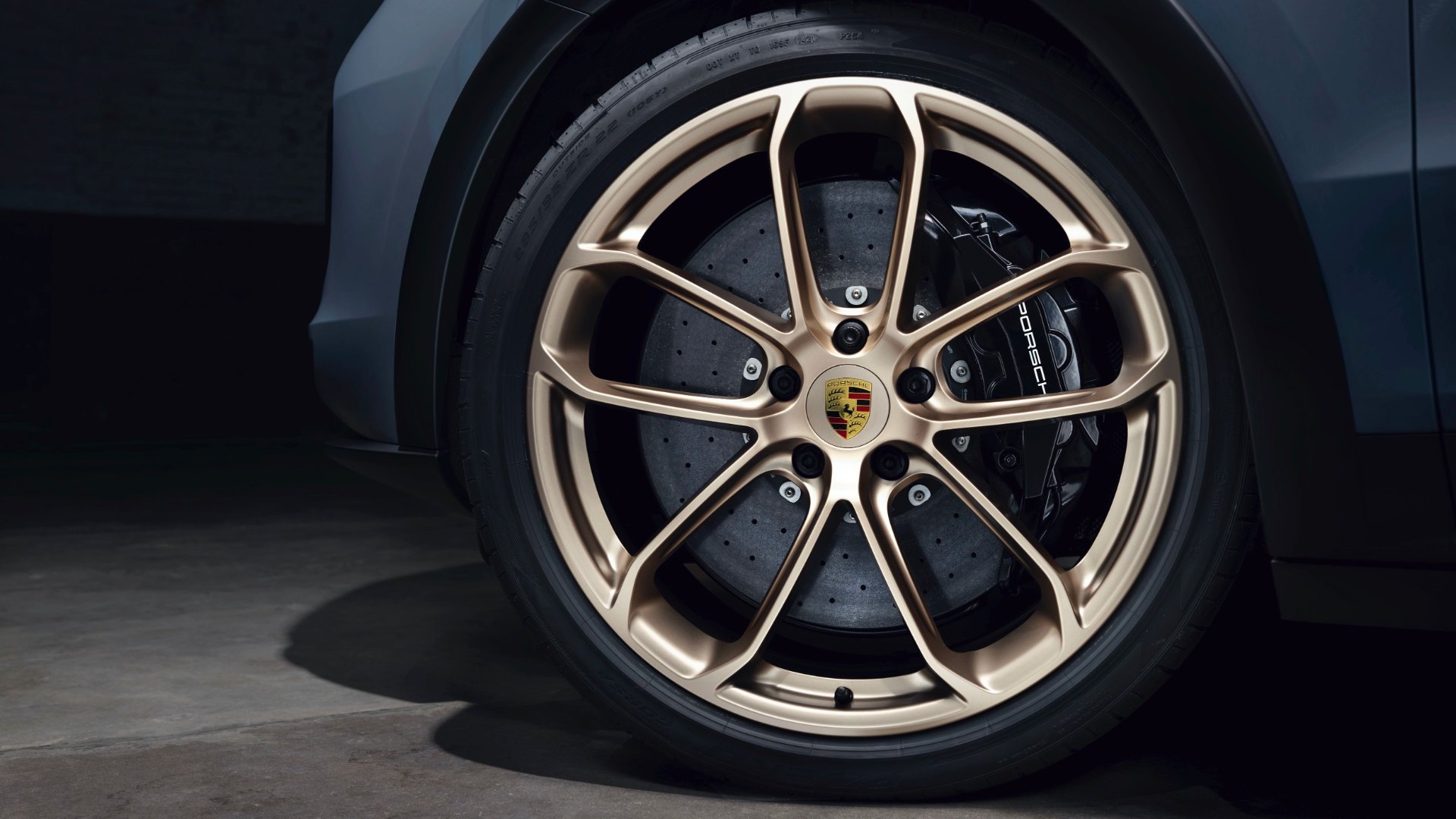
Horsepower alone has never explained the Turbo GT. The Turbo GT isn’t even the most powerful Cayenne Coupe: Porsche lists the Turbo E-Hybrid Coupe at 729 hp combined from $169,100, against $214,800 for the Turbo GT. By ECN’s arithmetic from those U.S. MSRPs, which exclude destination and options, Turbo GT buyers pay $45,700 more for 79 fewer horsepower. The 2021 launch car made 640 PS (631 hp), so output has moved only modestly since. What the money buys is a combustion-only drivetrain, a GT-specific chassis calibration, ceramic composite brakes and tires developed for the model.
What would make it a real upgrade
That makes the meaningful questions dynamic ones. Does a new tire or suspension setup add usable grip? Do the brakes hold up better over repeated hard stops? Does the rear aero add downforce without upsetting the car’s balance at speed? And does the car get lighter, or merely look faster? None of those gains is confirmed until Porsche publishes technical data.
Why Porsche is still bothering
The strategy behind it stands on firmer ground. In September 2025, Porsche said the Cayenne would remain available with combustion engines and plug-in hybrids well into the 2030s. At its October 7, 2026 Capital Markets Day, it said it would keep its three-pronged powertrain approach, invest in brand-defining combustion and plug-in hybrid drives, and aim to offer the sportiest vehicle in every segment it competes in.
That does not guarantee this trim or its engine for the next decade. It does explain why a sharper V8 Cayenne still fits the plan, and why the SUV still matters so much to a sports car company.
Most of the spec sheet remains unknown: final name, model year, output, weight, the content of any Weissach package, U.S. availability and price. If Porsche’s next announcement answers the handling questions rather than only the styling ones, the Turbo GT will have earned its place next to the electric Cayenne.