
FIA president Mohammed Ben Sulayem said Tuesday that Formula One will bring back V8 engines in 2030, a year before the current engine rules were due to expire. He made the comments in Kigali, Rwanda, on the stage where F1 announced its return to Africa. For F1 V8 engines, 2030 is now the target year. The regulations behind it are not finished.
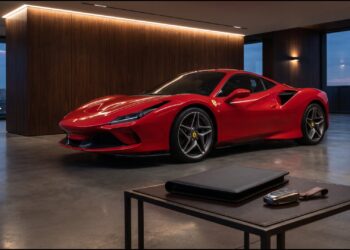
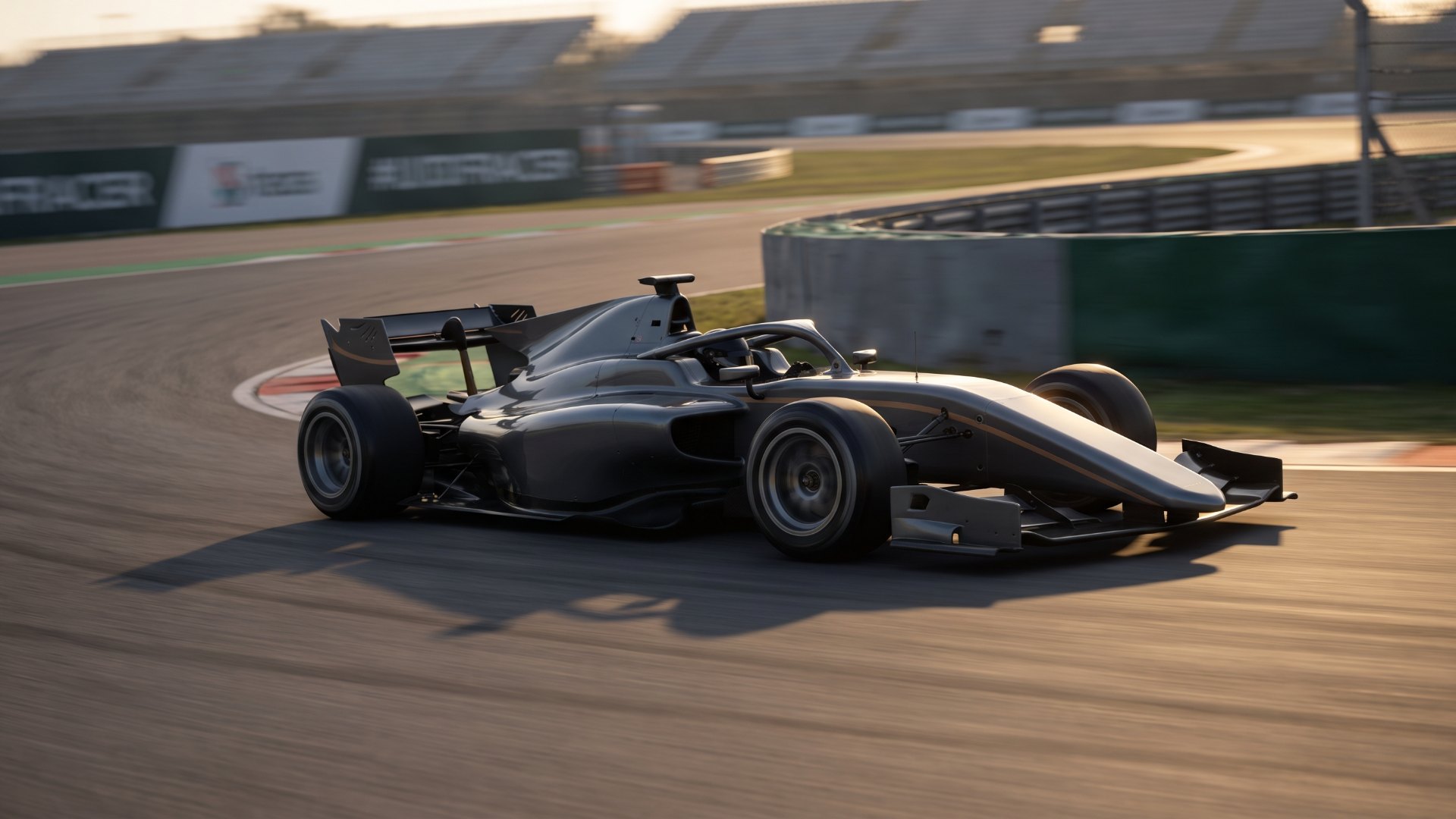
Images in this article are editorial illustrations, not manufacturer, team, press or event photography. No 2030 F1 engine or car has been shown publicly.
Speaking on a panel with Rwandan President Paul Kagame and F1 chief executive Stefano Domenicali, Ben Sulayem said “the launch of the new V8 will be in 2030,” and that Rwanda’s planned African Grand Prix would host the engine at its first race, according to RacingNews365. He also put early numbers on the project: a car “approximately 80 kilograms lighter” and engine and research costs cut by “at least 50 per cent.” On the noise question, his phrasing was pointed: “It’s about the sound, not the noise.”
What was announced, and what wasn’t
This is the clearest timeline the FIA’s leadership has given, but it is a president’s statement, not a published rulebook. As of October 13, the FIA has not issued 2030 power unit regulations, and the World Motor Sport Council, which must approve them, has not voted on a V8 package. The governing body’s most recent formal language, after the council’s June meeting in Macau, described V8 engines on sustainable fuels as one of the future power unit concepts under discussion.
The governance matters. The current rules run through 2030, and under the existing F1 framework, ending them a year early requires a supermajority of the power unit manufacturers. Ben Sulayem said in May that the FIA could impose new rules for 2031 without a manufacturer vote, and in Kigali he framed 2030 as a joint decision: he said he has the support of Formula 1 and the manufacturers. Details are still being worked through the Power Unit Advisory Committee before they can go to the F1 Commission and then the World Motor Sport Council.
The clock is tight. Audi team boss Mattia Binotto told reporters in Baku last month that a 2030 engine would need its regulations agreed and voted on before the end of this year so manufacturers can begin design work in 2027, PlanetF1 reported.
The other half of Tuesday’s news stands on its own: F1 and Rwanda signed a 10-year agreement for an African Grand Prix at a new circuit near Kigali, due to join the calendar in the early 2030s. It would be the first world championship race in Africa since the 1993 South African Grand Prix.
Why F1 is backing away from its own new engine
The V8 push is a verdict on the engines F1 introduced this season. The 2026 power units kept a 1.6-liter turbocharged V6 but dropped the MGU-H, raised electrical deployment to 350 kW and moved to fully sustainable fuel, bringing the split between combustion and battery power close to even. The aim was road relevance and new manufacturers, and it worked on the second count: Audi arrived and Ford joined Red Bull’s engine program.
On track, the near 50/50 split forced drivers to manage energy harvesting in ways many disliked. Fernando Alonso, Max Verstappen and Lando Norris were among the critics. The FIA has already approved staged changes that shift the balance toward the combustion engine in 2027 and 2028, ending near 60/40. A V8 formula would move much further in that direction.
What the 2030 engine could look like
No technical rules have been published, so everything below is preliminary and reported, not confirmed. According to reporting by RacingNews365 and Motorsport.com in late September, the FIA and the manufacturers have converged on the outline of:
- A 3.0-liter turbocharged V8. A naturally aspirated engine was reportedly rejected partly because of noise limits at street circuits; the turbo also quiets the exhaust.
- About 100 kW of electric assistance, down from today’s 350 kW. That would still be more than the 60 kW KERS systems of the last V8 era.
- A power unit at least 50 kg lighter than the current one. Ben Sulayem’s 80 kg figure on Tuesday appeared to describe the whole car.
- Sustainable fuel, a theme the FIA has attached to the V8 concept throughout.
- A push-to-pass overtaking system, still under discussion.
What is missing is a hard cost number. Ben Sulayem’s “at least 50 per cent” reduction has not been tied to a published cost cap, and Binotto has said a clear cost target matters to Audi.
Where the manufacturers stand
Support is broad but not unconditional. Mercedes boss Toto Wolff told RacingNews365 in August that “as a purist, I like it.” Red Bull’s Laurent Mekies has welcomed the idea, and the team’s Ford partnership brings deep V8 experience. Binotto said Audi welcomes the V8, the sound and the savings, but wants the formula to remain a platform for advanced technology.
Honda is the one to watch. The company tied its return to the 2026 rules directly to their electrification; Honda Racing Corporation president Koji Watanabe told The Race last year that the 50/50 split was the reason Honda came back. Honda has not publicly endorsed the V8 plan. Ferrari and Mercedes were reported last year to be open to a switch for 2030, one year early, rather than a wholesale change sooner.
The last time F1 ran V8s
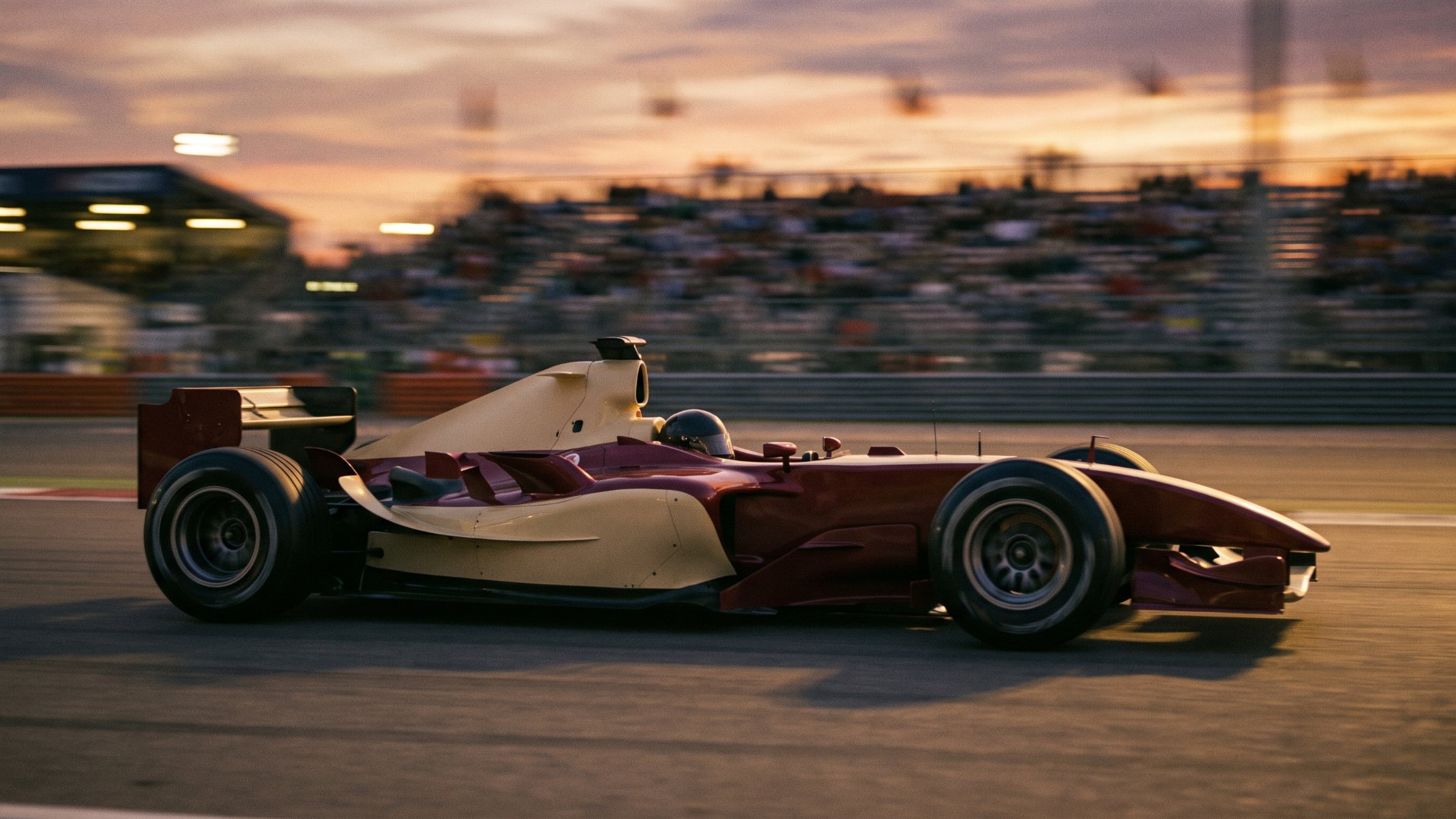
The previous F1 V8 era ran from 2006 through 2013 with 2.4-liter, naturally aspirated engines, rev-limited to 19,000 rpm from 2007 and 18,000 rpm from 2009. It is remembered for its sound, but it was also a cost-control formula: engine development was largely frozen from 2007, and Honda, BMW and Toyota had all left the sport by the end of 2009. KERS hybrid boost arrived in 2009, disappeared in 2010, and returned from 2011 to 2013, after which F1 moved to the turbo-hybrid V6.
That history is a useful warning. A simpler engine can lower costs and improve the show, but F1 has also learned that manufacturers commit when the formula serves their brand and leave when it doesn’t.
Why this matters beyond the racetrack
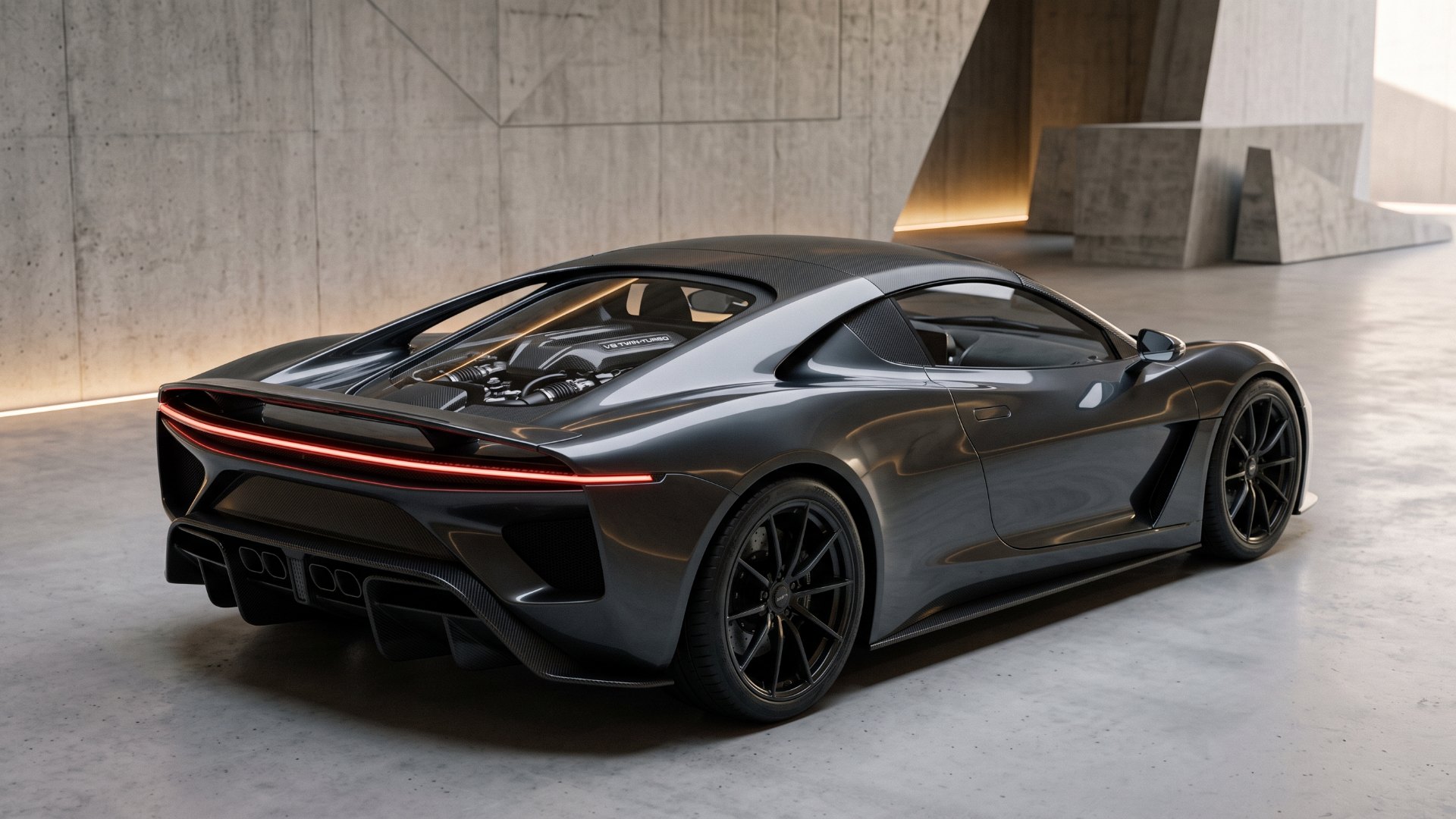
The proposed 2030 recipe, a turbocharged V8 with a modest electric motor, is not a step backward into the 2000s. It looks a lot like the formula the supercar world has already settled on. Ferrari’s SF90 and new 849 Testarossa, McLaren’s W1 and Lamborghini’s Temerario all pair a turbocharged V8 with electric assistance. At the top of the market, buyers want the emotion of a combustion engine, and makers use electric motors to add response, efficiency and performance rather than replace it.
F1 is arriving at a similar balance for its own reasons: racing quality, cost and fan appeal. That should not be read as evidence that combustion is replacing electrification across the car industry. Mainstream road cars face different pressures, and the F1 V8 is expected to keep a hybrid system and run on sustainable fuel. But for the exotic segment, the alignment is real. If the FIA delivers this engine, the sport’s top category will once again share a basic architecture with the cars many fans actually dream about owning, and it will put a high-profile spotlight on sustainable fuel as a way to keep that architecture alive.
For readers who want the technical background, ECN covered the emerging 2030 V8 rules framework last month, and why the V8 has refused to die on the road in America.
F1 V8 engines: 2030 or 2031?
Watch for three things: a formal FIA or F1 Commission statement confirming 2030, a World Motor Sport Council vote on published regulations, and any public position from Honda. If the rules are voted through before year end, 2030 becomes a fixed date. If they slip, Ben Sulayem has already named 2031 as the fallback. Either way, the V6 hybrid era now has an end in sight.