


With a striking mid-engine concept, plans for an entire family of performance cars, and a growing motorsport program, Genesis is preparing to enter a world where reputation matters as much as horsepower.
Genesis has never sold a mid-engine supercar. It has no decades-long racing legacy in the category, no celebrated supercar dynasty, and no collection of legendary engines that enthusiasts have spent generations debating.
Yet the company is already thinking beyond its first one.
A standard model. More powerful variants. A roadster. Lightweight editions. Perhaps even a road-going machine with direct ties to GT3 racing.
It’s an ambitious vision for a manufacturer that hasn’t put its first dedicated supercar into production.
The Genesis Magma GT Concept, unveiled in November 2025, is the first serious indication of where that vision could lead. Its low nose, wide rear haunches, and unmistakable mid-engine proportions suggest something entirely different from the luxury sedans and SUVs that established the Genesis name.
But the most interesting part of the Magma GT isn’t necessarily the car itself.
It’s what Genesis wants to build around it.
One Supercar, Many Possibilities
When Genesis introduced the Magma GT, Chief Creative Officer Luc Donckerwolke described ambitions extending well beyond a single flagship model.
In comments reported by The Drive at the reveal, he sketched a potential family: a base Magma GT, S and R variants, a roadster, and a Clubsport model. He also noted that 30 road cars would need to be built to homologate a GT3 racing version.
The Porsche 911 came up as a reference point for how one sports-car platform can evolve into multiple distinct versions. Donckerwolke was careful to say he wouldn’t compare a new car to the 911 itself, only that a clever product lifecycle would probably have to resemble Porsche’s strategy.
It’s an interesting comparison.
Porsche has spent generations developing the 911 into a family that ranges from comfortable grand tourers to focused track machines. Each version serves a different purpose, yet all share a recognizable identity.
Genesis is contemplating a similar breadth of choice without having established its first dedicated supercar.
That doesn’t mean every proposed Magma GT variant will reach production. The vehicle remains a concept, and Genesis has not confirmed a production lineup, a powertrain, or a timeline.
Still, the direction is revealing.
The company isn’t treating the Magma GT as a styling exercise destined to disappear after a few motor shows. It is exploring whether the vehicle could become the foundation of an entirely new performance identity.
A Different Approach to Supercar Design
The Magma GT doesn’t depend on enormous wings or exaggerated bodywork to communicate its intentions.
Its shape is low, wide, and unusually clean.
The front end slopes toward the road, while the roofline flows into broad rear fenders surrounding the mid-mounted engine compartment. The cabin narrows toward the rear in what Genesis calls a boat-tail, giving the car a distinctive silhouette without abandoning the proportions expected of a serious performance machine.
Genesis calls its design philosophy Athletic Elegance, and the Magma GT may be one of its clearest expressions.
That balance matters.
Genesis isn’t simply promising to build the most extreme supercar imaginable. Its stated ambition is to combine genuine performance with the refinement and composure expected of a luxury grand tourer.
The concept’s interior reinforces that idea.
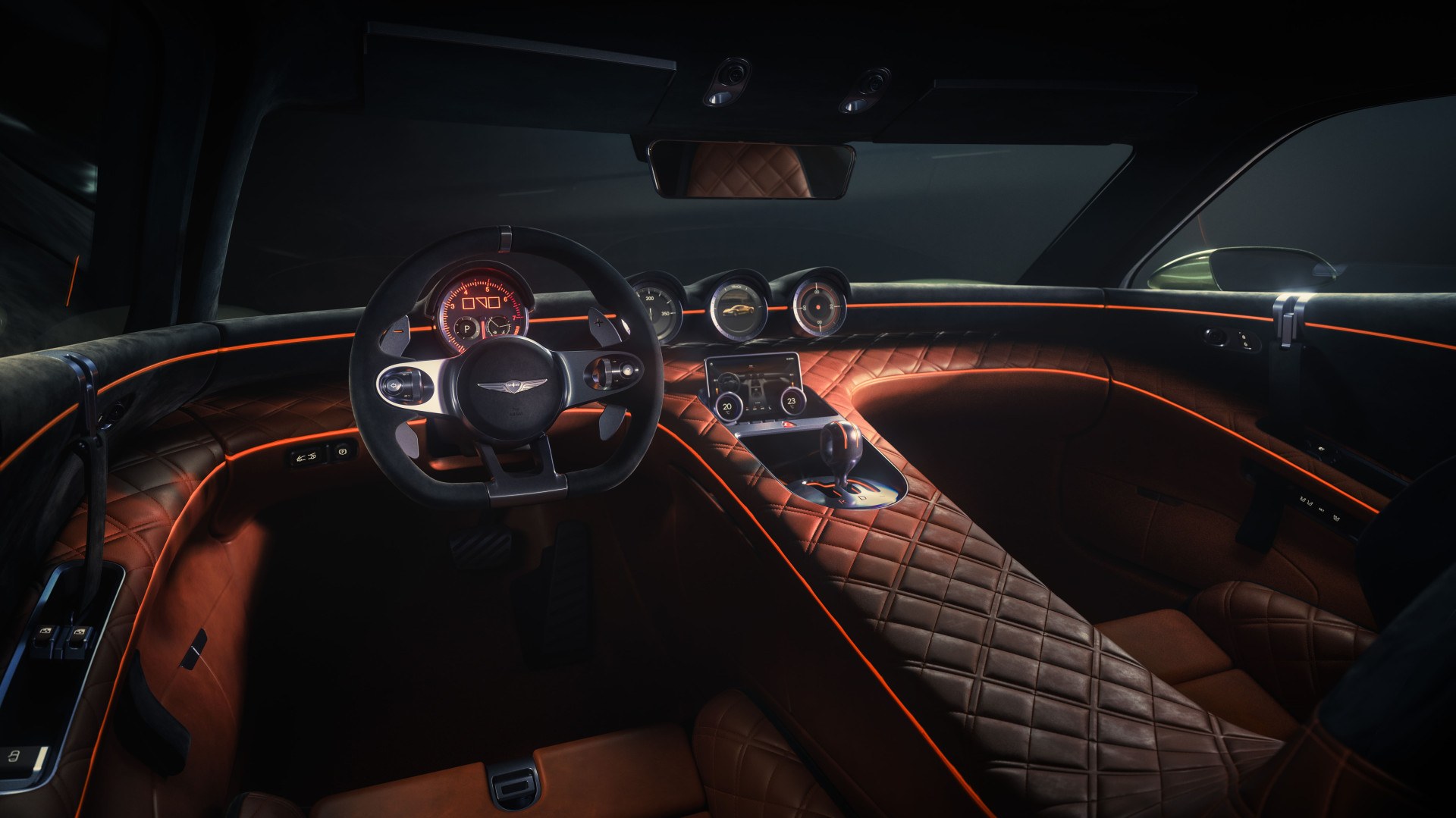
When Genesis returned to Le Mans in June 2026, it presented an updated Magma GT with a redesigned cabin: a twin-cockpit layout, quilted leather, tactile physical controls, and an analog instrument cluster inspired by motor-racing timekeeping.
In an industry increasingly dominated by large digital displays, that approach makes an interesting statement.
A modern performance car doesn’t necessarily need to place a screen at the center of every interaction.
Of course, this remains a concept interior. Whether those details survive into a production vehicle is another question.
But the design suggests Genesis understands that an expensive performance car needs a personality beyond its acceleration figures.
Building a Racing Reputation Before the Road Car Arrives
Perhaps the most unusual part of Genesis’s strategy is the timing of its motorsport ambitions.
Rather than waiting for a successful road-going supercar to establish the brand’s reputation, Genesis is developing its racing identity alongside its future performance vehicles.
The Genesis GMR-001 Hypercar made its Le Mans debut in June 2026, making Genesis the first Korean manufacturer to compete in the race and introducing the brand to one of the most demanding environments in international endurance racing.
At the same event, Genesis revealed the Magma GT3 Concept.
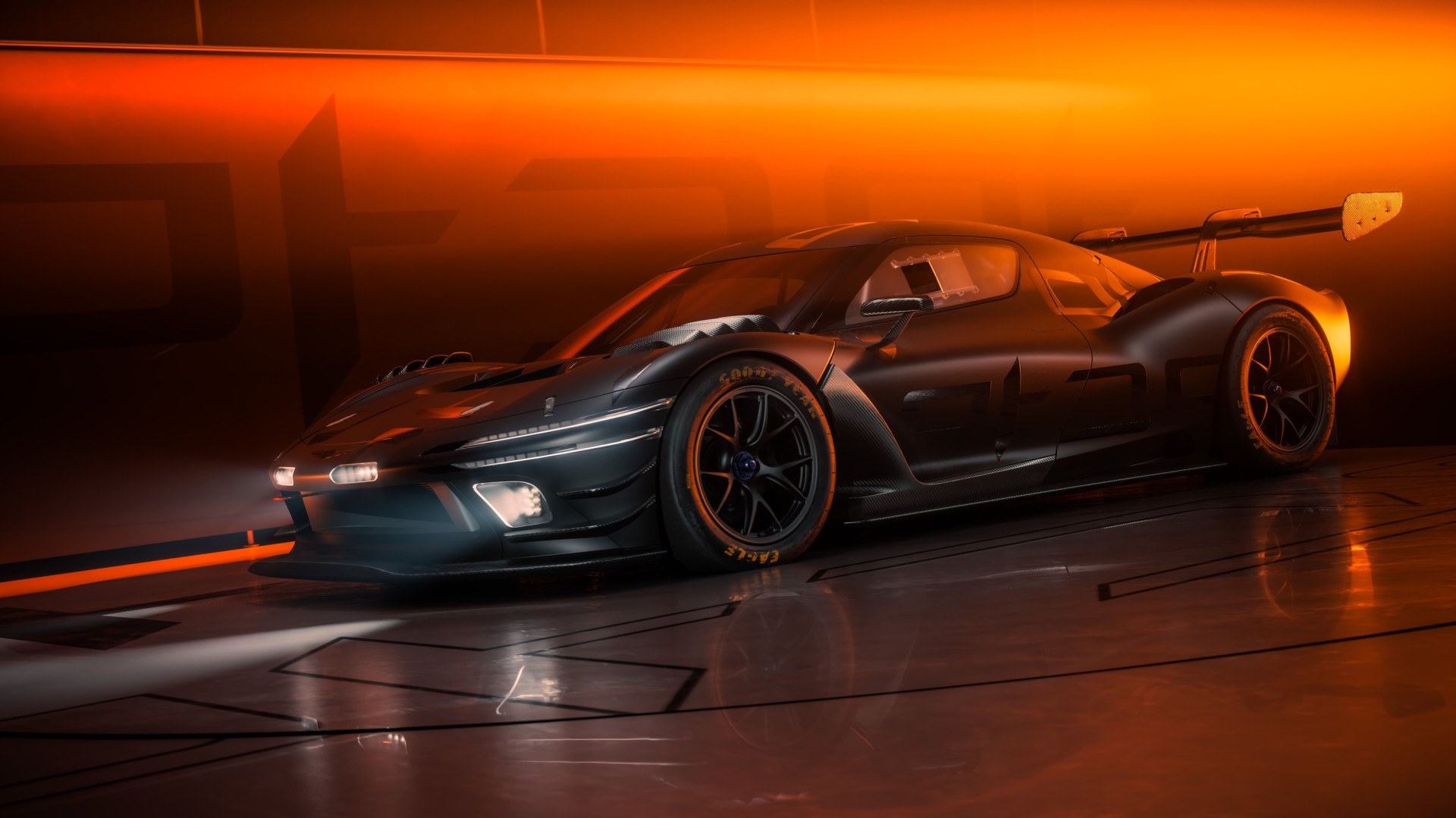
Although it shares the road concept’s general visual identity, the GT3 study was developed independently around GT3 technical regulations rather than simply adapting a production Magma GT.
Its wider front and rear tracks, prominent front splitter, enlarged cooling ducts, door-mounted fin, and substantial rear wing show how Genesis’s design language might translate into competition.
The concept was developed through a collaboration between the Genesis design team and Hyundai Motorsport engineers.
That connection is significant. Hyundai Motor Group already possesses considerable motorsport experience, giving Genesis access to technical resources that a completely independent new manufacturer would need years to develop.
Still, the Magma GT3 is not a confirmed racing entry. Genesis Magma Racing team principal Cyril Abiteboul described it as “one potential future direction” alongside the team’s FIA WEC Hypercar program, and Genesis says the concepts come “without confirming specific production or racing plans.”
And racing credibility cannot be created through a concept alone.
It comes from competition, reliability, results, and the ability to improve when the engineering is tested under pressure.
For Genesis, motorsport could become more than a marketing exercise. It could help establish the performance credibility that the Magma GT will eventually need.
The Hardest Part Comes After the Reveal
Designing an attractive supercar is difficult.
Building one that owners want to keep is considerably harder.

The concept has already turned a wheel in public. In September 2026, Genesis ran the Magma GT up the Tutto Bene Hillclimb above Lake Maggiore in Italy, its first dynamic outing. But a demonstration run is not a production program, and the Magma GT will eventually need to answer questions that concept photography cannot resolve.
What engine will power it? How will it sound? What will the steering feel like? Will it be comfortable enough for a long drive without losing the character expected of a mid-engine sports car?
And perhaps most importantly, what happens after someone buys one?
A serious supercar manufacturer needs more than an impressive vehicle. It needs specialized service capabilities, dependable parts support, knowledgeable technicians, and a reputation for standing behind its products.
Genesis already has a luxury-car customer-service infrastructure, but supporting a low-volume, highly specialized performance vehicle presents different demands.
Pricing and production volume will also help determine where the Magma GT belongs.
If Genesis positions it alongside established exotic cars, buyers will expect comparable engineering, craftsmanship, and ownership support.
If the company chooses a different approach, it will need to explain what makes that proposition compelling.
Those questions cannot be answered until the production program becomes clearer.
Can Genesis Create Its Own Performance Heritage?
Every established performance manufacturer had to begin somewhere.
The difference is that Genesis is entering a market where expectations have already been shaped by decades of extraordinary automobiles.
Ferrari has its racing history. Lamborghini has its unmistakable personality. Porsche has generations of sports-car development. McLaren has a deep connection to motorsport engineering.
Genesis cannot manufacture that history overnight.
But it doesn’t necessarily need to imitate it.
The Magma GT’s opportunity is to establish something recognizably its own: a combination of luxury, deliberate design, driver involvement, and motorsport-informed engineering.
Its greatest advantage may be that it isn’t burdened by an existing supercar formula.
Genesis has the freedom to decide what one of its performance cars should feel like without preserving the character of a model introduced generations ago.
That freedom also comes with risk.
Without an established supercar identity, the first production vehicle will have to do much of the work itself.
For now, the Genesis Magma GT remains a promise rather than a finished product.
But the scale of that promise is unusual.
Genesis isn’t simply imagining one exotic car sitting at the top of its showroom.
It is imagining the second, the third, and perhaps an entire family beyond them.
Now it has to build the first.
Images: official Genesis press photography of the Magma GT and Magma GT3 concepts, courtesy of Genesis.