
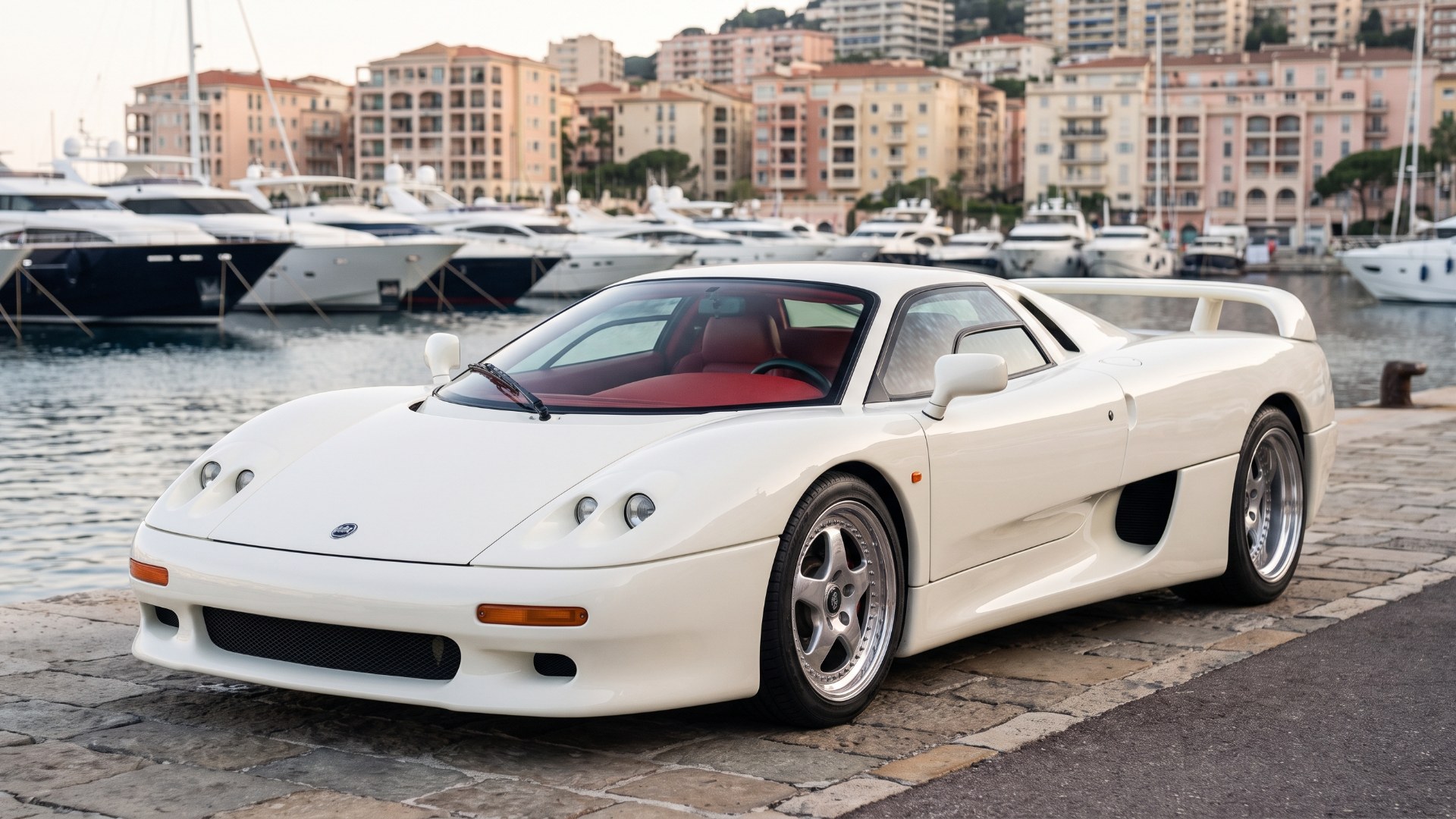
McLaren unveiled the F1 in Monaco on May 28, 1992, and it became the car every supercar since has been measured against. Two years earlier, during Grand Prix week in the same principality, a tiny local company had shown a mid-engined flagship of its own, with a Lamborghini V12 behind the seats and a passenger cell made of carbon fiber.
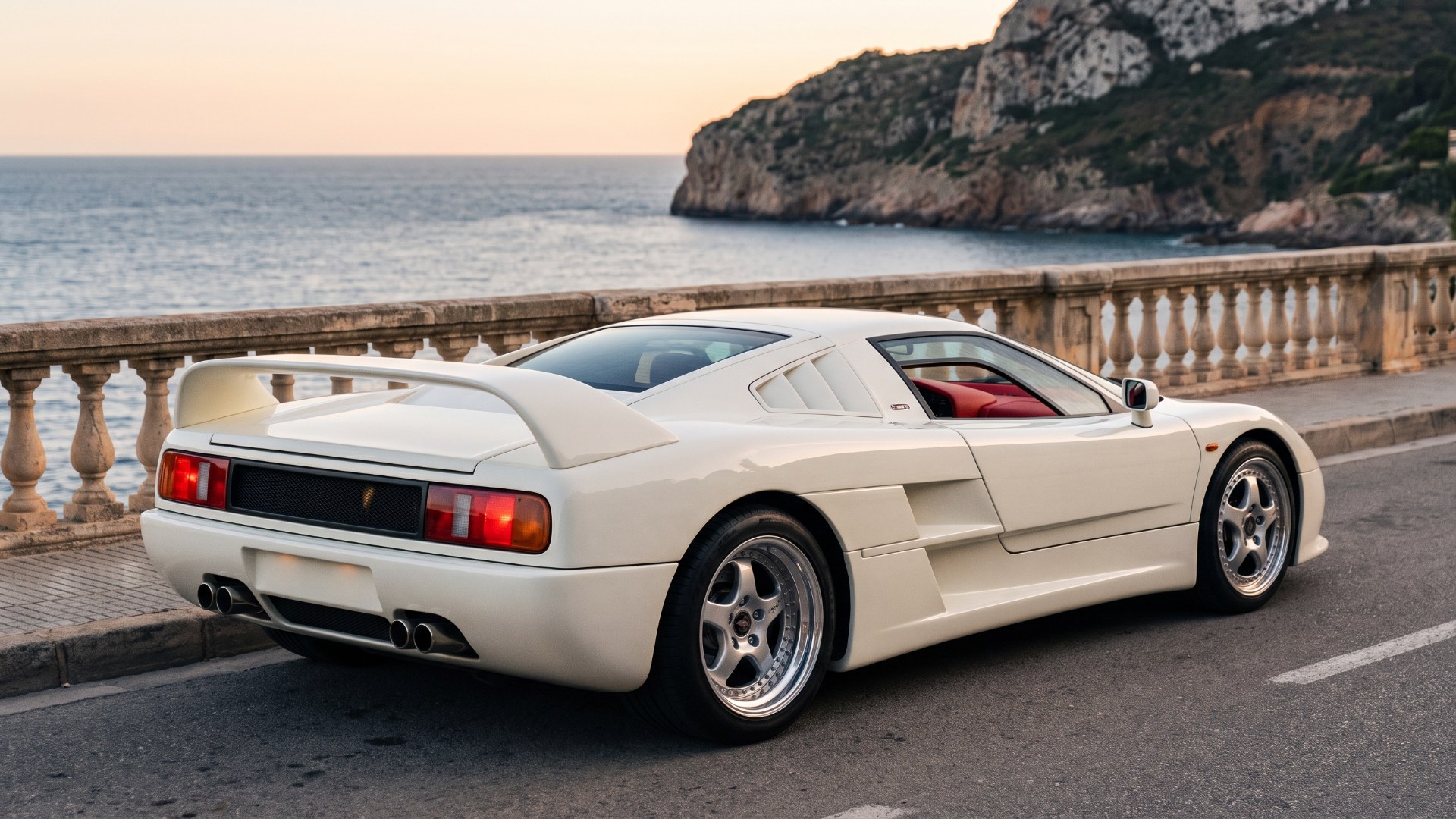
That car was the Monte Carlo Automobile Centenaire, usually shortened to MCA Centenaire. One of the few built crossed the block at Broad Arrow’s Zoute Concours Auction in Belgium on October 9, promoted by the auction house as “the very first road car with a carbon fiber monocoque chassis.” Broad Arrow’s bidding platform lists it as sold for about $812,000 (€725,000), below its low estimate of about $1.01 million.
So if Monaco’s car got there first, why does history remember only McLaren’s? The short answer is that arriving early and setting the standard are different achievements. The longer one involves a disputed chronology, a replacement engine that wouldn’t run without a laptop, and a production line that was always a month away.
What the MCA Centenaire Actually Was
Monte Carlo Automobile was the project of Fulvio Maria Ballabio, an Italian racing driver based in Monaco who had competed in Formula 2 and CART. Broad Arrow’s catalog dates the company to 1985; other histories say 1983. The car was named for the 100th anniversary of the Automobile Club de Monaco in 1990.
The claim that matters is about structure. Most 1980s supercars, the Lamborghini Countach included, were built around a steel tube frame with body panels hung on it. Some, like the Ferrari F40, wore carbon-composite bodywork over a steel frame.
A carbon-fiber monocoque is different. The molded shell is the structure, and it carries the loads. Racing had used the idea since McLaren’s MP4/1 Formula 1 car of 1981. On the road it was still exotic, and it is the reason damage to a carbon tub is such a serious matter today.
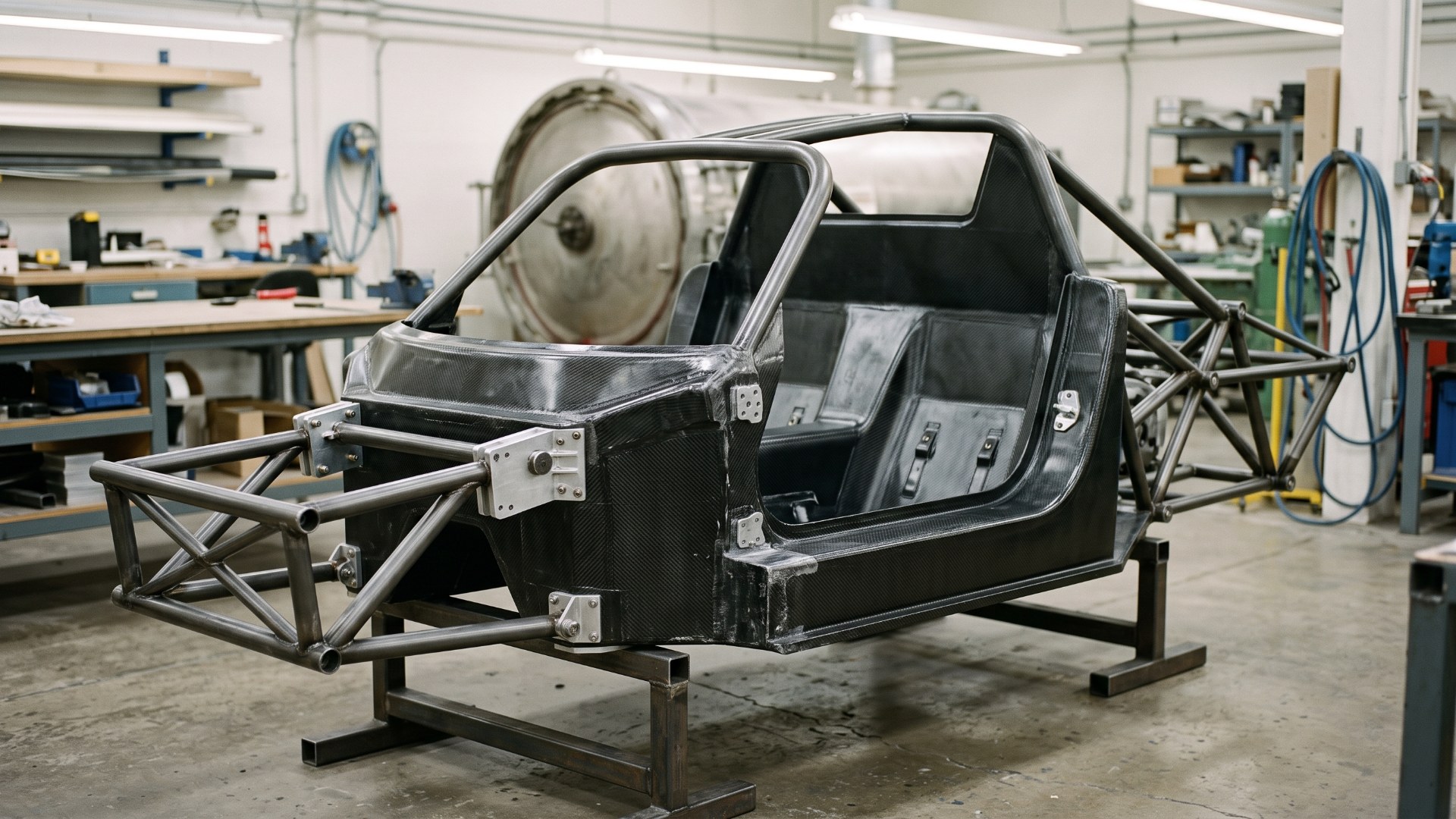
The best period description comes from Phil Hill, the 1961 Formula 1 world champion, writing in Road & Track’s April 1992 issue. By then the car had been restyled, re-engined and renamed the Monte Carlo GTB, which the magazine called less a new car than a name change. Hill described a black center tub, molded and cured in an autoclave in Italy, that formed the passenger compartment. Steel subframes bolted to it carried the suspension and drivetrain, and a steel roll cage tied in above.
So this was a carbon cabin with steel at both ends, not an all-carbon car. But the part the claim depends on, the central structure, was carbon fiber. Hill saw it on the GTB. For the car sold in Belgium, Broad Arrow’s catalog gives a monocoque number and cites a photograph of the tub taken during production.
The people were real, too. Broad Arrow’s catalog lists Carlo Chiti as technical director. He was the engineer behind Ferrari’s championship-winning 156 “Sharknose” and later ran Alfa Romeo’s Autodelta racing arm. The catalog credits former Formula 1 constructor Guglielmo Bellasi with the composites expertise.
Lamborghini’s role was narrower than the catalog’s talk of a partnership suggests. What is documented is an engine: a 1990 supply agreement, a copy of which is in the car’s file, for the 5.2-liter V12 from the Countach 5000 QV. Lamborghini did not design or build the Centenaire. And by 1992, Road & Track reported, MCA had already dropped the Lamborghini engine.
“Before” Depends on What You Count
Here the tidy story gets complicated, because three cars belong in the chronology.
| Car | First shown | Carbon structure | Built | What followed |
|---|---|---|---|---|
| MCA Centenaire | May 1990, Monaco Grand Prix week | Carbon-fiber center tub with steel subframes | Three to five originals, depending on the source | Customer production still pending in spring 1992 |
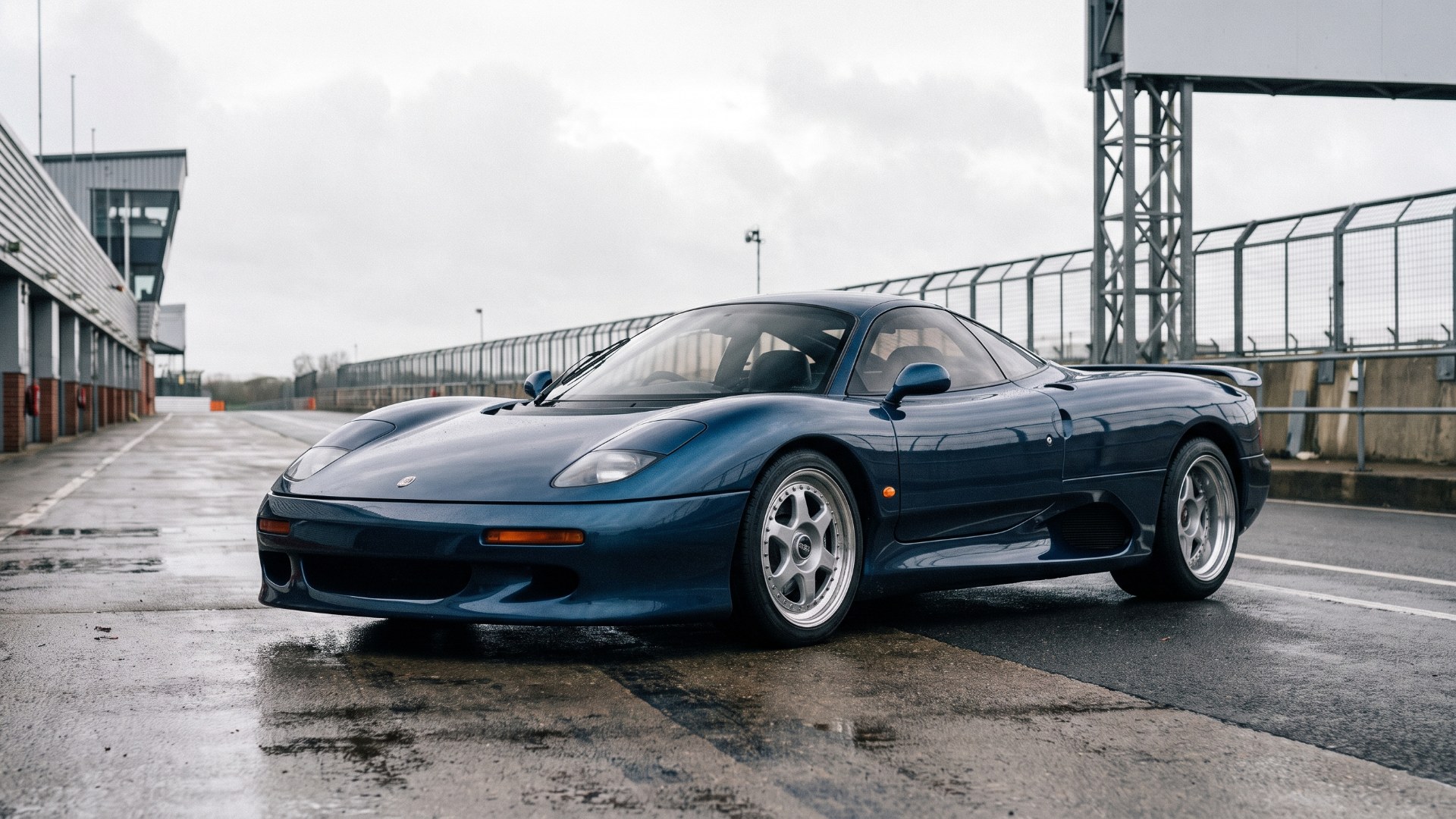
| Jaguar XJR-15 | Announced November 1990; launched early 1991 | Carbon-and-Kevlar tub derived from the XJR-9 Le Mans racer | A reported 53, through 1992 | One-make race series at three 1991 Grands Prix |
| McLaren F1 | May 28, 1992, Monaco | Carbon-fiber monocoque and body | 106, per McLaren | Le Mans win in 1995; 240.1 mph in 1998 |
Sources: Road & Track (April 1992), Broad Arrow Auctions, RM Sotheby’s, McLaren Automotive.
MCA showed its car first, six months ahead of Jaguar’s announcement and two years ahead of McLaren. That is the basis of Broad Arrow’s claim.
But the XJR-15 was no paper project. JaguarSport built it around a racing tub derived from the Le Mans-winning XJR-9, completed a reported 53 cars by 1992, and put them on the grid at three Grands Prix in 1991. When Road & Track republished Hill’s story online in 2016, its editors added a note pointing out that the all-carbon Jaguar also dates to 1990.
McLaren, for its part, still describes the F1 on its heritage page as “the first road car to be built around a lightweight carbon fibre monocoque.” On dates alone, that is hard to square with either earlier car.
The unveiling dates favor the Centenaire, but establishing the first production road car requires clearer evidence of completion, road approval and customer delivery. We’re not going to hand out a trophy the records can’t support.
The Number That Keeps Changing
Even Broad Arrow’s own descriptions of this car differ. Its September 22 announcement called it the first of five Centenaires. The listing on its bidding platform calls it the very first example produced and one of three originals.
The main catalog entry says otherwise. Citing a production declaration issued by Ballabio in October 2024, it describes the car as the second example completed, with chassis number EL 0002 GB and a monocoque numbered SCC89-0001L. It counts 16 cars across every version, of which three to five, depending on the source, were original Lamborghini-engined Centenaires.
The history file posted with that entry contains a correction. In a signed statement dated September 28, 2026, Matteo Ramella, who had vouched for the car’s identity in two letters in 2007, writes that those letters were wrong. The white car, he says, was the second Centenaire built. The first was a red car, chassis EL 0001 GB. He puts production at 16 cars between 1989 and 1994.
The differing descriptions show why chassis identity and production totals require careful attribution.
Why It Stalled
Road & Track’s 1992 story is the clearest record of how unfinished the project still was, because Hill flew to Monaco to drive the car and couldn’t. His experience concerned the later GTB, not the Lamborghini-powered Centenaire offered in Belgium, and it says nothing about how that car ran.
The GTB no longer used the Lamborghini engine. An English-designed 7.0-liter V12 had been tried and abandoned when its maker went under. In its place was a 4.0-liter twin-turbo V12 of Chiti’s own design, projected at 720 bhp in a car said to weigh 2,200 pounds.
The car arrived late, on a truck from Modena. The engine would run only with Chiti’s laptop plugged into it, because the engineer due to finish the engine-management programming had been called away to Formula 1 testing in Barcelona. Hill’s entire drive consisted of rolling downhill.
He still came away impressed by the tub, writing that it felt as solid as any structure he had experienced. He was less kind about the styling, which he called the car’s weakest point.
The same article counted five Centenaires and two Chiti-engined cars as development machines. Customer production, it said, would begin that May: five cars in 1992 and 15 a year afterward, at a projected $500,000, with Callaway studying U.S. certification.
May 1992 came, and it was McLaren that unveiled a carbon-fiber supercar in Monaco.
MCA’s plan did not hold. Chiti died in 1994. The following year the company passed to France’s Aixam-Mega, which developed the design into the Mercedes-powered Méga Monte Carlo. Broad Arrow’s catalog says two cars were prepared for Le Mans trials in 1993 and reportedly reached 354 km/h, or 220 mph.
We found no independent instrumented test of a Centenaire, no period delivery records and no owner accounts. Even the output is disputed: the catalog quotes 455 PS, about 449 hp, for this car, while Road & Track gave the Centenaire’s Lamborghini engine as 492 bhp. The early 1990s were hard on supercar makers far better funded than MCA, but we found nothing that ties its troubles to a single cause.
What McLaren Had That MCA Didn’t
The F1 is not famous because of carbon fiber. It is famous because everything about it was finished, and then tested in public.
It had a BMW V12 developed for the car and a central driving seat. Autocar’s 1994 road test called it “the finest driving machine yet built for the public road.” McLaren built 106. A race version won Le Mans outright in 1995, and in 1998 a prototype ran 240.1 mph. McLaren has built every production car since around a carbon tub.
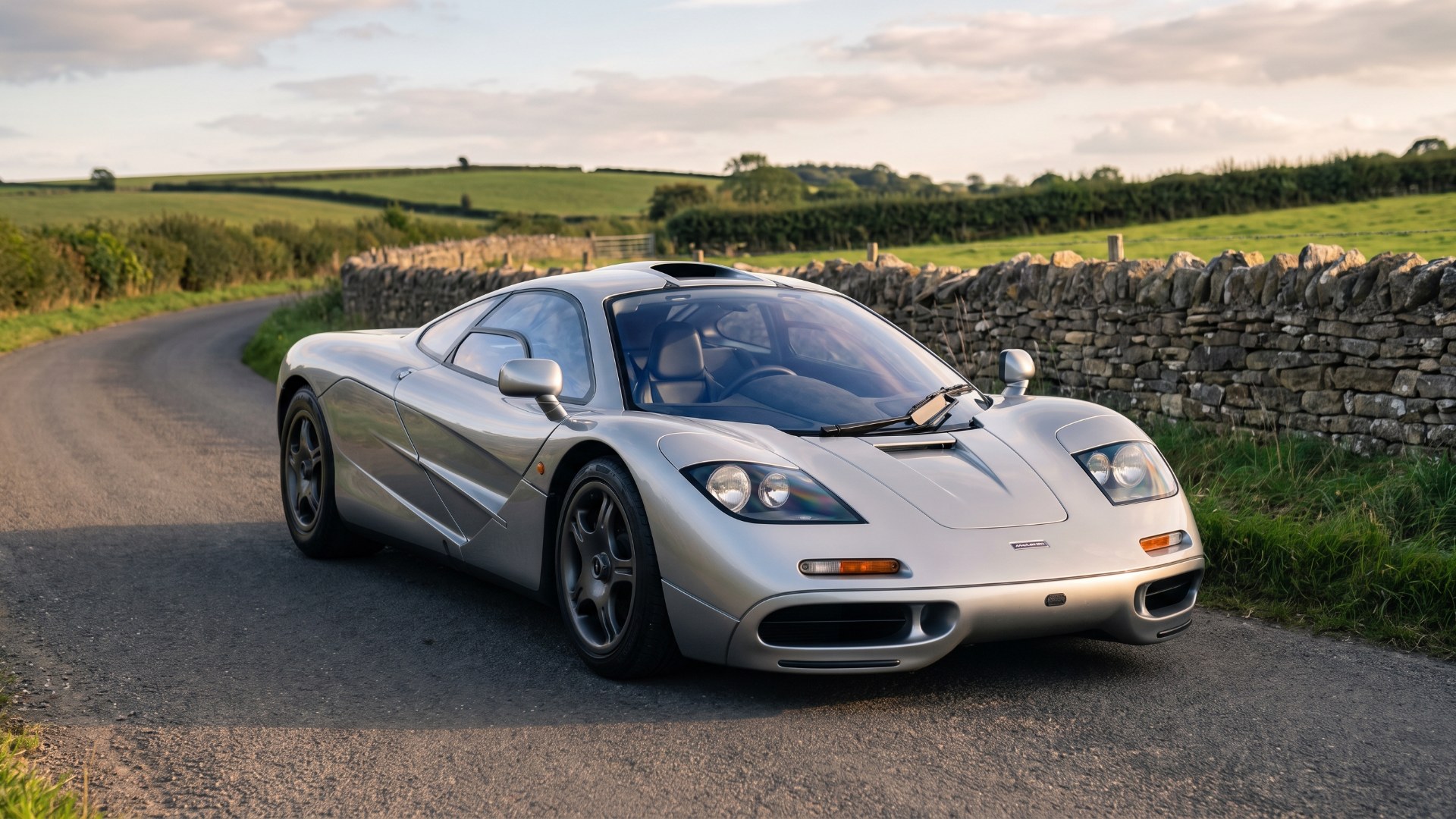
Each of those is something outsiders could check. MCA offered a specification. McLaren offered proof, repeatedly, for years.
That does not diminish what MCA attempted. It does mean an early chassis tells you nothing about handling, build quality or reliability, and that rarity alone does not make a car a classic.
What the Surviving Car Proves
The car sold in Belgium is the best evidence the project left behind. According to the catalog, it was finished in ivory white over red leather, Monaco’s national colors, at the request of Prince Rainier III, and served as MCA’s development and show car.
From 1992 it sat at Lamborghini’s factory in Sant’Agata Bolognese for about a decade before returning to Ballabio. It was repainted blue around 2007 and shown at Rétromobile, bought by its French consignor in 2014, and later returned to white by the restorer Lecoq.
The odometer shows 1,560 km, roughly 970 miles, though the catalog acknowledges it was reset at some point. By any count, this is a car that has spent far more of its life parked than driven.
The sale figure needs care. Broad Arrow’s bidding platform lists the car as sold for about $812,000 (€725,000). If the listed figure excludes buyer’s premium, the published premium schedule, 15% of the first €250,000 and 12.5% above that, would bring the total to roughly $921,000 before applicable taxes. That larger figure is our calculation, not a published result. For scale, Gooding & Company sold a McLaren F1 for $20.5 million in 2021.
That gap is not a verdict on the engineering. The Centenaire never really competed with the F1. One was a finished product. The other was a demonstration that a small team in Monaco could put a carbon tub under a road car in 1990.
History can record that without declaring a winner. The tub is real, the date is real, and the car still exists. That is a contribution, even if it never became a benchmark.
Dollar figures are converted from euros at the European Central Bank reference rate of $1.1206 per euro on October 9, 2026.
Images: Exotic Car News. All images in this article, including the lead image, are editorial illustrations, not manufacturer, press, auction or event photography. The two Centenaire images are based on the car’s published appearance and are not photographs of the car sold. The chassis image is a concept visualization.
Sources: Broad Arrow Auctions (catalog entry and history file for Lot 156, September 22 announcement, sale terms and bidding platform); Road & Track, April 1992, republished 2016; McLaren Automotive; RM Sotheby’s; Gooding & Company; Autocar; European Central Bank.