

When a masterpiece car vanishes, finding it may turn out to be the easy part.
Lead image: illustration, not a photograph of any real car or place.
What You Need to Know
- The missing Bugatti Atlantic, chassis 57453, was Jean Bugatti’s own car and has not been seen since the late 1930s. Bugatti calls it one of the great mysteries of automotive history and says experts value it at more than $112 million (€100 million), should it ever reappear.
- Other lost collector cars have come back. A Ferrari stolen from Gerhard Berger in 1995 surfaced in London in 2024. A 1954 Ferrari 375-Plus stolen in 1989 ended up in England’s High Court.
- A great car is hard to make anonymous. Its identity lives in chassis numbers, factory records and paperwork, and that same identity can make a recovered car difficult to sell until a court decides who owns it.
In the factory photographs, the car is black, low and almost liquid. Its wings swell over the wheels, its tail falls away nearly to the ground, and a riveted seam runs like a spine from the bonnet over the roof. It is the second of only four Bugatti Type 57 SC Atlantics ever built, and it belonged to the man who designed it.
No one knows where it is.
The world’s most valuable cars are usually easy to find. They sit in climate-controlled collections, appear on concours lawns, and change hands through a small circle of dealers and auction houses that know each car by its chassis number. That familiarity is part of what makes them valuable. It is also why the rare ones that disappear never stop being looked for.
This is a story about what happens when a car of that stature goes missing, and what happens when one comes back. The art world and the jewelry trade help explain both. The answer, it turns out, has less to do with where a car has been than with who can prove it is theirs.
The Black Car
Bugatti built four Atlantics between 1936 and 1938. Three survive. The first, chassis 57374, was delivered to the British banker Victor Rothschild. The third, 57473, was wrecked at a level crossing and later restored without its original engine. The last, 57591, belongs to Ralph Lauren.
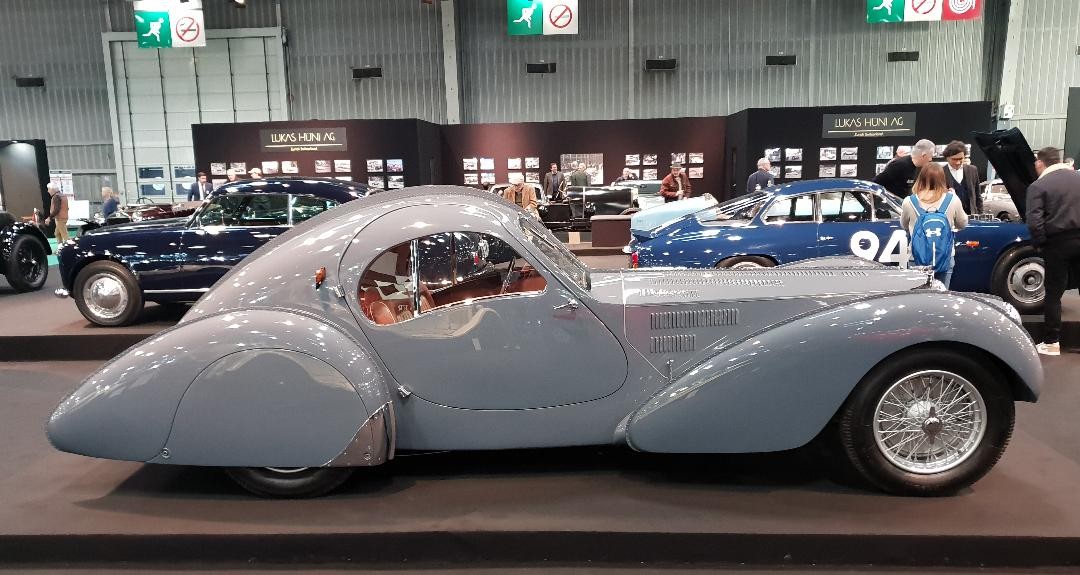
The second, chassis 57453, was Jean Bugatti’s own. In Bugatti’s account, only Jean and a few chosen friends, mainly the company’s racing drivers, ever drove it. The factory used the car, known as “La Voiture Noire,” for brochure photography and as a demonstrator at motor shows in Lyon and Nice.
Then the trail goes cold. Bugatti says there is no trace of the car after 1938. The company does not know whether Jean sold it to a racing-driver friend or whether it was moved to a safer part of France when the German army invaded Alsace, home of the Molsheim factory. It considers the second explanation more probable. Bugatti says experts estimate the car’s value at more than $112 million (more than €100 million, converted at October 2026 exchange rates), if it ever appears again. That is a hypothetical figure, not an appraisal or a sale.
Not everyone agrees that the trail ends in 1938. In April 2024, the French auction house Osenat offered a small piece of metal in a Paris sale and described it as the original chassis plate of 57453. It sold for about $16,900 (€15,750) including fees, against an estimate of about $5,400 to $10,700 (€5,000 to €10,000), at April 2024 exchange rates.
Osenat’s catalogue, which credits research by the Bugatti historian Pierre-Yves Laugier, tells a longer story than the factory’s. In that account, the plate was fitted to the Atlantic when it left the works on October 3, 1936. The number 57453 was assigned in June 1937 to a Gangloff-bodied saloon, and Osenat theorizes that the plate went with it. The Atlantic itself, now known as 57454, was lent to the King of Belgium in June 1939, photographed at Molsheim that year, and last mentioned in writing in Bordeaux in February 1941.
Those later dates conflict with Bugatti’s “no trace after 1938,” and ECN has not been able to examine the plate or the documents behind the catalogue. What the plate can show, if it is what Osenat says it is, is narrower than it first appears. It says nothing about where the car went. It does show something stranger: one of the most famous automotive identities in the world may have been separated from the automobile it belonged to before the car itself disappeared.
Why a Great Car Is Hard to Make Disappear
On March 18, 1990, two men dressed as police officers talked their way into Boston’s Isabella Stewart Gardner Museum and left with 13 works of art, among them a Vermeer and Rembrandt’s The Storm on the Sea of Galilee, which the FBI describes as the artist’s only known seascape. The FBI values the stolen works at more than $500 million and calls the theft the world’s largest property crime. More than 36 years later, the museum still offers up to $10 million for information leading to the recovery of all 13 works in good condition. Empty frames still hang where some of them were.
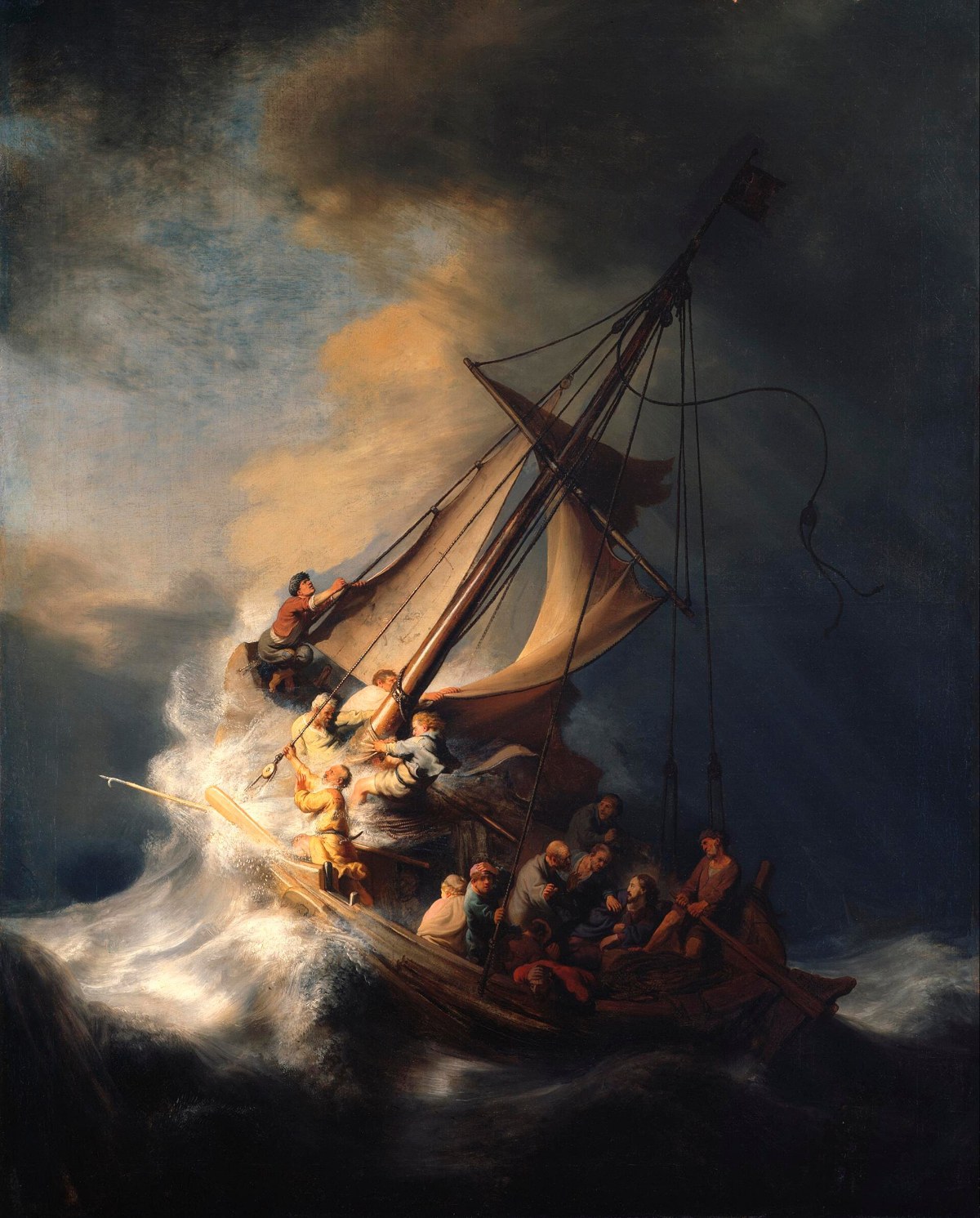
The Gardner works show the paradox of the famous stolen object. Their legitimate value is immense, and their value to whoever holds them is close to nothing. A painting known to every museum, dealer, insurer and police force in the world cannot be sold openly, exhibited or insured. Recognition protects it, and recognition also traps it.
Jewelry can escape that trap in a way paintings cannot. On October 19, 2025, thieves used a truck-mounted lift to reach the Louvre’s Apollo Gallery and left in under eight minutes with eight pieces of the French crown jewels. The Paris prosecutor valued them at about $102 million (€88 million) at the time, without counting their historical worth.
A year later, according to AFP, four main suspects were in jail awaiting trial and the jewels were still missing, listed in Interpol’s database of stolen art.
Art-crime specialists warned from the start that pieces this famous could not be sold whole, and that the stones might be cut down and the settings melted. A diamond recut is a different diamond. Destroying the jewel is how a thief turns it back into money.
A historically significant car sits between those two cases. Like a painting, it can be hidden intact. Unlike a jewel, it cannot be broken down into something valuable. Strip an Atlantic into parts and the parts are worth a fraction of the whole, because what buyers pay for is not aluminum and a straight-eight engine. They pay for the continuous, documented identity of one particular car. Thieves who take such a car have to keep it whole, and keeping it whole means keeping its identity intact as well.
The Paper Trail Catches Up
In April 1995, during the San Marino Grand Prix weekend at Imola, thieves took two Ferraris belonging to the Scuderia’s drivers: Gerhard Berger’s red F512 M and Jean Alesi’s silver-grey F355. Berger finished third in the race and Alesi second. Neither car was seen again for almost three decades.
The F512 M was the last evolution of the Testarossa, and Ferrari built 501 of them between 1994 and 1996. Berger’s resurfaced in 2023, when a buyer in the United States arranged to buy one from a broker in the UK and asked Ferrari to check it before completing the deal. Ferrari’s records showed it was stolen. In January 2024 the company reported it to London’s Metropolitan Police.
The Met’s Organised Vehicle Crime Unit took four days to rebuild the car’s history. It found that the car had been shipped to Japan shortly after the theft and stayed there until it was brought to Britain in late 2023. Officers took possession of it before it could be exported again. They valued it at about $444,000 at the time (close to £350,000). The Met said in March 2024 that no arrests had been made.
There was no stakeout and no informant. The car was caught by the most ordinary document in the collector world, a manufacturer’s record checked during a pre-purchase inspection. Whoever moved it across the world for 28 years could change its owners, its country and its plates. They could not change the fact that Ferrari knew what it was.
Who owns it now is less clear. The Met declined to say at the time who the car would be returned to. Autocar reported a Ferrari spokesperson saying the car remained Ferrari’s property and would return to Maranello, and several reports described the two cars as company cars supplied to the drivers. Other British coverage, citing insurance industry sources, said an insurer had most likely paid out after the theft, which would give that insurer a claim of its own. ECN found no public statement confirming the car’s final disposition as of October 2026.
Alesi’s F355 has never been reported found. In the police statements of March 2024 it was still missing. ECN found no later report of its recovery. Somewhere, three decades on, a silver Ferrari may still be wearing someone else’s identity, or none at all.
Finding It Is Only the Beginning
If the Berger case shows how a stolen car gets caught, the story of a 1954 Ferrari 375-Plus shows how much can still be unresolved after it is found.
Chassis 0384AM was one of only a handful of 375-Plus sports racers Ferrari built for the 1954 season; accounts of exactly how many were made, and how many survive, differ. In 1958 it was bought by Karl Kleve, a collector in Ohio. Over the following decades it was partly dismantled. In 1989 its wrecked chassis was stolen from Ohio and made its way to Belgium.
There, in 1990, it was bought by Jacques Swaters, a Belgian racing driver, Ferrari enthusiast and friend of Enzo Ferrari, who had the car restored. Kleve tried to get it back. Swaters later said the two men reached a settlement in 1999, and court reporting has described a payment of $625,000. After Kleve’s death in 2003 and Swaters’s in 2010, their heirs fought over the car. Kleve’s side argued that Swaters had not bought the chassis in good faith and that the settlement was a forgery.
In June 2014, with the families apparently in agreement, Bonhams offered the car at its Goodwood Festival of Speed sale. It sold for about $18.3 million (£10,753,500) including premium, at the exchange rate of the day, to the American retailer Les Wexner. Almost immediately, Wexner sought to undo the purchase, arguing he had been misled about the title. While lawyers argued, the restored car sat in a container in Southampton.
In 2015, England’s High Court held that Florence Swaters had owned the car and its spare parts before the auction and dismissed the competing claims, according to the barristers’ chambers that represented her. In April 2016, the remaining proceedings were settled on the first day of a three-week trial.
No one ever doubted which car this was. The chassis, the factory history and the racing record were never in question. What took a quarter of a century to settle was the paper. A recovered car can be completely genuine and still be close to unsellable until someone with authority says whose it is. As ECN found when Rod Stewart’s Lamborghini Diablo went to auction, a collector car’s ownership history can be half its story. Here it was nearly all of it.
Whose Law Applies?
Sometimes the answer depends on where the question is asked.
In 2003, an Italian partnership that included Paolo Provenzi acquired a 1996 Ferrari F50, one of 349 built. Shortly afterward it was stolen in Italy and reported to the police and to Interpol. It then spent about 16 years in Japan, where it changed hands several times. In 2019 it was sold to a company in Canada, which sold it to Ikonick Collection, a company that planned to take it to Florida.
In December 2019, U.S. Customs and Border Protection stopped the car at the border in Buffalo, New York, after finding that it had been reported stolen. In court papers, Provenzi has said investigators found its original identification number replaced with a false one. In 2021 the federal government, holding a car worth about $2 million and facing two claimants, asked a federal court to decide who owned it.
The case turns on a basic question: whose law applies? Italian law can extinguish an original owner’s rights over time in favor of a good-faith possessor, and Ikonick submitted legal opinions arguing that Italian and Japanese law had long since done just that.
In 2022, the court decided to apply New York law instead, under which a thief cannot pass good title, no matter how many honest sales follow the theft. In May 2026, a magistrate judge recommended judgment for Provenzi. Ikonick objected, and as of mid-October 2026 the decision rested with the district court, according to an analysis by John F. Coyle of the University of North Carolina School of Law. The car is still in a government warehouse.
The F50’s story shows that ownership of a car that has crossed borders can depend on where it happens to be stopped. Had it been seized somewhere else, it could have belonged to someone else.
How Identity Is Proven
None of these recoveries depended on luck. They depended on records.
Manufacturers keep the original build documentation for the cars they made. Ferrari’s Classiche department inspects a car’s chassis, mechanical systems and bodywork against original documents held in Ferrari’s archives before certifying it as authentic, which is why a pre-purchase check in Maranello could expose a car that had been through 28 years and two continents. Police forces share stolen-vehicle reports through Interpol, whose Stolen Motor Vehicle database helped identify more than a quarter of a million stolen vehicles in 2024. For older cars, historians fill the gaps with coachbuilders’ records, period photographs, registration papers and restoration invoices.
Those tools answer one question very well: is this the car? They do not answer the second: whose car is it? That one belongs to courts, and the answer depends on how the car was lost, how many times it was sold, whether the buyers acted in good faith, how much time has passed, and which country’s law governs. The 375-Plus needed 25 years and the English High Court. The F50 has spent nearly seven years in federal custody waiting for its answer.
Who Would Own It?
Which brings the story back to the black car.
Suppose 57453 were found tomorrow, behind a farmhouse wall in the southwest of France or in a collection that has never been catalogued. Authenticating it would be a formidable task. The Atlantics are among the most closely studied cars in the world, and period photographs record details that differ from car to car. But conflicting accounts of this car’s chassis numbers, and a plate said to be its original sold separately, would leave room for dispute. Establishing who legally owned it could prove harder still.
The cases above suggest how many claims might follow. Was the car still the company’s when it vanished, or had Jean Bugatti, who was killed on a test drive near the factory in August 1939, already sold it? Would heirs of the last documented owner have a claim, decades on?
What about someone who bought it in good faith years ago, under the laws of a country that rewards long possession? Does a chassis plate sold at auction in 2024 carry any weight at all, or is it only a fragment of a car that no longer answers to its own number? And what, if anything, would the company that carries the Bugatti name today have to say?
No court has had to answer those questions, and no one can answer them in advance. They are exactly the kind of questions the 375-Plus and the F50 had to work through, only with more history, more money and more countries involved.
Somewhere, perhaps behind a locked garage door, beneath a dusty cover, or inside a forgotten collection, a masterpiece may be waiting to be recognized. But if it were discovered tomorrow, who would actually own it?
At a Glance
| Car | Status as of October 2026 |
|---|---|
| 1936 Bugatti Type 57 SC Atlantic, chassis 57453 | Missing. No trace after 1938 by Bugatti’s account; Osenat cites traces to 1941. |
| Gerhard Berger’s 1995 Ferrari F512 M | Recovered. Stolen at Imola in April 1995; flagged by Ferrari and held by the Met Police in 2024. Final disposition not publicly confirmed. |
| Jean Alesi’s 1995 Ferrari F355 | Missing. Stolen at Imola in April 1995; no recovery reported. |
| 1954 Ferrari 375-Plus, chassis 0384AM | Resolved. Chassis stolen in Ohio in 1989, restored in Belgium, sold at Bonhams in 2014. Title decided in 2015; litigation settled in 2016. |
| 1996 Ferrari F50 | Found, ownership pending. Stolen in Italy in 2003; seized at the U.S. border in 2019. Ownership still before a federal court. |
Frequently Asked Questions
Has the Bugatti "La Voiture Noire" Atlantic ever been found?
No. Bugatti says there is no trace of chassis 57453 after 1938 and calls its disappearance one of the great mysteries of automotive history. An auction house sold what it described as the car’s original chassis plate in 2024, but that sale does not establish what happened to the car.
Was the missing Bugatti Atlantic stolen?
There is no evidence that it was. Bugatti considers it most likely that the car was moved to a safer part of France around the German invasion of Alsace. Whether it was hidden, sold, destroyed or taken is unknown.
How much is the missing Bugatti Atlantic worth?
Bugatti says experts estimate its value at more than $112 million (more than €100 million, converted at October 2026 exchange rates) if it ever reappears. That is a hypothetical estimate, not an appraisal or a sale.
How are stolen classic cars identified decades later?
Usually through records rather than detective work. Manufacturer archives, chassis and engine numbers, and police databases such as Interpol’s let a car be identified during a sale, an inspection or a border check, as happened with Gerhard Berger’s Ferrari in 2024.
Who owns a stolen car that is recovered decades later?
It depends on the law that applies and the facts of the case: who was compensated, how many times the car changed hands, whether buyers acted in good faith and how much time has passed. Some legal systems, including New York’s, hold that a thief can never pass good title; others can protect long-term good-faith possession.