
The twins behind the viral Half-11 have a carbon tub on wheels, 25 build slots and a $1.85 million price. As of Oct. 24, 2026, the first Oilstainlab HF-11 had not yet run. Here’s what is real, what is promised, and what still stands between Oilstainlab and its first customer car.
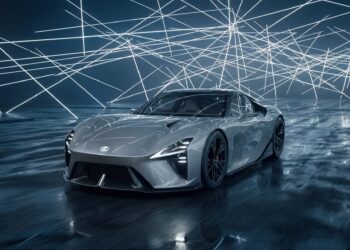
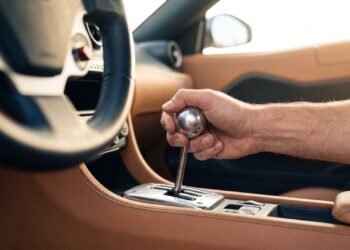
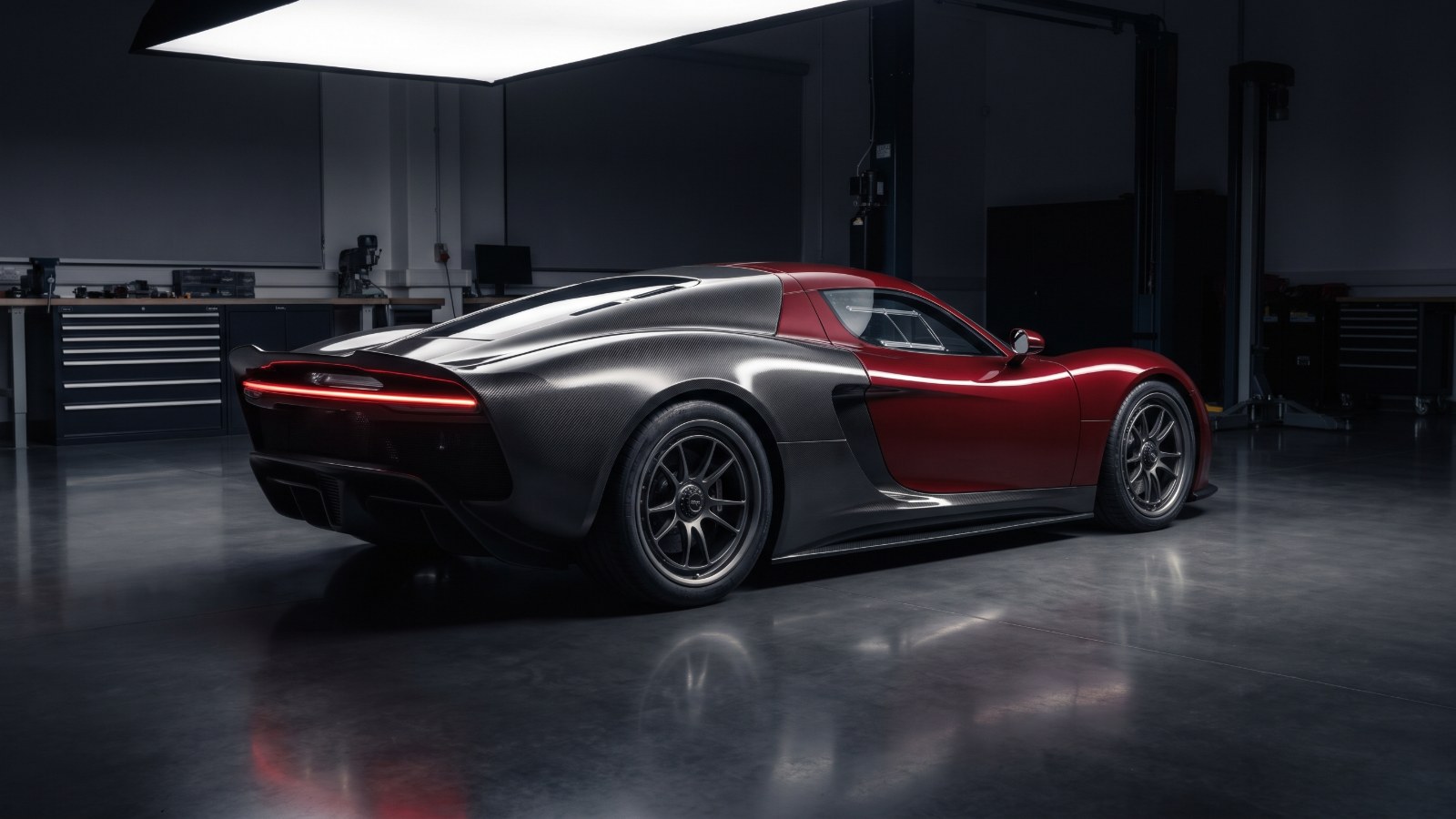
Imagery note: Illustrations in this article were AI-generated and do not depict actual Oilstainlab vehicles or components.
In a small assembly shop just outside Quebec City, one of the most talked-about independent supercar projects of recent years finally got wheels under it in October 2026. The first Oilstainlab HF-11 prototype was put on its wheels in early October, with co-founder Iliya Bridan supervising roughly 1,700 parts coming together, according to his interview with Driving.ca.
It was a genuine milestone. It was not yet a running car. On Oct. 24, his twin brother and CEO, Nikita Bridan, told New Atlas plainly: “The car isn’t running yet.” The coolant and brake lines were still to come. The plan was to show the car in Canada on Nov. 7, then truck it to California for winter testing, probably starting in early December.
That distance, between a machine the internet already adores and one that can turn a wheel under its own power, is the real Oilstainlab story. Plenty of people can draw a supercar. Very few have built a company that can make 25 of them, certify them, deliver them and still answer the phone a decade later. The Bridans are attempting all of it at once.
Oilstainlab HF-11: Development Milestones and Outstanding Questions
Oilstainlab’s public claims have moved quickly over the past two years. Sorting them by what has actually happened is the most useful way to understand the project. Status below is as of Oct. 24, 2026, based on the founders’ own published statements.
| Element | Status as of Oct. 24, 2026 |
|---|---|
| Half-11 prototype | Built and driven. 12,000-plus miles, Goodwood and a 2026 European tour. |
| HF-11 styling model | Shown. Static show car, displayed at SEMA and the Vancouver auto show. |
| HF-11 carbon tub and first prototype | In assembly. On its wheels near Quebec City; not yet running. |
| Oilstainlab’s own flat-six | In development. Founders hoped to have it running in early to mid-December. |
| Electric powertrain in an HF-11 | In development. Six to 12 months from a running car, per the CEO. |
| Thunder-Volt powertrain swap | Announced. Mechanism described; not yet demonstrated on an HF-11. |
| U.S. regulatory path | Replica registrations approved; HF-11 eligibility unconfirmed. NHTSA lists Oilstainlab as a replica-vehicle manufacturer with approved registrations. Whether the production HF-11, in either powertrain form, qualifies has not been confirmed. |
| Customer deliveries | Planned. Company says 2027; earlier buyer terms pointed to 2027–28 and later. |
The Brothers Who Walked Out of the Studio
Nikita and Iliya Bridan were born in Ukraine and grew up in Nova Scotia and Ontario, far from anything resembling a supercar showroom. By their own account, they left high school at about 14, studied design in Italy, then enrolled at ArtCenter College of Design in Pasadena. ArtCenter lists both as 2011 graduates and as faculty in its transportation design department.
The decade that followed was spent inside the industry they would later rebel against. In interviews, Nikita has described work at General Motors’ advanced design studio on Corvette and Cadillac projects, along with time at Toyota and Honda. Iliya, he told New Atlas, managed production programs for Honda and China’s GAC. Those roles are self-described and have not been independently confirmed by the automakers, but they matter: they are the basis of the brothers’ claim that they know how real cars get made.
Oilstainlab began in Southern California in 2018 as a design studio, now based in Signal Hill. Nikita has been blunt about why the startup cannot behave like a concept-car studio. As a small brand, he told Car Design News, “you can’t show something that you can’t build.”
The Half-11: A Hot Rod That Became a Business Plan
The company’s first car was never meant to be a product. Iliya’s 2017 sketch grafted the friendly face of an early Porsche 911 onto a skeletal, race-car rear end. The finished Half-11 used a small-block Chevrolet V8 and a manual gearbox from a 996-generation 911 GT2, according to the founders’ account in the Canadian magazine MONTECRISTO. Oilstainlab’s SEMA release lists 650 hp at 8,500 rpm, a tube-frame chassis, aluminum bodywork and a curb weight of 1,850 pounds.
Then it went everywhere. The Half-11 drove from Los Angeles to New York in about four days, slid through the F.A.T. Ice Race in Aspen, ran the hill at the 2024 Goodwood Festival of Speed and won an award at The Quail during Monterey Car Week. By mid-2026 it had covered more than 12,000 miles, according to the company’s Business Wire release announcing a European tour with parts brand Delphi.
The brothers also seeded social media with doctored “period” photographs placing their car in 1960s races. It was clever marketing. It is worth stating clearly: those images are inventions, not history.
What the Half-11 proved was demand. Enough people asked to buy one that, around 2023, the brothers began developing a road car. Nikita has said the team effectively had to start over, because the Half-11 was too low and too cramped for most people to even sit in.
The HF-11: What’s Real and What’s Planned
The Oilstainlab HF-11 that emerged is a mid-engine two-seater built around a bespoke carbon-fiber tub. Nikita told Forbes in 2025 that the tub is produced by Crawford Composites, a North Carolina motorsport specialist. Oilstainlab claims the cabin fits drivers up to 6-foot-4 wearing a helmet. Inside are five round gauges, a wooden shift knob and helmet storage in the doors. Its proportions sit closer to a Porsche Carrera GT or Gordon Murray T.50 than to today’s oversized hypercars.
Its performance figures are all targets. As of Oct. 25, 2026, Oilstainlab’s website still advertised 1,950 pounds for the combustion car, 2,100 pounds for the electric version, 650 hp, 3.2 seconds to 60 mph and a 12,000-rpm redline. None had been independently measured, and the first car had yet to run.
The engine has already changed
The most revealing part of the HF-11 story is its engine. At the October 2024 reveal, the headline was a 4.5-liter naturally aspirated flat-six making 650 hp and revving to 12,000 rpm. The founders said it was not a Porsche engine. By mid-2025 the company was discussing a 4.6-liter and a 5.0-liter flat-six, the latter with a quoted 1,200 hp. In August 2025, Forbes reported two planned options: a bespoke, air-cooled 4.5-liter from an unnamed California supplier, and a water-cooled 4.2-liter based on Porsche’s 991-generation RSR racing engine.
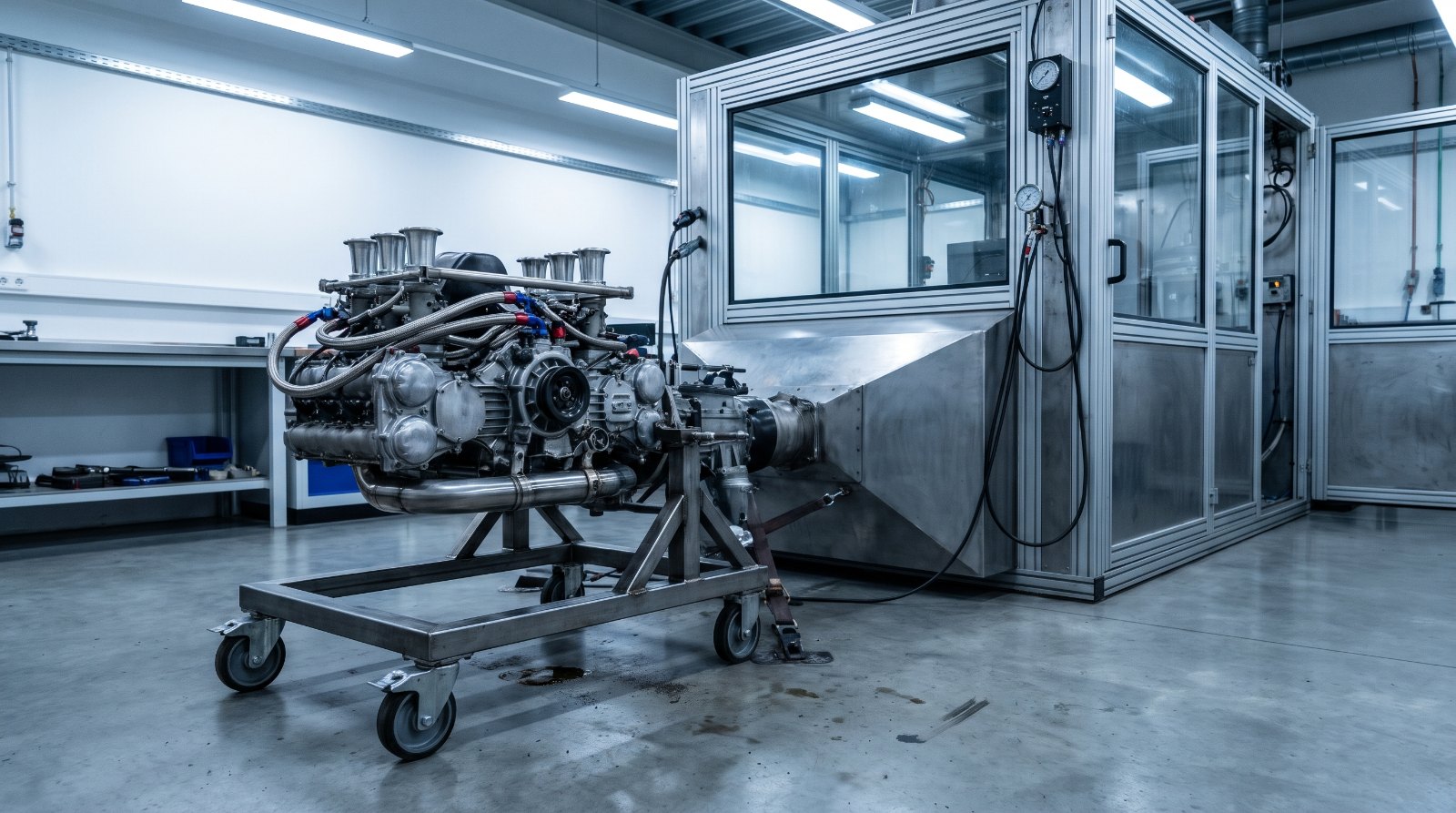
By October 2026, Nikita described a single target to New Atlas: a water-cooled 4.2-liter producing about 650 hp and revving to 10,000 rpm. The website had not been updated to match.
The change is less dramatic than it sounds, but it is meaningful. Sustaining 12,000 rpm in a road engine is extraordinarily hard. Piston speeds, valvetrain loads, lubrication and heat all climb steeply with revs, and so do the durability and emissions challenges. A 10,000-rpm engine derived from a proven racing design is a more conservative and more buildable choice. It is also further from the original promise.
The first prototype is not starting life with that engine. In the Driving.ca interview, Iliya said the plan was to begin with a stock Porsche 991-generation flat-six as a development engine, and to test with a Manthey Racing GT4MR six as well. Oilstainlab’s own engine was to follow later in the fall. As of Oct. 24, 2026, it had not been publicly confirmed whether the stock engine had been fitted.
Using a stand-in engine in an early development car is normal practice. It lets engineers start on the structure, suspension, steering, brakes, cooling layout and ergonomics without waiting for the final powertrain. What it cannot do is prove the production engine’s power, rev limit, sound or durability. As of late October 2026, those milestones were still ahead.
Thunder-Volt: one car, two hearts
The idea that made the HF-11 famous is Thunder-Volt: the same chassis can run either the flat-six or an electric powertrain, and the two can be exchanged. Nikita told New Atlas that the rear subframe disconnects and the engine and fuel tank slide out together as one sealed unit, so that, in simplified terms, the job comes down to a handful of bolts and a couple of electrical connectors. Driving.ca reported that a trained mechanic should need an hour or two.
The electric side is the more radical bet. Oilstainlab is targeting about 850 hp from a single motor driving through a real manual gearbox. It is also using silicon-anode battery cells and aiming for a weight of roughly 2,200 pounds.
The company used an electric version of the Half-11 to test what a clutch-and-shifter EV feels and sounds like. In October 2026, Nikita estimated the electric HF-11 was still six to 12 months from running. Until both powertrains exist in working form, a swap cannot be demonstrated. It is a bet Porsche has so far declined to make with its own 911, for reasons ECN explored in Porsche Won’t Make an Electric 911.
Who would be allowed to perform it was also unsettled. Nikita said in October 2026 that the company was still debating internally whether owners should do it themselves, mainly over liability. The likelier answer is a factory-trained mechanic sent to the customer. Nikita also told New Atlas that about 80 percent of prospective customers have expressed a preference for the electric version, a figure the company had not broken down publicly.
The Wall Every New Carmaker Hits
Designing a beautiful car is the part the Bridans have already proven they can do. Manufacturing is different. The HF-11 involves about 1,800 bespoke parts, a carbon tub from North Carolina, and final assembly by five or six people in Quebec City alongside partners such as Porsche restoration specialist EP9 Autosport. The wider team numbers roughly 10 to 15 people, including part-timers.
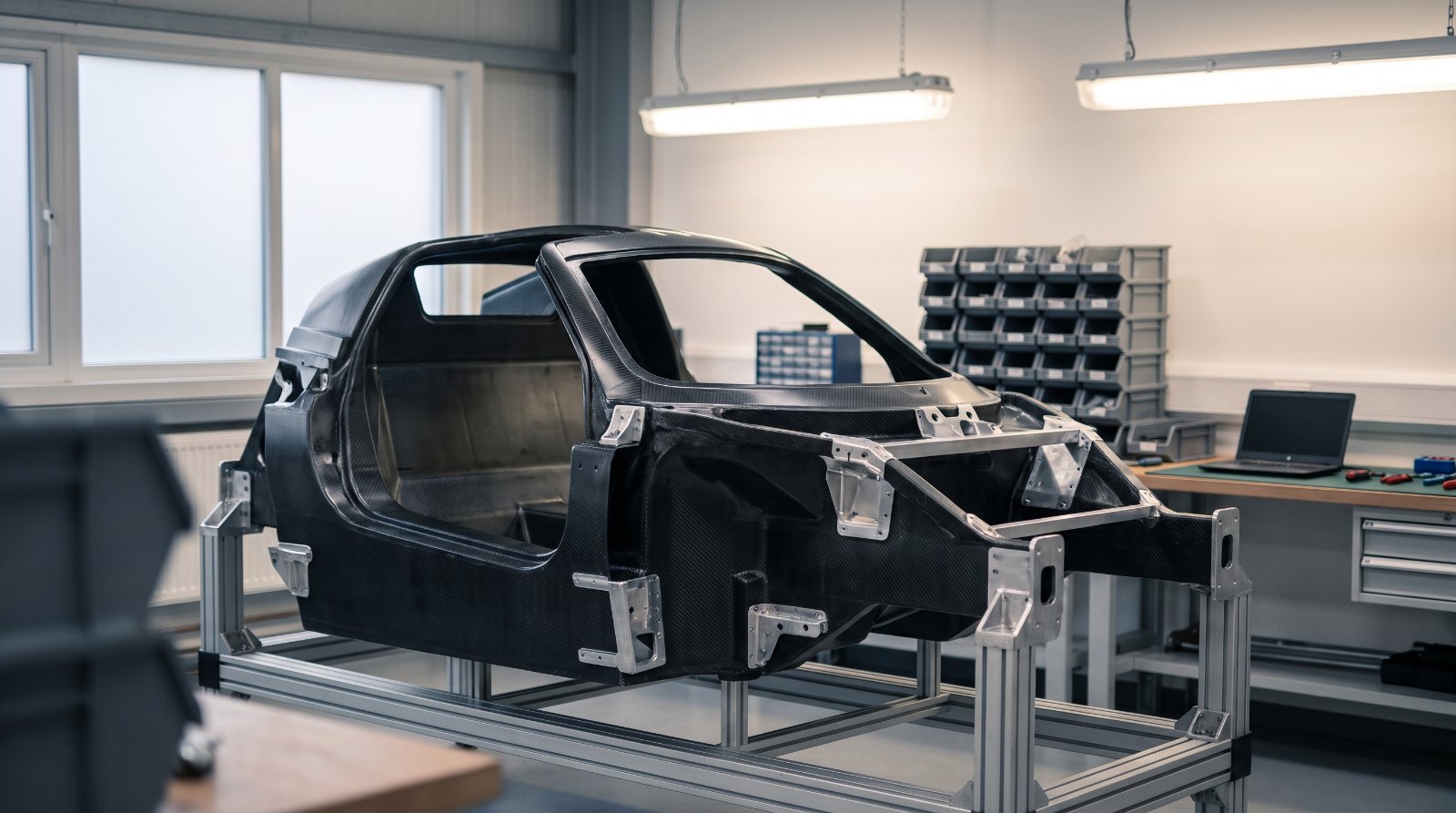
Each of those parts needs a qualified supplier, a repeatable process and a way to be replaced years from now. Nikita told New Atlas that the latest delays came from global conflicts and from suppliers redirecting capacity to military products, including drones and missiles. That is the company’s explanation; it cannot be independently verified.
Then comes the regulatory path, the step that has stopped many promising specialty cars. Building only 25 cars does not by itself exempt a company from U.S. safety law. The National Highway Traffic Safety Administration has stated that there is no small-volume exclusion from the federal motor vehicle safety standards. There are narrow routes, though, and NHTSA’s public records suggest Oilstainlab is pursuing one.
NHTSA’s manufacturer database lists Oilstainlab LLC, registered in July 2023, as a replica vehicle manufacturer. Under a program that took effect in 2022, small manufacturers can sell up to 325 cars a year that resemble a vehicle produced at least 25 years earlier, without meeting the full set of federal safety standards that apply to new cars. Oilstainlab’s entry shows two approved replica registrations: a 1967 Alfa Romeo 33 Stradale, filed in July 2023, and a 1996 Porsche GT1, filed in February 2024. In ECN’s examination of the public filing, the GT1 registration sets the Porsche’s dimensions and silhouettes beside renderings labeled “hf-1” that closely resemble the HF-11.
That connection is ECN’s interpretation of the filing. Oilstainlab has not described the HF-11 as a replica in its own announcements, and the registration does not by itself establish that the production HF-11, in either powertrain form, qualifies for the program, has been approved for sale or meets federal requirements.
The interpretation would fit Iliya’s comment to duPont REGISTRY in December 2025 that the company was focusing on the U.S. market and small-batch manufacturing exemptions. Replica makers must still label each car as a replica, report to NHTSA every year and handle defects and recalls, and lighting and glazing must meet equipment standards. Emissions rules are a separate matter, and NHTSA can revoke a registration. How a car that can swap powertrains fits that framework is still an open question.
Paperwork also cannot stand in for engineering. Nikita says the team spent about two years on its engineering and regulatory strategy, but as of late October 2026 the first HF-11 had yet to run, and its own engine had yet to prove itself.
The Money Behind 25 Cars
Oilstainlab’s price ladder has been more stable than its spec sheet. The HF-11 starts at $1.85 million (about CDN$2.5 million) with the combustion powertrain. Thunder-Volt dual-powertrain capability adds $500,000.
Buyer terms detailed by duPont REGISTRY in December 2025 show a two-tier structure. Eleven “Maniac” buyers lock the car at $1.35 million and take a $500,000 equity stake in the company. They put down a 25 percent deposit, choose their VIN and build slot, and were then quoted deliveries in 2027–28. Standard buyers pay a $100,000 deposit to join the waitlist and 25 percent to secure production, with deliveries from 2028 onward.
That structure makes early buyers part-owners of the manufacturer, which is unusual. It builds an intensely loyal founding community. It also means those customers carry two risks: whether their car arrives, and whether the company succeeds.
In June 2026, Oilstainlab’s financial adviser, Mavka Capital, announced a first closing of a Series A round. It said proceeds would fund the start of HF-11 production and first deliveries in 2027, and that more than half the planned production run was reserved. The amount raised and the investors were not disclosed. The announcement also said the company had signed multiple agreements to supply its powertrain, platform and other technologies to global automakers. It did not name them, and ECN could not independently confirm any of the agreements.
Some simple ECN arithmetic shows the scale involved. If all 25 cars sold at the standard $1.85 million price, vehicle sales would total $46.25 million. Under the published two-tier terms, 11 Maniac cars at $1.35 million and 14 standard cars at $1.85 million would total $40.75 million. The Maniac buyers’ $500,000 equity purchases, up to $5.5 million combined, would be investment in the company rather than car sales.
These are two pricing scenarios, not revenue forecasts, and they exclude options, Thunder-Volt upgrades and any changes to terms. Neither says anything about profit, or about what development, tooling, testing and compliance have cost. They do show why the founders have described the first car as a way to prove they can build a compelling product, and why selling Thunder-Volt technology to other manufacturers could matter to the business.
Who Has Done This Before
The Bridans name Gordon Murray Automotive as their benchmark, and it is a demanding one. GMA says the T.50’s 100-car run sold out within 48 hours of its August 2020 reveal, and in June 2026 the company said all 100 had been built and delivered to owners. Even with Murray’s reputation and an established engineering firm behind it, that took the better part of six years.
Established makers slip too. Koenigsegg showed its four-seat Gemera in 2020, reworked the powertrain in 2023 and presented the first V8 customer car in 2026. Changing an engine plan midstream, as Oilstainlab has, is normal in this world. It simply costs time.
The cautionary tales are real. Germany’s Gumpert put its Apollo supercar into production in 2005, entered insolvency in 2012 and was liquidated in 2013. Under new owners it returned as Apollo Automobil, whose 10-car Intensa Emozione was developed with racing specialist HWA. Technical daring is no guarantee either: the MCA Centenaire had a carbon-fiber chassis before the McLaren F1 and is now largely forgotten.
The HF-11 is not Quebec’s first supercar project, either. HTT’s Pléthore LC-750 was promoted as “Canada’s first supercar,” appeared on Dragons’ Den and was on the road by 2011. That earlier claim is one reason to treat descriptions of the HF-11 as Canada’s first hypercar with caution.
The difference between survivors and spectacular prototypes is rarely design. It is capital, supplier discipline and a credible path through certification. Oilstainlab’s advisers include Alex Lee, the former chief executive of Singer, a company the Bridans cite for standing behind its product. That company knowledge will matter more than any rendering.
The Next Car and the Owner’s Question
The founders have been open that the HF-11 is a halo. A second, far cheaper model, code-named Project GRIN, is in early development. Nikita told CarBuzz he wants something around 2,200 pounds and 400 hp with a manual gearbox. Driving.ca reported that combustion and electric are both still on the table, with cost deciding which. Nothing about price, timing or approval has been announced, and it should be treated as exploratory.
For a collector, that raises the real question: is buying an HF-11 buying a car, joining a development program, or helping found a manufacturer? For Maniac buyers, it is all three. The rewards could be a genuinely singular object with a founding story attached. The risks are those of any first-generation boutique car: long-term parts, specialist service, insurance and resale in a market with no price history yet. Even established exotics can lose value quickly, as ECN found in its look at used-supercar depreciation; a 25-car newcomer has no track record in either direction.
What Would Count as Proof
Delays are not failure. The HF-11 has missed its own early targets. A running prototype was promised for spring 2025, and Forbes was told in August 2025 that the car would be on track that fall. Neither happened. But the same is true of programs that went on to succeed, and by October 2026 Oilstainlab had something it lacked a year earlier: a real HF-11 chassis on its wheels.
The next proofs are easy to define. Oilstainlab’s own engine running in the car. An independent journalist or engineer driving it. A working electric HF-11 and a demonstrated Thunder-Volt swap. A confirmed U.S. compliance path for both powertrains. And, ultimately, a customer taking delivery of car number one. In October 2026, the company pointed to a fully finished car in summer 2027.
The Bridans have already done the improbable once, turning a weekend hot rod into one of the most recognizable independent cars of the decade. Building 25 supercars is a different kind of hard. The next step is the simplest to describe and the hardest to deliver: the HF-11 has to stop being a promise and start being a machine.