
For most of supercar history, “daily drivable” was a polite way of saying “slower.” The car you could live with was the one with the softer suspension, the smaller engine and the less dramatic badge. In 2026, that rule has quietly broken. Several of the quickest cars on sale are also among the easiest to use every day, and the reason is the technology enthusiasts were most nervous about: electrification.
A front electric motor gives a Corvette all-weather traction. A hybrid system lets a 907-horsepower Lamborghini leave the house without waking the street. Electrically assisted turbochargers make Porsche’s most powerful 911 respond more smoothly in traffic than the one it replaced. Below are the seven supercars and super-GTs we would choose to drive every day in 2026, and the honest trade-offs that come with each.
What You Need to Know
- The Porsche 911 Turbo S remains the most complete daily supercar, now with 701 hp of T-Hybrid power and rear seats.
- The Chevrolet Corvette E-Ray is the value and all-weather pick at about $111,000, but 2026 is its final model year.
- The McLaren GTS is the most usable mid-engine car, with real luggage space and a fast nose lift.
- Five cars on many older “daily supercar” lists, including the Audi R8, Ferrari Roma, McLaren GT, Lamborghini Huracán and Aston Martin DB11, are no longer sold new.
What actually makes a supercar daily drivable
Horsepower is the least useful number when you are choosing a car for Monday morning. These are the six things that decide whether a supercar gets driven or ends up under a cover.
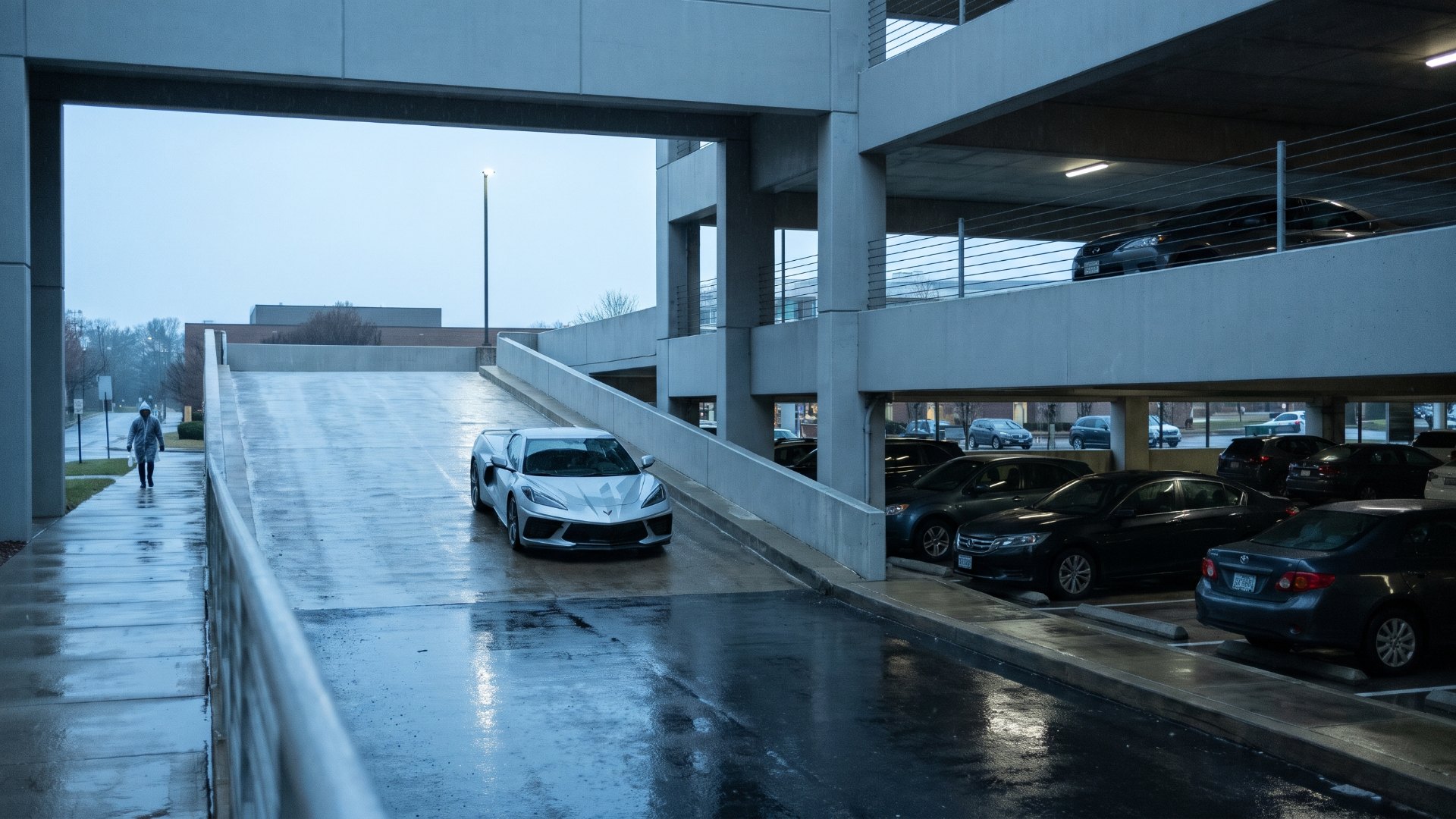
- Clearance and a nose lift. Driveways, parking ramps and speed bumps defeat more supercars than traffic does. A fast front-axle lift is close to essential.
- Ride in its softest mode. Adaptive dampers matter more than lap times on broken city streets.
- Traction in bad weather. All-wheel drive turns a fair-weather toy into a car you can take out in the rain.
- Space you can use. A golf bag, carry-on luggage or a weekly grocery run should fit without planning.
- Visibility and size. Being able to see out, and to fit in a normal parking space, reduces daily stress more than any feature.
- Running costs and servicing. Dealer access, service intervals, insurance and tires shape ownership far more than the purchase price.
Our picks below are based on manufacturer specifications, published U.S. pricing and independent testing reported by other outlets. ECN did not road-test these cars for this guide.
At a glance: 2026’s best daily-drivable supercars
| Car | Power | 0–60 mph* | Seats | Drive | From (USD) |
|---|---|---|---|---|---|
| Porsche 911 Turbo S | 701 hp | 2.4 sec | 2+2 | AWD | $272,650 |
| McLaren GTS | 626 hp | 3.1 sec | 2 | RWD | $229,900 |
| Chevrolet Corvette E-Ray | 655 hp | 2.5 sec | 2 | AWD | $111,095 |
| Ferrari Amalfi | 631 hp | 3.3 sec (0–62) | 2+2 | RWD | ~$262,000 |
| Mercedes-AMG GT 63 Coupe | 577 hp | 3.1 sec | 2 (2+2 opt.) | AWD | $181,350 |
| Aston Martin Vantage | 656 hp | 3.5 sec | 2 | RWD | $191,000 |
| Lamborghini Temerario | 907 hp | 2.7 sec (0–62) | 2 | AWD | ~$390,000 |
*Manufacturer claims. Prices are base U.S. MSRPs before options, as published at the time of writing; the Corvette and Porsche figures include destination. Ferrari and Lamborghini have not published simple U.S. base prices, so those figures reflect widely reported U.S. pricing and should be confirmed with a dealer.
1. Porsche 911 Turbo S: still the benchmark
The 911 Turbo S has been the default answer to this question for two decades, and the 2026 car makes the case stronger. Porsche’s new T-Hybrid system raises output to 701 horsepower, 61 more than before, with an unchanged 590 lb-ft of torque. Porsche claims 0–60 mph in 2.4 seconds and a 200-mph top speed.
What makes it a daily car is everything around those numbers. You get all-wheel drive, small rear seats that take a child or a bag, a usable front trunk, good visibility and a dealer network in most major U.S. cities. The hybrid system builds boost almost instantly, so the car feels relaxed in traffic rather than waiting to come on song.
The trade-off: price. At $272,650 including destination, the Turbo S costs tens of thousands more than the car it replaces, and options climb quickly. If you want the same everyday character for much less, the 911 Carrera GTS shares the T-Hybrid idea at a lower price.
2. McLaren GTS: the mid-engine car you can pack for a weekend
Most mid-engine supercars treat luggage as an afterthought. The GTS was designed around it. McLaren quotes about 420 liters of space under the rear glass and another 150 liters up front, enough for real weekend bags. Its 4.0-liter twin-turbo V8 makes 626 horsepower, and McLaren claims 0–60 mph in 3.1 seconds.
The detail that matters most is the nose lift. It raises ground clearance from 4.3 to 5.1 inches in about four seconds, more than twice as fast as the system on the outgoing GT. That is the difference between using it at a red light and holding up the car behind you. Visibility is unusually good for the class, and the GTS starts at $229,900 plus a $5,500 destination charge.
The trade-off: two seats, rear-wheel drive and a smaller dealer network than Porsche or Mercedes. Infotainment and driver-assistance features also trail the German cars.
3. Chevrolet Corvette E-Ray: the all-weather bargain, for now
The E-Ray is the clearest example of electrification making a supercar easier to live with. A 495-horsepower V8 drives the rear wheels, and a 160-horsepower electric motor drives the fronts, for 655 horsepower combined. There is no driveshaft linking the two ends; the front motor simply adds traction when the rear tires need help. Chevrolet claims 0–60 mph in 2.5 seconds.
For daily use, it offers all-wheel drive, a front lift, two trunks with 12.5 cubic feet of combined space, a quiet electric-only “Stealth” mode for early departures, and a starting price of $111,095 including destination. Nothing else on this list comes close on value.
The trade-off: 2026 is the E-Ray’s final model year, so new examples will become harder to find. It is also one of the heavier C8 Corvettes, at about 3,800 pounds. If you are shopping late, a lightly used E-Ray may be the smarter buy; see our guide to the best exotic cars under $150,000.
4. Ferrari Amalfi: the Ferrari built for daily use
The Amalfi replaced the Roma as Ferrari’s entry point and its most everyday-friendly car. Its front-mounted twin-turbo V8 makes 631 horsepower, 19 more than the Roma, and Ferrari quotes 0–62 mph in 3.3 seconds. The headline change for daily drivers is inside, where Ferrari has brought back physical buttons in place of the touch-sensitive controls used in the Roma.
It is a 2+2, with rear seats best used for small children or bags, and a trunk large enough for a weekend away. A front-engine layout also means better visibility and easier parking than Ferrari’s mid-engine cars. U.S. pricing has been widely reported at about $262,000 before destination and options, and a convertible Amalfi Spider has since joined the range.
The trade-off: rear-wheel drive only, and Ferrari’s options list can add six figures. Allocation also varies by dealer, so availability is not guaranteed.
5. Mercedes-AMG GT 63 Coupe: the most comfortable car here
The current AMG GT is a different car from the stripped-back first generation. It now has all-wheel drive, an available pair of small rear seats and a hatchback, which together make it the most practical two-door on this list. The GT 63’s 4.0-liter twin-turbo V8 makes 577 horsepower, and Mercedes-Benz USA lists 0–60 mph in 3.1 seconds with a starting price of $181,350.
Driver-assistance technology, cabin comfort and Mercedes’ service network are all strengths. If you want more performance, the GT 63 S E Performance plug-in hybrid raises output to 805 horsepower.
The trade-off: it is big and heavy, and it feels more like a fast grand tourer than a supercar. Buyers who want mid-engine drama should look elsewhere.
6. Aston Martin Vantage: the driver’s choice
The latest Vantage gained well over 100 horsepower compared with the car it replaced and now makes 656 horsepower from a Mercedes-AMG-sourced twin-turbo V8. Aston Martin claims 0–60 mph in 3.5 seconds. More importantly for daily use, its redesigned interior brings back physical switches and a modern infotainment system.
It is the most traditional car here: front engine, rear-wheel drive, two seats and a long hood. That makes it engaging on a good road and easy to judge in a parking lot. The coupe starts at $191,000, with a Roadster also available.
The trade-off: limited cargo space, no all-wheel drive and no manual option. It rewards a driver more than it serves a commuter.
7. Lamborghini Temerario: the wild card that works
No one buys a Lamborghini for practicality, which is what makes the Temerario interesting. Its twin-turbo V8 and three electric motors produce a combined 907 horsepower, and Lamborghini claims 0–62 mph in 2.7 seconds. The engine revs to 10,000 rpm.
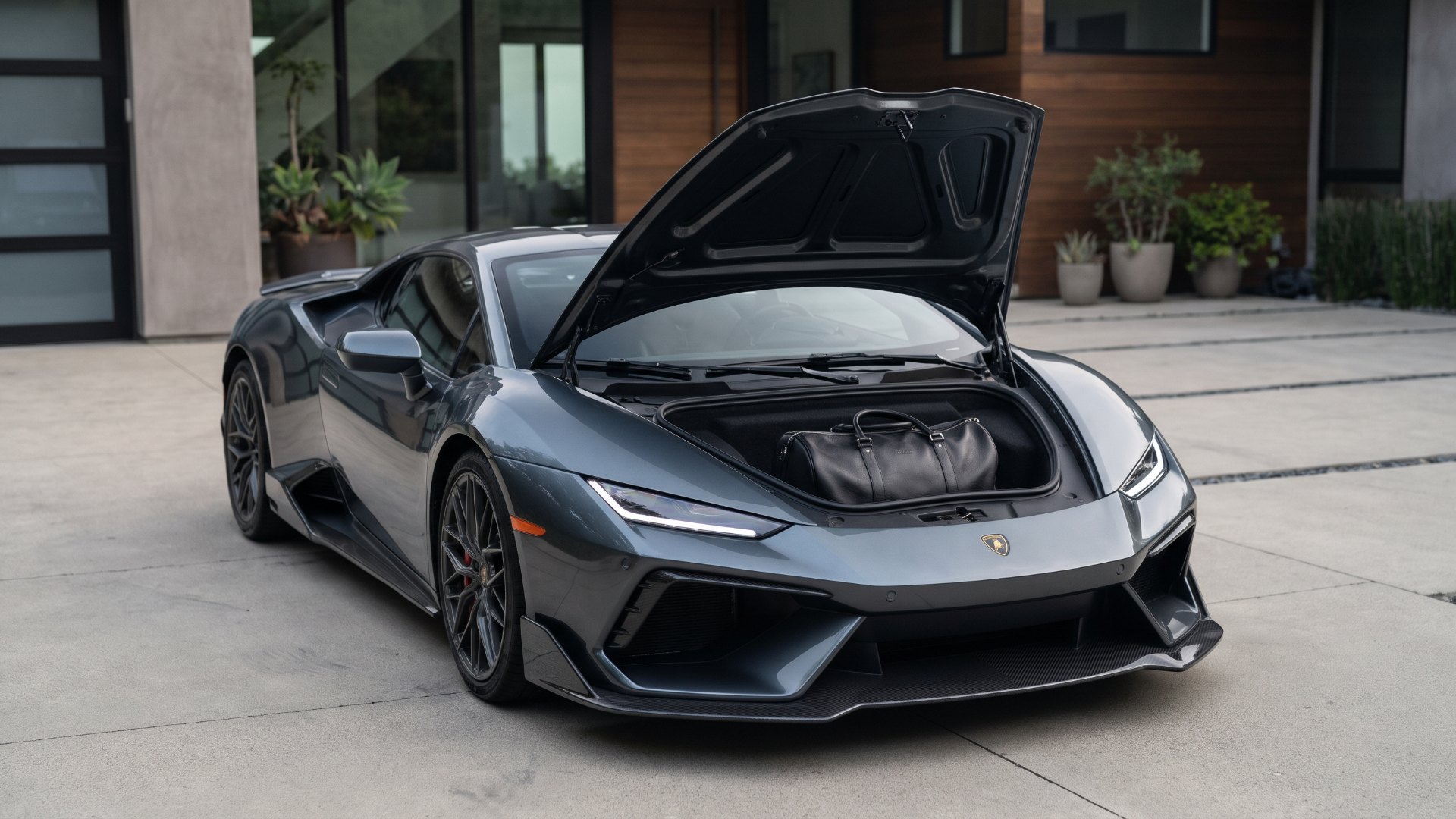
Yet the hybrid system makes it more usable than the Huracán it replaced. It can move short distances on electric power, its electric front axle provides all-wheel drive, and the cabin is roomier than Lamborghinis have been in the past. We compared its performance with the V12 flagship in our Temerario vs. Revuelto analysis.
The trade-off: at around $390,000 before options by most published estimates, it costs more than any other car here, and its front trunk holds only about 3.8 cubic feet. Treat it as a special car you can use often, not a commuter.
The daily supercars you can no longer buy new
If you have read older versions of lists like this one, several familiar names are gone. The Audi R8 ended production in 2024. The Ferrari Roma has been replaced by the Amalfi, the McLaren GT by the GTS, the Lamborghini Huracán by the Temerario and the Aston Martin DB11 by the DB12.
That is not bad news for buyers. Many of these cars are now available used at a fraction of their original prices, often with the same everyday strengths. We looked at how that works in our analysis of supercar depreciation.
Why it matters
For years, enthusiasts assumed hybrid technology would make supercars heavier, quieter and less exciting. In some ways it has. But it has also solved problems that kept supercars in garages: poor traction in the wet, turbo lag in traffic, and the noise of a cold start before sunrise. The result is that, in 2026, the car you can drive every day no longer has to be the slow one. Porsche’s decision to keep the 911 gasoline-powered with hybrid assistance, rather than fully electric, reflects the same balance; we explored why in what Porsche is protecting with the 911.
Frequently asked questions
What is the best daily-drivable supercar in 2026?
The Porsche 911 Turbo S is the most complete choice, combining 701 horsepower with all-wheel drive, rear seats, good visibility and a broad dealer network. The Corvette E-Ray offers much of the same everyday usability for well under half the price.
What makes a supercar daily drivable?
The key factors are ground clearance and a fast nose lift, a comfortable ride in the softest mode, all-weather traction, usable luggage space, good visibility and reasonable servicing and running costs.
What is the cheapest daily-drivable supercar in 2026?
Among new cars, the Chevrolet Corvette E-Ray, at $111,095 including destination, is the least expensive car on our list. 2026 is its final model year.
Is a mid-engine supercar practical for daily use?
It can be. The McLaren GTS offers about 570 liters of total luggage space and a four-second nose lift, which makes it one of the most practical mid-engine cars sold today.
Is the Audi R8 still available?
No. Audi ended R8 production in 2024. Used R8s remain a popular daily-drivable supercar on the pre-owned market.
Sources: manufacturer specifications and U.S. pricing from Porsche, McLaren, Chevrolet, Ferrari, Mercedes-Benz USA, Aston Martin and Lamborghini, plus published U.S. pricing reports where manufacturers do not list a base price. ECN did not road-test these vehicles for this guide. Prices and availability can change; confirm with a dealer. Updated November 10, 2026.