
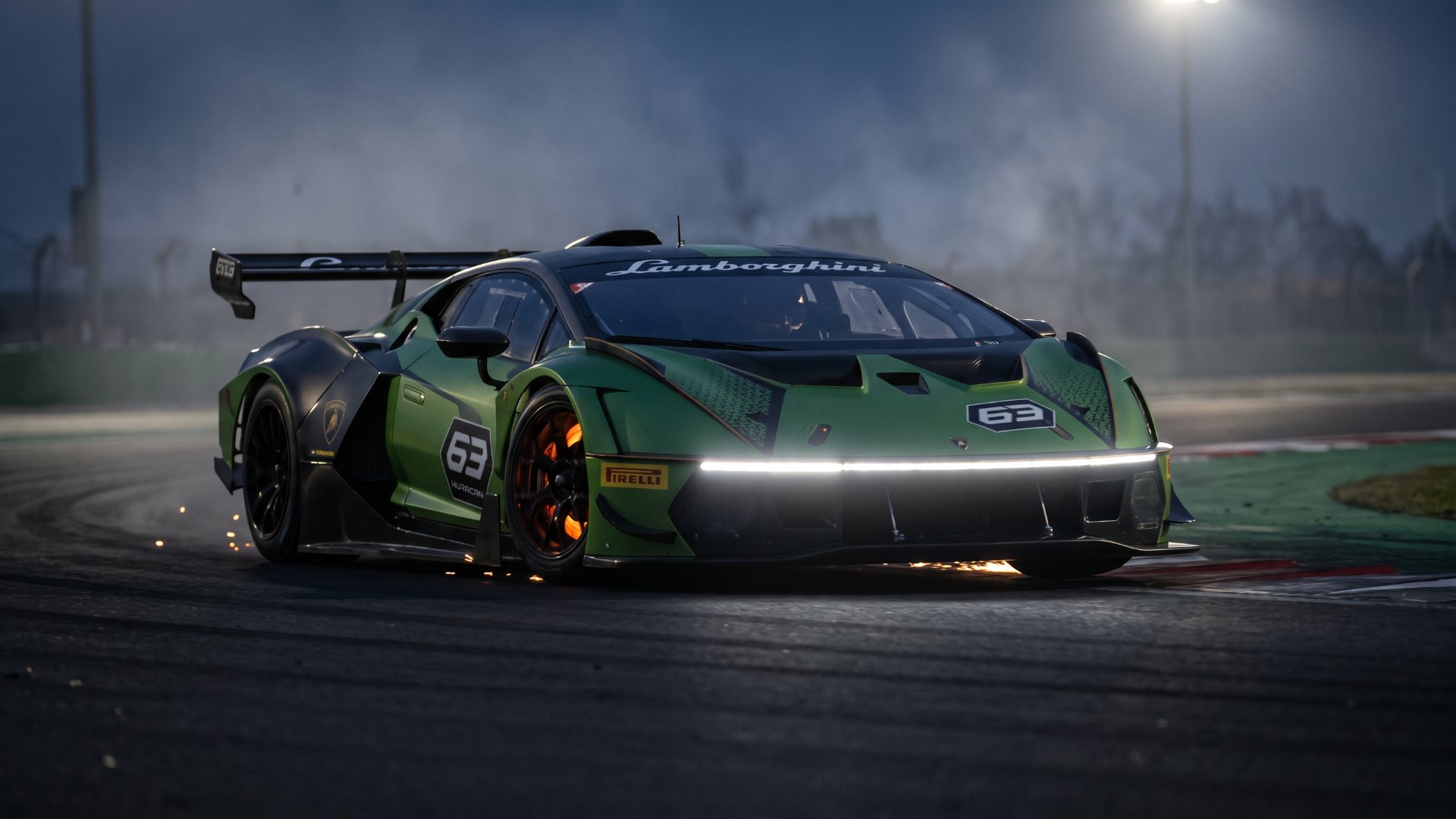
The Lamborghini Temerario GT3 dropped the road car’s hybrid system entirely. Six months after a bruising Sebring debut, the pure twin-turbo V8 is winning IMSA races back to back.
What You Need to Know
- The Lamborghini Temerario GT3 is the first GT race car designed and built entirely in-house by Lamborghini Squadra Corse, replacing the Huracán GT3 after a decade of service.
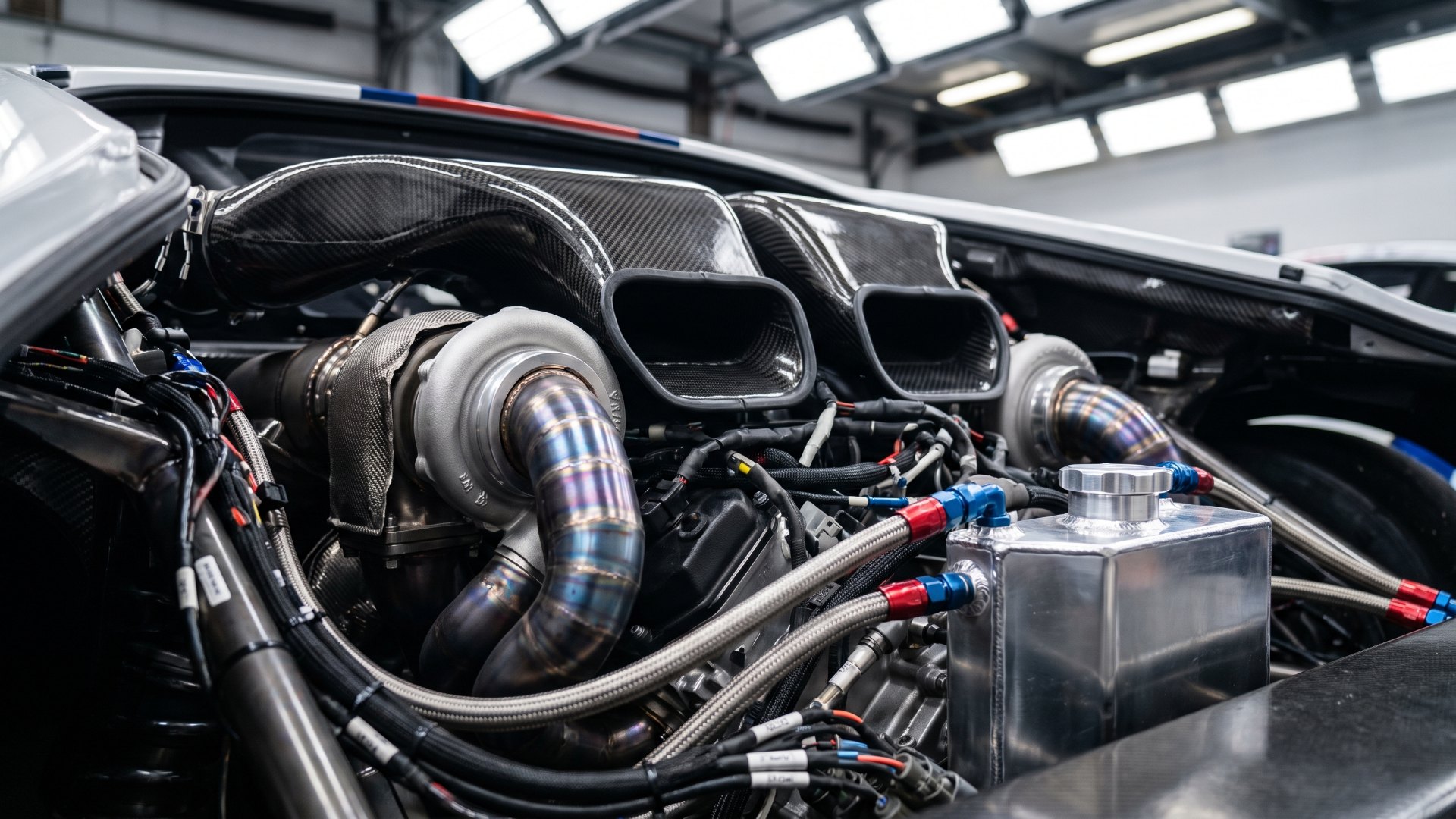
- Unlike the 907-hp road car, the race version runs no hybrid system at all — GT3 regulations don’t allow it. It is a 4.0-litre twin-turbo V8 producing roughly 585 CV, adjusted by Balance of Performance.
- After finishing 10th on debut at Sebring in March, the No. 9 Pfaff Motorsports car won at Road America on August 2 and again at VIR on August 23 from pole — Lamborghini’s first WeatherTech win at the Virginia circuit since 2017.
When the Lamborghini Temerario GT3 rolled onto the grid at the Mobil 1 Twelve Hours of Sebring on March 21, 2026, it was carrying more than a new livery. It was carrying the end of the Huracán GT3 era, the first customer racing programme Sant’Agata built without an outside partner, and a decision that runs directly against the direction the road cars have taken: no electric motors, no battery, no hybrid boost.
Six months on, that decision looks considerably better than it did in March. Andrea Caldarelli and Sandy Mitchell have taken the No. 9 Pfaff Motorsports Lamborghini Temerario GT3 to consecutive IMSA GTD Pro victories, and the car has climbed into championship contention in its first season. Here is where the programme actually stands.
The Hybrid Stays in the Road Car
The road-going Temerario is one of the most electrically complex cars Lamborghini has ever sold: a 4.0-litre twin-turbo V8 that revs to 10,000 rpm, three electric motors, and a combined output of 907 hp, good for a claimed 0–60 mph in the 2.7-second range and a 213-mph top end.
The GT3 car keeps the V8 and throws the rest away. FIA GT3 regulations are written around cost containment and parity, and they leave no room for a hybrid system. So Squadra Corse stripped the electrification out, re-engineered the V8 for endurance duty, and detuned it to roughly 585 CV (436 kW) — a figure that moves race to race under Balance of Performance.
What is left is deliberately conventional: rear-wheel drive, a six-speed sequential gearbox, an aluminium chassis with an integrated roll structure engineered to FIA crash-test standards, and carbon-fibre bodywork split into removable front and rear sections so a damaged car can be rebuilt quickly during a long race. The aerodynamic work went into balance and cooling — radiator and brake ducting in particular — rather than headline downforce numbers.
Lamborghini Temerario GT3 at a Glance
| Model | Lamborghini Temerario GT3 (2026) |
| Engine | 4.0-litre twin-turbo V8, no hybrid assistance |
| Power | Approx. 585 CV / 436 kW, subject to Balance of Performance |
| Transmission | Six-speed sequential, rear-wheel drive |
| Chassis | Aluminium with integrated FIA-standard roll structure |
| Bodywork | Carbon fibre, quick-change front and rear sections |
| Developed by | Lamborghini Squadra Corse, entirely in-house |
| Replaces | Huracán GT3 / GT3 EVO2 |
| Race debut | March 21, 2026 — Twelve Hours of Sebring, IMSA GTD Pro |
| Customer price | Not published by Lamborghini — TBD |
Sebring: A Finish, Not a Fairytale
Lamborghini did not ease the car in. Sebring’s concrete slabs and 12-hour distance break parts that survive everything else, and Squadra Corse chose it for the global race debut anyway, backed by more than 15,000 km of testing since the car first turned a wheel at Vallelunga in August 2025 — including a Daytona run at the end of 2025 and a 2,400-km Sebring test.
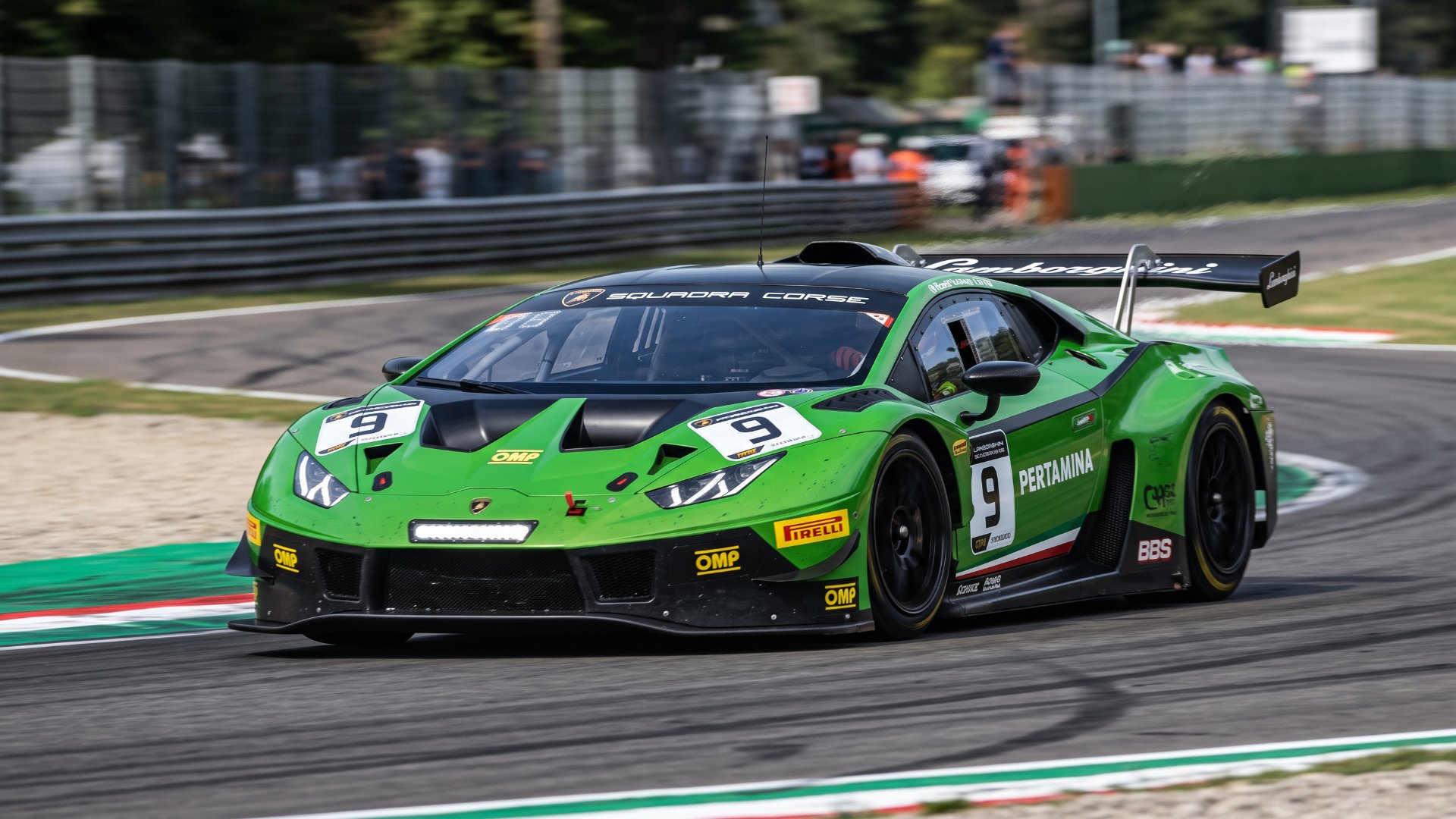
The result was honest rather than heroic. Caldarelli, Mitchell and Franck Perera brought the No. 9 home 10th in GTD Pro, 319 laps completed, two laps behind the class-winning Manthey Porsche 911 GT3 R. A brake problem with roughly 90 minutes left cost a lap — the only significant mechanical issue of the race, and one that had never appeared in testing.
“We were proud to make it to the end of the race. That was the goal going in.”
Steve Bortolotti, General Manager, Pfaff Motorsports (RACER)
The European programme opened a month later at Circuit Paul Ricard, where TGI Team by GRT entered a Temerario for Mirko Bortolotti, Perera and Maximilian Paul in the GT World Challenge Europe season opener. In IMSA, the car’s form built slowly: fifth in GTD Pro at Laguna Seca on May 4, its best result at that point, on a weekend when Lamborghini’s first IMSA win of the year still went to a Huracán GT3 EVO2 — Wayne Taylor Racing’s No. 45 in GTD.
Road America and VIR: The Car Arrives
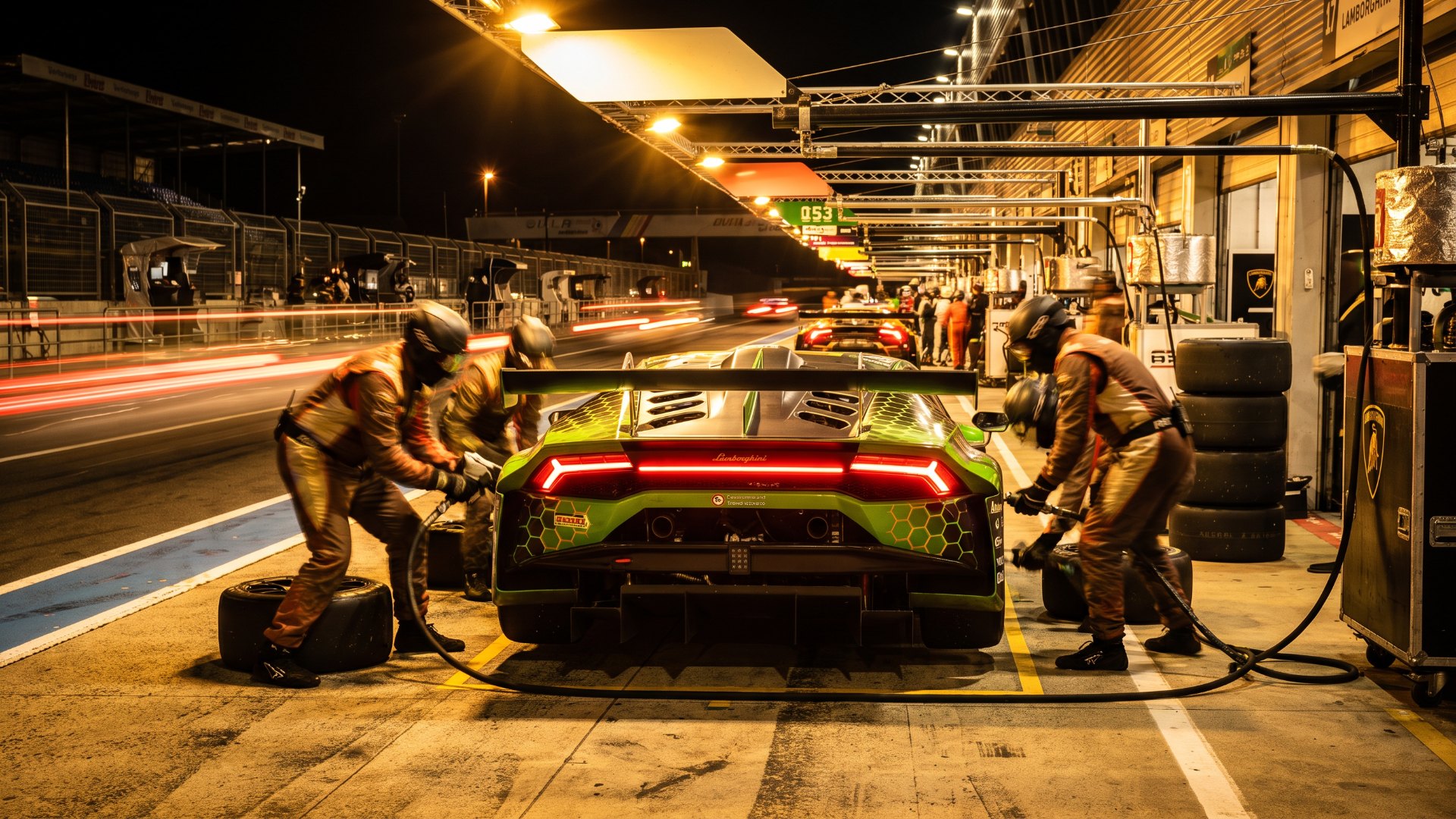
The breakthrough came at Elkhart Lake. Pfaff brought a revised brake package to the Motul SportsCar Endurance Grand Prix at Road America on August 2, and Caldarelli and Mitchell converted it into the Lamborghini Temerario GT3’s first IMSA victory, ahead of the No. 77 AO Racing Porsche of Nick Tandy and Harry King and the No. 4 Corvette Z06 GT3.R of Tommy Milner and Nicky Catsburg. For Pfaff it ended a 36-race winless run stretching back to March 2023.
“It feels really special because I saw where we were 12 months ago, and to come here and win, it’s insane.”
Andrea Caldarelli, after the Road America win (IMSA)
Three weeks later at Virginia International Raceway it stopped looking like a one-off. Caldarelli took the car’s maiden IMSA pole on August 22 with a 1:44.773 lap at 112.356 mph, and the pair led 69 of 84 laps on Sunday to win the Michelin GT Challenge outright — a GT-only race, so the class win was also the overall win. Two Ford Mustang GT3s completed the GTD Pro podium. It was Lamborghini’s first IMSA WeatherTech victory at VIR since 2017, and it moved the No. 9 to third in the GTD Pro standings.
Caldarelli’s own framing of the season is worth repeating, because it explains the gap between March and August better than any spec sheet: “People forget that when you put a brand-new car on track, it’s not as easy as it looks.”
The Win That Is Still in Dispute
The Lamborghini Temerario GT3’s first victory anywhere in the world actually came six days before Road America, and it remains unresolved. Mirko Bortolotti won DTM Race 2 at Oschersleben on July 27 for Grasser Racing Team, beating Maro Engel by 3.027 seconds on a strategy call that undercut the field.
On August 13, post-race scrutineering disqualified him over a wheel bearing that did not match the DTM GT3 homologation reference part, and Engel inherited the win. Grasser has appealed, arguing that a regulation bulletin had declared wheel bearings free, and the DMSB appeals court in Frankfurt is scheduled to hear the case on September 25, 2026 — two weeks before the DTM finale. Until then the result is provisional.
Why Lamborghini Built It This Way
Two things are happening at once in Sant’Agata, and they are easy to confuse.
On the road-car side, Lamborghini has committed to plug-in hybrids and pushed pure electrification out. Reporting in February 2026 confirmed the Lanzador — the brand’s long-promised first EV — is no longer arriving as a battery-electric model on its original timeline, with the company doubling down on PHEV powertrains across the range instead. Hybridisation there is about adding performance and meeting regulation without giving up the engine.
On the racing side, none of that applies. GT3 is a customer category: cars have to be affordable to buy, rebuild in a garage at 2 a.m., and equalise against a dozen rivals. A hybrid system adds cost, weight, complexity and a BoP headache nobody wants. Stripping it out was not a philosophical statement about electrification — it was the only way to build a competitive, sellable GT3 car.
What is a statement is that Squadra Corse did the whole thing itself. The Huracán GT3 was developed with Dallara. The Temerario GT3 is Lamborghini’s own chassis, aero and engine programme end to end, and the fact that it took five months to go from a two-laps-down finish to back-to-back wins says something about how much of that knowledge stayed in-house.
What It Means for Buyers and Collectors
For customer teams, the calculation has changed quickly. A brand-new GT3 platform like the Lamborghini Temerario GT3 is usually a two-season investment before it is competitive; this one is winning in year one, which matters to anyone deciding between a Lamborghini Temerario GT3 and an established Porsche, Ferrari or Ford programme for 2027.
For the collector market, the more interesting story is what happens to the Huracán GT3. Ten seasons, a long championship record, and a clean end point make it the kind of car that gets bought and kept rather than campaigned — and the EVO2 remains eligible and race-winning, as Laguna Seca showed in May. Historically, GT3 cars settle in value at the moment their factory support tapers, not at the moment their replacement debuts.
And for anyone shopping the road car: the Temerario road car’s hybrid system is not a detuned version of a racing technology. The relationship runs the other way. The engine went racing; the electrification stayed home.
Why It Matters
The Lamborghini Temerario GT3 is the clearest evidence yet that Lamborghini’s engineering independence has caught up with its ambition. A manufacturer that spent a decade racing a partner-developed car has produced its own, put it into the hardest endurance race in North America on day one, absorbed a mediocre result without changing course, and turned it into a race winner inside a single season.
It also draws a line that the rest of the industry will keep testing: hybrids where the regulations and the customers reward them, and combustion where they don’t. Lamborghini is now running both answers at the same time, in public, and winning with the simpler one.
Related coverage on Exotic Car News
- Lamborghini Fenomeno: The 1,080-CV V12 Few-Off Explained
- The Analog Comeback: Why the Exotic Car World Is Falling Back in Love With Engines
- Exotic Car Technology in 2026: The Industry Hedged Its Bets
- All Lamborghini coverage
Sources: Lamborghini Squadra Corse, IMSA, RACER, DailySportsCar, SPEED SPORT.