
Most hypercar startups miss their power targets. Nilu27 just beat one — on the very first pull.
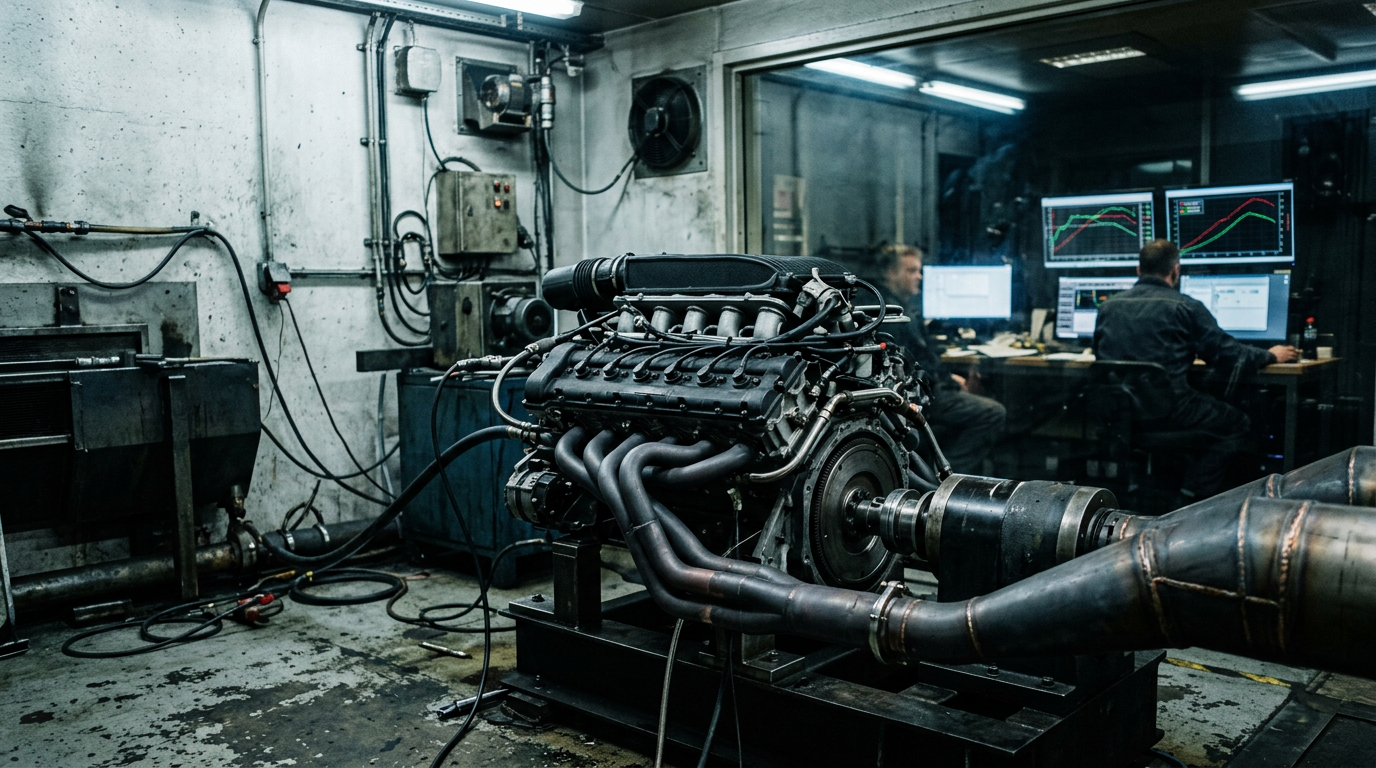
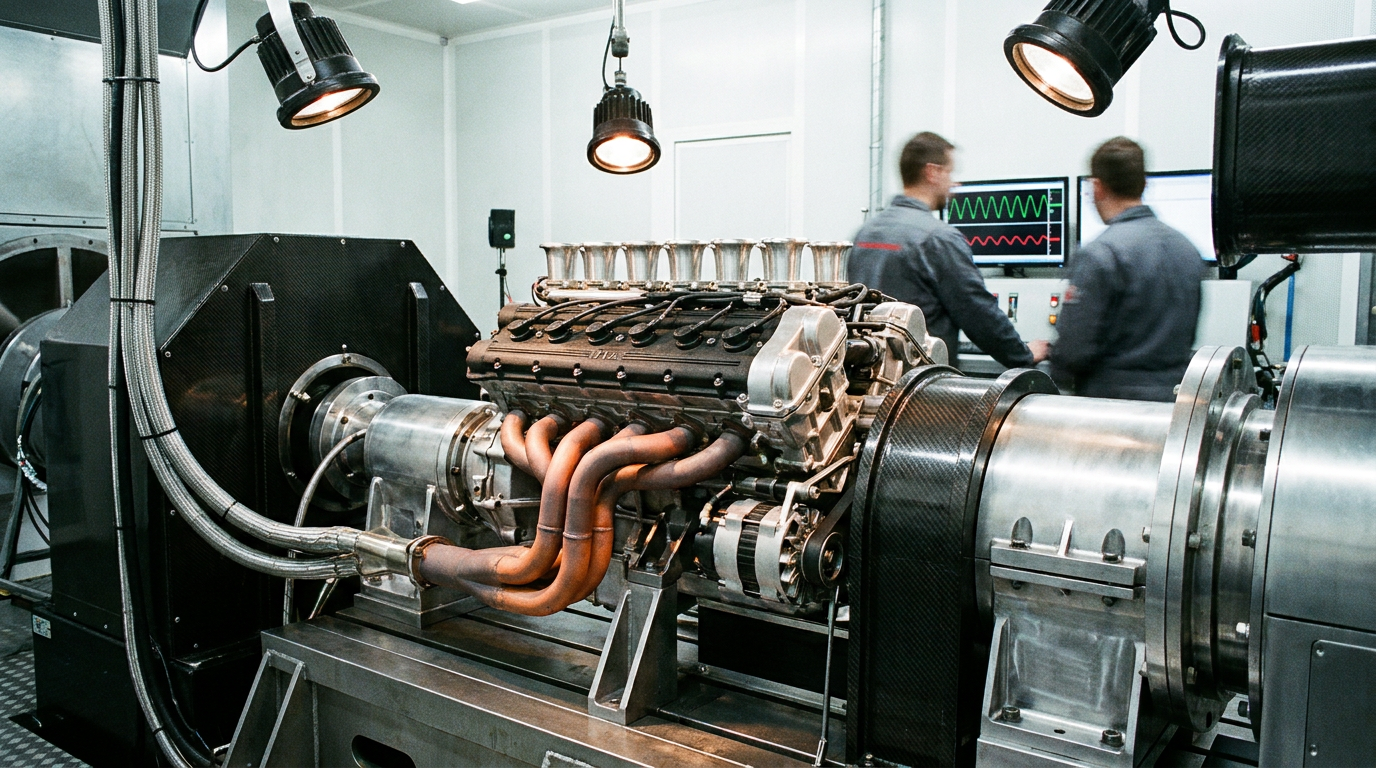
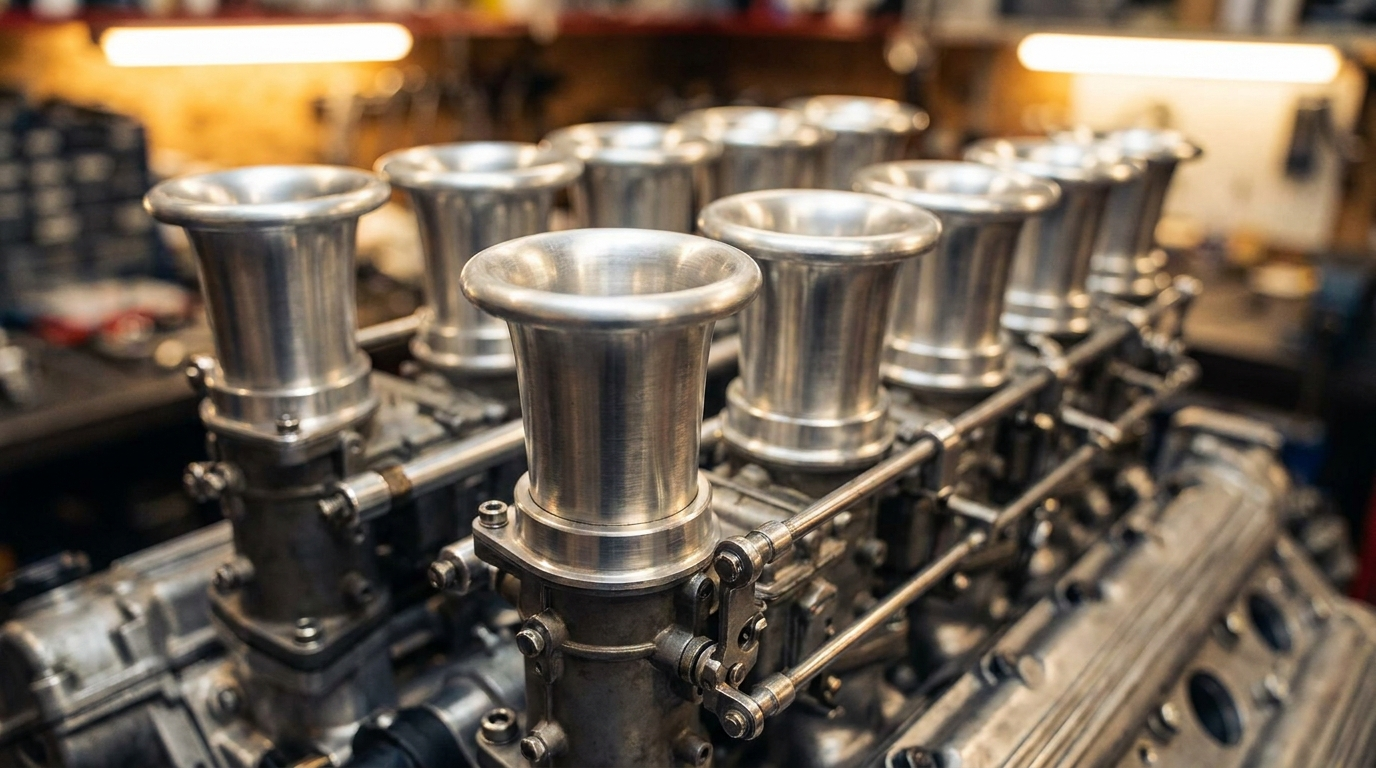
The 6.5-liter naturally aspirated Nilu27 V12 destined for the NILU has run on the dyno for the first time, and the numbers came back higher than the 1,070 horsepower the entire program was engineered around. That figure arrives with no turbochargers, no supercharger, and no hybrid assistance — just twelve cylinders breathing through individual throttle bodies and exhaling through equal-length headers crafted from Inconel, the nickel superalloy more commonly found in Formula 1 exhausts and rocket engines.
The Nilu27 V12 Overdelivered on Day One
First dyno runs are where hypercar dreams usually meet reality. Development engines typically start conservative — soft maps, reduced revs, targets approached over months of calibration. For a brand-new, clean-sheet V12 to exceed its rated output on its maiden pull is genuinely rare, and it says as much about the engineering partner as the design.
The Hartley Connection Behind the Nilu27 V12
The engine is a joint venture with Hartley Engines, the New Zealand specialist that has quietly become the go-to house for extreme naturally aspirated builds — the kind of shop that turns out bespoke V8s, V10s, and V12s for hillclimb monsters and land-speed projects that legacy suppliers will not touch. Development is being completed at Hartley’s facility in Palmerston North before the powertrain ships to Nilu27’s research and manufacturing operation in Germany, where it will be installed in the first road-going NILU prototype.
Built in California, of All Places
In a twist that says everything about where low-volume hypercar manufacturing is heading, customer cars will be assembled in Irvine, California by Aria Group — the advanced manufacturing house whose additive-manufacturing expertise also underpins the Czinger 21C. The NILU leans on the same playbook: 3D-printed structures where they save weight, composite body materials where they add stiffness, and an Inconel exhaust manifold that would be prohibitively expensive to produce any other way at this scale.
Only 54 Will Exist
Production remains strictly limited: 54 cars, with early estimates putting the launch edition around $3.5 million. The timeline has shifted — production was originally slated for 2025, and the current trajectory points to customer deliveries beginning in 2027 instead. In this segment, a two-year slip is neither unusual nor, historically, damaging to demand; the Gordon Murray T.50 and Pagani Utopia both ran long past their original dates and sold out regardless.
Why the Nilu27 V12 Matters
Founder Sasha Selipanov — the designer behind some of the most celebrated hypercar silhouettes of the last decade — has been explicit about the brief: build the hypercar he felt no one else was making. In an era when every legacy flagship leans on electrification, the NILU is a deliberate counterpunch: no turbos, no batteries, a true manual transmission, and a free-breathing Nilu27 V12 that just proved it makes more power than promised.
For collectors, that combination lands in a very specific place. Analog scarcity — manuals, high-revving naturally aspirated engines, sub-100 production runs — has been the single most reliable appreciation profile of the past fifteen years. The NILU now has the one thing paper hypercars never have: a running, overdelivering engine. Watch how quickly the remaining allocation conversations firm up.
The Nilu27 NILU is a 54-unit hypercar powered by a 6.5-liter naturally aspirated V12 developed with Hartley Engines. The engine exceeded its 1,070-horsepower target on its first dyno test. Customer cars will be built by Aria Group in Irvine, California, with deliveries expected to begin in 2027 at a price around $3.5 million.