


In the world of exotic automobiles, performance is measured in milliseconds, precision in microns—premium fuel for exotic cars is far more than a commodity. It is a calibrated component of the engine itself. Every combustion cycle inside a modern supercar is engineered with extraordinary intent, and the gasoline you choose plays a direct role in how that performance is delivered—or compromised.
Choosing the right premium fuel for exotic cars ensures that you maximize your vehicle’s potential.
Investing in the best premium fuel for exotic cars translates to better performance and longevity.
From octane ratings to ethanol blends and fuel additives, understanding what flows through your tank is essential to preserving both the performance and integrity of high-output engines from marques like Ferrari, Lamborghini, and McLaren.
Understanding the importance of premium fuel for exotic cars can save you costly repairs in the long run.
Octane: The Foundation of Controlled Power
Thus, selecting the right premium fuel for exotic cars is crucial for maintaining engine health.
Opting for high-octane premium fuel for exotic cars can enhance your driving experience significantly.
Understanding Premium Fuel for Exotic Cars
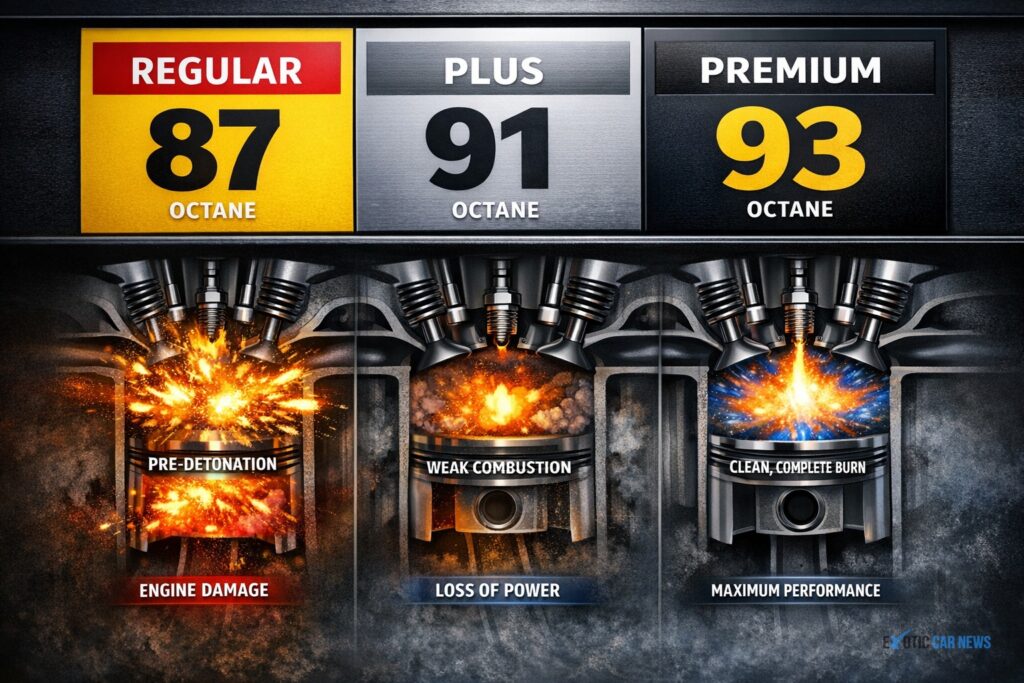
At its core, octane rating is a measure of a fuel’s resistance to premature combustion—commonly known as engine knock. In standard vehicles, this may be a mild inefficiency. In an exotic engine, it is the difference between optimal performance and mechanical distress.
High-performance engines are designed with:
- Elevated compression ratios
- Advanced ignition timing
- Forced induction systems pushing extreme cylinder pressures
All of these demand a fuel that can remain stable under intense conditions until the precise moment of ignition.
Premium fuel—typically rated at 91 to 93 octane in the United States—is not a suggestion. It is a requirement. Anything less forces the engine’s control systems to compensate, reducing timing, lowering output, and ultimately diluting the very experience the car was built to deliver.
Many enthusiasts argue that premium fuel for exotic cars is the only choice for optimal performance.
In essence, using lower-octane fuel in an exotic car is akin to restricting airflow to a world-class athlete.
For those who own exotic cars, premium fuel for exotic cars is not just a recommendation, but a necessity.
Engineering Intent: Why Premium Fuel Is Non-Negotiable
Modern exotic powertrains are masterpieces of engineering, often extracting extraordinary output from relatively compact displacements. Twin-turbocharged V8s, high-revving V10s, and hybrid-assisted hypercar systems all share a reliance on predictable, high-quality combustion.
When proper octane is used:
- Ignition timing remains aggressive and optimized
- Turbocharged engines maintain full boost pressure
- Combustion remains stable and efficient
When it is not:
- The ECU intervenes, reducing performance to protect the engine
- Heat and pressure increase unpredictably
- Long-term wear can accelerate in critical components
The result is not just diminished performance—it is a departure from the engineering philosophy of the car itself.
Ethanol Blends: Performance Potential with Caveats
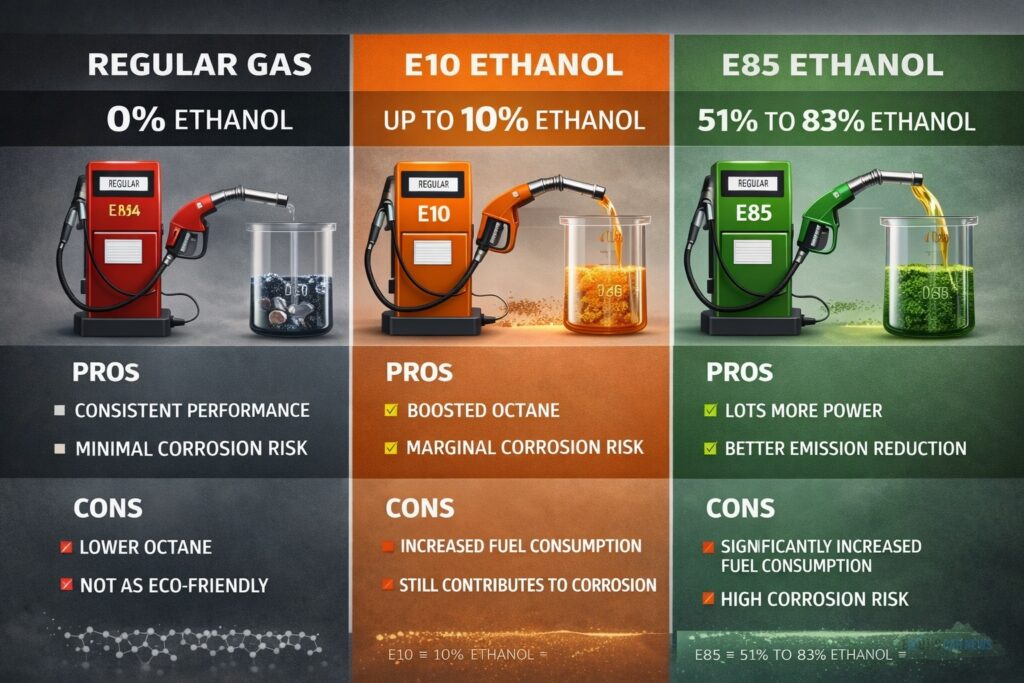
Ethanol has become a standard component in modern gasoline, most commonly in the form of E10—fuel containing up to 10% ethanol. While largely compatible with modern vehicles, ethanol introduces both opportunities and complexities for exotic applications.
The Upside
When it comes to performance, the choice of premium fuel for exotic cars is paramount.
Using premium fuel for exotic cars can significantly impact your car’s performance metrics.
Ethanol carries a naturally higher octane rating and burns cooler than traditional gasoline. In performance environments, particularly when paired with proper tuning, this can unlock measurable gains:
Those who race often know that premium fuel for exotic cars is essential for achieving top speeds.
- Increased knock resistance
- Cooler combustion temperatures
- Potential for higher boost and ignition timing
In fact, high-ethanol fuels such as E85—when properly supported—are widely used in performance tuning circles for precisely these reasons.
The Trade-Offs
However, ethanol is not without compromise:
- It contains less energy per gallon, reducing fuel efficiency
- It absorbs moisture, which can introduce long-term corrosion risks
- It requires significantly more fuel volume to achieve proper combustion
For most factory exotic vehicles, E10 represents the upper limit of compatibility. Higher ethanol blends—such as E15 or E85—require dedicated tuning, upgraded fuel systems, and careful calibration. Without these, the risks outweigh the rewards.
Race Fuel: Where Engineering Meets Extremes
Beyond pump fuel lies the world of race gasoline—high-octane blends engineered for track use and extreme performance applications.
These fuels, often ranging from 100 to 110 octane or higher, offer:
- Maximum resistance to detonation
- The ability to run aggressive timing and boost
- Consistent performance under sustained high-load conditions
For many, the use of premium fuel for exotic cars is a key factor in their performance tuning strategy.
For track-focused exotic builds, race fuel can unlock the upper limits of an engine’s capability. However, it comes at a cost—both financially and mechanically. Not all systems are designed for prolonged use, and emissions components may suffer as a result.
Fuel Additives: Precision or Placebo?
Fuel additives occupy a gray area in the performance world—marketed as enhancers, but often misunderstood in practice.
Octane Boosters
While appealing in theory, most commercially available octane boosters deliver only marginal improvements. In some cases, they may introduce compounds that leave deposits on sensors or exhaust components.
Fuel System Cleaners
High-quality cleaners can serve a legitimate purpose, particularly in maintaining injector efficiency and reducing carbon buildup. However, their necessity diminishes significantly when consistently using premium, Top Tier fuel.
Fuel Stabilizers
For collectors and seasonal drivers, stabilizers are essential. They prevent fuel degradation and preserve system integrity during periods of inactivity—an often-overlooked aspect of exotic car ownership.
Choosing the right premium fuel for exotic cars is foundational for any performance-focused driver.
Always ensure your vehicle is running on premium fuel for exotic cars to avoid unnecessary wear.
When maintaining your exotic car, never overlook the importance of premium fuel for exotic cars.
The benefits of using premium fuel for exotic cars can’t be overstated in the automotive world.
The Role of Top Tier Fuel
Not all premium fuel is created equal. Top Tier-certified gasoline includes enhanced detergent packages designed to keep engines cleaner and operating at peak efficiency.
For exotic vehicles, this translates to:
- Cleaner injectors
- Reduced carbon deposits
- More consistent combustion over time
In many cases, the benefits of high-quality fuel far outweigh the perceived need for aftermarket additives.
A Matter of Precision
Exotic cars are not built around compromise. Every parameter—from air intake geometry to ignition mapping—is engineered to operate within a precise window. Fuel is no exception.
Choosing the correct gasoline is not about preference. It is about preserving the integrity of a machine designed to perform at the highest level.
Final Word
In the pursuit of performance, the smallest variables often yield the greatest consequences. Fuel—frequently overlooked—is one of the most critical.
For those who demand everything their vehicle was designed to deliver, the equation is simple:
- Use the correct octane
- Understand the role of ethanol
- Approach additives with discernment
Because in the world of exotic automobiles, excellence is not optional—it is engineered.
Finally, understanding the nuances of premium fuel for exotic cars is crucial for any enthusiast.
In conclusion, always prioritize premium fuel for exotic cars to protect your investment.
For more in-depth insights into exotic performance, ownership, and the evolving automotive landscape, explore the latest at ExoticCarNews.com.
Frequently Asked Questions
What octane fuel do exotic cars require?
Most high-performance exotic engines require premium fuel, typically rated at 91 to 93 octane in the United States. For these engines premium fuel is not a suggestion but a requirement, because octane is a measure of a fuel’s resistance to premature combustion (engine knock).
Why is premium fuel non-negotiable for supercars?
High-performance engines are built with elevated compression ratios, advanced ignition timing, and forced induction that create extreme cylinder pressures. These demand a fuel that stays stable until the precise moment of ignition. Using lower octane forces the engine’s control systems to compensate by reducing timing and lowering output.
Can you run ethanol-blended fuel in an exotic car?
Ethanol blends offer performance potential but come with trade-offs. They can deliver benefits in the right application, but they also carry caveats for high-output engines, so they should be used with an understanding of how a specific vehicle is engineered.
Do octane boosters and fuel additives actually work?
It depends on the product and how it’s used. Additives such as octane boosters, fuel system cleaners, and fuel stabilizers can serve a precise engineering purpose, but in the wrong context they amount to little more than a placebo. They are tools for specific situations rather than universal upgrades.