
Supercars spent decades getting faster and easier to drive. Now Ferrari, Porsche, Pagani and Gordon Murray are selling driver involvement, in cars that ask more of the person at the wheel. What that costs is harder to pin down than it looks.
Ferrari’s newest V12 can stall.
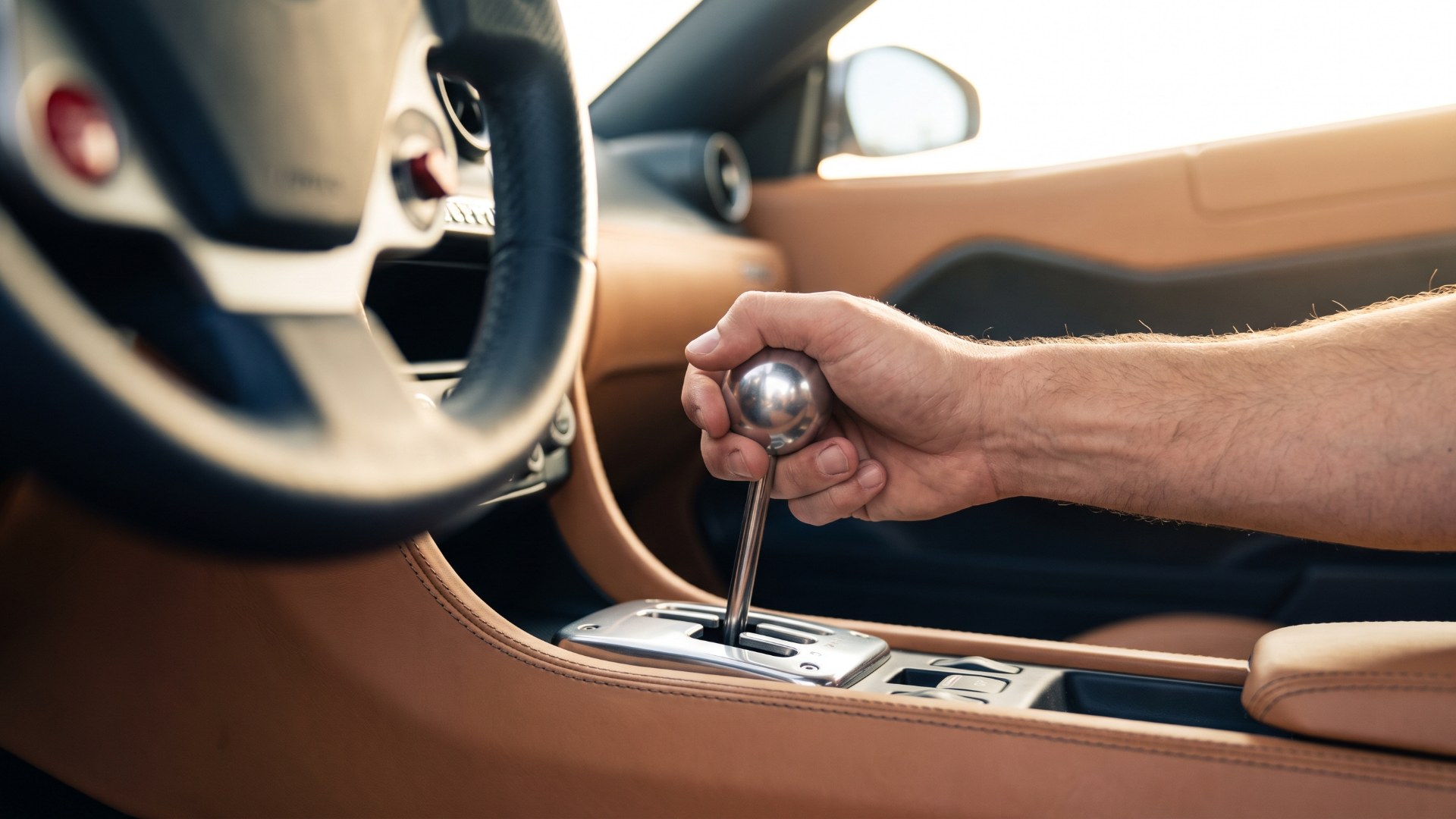
That is deliberate. The 12Cilindri Manuale, revealed in July, puts a gated shifter and a clutch pedal on top of the same eight-speed dual-clutch gearbox as the regular car. Coordinate clutch, throttle and lever well and, Ferrari says, the shift is smooth. Get the timing wrong and the car can jerk, or stall.
Ferrari engineered that failure in. It also removed the steering-wheel paddles, so the lever and pedal are the only way to shift by hand, though a fully automatic mode remains. It will build 1,499 cars, at an Italian list price roughly half again as high as the standard coupe’s.
For most of the supercar’s history, money bought ease: quicker shifts, more grip, less effort. Some of the most exclusive cars on sale now promise the opposite, which the industry calls driver involvement. It is worth asking what those buyers are paying for, and whether anyone can put a number on it.
Speed got easy. Having a job did not.
Dual-clutch gearboxes shift faster than a person can. Turbochargers and electric motors deliver torque without waiting for revs. As we argued in our look at why technology is no longer a luxury, performance that once defined a flagship now arrives in ordinary cars.
When the car does nearly everything well, the driver’s own contribution becomes the scarce part. A missed shift, a clumsy rev match or an engine caught below its power band is a small failure. It is also proof that the person in the seat was responsible for what happened next.
That is the sense of “imperfection” in the headline. Nobody is paying for bad engineering. They are paying for the chance to be the variable.
Porsche: real demand, no premium
The Porsche 911 GT3 is the cleanest test, because buyers get a choice. The same car comes with a six-speed manual or a seven-speed PDK, and Porsche charges the same for either.
In April 2025, Porsche sent brand ambassador Jörg Bergmeister around the Nürburgring Nordschleife in a manual GT3. His 6:56.294 was, Porsche said, the fastest lap by a production car with a manual transmission.
GT cars director Andreas Preuninger explained the exercise this way: “More and more customers of the 911 GT3 are opting for the six-speed manual transmission.” In the same statement he conceded that the PDK car “is significantly faster.”
Bergmeister’s verdict was shorter. The manual, he said, gave him “more to do on the fast lap and thus also a bit more fun.”
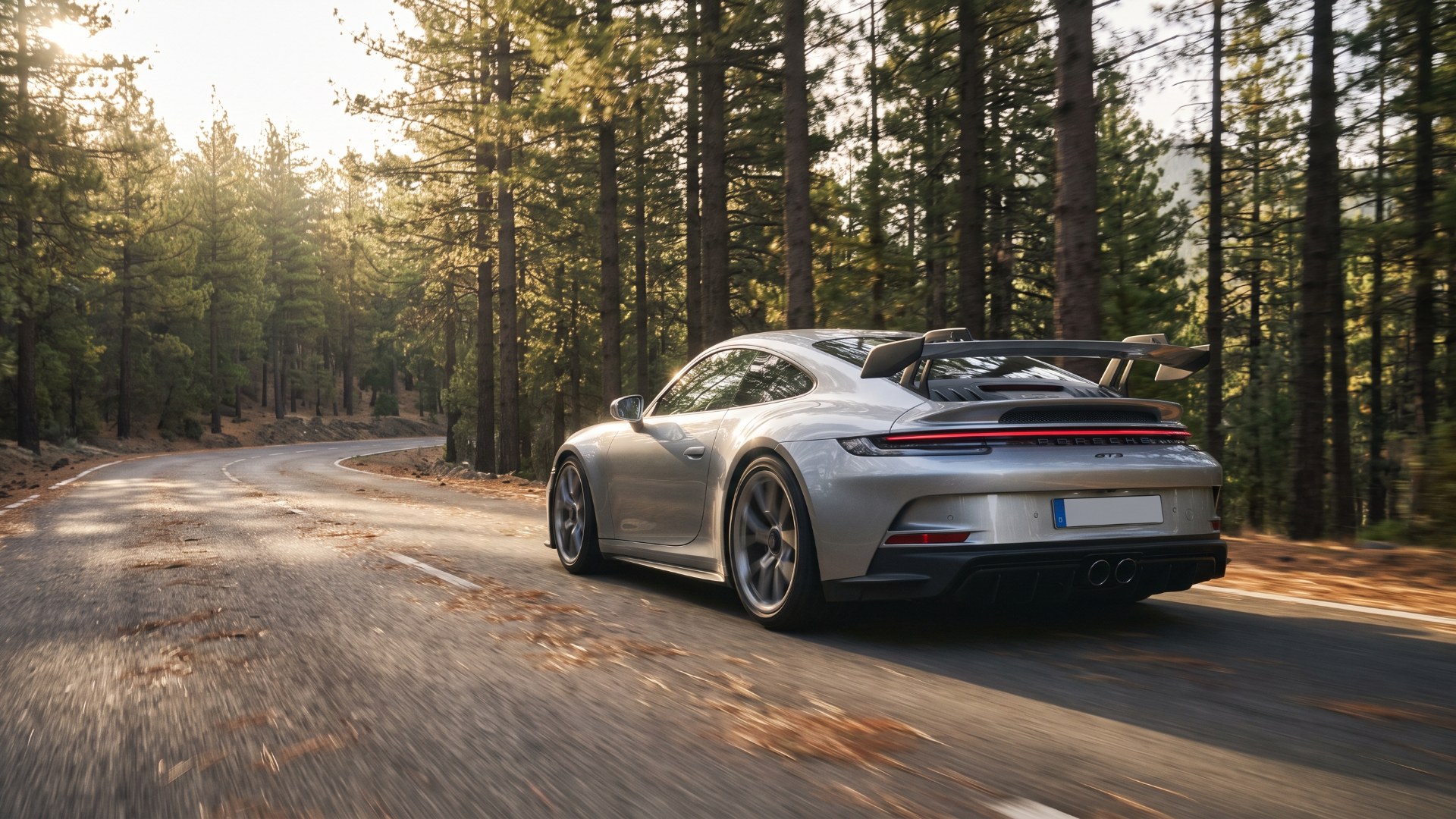
The demand has held. Timo Resch, president and CEO of Porsche Cars North America, told Motor1 in August that 80% of GT3 Touring customers pick the manual. That is his market’s figure: Porsche told Britain’s Autocar last year that just over half of UK Touring orders were manual.
That is evidence from one enthusiast niche. Manuals have accounted for less than 1% of new U.S. vehicle production since the 2021 model year, according to the EPA’s Automotive Trends report. The GT3 is also one of the last naturally aspirated manual exotics still in series production.
One rung down, a price appears. The 2027 911 Carrera S with MT Package, announced in August for North America only, starts at $167,100 before a $2,350 delivery fee. That is $10,900 above the base MSRP of a PDK Carrera S.
The package also adds rear-axle steering, lowered sport suspension, the Sport Chrono Package and center-lock wheels. Nobody outside Porsche can say how much of the $10,900 is the clutch pedal.
Resch conceded in the announcement that a clutch and shift lever are not for everyone. “But for the drivers who want it,” he said, “there really is no substitute.”
Gordon Murray: analog does not mean old
The GT3 shows the demand. The Gordon Murray Automotive T.50 shows what happens when a whole car is designed around it. At the 2020 reveal, Murray said the time was right “to design the greatest analogue driver’s car.”
Very little about it is low-tech. The 3.9-liter Cosworth V12 revs to 12,100 rpm and makes 654 hp (663 PS) with no turbochargers and no hybrid system. GMA calls it the highest-revving, fastest-responding and lightest V12 in a road car. A 15.7-inch fan at the tail works the air under the body, and the car weighs less than 2,200 pounds.
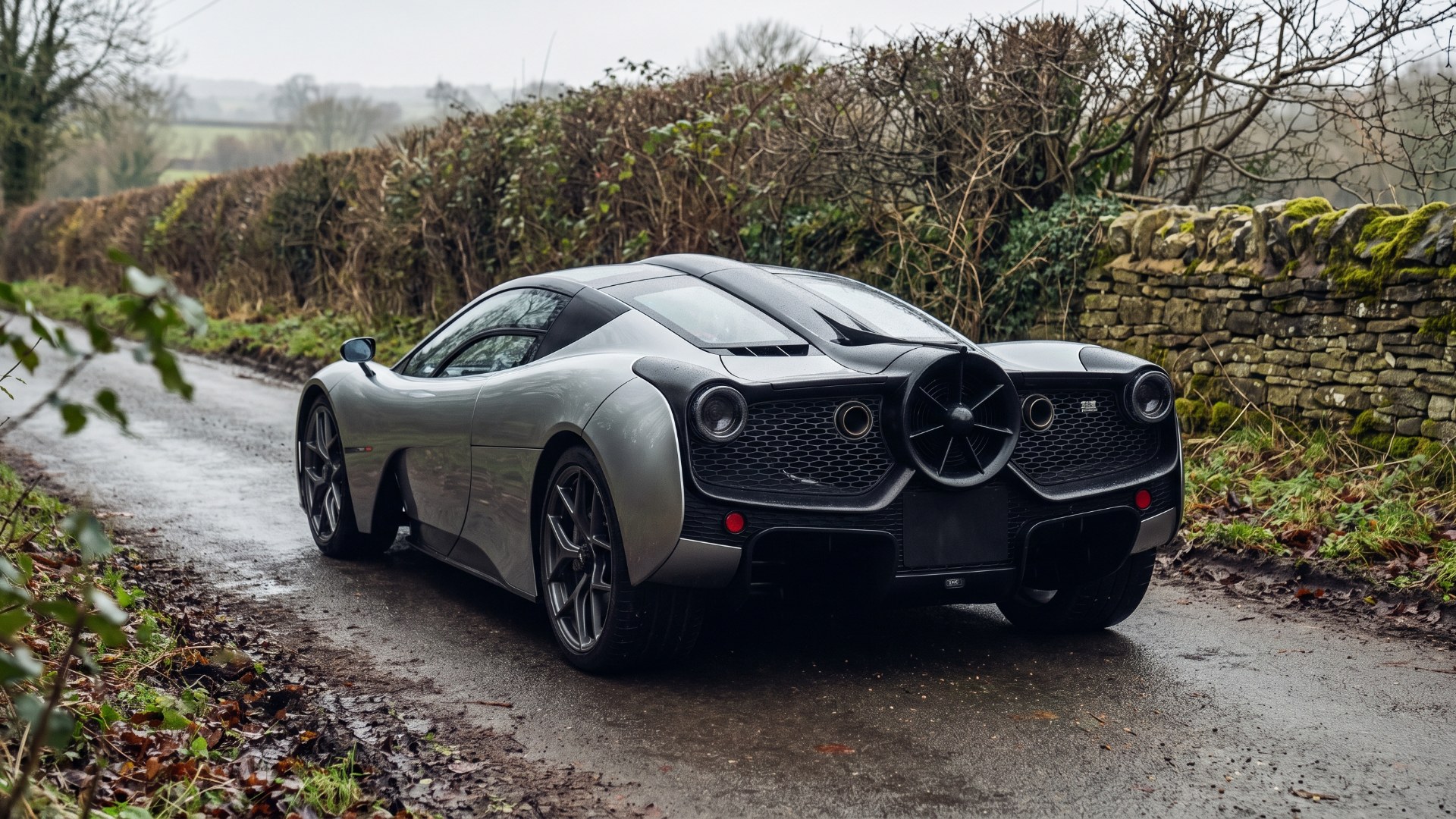
The driver gets a six-speed H-pattern manual, built for the car by Xtrac, and no alternative. GMA says every element is “100% bespoke.” That goes a long way toward explaining a price of £2.36 million before taxes, about $3.1 million at the time, for a run of 100 cars.
That is the answer to anyone who calls these cars less advanced. What the T.50 leaves out was chosen as carefully as what it includes.
Pagani: the screen would have been easier
Before designing the Utopia, Horacio Pagani asked his closest clients what they still lacked. By the company’s account, three answers kept coming back: “simplicity, lightness and the pleasure of driving.”
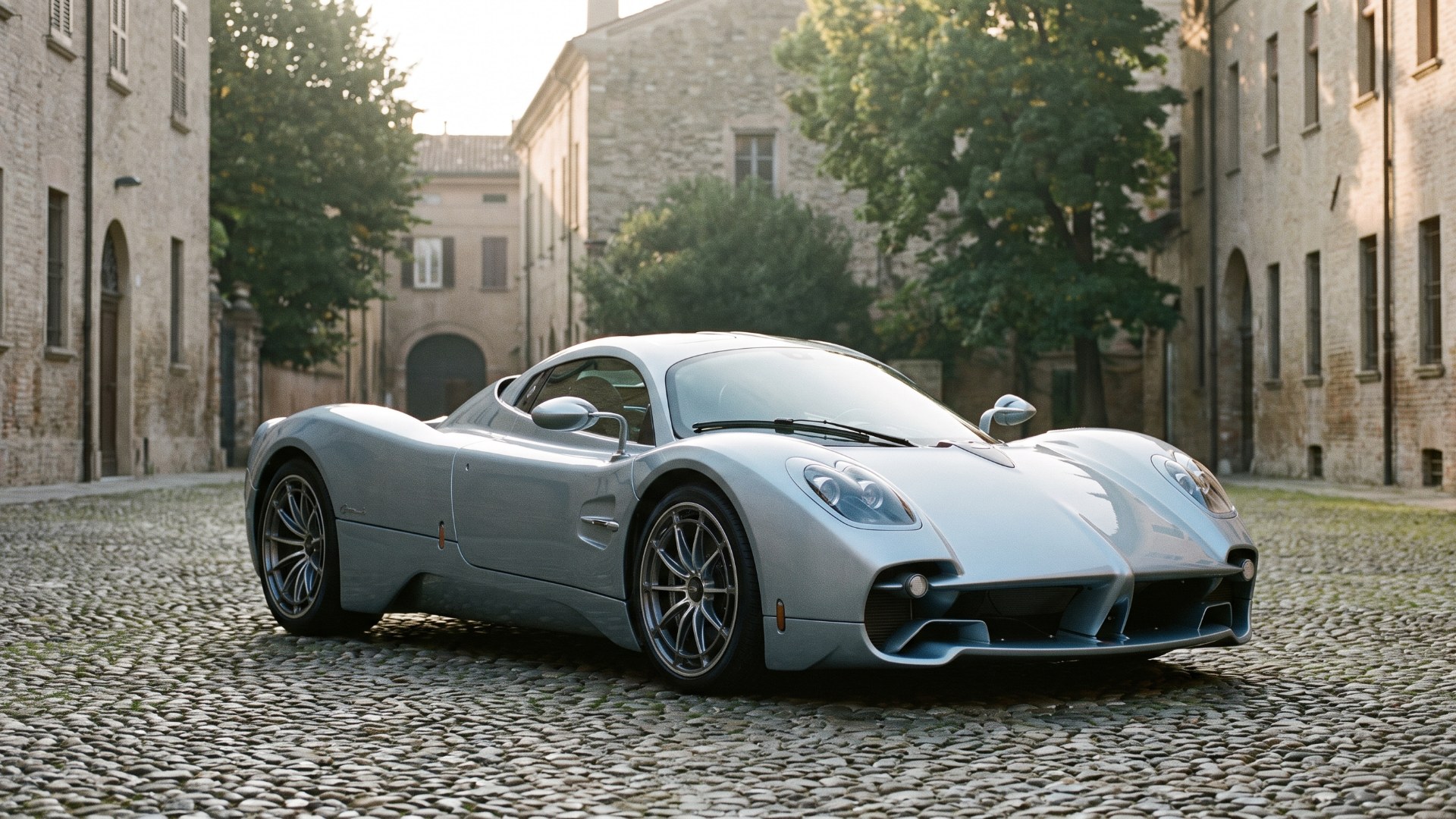
The result has an 852-hp (864 PS) twin-turbo V12, which is a reminder that involvement and natural aspiration are separate things. It comes with a seven-speed manual or an automated version of the same Xtrac gearbox. Pagani says a simulated manual “would not be acceptable,” and admits that building a real one to handle 811 lb-ft of torque “was not an easy task.”
Commercial director Hannes Zanon told Motor1 in 2024 that more than 70% of Utopia clients had chosen the manual. He also said it was “tough to develop,” because it needed components Pagani “can’t find in the market,” including a clutch the company had to develop itself.
The cabin makes the same argument. The instruments are analog, and there is one small display ahead of the driver. Big screens “would have been easier to fit” and would have saved design effort, Pagani says, but “it would have taken away much of the beauty.”
Here the simple-looking choice was the costly one. The 99 Utopia coupes were already assigned when the car was revealed in 2022, at a price reported then as €2.17 million before taxes, about $2.2 million.
What driver involvement costs
- Porsche 911 GT3: $0. The manual and the PDK cost the same.
- Porsche 911 Carrera S with MT Package: $10,900 over the PDK car on base MSRP, with chassis upgrades bundled in.
- Ferrari 12Cilindri Manuale: €590,000 in Italy, the list price Reuters reported at the reveal. That is €190,000 to €195,000 more than the standard coupe, or roughly $220,000 at the exchange rate on the day of the reveal. It is not a U.S. price.
- Pagani Utopia: manual or automated gearbox in the same car. ECN found no published price difference.
- GMA T.50: manual only. There is nothing to compare it with.
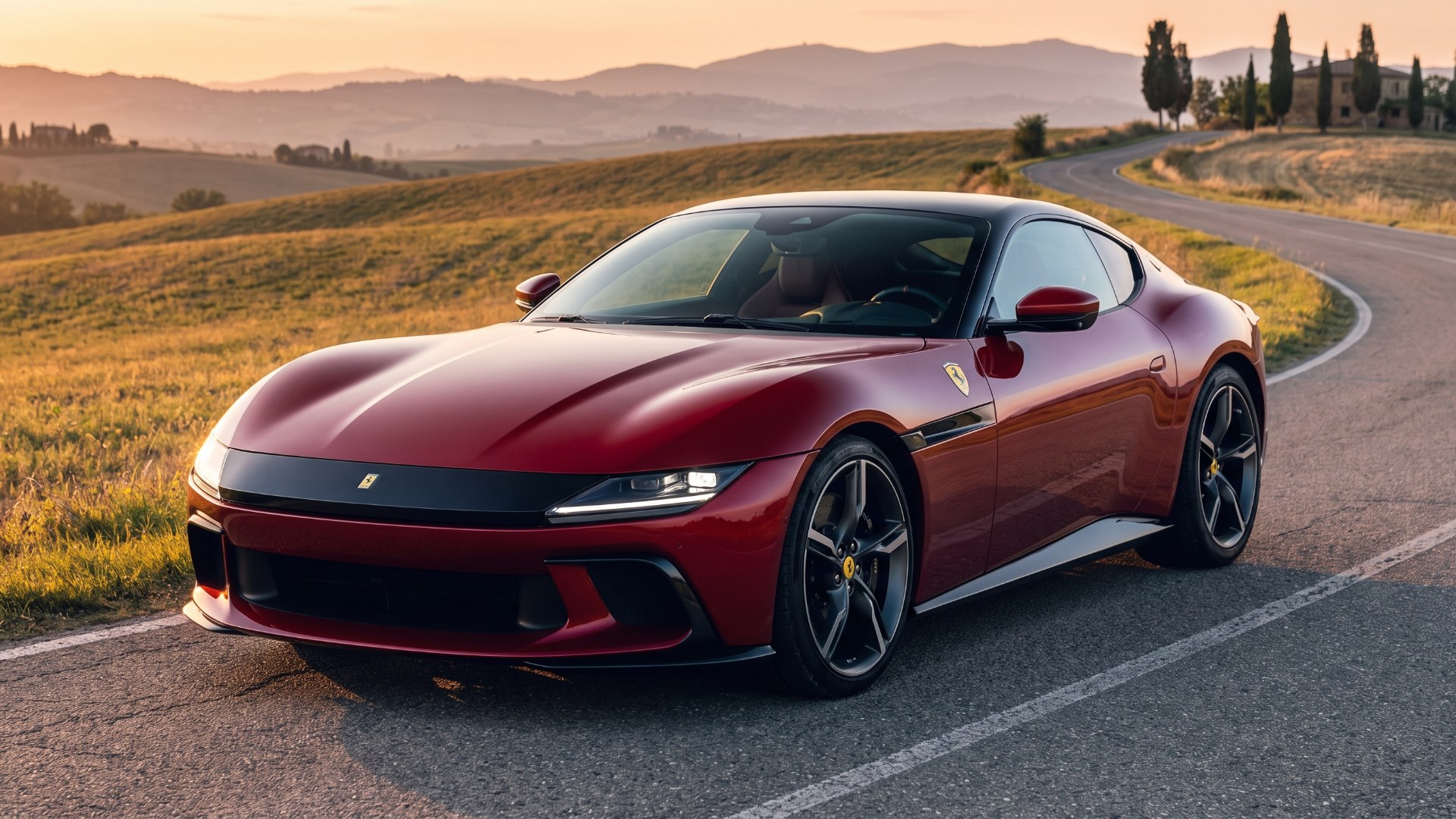
The Ferrari comes closest to an isolated price, because the engine and gearbox are unchanged and only the way the driver operates them is new. Even so, the buyer is also getting a numbered special series finished through Ferrari’s Tailor Made program. Scarcity and the shifter are sold together, and Ferrari does not itemize.
So “most expensive option” is a metaphor for now. What the evidence supports is narrower: expensive cars are being designed to preserve the driver’s role, and in two cases that choice carries a visible price.
The reality check
Plenty of buyers want the opposite, for good reasons. A dual-clutch car is quicker, calmer in traffic and, by Porsche’s own admission, faster around a circuit.
Not every analog feature is an imperfection, either. A switch you can find without looking is simply a good control. And the industry did not drop manuals and mechanical gauges for one shared reason. Speed, emissions rules, cost, packaging and fashion each played a part.
Then there is status. A gated shifter is visible proof of taste, and limited production creates desire on its own. In April, Broad Arrow Auctions sold a T.50 for a final $8,035,000, according to the auction house, more than double its original price. The gearbox did not do that alone. The car is one of 100 V12 machines from the designer of the McLaren F1.
That sale is also awkward for the involvement argument. GMA says the T.50 was created to be “alive” at normal road speeds. This one changed hands with fewer than 30 miles on it, a pattern we examined in The Worst Thing You Can Do to Some Supercars Is Drive Them.
A high price shows that people want the car. It does not show that they want it for the driving.
What’s next
Ferrari’s system sits on top of a gearbox the company already builds. If buyers accept it, involvement becomes a lever, a pedal and software. McLaren is taking the mechanical route. Its McL 6GT, due in 2028, pairs a true manual with hydraulic steering. For readers who want to know what can be ordered today, our guide to every manual supercar still on sale separates the real gearboxes from the simulated ones.
Every car here is quick enough that the driver adds nothing to the numbers. What they offer is a share of the work. Owning extraordinary performance has become ordinary at this level. Contributing to it is the rare part, and rare things can be priced.
Whether that is worth $10,900, $220,000 or nothing extra depends on something no order form asks: how often the owner plans to be the one who gets it wrong.
Images: Exotic Car News. All five images, including the lead image, are editorial illustrations, not manufacturer, press or event photography.