
For eight years the Bugatti Chiron was the final word in hypercars — a 1,500-horsepower monument to the W16 engine and the idea that more is always more. Now it has a successor, and the Bugatti Tourbillon does not simply turn the dial up. It changes the argument entirely. Priced at roughly €3.8 million (about US$4.1 million) and capped at 250 examples, the Tourbillon costs well over a million more than a Chiron did — so the obvious question is what that extra money actually buys.
Here is the honest comparison, section by section, for anyone weighing the outgoing icon against its replacement.
W16 Out, V16 In: The Heart of the Bugatti Tourbillon
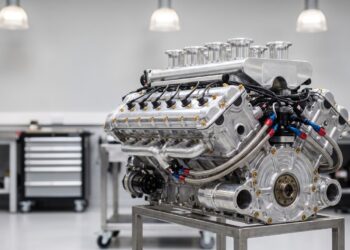
The Chiron’s defining feature was its 8.0-liter quad-turbocharged W16 — an engine no rival could match and no one is likely to build again. The Tourbillon walks away from it completely. In its place sits a naturally aspirated 8.3-liter V16, developed with Cosworth, spinning to a stratospheric redline and paired with three electric motors for a combined output of 1,800 horsepower.
That is a philosophical shift as much as a mechanical one. The Chiron chased speed through forced induction and brute torque. The Bugatti Tourbillon chases sensation — a high-revving, hybrid-assisted powertrain that targets 0–62 mph in around 2.0 seconds and a top speed north of 276 mph, with a speedometer that reads all the way to 341 mph. The Chiron was about the number. The Tourbillon is about how the number is delivered.
The Interior Argument: Where the Bugatti Tourbillon Pulls Ahead
If one feature justifies the price leap, it is the cabin. The Chiron’s interior was beautifully built but increasingly conventional, anchored by screens that — like all screens — were always going to age.
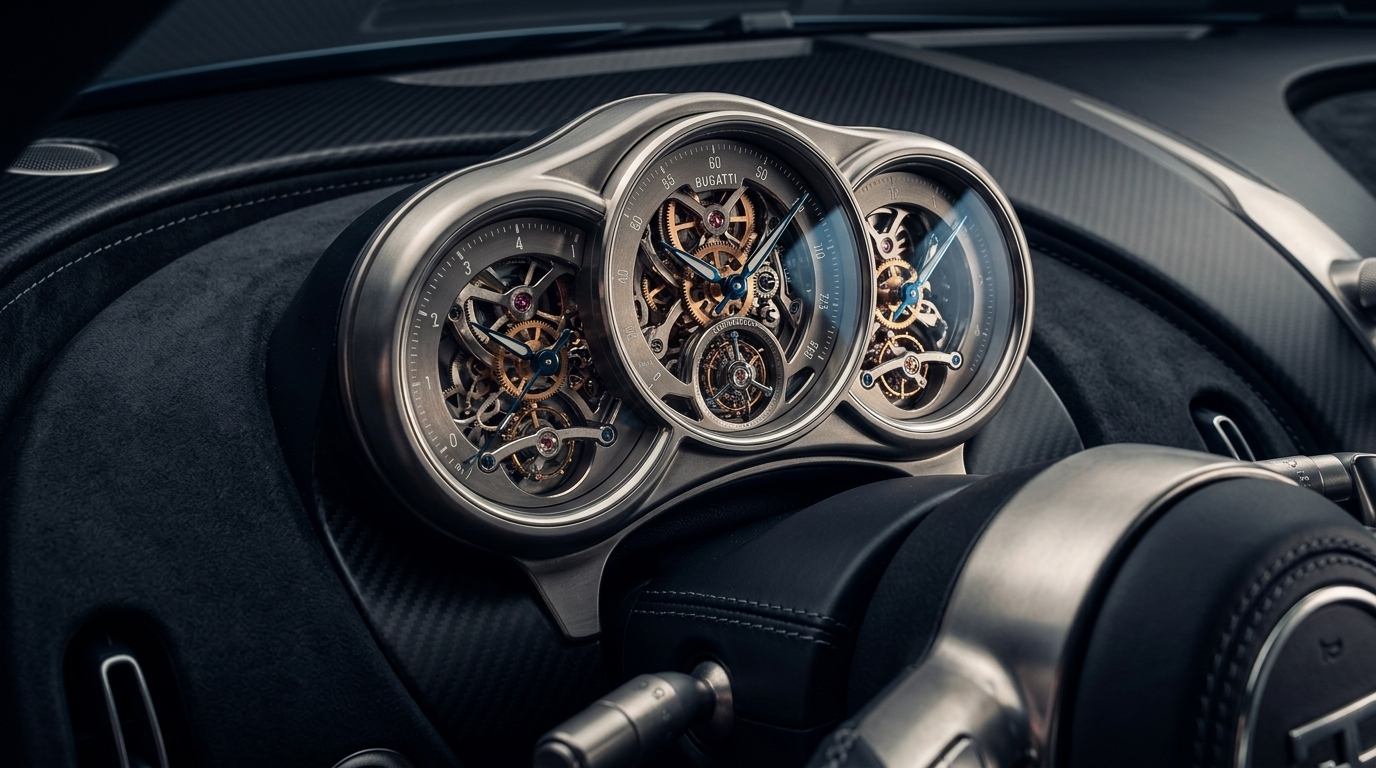
The Bugatti Tourbillon answers with a fully analog instrument cluster crafted by Swiss watchmakers. Built from titanium and sapphire glass, detailed with rubies and comprising more than 600 individual components, it is engineered like a mechanical watch movement, with the tachometer and speedometer needles arranged to move like the hands of a timepiece. The central display can retract entirely, leaving a cabin designed to look as timeless in fifty years as it does today. This is the clearest place the extra spend shows up — not in raw speed, but in craftsmanship the Chiron never attempted.
Design and Presence: Evolution, Not Revolution
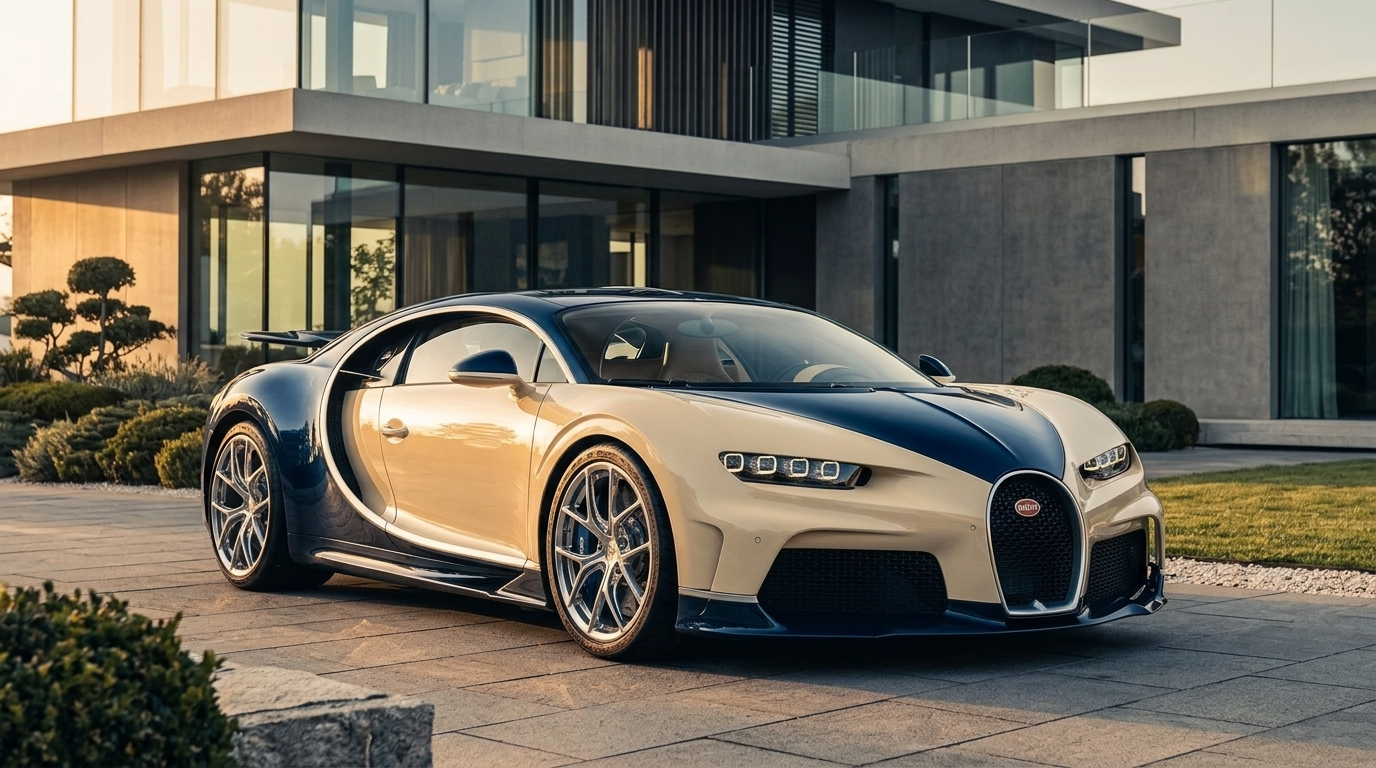
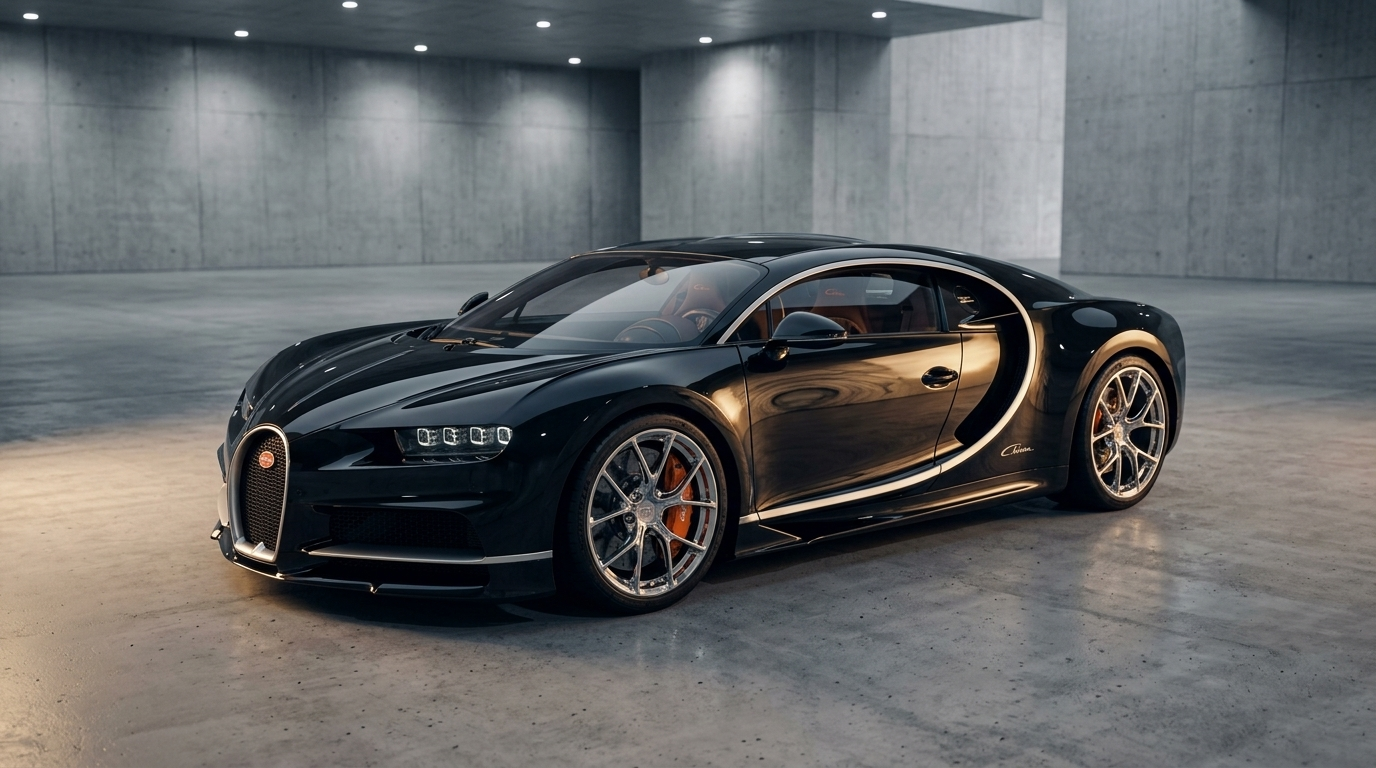
Bugatti describes the Tourbillon as a completely new design that shares no components with the Chiron, and mechanically that is true. Visually, though, the lineage is deliberate. The horseshoe grille remains. So does the central spine running the length of the body, the C-shaped signature line along the flanks, and the two-tone paint treatment that has defined the marque for a century.
The references run deeper than the Chiron, reaching back to the Type 35, the Type 41 Royale, and the storied Type 57SC Atlantic. Where the Chiron read as a technological statement, the Tourbillon reads as a coachbuilt one — lower, more sculptural, and more overtly tied to Bugatti’s pre-war heritage. Park them side by side and the Chiron suddenly looks like the product of a different, more industrial era.
Scarcity and Money: How the Bugatti Tourbillon Reshapes Value
The Chiron was built in far greater numbers across its many special editions. The Tourbillon is strictly limited to 250 cars worldwide, and Bugatti has signaled that allocations are effectively spoken for. That scarcity, combined with the generational-flagship status, is why the market is treating the Tourbillon as a blue-chip collectible from day one.
For buyers, the calculus is familiar in this segment: the newest, rarest, most significant Bugatti almost always holds its value better than the car it replaces. It is the same dynamic we cover in our look at why hypercars sell out before they are revealed — the most desirable cars are gone long before the public ever sees a price list. A standard Chiron, capable as it remains, now sits in the Tourbillon’s shadow, and values reflect it.
The Ownership Reality: Living With a Tourbillon
Both cars demand a level of commitment ordinary supercars never approach. Servicing, tire replacement, storage, and transport all operate on a scale where individual invoices can rival the price of an entire ordinary car. Neither the Chiron nor the Tourbillon is an object you simply drive and forget.
The difference is what ownership represents. A Chiron today is a superb, usable hypercar and, increasingly, relative value within the Bugatti universe. The Tourbillon is a statement of arrival — a car that signals access to one of the most exclusive allocations in the modern automotive world. For most buyers at this level, that distinction is the entire point, and it is worth tracking alongside the broader field in our guide to every hypercar delivering in 2026.
The Verdict: Is the Bugatti Tourbillon Worth the Premium?
If the question is pure capability per dollar, the used Chiron is one of the most formidable cars ever built and, on paper, a lot of performance for the money. But that is not the question buyers at this altitude are asking.
The extra $1M+ for the Bugatti Tourbillon buys a naturally aspirated V16 with a soul the turbocharged W16 never had, an analog watchmaker’s cabin that redefines what a hypercar interior can be, tighter scarcity, and the intangible weight of owning the car that closes the Chiron era and opens the next one. For a collector, that is not a premium. It is the whole proposition.
The Chiron will be remembered as the car that proved Bugatti could dominate the numbers. The Tourbillon looks set to be remembered as the one that proved it never needed to.
The Tourbillon marks a genuine turning point for the marque — a move away from the horsepower arms race and toward craftsmanship, mechanical artistry, and deliberate scarcity. Whether it ultimately eclipses the Chiron in the eyes of collectors will take years to settle, but the early signals all point one way. For buyers deciding between the two, the Tourbillon is not just the newer car; it is the one built to be remembered.