
What you need to know
- In the latest Hamilton-Leclerc flashpoint, Charles Leclerc spun teammate Lewis Hamilton at Turn 7 of the Las Vegas Grand Prix on November 22. The stewards found him wholly to blame and added 10 seconds, dropping him from sixth to 10th.
- It was the second Ferrari intra-team clash in three races, after a first-lap fight in Mexico City cost the team a likely victory.
- Team principal Fred Vasseur has publicly blamed Leclerc, revealed that a hold-position instruction was ignored, and said Ferrari will have to act.
- Italian media report that internal penalties are being considered. Ferrari has confirmed nothing.
Las Vegas Was the Breaking Point
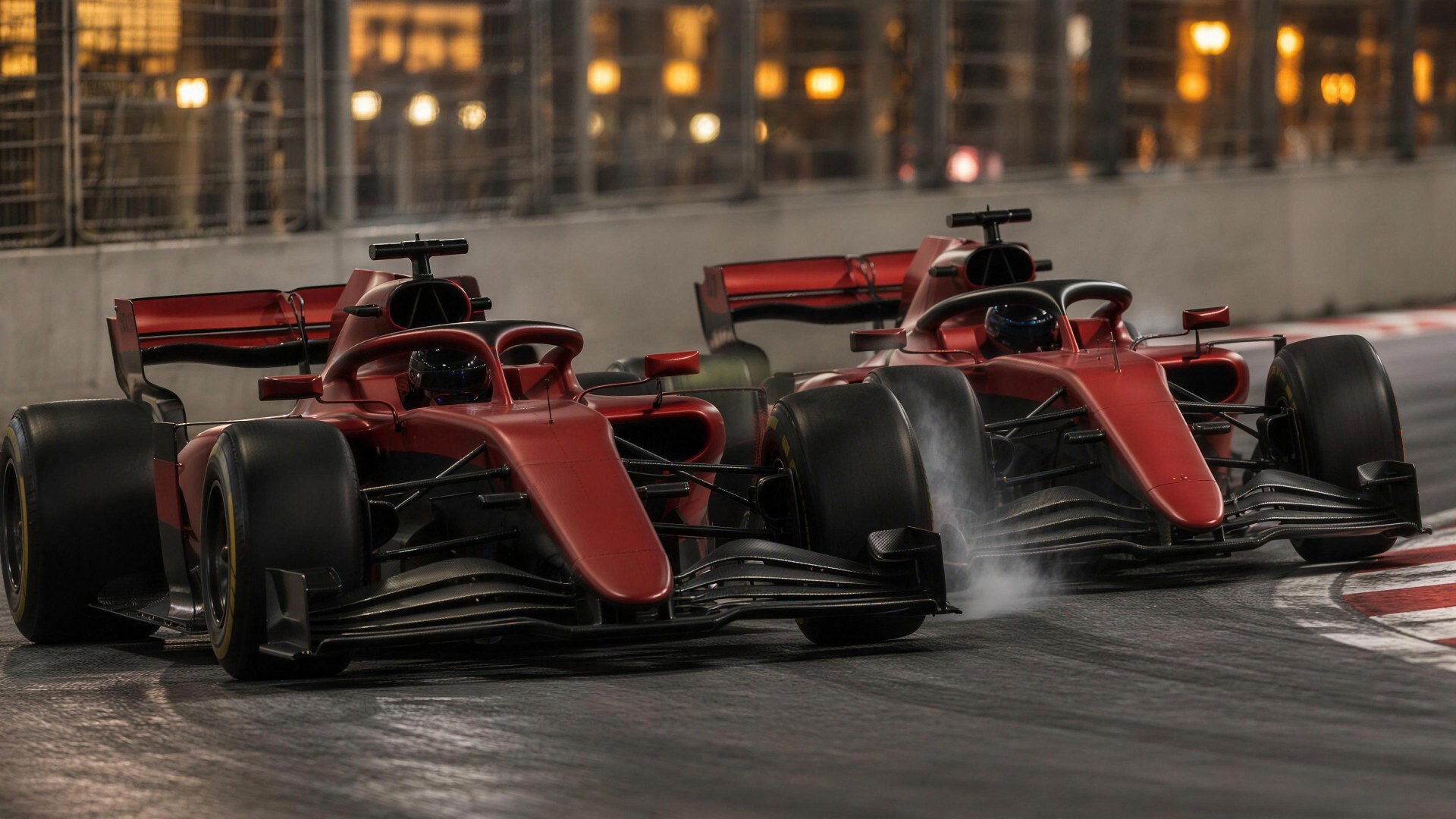
Lap 38 of 50, Turn 7 on the Las Vegas Strip. Leclerc pointed his Ferrari down the inside of Hamilton’s, arrived late, clipped the left rear as Hamilton turned in, and spun his teammate around. The FIA stewards ruled that Leclerc had launched the move from too far back, with his front axle still short of Hamilton’s mirror at the apex. Ten seconds were added to his race time. Hamilton recovered to seventh.
On its own, that is a racing incident with a penalty attached. What made it a story was Fred Vasseur.
Ferrari’s team principal skipped the usual language about drivers being free to race. He called the collision a professional error, said he had delivered the same message after Mexico, and described it as a lack of respect for the team, its sponsors and, above all, the staff back at the factory. Drivers, he told Sky Sports Italy, must remember that “you have to think about the team, about the people working in Maranello.” To RaceFans he was blunter: “this cannot continue.” Then he revealed something the world feed never aired. Ferrari had told Leclerc to hold position behind Hamilton before the move.
In the days since, his tone has hardened further. In another Sky Italia interview he said: “Recently, the situation between them is becoming unmanageable.” He has also said Ferrari will have to take action, while describing the root of it as a personal misunderstanding between the drivers rather than a dispute with the team.
Team principals rarely disclose an ignored instruction in public. When one does, the private channel has usually been exhausted. Las Vegas was not the cause of Ferrari’s problem. It was the moment the team stopped pretending the problem was handled.
The Problem Ferrari Has Faced Before
Ferrari has run two-star line-ups before, and it has tried both of the obvious answers.
The first was hierarchy. At the 2002 Austrian Grand Prix on May 12, Rubens Barrichello led until the final corner, then lifted on team orders to hand victory to Michael Schumacher. The crowd booed, Schumacher pushed Barrichello onto the top step of the podium, and the FIA’s World Motor Sport Council later fined Ferrari and both drivers $1 million jointly. Tellingly, the fine was for breaching podium protocol; the Council said it could take no action over the order itself. The FIA then banned team orders that influence results from 2003, a prohibition that lasted until after the 2010 season.
The lesson of that era is uncomfortable but real. Ferrari’s hierarchy worked competitively because it was settled before the season started, not improvised on Sunday afternoon. It was also expensive in reputation.
The second answer was equality with side agreements. In 2019, Ferrari paired the four-time champion Sebastian Vettel with the young Leclerc and let them race. The year produced a string of disputes: Leclerc ignoring qualifying instructions at Monza, Vettel winning Singapore through strategy, and Vettel declining to honor a pre-race agreement to give back the lead in Russia. It ended at Interlagos on November 17, when the two touched on lap 66 while fighting over fourth and both retired. The stewards found neither predominantly to blame. Then team principal Mattia Binotto called it “a silly thing that should not happen,” and Ferrari left Brazil without a point.
The eras are not interchangeable. In 2002 Ferrari had a dominant car and one title-focused leader. In 2019 the incumbent champion faced the young challenger. Today the roles are inverted: Leclerc is the long-serving incumbent, and the seven-time champion is the newcomer. Team radio and social media also make every internal tension public within minutes. But the pattern holds. Ferrari’s trouble arrives when the rules between its drivers are loose enough for each of them to read differently.
Hamilton Arrives in Maranello
Ferrari announced Hamilton’s signing on February 1, 2024, on a multi-year deal from 2025. The market reaction showed what the company believed it was buying: Ferrari shares closed up roughly 12.5% on the New York Stock Exchange that day, a move that coincided with strong fourth-quarter results as well as the Hamilton news. (For how far Ferrari’s market value has since run, see our earlier analysis.) Hamilton brought a global audience, seven titles, and the promise of experience Ferrari has lacked since its last drivers’ crown in 2007.
Leclerc, meanwhile, had been Ferrari’s race driver since 2019 and its emotional center for most of that time. He was not going to become a supporting act, and Ferrari never asked him to be.
The partnership started slowly. Hamilton went winless through 2025, and after a double retirement in São Paulo that November, chairman John Elkann publicly said the drivers needed to “focus on their driving and talk less.” The 2026 regulations changed the picture. Hamilton took his first Ferrari victory at the Barcelona-Catalunya Grand Prix on June 14, ending Mercedes’ unbeaten start to the season, and later added his first Ferrari pole in Mexico City.
Ferrari has committed to both men. Leclerc signed a new contract in June 2026 whose length the team did not disclose; reports range from the end of 2028 to beyond 2030. Hamilton said at the Canadian Grand Prix that he is under contract for at least 2027, and Sky Sports has reported he holds a unilateral option for 2028. Vasseur summed up the arrangement candidly in São Paulo: “It’s a choice in the line-up, and I have the positive and the negative.”
How the Tension Developed
The timeline below sticks to documented events.
- November 2025, São Paulo. Double retirement, followed by Elkann’s public criticism of both drivers.
- September 6, 2026, Monza. From the second row, Hamilton went for the inside into the first chicane; Leclerc refused to yield and ran him wide. Leclerc later admitted the fight went “too far,” then crashed out at Parabolica on lap 2. Hamilton finished sixth, 76 points behind eventual champion Kimi Antonelli, and told Sky Sports: “Here, there are no rules.” Vasseur conceded that at some point a decision on priority would be needed, but said it was too early before Monza.
- Early October, Sepang. Amid Italian press speculation about Vasseur’s position, Ferrari issued a statement of full confidence in him. Hamilton backed Vasseur too, while suggesting the bigger question lay higher up the organization.
- November 1, Mexico City. Hamilton started from pole. Leclerc tried the outside into Turn 4, both drivers overshot, and Leclerc cut across the grass to emerge in the lead. Stewards gave him a five-second penalty, citing mitigating circumstances. Max Verstappen slipped past Hamilton in the confusion and won by 0.799 seconds, with Hamilton second and Leclerc fourth. Hamilton said Ferrari needed “to have some serious talks behind the scenes”; Leclerc argued both had made mistakes and there had been no contact.
- November 5–8, São Paulo. Vasseur met both drivers on Thursday and told Reuters: “The guidelines are still the same.” Leclerc, who had just become a father, missed first practice. In the race he finished eighth after a five-second penalty for contact with Liam Lawson; Hamilton was ninth, a lap down. Mercedes clinched the constructors’ title.
- November 22, Las Vegas. The collision, the penalty, and Vasseur’s public censure.
What Las Vegas Revealed
The full race matters, because it complicates any simple villain story. (Our Las Vegas race report covers the wider night.)
After a difficult qualifying, Hamilton carved back through the field and passed Leclerc cleanly. He then collected a 10-second penalty of his own for overtaking Lando Norris off track. Under the Safety Car, Ferrari left him out to avoid double-stacking both cars, and when he pitted a lap later he fell to 14th. He recovered to Leclerc’s position, passed him a second time, and was spun when Leclerc tried to take the place back, according to Formula One’s race-day team round-up.
The radio showed the temperature rising before contact. Hamilton asked the pit wall to tell his teammate to back off. A few laps earlier, Leclerc had warned that Hamilton’s squeezing was risky, saying “it’s not going to end well.” After the race Leclerc accepted the penalty, said he had misjudged how much Hamilton could see in his mirrors, and apologized to the team. Hamilton said a podium had been possible before the penalty and the contact. He has since declined to explain his radio messages, saying he had already said all he could and leaving the matter to Ferrari.
Three conclusions follow. First, Hamilton’s afternoon was compromised before Leclerc touched him; his own penalty and the strategy call that followed cost him time. Second, the collision itself was not a gray area: the stewards placed all the blame on Leclerc, and Leclerc agreed. Third, and most important for Ferrari, an instruction existed. The problem was not an absence of rules. It was that the rule did not hold in the moment it was meant for.
The Leadership Dilemma
Vasseur’s approach has been consistent: let the drivers race, issue guidelines, resolve disputes in meetings, and decline to name a number one. It is defensible. Both drivers can win races, the title was out of reach for most of the season, and a forced hierarchy would have alienated one of them.
Vasseur also has a clear diagnosis of what went wrong, and it is not the one critics expect. According to reports of his Sky Italia remarks, he rejects the idea that Ferrari needs new rules. “It’s a question of egos,” he said, arguing that no written regulation can anticipate every situation on track and that the real fix is respect between teammates.
He has a point, and Hamilton’s own history supports it. At Mercedes, after a collision with Nico Rosberg at Spa in 2014, the team reportedly imposed disciplinary measures on Rosberg. In July 2016, after three incidents in five races, Mercedes publicly announced stricter rules of engagement with “much greater deterrents to contact between our cars,” keeping team orders as a last resort. Even then, Toto Wolff later admitted the internal rulebook still had gaps. Rules alone did not make Hamilton and Rosberg get along.
But Mercedes did something Ferrari has not yet done publicly: it attached consequences to the rules and said so. The record since Monza suggests Ferrari’s current framework is not settling three basic questions.
What counts as acceptable racing? At Monza, Leclerc’s defense was judged robust by some and reckless by others. In Mexico, both drivers argued the other was on the limit. When two experienced drivers read the same guidelines differently, the guidelines are too open.
What is the strategic priority? Hamilton asked before Monza to be prioritized while he was the closest non-Mercedes challenger. Ferrari declined, and Hamilton later called the window closed. The decision may have been right, but it was never stated as a policy either driver could plan around.
What happens when an instruction is ignored? This is the Las Vegas question. Ferrari told Leclerc to hold position. He did not, and the price so far has been a stewards’ penalty and a public rebuke. La Gazzetta dello Sport has reported that Ferrari is weighing internal financial penalties, and some outlets have gone further. Ferrari has confirmed no sanction or policy change, and ECN treats those reports as unconfirmed.
Vasseur’s public frustration may itself be a management decision: moving accountability into the open. It carries a risk, though. Public censure of the driver Ferrari has just committed to long term has to be followed by clarity, or it becomes another source of friction. And the question Hamilton raised in October still hangs over the team: whether a problem like this can be solved at team-principal level alone.
The Championship Cost
The 2026 titles were not lost in these incidents. Antonelli clinched the drivers’ championship in Mexico City, and Mercedes secured the constructors’ title in São Paulo, as we covered at the time.
The measurable damage is narrower but real. After Las Vegas, Hamilton sits third in the drivers’ standings on 267 points, three ahead of George Russell, with Leclerc sixth on 250. In the constructors’ table, Ferrari is second on 517 points, 77 clear of Red Bull with two rounds left. Verstappen’s win in Las Vegas delayed Ferrari from sealing that position.
By ECN’s calculation using F1’s standard points scale, Leclerc’s penalty alone cost Ferrari seven points in Las Vegas, the difference between sixth (8 points) and 10th (1 point). What Hamilton might have scored without the spin cannot be stated with confidence, and ECN has not estimated it. In Mexico, the start cost Ferrari a realistic shot at a one-two; Hamilton finished less than a second from victory.
The larger costs are harder to count. Vasseur himself pointed past the points to the motivation of the workforce, the people whose effort is wasted when the two cars meet. A team heading into the final weeks of a development cycle cannot afford engineers and strategists who wonder whether their work will survive the first lap.
What Happens in 2027 and Beyond?
The following is ECN editorial analysis, not reported Ferrari decisions. Ferrari has announced no change to its line-up or its driver policy.
The first test comes quickly. Leclerc is due in the FIA’s pre-race press conference in Qatar on Thursday, and the two cars will share a track again on November 29.

1. Improved cooperation. Both drivers are contracted for 2027, and Vasseur has said he does not need them to be friends, only to respect each other and the team. If the meetings since Mexico take hold, Ferrari keeps its strongest pair and 2026 becomes a lesson learned. This is the most likely near-term path, and the most fragile: it relies on behavior changing without a visible change in consequences.
2. Stricter team protocols. Ferrari could formalize rules of engagement with defined consequences, as Mercedes did in 2016. Vasseur’s insistence that this is not a matter of rules suggests he would rather avoid a rulebook, but the reported discussion of internal penalties shows the option is on the table. The cost is some loss of the freedom both men value.
3. A practical hierarchy. Not a declared number one, but priority awarded by points at a fixed point in the season. Vasseur has already said that at some point a decision has to be made. The difficulty is timing: decide early and you may back the wrong driver; decide late and, as Hamilton found after Monza, it no longer matters.
4. A longer-term change in driver strategy. Leclerc’s new contract signals where Ferrari sees its future, while Hamilton is committed through at least 2027 with a reported option beyond. There is no evidence Ferrari intends to change either seat. But the 2028 decision point is approaching, and how 2027 goes will inevitably shape it, with F1’s next engine-rules shift already on the horizon.
Ferrari Must Solve More Than a Driver Rivalry
Ferrari has never struggled to attract talent. Schumacher, Vettel, Leclerc and Hamilton all came because driving a Ferrari still means something no other seat offers. The team’s harder historical problem has been organizing that talent so that two great drivers pull in the same direction on a Sunday afternoon.
The Schumacher years worked because roles were settled before the lights went out. The Vettel-Leclerc years faltered because agreements were made and then reinterpreted on track. Las Vegas showed which pattern Ferrari is currently repeating: a clear instruction, broken in the heat of a battle, followed by a public reckoning.
Vasseur may be right that this is about egos. But egos are exactly what a championship organization exists to manage. Assembling a world-class line-up is a signing. Running a world-championship team is a system. Ferrari’s greatest challenge may no longer be finding drivers capable of winning a world championship. It may be creating the leadership structure that allows them to win one together.