

The Porsche Cayenne Electric: A Landmark Moment for Luxury Performance SUVs
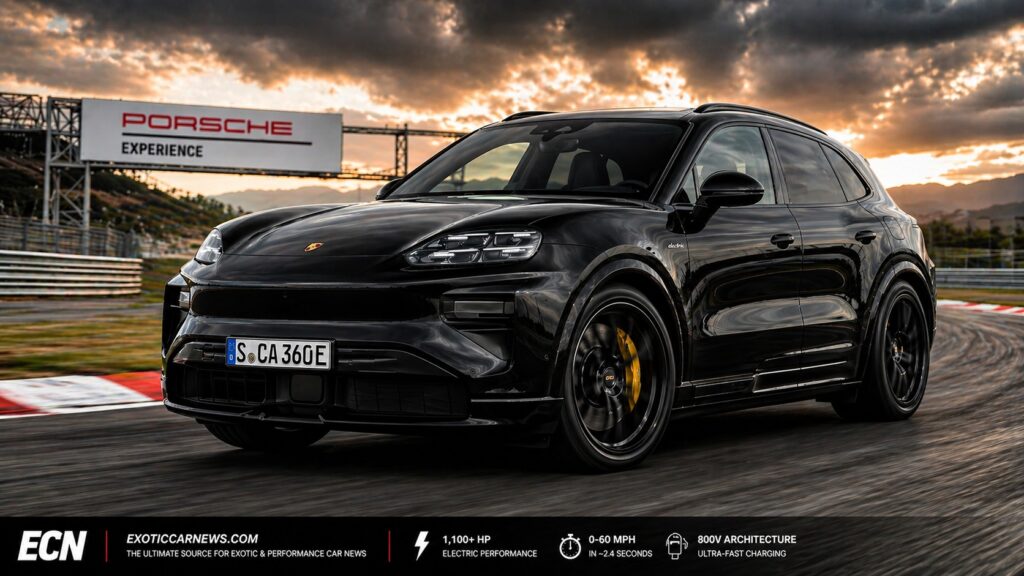
The debut of the all-new Porsche Cayenne Electric signals a pivotal shift in the evolution of the modern performance SUV. Far beyond a simple successor to one of Porsche’s most successful models, it represents a ground-up rethinking of how luxury, performance, and electrification can coexist in a single vehicle.
Engineered from inception as a fully electric platform, the Cayenne Electric fuses Porsche’s unmistakable sports car heritage with next-generation EV innovation. The result is a vehicle that pushes boundaries—delivering sharper performance, greater intelligence, and enhanced versatility in a way that redefines expectations for the segment.
Porsche Cayenne Electric Performance: Hypercar Power Meets SUV Practicality
Porsche has built the Cayenne Electric around a sophisticated dual-motor, all-wheel-drive architecture designed to deliver relentless performance across the entire lineup.
Estimated Output:
- Cayenne Electric: up to 435 hp
- Cayenne S Electric: up to 657 hp
- Cayenne Turbo Electric: up to 1,139 hp
At the top of the range, the Cayenne Turbo Electric crosses into hypercar territory. Expect 0–60 mph in approximately 2.4 seconds, more than 1,100 lb-ft of torque, and a top speed north of 160 mph—numbers that place it among the most powerful SUVs ever built, and potentially the most powerful road-going Porsche to date.
But the real story isn’t just the output—it’s how it’s delivered. Acceleration is immediate, seamless, and relentlessly consistent, thanks to advanced thermal management and intelligent torque distribution. Whether it’s a single launch or repeated high-load driving, the Cayenne Electric maintains its composure—delivering performance that doesn’t just impress once, but holds up every time you put your foot down.
800-Volt Charging in the Porsche Cayenne Electric: A True Technological Leap
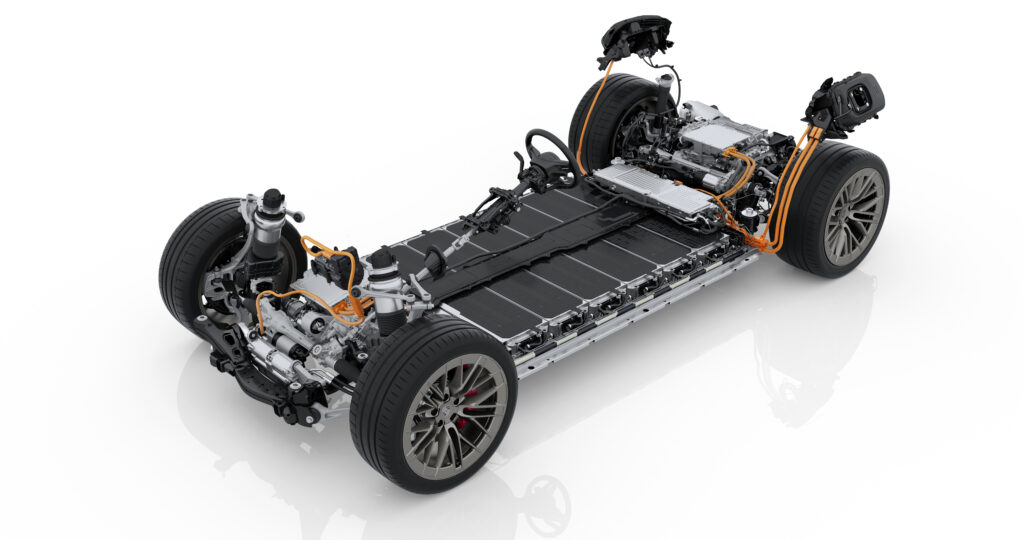
At the core of the Porsche Cayenne Electric is one of its most defining innovations: Porsche’s advanced 800-volt electrical architecture, a system derived directly from the brand’s experience in motorsport and high-performance EV development. While most electric vehicles operate on a 400-volt system, doubling the voltage allows Porsche to deliver the same power with significantly less current—reducing heat, minimizing energy loss, and unlocking a new level of charging and performance capability.
The numbers are impressive, and Porsche publishes the full technical figures in its Cayenne Electric press kit. Charging speeds can reach up to 400 kW, enabling a 10% to 80% charge in under 16 minutes, supported by a battery capacity of approximately 113 kWh and an estimated range exceeding 300 miles. But beyond raw speed, the true advantage lies in how intelligently the system is engineered. Porsche has developed a sophisticated thermal management strategy that keeps the battery operating at optimal temperatures during both ultra-fast charging and high-performance driving. The result is consistent, repeatable performance—whether on a long highway drive or under sustained acceleration.
By reducing electrical resistance throughout the system, the 800-volt architecture also allows for lighter wiring, improved energy transfer, and overall efficiency gains that enhance both performance and driving dynamics. In real-world terms, this means shorter charging stops, greater range confidence, and a more seamless ownership experience. In the evolving world of electric performance, voltage is quickly becoming the new benchmark—and with its 800-volt platform, the Cayenne Electric doesn’t just keep pace, it sets the standard.
Design: Evolution of an Icon
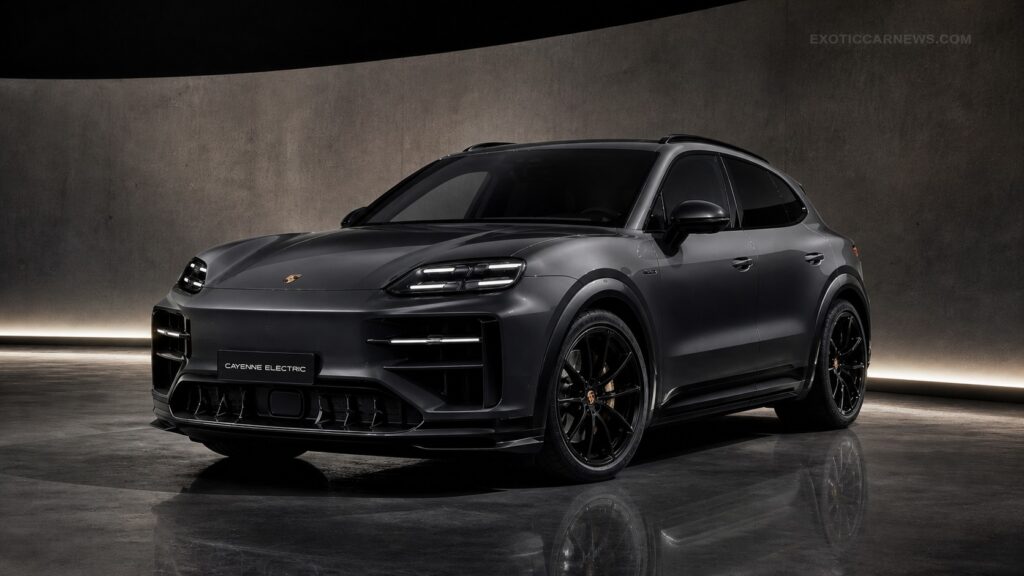
Visually, the Porsche Cayenne Electric doesn’t stray from Porsche DNA—it sharpens it. The stance is lower, wider, and more planted, giving the SUV a presence that feels closer to a sports car than anything in its class. The surfaces are tighter, more sculpted, with clear inspiration pulled straight from the Porsche 911—lean, purposeful, and aerodynamic without trying too hard. A full-width LED light bar stretches across the rear, while active aerodynamic elements work behind the scenes to manage airflow and efficiency at speed.
The Coupe variant takes things a step further. With a roofline dropped by roughly 24 mm and a drag coefficient as low as 0.23, it looks faster standing still—and backs it up in motion. Yet, Porsche hasn’t sacrificed usability in the process. You still get up to 1,347 liters of cargo space, a functional front trunk, and flexible rear seating. It’s the kind of balance Porsche has perfected: performance-first design that doesn’t punish you in the real world.
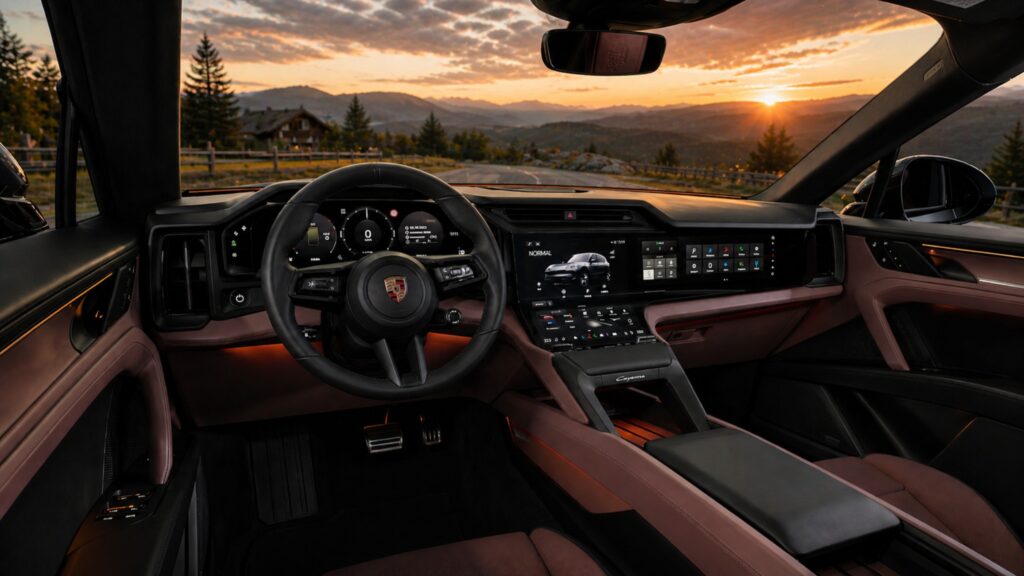
Step inside, and the Porsche Cayenne Electric feels like a glimpse into Porsche’s next decade. The cabin is fully digital, anchored by a next-generation display system that replaces traditional analog cues with crisp, configurable interfaces. Porsche Communication Management (PCM) is faster and more intuitive, while materials remain exactly what you’d expect—premium, tactile, and highly customizable. The layout stays driver-focused, but passengers aren’t an afterthought, with seamless integration across the entire cockpit.
Everything inside serves a purpose. It’s clean, modern, and performance-driven without losing the sense of occasion. This isn’t just a luxury interior—it’s a cockpit designed for people who actually care about driving.
Engineering: When Technology, Science, and Art Hits the Spot
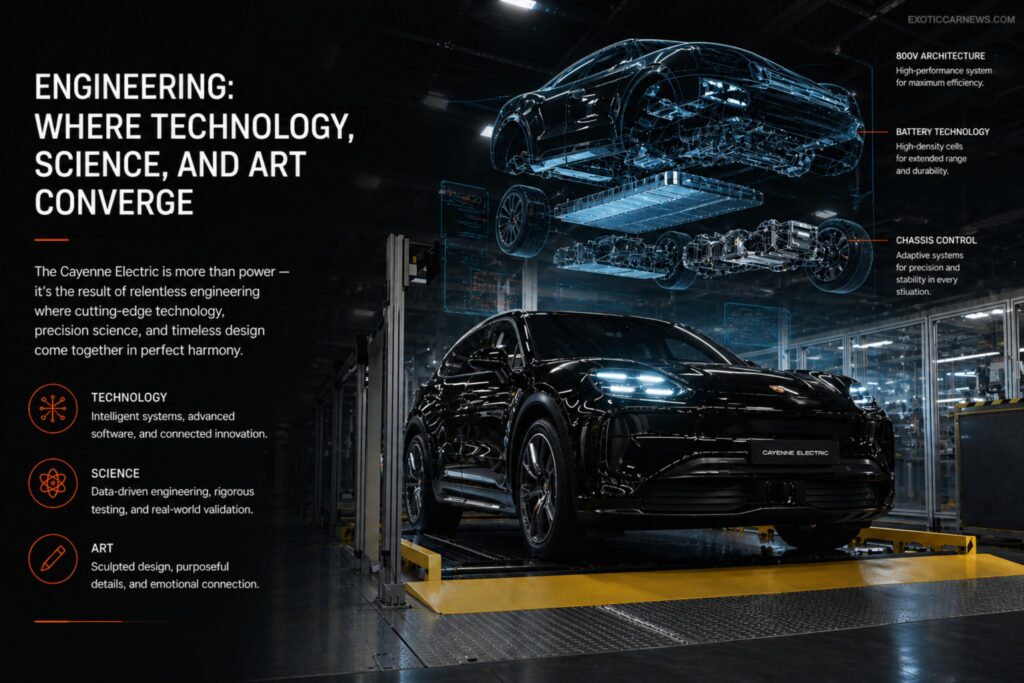
Beyond straight-line speed, the Porsche Cayenne Electric is packed with serious chassis tech that gives it real credibility when the road gets interesting. At the center of it is Porsche Active Ride, a next-gen suspension system that actively manages body control in real time—keeping the SUV flat through corners, composed under braking, and planted when you get back on throttle. Add in rear-axle steering, and the Cayenne shrinks around you, tightening up in corners and feeling far more agile than something this size has any right to.
Supporting it all is an adaptive air suspension that can dial itself from comfortable cruiser to firm, performance-focused setup in an instant, paired with advanced torque vectoring that actively distributes power side-to-side to maximize grip and rotation. The end result isn’t just impressive—it’s borderline surreal. You get something that can carve like a sports car, settle into long-distance drives without fatigue, and still handle rough terrain when the pavement ends.
This isn’t just engineering for the spec sheet—it’s engineering you can actually feel behind the wheel.
Porsche’s Electric Future Gains Traction Here
The Porsche Cayenne Electric isn’t just another model in the lineup—it’s the moment Porsche plants its flag in the next era. As a core pillar of the brand’s electrification push, it carries the same expectation the original Cayenne once did: redefine what an SUV can be, only now through the lens of electric performance.
Alongside the Porsche Taycan, this isn’t about compliance or chasing trends—it’s about building EVs the Porsche way. Performance comes first, the driving experience stays front and center, and the engineering backs it up. The Cayenne Electric proves that going electric doesn’t mean giving anything up—it means pushing further.
And because the Cayenne sits at the heart of Porsche’s global lineup, this shift matters. When their best-selling SUV goes fully electric, it doesn’t just move the brand forward—it sends a message to the entire segment. The future of the luxury performance SUV isn’t coming—it’s already here.
Final Verdict on the Porsche Cayenne Electric
The Porsche Cayenne Electric doesn’t arrive to participate—it arrives to raise the standard. It blends extreme, repeatable performance with ultra-fast charging capability, advanced engineering, and real-world usability in a way that feels distinctly Porsche.
What makes it compelling isn’t just the headline numbers, but how seamlessly it all comes together. It’s as comfortable crossing states as it is carving through corners, as composed in daily use as it is under full load. The technology fades into the background, leaving a driving experience that feels natural, immediate, and unmistakably refined.
For those looking at the next generation of luxury performance SUVs, this isn’t simply another option—it’s the one that moves the entire segment forward.
Image Credits
Some images sourced from official press materials courtesy of Porsche Newsroom / Porsche AG.