


The New Era of Supercars: Performance Meets Sustainability

The supercar industry is entering a new phase—one where sustainability and performance are no longer opposing forces. Biodegradable materials have moved out of the concept-car stage and into cars customers can actually order. Today’s leading manufacturers are integrating biodegradable, recycled, and plant-based materials into some of the most advanced vehicles ever produced.
Iconic leading brands are leading this transformation, demonstrating that environmentally conscious engineering can enhance both luxury and performance.
For collectors and enthusiasts, this evolution represents a technological advancement rather than a compromise.
What Biodegradable Materials Mean in High-End Automotive Design
Biodegradable materials in automotive manufacturing are engineered for durability, not disposability. Their purpose is to reduce environmental impact while maintaining structural integrity and long-term usability.
Common materials now being integrated include:
- Flax fiber composites, offering lightweight strength comparable to traditional materials
- Hemp-based structural reinforcements
- Recycled plastics and ocean-derived textiles
- Natural resins and low-impact adhesives
These materials are increasingly used in interior panels, seating, insulation systems, and select structural components. When properly maintained, they are designed to last for the full lifecycle of the vehicle.
Lightweight Composites and Performance Advantages
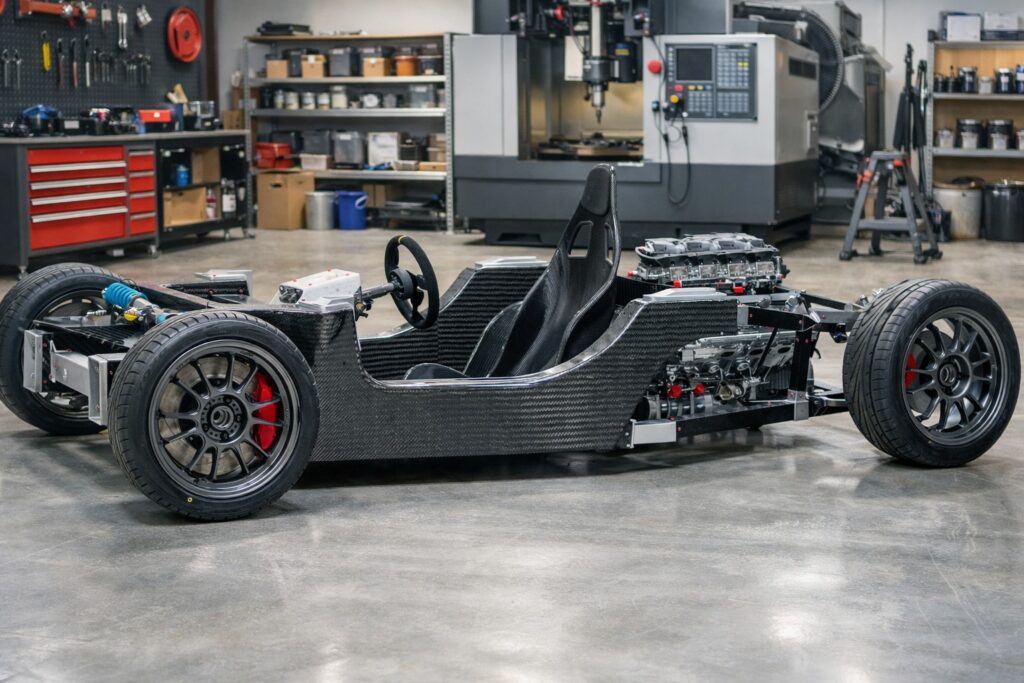

Weight reduction remains one of the most critical factors in high-performance automotive engineering. Sustainable composite materials contribute significantly to this objective.
Reducing overall vehicle mass improves acceleration, enhances handling precision, and increases efficiency—whether in internal combustion or electric platforms. In many applications, plant-based composites are now being evaluated alongside traditional carbon fiber, offering comparable performance with a more sustainable production process.
The advantages are clear: lighter materials reduce mechanical strain, improve responsiveness, and support the broader evolution of performance engineering.
Maintenance and Long-Term Care Considerations

The introduction of biodegradable and sustainable materials does not increase ownership risk, but it does require a more considered approach to maintenance.
Interior materials derived from natural or recycled sources benefit from gentle care. pH-neutral cleaning products are recommended, while harsh chemical agents should be avoided to preserve material integrity.
Environmental control is equally important. Vehicles should ideally be stored in temperature-stable, low-humidity environments to prevent long-term degradation. Climate-controlled garages or professional storage facilities are strongly recommended for collectors.
Repair and restoration processes may also differ slightly. Composite materials—whether traditional or plant-based—often require specialized techniques and trained technicians. Working with manufacturer-approved service providers ensures proper care and longevity.
Finally, protection from prolonged ultraviolet exposure is essential. Consistent exposure to sunlight can impact certain materials over time, making indoor storage or protective coverings a worthwhile investment.
The Future of Sustainable Materials in Supercars

The integration of biodegradable materials is part of a broader shift toward fully sustainable automotive design. Future supercars are expected to feature fully sustainable interiors, hybrid composite structures, and increased use of recyclable materials throughout the vehicle lifecycle.
Manufacturers are also investing in carbon-neutral production processes, ensuring that sustainability extends beyond the vehicle itself to its entire manufacturing ecosystem.
This evolution reflects changing consumer expectations, regulatory pressures, and technological advancements—all converging to shape the next generation of high-performance vehicles.
Final Thoughts
Biodegradable materials are redefining modern supercar engineering. They provide measurable performance benefits, reduce environmental impact, and align with the future direction of the automotive industry.
Rather than introducing limitations, these materials offer clear advantages—particularly in weight reduction and efficiency. The only adjustment required is a more intentional approach to maintenance and care, similar to existing best practices for premium materials such as carbon fiber and Alcantara.
For today’s collectors and enthusiasts, this represents a progression toward a more advanced, refined, and sustainable era of automotive excellence.
The next evolution of high-performance engineering isn’t just about horsepower or hybrid systems—it’s about materials. Today’s supercars and luxury vehicles are beginning to incorporate biodegradable, recycled, and sustainable composites into their design and construction.
For enthusiasts and collectors, this shift may sound concerning at first—but in reality, it represents a smarter, lighter, and more advanced future. The same shift is visible in powertrains, where hybrid supercars are dominating 2026. These materials are not a downgrade—they’re an upgrade with a slightly different ownership approach.